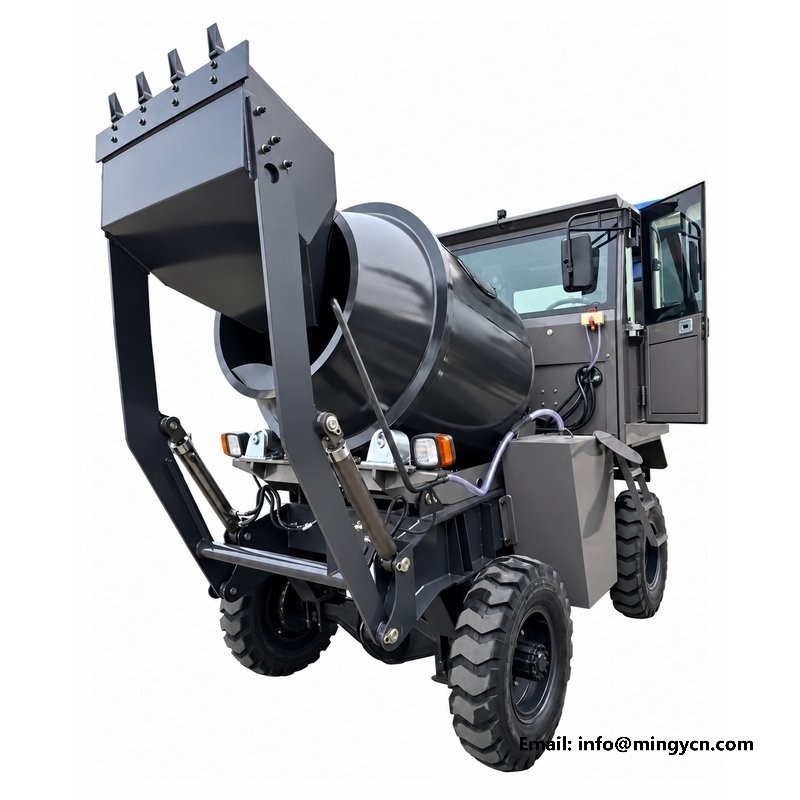
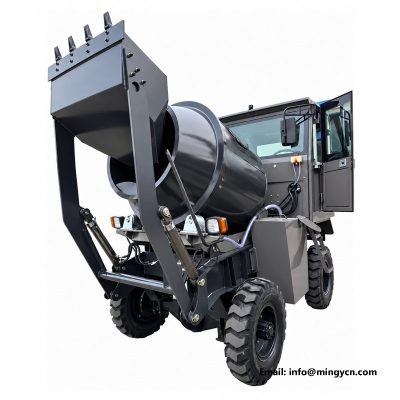
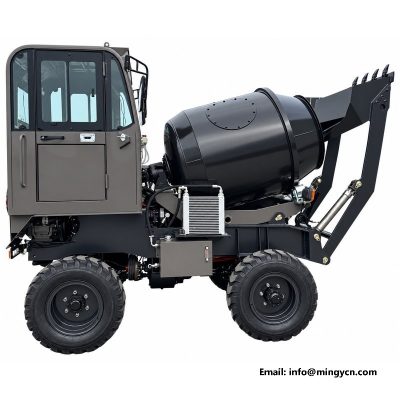
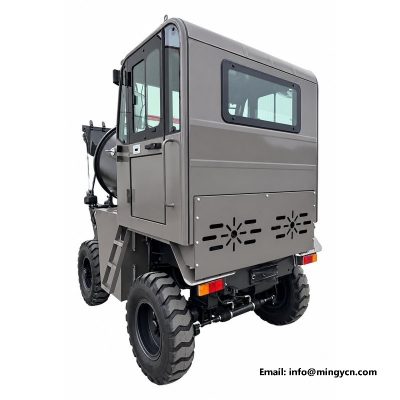
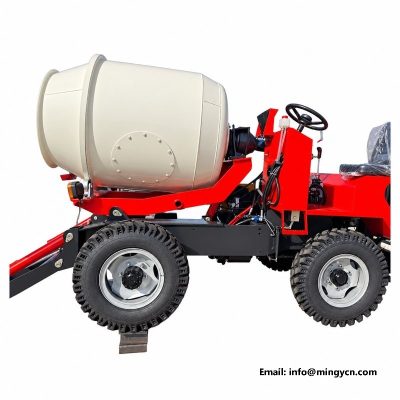
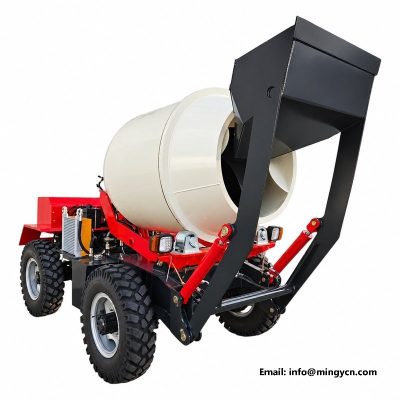
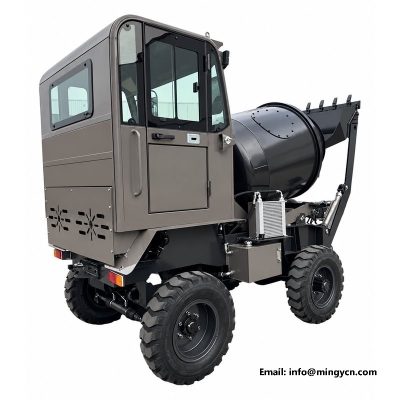
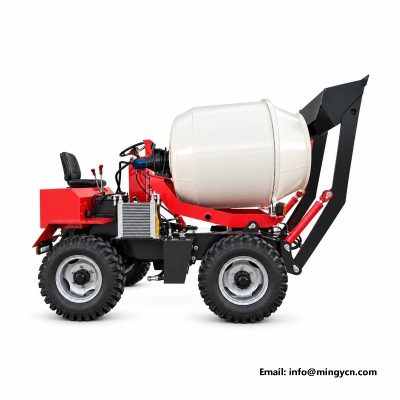
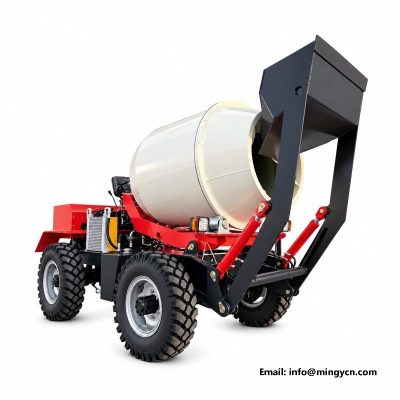
Front Loading Shovel and Lift Arm Geometry on the 0.8 m3 Self Loading Concrete Mixer with Hydraulic Cylinders
The loading shovel is the part of a self-loading mixer that turns a concrete plant into a one-machine site. Every batch starts with the shovel digging aggregate, and the geometry that decides how well it digs — arm length, pivot heights, cylinder leverage and bucket rotation — is built into the front frame before the first batch is ever mixed. The photographs in this page show that geometry on the 0.8 m³ self loading concrete mixer from the angles that reveal it: arms level, bucket dumped, cylinders at each end of their stroke.
The sections below explain how the loading cycle works, why the linkage is sized the way it is, what the cylinders do at each stage, and how a buyer can judge shovel quality from still photographs in the same way the factory judges it on the assembly line.
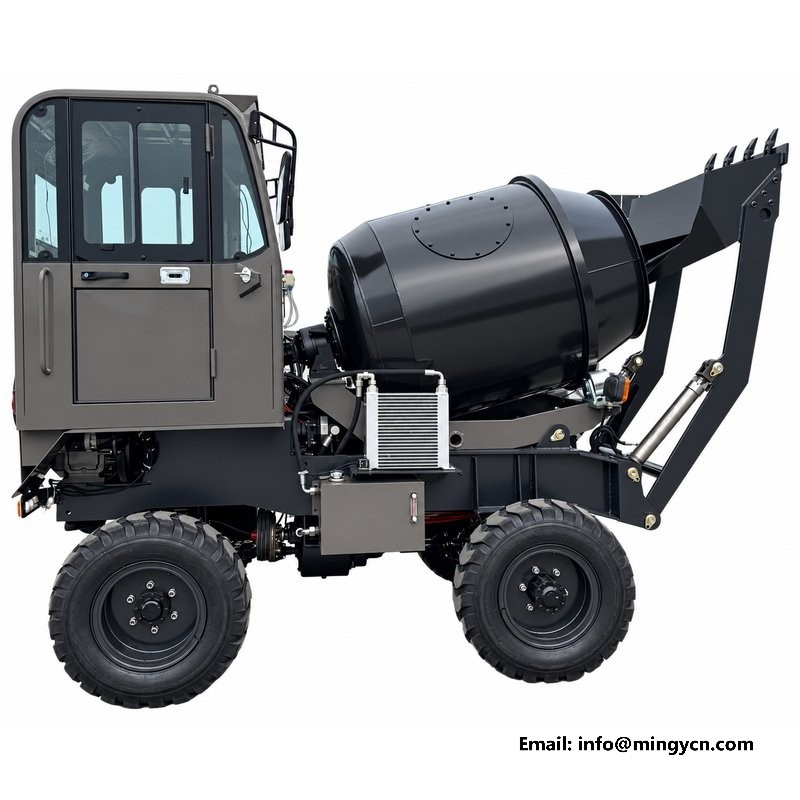
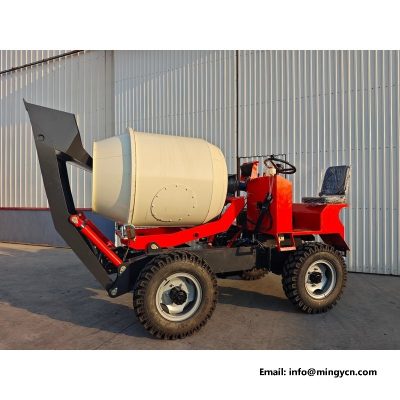
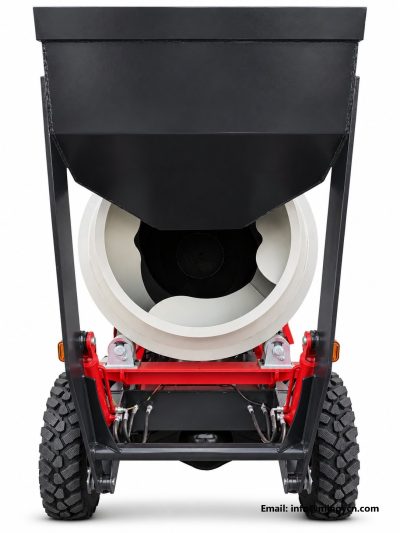
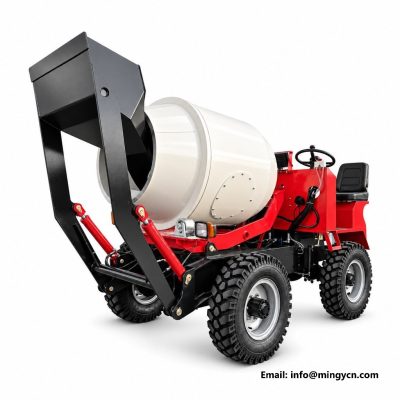
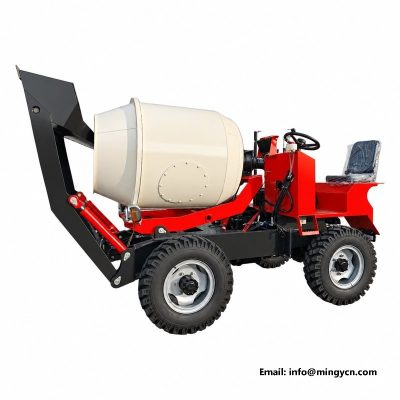
The cycle that defines a self-loading machine runs in four moves: dig, curl, lift, dump. The shovel digs forward into the aggregate heap, the bucket curls back to trap its load, the arms lift the load over the drum mouth, and the bucket dumps forward to release it. The photographs capture each pose, and together they show why the machine needs no separate loader: the same front frame that digs the heap is the crane that fills the drum.
Timing is the practical measure. A practiced operator completes the cycle in well under a minute, and the whole batch sequence — aggregate, cement, water, mix, discharge — fits inside the working rhythm of a small pour without waiting on any outside machine.
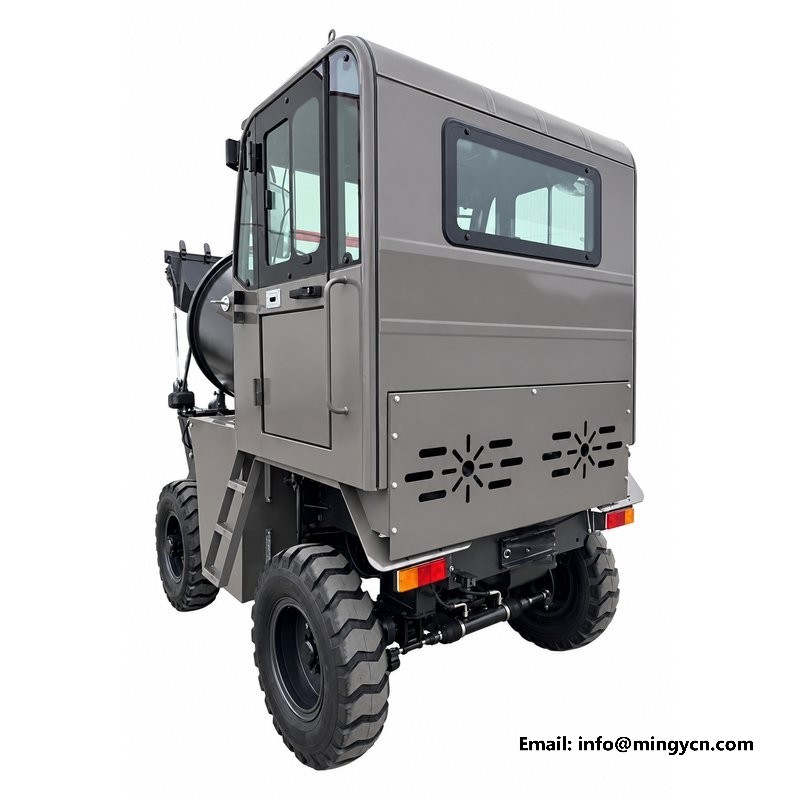
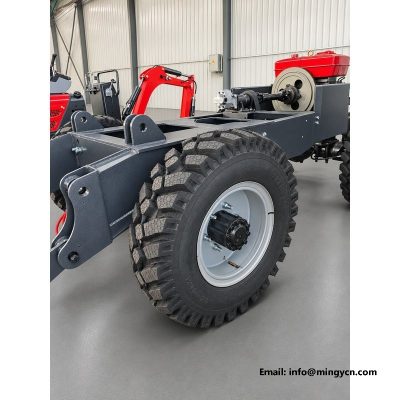
The lift arm pivots sit low and wide on the front frame, and that placement is a load calculation rather than a styling choice. Low pivots shorten the moment arm of a loaded bucket against the frame, wide spacing resists the side loads of digging with the bucket angled, and the resulting structure puts the steel where the bending lives. The arms themselves are boxed sections rather than open channels, because a box resists the torsion of one-sided digging that slowly twists weaker arms out of parallel.
Parallel arms also keep the bucket level through most of the lift, which is what lets the operator carry a full load across a site without spilling it over the back of the bucket.
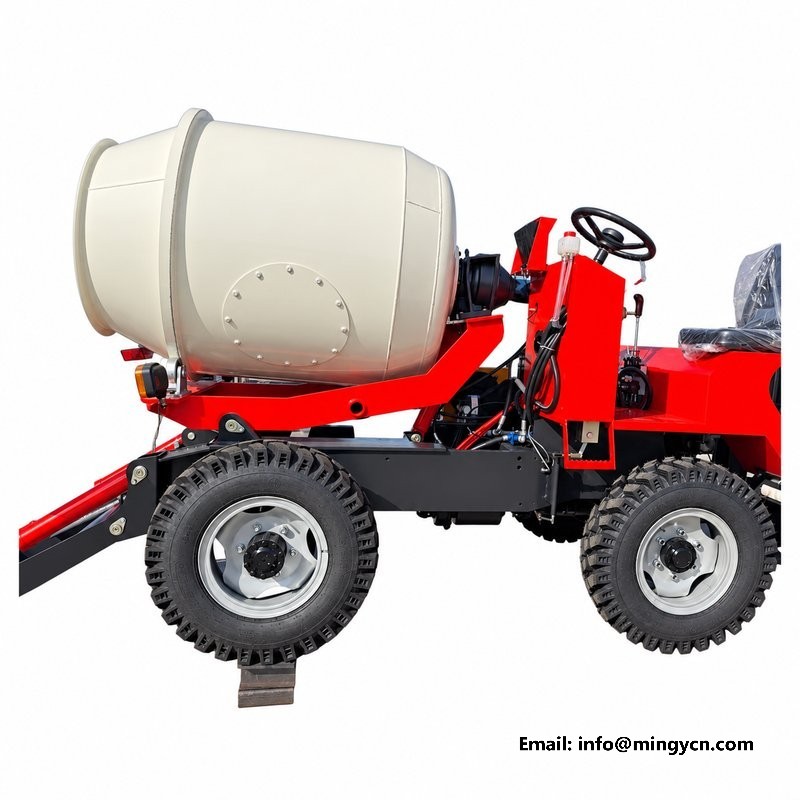
The lift cylinders do their easiest work at the start of the stroke and their strongest leverage near the top, which matches the load: a full bucket is heaviest close to the ground and lightens in effect as the arm rises toward the pivot line. The photograph of the extended cylinder shows the mounting lugs and the hose routing at full reach, where the factory checks for clearance and for line length. The bucket cylinder works through a shorter, faster stroke, and its bottom mount is protected behind the bucket shell, out of the splash zone of every dump.
Cylinder rods on a new machine arrive chromed and clean, and their condition is one of the fastest honest reads on how a machine has been kept.
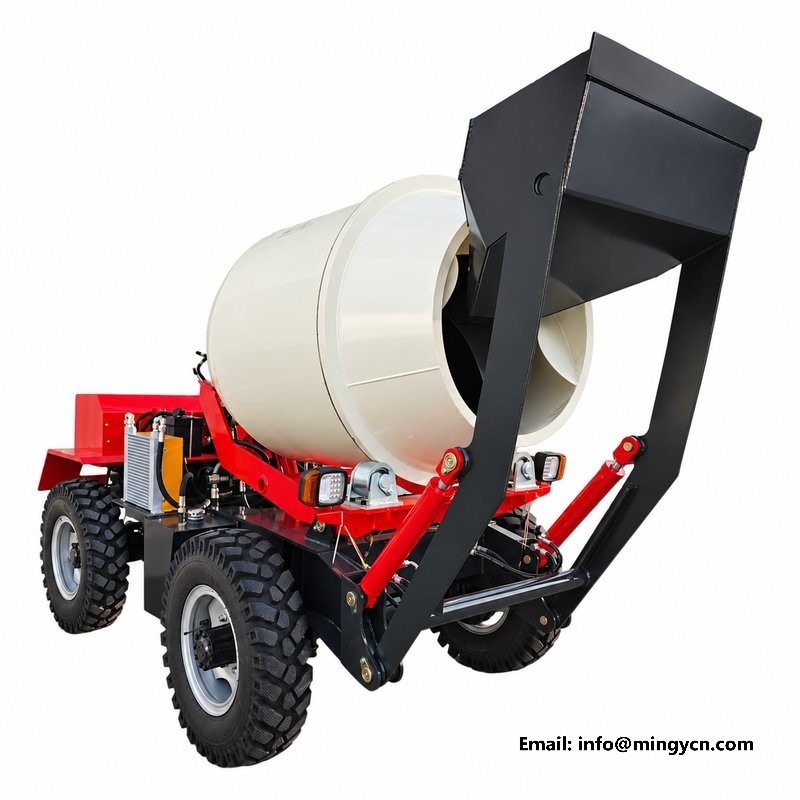
The bucket is sized to load the drum’s batch in one or two passes, and its heeled shell carries a bolted cutting edge that takes the ground’s punishment so the shell does not. The edge is a wear part by design: bolts shear or back off in service, the edge is flipped or replaced, and the shell behind it keeps its original thickness for years. Buyers comparing machines should ask whether the edge is bolted or welded, because a welded edge turns a twenty-minute maintenance job into a fabrication project.
The bucket tilt range matters as much as its capacity, since the tilt is what self-levels the load on side slopes and scrapes the heap clean at the end of a dig.
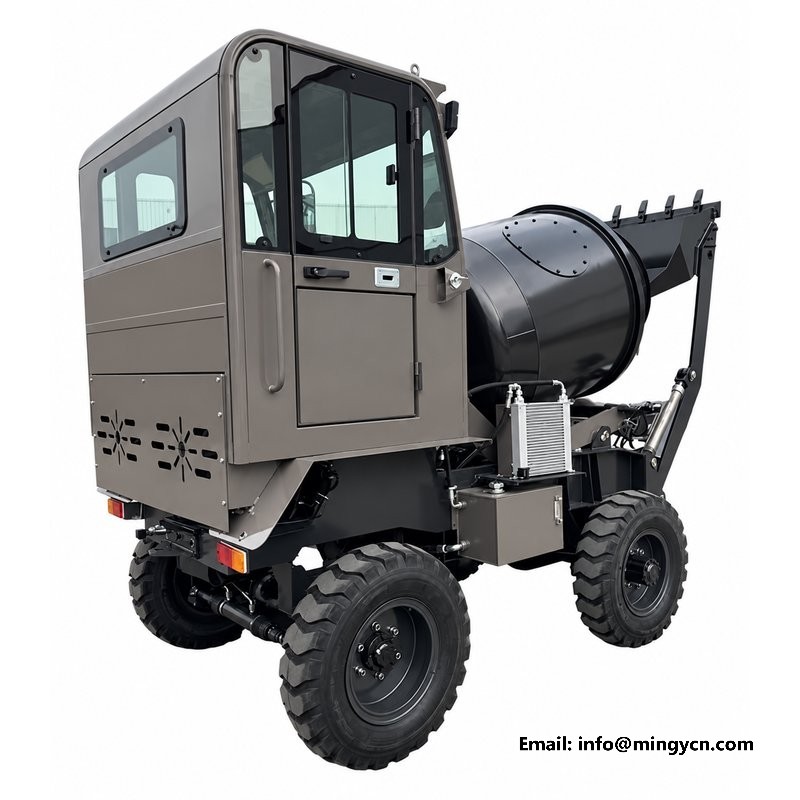
Three numbers describe what the shovel can do: dig depth below the wheel footprint, lift height to the drum mouth, and reach forward at carry height. The photographs record each with the machine square and level, and the manual prints the figures the production jigs hold. Dig depth decides whether the machine can re-dig its own ramp or load from a shallow pit; lift height must clear the drum mouth with margin; reach sets how far into a heap the shovel works before the machine moves.
For most small pours the numbers matter less than the cycle they enable, but buyers planning to work from stockpiles rather than loose heaps should compare the reach figure across suppliers, because it is the one most often glossed.
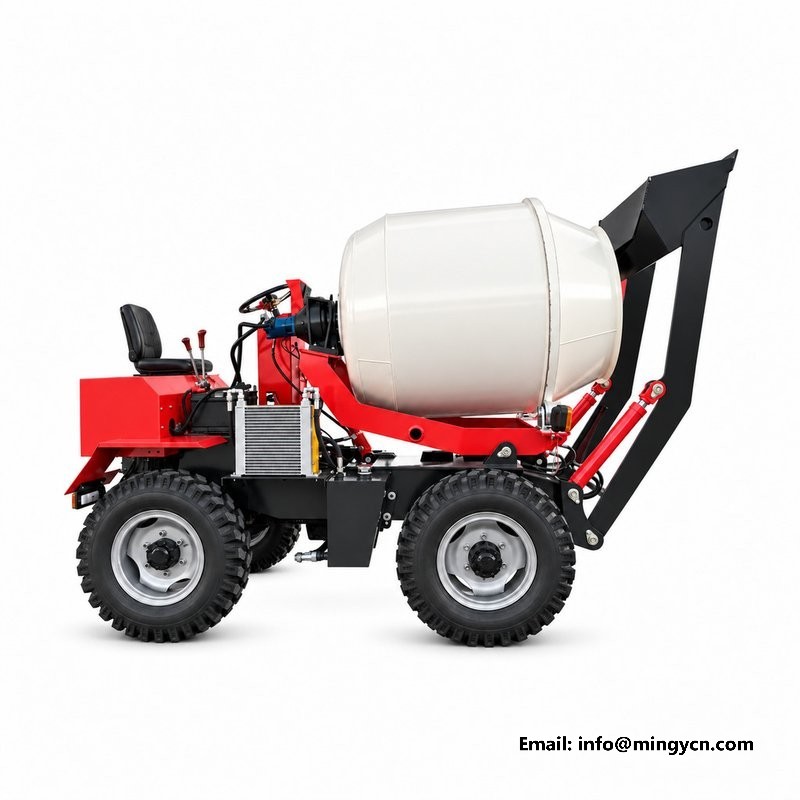
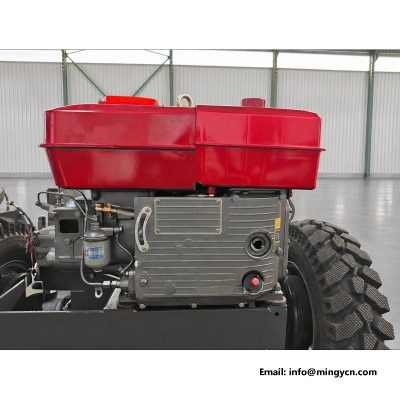
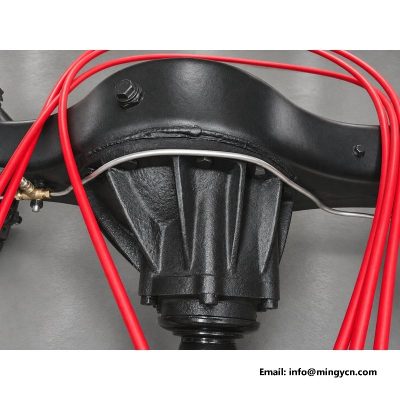
The shovel cylinders and the drum drive share one pump, and the valve system arbitrates. Lifting a full bucket briefly slows the drum, which is invisible in the mix and irrelevant to the result, and the drum resumes full speed the moment the lift ends. What the sharing rules out is the old workaround of a second engine to run the loader, with its extra service points, fuel lines and starting rituals. One diesel, one hydraulic system and one set of filters keep the maintenance map short, and the photograph shows how short: valves, lines and cylinders within reach of one standing position.
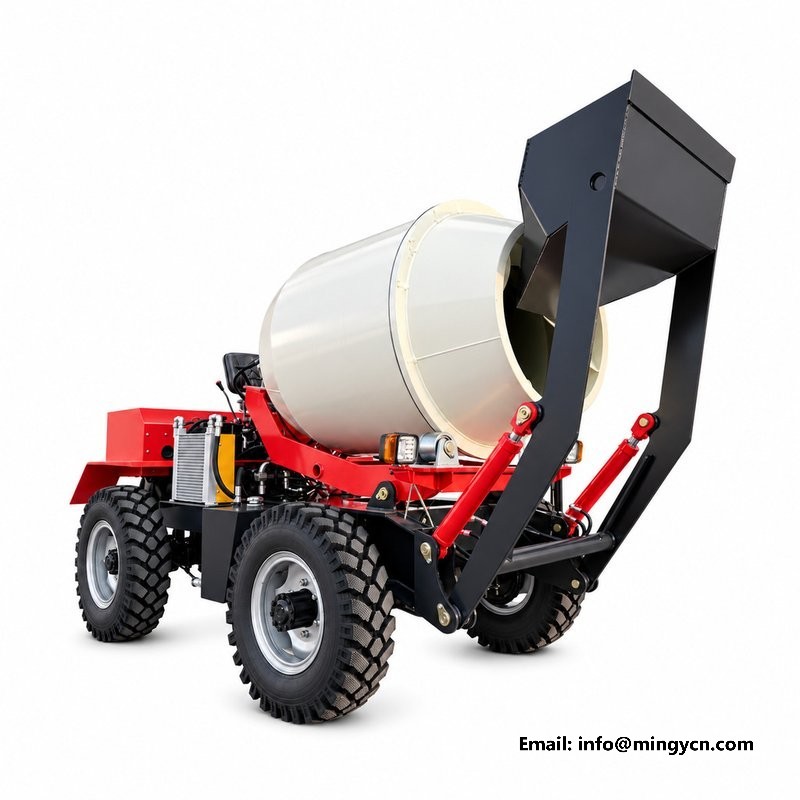
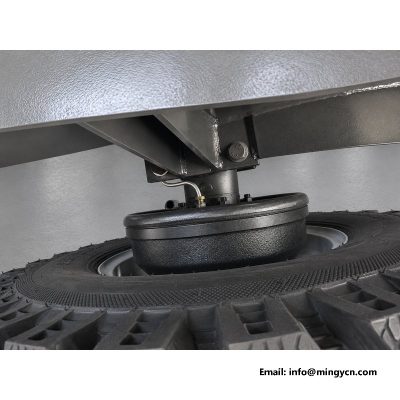
The assembly line judges the front frame at the same points a buyer can: the welds at the arm roots carry a continuous bead with dress-up passes, the gussets sit square against their parent plates without gaps, and the pivot bushings enter machined bores rather than torch-cut holes. Paint tells the same story from the outside, because thick even coverage follows prepared and primered steel. A photograph at this magnification is hard to fake and easy to compare, which is why these images are published at working resolution: a buyer comparing two suppliers can put this page beside any competitor’s equivalent shot and read the difference without a workshop.
| Loading shovel reference — 0.8 m³ 4WD self-loading mixer | |
|---|---|
| Shovel type | front hydraulic shovel on parallel box-section lift arms |
| Cycle | dig, curl, lift, dump — under a minute for a practiced operator |
| Bucket edge | bolted, replaceable cutting edge |
| Cylinders | two lift, one bucket tilt, shared pump with drum drive |
| Controls | right-hand lever cluster at the operator platform |
Figures describe the machine as supplied; the manual carries lift heights, bucket capacity and cylinder service data for the shovel as fitted.
The shovel amplifies whatever the operator asks of it, and the difference between a careful crew and a rough one shows in the steel within a season. Reading the heap is the first skill: dig where the material is loosest, keep the bucket flat until it is full rather than filling it with three scraping passes, and back the machine square out of the heap rather than turning under load. A full, level bucket loads the drum in one dump and keeps aggregate off the drum mouth ledge, where spilled material eventually finds its way into the frame gaps. The photographs in this page double as training aids for exactly these habits, because each pose shows the bucket attitude a correct cycle passes through.
Sites rarely offer a level heap beside level ground, and the bucket tilt exists for the slopes. The operator levels the bucket to the heap rather than to the machine, digs with the cutting edge square to the material, and curls before the load can slide. The arms carry the resulting side load at their wide pivots, which is the loading the boxed sections and wide spacing were sized for. What the geometry does not invite is digging downhill across the slope, where the machine’s weight feeds the cut and the bucket meets the ground edge-on; the safe habit is to reposition the machine so the dig stays square, and the machine’s size makes repositioning a ten-second move rather than a deliberation.
Shovel maintenance is a standing-height routine with the machine parked, and it takes minutes. Grease reaches every pivot from the service side; the hoses get a hand-over inspection for rub marks where they cross the arm roots; and the bucket edge bolts get a wrench check, because a loose edge that works on its bolts for a shift elongates the holes and turns a retensioning into a re-drilling. Crews that fold the routine into the same weekly walk as the axle and tyre checks keep the shovel in as-delivered condition for years, and the grease gun does more for the front frame than any component upgrade ever sold to them.
Field damage to loaders follows a short list of beginnings, and all of them are visible early. A hose that rubs wears a bright line before it bursts. An edge that lost one bolt shakes slightly at the dig before the rest follow. A hydraulic cylinder that starts weeping films the rod before it scores it. Arm roots crack, when they crack at all, from a weld toe outward, which is why the dressed beads in the photograph matter structurally and not just cosmetically. A ten-minute monthly look at these five signatures finds every one of them in its cheap stage, and the habit converts the shovel from a repair line item into background noise.
The shovel, the drum and the discharge are one production line, and the batch size is the drum’s. The bucket is sized so that one or two passes charge a batch, and the operator’s rhythm falls out of that match: dig while the previous batch mixes, lift and dump at the drum’s pause, and the machine moves material continuously without racing. Sites that hand-load the drum with a second machine while the shovel stands idle have bought the wrong geometry, and sites that stretch the cycle with half buckets are leaving machine paid for on the ground. Buyers can verify the match from the two figures — bucket pass and drum batch — printed in the same manual table, and the factory quotes them together for exactly this reason, so the arithmetic is done before delivery rather than after it, and the shovel arrives matched to the batches the site actually pours.
Yes. Loose aggregate is the designed diet, and the bucket edge handles it all day; the wear part is the edge, which is why it bolts rather than welds. Rock large enough to bridge the drum mouth is hand-picked, as on any machine of this class.
Grease at the pivots weekly, a glance at the hoses monthly, and the bucket edge when the bolts talk. That is the whole routine, and every point is reachable from the ground with the machine parked.
Measured in heaps rather than hours: months of ordinary aggregate work on abrasive ground. Flipping the edge doubles the interval, and replacements are a consumable priced accordingly.
The factory quotes pallet-fork and light-material options at order time on the same arm geometry. The hydraulics are sized for the bucket as standard, so attachment choices belong in the order conversation rather than the field.
Contact MINGYI Machinery for the current 0.8 m³ self loading concrete mixer specification, shovel options and a formal quotation for your market. E-mail: sales@mingycn.com | LINE (ID): mingyicn
For the frame these arms mount to and the hydraulics that feed them, see Reinforced Axle 0.8m3 Self Loading Mixer for Unpaved Sites and the chassis and hydraulic pages in the mini self loading concrete mixer category.