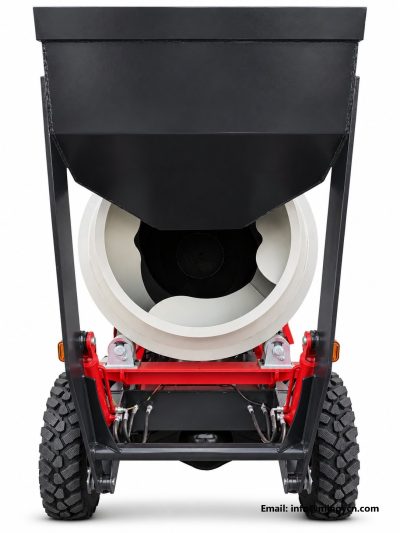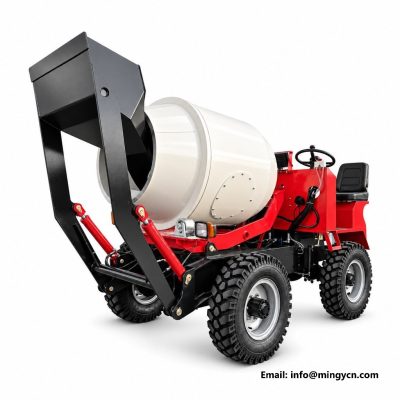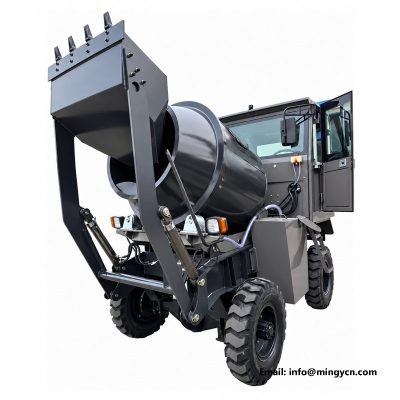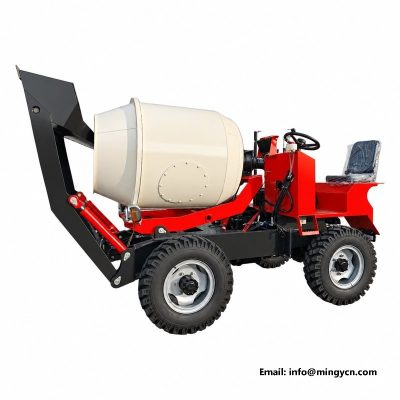
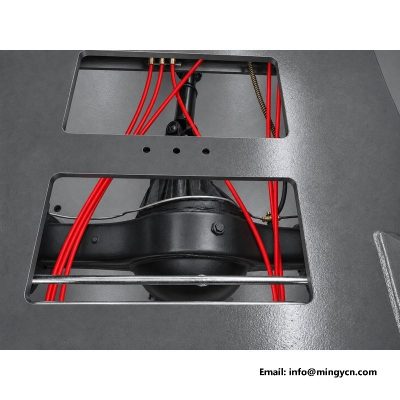
Reinforced Front Drive Axle and Deep Lug Traction Tyres Keeping the 0.8 m3 Self Loading Mixer Moving on Soft Ground
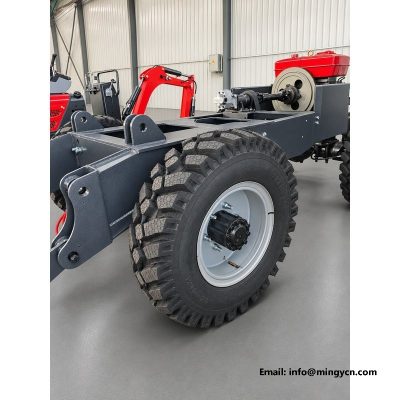
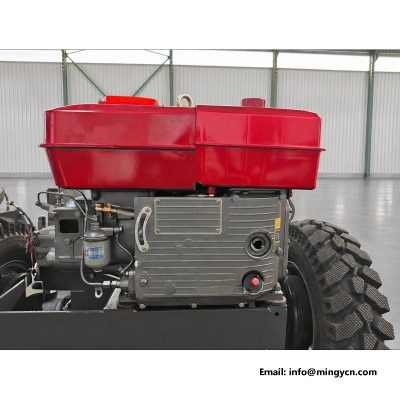
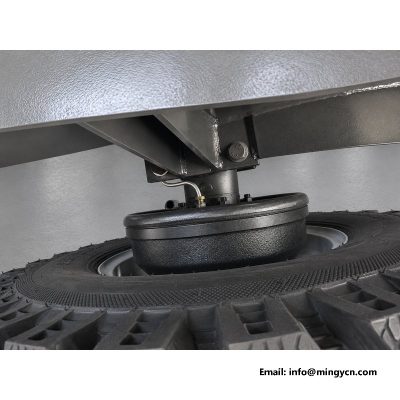
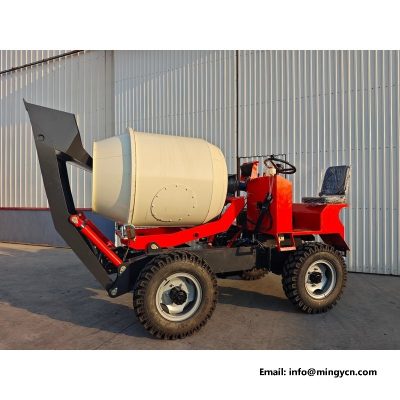
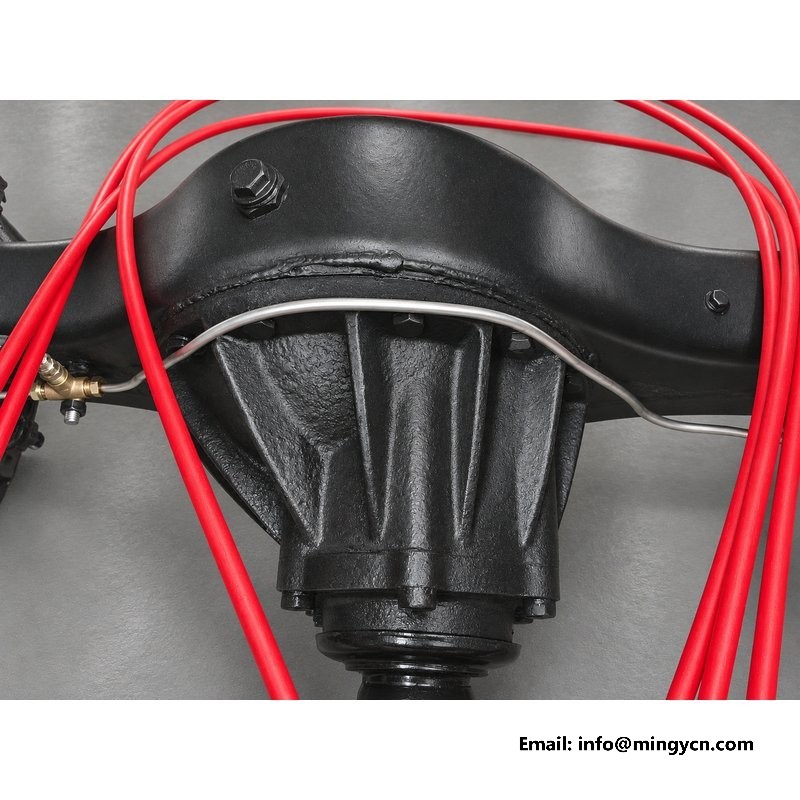
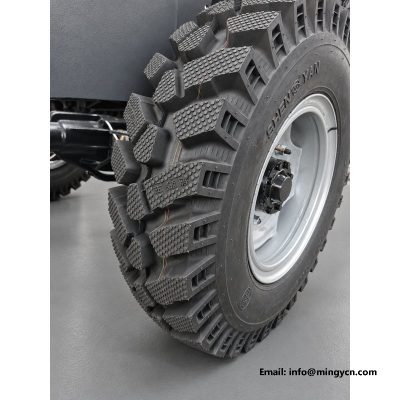
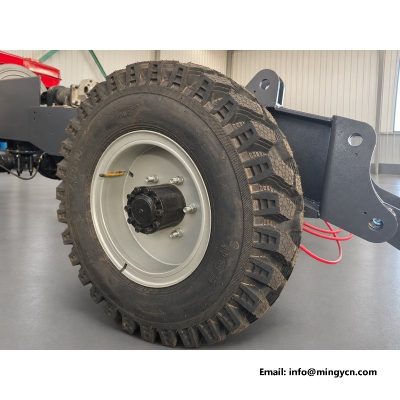
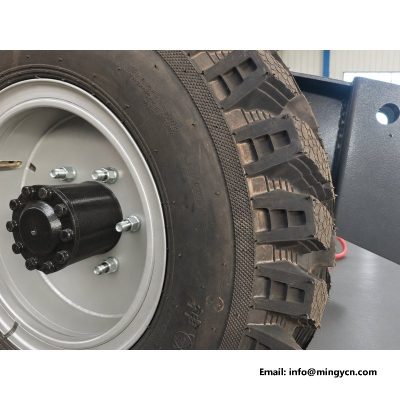
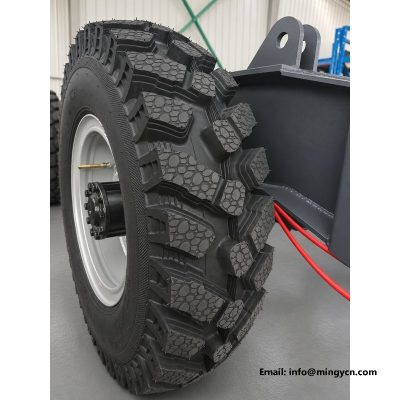
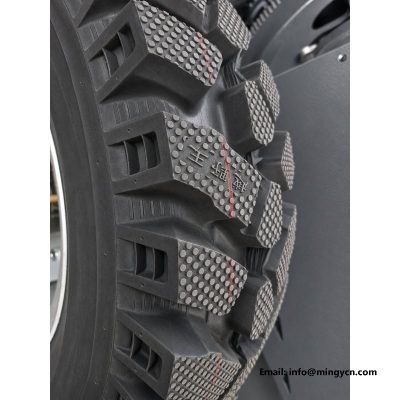
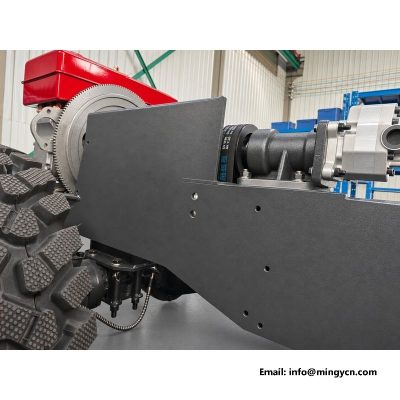
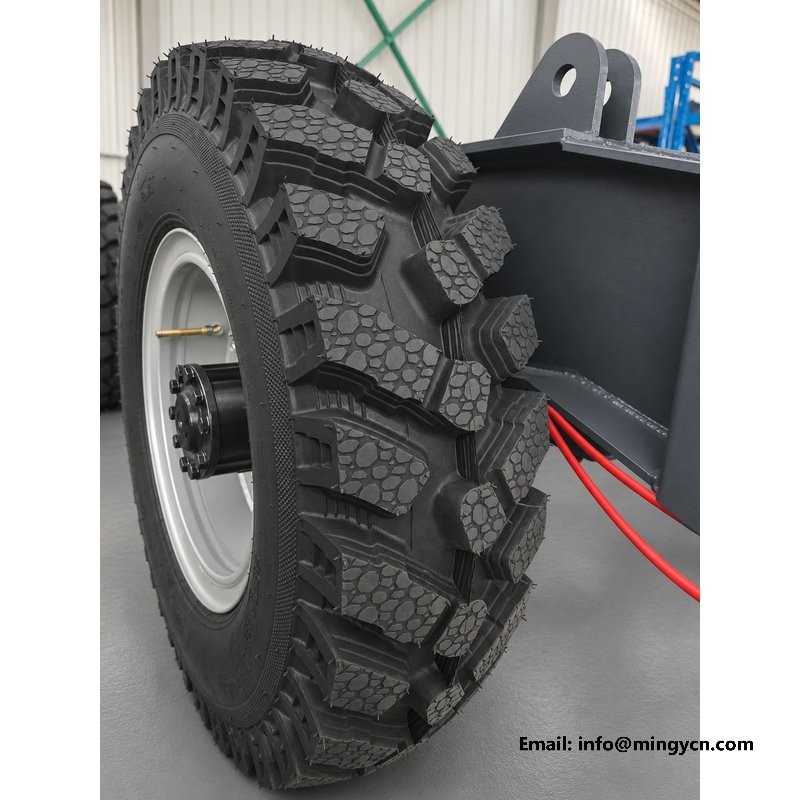
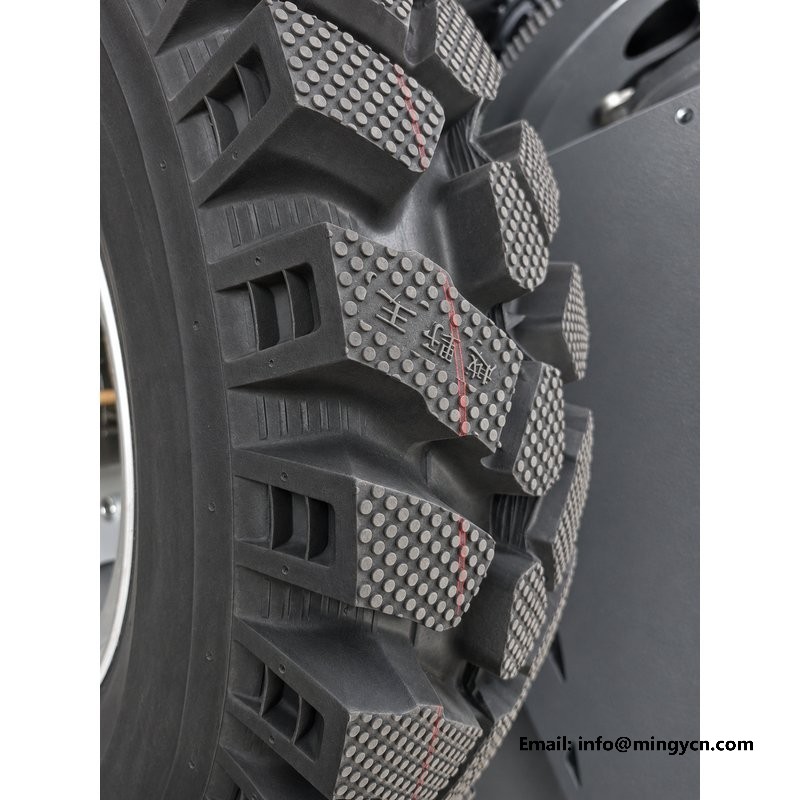
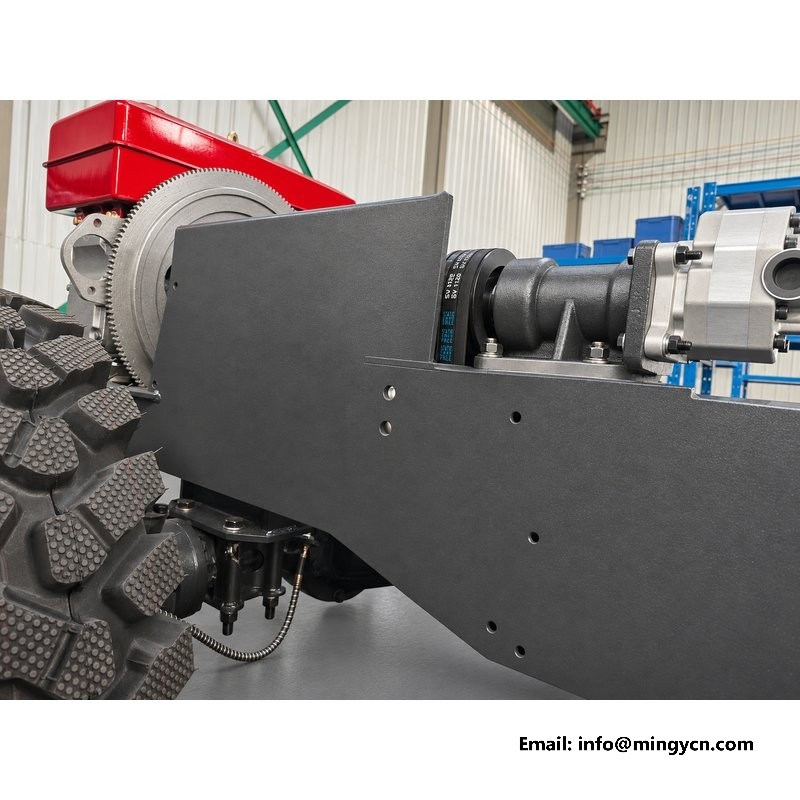
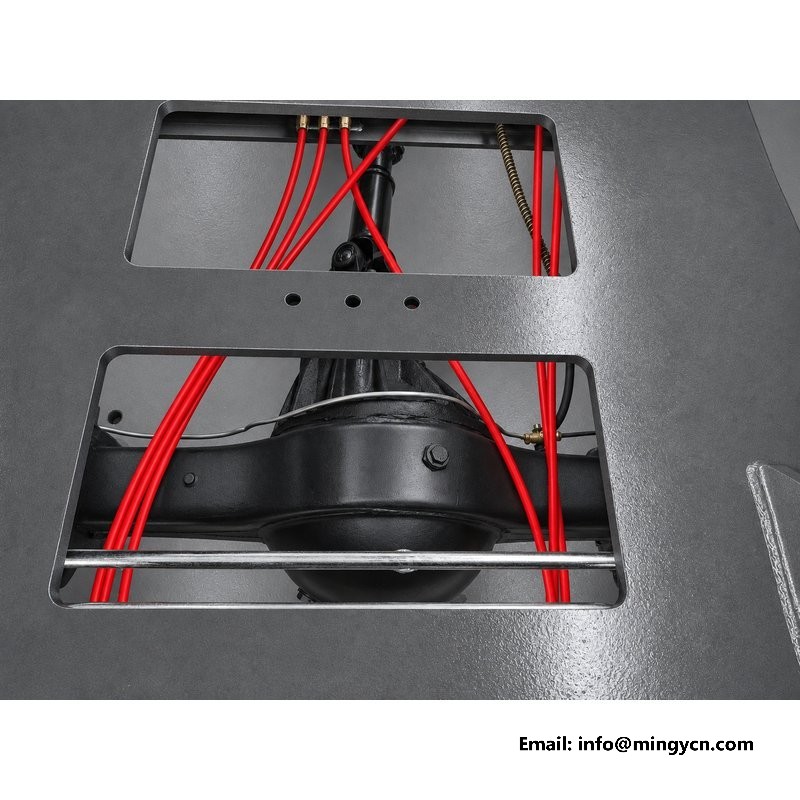
Soft ground is where quotations meet reality. A mixer that loads, mixes and discharges beautifully on a paved yard still has to cross the sand, paddy-edge clay and churned approach that real sites put between the road and the pour. The photographs in this page show the parts of the 0.8 m³ self loading concrete mixer that exist for exactly that crossing: the reinforced front drive axle, the deep lug tyres it turns, and the tread pattern in macro, doing its work at ground level.
The sections below explain how the front axle is strengthened and why, what the wide tyre footprint does on yielding ground, how the whole traction system behaves when the wheels start to dig, and what operators should and should not attempt when the site is softest. A closing section lists the questions worth putting to any supplier before the order is signed.
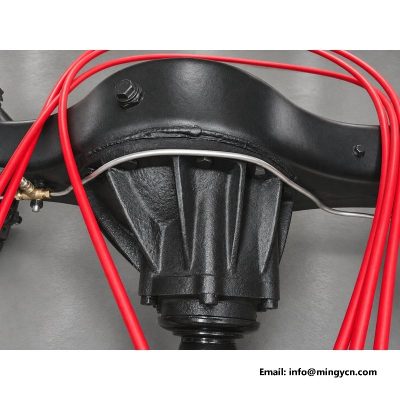
The front axle of this machine is driven, steering and loaded all at once, and its study tubes and flange castings reflect that triple duty. Reinforcement concentrates where the bending moments live: at the tube-to-centre welds, at the flange roots, and at the king pin bores that carry the steering loads. The section thicknesses are those of the heavy-duty variants of the axle family rather than the light ones, because a front axle failure on a far-away site is not a repair, it is a project.
Buyers can verify the claim with a tape rather than trust: the tube diameters and flange castings are visible in the photographs, and a supplier meeting should invite the comparison against any alternative being quoted.
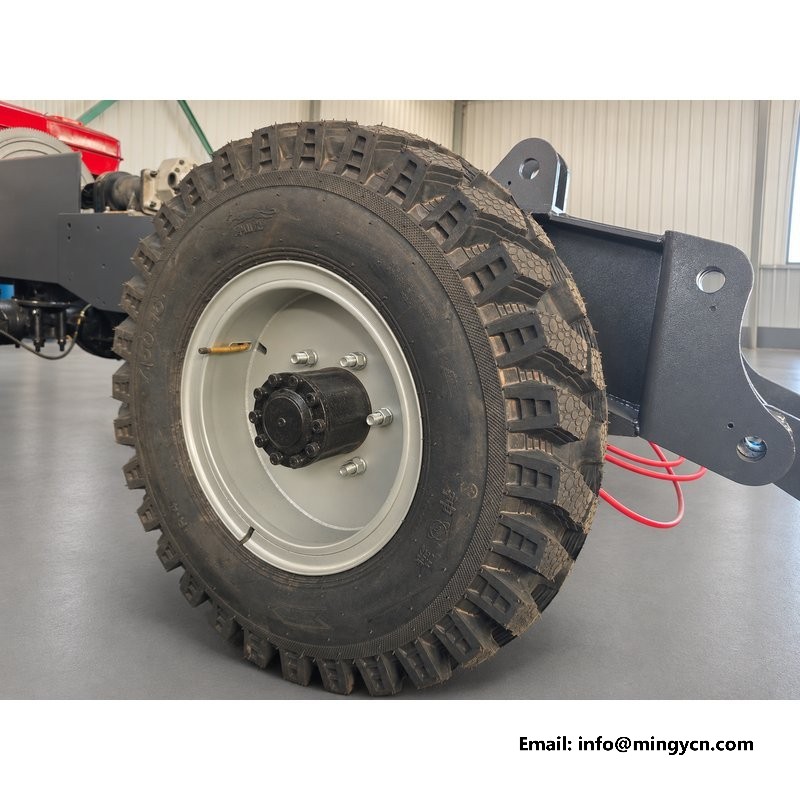
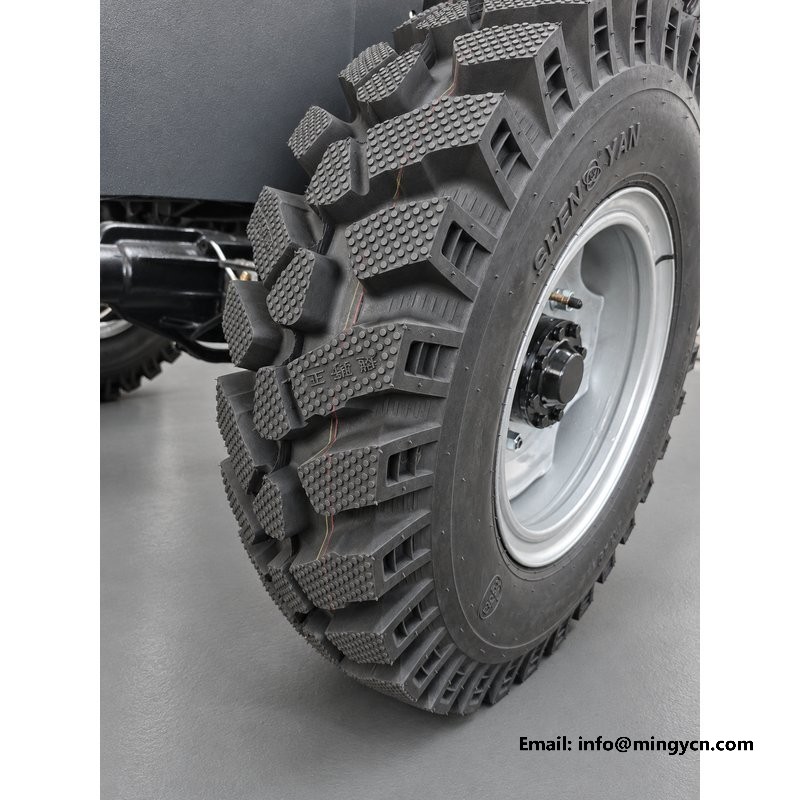
On yielding ground, flotation is a function of footprint. The wide front section presses a broader, shorter contact patch into the surface, and a broad patch sinks less for the same load, which matters because every centimetre of rut is rolling resistance the diesel must climb out of. The rear wheels then run partly in the front wheel tracks, where the ground has already been compacted once, and the machine as a whole fights less ground than its weight suggests.
This is also why pressures are set lower for site work: a carcass run soft lengthens the footprint further, and the deep lug pattern opens its grooves to find the firmer layer beneath. The system — width, pressure and pattern — works as one, and each part of it is visible in these photographs.
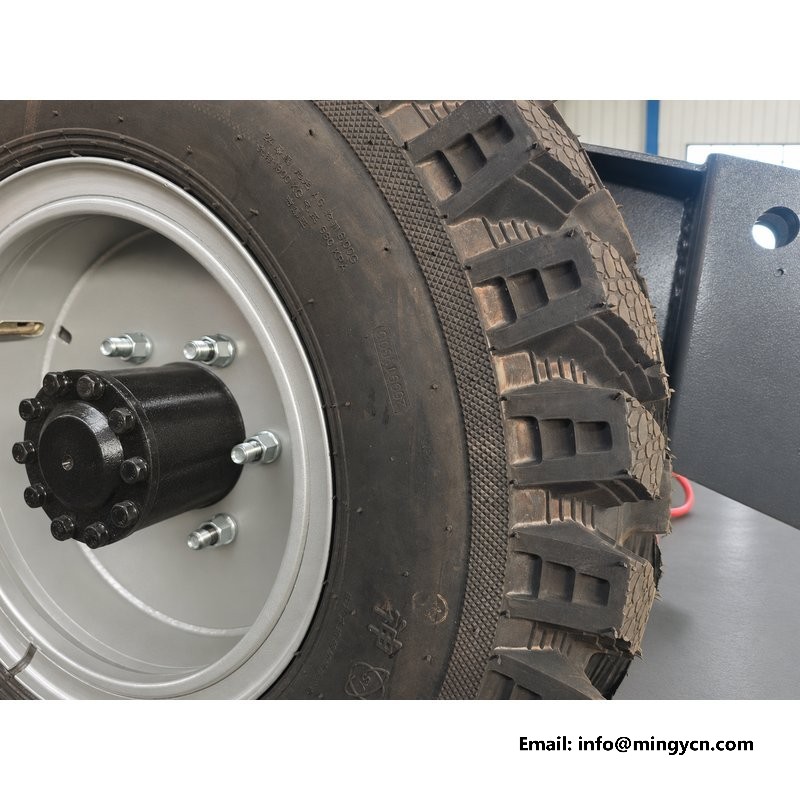
The first moments of a soft patch decide whether the machine walks through or buries to the axles. The lug blocks bite down through the loose skin; as torque rises they shear the material behind each block rather than packing it in front, and the open grooves give that material somewhere to go. A packed pattern, by contrast, builds a smooth mud surface of its own and spins inside it.
The operator’s part is to feed torque smoothly and stop before the spin deepens the hole. Once a wheel has dug in past the crown of the tread, the machine is carrying its weight out of a pit it made, and even the right tyres work at a fraction of their grip. Momentum, gentle throttle and steering kept straight through the soft length are the habits that keep the axle out of trouble.
The difference between the two outcomes is visible in the photographs. A wheel that has worked correctly leaves a printed pattern in the surface, each block stamped clean, the grooves still open behind it. A wheel that has spun leaves a polished smear and a growing rut, and the rut is the receipt for the grip that was available and not used. Teaching new operators to read those two signatures in their first week saves more tyres than any specification change made later, and it costs only the habit of glancing at the wheel tracks after each crossing of the day.
Saturated clay at a paddy edge is the most common ground to stop a light machine in the markets this mixer serves. The pattern helps most when it can reach beneath the slick layer, which it usually can at a paddy shoulder where firm ground sits a few centimetres down. Where the clay runs deep, the honest answer is that no tyre saves a bad plan: the machine crosses at the shoulder, not through the middle, and the shovel carries material rather than the wheels carrying the machine.
Sites that regularly face deep soft crossings solve it with mats or a load of coarse stone laid ahead of the route, and the mixer’s own bucket is often the tool that lays it. The axle and tyres are built to attempt the reasonable crossing, not the heroic one.
Working soft ground loads the front axle differently from road work: constant small steering corrections and torque reversals work the king pins, the track rod ends and the hub bearings harder than kilometres do. The weekly grease route covers all of them, and the monthly walk adds a check for play at each wheel by rocking it at the twelve and six o’clock positions. Play felt there means hub bearing adjustment, a half-hour job, and catching it early is the difference between adjustment and replacement.
Hub seals deserve the same attention on machines that wade, because soft ground work often means water up to the hubs, and a seal that has passed water passes milky oil at the next check.
Three questions sort the market quickly. First, is the front axle driven, and from which axle family, because a driven front axle from the 212-type lineage has parts anywhere. Second, what are the wheel sections and pressures, because floatation is decided there. Third, may the machine be tested on soft ground before shipment, because a yard that lets a buyer drive through a sand bed is a yard with confidence in its driveline. A supplier who answers all three without hesitation has built the machine for the ground you described; evasive answers are themselves information, and collecting them costs nothing before the order is signed.
Everything promised in those answers should appear somewhere in the photographs the factory supplies, and the pages in this series exist so that it does.
| Front axle and traction reference — 0.8 m³ 4WD self-loading mixer | |
|---|---|
| Front axle | reinforced driven steering axle, heavy-duty sections |
| Front fitment | 8.25-16 deep lug, site pressures per manual |
| Rear fitment | 7.50-16 deep lug, tracking the front ruts |
| Service focus | weekly grease to king pins, rod ends, hubs |
Values describe the machine as supplied; the manual carries pressures, torque figures and service intervals for the axle as fitted.
Soft-ground trouble is mostly planned at the gate, not suffered at the puddle. A five-minute walk with the question “where will this machine sink?” finds the paddy shoulder, the unmade service road, the trench backfill that never compacted and the shaded strip that stays wet all day. Mark the crossing points, decide where the machine will stand to load and to pour, and keep those standing points on the firmest ground available. The mixer’s traction system is designed to cross marginal ground, not to park on it; a machine that works from a bad standing spot converts its best feature into its worst day. Supervisors who walk the route first spend five minutes and save an afternoon, and the habit costs nothing but the walk.
The front shovel gives this machine something no tractor towing it can offer: it carries its own ground improvement. A bucket of coarse stone or hard-core dropped and spread ahead of a soft length makes a crossing in minutes, and the machine drives over its own road. The same trick firms a standing point before a long pour and tops up a track that the day’s traffic has churned. Crews working soft sites treat the shovel as the first recovery tool and the winch-and-tow conversation as the second, and the order of that list is why the machine so rarely needs the second.
On a two-wheel-drive machine, soft ground teaches drivers to keep moving and never stop, because a standstill is a burial. Four-wheel drive reverses the advice: the machine can stop, think, and start again, which means the right technique is slower and calmer. Approach a soft length straight, at steady walking pace, in the gear that needs no change halfway. Stop on firm spots, not in the soft length. Turn on firm ground where the turning resistance is low. Drivers arriving from two-wheel-drive habits need an hour of unlearning, and the site evidence of the unlearning is ruts that wander or a machine parked in the one soft place on the job.
A site that was firm on Monday can be a different material after a night of rain, and rain-season working is a planning rhythm as much as a traction problem. The practical adjustments are known to any crew that has worked a monsoon: pour from the road side where the ground has never been disturbed, keep the day’s travel to routes already compacted, and let the first hour of morning sun dry the approaches before the day’s first crossing. The machine’s part in the rhythm is its flotation and its shovel; the crew’s part is not asking the machine to re-cross freshly churned ground when a longer dry route exists. Machines worked this way finish rain seasons with their tyres, axles and schedules intact.
Steel chains multiply grip on ice, frozen ground and wet log-yards, and they ruin tyres and ground everywhere else. On soft mud and sand, chains dig the pattern’s clearance away, pack the grooves solid and chew the block edges, which is the opposite of what the deep lug design does. The rule is material: hard slippery surfaces take chains, soft yielding surfaces take the pattern at site pressure. Sites that see frost mornings and soft afternoons in the same week carry chains in the box and fit them for the morning run only, and the tyres pay the small toll gladly because the alternative is a schedule that stops for weather.
A maintained dyke shoulder with firm ground beneath, yes, at walking pace with the drum low. Deep saturated clay across the whole route is a job for mats or stone, whichever the shovel can lay, and the machine crosses after the route is made.
The factory quotes alternative fitments at order time, within the limits of guard clearance and driveline ratios. It is a specification decision made with drawings, not a swap tried after delivery.
Measurably, and it is free. Running the manual’s site pressure instead of road pressure on soft ground lengthens the footprint and lets the tread clean itself, which is most of the grip difference crews feel between machines on the same site.
Play at the wheel felt at the twelve and six o’clock rock test, or a new clunk when steering is reversed at low speed. Both are adjustment-stage items, and both are found by the monthly walk before they become repairs.
Contact MINGYI Machinery for the current 0.8 m³ self loading concrete mixer specification, axle reinforcement options and a formal quotation for your market. E-mail: sales@mingycn.com | LINE (ID): mingyicn
For the axles and tyres in depth, see Reinforced Axle 0.8m3 Self Loading Mixer for Unpaved Sites, the tread measurement page and the steering axle page in the mini self loading concrete mixer category.