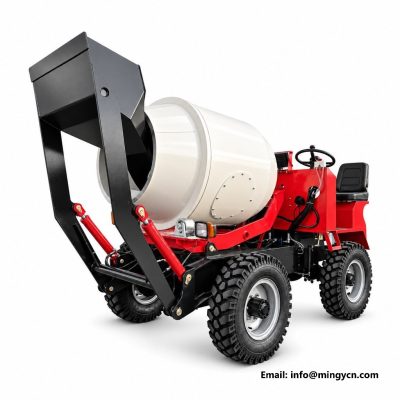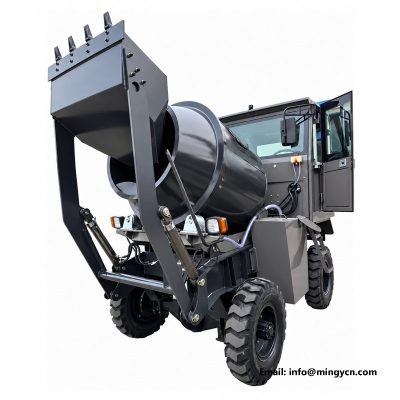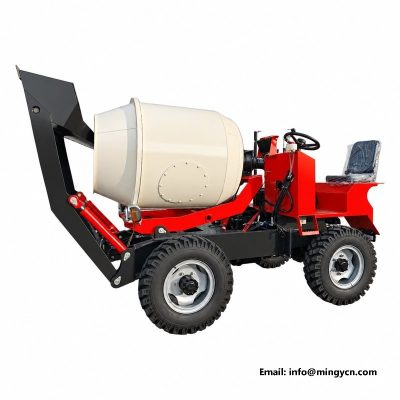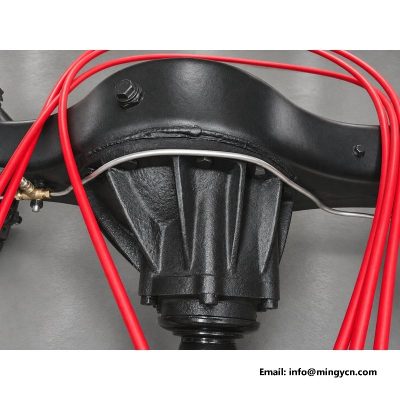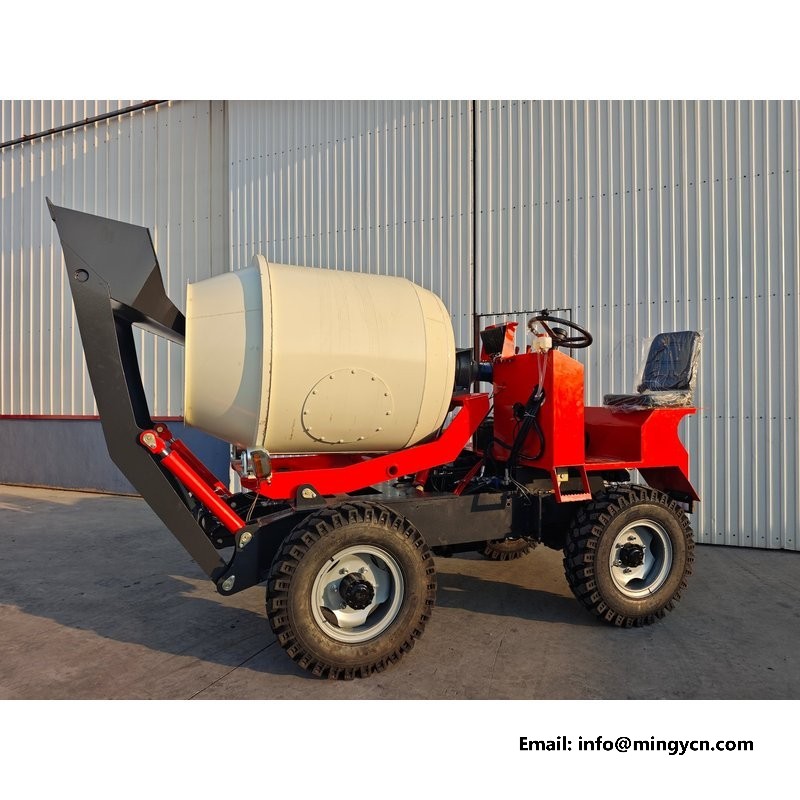
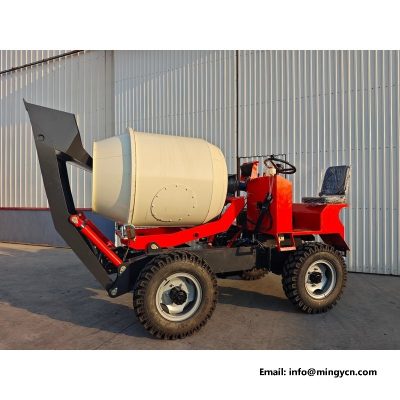
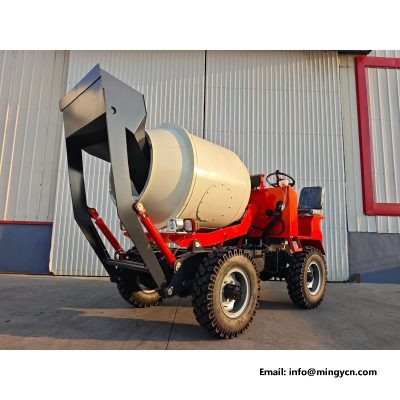
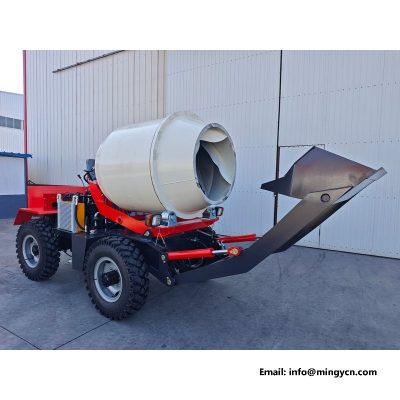
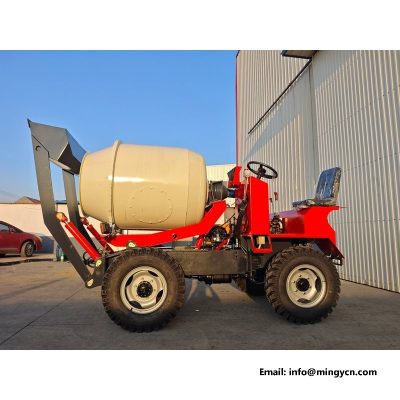
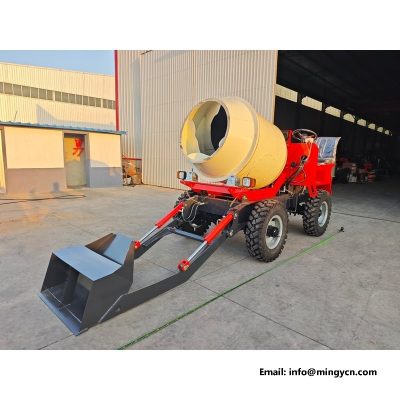
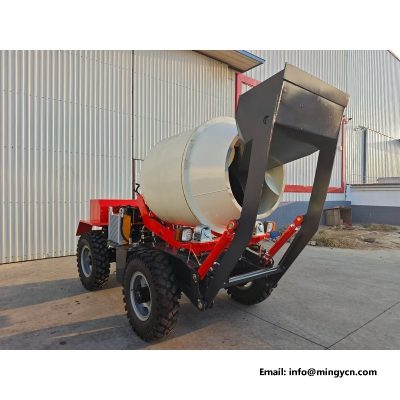
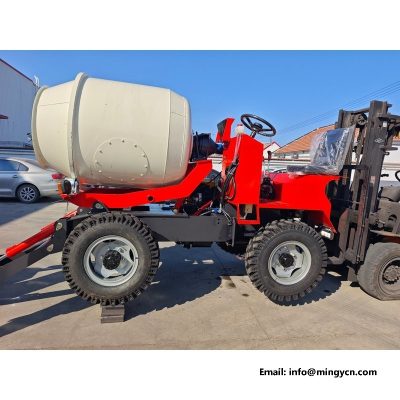
0.8 m3 4WD Self Loading Concrete Mixer Photographed at the Works Before Container Loading and Export Shipment
The last photographs a factory takes are the first ones a buyer should see. Before the 0.8 m³ 4WD self loading concrete mixer is washed, lashed and lowered into its container, it stands in the works for a final photographic record: running, finished, and photographed from the angles that document what is being shipped. This page shows that record and explains what each image verifies, because the gap between “the machine we ordered” and “the machine in the container” is closed exactly here, before the doors are sealed.
The sections below walk through the pre-shipment sequence — function test, clean-down, documentation and loading — and tell a buyer which photographs to request, which documents should travel with the machine, and what to do in the first hour after the container opens at the other end.
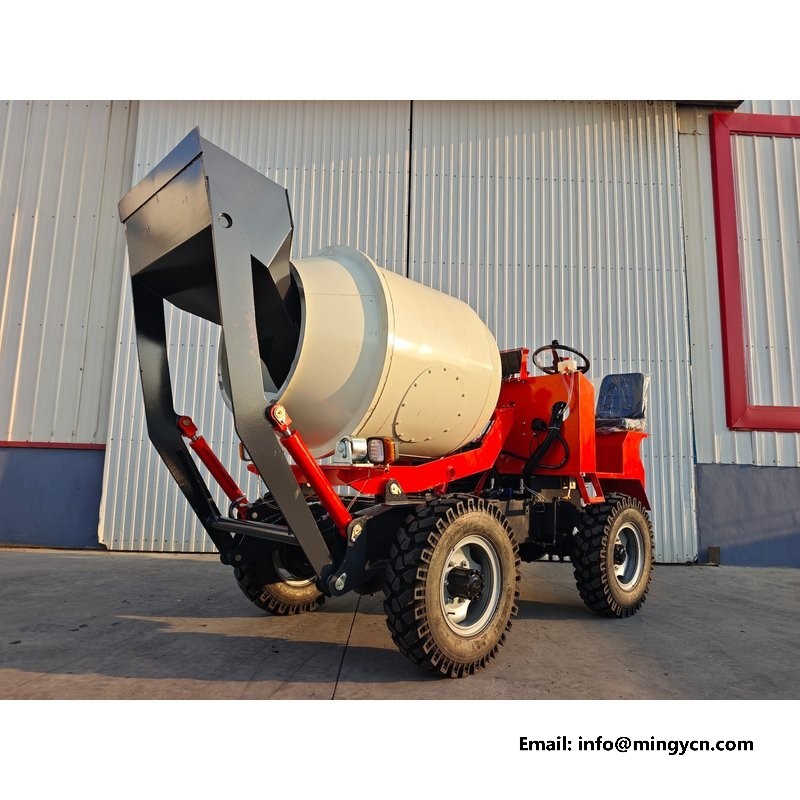
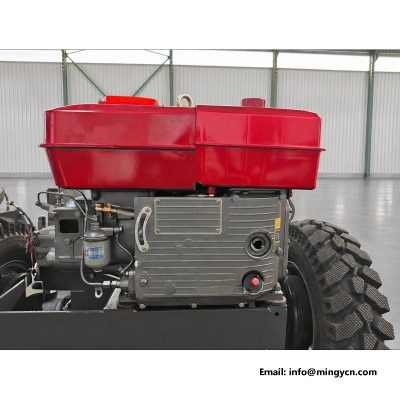
The pre-shipment sequence starts with the machine running, not standing. The diesel starts on the button cold, the drum turns at both speeds, the shovel lifts and dumps through its full cycle, the machine drives forward and back and steers through full lock, and the water system pumps against its rated load. The photograph records the running check mid-sequence. A video of the same test accompanies the images in the shipping file, and together they are the factory’s statement that the machine that left the works is a working machine, not a photograph of one. The test is run on the machine’s own fuel and fluids, from its own tank and filters, so what runs at the works is exactly what will run at the site after the journey.
Buyers arranging third-party inspection should hand the inspector this exact list; it is short enough to watch in an hour and it exercises every system the machine owns.
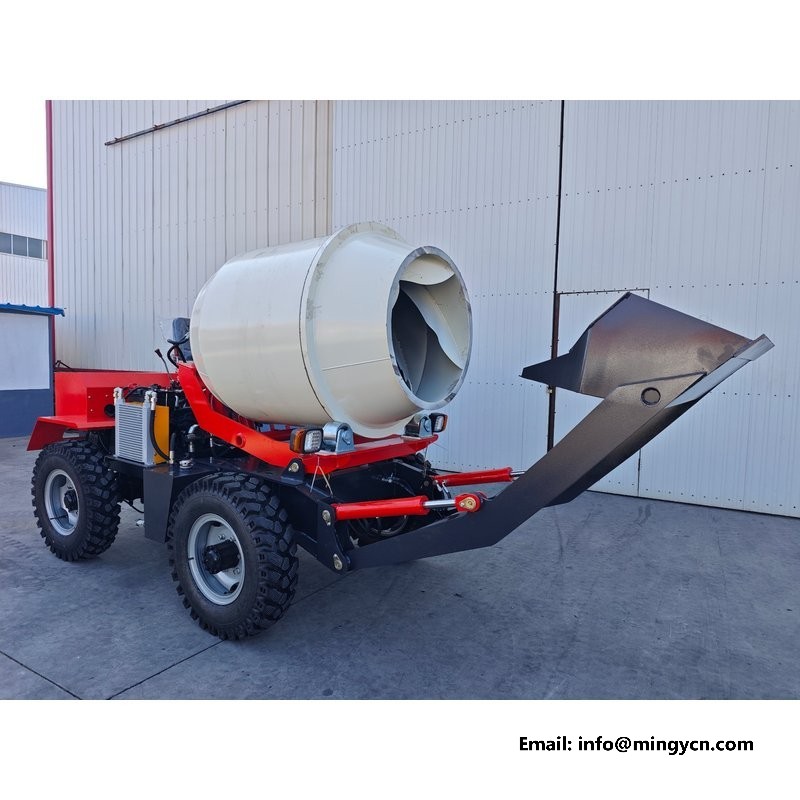
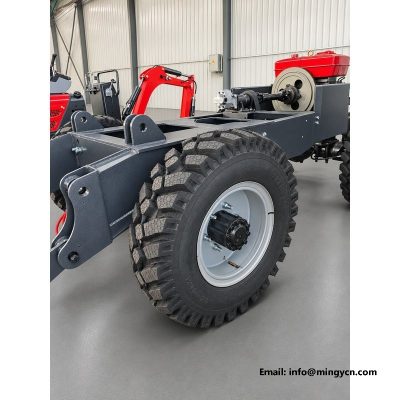
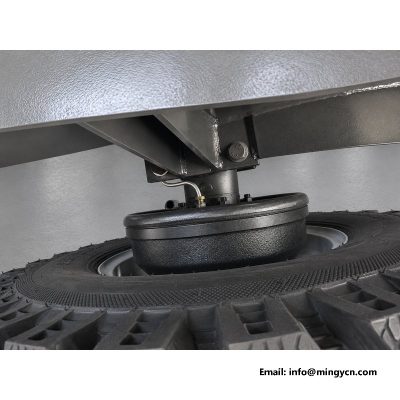
The wash before photography is not cosmetic. Cleaning the machine is the last inspection the line performs: mud and dust hide leaks, cracked welds and loose fittings, and the wash pad is where they surface. A machine photographed clean is a machine whose underside, frame and hydraulic points have been looked at with water and light before they are packed away for weeks at sea. The dried, clean machine in the photographs is therefore also a document — it shows the condition at loading, and any transit damage arriving at the other port reads against a clean baseline rather than an argument.
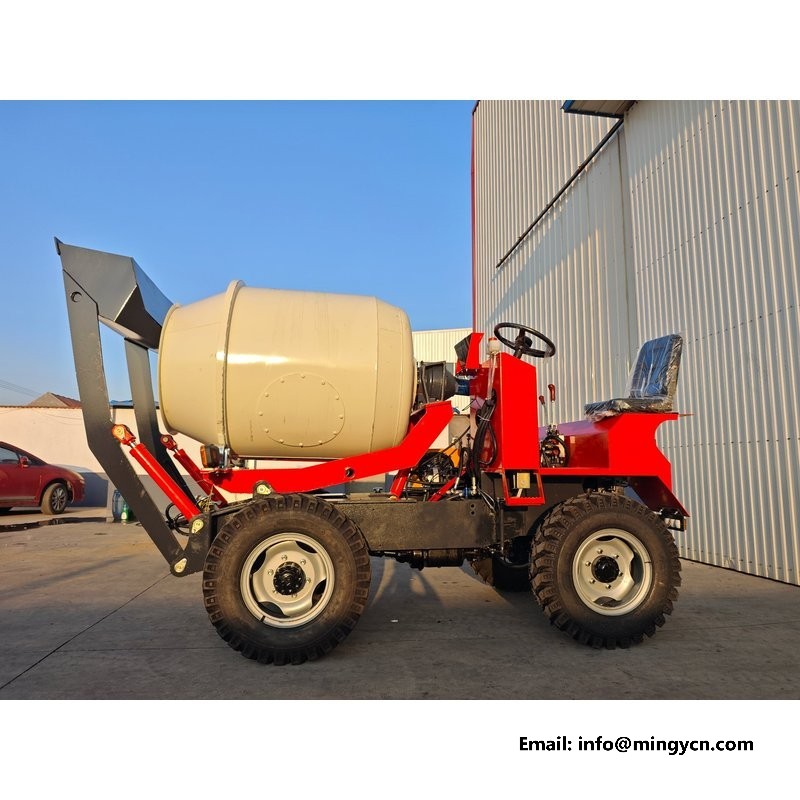
The paper travels with the steel. The pack contains the operation and maintenance manual in English, the parts book with exploded views, the engine documentation, the packing list, and the commercial invoice set the customs process needs. Photographing the pack on the platform before sealing is a habit worth keeping: when a container is opened in another country and someone asks where the manuals are, the answer is photographed before the doors closed. Digital copies of the whole pack travel by e-mail in parallel, because paper and containers do not always arrive on the same week.
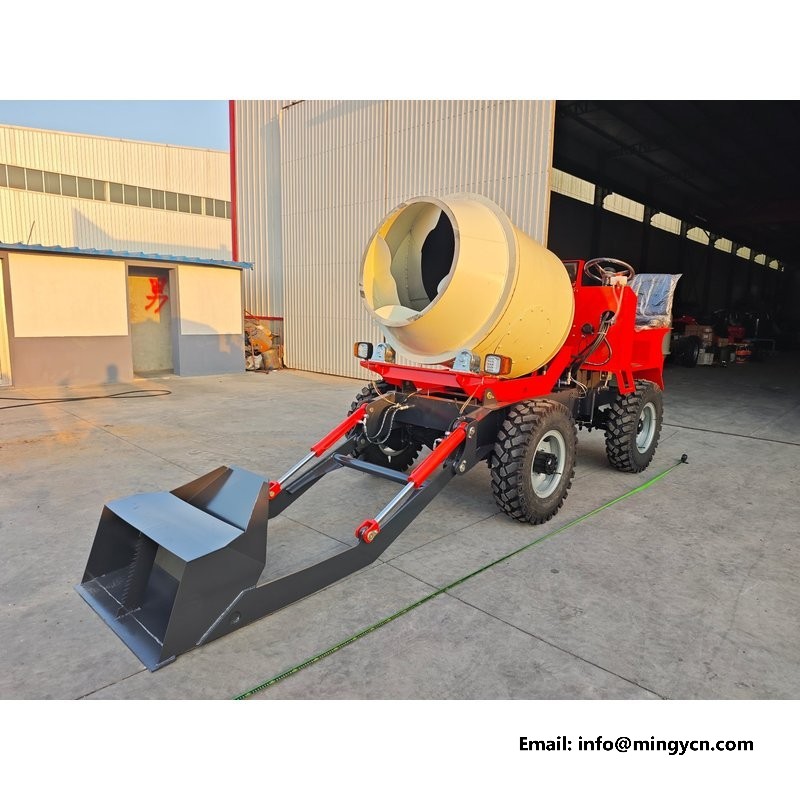
Loading is engineering, not muscle. The machine drives in on its own wheels, sits on timber chocks with the drum lashed and the chassis strapped to the container rings, and the shovel is secured against transit bounce. The photograph shows the finished lashing from the door end, and it is the image a buyer should compare across any supplier, because transit damage is rarely the sea’s fault and usually the lashing’s. Straps over structure rather than hoses, chocks under frame rather than under tyres alone, and a shovel that cannot nod on the ocean — these are the visible marks of a line that has shipped before.
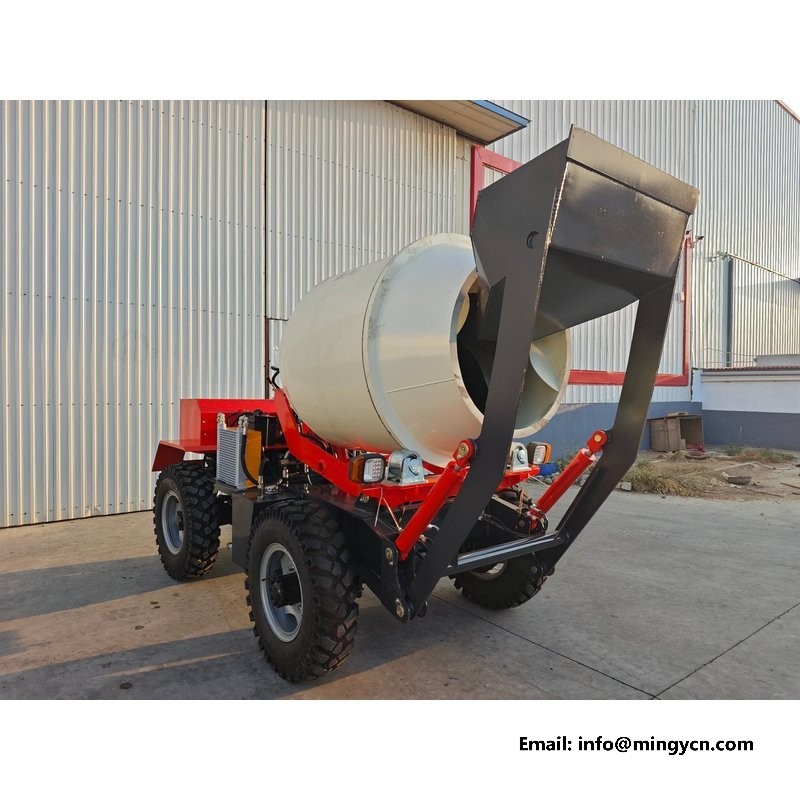
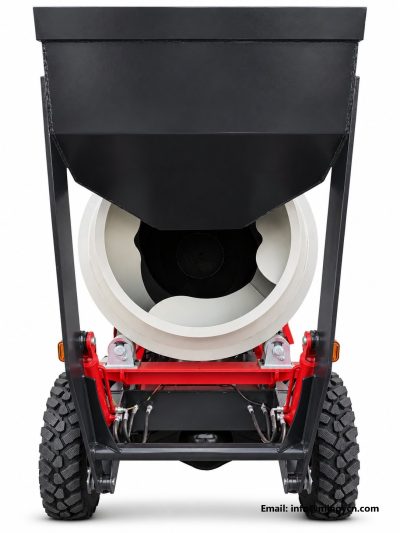
The standard set is short and repeatable: the twelve white-ground views described on the reference page, the four working photographs of the function test, the cleaned machine from each side, the documentation pack, and the lashing inside the container. Together they take an hour to produce and they answer every question that can arise between works and site. Buyers should put the set in the order as a line item rather than a hope, and any factory confident in its build agrees without negotiation — the request costs less than the argument it prevents.
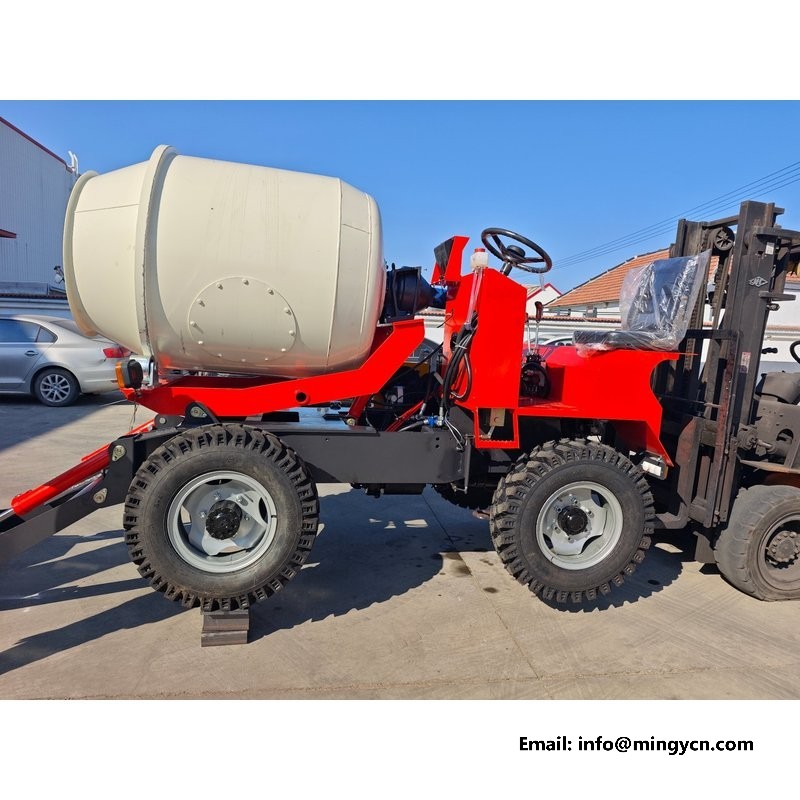
The receiving routine mirrors the loading record. Photograph the open doors before anything moves, check the lashing against the loading image, walk the machine’s faces in the same order as the twelve views, and only then unlashed and unload. Transit scuffs get photographed on the spot, against the baseline, while the container walls are still the background. The machine then gets its fluids checked, tyres pumped to site pressure, and a slow first start — the same function test it passed at the works, repeated on another continent. A receiver who follows the routine finds every transit issue while the shipping company is still accountable for it, which is a window measured in days.
The routine also assigns the right eyes to the right questions. The receiver who walks the twelve angles is checking condition; the operator who makes the first start is checking function; the site supervisor who counts the parts crate is checking the order. Three people, three checklists, one hour, and the machine moves from shipping file to working life with every step on the record. Sites that rush the first hour spend the first week finding what the hour would have found.
| Pre-shipment record — 0.8 m³ 4WD self-loading mixer | |
|---|---|
| Function test | start, drum, shovel, drive, steer, water — videoed |
| Clean-down | washed and dried before photography |
| Documents | manuals, parts book, engine papers, packing list |
| Loading | chocked, strapped, shovel secured, photographed |
| Photograph set | twelve views plus test, documents and lashing |
The exact contents of the pack and set are listed in the order confirmation, so both sides hold the same list before the machine moves.
The machine ships with its fluids at running level and its filters fresh, and the first service falls at the running-hours interval the manual states, not at delivery. What the buyer should confirm in the pack is the first-service kit when it is ordered with the machine: engine oil and filter, hydraulic return filter, fuel filters and the grease tubes sized to the lubrication points. Packing the kit with the machine means the first service happens on schedule in a place where genuine parts may be weeks away, rather than waiting on a shipment of small items that cost little and stop much. The photograph of the parts crate beside the machine is part of the pre-shipment set for exactly this reason: the kit is verifiable before the doors close.
The sequence runs smoothest when responsibilities are written, and the order confirmation does that in a paragraph. The factory tests, cleans, photographs, documents and loads. The buyer or their agent confirms the photograph set, approves the loading, and arranges marine survey where the contract calls for one. The freight forwarder collects documents and moves the box. Nothing in that chain requires trust in place of records, because every step leaves a photograph or a signature, and the machine arrives with its own history attached. Buyers importing for the first time find this paragraph the most useful page in the file, because it names each hand the machine passes through.
Marine insurance pays on evidence, and the pre-shipment record is that evidence assembled in advance. The clean-machine photographs fix the condition at loading, the lashing image fixes the securing method, and the opening routine at destination fixes the condition at arrival. A claim filed with those three records moves at document speed; a claim filed with memory and argument does not move at all. Buyers should also photograph the container number and seal at both ends, because the seal record ties the box to the journey, and insurance conversations begin with that number rather than with the machine.
Containers and pour dates meet rarely by accident, and the shipping conversation belongs in the order, not after it. Sea time to most ports in the export markets runs in weeks, customs in days, and inland delivery in whatever the roads allow — so the works date is planned backwards from the first pour, with margin for the port that always has one more inspection. Rain seasons at the destination matter as much as sailing dates, because a machine that arrives onto a site cut off by mud simply waits in its crate, and the crating is specified for that possibility. The factory holds finished machines for scheduled sailings as part of the order terms, and the pre-shipment record is completed at the works even when the container follows later, so the machine waits documented rather than waiting to be documented.
Three questions arrive with nearly every first order. How is the machine off-loaded at destination — by crane or by ramps, and what does the site need ready? The manual prints the weight and lifting points, and a loaded truck or a pair of ramps answers the rest. Who clears customs — a named clearing agent on the buyer’s side with the document pack e-mailed ahead, which is why the pack travels digitally too. What if something is missing at opening — the packing list and the loading photographs resolve it in one e-mail, which is the system working rather than failing. A fourth arrives from buyers in wet climates: what protects the machine inside the box, and the answer is the desiccant and spray protection noted on the packing list. None of the three needs special expertise; all three run on the records this page describes.
The pre-shipment routine is also how a supplier earns the second order. A buyer who received exactly the machine in the photographs, with the documents that were promised and a parts box that matched the packing list, has one question left for the reorder: how soon. Fleets grow from this loop, and the factory grows with them, which is why the record standard is applied to the smallest order as carefully as to a dealership container. The machine in this page’s photographs is somebody’s first, and it was treated accordingly.
Yes. The test is run on a scheduled call for buyers who want to watch, and the recording ships regardless. Third-party inspectors are welcome to attend in person.
The loading photographs and lashing record settle responsibility the same day: damage against a documented lashing is a carrier claim, and damage against a documented machine is a factory conversation. The photograph set exists precisely so that neither question is ambiguous.
The consumables box ordered with the machine travels inside, strapped beside the chassis, listed on the same packing list. Larger spare orders ship as separate packaging in the same container where space allows.
One working day at the works: test in the morning, clean-down and photography after, loading and sealing the same afternoon. The machine is photographed, packed and documented without standing between steps, and the completed record ships to the buyer by e-mail the same evening.
Contact MINGYI Machinery for the current 0.8 m³ self loading concrete mixer specification, the pre-shipment record standard and a formal quotation for your market. E-mail: sales@mingycn.com | LINE (ID): mingyicn
For the machine this record ships, see Reinforced Axle 0.8m3 Self Loading Mixer for Unpaved Sites and the twelve-angle reference page in the mini self loading concrete mixer category.