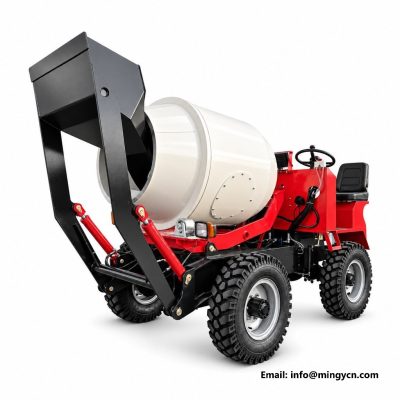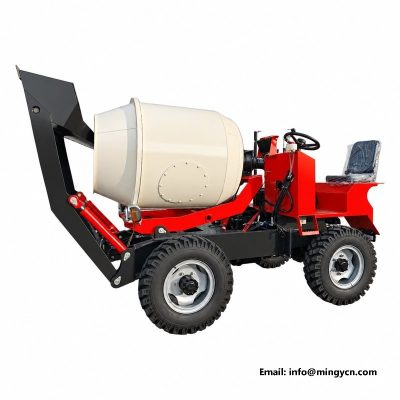
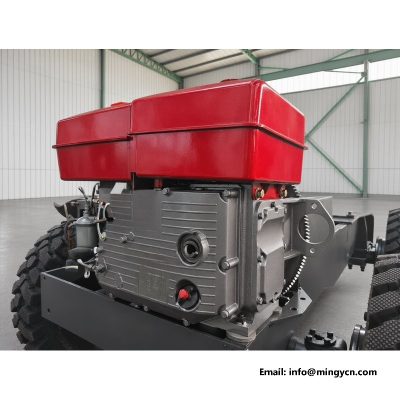
25 Horsepower Single-Cylinder Water-Cooled Diesel Engine Installed on the 0.8 m3 4WD Self Loading Concrete Mixer
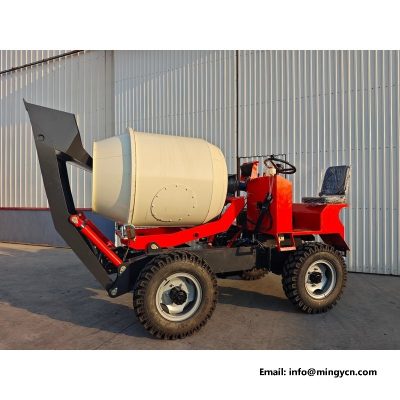
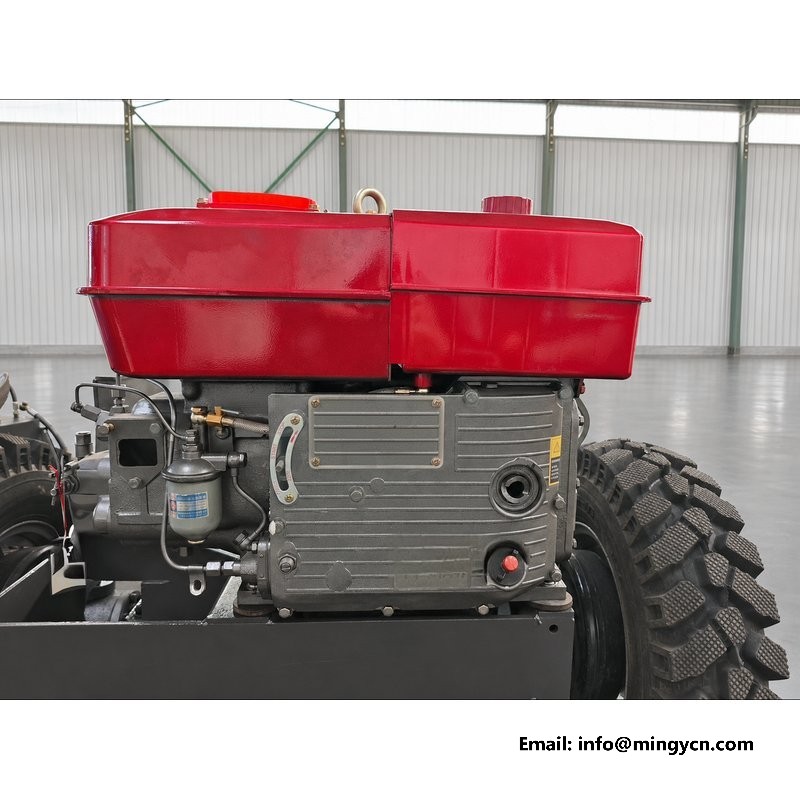
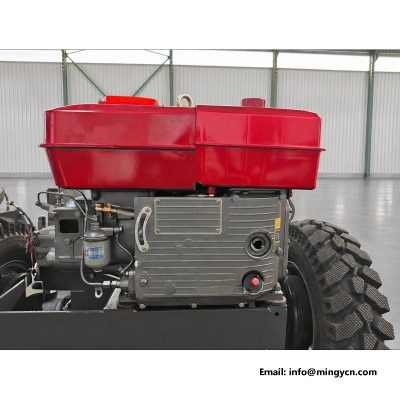
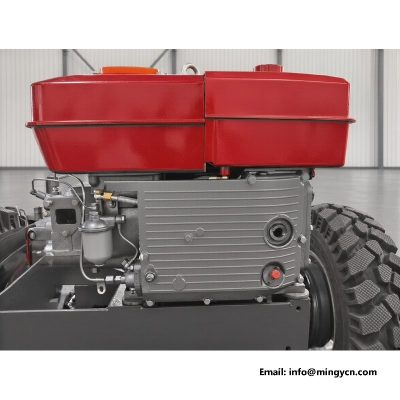
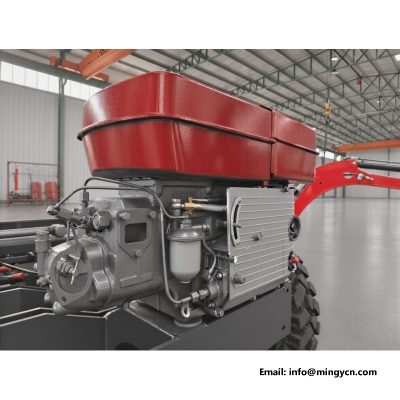
The engine is the heartbeat of a self-loading mixer, and on this machine it is an engine any village mechanic already knows. The 0.8 m³ 4WD self loading concrete mixer is powered by a 25 horsepower single-cylinder diesel of the type that has kept small agricultural machinery moving across Asia and Africa for decades. The photographs in this page show the engine as it is installed: the nameplate data, the starting controls, the fuel and lubrication points, and the layouts that make daily checks a two-minute job rather than a workshop session.
The sections below cover what the engine specification means in working terms, why a single-cylinder layout was chosen for this class of machine, how starting behaves in hot and cool seasons, and what the operator checks daily, weekly and at the service interval. The nameplate, the cooling and the starting arrangements each get their own section, because those are the three places engine questions begin on a working site. Every claim is tied to the photographs on this page, which show the engine as installed on the production line.
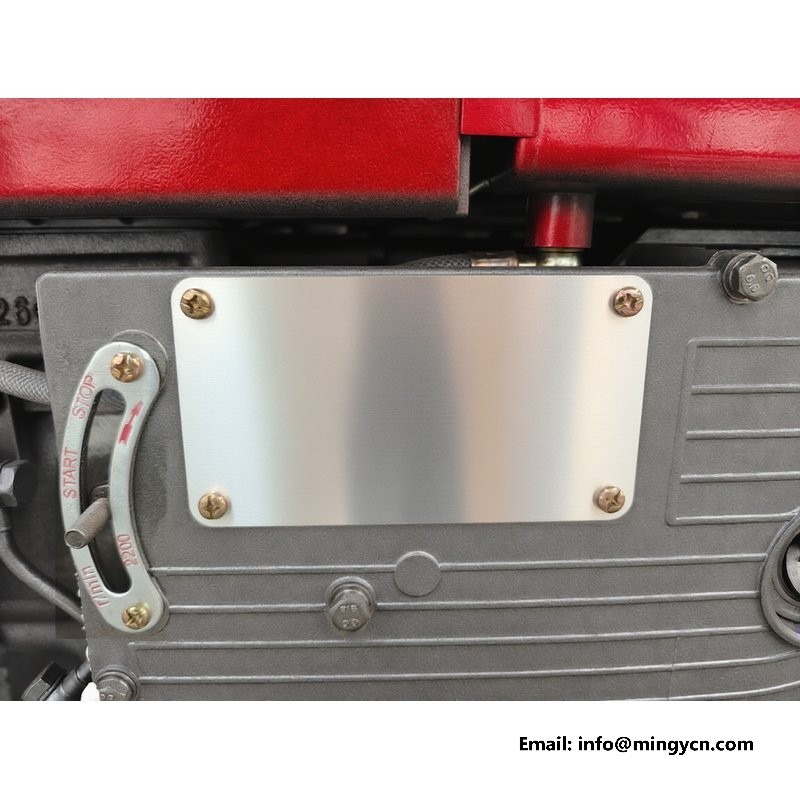
Twenty-five horsepower at the flywheel is the honest figure for a machine that mixes 0.8 cubic metres, drives four wheels and lifts a loaded shovel, and it is sized to do all three with margin rather than at the limit. In working terms the engine carries the drum at mixing speed while the machine crawls to the pour, drives the shovel through its cycle without stalling on a full bucket, and holds road speed between sites with the drum turning. The torque curve matters more than the peak figure: a single-cylinder diesel of this type makes its pull low down, where a loader works, rather than at speeds the machine never sees. The reserve shows whenever the shovel bites into a heap that rain has packed harder than loose aggregate, which is exactly the moment a marginally sized engine asks the operator to wait.
Buyers comparing quotations should read the engine rating with the duty it is given. A bigger engine on the same drum adds fuel consumption and weight without adding batch, because the drum and the hydraulics set the pace.
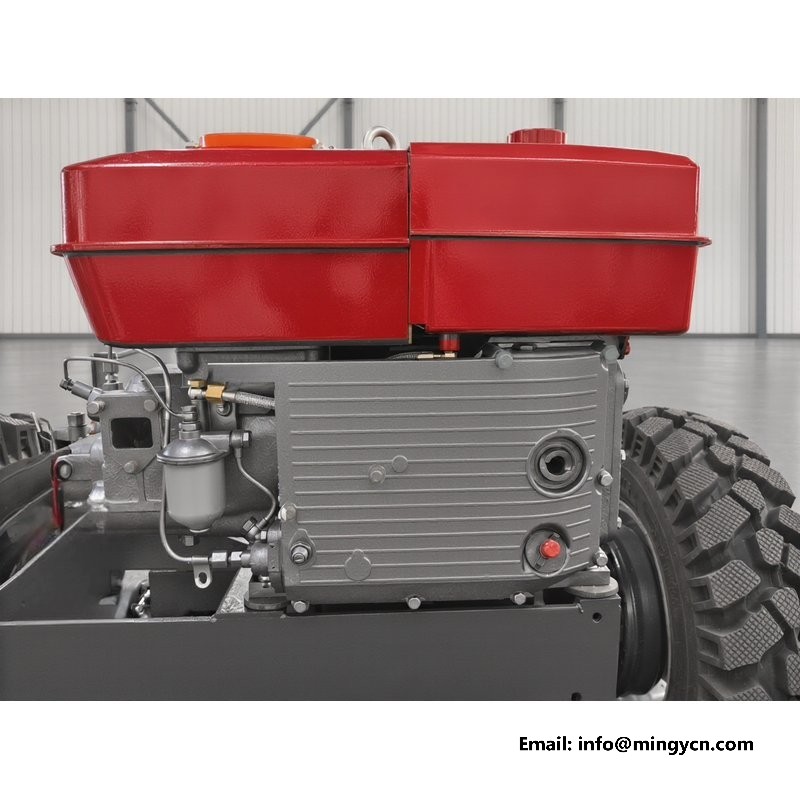
The single-cylinder layout is chosen for the same reasons it dominates small agricultural diesel everywhere. One cylinder means one head, one injector, one set of valve gear — every wear point sits in the open, reachable with hand tools on the machine. Parts are stocked in every market town in the regions this mixer serves, because the engine family has run pumps, generators and tractors for decades. A mechanic who has never seen this exact mixer can still service its engine from memory.
The trade-offs are known and accepted: a single cylinder hums rather than purrs, and the torque pulses are felt in the frame at idle. Machines built for showrooms balance differently; machines built for sites balance serviceability against everything else, which is the choice this engine represents.
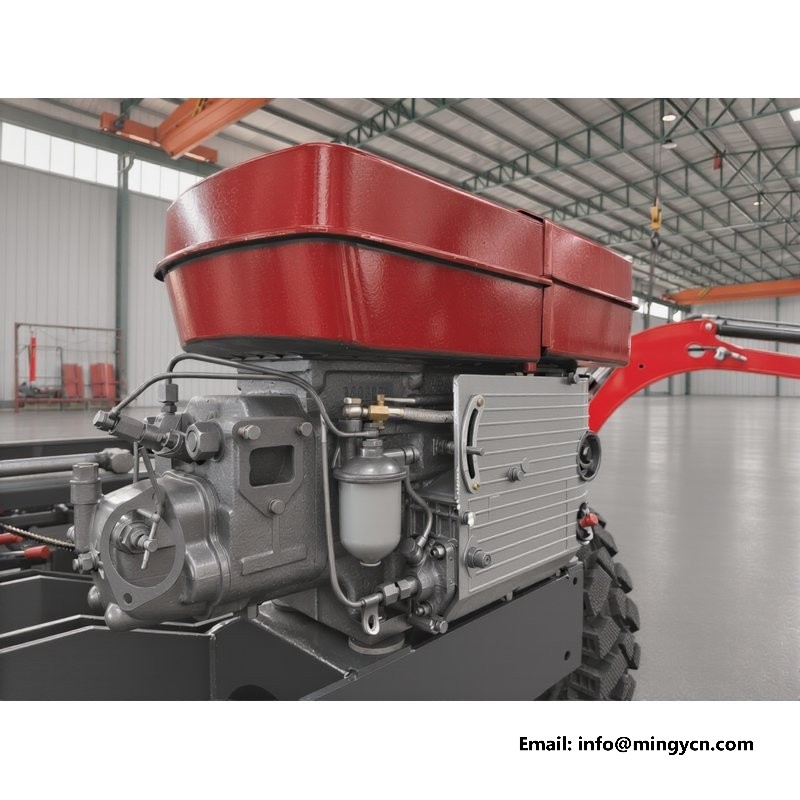
The engine starts on an electric starter as standard, with the decompression lever and crank handle retained as the backup that remains the reason single-cylinder diesels are trusted far from spare parts. Cold-morning starts use the decompression sequence a generation of operators knows; hot-season starts in the markets this machine serves are generally one-touch. The fuel system bleeds with a screwdriver from the filter to the injector, a ten-minute job after a filter change or a run-dry tank, and the sequence is printed in the manual with the bleed points photographed for a first-time crew.
Battery care is the starting system’s real maintenance: terminals clean, tops dry, and the charge checked weekly, because most no-start calls are electrical rather than diesel.
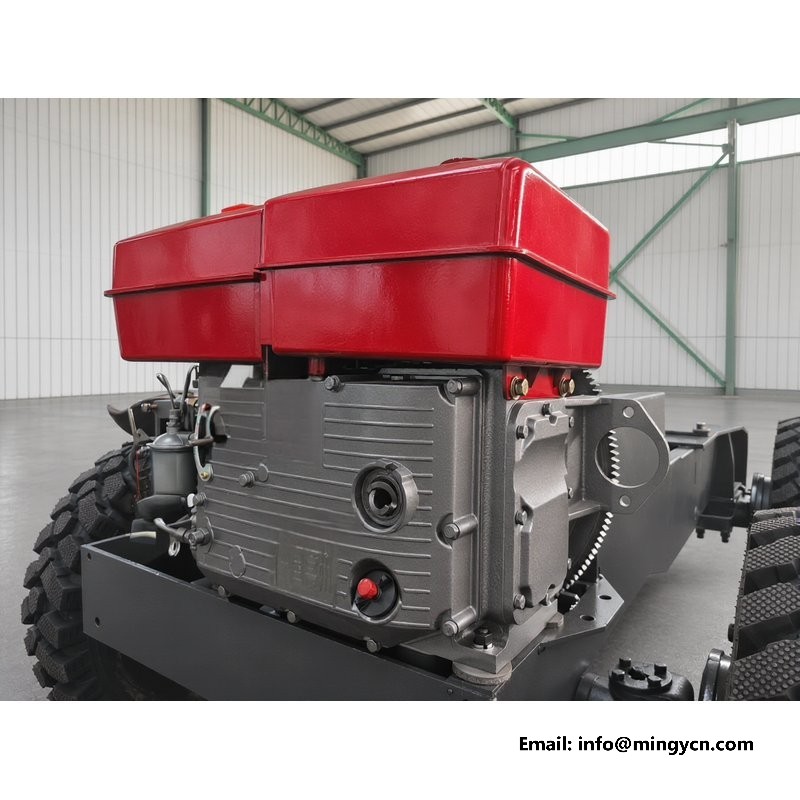
The daily routine is two glances and a dip. Fuel level at the tank, water drained from the separator if the tap shows any, and oil on the dipstick between the marks. The engine takes common grades of diesel engine oil available anywhere, changed at the manual’s hour interval with a filter — a thirty-minute service at the side of the site. Air filtration matters more than oil on dusty sites, and the cyclone pre-cleaner on this installation takes the worst before the element, which is checked weekly in dry season and after any work in fine sand. A blocked element announces itself as black smoke under load and lost pull, both of which disappear the moment the filter is cleaned or renewed.
None of these points hide behind covers: the photograph shows tap, separator and dipstick within arm’s reach of one standing position, which is the accessibility the layout was designed around.
The honest wear list is short. The injector, serviced or replaced by hours; the fuel filters, changed on the interval; the valve clearances, checked and shimmed with feeler gauges; the fan and charging belts, tensioned by hand; and the oil, changed with the filter. Every one of these is a same-day job in any market town, with parts from the agricultural channel rather than a dealer order, and every one of them is photographed or named somewhere in the sections above. The engine documentation in the shipping pack lists the part specifications by size and standard, so a local supplier matches them without a photograph.
The consumables box ordered with the machine carries the first service set: oil, filters and a belt, chosen because statistics and experience agree on what the first season asks for.
| Engine reference — 0.8 m³ 4WD self-loading concrete mixer | |
|---|---|
| Engine type | single-cylinder diesel, water cooled |
| Rated power | 25 hp class at rated speed |
| Starting | electric starter, decompression and crank handle backup |
| Fuel system | mechanical injection, bleedable filter set |
| Service | oil and filters at manual hour interval, valves by feeler gauge |
Ratings describe the engine as installed; the manual and engine documentation in the shipping pack carry the exact figures for the unit supplied.
The radiator on this installation sits forward where the fan can pull clean air through, and dusty sites make its care a weekly item rather than a service-interval one. Chaff, dust and concrete dust load the core from the outside, and an overheating shutdown in the middle of a pour is the symptom of a core that needed two minutes with a soft brush and low-pressure water the week before. The coolant itself is checked cold at the expansion bottle, topped with the same mix rather than plain water where possible, and the belt that drives the fan is on the weekly tension check with the charging belt. Machines worked in hot climates — and the markets for this mixer are hot — make cooling checks part of the morning start routine, along with fuel and oil.
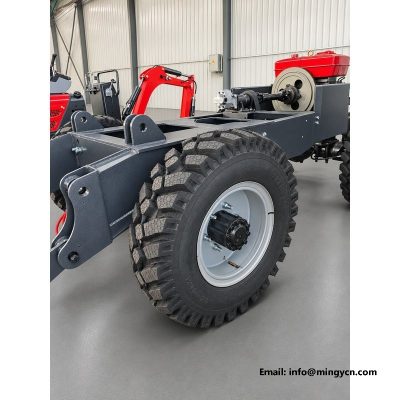
The engine sits on isolating mounts that carry its torque pulses away from the frame and the operator platform, and the mounts are checked at service for looseness and collapse. Alignment between the engine pulley and the hydraulic pump and charging arrangements matters in the same quiet way belt tension does: a misaligned run eats belts and bearings slowly and noises long before it fails. The photographs show clean, accessible mount bolts and straight pulley runs, which is what a buyer should see at delivery, and what a monthly glance confirms afterwards. An engine that has moved on its mounts announces it in belt squeal and new vibrations that the operator feels before the mechanic hears.
The exhaust runs up and away from the platform, and its daily report is worth reading. A healthy engine of this type idles with a steady hum and works with a firm, even note; black smoke under load that clears at speed is normal acceleration fuel, while persistent black at steady load means air filtration or injection attention, and blue smoke means oil is passing where it should not. White smoke on a cold start that fades with warmth is normal; white smoke that persists is a conversation with the manual before the conversation with the supplier. Operators who learn these three colours in the first week catch engine issues at the price of a filter rather than the price of a rebuild.
Two seasonal adjustments keep the engine even in its work. Into the hot season: clean the cooling core more often, verify the coolant strength, and expect the fan belt to stretch in the heat. Into the cool season: check the battery the operator neglects in warm weather, because cold mornings are when a weak battery is discovered, and use the decompression start sequence the manual prints rather than grinding the starter. Fuel also changes behaviour in cool mornings where paraffin blends are common, and the water separator earns its place on the daily walk. Neither season asks for parts, only for the two or three checks moved from the weekly sheet to the daily one.
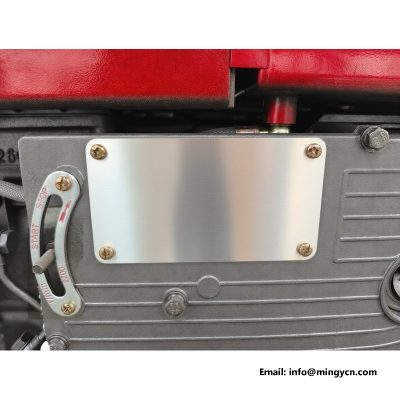
The nameplate photographed on this page carries the engine’s model, serial number and rated figures, and it deserves a photograph in the delivery file beside the machine’s own data plate. The serial number is how parts are matched without guesswork in year three, how the engine documentation is indexed, and how any warranty conversation begins. Buyers should record it at handover, and crews should keep a copy with the maintenance log, because the plate is the one identity the engine cannot lose even when the paperwork does. A clean photograph of the nameplate, the machine plate and the packing list together is the whole identity of the purchase in one image, and it costs ten seconds at delivery.
The first start at its destination mirrors the factory test: fluids checked cold, fuel system bled if the journey shook air into it, decompression on the first crank, and then a slow idle while the operator walks the machine listening and looking. Water flows, belts track straight, the exhaust settles to its steady note, and only then does the drum take its first load. Twenty minutes of unhurried first start sets the engine’s relationship with its crew for years, and it repeats the exact sequence the factory ran before the container closed, which is why the test video in the shipping file is worth watching before, not after.
Yes. The engine was sized against the working cycle, not the brochure: the drum turns while the machine creeps, the shovel cycle borrows flow briefly, and the torque arrives where that duty lives. Users coming from smaller mixers notice reserve, not strain, and the reserve shows again at the fuel bowser at the end of a full pour day.
Standard diesel from any filling station, with the water separator drained as part of the daily routine where fuel handling is casual. The mechanical injection tolerates the fuel realities of working markets better than common-rail systems do.
A cyclone pre-cleaner ahead of the air element, checked weekly in dry season. The element itself is a common size stocked with the filters in the agricultural channel.
The chassis, hydraulics and cooling are matched to the installed rating, and engine swaps belong in the order conversation with the factory rather than in the field, where pulley ratios, mounts and cooling all argue against improvisation.
Contact MINGYI Machinery for the current 0.8 m³ self loading concrete mixer specification, engine options and a formal quotation for your market. E-mail: sales@mingycn.com | LINE (ID): mingyicn
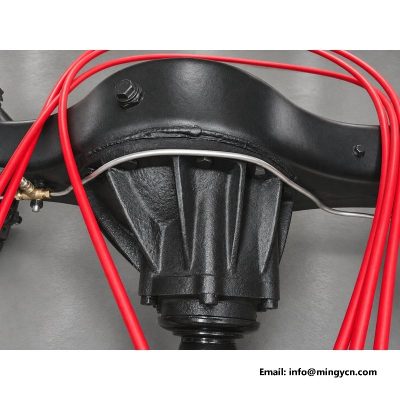
For the systems this engine drives, see Reinforced Axle 0.8m3 Self Loading Mixer for Unpaved Sites and the hydraulic drive and gearbox pages in the mini self loading concrete mixer category.