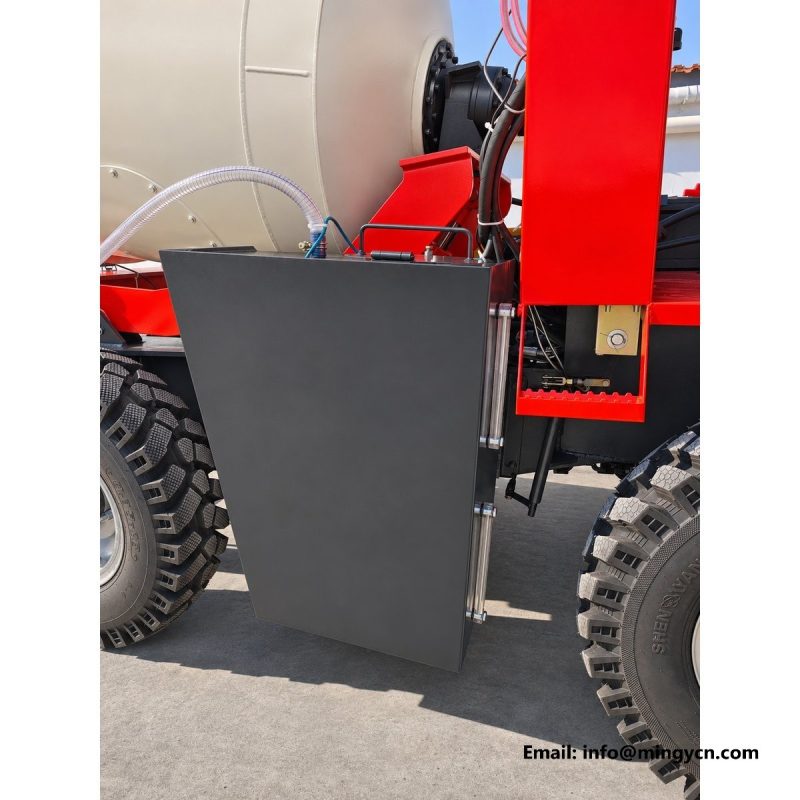

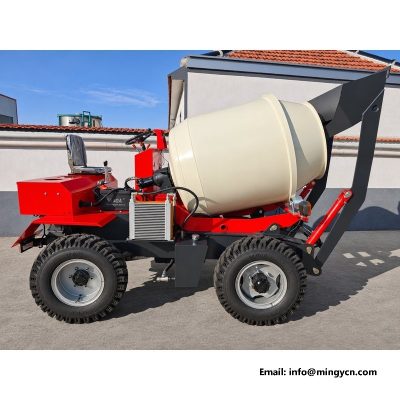
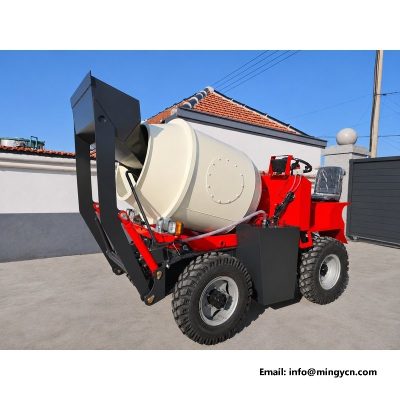
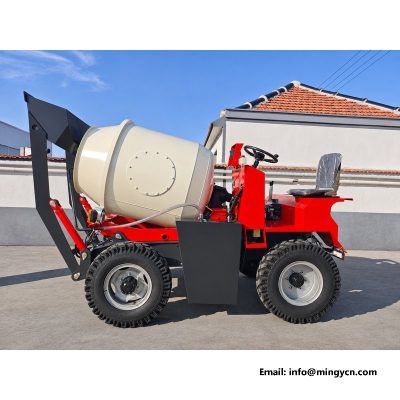
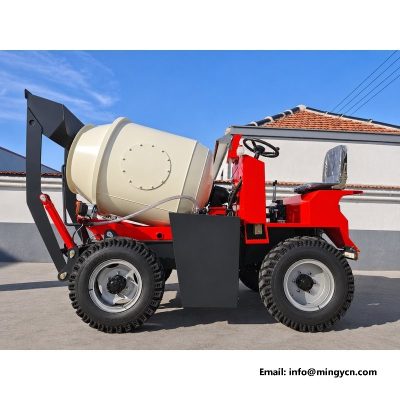
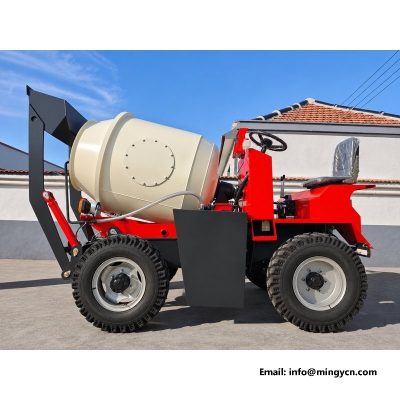
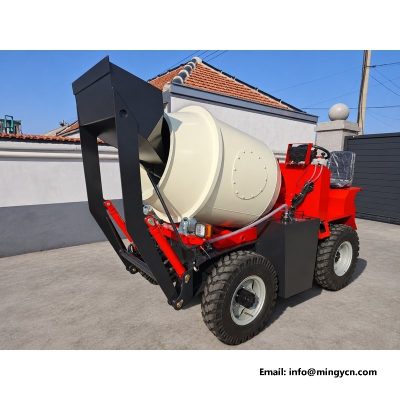
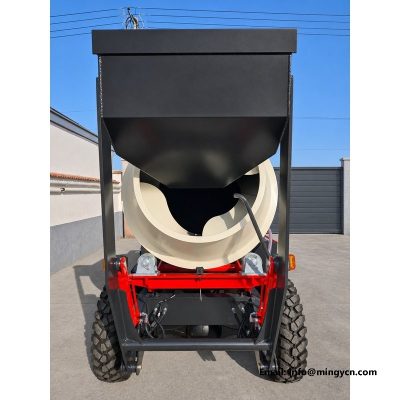
hopper raised from the side: arm angle and ram extension
A raised hopper changes the machine completely. Weight moves forward, the arm leaves the frame line, the lift ram extends into view, and the parts that are usually hidden become the only things worth photographing. This set records the hopper held at height from the side, which is the one angle where arm angle, ram extension and frame attitude can be read in a single frame. The notes cover what the geometry means, how lift speed and side rigidity show up in a photograph, what an operator watches while the load is up, and how to commission the same shots yourself before accepting delivery of a machine.
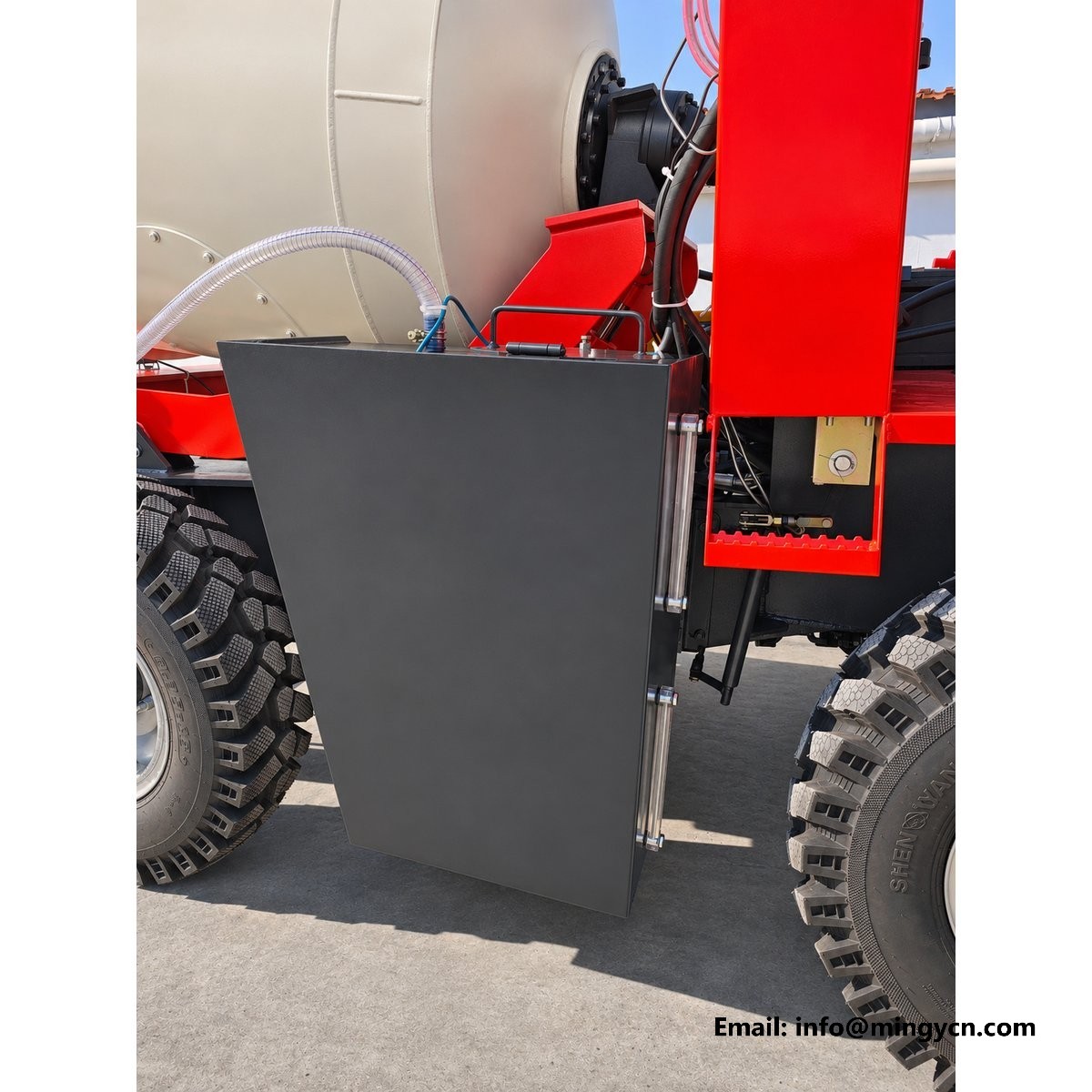
| Specification | 1.5 m³ self loading mixer |
|---|---|
| Rated load | 5,000 kg |
| Drum capacity | 1.5 m³ (1,500 L) |
| Overall dimensions (L x W x H) | 3,500 x 1,600 x 2,200 mm |
With the hopper on the ground the machine is a compact object with a low outline. Raised, it becomes a structure with a load path running from the bucket through the arm and the pivot into the front frame, and that path is what the photograph records. A side view is the right place to see it because the arm, the ram and the frame all lie in one plane. What a buyer can judge from such a frame is not lifting capacity, which is a figure on a plate, but whether the machine looks composed at height: whether the arm is supported along its length, whether the ram is being asked to do work it was not sized for, and whether the frame and tyres are taking the load evenly.
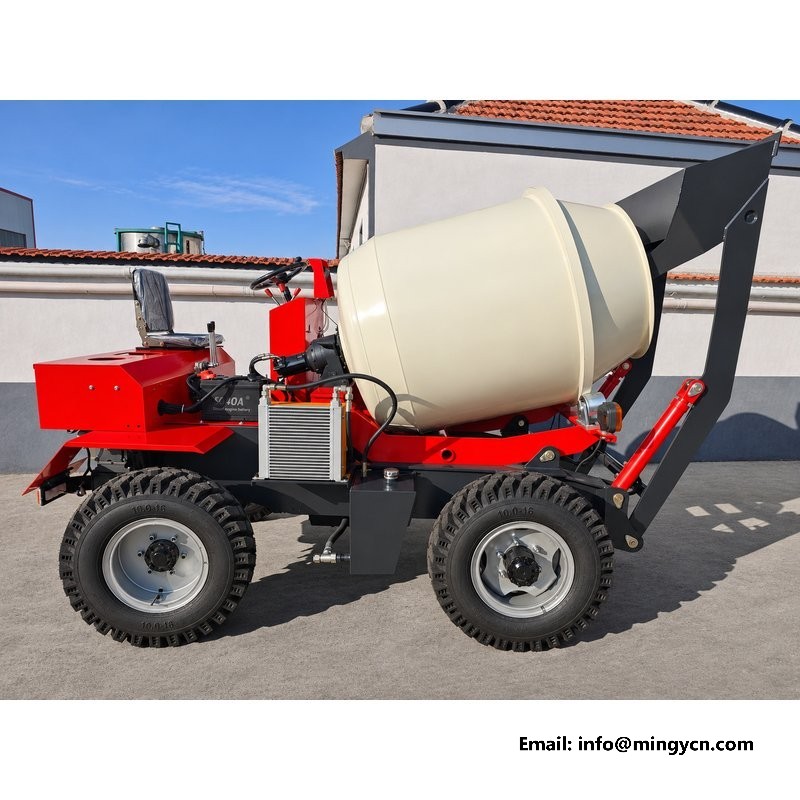
Arm angle is the one figure that decides how the load sits relative to the machine. At the start of the lift the bucket is ahead of the front axle and the moment arm is long; as the arm rises, the load comes back over the frame and the moment shortens. The frame here catches the arm partway through that arc, which is where the structure works hardest. Read the angle off the photograph by comparing the top edge of the arm with the frame line: the change over the length of the arm tells you how much of the movement is rotary and how much is vertical. Two frames, one at part lift and one at full, are worth more than one at the top, because the difference between them is the work the machine does.
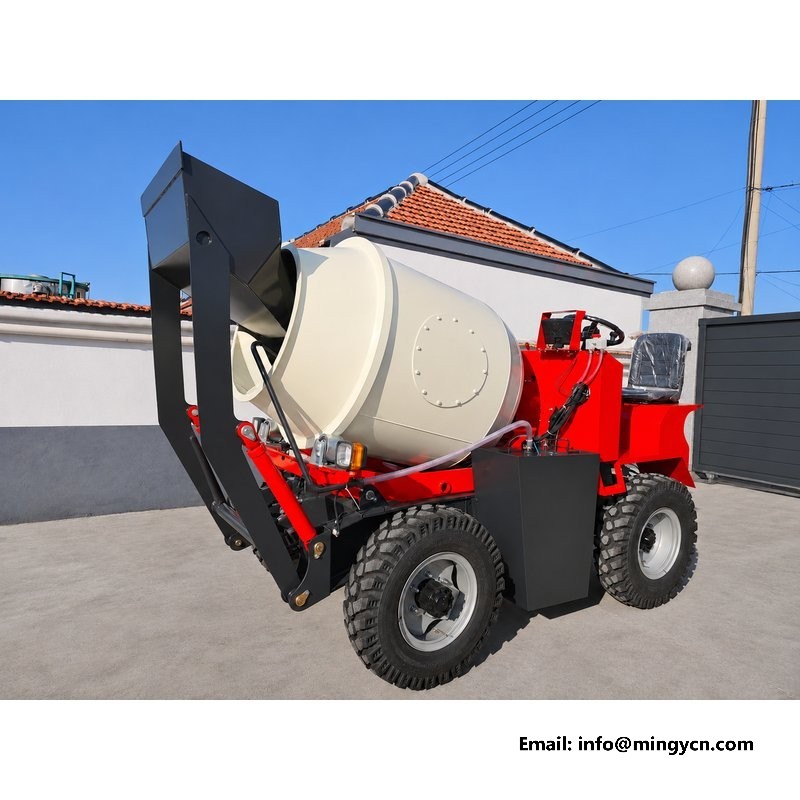
The lift ram is the most honest wear gauge on the machine. At rest most of the rod is inside the barrel; raised, a long section of chrome is exposed, and that section carries a record of every hour the machine has worked. Look for a bright, even band along the rod and a sharp line where the wiper seal sits. Pitting, a dull patch or a rust bloom on the chrome will destroy the seal from the inside, and the first symptom is a slow drop rather than an obvious leak. In the frame, check that the exposed rod is straight and that the barrel end is dry. A wet barrel below the wiper is a seal on its way out, and it is the cheapest thing to fix before it becomes a scored rod.
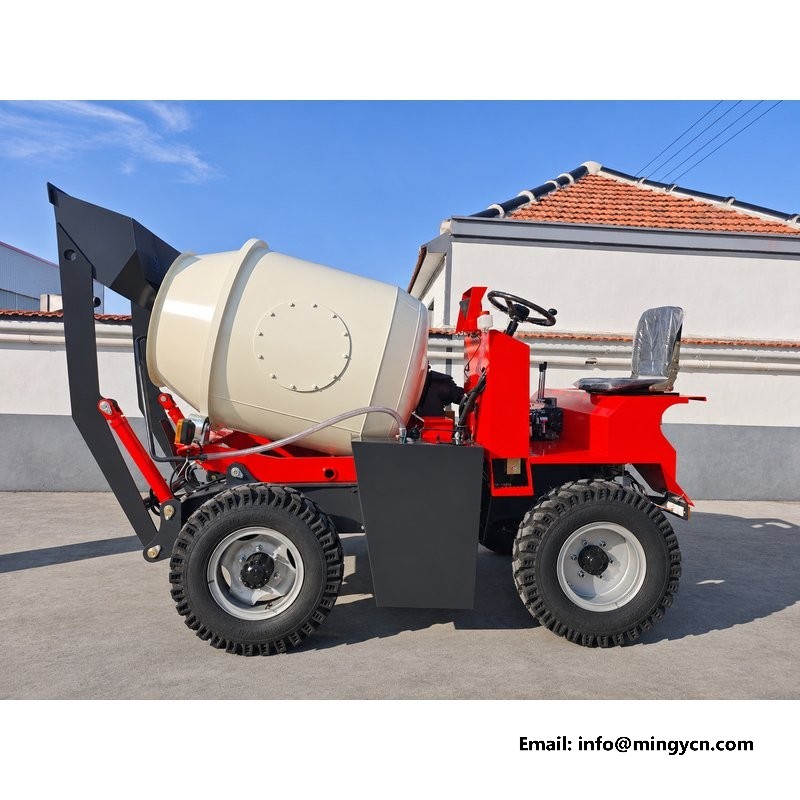
Lift speed is often described as a single figure, but it is the result of several things working together: the output of the pump, the bore of the ram, the setting of the valve, and the speed at which the engine is running. This machine's single-cylinder diesel governs at a fixed working speed, so the pump delivers what it delivers and the ram moves at a rate set by its displacement. What a buyer should take from that is simple: a lift that looks unhurried in a video is not necessarily weak, and a fast lift is not necessarily strong. Ask for the hopper to be raised from the ground to full height in one continuous take, at working speed, and watch whether the motion is smooth or whether it stutters.
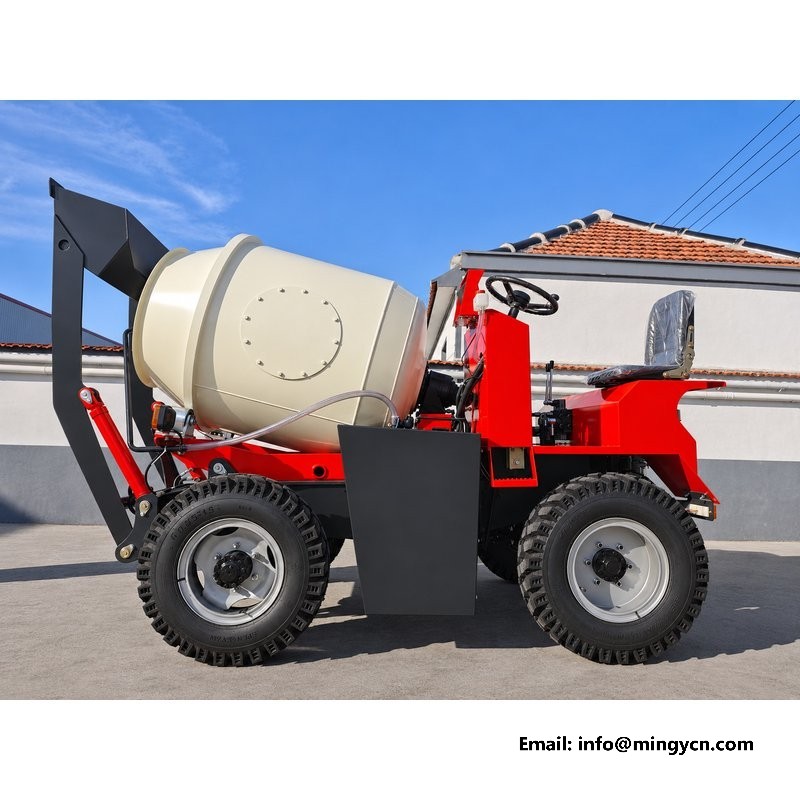
A raised hopper puts a turning moment on the frame that nothing else on the machine produces. The arm pulls up on one side of the front frame while the axle pushes down, and the rails have to carry that as a couple. In a side photograph the evidence is subtle: look at the gap between the arm and the frame, which should stay parallel as the arm rises, and at the tyre, whose sidewall will compress as weight transfers forward. A machine that leans noticeably to one side at height has either a ram problem or a frame that is not square. The Isuzu-type reinforced front axle is the part that resists the forward transfer, which is why the front tyres in a raised frame look more loaded than the rear.
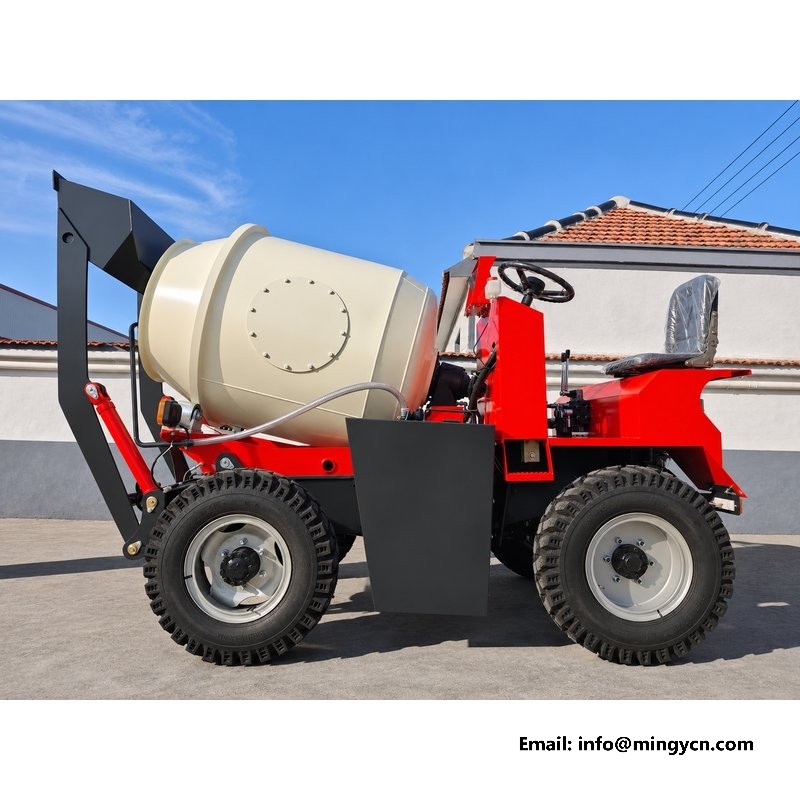
This machine steers on both axles, with a 130 four-wheel steering rear unit and a 28 degree steering angle. That arrangement is a gift on a cramped site, because the rear wheels can follow the front around a tight corner instead of being dragged across it. It also changes how the machine behaves with the hopper up. At low speed, with the load forward, the rear axle carries less and steers more easily, which is why operators countersteer when they reposition at height. The photograph should show the rear steering ram and its linkage clear of the frame and protected from the tyres. If the linkage sits low and exposed, a stone thrown from the tread will find it. Ask for the wheels to be turned while the frame is taken, so that the travel of the linkage is visible.
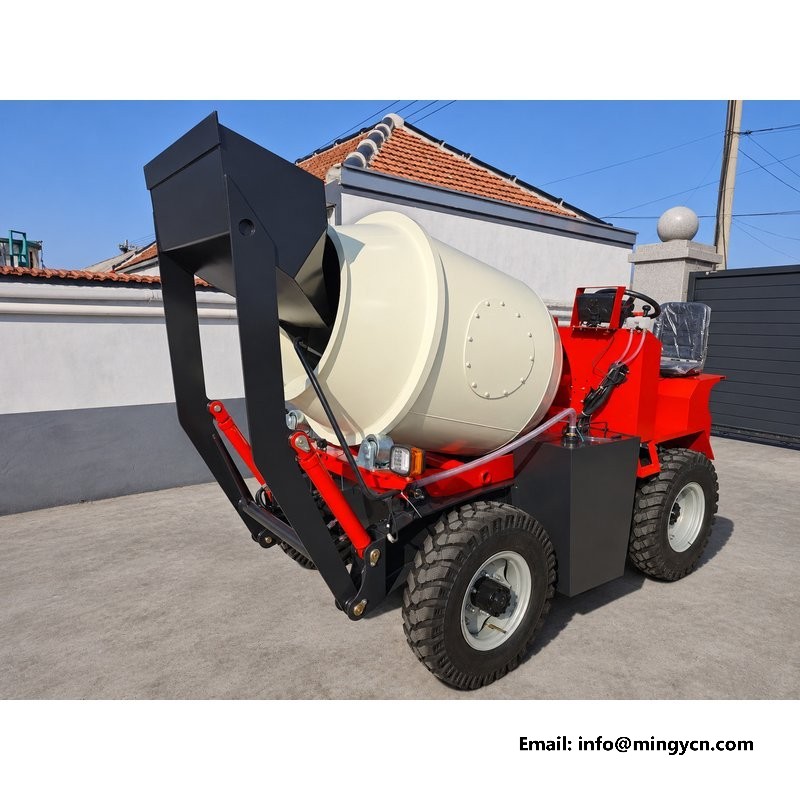
The 204 mm of ground clearance is measured on a machine standing empty, and it is the figure that decides whether the machine can cross a rutted entrance without dragging its frame. Loaded, the number shrinks: the tyres squat, the suspension in the seat compresses, and the lowest point of the frame comes closer to the ground. In a raised-hopper frame the front of the machine is carrying the bucket and its contents, so the front tyres are the ones to watch. Look at how much of the sidewall is visible above the rim compared with the rear. If the front tyre looks substantially flatter, the machine is either overloaded or the front axle is being asked to carry more than the arm geometry suggests.
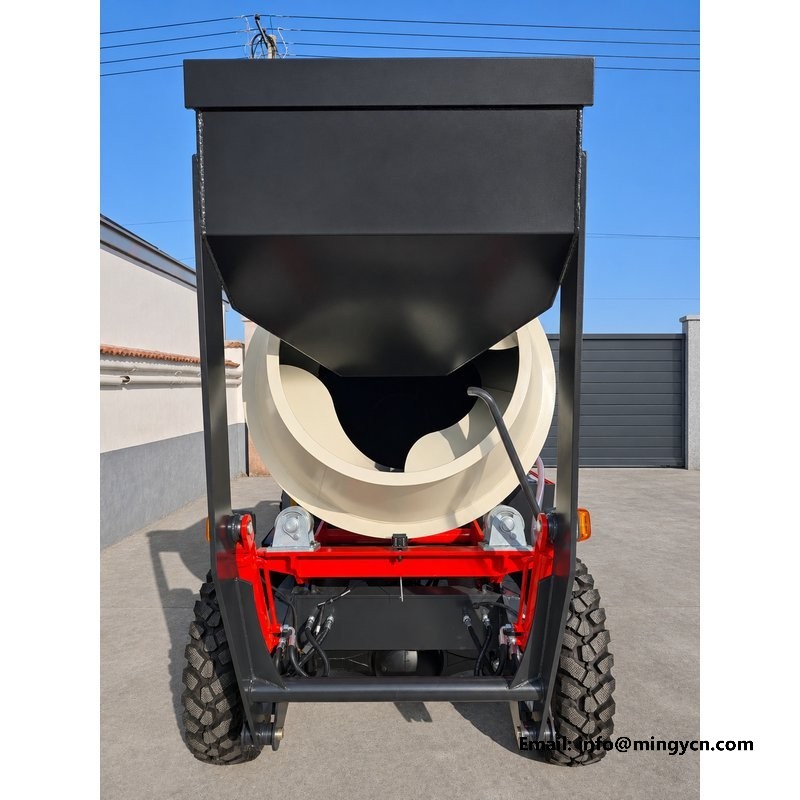
An experienced operator watches four things during a lift and none of them is the bucket. The first is the sound of the engine, which should hold steady rather than labour as the ram comes to the end of its stroke. The second is the hose bundle along the arm, which should straighten as the arm rises and never pull tight against its last clamp. The third is the gap between the bucket heel and the drum mouth, which closes as the arm comes over. The fourth is the ground under the front tyres, because a soft patch that was fine with the hopper down will give way once the weight moves forward. A buyer watching a demonstration can watch the same four things.
A raised hopper is a stored load, and the only thing holding it is hydraulic pressure in a circuit that contains seals, hoses and a valve. Every one of those can fail without warning. The rule on site is absolute: nobody puts any part of their body under the arm or the bucket unless the hopper is mechanically propped or the arm is lowered to the ground. If a machine is delivered with a prop or a lockout pin, keep it on the machine rather than in the workshop. In photographs, a raised hopper with a person standing beneath it is not a demonstration of confidence; it is a picture of a site that has not thought about what happens when a hose bursts.
To repeat this set on delivery, choose flat ground and mark the machine's position with chalk on the tyres and the ground. Raise the hopper to part lift, stop the engine, and take the side frame from the same height and distance as the reference. Then raise to full height, stop, and repeat. Keeping the engine off for the close frames removes vibration and makes the ram and the hoses easier to read. Take one frame of the ram from directly alongside, with the chrome in shade rather than direct sun, because a highlight will hide pitting. Store the pair with the delivery paperwork. Six months later, the same two frames will show whether the arm has begun to droop or the rod has started to score.
It tells you about geometry and condition, not about capacity. An empty lift shows the arm arc, the ram extension and whether the frame stays square, which is what a photograph can honestly record. Lifting ability depends on the hydraulic system and the structure under load, and that is best judged from a video of the machine working in material. Ask for one continuous take of a full bucket raised from the ground to full height.
Look at the exposed chrome. A healthy rod is bright and even along its length, with a clean line where the wiper seal sits and no dull patches. Pitting, a rust bloom or a scored band means the seal is being damaged from the inside, and a leak will follow. Look also at the barrel below the wiper: if it is wet, the seal is already passing oil. Ask for the frame to be taken in shade.
For the current specification, build options and a formal quotation for your market, contact MINGYI Machinery. E-mail: sales@mingycn.com | LINE (ID): mingyicn
Loading Hopper and Lift Arm on the 1.5m3 Self Loading Mixer · 1.5 m3 Self Loading Concrete Mixer: Full Specification and Walkaround · 1.5m3 Self Loading Mixer from Every Angle: A Yard Photo Reference








