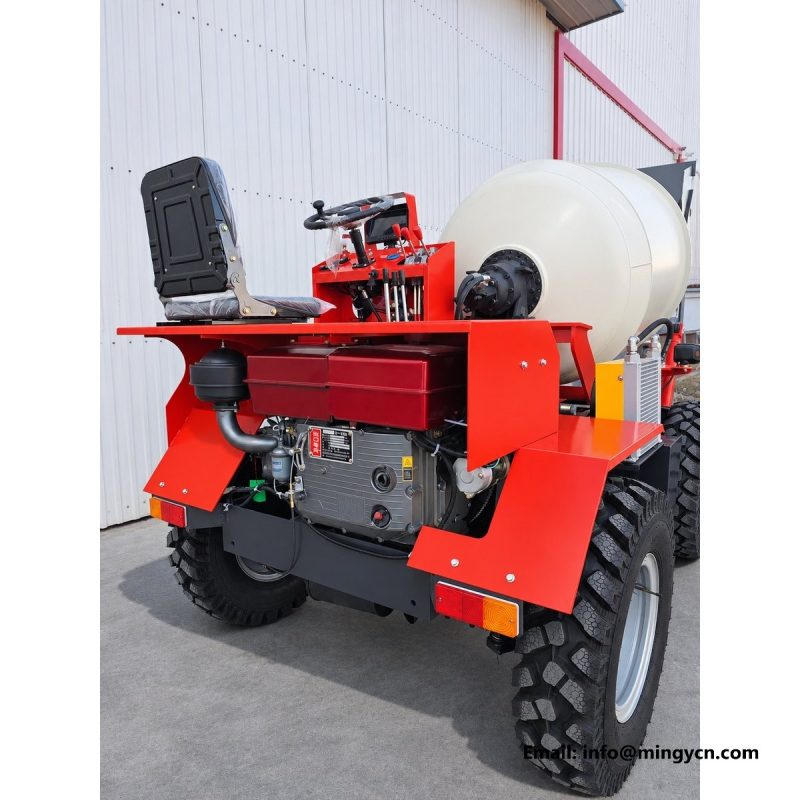

tyres, drum mouth and tank fittings: detail mix
Detail photographs are only useful if they are taken close enough to show a decision and wide enough to show where that decision sits on the machine. This set mixes four scales: the complete mixer, the 750-16 tyre sidewall, the inside of the drum mouth, and the water tank connections. Read together, they answer questions that a full-machine shot cannot: how the tyres are wearing, whether the drum mouth has been kept clean, and whether the plumbing looks built rather than assembled. The notes below explain what each frame proves, what it cannot prove, and the order in which a buyer should look at them before asking for more.
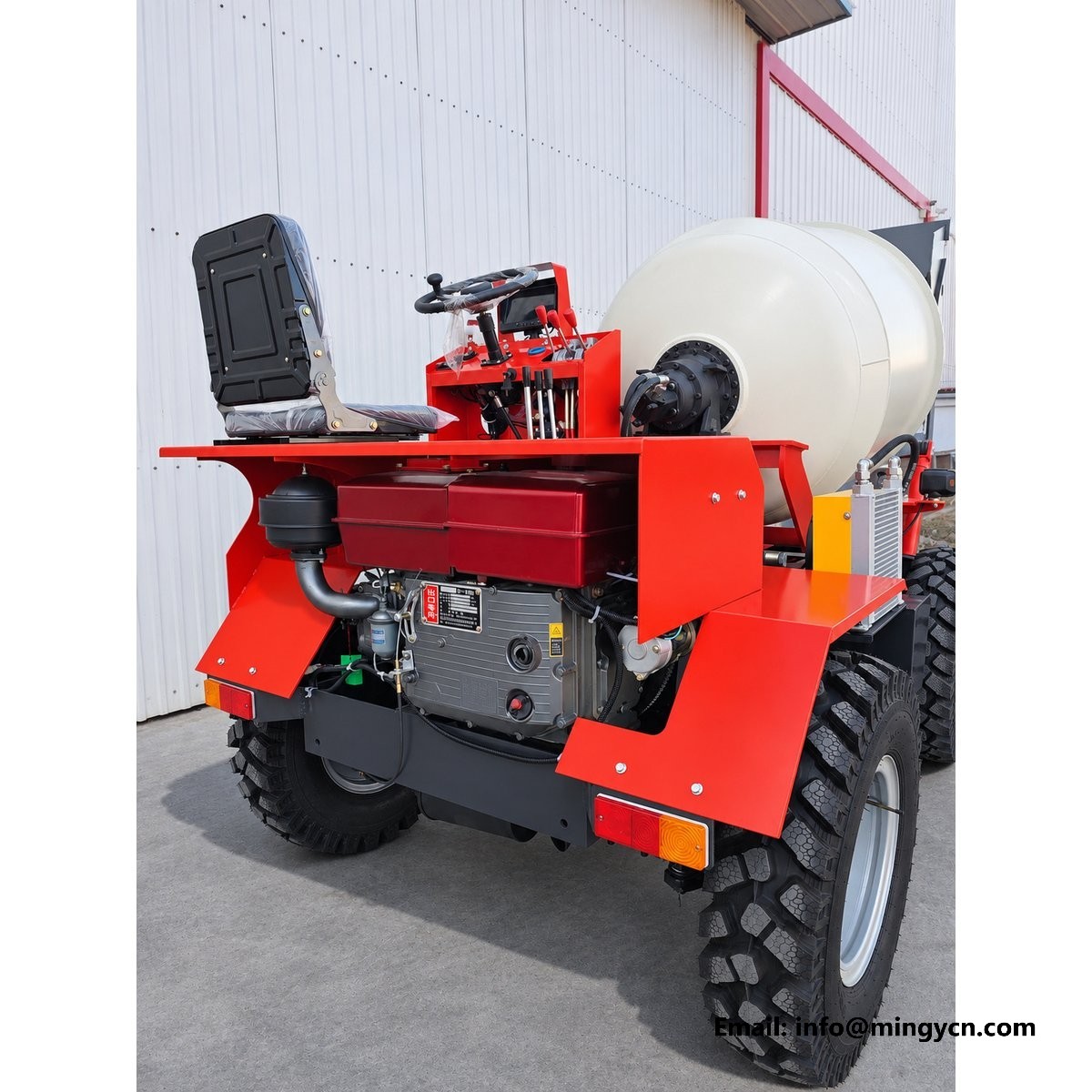
| Specification | 1.5 m³ self loading mixer |
|---|---|
| Drum capacity | 1.5 m³ (1,500 L) |
| Overall dimensions (L x W x H) | 3,500 x 1,600 x 2,200 mm |
| Front tyres | 750-16 |
A gallery of eight similar three-quarter shots tells a buyer almost nothing. What answers questions is a set that moves between scales: the whole machine for context, the tyre for wear, the drum mouth for internal condition, and the tank connections for assembly quality. Each frame here has a job, and each is placed so that the next can be understood. The wide shot fixes the position of the detail; the detail explains what the wide shot could only hint at. Read in that order, four subjects cover most of what a remote inspection needs, and the remaining frames repeat the important ones from a slightly different angle so that nothing is hidden by a shadow or a reflection. That progression is deliberate, and it mirrors the order in which an inspector actually walks.
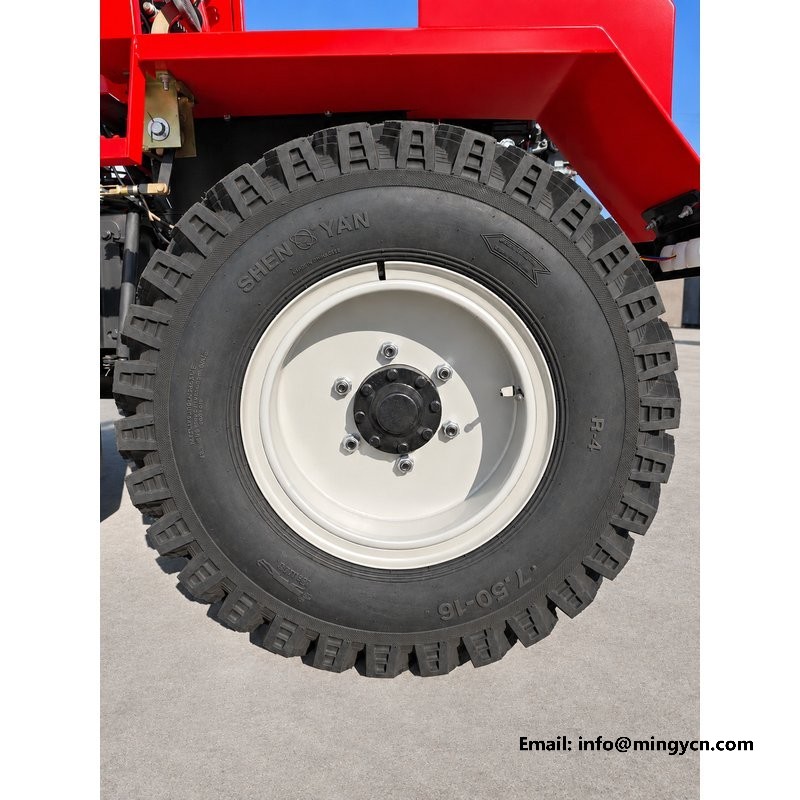
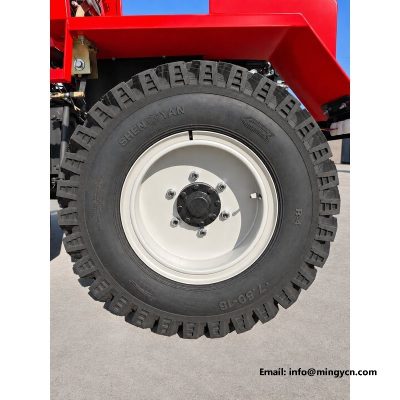
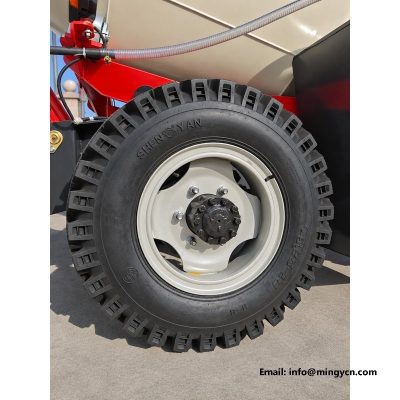
The tyre sidewall is a specification plate that happens to be round. On this machine the size is 750-16, front and rear, which tells a buyer the rim diameter and the section width before any other question is asked. Read the marking on a photograph the way you would read it in a yard: size first, then the load and ply information moulded beside it, then the brand and the country of manufacture. Check that all four tyres match. A machine delivered with one odd tyre has either been worked hard enough to destroy a casing or was assembled from whatever was in the store, and both possibilities deserve a question. Photograph the marking straight on, in shade, with the camera close enough for the characters to be legible.
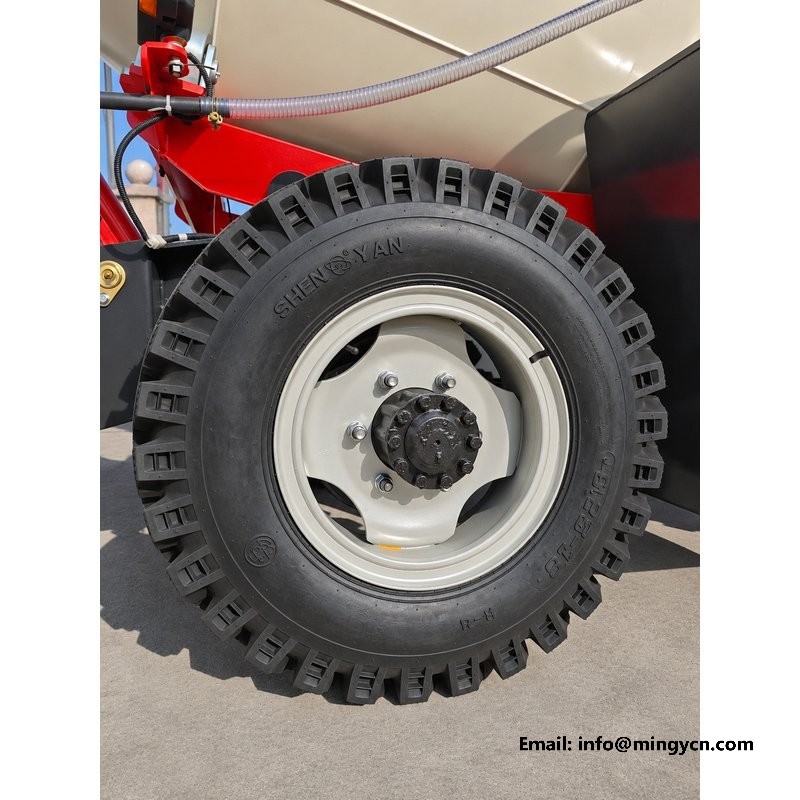
The lug pattern on an industrial tyre is a compromise between cleaning and road manners. Open, angled lugs throw clay out as the wheel turns, which matters on a site where the machine alternates between a muddy stockpile and a hard road. A tighter pattern lasts longer on tarmac but packs up in wet soil until the tyre behaves like a slick. This machine runs 4WD with a three-forward, one-reverse gearbox and a road gear that reaches 24 km/h, so the tyres have to survive both a building site and a short trip between sites. Look at the photograph for the shape of the shoulder: a square shoulder with full-depth lugs suggests a tyre chosen for traction, while a rounded shoulder suggests one chosen for carrying load.
Tyre condition is read at three places. Start at the shoulder, where scrubbing shows first on a machine that turns tightly all day; uneven shoulder wear points to alignment or to consistent overloading. Then look at the sidewall for fine radial cracks, which appear with age and sunlight rather than with distance travelled, and which no amount of tread depth will fix. Finally check the bead area and the valve: a valve that leans, or a rim with a fresh dent, means the tyre has been run soft or has struck something. In a photograph, all three need side light. Ask for the frame to be taken with the machine parked so the sun rakes across the sidewall, because flat light hides exactly the cracks a buyer needs to see.
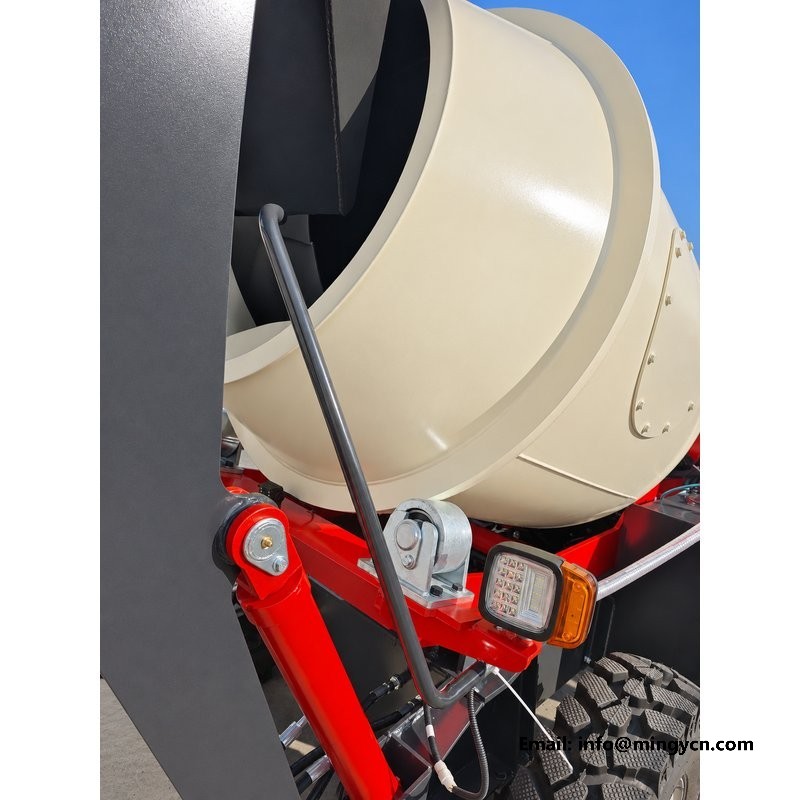
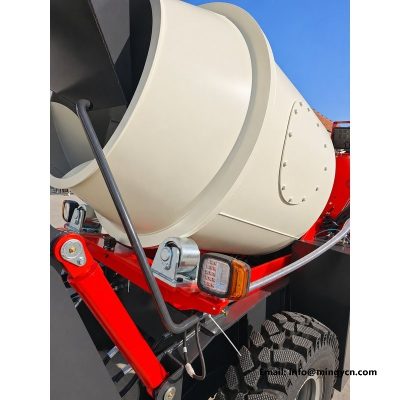
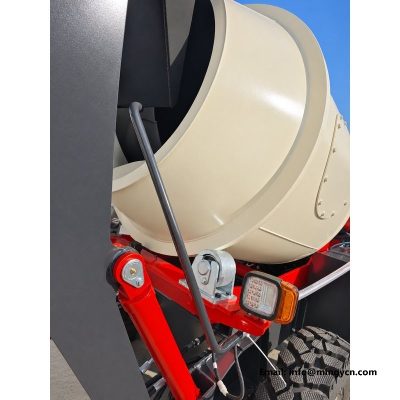
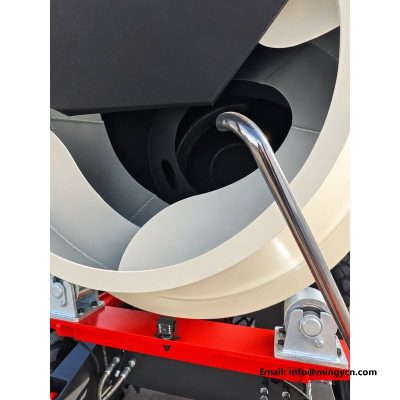
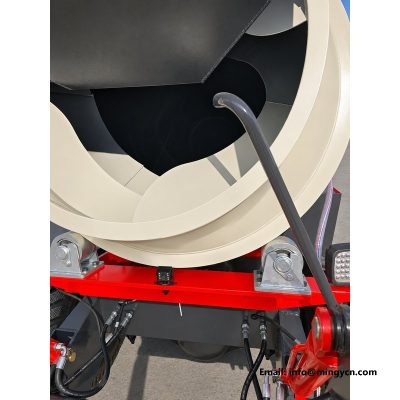
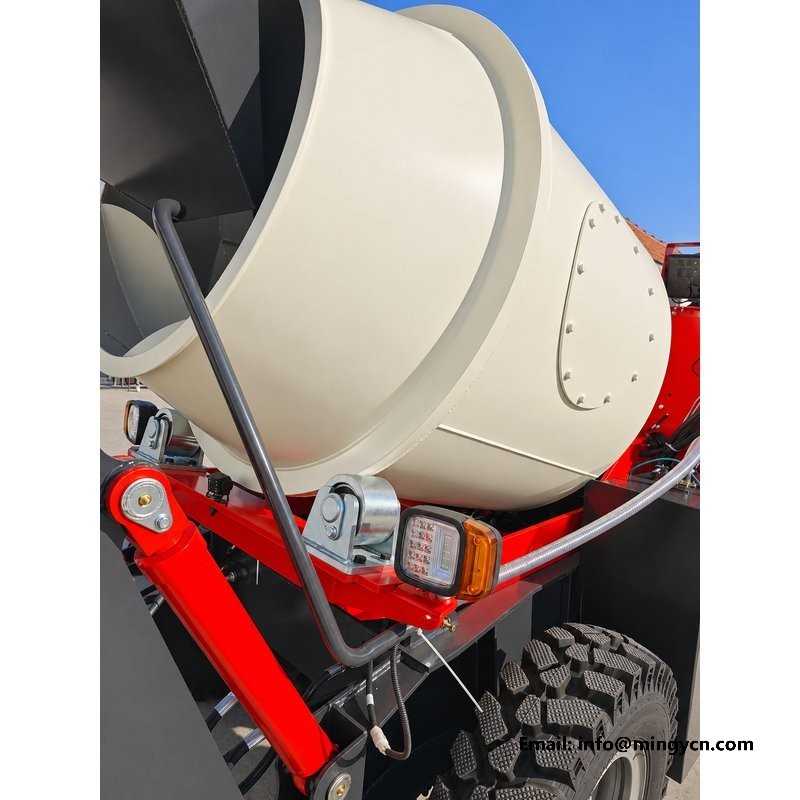
The drum mouth is the only place where the inside of the mixer can be inspected without opening anything. With the hopper lowered, a camera placed at the rim looks down the cone and shows the first section of the blades, the liner plates where they are fitted, and the weld seams where the shell sections join. What matters is cleanliness and symmetry. A mouth with hardened concrete left in the cone is a mouth that has not been washed out, and the build-up will eventually reduce the batch volume and load the drive unevenly. Look for blade tips that sit at the same height on both sides of the cone. A tip standing proud on one side means a liner has been replaced without matching its pair, which changes the mixing action.
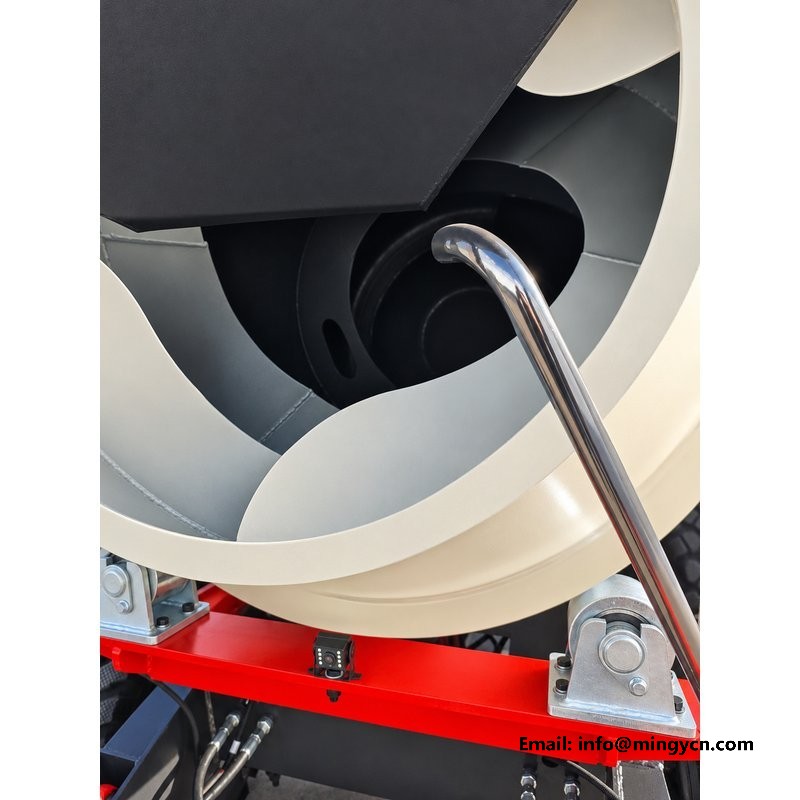
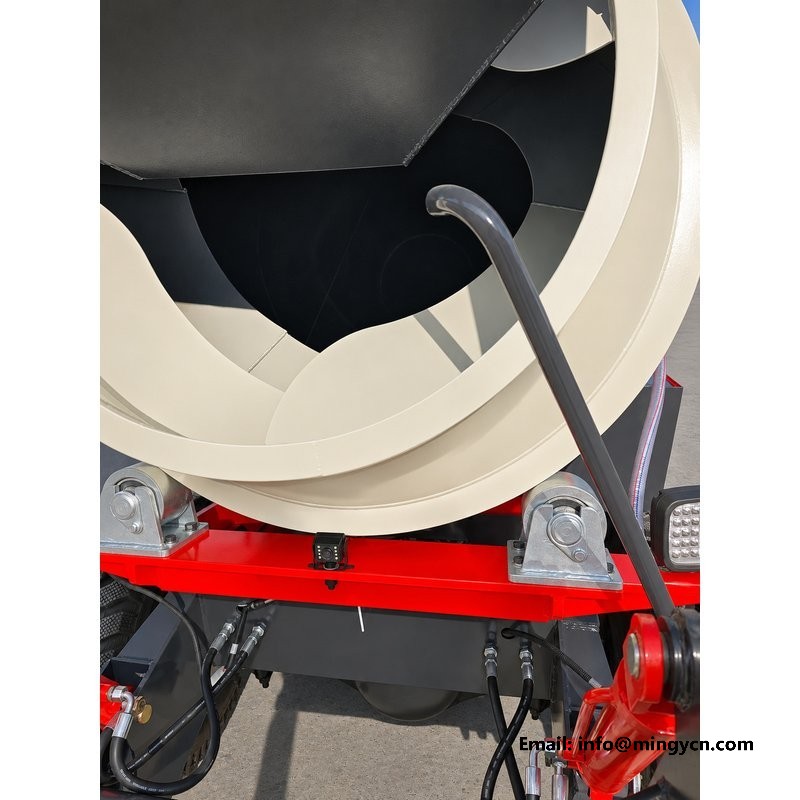
The rim of the drum mouth takes the discharge from the hopper, and it is a wear part in its own right. Look at the photograph for a rim that is straight and continuous, with no flattened section where the shell has been struck. The ring around it, where one is fitted, should sit tight against the shell rather than standing off on spacers. Charging clearance is the other thing the frame shows: the distance between the hopper lip at full height and the mouth rim, and whether material has a clear path into the cone rather than catching on the edge. That distance is fixed by the arm geometry, so a frame showing the hopper above the mouth is worth more than a description of it, however carefully written.
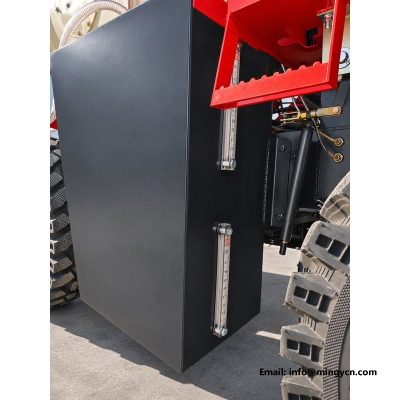
Water plumbing is where a manufacturer's habits show, because nobody photographs it for a brochure. The connections in this set show the fill point, the outlet with its valve, the drain, and any sight tube used to judge the level. Look for fittings that are supported: a valve hanging on an unsupported hose will crack at the tank boss after a season of vibration. Look for a drain that points somewhere useful rather than onto the frame, where it will start a rust line. Look, too, at the material of the valve body. A plastic valve on a site machine is a service item waiting to be bought twice. Photograph the connections dry and clean, because a wet fitting in a picture cannot be judged.
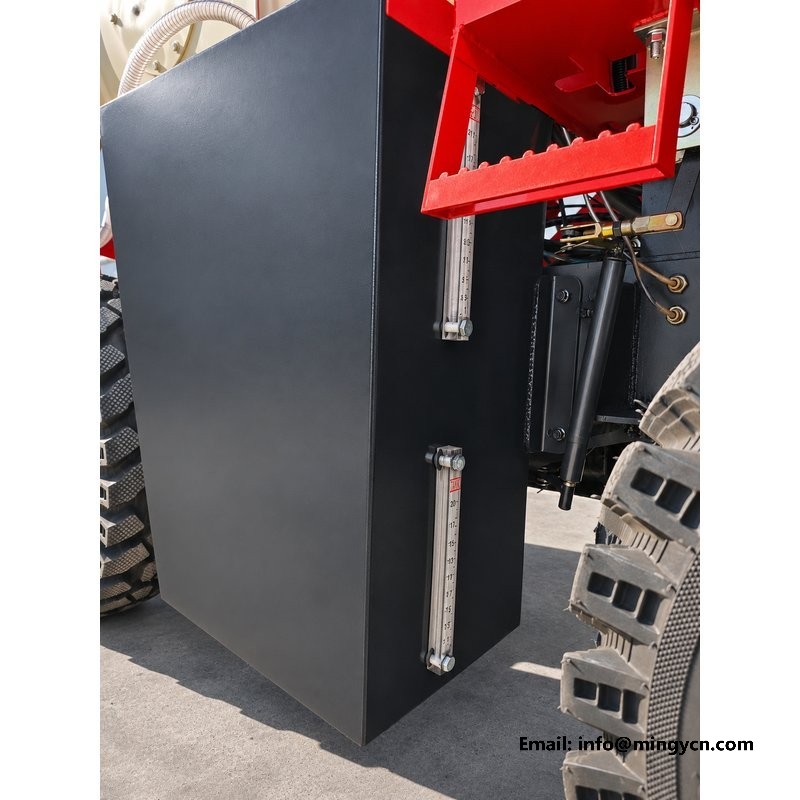
Every flexible line on the machine is held by something, and the clamps are the cheapest part of the assembly and the most revealing. In these frames the water lines run with gentle bends and are clipped at intervals, which keeps the weight of the water from pulling on the fittings. Hoses should not rub on a weld seam or pass through a hole without a grommet. Then look for wet marks. A dark patch under a valve, with dust stuck to it, is a weep that has been there long enough to collect dirt. A clean wet line is a drip that started recently. Neither is fatal, and both are bargaining points. Photograph the area before the machine is washed, since washing hides the history a buyer is trying to read.
Individually, each detail frame answers one question. Together they answer a better one: whether the condition of the parts agrees with the story being told about the machine. A drum mouth that is scuffed and stained belongs on a machine with worn tyres and a well-used bucket, not on one presented as new. Clean plumbing and original clamps belong with paint that has not been touched up. When the frames disagree, ask which one was taken at a different time. In this set the same machine appears in all four frames, and the paint, the hose colours and the tyre branding stay consistent from the wide shot to the close-up. That consistency is the quiet proof that the gallery was shot in one session rather than assembled from a catalogue.
Use the frames in a fixed order and the set becomes a checklist rather than a slideshow. Start with the wide shot and note the machine's attitude and the tyre type. Move to the tyre sidewall and read the marking. Move to the drum mouth and judge cleanliness and blade height. Finish at the tank connections and look for wet marks and unsupported fittings. If a frame is missing, ask for it by name rather than accepting a substitute from a different angle. Suppliers rarely refuse a specific request, and the way they answer tells you how well they know the machine. Save the set with the date and the serial number, then repeat the same four frames when it arrives.
Ask for the same tyre shot square to the sidewall from about two paces back, with a rule held against the tread. Depth is best judged against a known object, and a tape sitting in the groove reads more honestly than an estimate. Ask also for a frame of the opposite tyre on the same axle, so you can compare wear across the machine rather than judging one wheel in isolation.
Not necessarily. Some staining is normal on any machine that has mixed and discharged, and the inside of a drum is not meant to stay bright. What matters is hardened build-up, especially in the cone and around the blade roots, because that reduces the working volume and loads the drive unevenly. Look for a mouth that has been washed out and a drum whose blades are still visible and evenly placed.
For the current specification, build options and a formal quotation for your market, contact MINGYI Machinery. E-mail: sales@mingycn.com | LINE (ID): mingyicn
Water Tank Level Sight, Drain and Breather on the 1.5m3 Mixer · 750-16 Tyres and Isuzu Front Axle on the 1.5m3 Mixer · 1.5m3 Self Loading Mixer from Every Angle: A Yard Photo Reference








