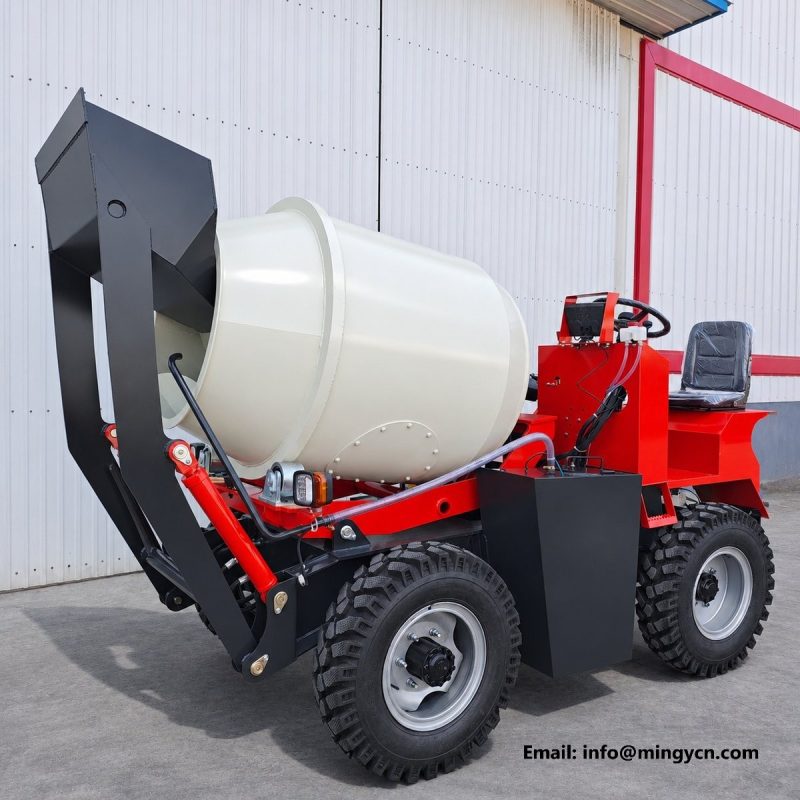

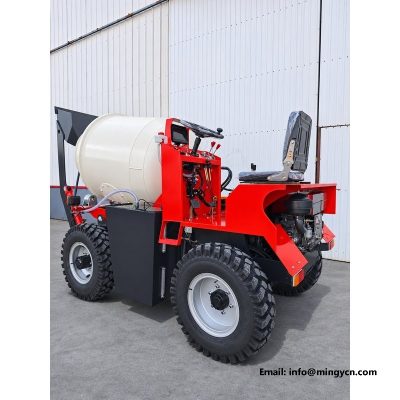
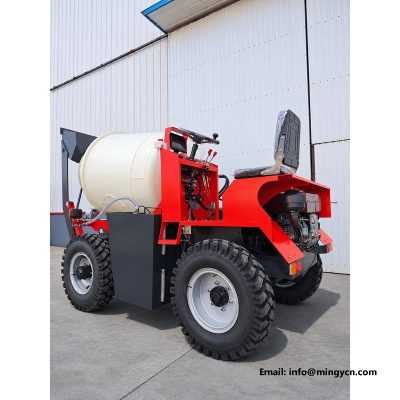
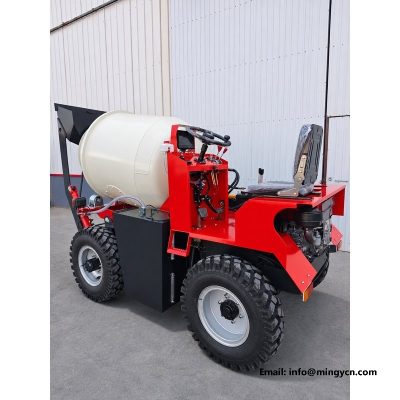
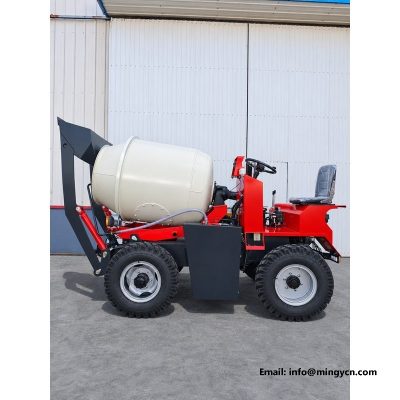
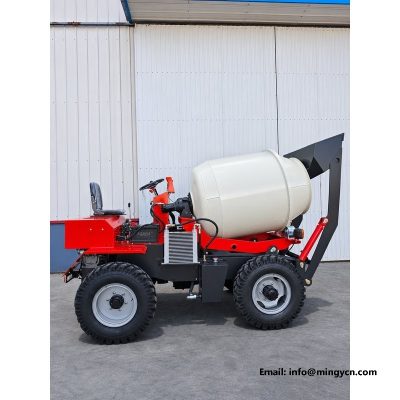
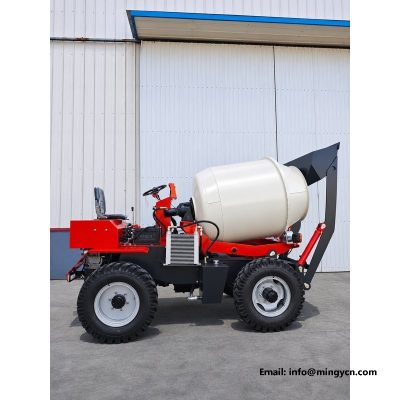
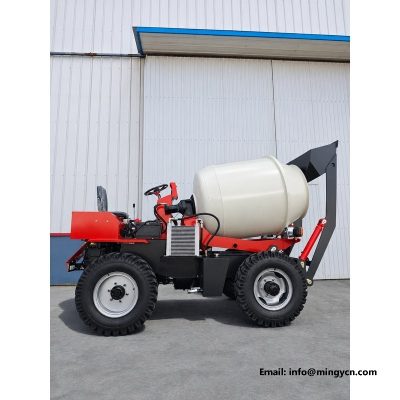
right side against white wall: clean background reference
A white wall is not a background; it is a measuring instrument. By removing everything else from the frame, it turns the machine into an outline and every edge into a line that can be compared with the one next to it. This view sits at the end of the set on purpose. After the working photographs have shown how the machine behaves, the clean frame answers a different question: what exactly is the shape, and does it hold together as a design? Use it for proportion, for detail, and for anything that has to be drawn rather than photographed.
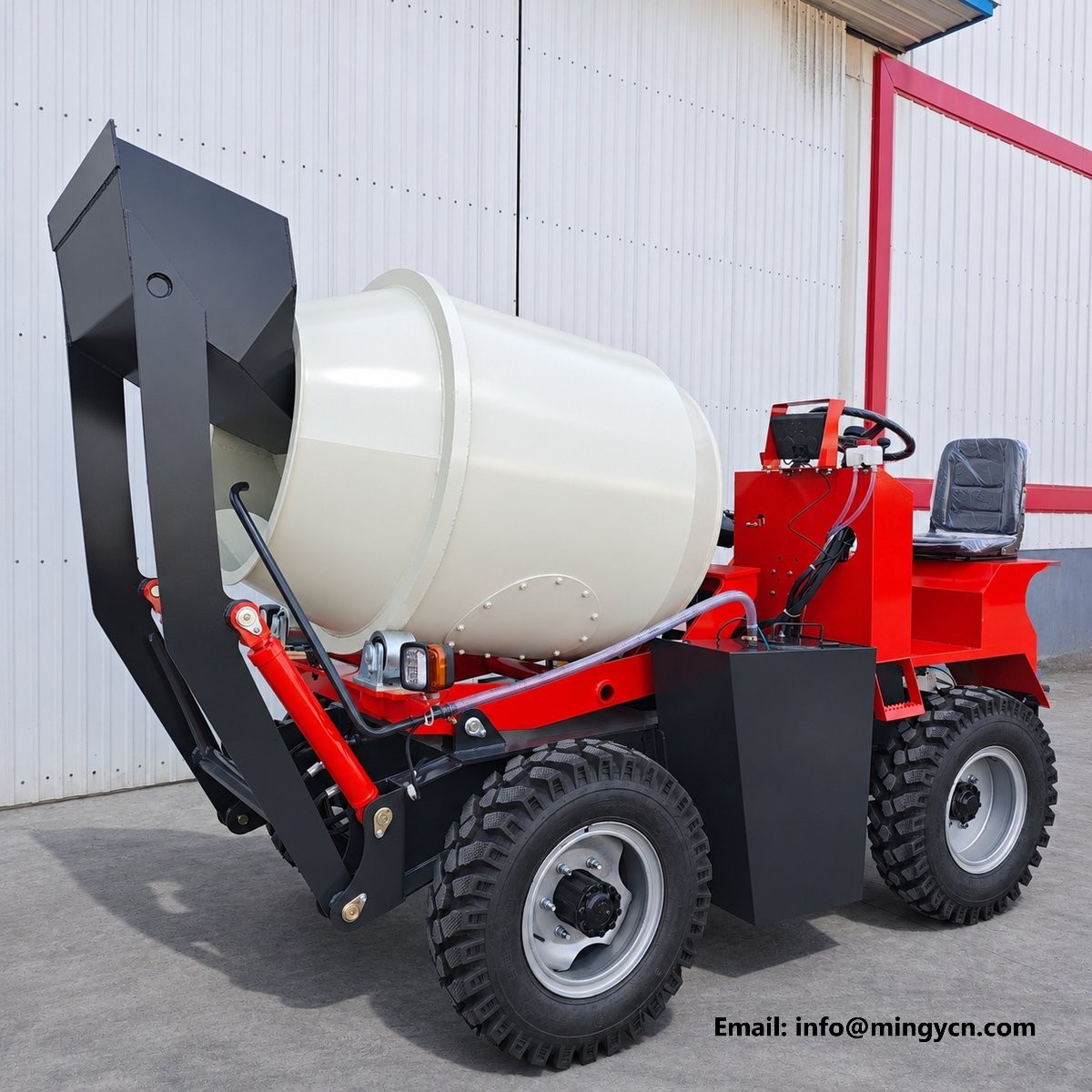
| Specification | 1.5 m³ self loading mixer |
|---|---|
| Operating weight | 1,900 kg |
| Overall dimensions (L x W x H) | 3,500 x 1,600 x 2,200 mm |
| Front tyres | 750-16 |
Most photographs on a machine page are taken where the machine works, which is useful and noisy. A frame against a plain white wall does a different job: it removes the background and leaves only the object, so the eye has nothing to do but follow the outline. That is why this view is included at the end of the set rather than the start. By the time a buyer reaches it, they have seen the machine in context and know what it does. The plain frame then answers a separate question: what is the shape, exactly, and does it look like a machine designed as a whole rather than assembled from parts that happened to fit. The frame is also the fairest one to compare between suppliers, because it removes the advantage of a better location.
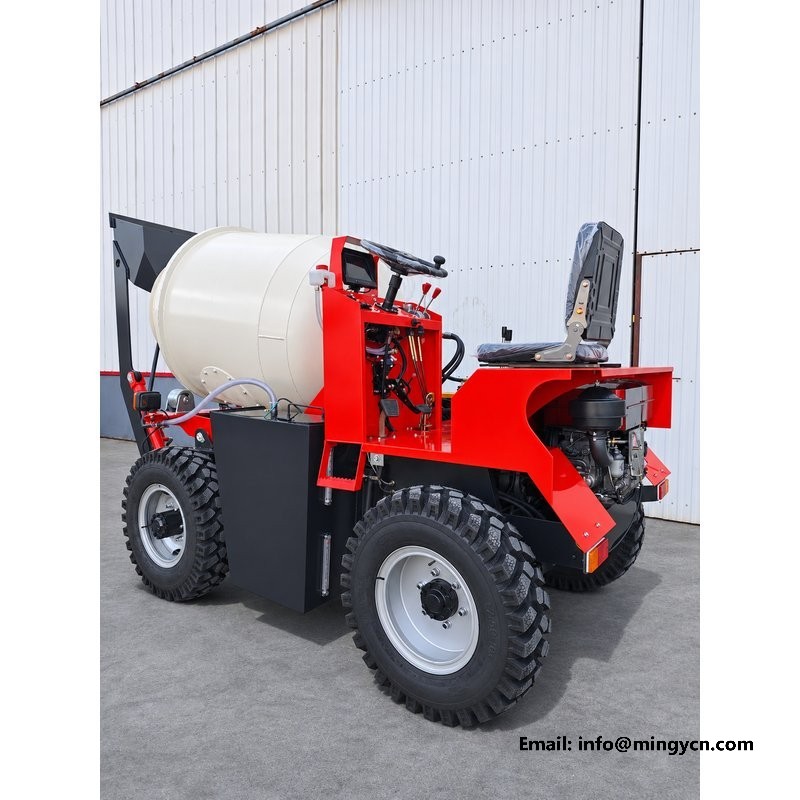
Squint at this photograph and the machine becomes a shape: a low mass at the rear, a rising line over the drum, a step down at the operator platform, and the arm reaching forward to the bucket. That outline is the most abstract and most durable thing about the design, because it does not change with paint, decals or the size of the tyres. It also reveals proportion. A machine with too much mass behind the rear axle looks tail heavy; one with a short front overhang looks cramped. In this frame the visual weight sits between the axles, which is where it belongs on a machine carrying a full drum and a raised bucket. Trace the outline with a finger on the screen and note where it changes direction; each change is a decision about access or clearance.
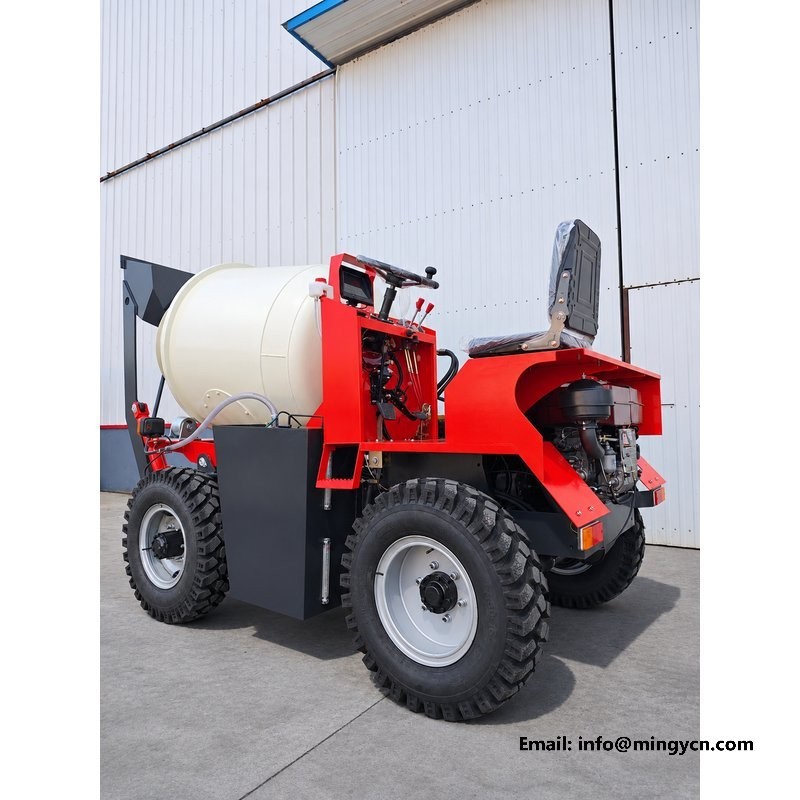
The published envelope for this machine is 3,500 mm long, 1,600 mm wide and 2,200 mm high, and a clean side view is the easiest place to see how those figures are distributed. Height is mostly drum and arm; length is mostly wheelbase and overhang; width is set by the track and the tyres. What the photograph adds is where the mass sits inside those numbers. A machine can be within its envelope and still look wrong, with a small drum set far back or a long nose ahead of the front axle. Comparing the picture with the figures is a quick way to spot a build stretched to fit a larger drum without lengthening the frame. If a dimension looks wrong against the picture, ask which figure is measured and from where, because envelope figures are often taken at different points.
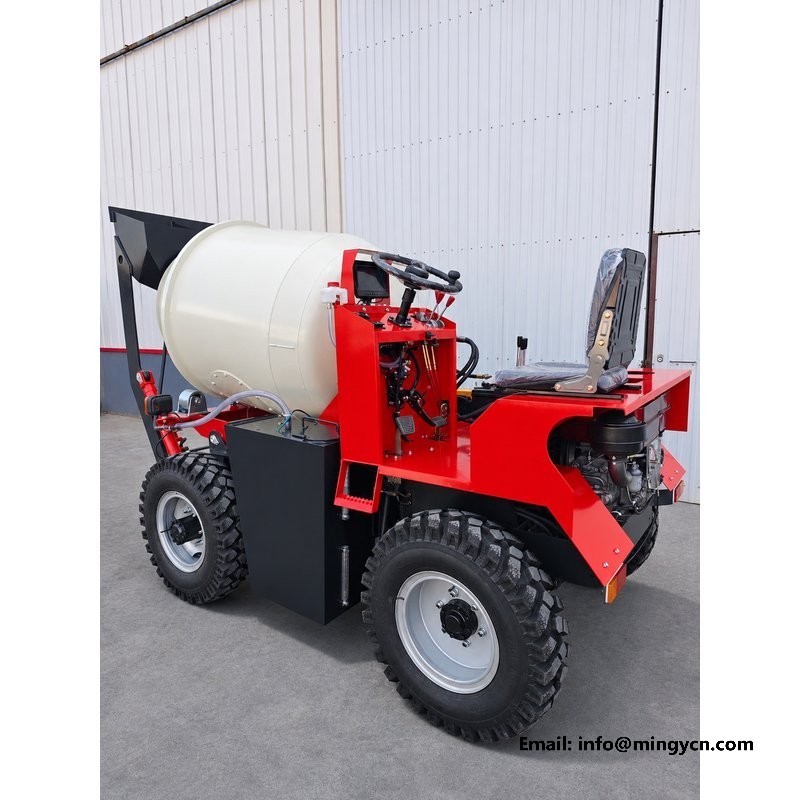
Against a white wall, every edge is a line and every shadow is a fact. Panel gaps become visible because there is no background clutter to hide them. Weld beads on the arm show as a change in the surface rather than as a texture lost in a busy photograph. The route of a hose is readable end to end, and so is the way it is clipped. Paint coverage on the underside of a guard, which is where thin coats show, can be judged because nothing else competes for attention. That is the practical value of the clean frame: it does not make the machine look better, it makes the details harder to avoid. Look at the shadow under the drum, because a hard, even shadow line means the shell is sitting square on its saddle.
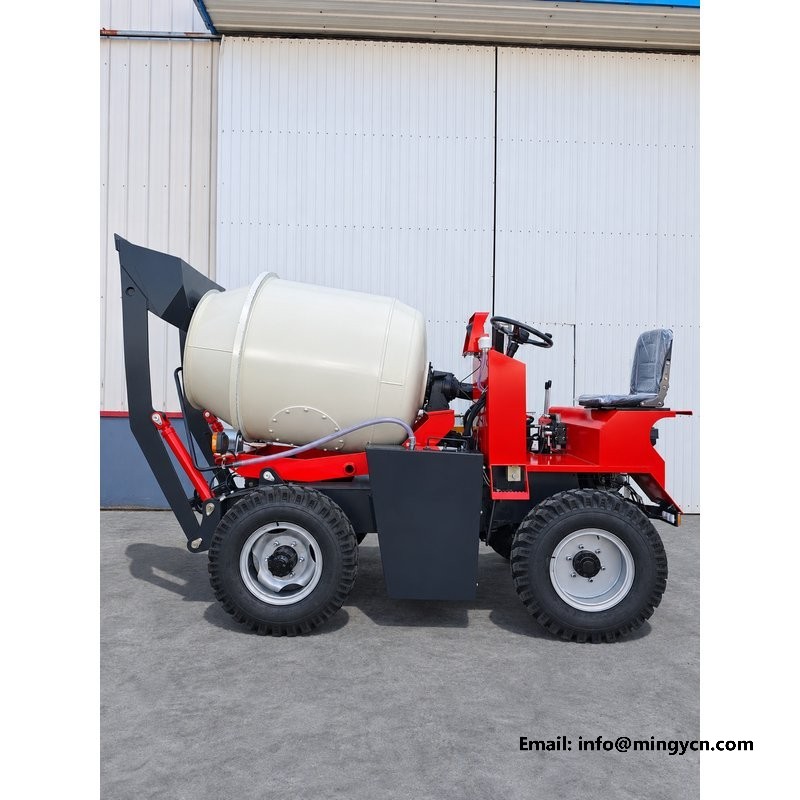
A side view against a plain background is the closest thing to an orthographic drawing that a photograph can be, and that makes it useful away from the website. Sales teams use it in quotations where the machine has to sit next to a competitor's outline. Buyers use it to check that what is offered matches what was described. Yards use it to plan parking and door heights. None of those uses need a beautiful picture; they need a picture with a known scale and no perspective distortion. A frame taken square to the flank, with the machine standing level, does that job better than a dramatic three-quarter shot. A picture with no scale is still useful for shape, but ask for one known dimension to be visible, such as the tyre, to anchor the rest.
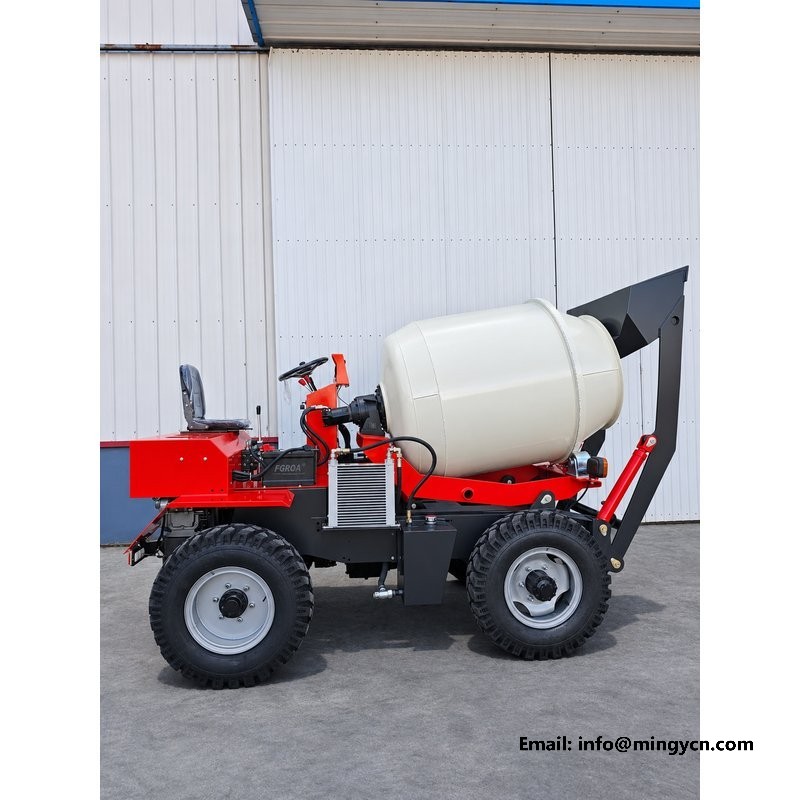
Paint is the least important thing about a mixer and the hardest to judge from a photograph taken outdoors, because the colour of the light changes the colour of the machine. A white wall removes most of that problem by giving the camera a neutral reference. What can then be judged is the evenness of the finish, the sharpness of the edge between body colour and accent, and whether the decals sit where they were designed to sit or have been applied by eye. In this frame the graphic runs parallel to the frame line, which is a small thing that separates a controlled paint process from a quick one. A colour that reads differently on two panels in the same light is a colour applied in two sessions, not a colour chosen twice.
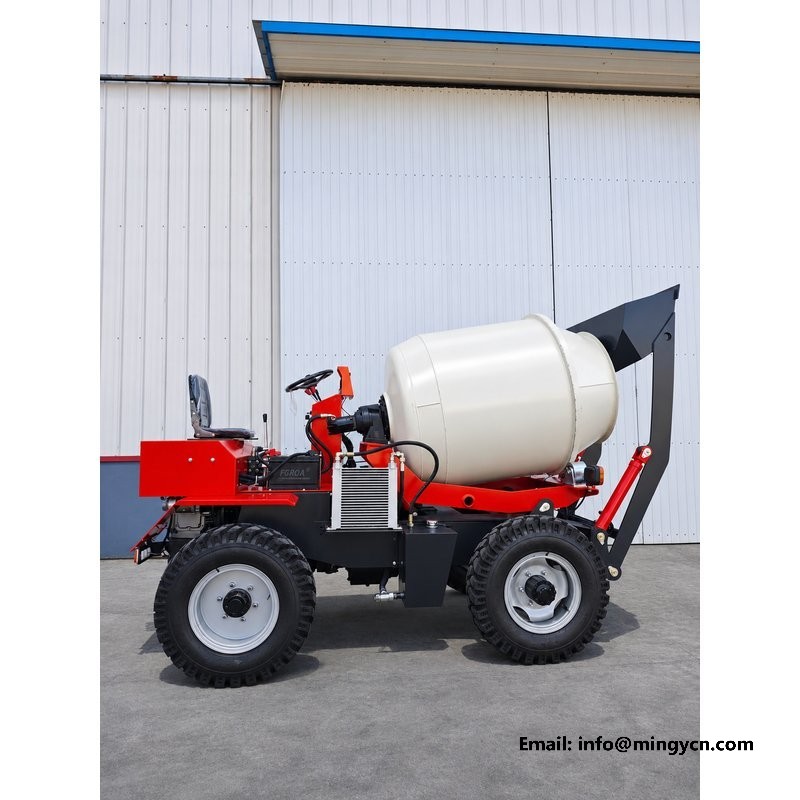
The real value of a standard view accumulates over time. If every machine is photographed from the same side, against the same background, at the same distance, then a set of those photographs becomes a record: a way to see whether a bracket moved, whether a guard changed shape, whether the arm was redesigned between one year and the next. Suppliers rarely do this deliberately, which is why buyers should ask for it. A reference frame taken today is worth more in three years than it is now, because by then nobody will remember what the machine looked like before the change. Ask for the file name to carry the model and the date, because a folder of images called one, two and three is a record nobody can use.
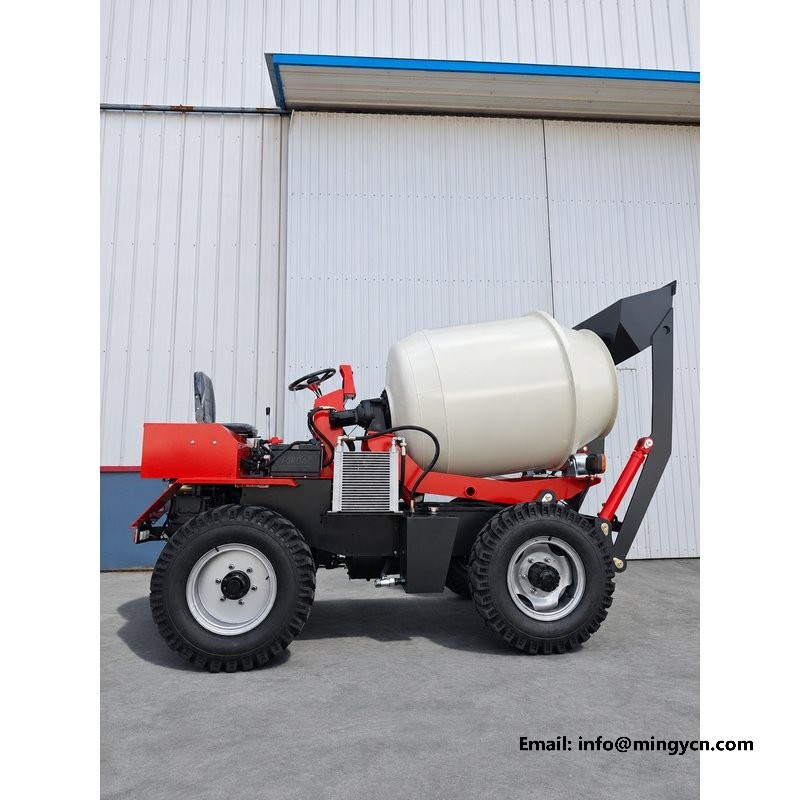
A plain background is honest about shape and dishonest about condition. It hides dust, it hides the film of oil that would show under a machine that has been working, and it hides the ground the machine stands on, which is where a leak would leave its mark. It also flattens depth: a guard standing off the frame by a hand's width can look flush when the light is even. So the clean frame should never be the only one a buyer sees. Use it for proportion and detail, and use the site photographs for condition. Together they describe a machine; either alone describes a version of one. The wall also hides the operator, which is where the sight line question is answered and cannot be answered here.
The most useful gallery is not a set of studio shots with a few site pictures added, but a deliberate pair for each part of the machine: one frame where it works and one where it can be seen clearly. The site photograph answers whether the design survives contact with mud; the clean frame answers what the design actually is. In this set the two are separated by page rather than mixed, which lets a buyer move between them. When you request images from a supplier, ask for both and ask for them of the same build. A clean shot of one machine beside a working shot of another is a comparison that cannot be made. A buyer who keeps both sets side by side will notice a change in a bracket long before a specification sheet mentions it.
If you are commissioning photographs, be specific. Ask for the machine square to the camera rather than at an angle, standing on level ground, with the arm down and the bucket flat. Ask for one frame with the arm at full lift, one of the drive end with the guard on, and one from the operator position. Ask for the same set for each build you are considering. The request costs nothing and it produces a comparison no brochure can. Suppliers who understand their own machine will send the set without argument; the ones who send three glamour shots and a video are telling you how they think about detail. A short written list sent with the request works better than a long conversation, because it survives being forwarded to the person with the camera.
Because it removes the distractions that make a working photograph hard to read. Against a plain wall, panel gaps, weld beads, hose routes and paint edges all become visible as lines rather than textures. It is the frame you use when you need to compare a machine with a drawing, with another build, or with the dimensions published on the specification sheet.
Only partly. A plain background is honest about shape and silent about wear. It hides dust, oil film and the ground beneath the machine, and it flattens depth so a guard standing off the frame can look flush. Use the clean frame for proportion and detail, and pair it with photographs taken where the machine works before drawing any conclusion about condition.
For the current specification, build options and a formal quotation for your market, contact MINGYI Machinery. E-mail: sales@mingycn.com | LINE (ID): mingyicn
1.5 m3 Self Loading Concrete Mixer: Full Specification and Walkaround · 750-16 Tyres and Isuzu Front Axle on the 1.5m3 Mixer · 1.5m3 Self Loading Mixer from Every Angle: A Yard Photo Reference








