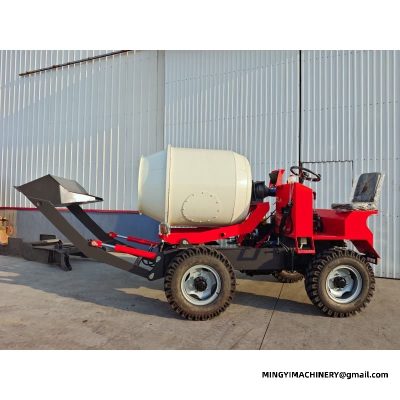
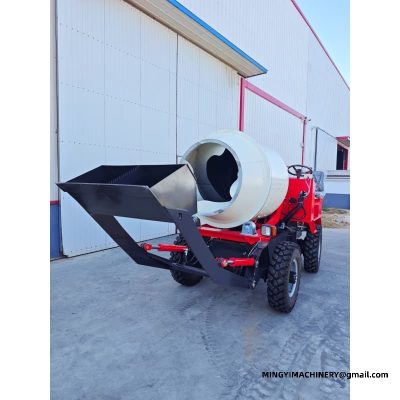
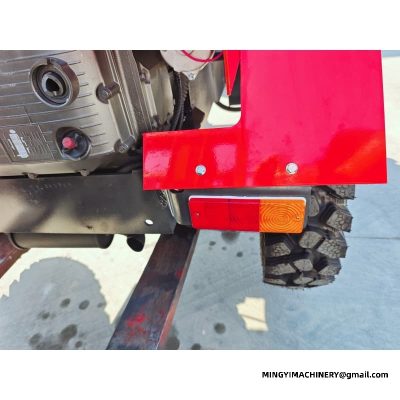
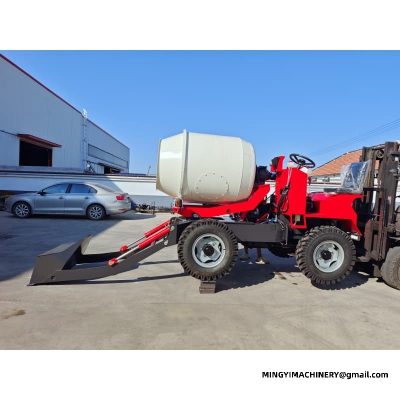
4WD Diesel Self Discharging Mixer, Auto Tilting 0.8m³ Drum, Hydraulic Discharge Truck
Every figure on the 4wd diesel tilting drum mixer table earns its keep somewhere specific. The 0.8 m³ drum matters at the formwork; the 8.25-16 tyres matter halfway across a wet site; the 25 hp single-cylinder diesel matters at the fuel bowser and at the mechanic who knows it by heart. This page connects each published number to the moment on village projects a crew actually feels it.
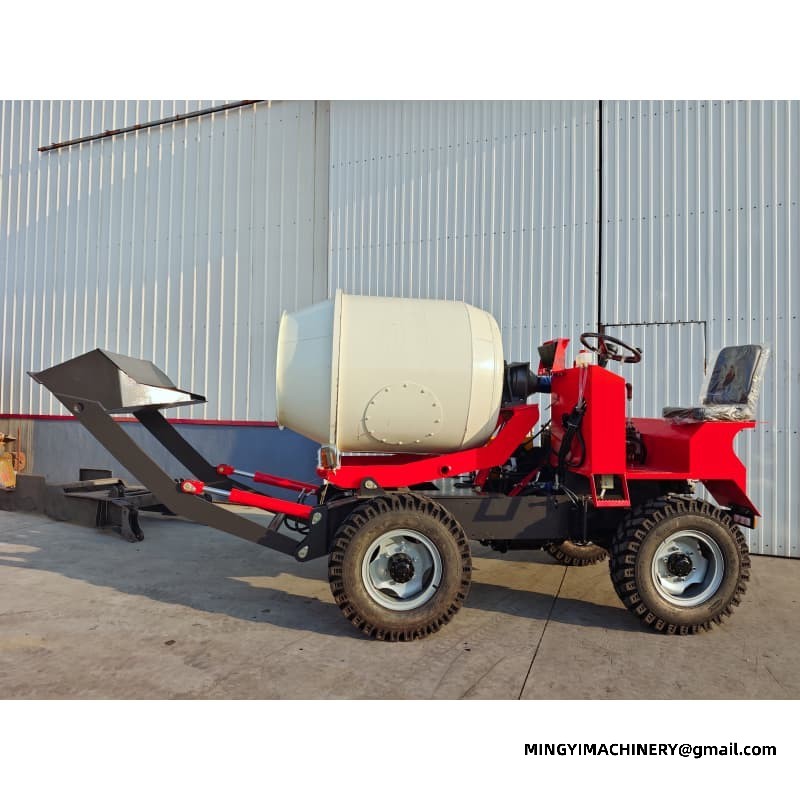
The open station is the machine's safety feature as much as its cab trade-off. Mirrors, a beacon and site lighting turn a fully visible operator into a fully visible machine, and on congested slabs that visibility is what prevents the near-misses closed cabs sometimes hide.
Where weather or debris demands a screen, confirm what the supplier offers for your market before ordering, and weigh it against the access the open station buys. On most small sites the screen takes more in reachability than it returns in comfort.
Consistency comes from a fixed recipe and a fixed routine: the same bucket counts, the same water measure, the same mixing time. Because the shovel weighs each scoop the same way and the drum turns each batch the same way, the machine rewards crews that work to a recipe with batches that finish identically.
Aggregate quality feeds consistency too. Graded pile, clean stock, dry cement storage — the drum can only mix what it is given, and crews that protect their materials on village projects find the machine generous in return.
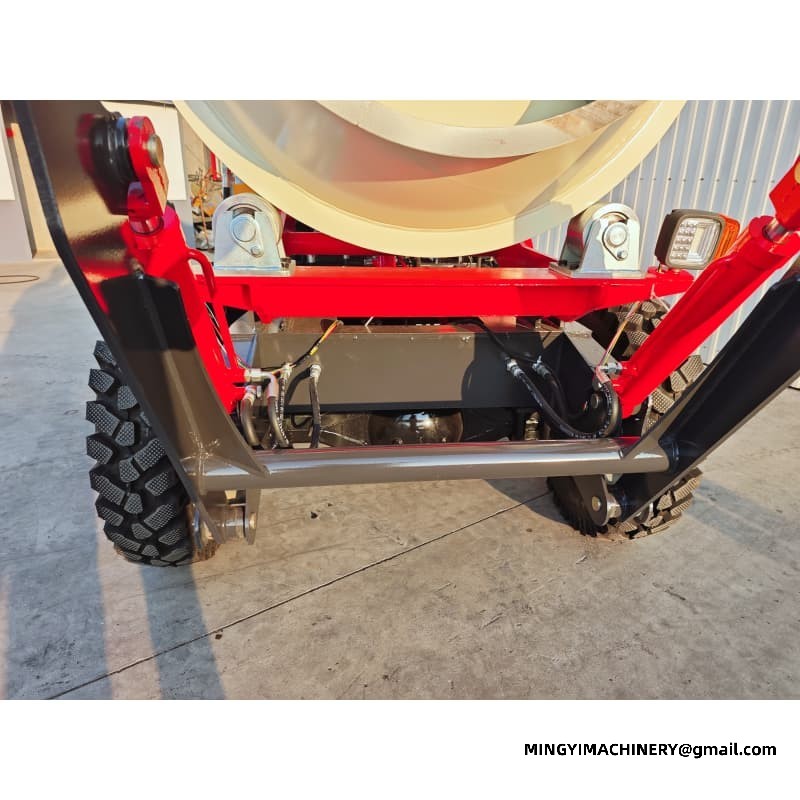
The design is deliberately conventional. Open-centre hydraulics of this pattern are understood by every agricultural mechanic, and hoses, seals and spool valves are stock items almost everywhere the machines are sold.
The tell is noise: a whining pump or juddering steering means the oil is not ready. Operators who warm the circuit before the first batch on village projects hear the difference and save themselves a season of leaks.
| Specification extract — 0.8 m³ 4WD self-loading concrete mixer | |
|---|---|
| Rated load | 1,500 kg |
| Rated capacity | 0.8 m³ |
| Overall dimensions (L x W x H) | 3,500 x 1,600 x 2,200 mm |
| Front tyre size | 8.25-16 |
| Rear tyre size | 7.50-16 |
| Minimum ground clearance | 204 mm |
| Steering angle | 28° |
| Turning dimension (outer tyre) | 2,464 mm |
| Maximum travel speed | 24 km/h |
| Transmission | 4WD |
| Gears | 3 forward / 1 reverse + travel gear |
| Front axle | 130 drive axle |
| Rear axle | 212 selectable 4WD steering axle |
| Engine | single-cylinder diesel / 25 hp |
| Steering | hydraulic power steering |
Cement count, aggregate count, water measure, drum time — four numbers per mix design, and every crew member should be able to recite them. The machine's repeatability turns those four numbers into strength rather than into hope.
Keep a few cubes from the important pours even on small jobs — a shoebox-sized mortar tin makes a serviceable mould in a pinch, and six months later the evidence settles every argument about the batch.
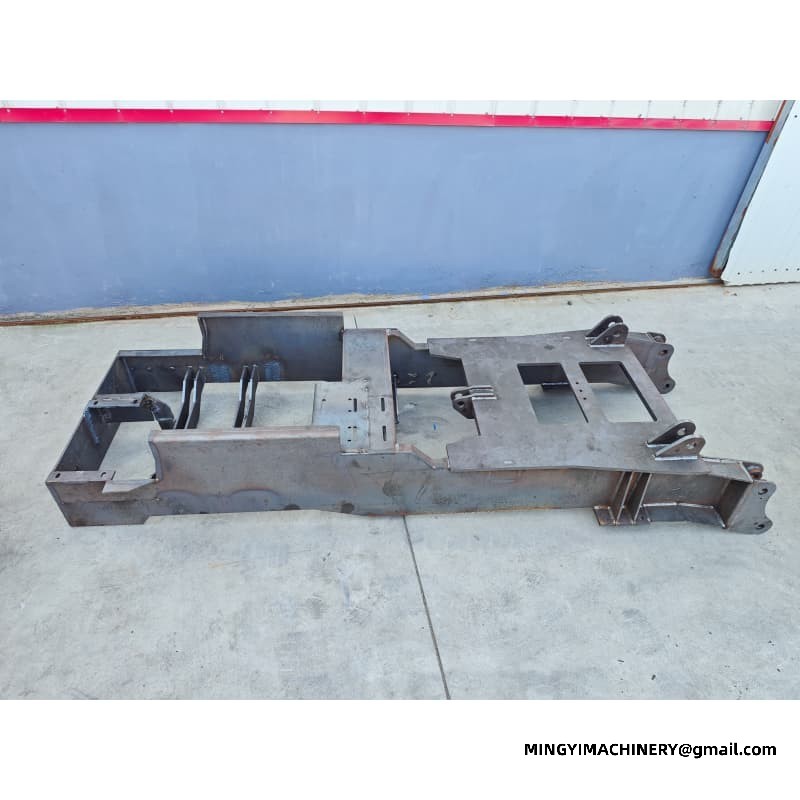
The 130 front drive axle and 212 rear steering axle are named because they are standard agricultural patterns, and that naming is part of the durability case. Bearings, seals, hubs and crown wheels for both exist wherever tractors are sold.
Read the rated load and the rated capacity together, never one without the other. The 1,500 kg rating is what the chassis and tyres are built to carry; the 0.8 m³ is what the drum actually holds per cycle, and the honest pour lives in the gap between the two.
Build the plan around the standing spot rather than the drum: a machine that parks once and serves a bay from one position outserves a machine that shuttles. Positioning time is the only time the drum spends doing nothing.
Wind deserves a mention in the schedule too: it stiffens exposed surfaces and steals workability on the run. Batching slightly wetter within the design, placing tighter to the drum, and covering between loads keep the pour honest on exposed sites.
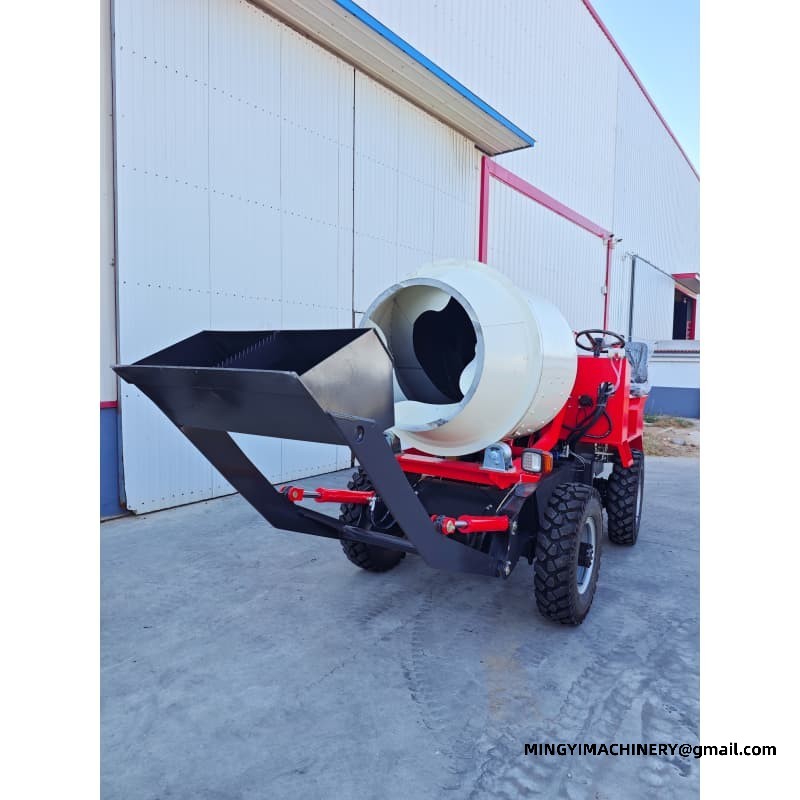
Aggregate temperature is the hidden variable in hot-weather concrete: stockpiles in the sun can carry the mix temperature past the design window before the drum spins. Shade, sprinkling and morning batching are the simple answers.
The wet-season spares list grows by two items: extra air filters and a can of water dispersant for the electrics. Machines that work monsoons year after year on village projects are machines whose crews plan for it.
Rural road work, irrigation canals, farm buildings, village housing and small precast all sit inside that band. Each needs small structural and paving concrete in quantities a plant would refuse and a shovel alone would take all day to supply.
The right-size test is simple. If the work consumes concrete in drum-sized lots, at several points, over more than a few days, the machine fits. Outside that shape, other tools are simpler and better.
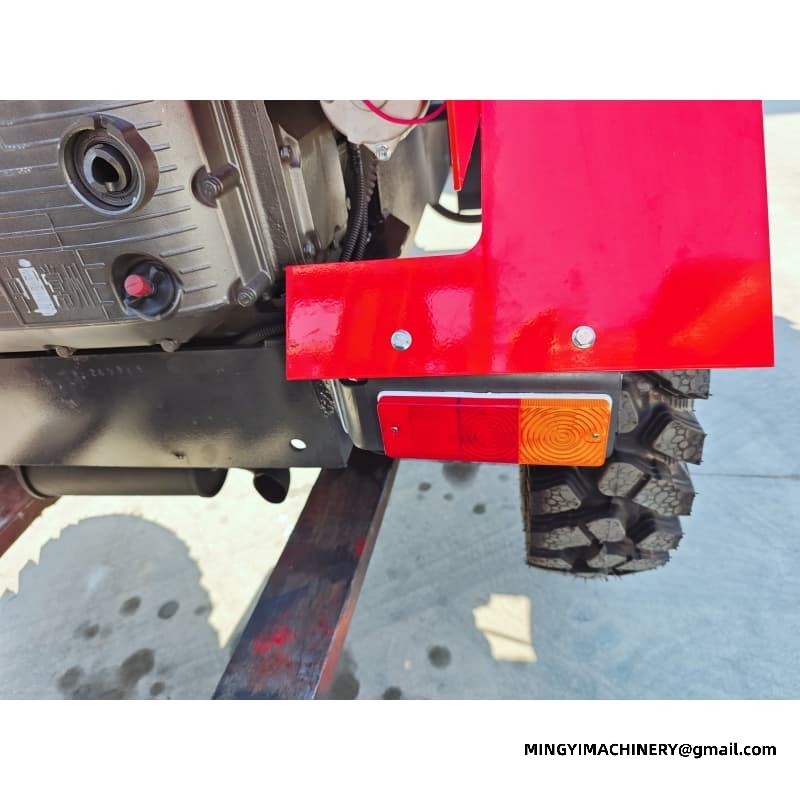
The gear that surprises new operators is the travel gear's absence from site work. Under load, low gears keep the hydraulic pressure available for the drum and shovel; flogging third on village projects starves both and heats the machine for no gain.
Shift on the move only between close ratios; come to rest for anything involving the travel gear. The gearbox is simple and strong, and the abuse that kills gearboxes — ramming selectors under load — is entirely avoidable on village projects.
The machine's natural work is the small structural pour — bases, posts, beams, ties — and the non-structural one beside it: paths, kerbs, patching, linings. Both consume 0.8 m³ per batch in quantities the drum and the crew handle naturally.
The machine suits the small structural pour and the non-structural one beside it — bases, posts, paths, kerbs — all in 0.8 m³ batches the crew handles without a second plant. It should decline the continuous slab, where supply wins outright.
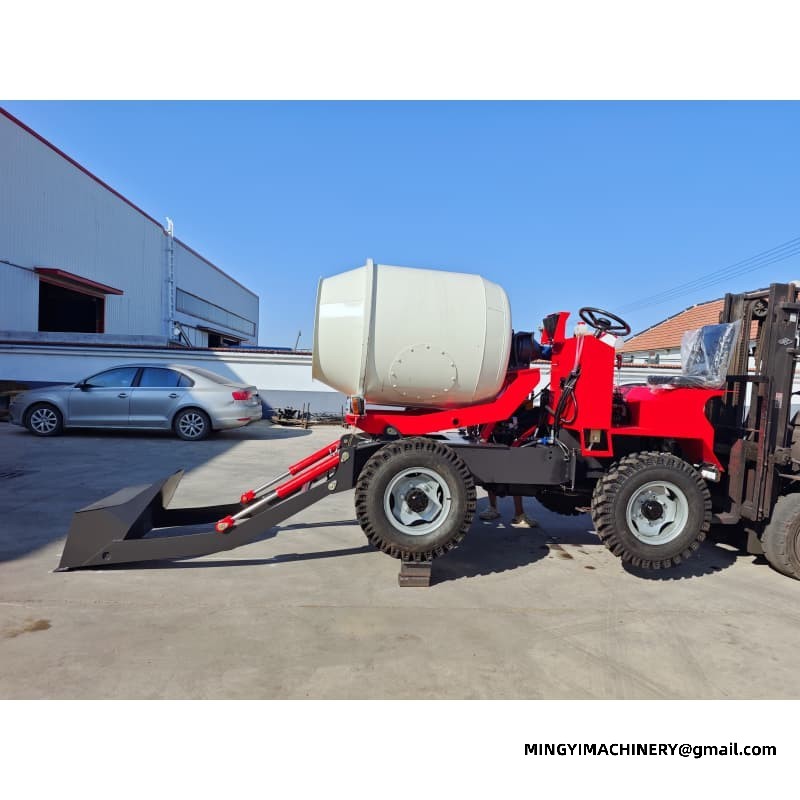
The first week sets the machine's tone. Commission it properly — turn the engine by hand, prime the hydraulics, run the drum empty — then let a new operator feel the 28° steer and the 2,464 mm circle without a live load aboard.
Keep the order history with the parts book. The second order — a blade, a seal, a hose — placed a year later is a two-minute email when the references are at hand, and a half-day search when they are not.
2,464 mm at the outer tyre is the figure that decides where the machine can work. It turns inside estate gateways, between fence posts, along canal towpaths and through basement ramps that stop ordinary site trucks.
Measure the narrowest point on the route before the machine arrives on village projects — the figure turns an access argument into a five-second check. Crews that skip the measurement discover the constraint with a full drum aboard, which is the lengthy way.
A single-cylinder diesel of this size burns a few litres an hour, runs on the same diesel as everything else on site, and services with filters and oil a general mechanic stocks. None of that is glamorous; all of it matters on village projects, where the nearest dealer is a day away.
The spares argument is the strongest one. Injector, nozzle, liners, bearings — parts for engines of this pattern are stocked in every agricultural town on several continents. A mixer that waits a week for a part is a mixer that has stopped being useful.
A tidy pile also protects the mix. Contamination from ground spoil is the usual cause of weak batches on sites that store material directly on soil; a hardened standing area takes little and keeps small structural and paving concrete honest from the first scoop.
Inspection is a two-minute weekly job: pins, teeth or cutting edge, and the two hoses that flex with every lift. Caught early, a weeping fitting or a worn bushing is a teatime repair; left alone, it becomes a pour-day stoppage on village projects.
Will the 4wd diesel tilting drum mixer start in cold weather?
Electric key start with a decompression lever as the manual fallback. Warm the hydraulics and cycle the drum gently on cold mornings before the first loaded batch.
Is the 4wd diesel tilting drum mixer electric start?
Yes — key electric start, with a decompression lever as the manual fallback. Healthy battery practice keeps the starting method reliable across seasons.
How close can the 4wd diesel tilting drum mixer pour to an edge or trench?
The discharge reaches the edge; the wheels should not. Keep the standing spot back from any face, trench or excavation by more than the machine's allowance, and let the drum do the reaching.
What is the rated load of the 4wd diesel tilting drum mixer?
Rated load is 1,500 kg, carried over a short wheelbase with the drum mounted low between the axles on village projects.
Can the 4wd diesel tilting drum mixer run on finished slabs without damaging them?
Fresh slabs take wheel loads only when cured enough — protect with boards or route around, the same as any plant. The agricultural tyres are kinder than steel tracks but not kind to green concrete.
Can the 4wd diesel tilting drum mixer be towed behind a pickup?
On a braked tag trailer rated for the machine's weight, yes — the 3,500 x 1,600 x 2,200 mm footprint was drawn for it. Lash at the chassis, chock the wheels, fold the shovel to travel order.
4wd diesel tilting drum mixer or a small hand-fed drum mixer?
The self-loader replaces the shovel line feeding a hand mixer and hauls the batch to the pour under its own power — one operator does the work of a barrow chain.
Why choose a 4wd diesel tilting drum mixer over more labour?
Because wages recur weekly and the machine does not. One operator with the shovel-and-drum loop replaces a barrow chain, and the batches come out more consistent than hand mixing ever was.
The figures above answer the questions buyers ask most; the daily habits answer the rest. Between them, they describe a machine that is deliberately simple and deliberately durable.
Storage and long idle periods for 4WD Diesel Tilting Drum Mixer: Rotation Both Ways
A stored machine should be brought back carefully. Before 4WD Diesel Tilting Drum Mixer: Rotation Both Ways returns to work the fluids, the brakes and the controls are checked, because months of standing change more than a weekend does.
Hot, humid and dusty conditions around 4WD Diesel Tilting Drum Mixer: Rotation Both Ways
Dust is the enemy of every rotating joint. Keeping the radiator and the air intake of 4WD Diesel Tilting Drum Mixer: Rotation Both Ways clean, and cleaning them before they are blocked rather than after, is what separates a machine that lasts from one that overheats.
A second operator for 4WD Diesel Tilting Drum Mixer: Rotation Both Ways
A machine that only one person can use is a single point of failure. Training a second operator on 4WD Diesel Tilting Drum Mixer: Rotation Both Ways takes a day and removes the dependency that otherwise governs holidays, illness and busy weeks.
Documents that travel with 4WD Diesel Tilting Drum Mixer: Rotation Both Ways
The machine is only half of what arrives. The parts book, the service schedule and the declarations that come with 4WD Diesel Tilting Drum Mixer: Rotation Both Ways are what let the owner register, insure and maintain it without a second round of emails.
Moving 4WD Diesel Tilting Drum Mixer: Rotation Both Ways between sites
Travel time is not working time, and it should be planned as its own item. The hours spent moving 4WD Diesel Tilting Drum Mixer: Rotation Both Ways between jobs are hours not worked, and a trailer that matches the machine reduces them every single trip.
Contact MINGYI Machinery for the current self-loading concrete mixer specification, export packing and a formal specification for your market. E-mail: sales@mingycn.com | LINE (ID): mingyicn
Single Operator 0.8m3 Concrete Mixer: The One-Person Loop · Mini Self Loading Concrete Mixer: The 0.8 m³ 4WD Machine · 4WD Site Dumper with hydraulic tipping body - site duty guide · Mini Self-Loading Concrete Mixer









