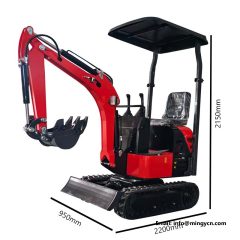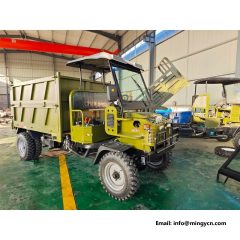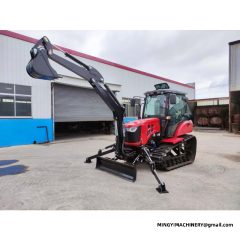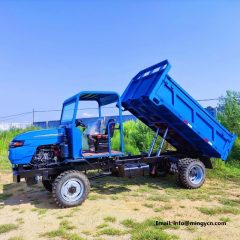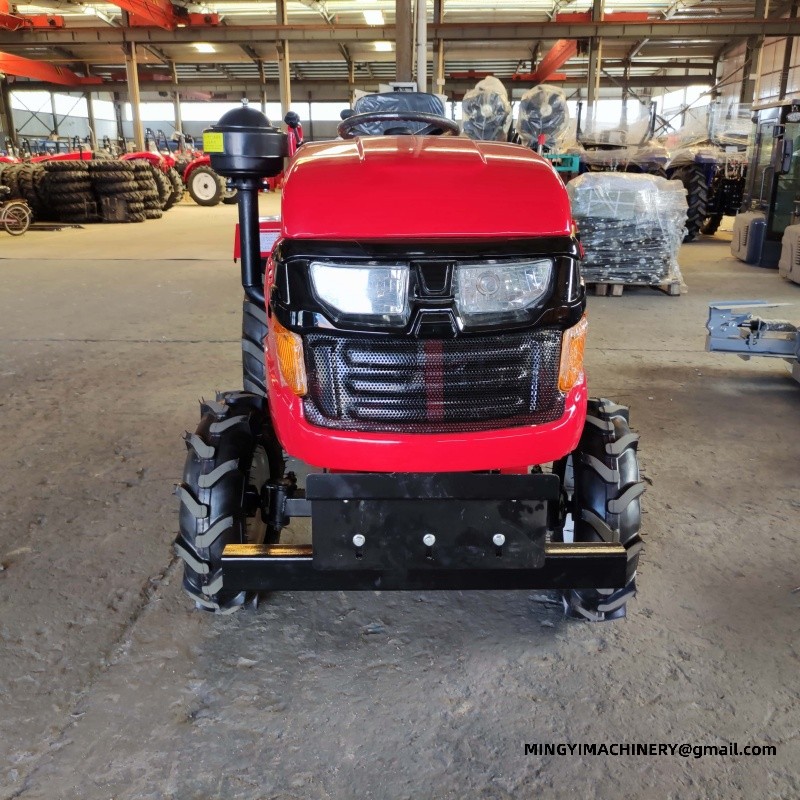
A wheel tractor is the machine that turns up for everything: hauling, mowing, loading, tilling, towing, and carrying things that were never designed to be carried. That breadth is exactly why choosing one badly is easy — a tractor bought for its engine power number can be wrong on hydraulics, wrong on weight, and wrong on tyres, and each of those will show up on the first day of real work. This guide sets out what to match, in the order that actually matters.
Start With the Work, Not the Horsepower
Power is the number buyers compare and the number that decides least. A tractor's usefulness comes from how well power reaches the ground, how much hydraulic work it can do, and whether it can carry or pull the implement you own. Write down the implements first: their weight, their hydraulic requirements, their power take-off speed, and whether they are mounted, semi-mounted, or trailed. The tractor follows from that list.
Two buyers with the same power requirement can need very different machines. One pulls a trailer on a firm track all day and needs speed, braking, and road lighting. The other runs a heavy rotary cutter on wet ground and needs weight, traction, and ground clearance. Both might be satisfied by similar power figures, and neither would be satisfied by the other's tractor.
Power, Weight, and the Ballast Question
Tractors make pull at the ground, and pull is limited by weight and grip rather than by engine power. A powerful tractor that is too light simply spins. The practical consequence: ballast is part of the specification, not an accessory. Front weights, wheel weights, and liquid-filled tyres all add the mass that turns power into drawbar pull, and they also affect braking and stability, which is why manufacturers publish minimum ballast figures for trailed loads.
Weight cuts both ways. More weight means more compaction and more ground damage, which is the same trade-off discussed in the undercarriage guide. The right answer is the least weight that delivers the required pull, with ballast that can be removed when the job does not need it.
Two-Wheel Drive or Four-Wheel Drive
For most work, four-wheel drive is not an upgrade but a requirement. It roughly doubles usable pull for the same weight, it keeps a loaded tractor moving on wet or loose ground, and it improves control on slopes and when braking a trailed load. Two-wheel drive tractors remain sensible for light duties on firm surfaces, for mowing on flat ground, and where simplicity and purchase economy matter more than capability.
Where four-wheel drive is chosen, check that the front axle is built for the duty: a reinforced axle and a proper differential lock matter more than the badge. Also ask about turning radius, because a four-wheel drive tractor with a poor lock angle wastes time at every headland, and time at headlands is a large part of a working day.
Transmissions: What You Will Live With Every Hour
Transmission choice is an operator-fatigue decision as much as a technical one. A simple mechanical gearbox with a limited number of ratios is easy to repair and predictable, but it means clutching constantly in loader work. A synchronised or powershift transmission reduces effort and keeps speed matched to load. A hydrostatic or continuously variable transmission is the smoothest for shuttle work — loading, mowing, and anything with frequent direction changes — while giving up some efficiency and depending on a more specialised repair path.
Ask what local mechanics can service. A transmission nobody within a day's travel can repair is a specification problem, not a convenience problem, and the same reasoning appears throughout the spare parts and support guide. Also check the clutch or shuttle behaviour directly: direction changes under load should be smooth, and creep should be absent.
Hydraulics and Linkage
The three-point linkage is what makes a tractor useful. Check its lift capacity at the specified point, not only at the ball ends, and confirm the category matches your implements. Check whether there are rear remotes — the hydraulic outlets that run tipping trailers, log splitters, and hydraulic top links — and how many. One remote is limiting; two or three changes what the tractor can do.
Flow and pressure at those remotes decide whether implements work properly, exactly as described in the hydraulics guide. An implement that tips slowly or a motor that stalls is a flow problem far more often than a mechanical fault. Ask for the measured figures and match them to the implement before ordering.
Power Take-Off
The power take-off drives implements, and it is a common source of incompatibility. Confirm the rated speeds available, whether it is independent or ground-driven, and how it is engaged. An independent PTO that engages under load with a modulated clutch is easier on both the tractor and the implement. Check the shaft guard and the shielding, because a rotating shaft is the single most dangerous item on the machine and the guard must be present and intact.
If you already own implements, check their PTO requirements and their rotation direction before ordering the tractor. Converting later is possible but rarely convenient.
Tyres and Ground
Tyres are where the tractor meets the job, and they are frequently chosen by default. Agricultural tread gives grip in soil and clears mud; turf tread protects grass; industrial tread resists puncture and wear on hard surfaces. Ply rating matters where stones and stubble are present. Pressure should be set for the load and the surface, and lowered within specification for soft ground.
Also check whether tyres can be adjusted for track width. Rows, implements, and stability on slopes all depend on width, and a tractor whose track cannot be set to the row spacing is a daily frustration in orchard and vineyard work — the point made in more detail in the orchard and vineyard guide.
Cab, Visibility, and the Operator's Day
A tractor is often the machine someone sits in longest. Check the view to the linkage and to the front loader, the position of the controls that will be used most, the seat, the noise level, and the ventilation. Air conditioning is not a luxury in a hot climate; it is the difference between a full working day and a shortened one. Check steps and handholds, because most tractor accidents happen getting on and off.
Road Use and Transport
If the tractor travels on public roads, its specification changes: lighting, braking for a trailed load, marking, and any registration or operator licensing requirements in your market. Check maximum speed, and check that braking performance is adequate for the heaviest trailer you will pull, loaded, on the worst gradient you will meet. Ask whether a trailer braking system is required and whether the tractor is plumbed for it.
If the Tractor Carries a Loader
Loader work changes the specification. The front axle carries the load, so the axle rating and the tractor's front ballast matter more than the engine figure. Hydraulic flow decides how quickly the loader lifts and how well a grapple or a fourth function works; a loader that lifts slowly makes every loading cycle longer and every day harder. Check whether the loader frame is integrated into the tractor structure or bolted on, because an integrated subframe spreads load into the chassis and a bolt-on frame concentrates it at the mounting points.
Visibility over the loader arms is a safety issue as well as a comfort one. Check the view to the bucket in the carry position and at height, and check that the rear ballast required for safe loader work can actually be fitted — a tractor that must carry rear weight but has nowhere to put it is being set up to fail.
Service Intervals and What to Keep on the Shelf
Tractors are maintained rather than repaired, and the discipline is simple: engine oil and filters on the stated hours, fuel filters before they cause a starting problem, air filter by indicator rather than by calendar, hydraulic oil and filter as specified, and grease at every point on the loader and linkage as often as the work demands. The routine in the maintenance guide applies directly.
Keep a small shelf: engine oil and filter, fuel filter, air filter element, hydraulic filter, a set of belts, a spare set of linkage pins and clips, and the seals most likely to weep. Filters and belts are the items that stop a machine for a day over a part that is small, and they are the same items covered in the parts planning set out in the spare parts guide.
Matching Tractor Size to the Job
| Job profile | What matters most | What to avoid |
|---|---|---|
| Mowing and light estate work | Turf tyres, comfortable cab, good visibility | Overweight machine on soft ground |
| Loader and yard work | Hydraulic flow, front axle rating, shuttle smoothness | Slow hydraulics and poor visibility over the arms |
| Tillage and heavy draft work | Weight, four-wheel drive, drawbar pull | Power without ballast |
| Orchard and vineyard rows | Narrow track, low profile, adjustable width | Wide fixed track and tall cab |
| Hauling on roads | Braking, lighting, towing ratings | Inadequate brakes for the loaded trailer |
| Mixed farm duties | Balanced specification and local service support | Exotic transmission nobody can repair |
Engine, Emissions, and Fuel Realities
Modern tractor engines carry emissions equipment that changes how the machine should be run and fuelled. Confirm the emissions tier that applies in your market and what it means for fuel quality and for service intervals. Low-sulphur fuel is a requirement, not a preference, on engines with diesel particulate filters, and poor fuel is the fastest route to a machine that will not regenerate and will not pull.
Check the fuel tank capacity against a working day, because refuelling in a field is time lost. Check that the engine's torque curve suits the work: an engine that holds torque as speed drops under load pulls through a heavy patch rather than stalling in it, and that behaviour matters more in draft work than the peak power figure printed on the bonnet.
Common Mistakes
Buying power and forgetting weight. Ordering a tractor with one hydraulic remote when the implement list needs three. Choosing a transmission that nobody locally can repair. Accepting default tyres. And discovering after delivery that the PTO speed or linkage category does not match implements already on the farm.
Wheel Tractor Selection Checklist
| Item | What to confirm |
|---|---|
| Implement list | Weight, linkage category, PTO speed, hydraulic needs |
| Power | Matched to the heaviest implement and to the PTO demand |
| Weight and ballast | Enough for required pull; removable when not needed |
| Drive | Four-wheel drive with a reinforced axle and diff lock for most work |
| Transmission | Suited to shuttle frequency; serviceable locally |
| Linkage | Lift capacity at the specified point; category matches implements |
| Remotes | Number, flow, pressure, and coupler type |
| PTO | Speeds, engagement type, guard condition |
| Tyres | Tread and ply for the surface; adjustable track width |
| Operator | Visibility to linkage and loader, seat, climate, access steps |
| Road use | Lighting, braking, towing limits, local registration |
| Support | Service intervals, filters, and wear parts available locally |
Write the implement list first, then match weight, drive, transmission, hydraulics, and tyres to it. That order produces a tractor that works on its first day. If you want a second pair of eyes on a specification you are considering, send us the implement list and the ground conditions and we will tell you what we would change.