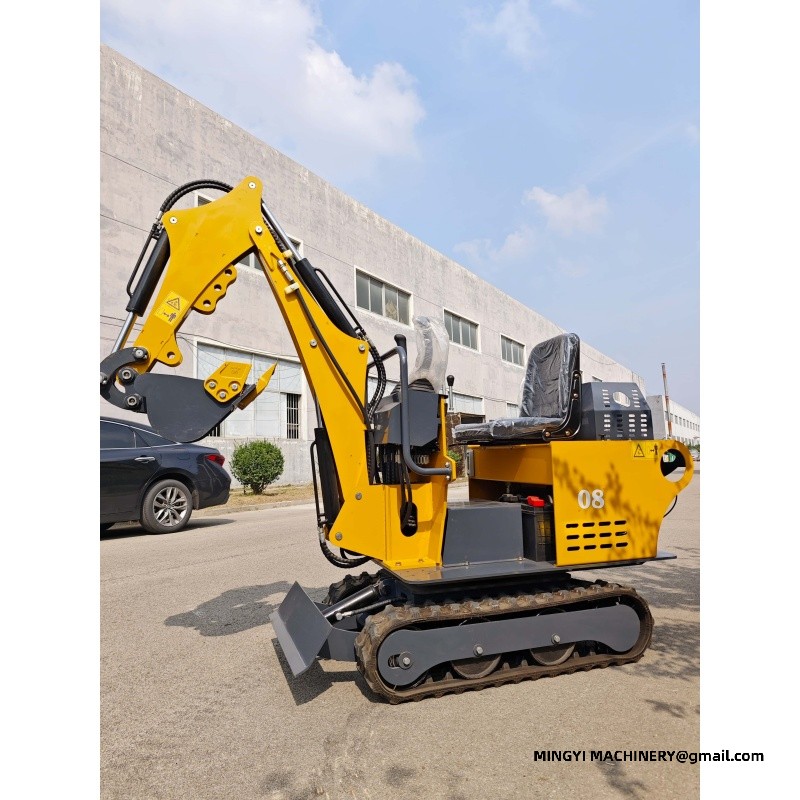
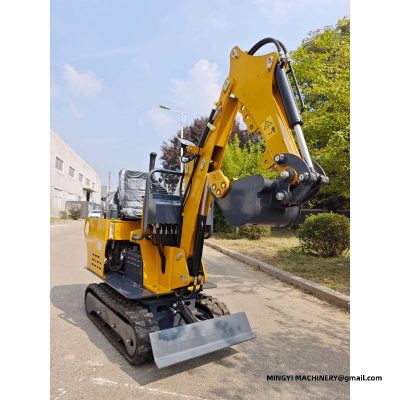
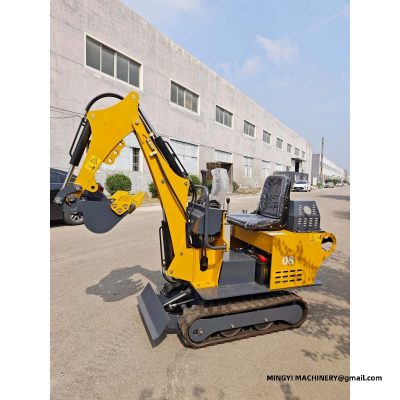
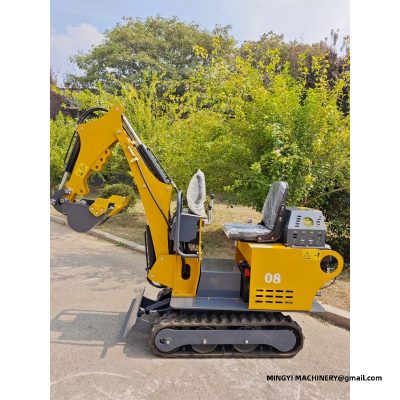
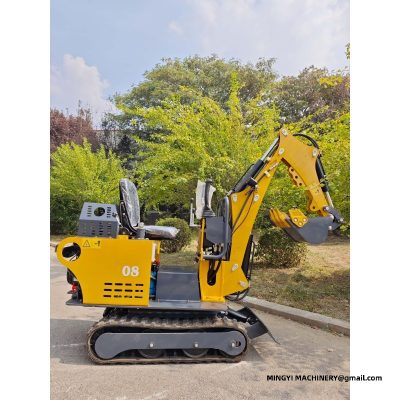
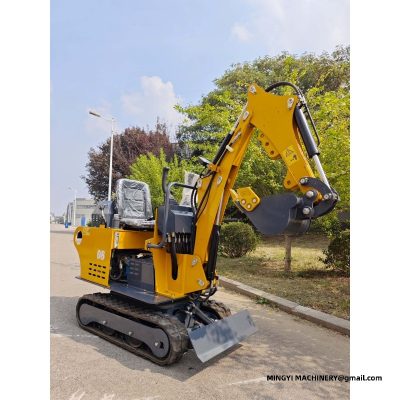
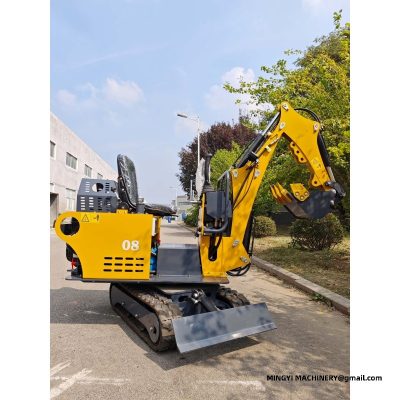
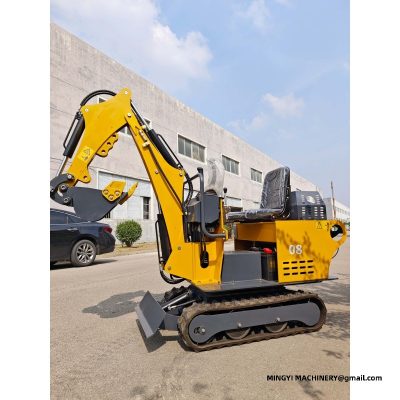
Renovation inside existing buildings creates a digging and demolition problem in an awkward place: floors must be broken, sub-base removed and new footings dug, all within occupied rooms reached through standard doorways. A mini excavator for interior work is sized around these limits.
The smallest classes in the range pass through internal openings and turn within rooms, bringing machine breaking and digging to jobs once done on knees with a hammer and barrow. Exhaust ventilation remains a site planning matter, as with any diesel machine indoors.
Indoor demolition with a compact digger
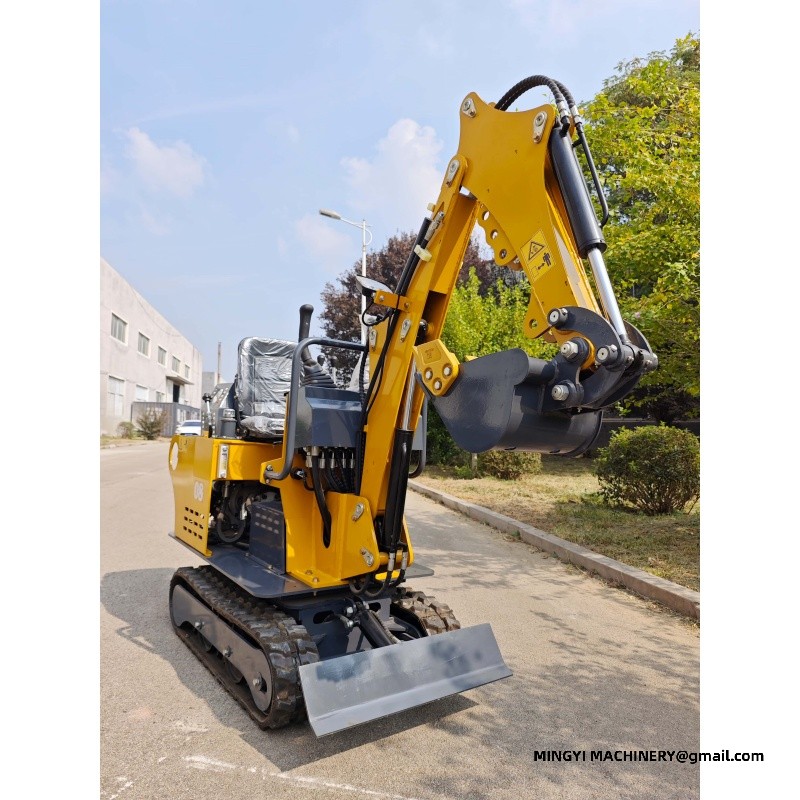
The working pattern on an interior strip-out runs from breaking to clearance: a breaker hammer opens the old floor slab and redundant footings, the bucket digs out the sub-base, and a thumb gathers the rubble into loads for removal through the same doorway.
Room by room sequencing keeps the rest of the building habitable, with the machine breaking out, digging and loading in one area before moving on. Damage is confined to parts already scheduled for renewal.
Machine choice for interior renovation work
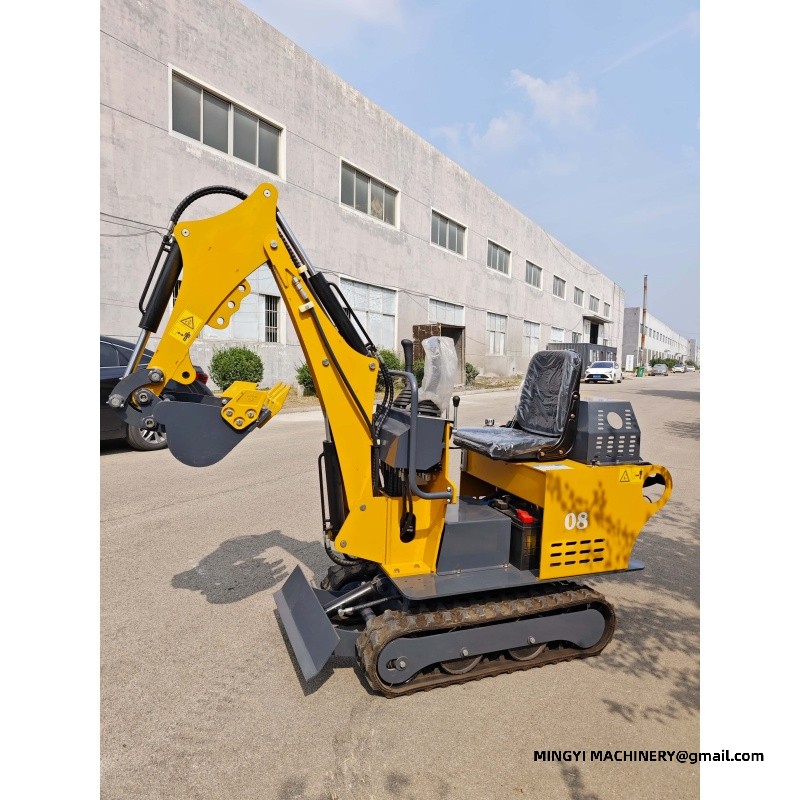
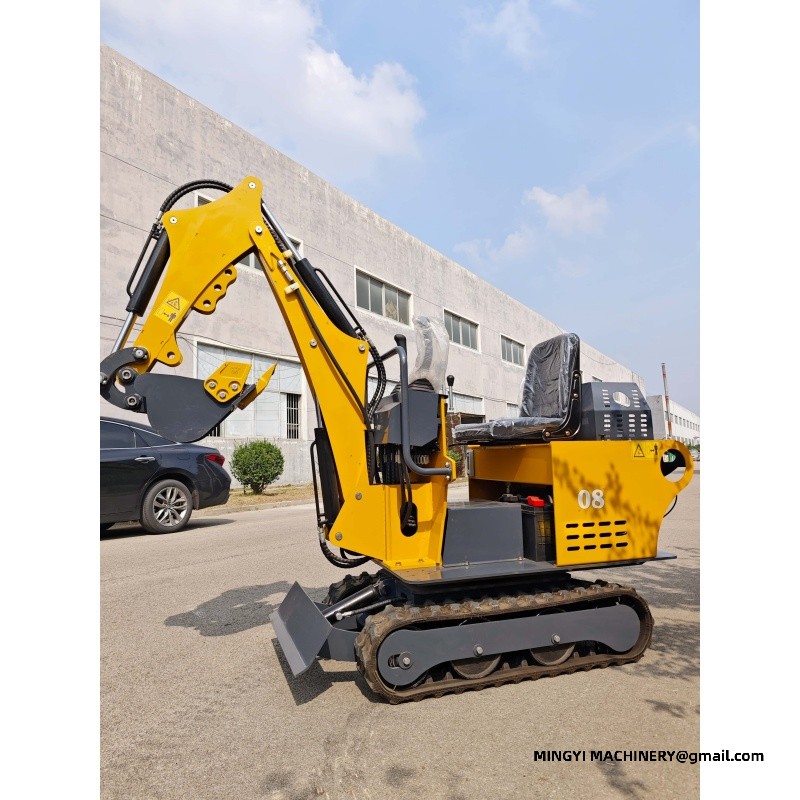
The specification centres on width and height: the narrowest machines in the range, usually on rubber tracks to protect floors underneath, and a canopy rather than a cab where ceilings and door linings restrict the height.
Ordering should state the narrowest internal opening and lowest obstruction on your projects, since these fix the class and canopy arrangement. The breaker, bucket and thumb set travels with the machine, its specification recorded for later parts ordering.
Interior renovation rewards the smallest machine that can still break. MINGYI builds to the doorway measurements you supply, so the unit that arrives fits the rooms and finishes the strip-out at a pace hand demolition cannot hold.
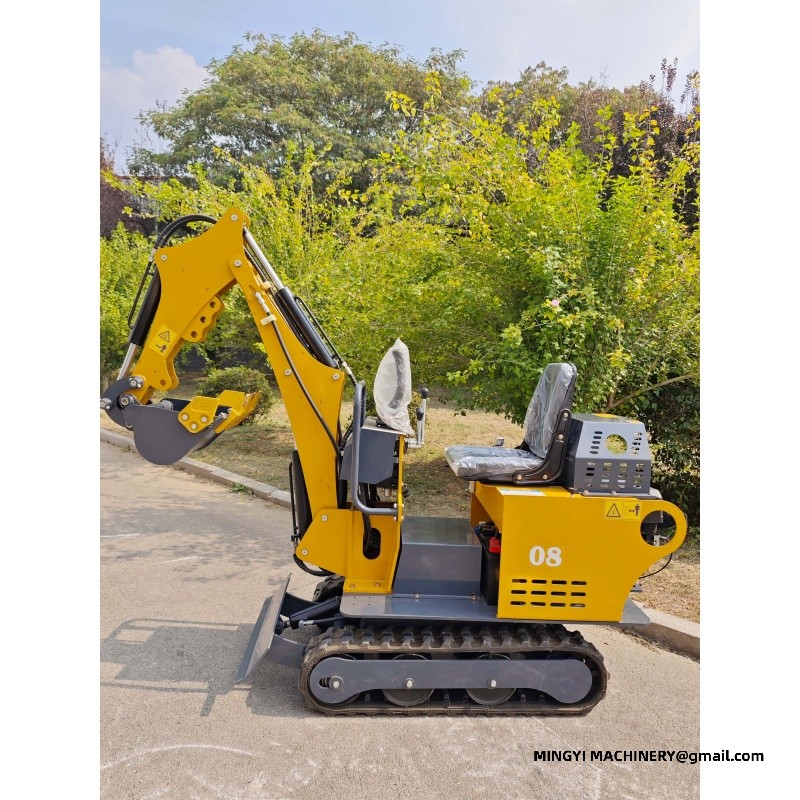
Landscaping and ground care with mini excavator for interior renovation Landscape contractors use the excavator for planting holes, pond excavation, grading and retaining work. The machine is light enough to cross finished lawn and narrow enough to work between established trees. Grass cutting heads, rakes and tillers extend this class of machine into ground care. The same carrier that digs a border in spring can cut and clear the same area later in the season. OEM and fleet customisation of mini excavator for interior renovation Distributors and rental fleets usually need the machine to look like theirs. Paint, decals, seat colour and attachment branding can be specified on the unit in daily use at build time rather than applied after import. Documentation can be prepared to suit the importer. Manuals, parts books and decal sets for a machine of this size can be supplied with the buyer's own branding where the order size justifies it. Matching mini excavator for interior renovation to ground conditions Hard and abrasive ground reverses the specification. On rock, demolition rubble or sharp gravel, steel tracks with rubber blocks on the equipment on site survive conditions that cut a rubber belt quickly. Mixed sites are common and argue for a compromise specification. Most buyers choose rubber for the machine itself and accept the wear, unless the majority of the work is on material that will damage it. Daily checks and maintenance on mini excavator for interior renovation Daily maintenance on the model in question is a short list: engine oil level, coolant, track tension, hydraulic oil level and a look at the hoses. Ten minutes at the start of the shift prevents most of the failures that stop a machine. Greasing is the second item. The slew ring, the boom and arm pins and the bucket linkage on the machine in that duty take grease daily in dusty work, and the intervals shorten further when the machine is used in water or mud. Canopy or enclosed cab on a mini excavator for interior renovation A canopy keeps the machine light and the operator aware of the surroundings, which suits short jobs in warm weather. A fully enclosed cab is specified where rain, dust or cold are part of the working year, and it can be added to the unit on the job as a retrofit rather than only at build time. The cab decision follows the climate and the hours. Operators working a full shift in a machine built for the work benefit from a sealed cab with wipers and heating; operators stepping on and off every few minutes usually prefer the canopy for the visibility and the quick exit. Engine options behind mini excavator for interior renovation Two buyers can order the same the excavator and receive different engines. The decision is rarely about peak power; it is about which parts counter is closest to the site and which engine the local mechanic already knows. Engine choice is also an emissions and documentation question for some markets. Listing the available units with the equipment in service enquiry lets the factory confirm what can be supplied and documented for the destination country. Road and paving work for this class of machine Road repair generates short, interrupted jobs - a patch, a drainage connection, a kerb line. The unit in daily use is economical here because it travels on a small trailer and starts working minutes after arriving. Patching and reinstatement favour a machine that can work in a lane closure. A machine of this size occupies less road than a full-size excavator, which reduces the traffic management needed and the length of the closure. Working the equipment on site through the seasons Seasonal planning smooths the workload. Machines that are busy for a few months and idle for the rest benefit from a service slot in the quiet period, and the machine itself prepared in the off-season starts the busy months reliably. Heat and dust are as limiting as rain. Air intake condition and cooling cleanliness decide how the model in question behaves in a dry season, and both are checked in a minute rather than repaired later. Hydraulic circuits on the machine in that duty Auxiliary hydraulic lines are what let a machine drive a tool rather than only a bucket. The unit on the job specified with the right circuits and flow runs a breaker or an auger without an add-on power pack bolted to the frame. Hydraulic specification is easier to settle at build time than to correct later. A machine built for the work delivered without auxiliary lines can still dig, but every additional tool becomes a retrofit project. Lifting and material handling with the equipment in service Lifting with a machine built to dig needs a plan. The load, the radius and the ground under the class of machine all matter, and the safe figure is the one on the chart rather than the one that looks possible. Stability changes with reach. A load the excavator handles close in becomes a different proposition at full extension, so the working radius belongs in the plan before the lift rather than during it. Working the unit in daily use in confined spaces Confined sites are decided by dimensions. Overall width, tail swing and the space needed to work the arm are what let a machine of this size operate inside a building, between walls or in a courtyard. Ventilation is the other indoor constraint. Running the equipment on site inside a closed structure needs air movement, and that is a planning item rather than something to discover after the first hour. Parts, service and support for the machine itself Remote diagnosis shortens most faults. A walk-around on video with the panels open often identifies the cause on the model in question without waiting for a visit, and avoids shipping a part that turns out not to be needed. Specification data for the machine in that duty The figures below are the factory figures for the models most often matched to the unit on the job. They are the numbers to check against the site: the depth the work needs, the reach from one position, and the width of the narrowest point on the route in. These are the reference figures for a machine built for the work. MINGYI confirms the final build sheet, including engine and attachment choices, against the destination and the job list before production. Support after delivery is a parts question. Wearing items for the equipment in service - filters, belts, track components, bucket teeth and pins - are the items a buyer should plan to hold before the first service interval. Engine parts availability usually drives the engine choice. The excavator built with an engine the local network already carries is serviced from stock rather than from an international order.
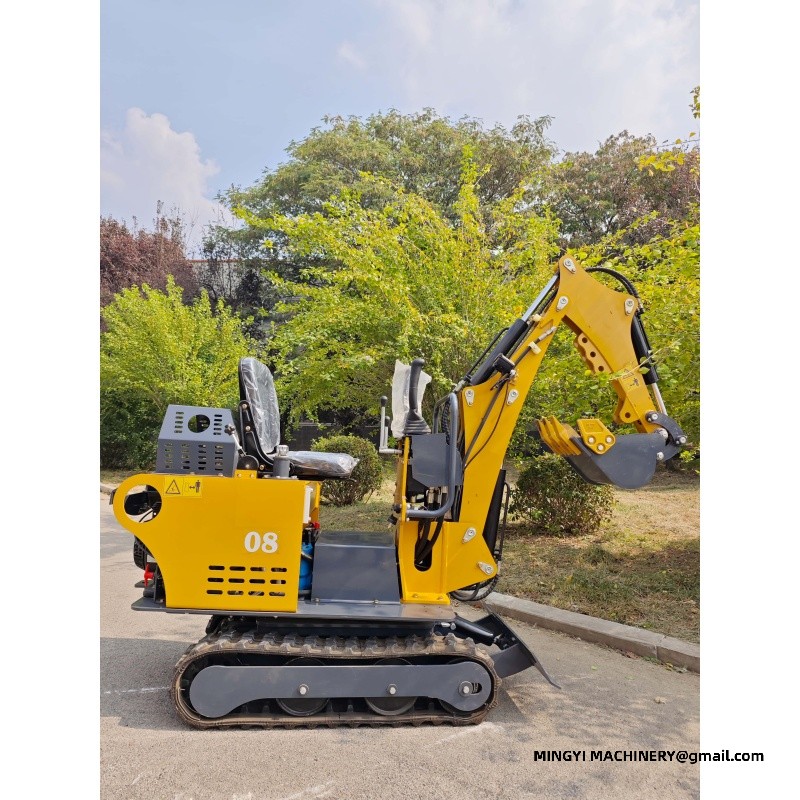
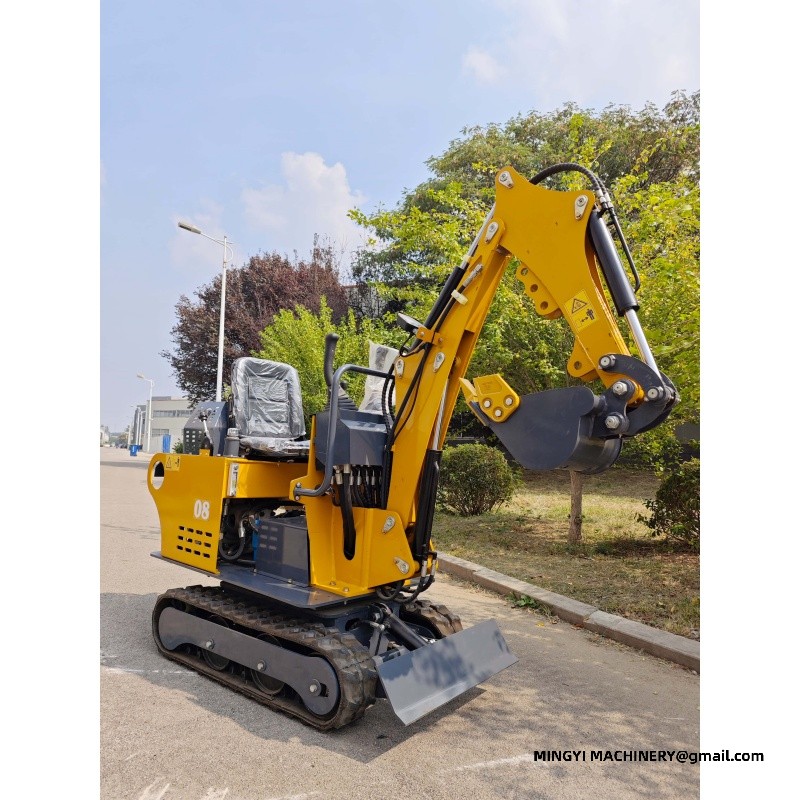
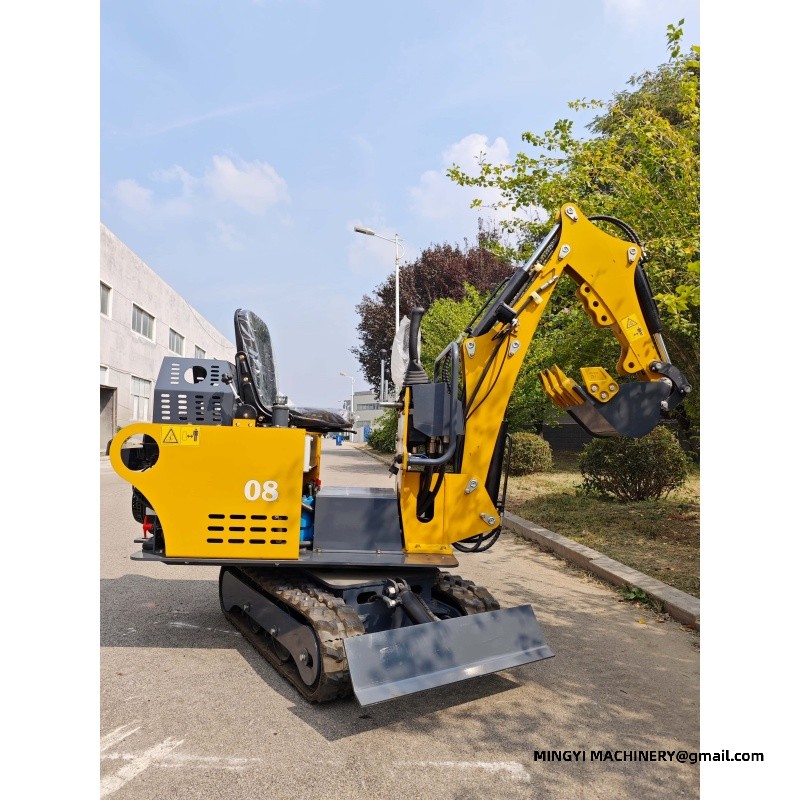
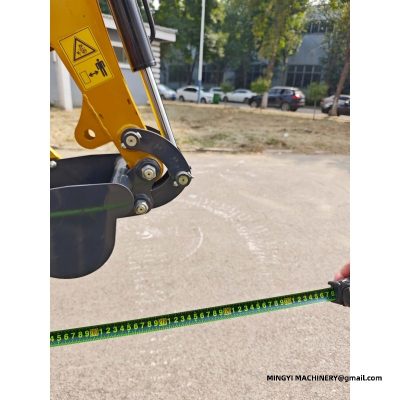
Reference specification — mini excavator range 09W 30-2W 15L 30-2L Operating weight 1100 kg (2425.08 lb) 2700 kg (5952.48 lb) 1400 kg (3086.47 lb) 2400 kg (5291 lb) Transport size (L×W×H) 1800 × 750 × 1970 mm 3000 × 1100 × 2700 mm 2200 × 930 × 2250 mm 2800 × 1500 × 2500 mm Max digging depth 1250 mm (49.21 in) 2200 mm (86.61 in) 1700 mm (66.93 in) 2200 mm (86.61 in) Max digging height 2800 mm (110.24 in) 3000 mm (118.11 in) 2750 mm (108.27 in) 2900 mm (114.17 in) Max dumping height 1700 mm (66.93 in) 2000 mm (78.74 in) 1960 mm (77.17 in) 2100 mm (82.68 in) Max digging radius 2570 mm (101.18 in) 3800 mm (149.61 in) 2900 mm (114.17 in) 3330 mm (131.1 in) Max digging distance 1869 mm (73.58 in) 3050 mm (120.08 in) 2300 mm (90.55 in) 2700 mm (106.3 in) Minimum turning radius 1000 mm (39.37 in) 1750 mm (68.9 in) 1450 mm (57.09 in) 1555 mm (61.22 in) Travel speed 3 km/h (1.86 mph) 7 km/h (4.35 mph) 3 km/h (1.86 mph) 7 km/h (4.35 mph) Gradeability 30° 30° 30° 30° Fuel consumption 1-1.3 L/h (0.264—0.343 gal) 2-3 L/h (0.528—0.793 gal) 1-1.3 L/h (0.264—0.343 gal) 2-3 L/h (0.528—0.793 gal) Fuel tank capacity 8 L (2.11 gal) 16 L (4.23 gal) 10 L (2.64 gal) 16 L (4.23 gal) Hydraulic oil tank 16 L (4.23 gal) 20 L (5.28 gal) 16 L (4.23 gal) 18 L (4.76 gal) Dozer blade lift height 180 mm (7.09 in) 230 mm (9.06 in) 180 mm (7.09 in) 230 mm (9.06 in) Dozer blade drop depth 210 mm (8.27 in) 280 mm (11.02 in) 210 mm (8.27 in) 280 mm (11.02 in)
Q. What is this class of machine?
A. In strip-out and demolition the compact digger does the work that used to need crews with hand tools, at a rate hand work cannot touch. Indoors, zero tail swing keeps the counterweight off the walls and a thumb turns the bucket into a sorting hand. The unit in daily use is one of the pages buyers land on when comparing machines for interior renovation, and the factory treats it as a specification conversation rather than a catalogue line.
Q. What attachment set matters for demolition?
A. A breaker for the concrete, a thumb or grapple for sorting, a bucket for clean-up - and steel tracks once the floor is rubble. The coupler turns the machine from breaker carrier to loader between passes.
Q. What about colours and branding?
A. OEM colours and decals are part of the build: private-label machines carry the buyer brand on the standard MINGYI platform, and the interior renovation order confirms colours, marks and documents before production starts.
Wear items and spares worth holding for a machine of this size
Holding spares is about downtime rather than the shelf itself. The question for the equipment on site is not how large the part is but how long the machine sits while it is found, and a small shelf answers that better than a fast courier.
A second operator for the machine itself
Training is simpler than repair. An hour spent with a new operator on the model in question, covering the limits and the awkward cases, is the least lengthy hour in the whole ownership.
Commissioning the machine in that duty on site
The first hour on site should be slow. Before the unit on the job is put to work the fluid levels are rechecked after transport, the fasteners are gone over and the machine is run light so that anything loosened in transit shows up early.
E-mail : sales@mingycn.com
LINE ( ID ): mingyicn
Related pages
mini digger manufacture and supply · compact excavator · Bucket Loader Machine: Matching Bucket Volume to Material Weight · Mini Excavators









