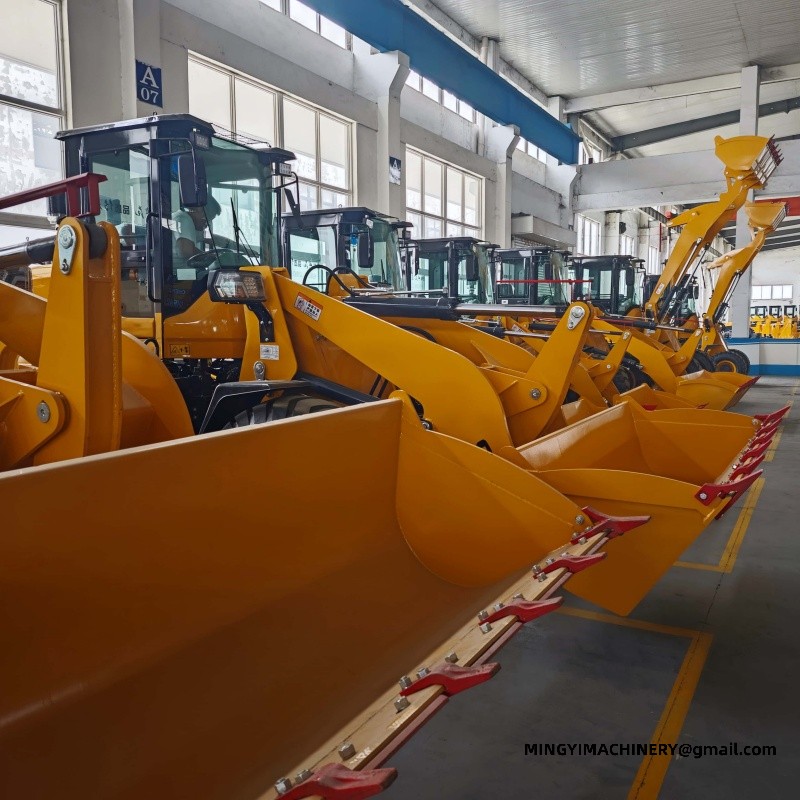
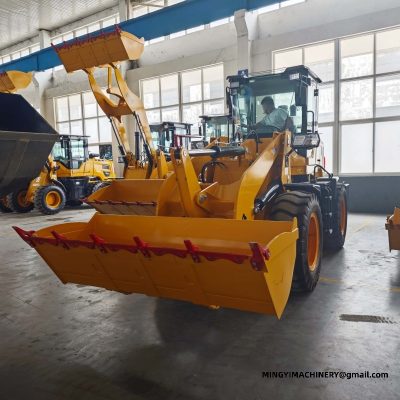
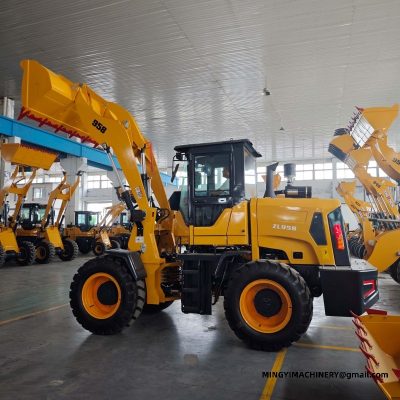
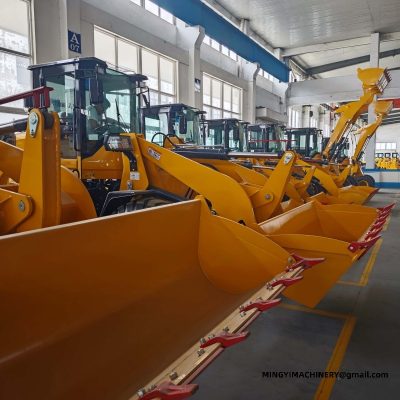
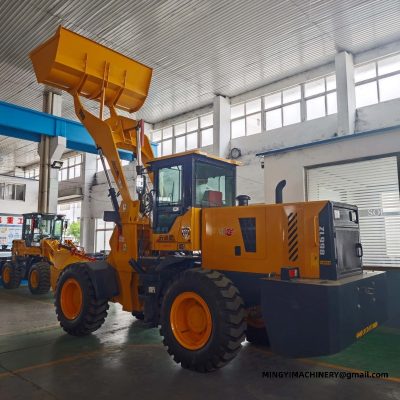
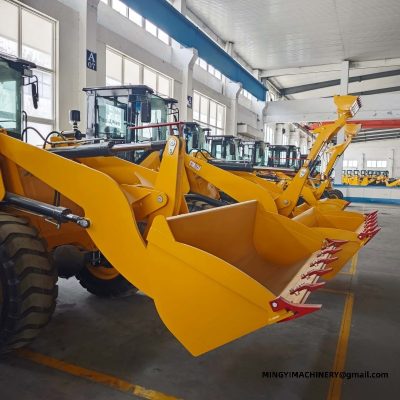
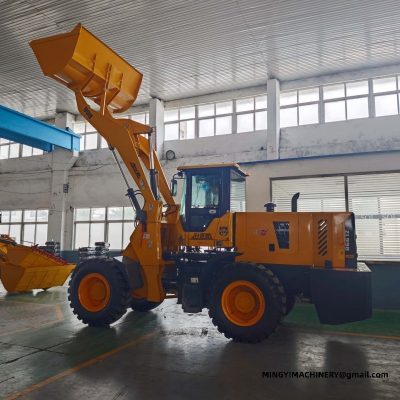
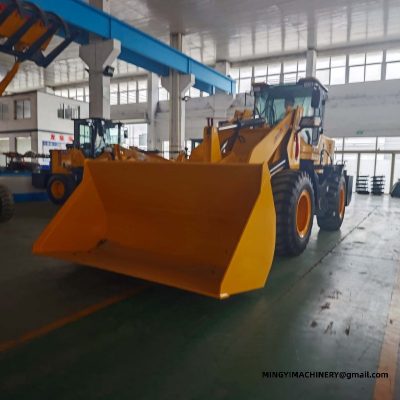
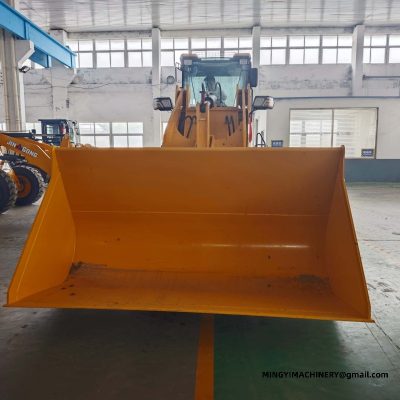
Duty decides the build, and duty is measured in cycles, not in tonnes. A bucket loader machine loading twenty trucks a day needs heavier steel than one moving pallets and feed. The figures move together: cross-member 45 mm against 45 mm, rear hinge 30 mm against 30 mm, cylinder set centre cylinder 60 / side cylinder 50 against centre cylinder 60 / side cylinder 50, radiator 4105 core against 4105 core. Buckets are 0.65 m³ and 0.65 m³, dump heights 4.2 m and 4.5 m. This page maps duty to build, with the numbers for each.
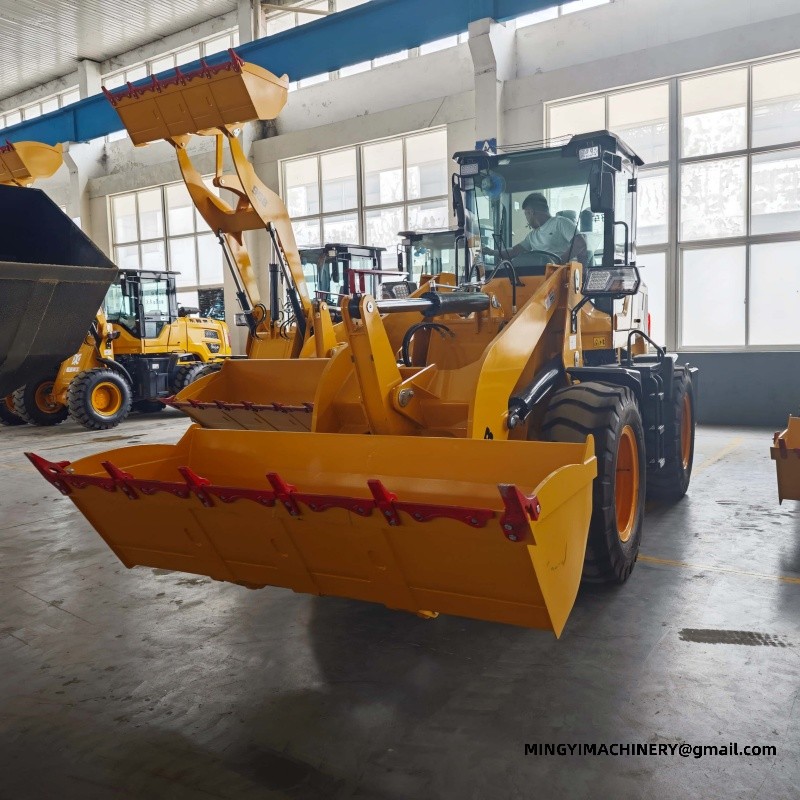
Volume is simple and stability is not. Across the range the buckets run 0.65 m³ on the heavy-duty 4.2 m medium-frame wheel-side reduction wheel loader to 0.65 m³ on the heavy-duty 4.5 m medium-frame wheel-side reduction wheel loader, and the machines behind them are built to match: 30 mm boom wall and 45 mm cross-member against 30 mm and 45 mm. That is why a bigger bucket on a lighter frame is a poor bargain.
Decide in three steps. First, what are you loading into — that fixes dump height, 4.2 m on the heavy-duty 4.2 m medium-frame wheel-side reduction wheel loader or 4.5 m on the heavy-duty 4.5 m medium-frame wheel-side reduction wheel loader. Second, what is the material's weight per cubic metre — that fixes whether 0.65 m³ or 0.65 m³ is honest. Third, how many passes a day — that fixes whether the extra volume saves enough time to pay for the heavier frame. Skip the second step and you buy a machine that is either slow or overloaded.
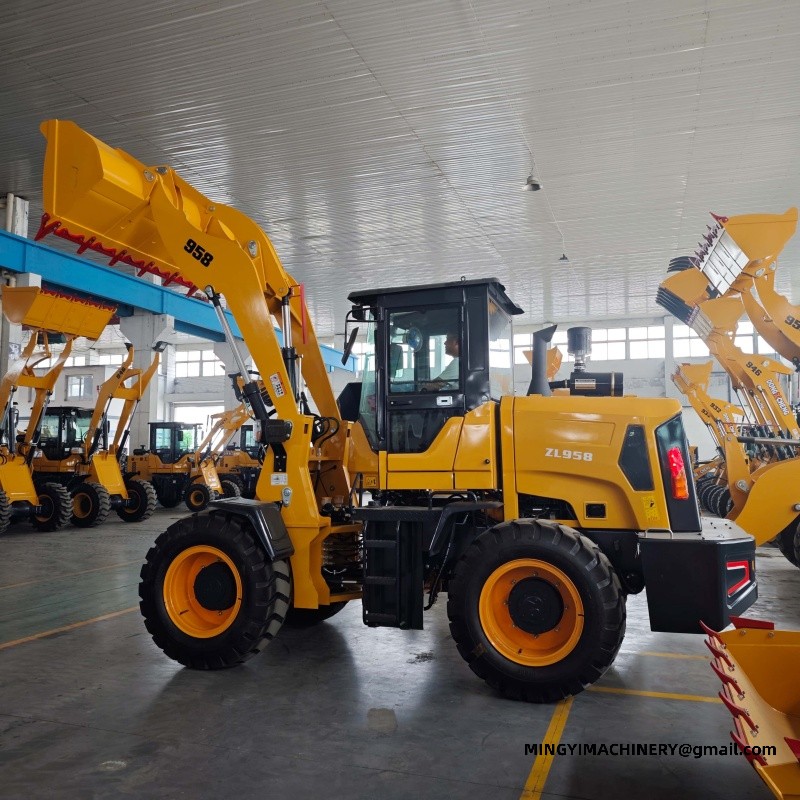
The useful way to read a range is as three decisions: how high, how heavy, and how wide. How high is dump height, 3.2 m against 4.5 m. How heavy is the steel, cross-member 30 mm against 45 mm and rear frame 230 mm high x 800 mm wide against 300 mm high x 800 mm wide. How wide is track, 1.5 m (wheel-side reduction axle); 1.45 m (Isuzu axle) against 1.6 m.
Once those three are settled, the bucket follows from the material and the boom from the height: 0.4 m³ on a 2.3 m arm here, 0.65 m³ on 3.35 m there. Reading it in that order means the specification is decided by the work rather than by whichever machine happened to be in stock.
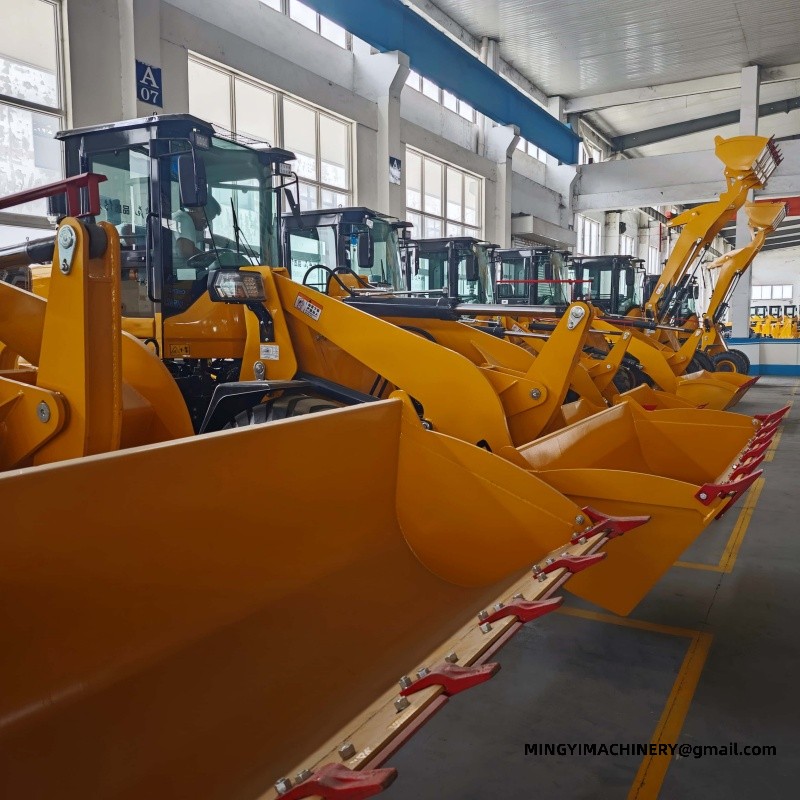
On a farm the loader is judged by whether it can get to the work. The heavy-duty 3.5 m small-frame wheel-side reduction wheel loader at 1.5 m (wheel-side reduction axle); 1.45 m (Isuzu axle) track and 4.1 m length turns in places the heavy-duty 3.8 m small-frame wheel-side reduction wheel loader at 1.5 m (wheel-side reduction axle); 1.45 m (Isuzu axle) and 4.2 m cannot enter. Capacity — 0.4 m³ against 0.4 m³ — is the last consideration, not the first.
Dump height still matters, because feed wagons and high-sided trailers are tall: 3.5 m on the heavy-duty 3.5 m small-frame wheel-side reduction wheel loader, 3.8 m on the heavy-duty 3.8 m small-frame wheel-side reduction wheel loader. Measure the wagon side, then measure the shed door. Where both fit, take the larger bucket; where only one fits, take the machine that fits. Attachments specification against the boom section — 430 mm against 430 mm — so the tool carrier is decided in the same conversation.
| Published build data — standard 2.8 m low-profile wheel loader | |
|---|---|
| Bucket capacity | 0.3 m³ |
| Dump height | 2.8 m |
| Track width | 1.2 m (Isuzu axle); 1.3 m (wheel-side reduction axle) |
| Boom arm thickness | 20 mm |
| Boom arm width | 300 mm |
| Boom arm length | 2.05 m |
| Boom arm centre distance | 680 mm |
| Cross-member thickness | 16 mm |
| Front hinge plate thickness | 16 mm |
| Rear hinge plate thickness | 16 mm |
| Rear frame section | 200 mm high x 750 mm wide |
| Hydraulic cylinders | centre cylinder 45 / side cylinder 40 |
| Fuel tank | 30.8 L (48# large tank, 20.5/70-16 tyres); 24.6 L (48# small tank, 8.25-16 tyres) |
| Battery | 45 Ah (24 V) |
| Front wheel to counterweight | 3.5 m |
| Radiator | 4100 core |
| Work pump | 32 pump |
| Travel pump | 316 pump |
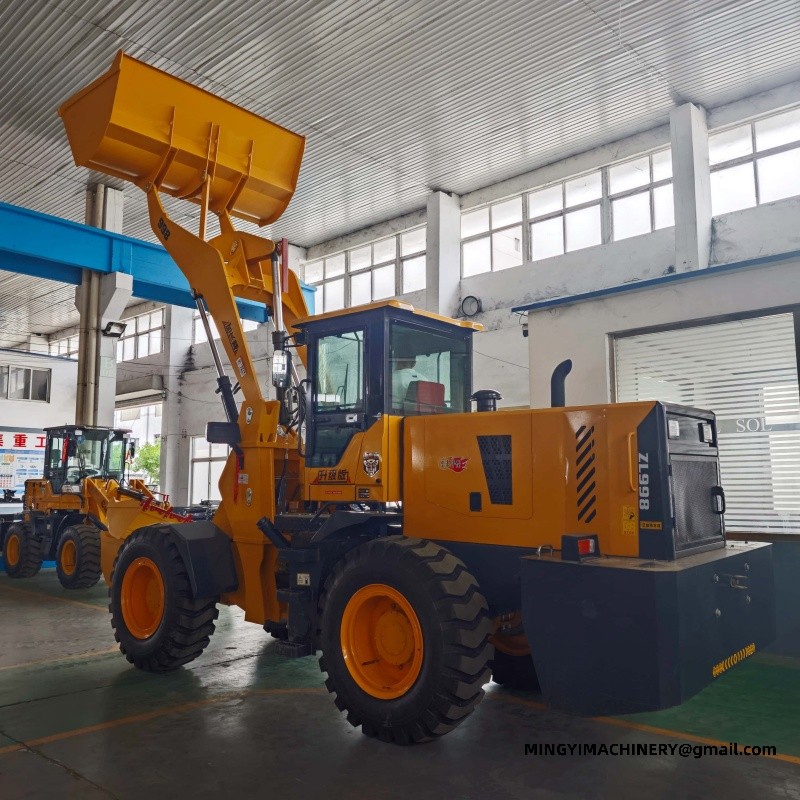
Fuel capacity on this range is specified per frame rather than per model: 64.7 L (75# small tank) on the heavy-duty 3.2 m small-frame wheel-side reduction wheel loader and 70 L (75# large tank) on the heavy-duty 4.2 m medium-frame wheel-side reduction wheel loader. Both are intended to cover a full shift at working throttle, and both assume the machine is not idling for hours between loads — idling is where a "full day" tank becomes a half-day tank.
Plan refuelling around the tank, not around the clock. On the heavy-duty 3.2 m small-frame wheel-side reduction wheel loader with 64.7 L (75# small tank) and a 0.4 m³ bucket at 3.2 m, a day of continuous loading will run the tank down; on the heavy-duty 4.2 m medium-frame wheel-side reduction wheel loader with 70 L (75# large tank) and 0.65 m³ at 4.2 m, the same day leaves allowance. Where a site has no bowser, that allowance is the difference between finishing at four and stopping at two.
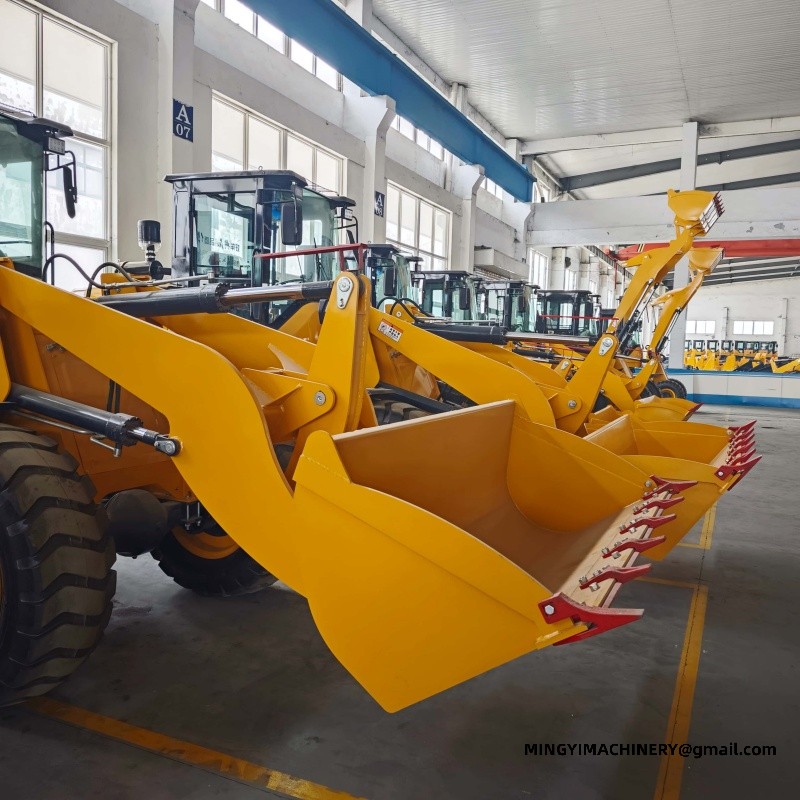
Hinge plates carry the pin loads that the boom and the steering articulation put into the frame, and they are where a loader shows its age first. The heavy-duty 4.2 m medium-frame wheel-side reduction wheel loader runs 45 mm front plates and 30 mm rear plates over a 45 mm cross-member; the heavy-duty 4.5 m medium-frame wheel-side reduction wheel loader runs 45 mm and 30 mm over 45 mm. Rear frame sections follow at 300 mm high x 800 mm wide and 300 mm high x 800 mm wide respectively.
The rear plate is the more telling of the two. Articulated steering loads the rear hinge every time the machine turns under load, and reversing out of a face with a full bucket doubles it. A 30 mm rear plate with a 45 mm cross-member is a light-duty specification; 30 mm over 45 mm is a heavy-duty one. Put those alongside the 0.65 m³ and 0.65 m³ buckets and the specification difference between the two builds stops looking arbitrary — it is steel.
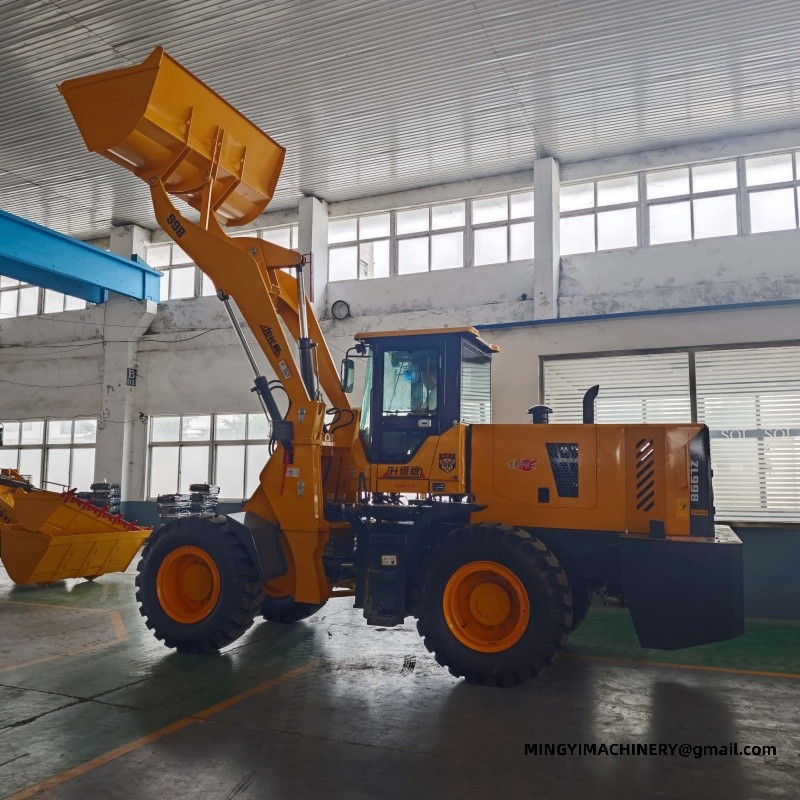
When a loaded machine turns, the load does not go straight down through the hinge. It goes through the plates at an angle, and the rear frame takes the twist. Rear section here is 280 mm high x 800 mm wide; cross-member 30 mm; rear hinge plate 20 mm. Read those three together and you have the answer to how a frame behaves when it is both loaded and turning.
The front plate, at 30 mm, is the thicker of the pair, and the boom ahead of it is designed to give way first anyway: the bucket hits the ground, the arm takes the shock, and the cylinders at centre cylinder 45 / side cylinder 45 absorb what is left. That is the intended load path. Protecting it means protecting the pins, and protecting the pins means the cross-member stays at the thickness it was built with.
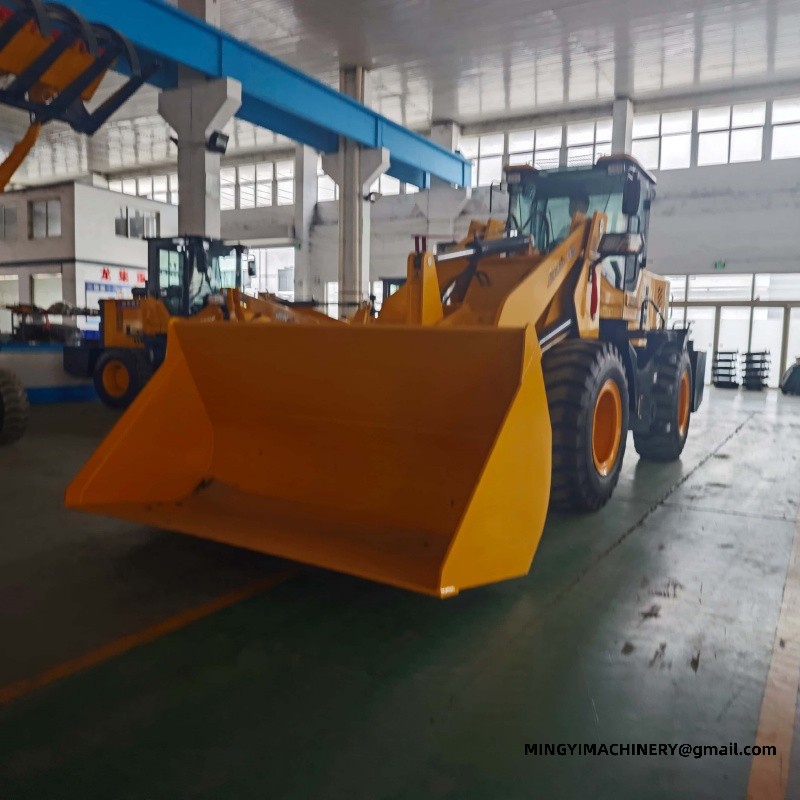
A loader that is greased, cool and clean will run for years on its original frame. The components that need attention are the articulation — 30 mm and 20 mm hinge plates on the heavy-duty 3.2 m small-frame wheel-side reduction wheel loader — the boom mounts at 890 mm, and the cooling pack, 4100 core (490 engine); 4105 core (4102T engine).
Set the intervals by duty, not by calendar. A machine working a dusty stockyard needs its core blown out daily; the same machine on a farm needs it monthly. A machine loading a face needs its pins greased every shift; one moving pallets needs it weekly. The specification tells you what to check — centre cylinder 45 / side cylinder 45 cylinders, 40 pump (490 engine); 1045 pump (4102 turbo engine) and 316 pump on the heavy-duty 3.2 m small-frame wheel-side reduction wheel loader, centre cylinder 60 / side cylinder 50, 2063 pump and 25 pump on the heavy-duty 4.2 m medium-frame wheel-side reduction wheel loader — and the duty tells you how often.
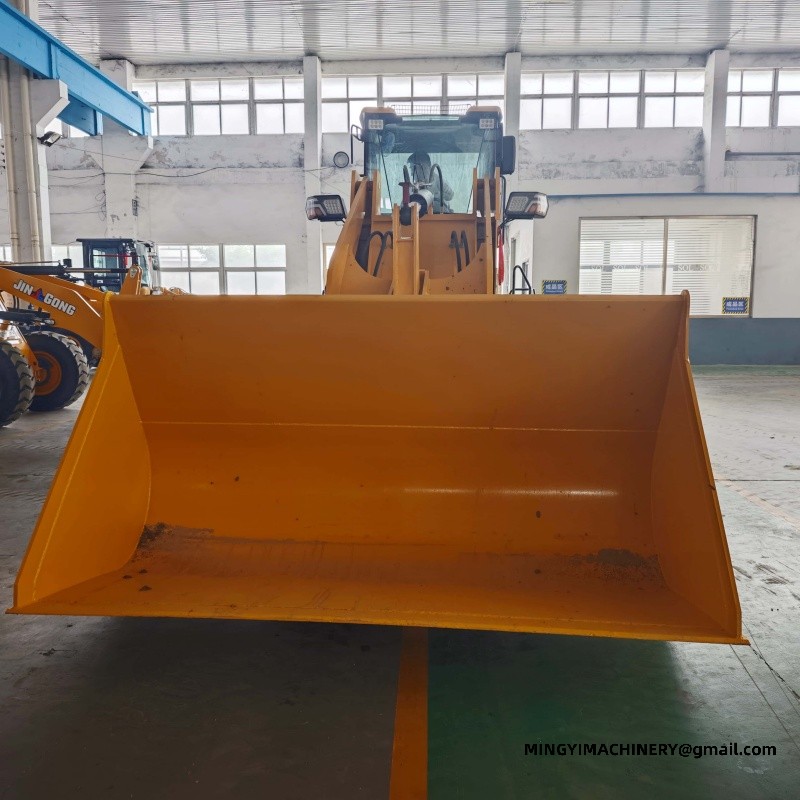
Stockpile work is the hardest duty a loader sees: the machine drives into a face, breaks out, reverses under load and turns, all day. The components that govern life are the rear hinge plate, the cross-member and the cooling pack. On the heavy-duty 3.5 m small-frame wheel-side reduction wheel loader those are 20 mm and 30 mm with 4100 core (490 engine); 4105 core (4102T engine); on the heavy-duty 4.2 m small-frame wheel-side reduction wheel loader they are 20 mm and 30 mm with 4100 core (490 engine); 4105 core (4102T engine).
Traction is the second half. A stockyard floor is rarely compacted and often rutted, which argues for the wheel-side reduction axle and the 1.5 m (wheel-side reduction axle); 1.45 m (Isuzu axle) track rather than the lighter axle. Add the raised radiator core where the material is fine and dry — cement raw meal, lime, crushed fines — because a blanked core stops the machine in the middle of a shift, and a stopped loader stops everything behind it.
How do I pick between the frame tiers of a bucket loader machine?
By reach and duty. The heavy-duty 3.2 m small-frame wheel-side reduction wheel loader carries 0.4 m³ to 3.2 m on a 30 mm cross-member; the heavy-duty 4.2 m medium-frame wheel-side reduction wheel loader carries 0.65 m³ to 4.2 m on 45 mm.
What does the cross-member figure tell me about a bucket loader machine?
How well the frame resists the twisting that articulation puts into it: 30 mm on the heavy-duty 4.2 m small-frame wheel-side reduction wheel loader against 45 mm on the heavy-duty 4.2 m medium-frame wheel-side reduction wheel loader. It is the clearest marker of build class.
How do I choose the right dump height for a bucket loader machine?
Measure the receiving body at the front board rather than the side: 4.2 m on the heavy-duty 4.2 m medium-frame wheel-side reduction wheel loader, 4.5 m on the heavy-duty 4.5 m medium-frame wheel-side reduction wheel loader. Clearance decides whether the pass is possible at all.
What is the largest bucket loader machine in the range?
The medium-frame heavy builds: a 0.65 m³ bucket at 4.2 m on a 3.16 m boom with centre cylinder 60 / side cylinder 50 cylinders.
What should I check before a bucket loader machine works a ramp?
Traction and cooling. A 1.5 m (wheel-side reduction axle); 1.45 m (Isuzu axle) track with wheel-side reduction holds on a ramp where an Isuzu-pattern axle would spin, and the 4100 core (490 engine); 4105 core (4102T engine) radiator keeps working at low speed.
How much reach does the boom of a bucket loader machine give?
Boom length is 3.15 m on the heavy-duty 4.2 m small-frame wheel-side reduction wheel loader and 3.35 m on the heavy-duty 4.5 m medium-frame wheel-side reduction wheel loader. Length buys reach and takes stability, so match it to the height you actually have to clear.
Where is the extra steel in a heavier bucket loader machine?
Boom wall 20 mm against 30 mm, front hinge 16 mm against 45 mm, rear hinge 16 mm against 30 mm, cross-member 16 mm against 45 mm.
Specifications are built per order: machine, attachments, spares box and container plan together. Because rear frame sections stay between 300 mm high x 800 mm wide and 300 mm high x 800 mm wide across the bucket loader machine range, two to three units ship in one forty-foot box.
Documents that travel with Bucket Loader Machine: Matching Bucket Volume to Material Weight
The machine is only half of what arrives. The parts book, the service schedule and the declarations that come with Bucket Loader Machine: Matching Bucket Volume to Material Weight are what let the owner register, insure and maintain it without a second round of emails.
Cold weather and winter care for Bucket Loader Machine: Matching Bucket Volume to Material Weight
Cold exposes weak batteries, thick oil and water in the fuel. Preparing Bucket Loader Machine: Matching Bucket Volume to Material Weight for winter means the right grade of oil, a battery in good condition and fuel that will not wax in the tank overnight.
Contact MINGYI Machinery for the current wheel loader lineup, configuration options and a formal specification for your market. E-mail: sales@mingycn.com | LINE (ID): mingyicn
Construction Equipment Loader: Sizing for Site and Yard Work · Earthmoving Wheel Loader: Boom Geometry and Breakout Behaviour · Wheel Loader Supplier: Keeping One Build in Stock · Loaders









