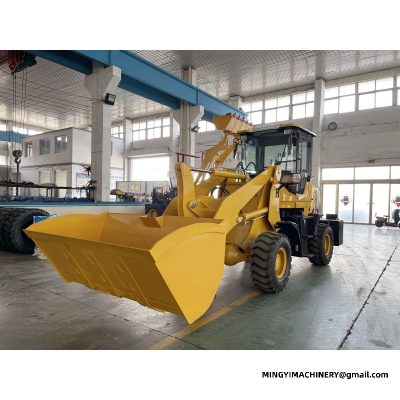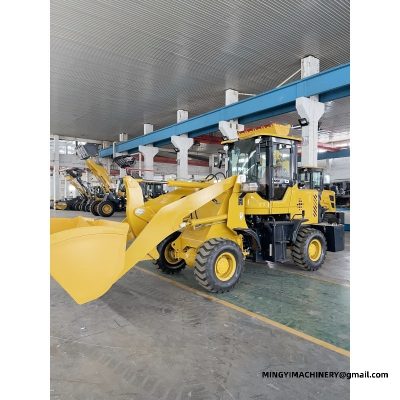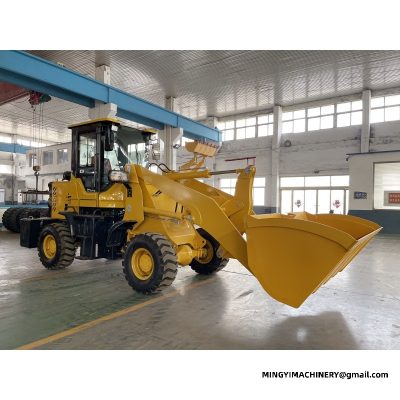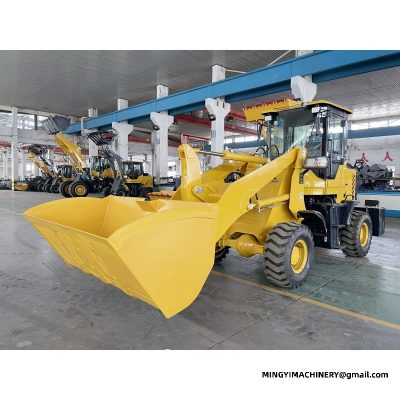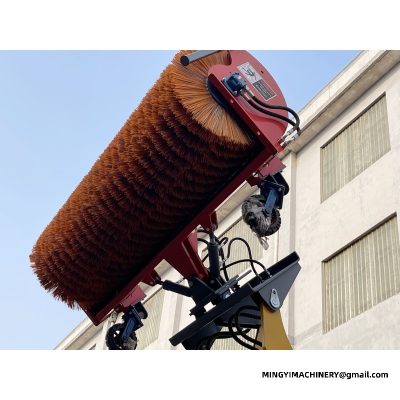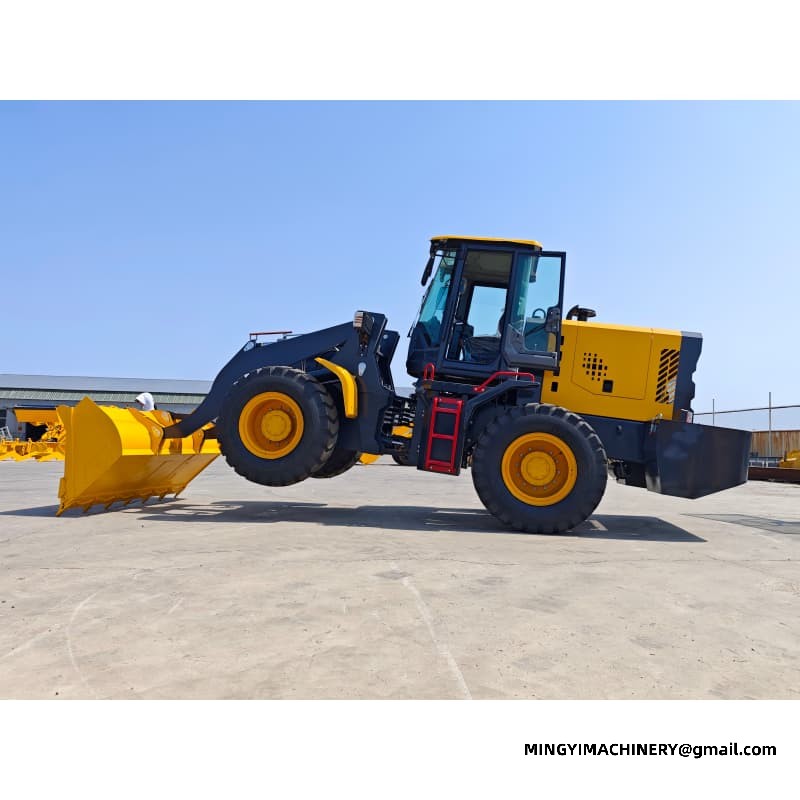
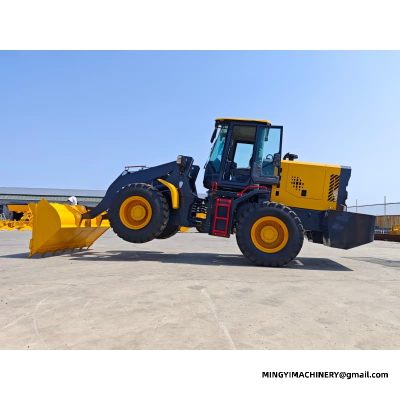
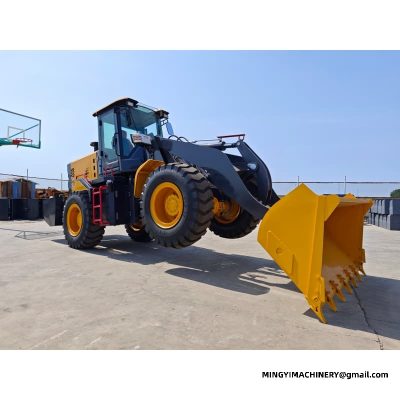
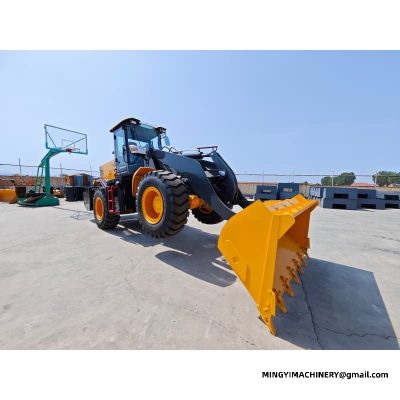
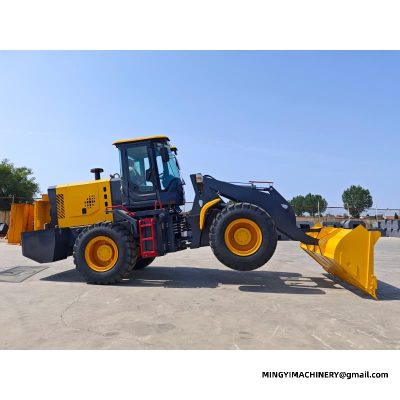
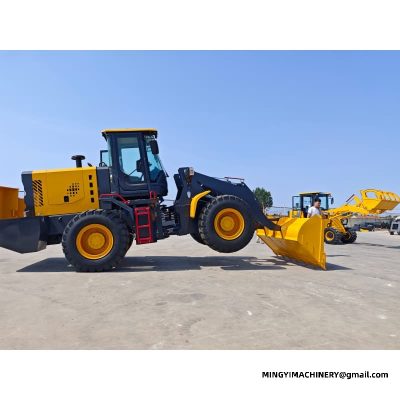
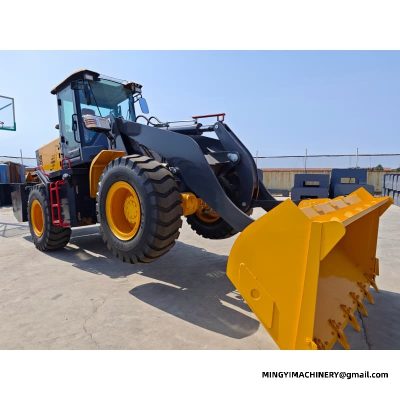
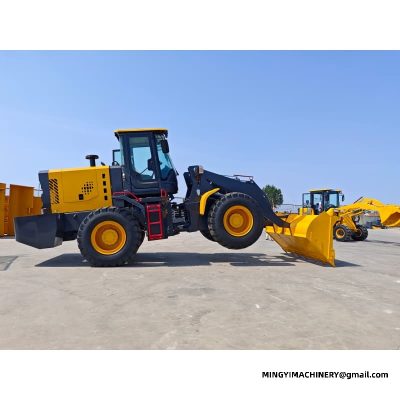
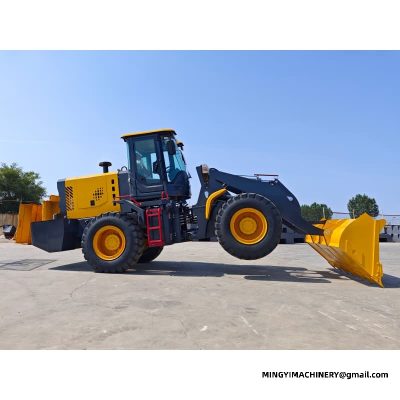
There are two ways to buy a earthmoving wheel loader: from the brochure, or from the numbers that decide whether it works. This page is the second. Bucket 0.4 m³ to 0.4 m³. Dump height 3.5 m to 3.8 m. Boom 2.62 m long, 430 mm wide and 25 mm thick on the lighter build; 2.61 m, 430 mm and 25 mm on the heavier one. Cylinders centre cylinder 45 / side cylinder 40 against centre cylinder 45 / side cylinder 45, pumps 40 pump (490 engine); 1045 pump (4102 turbo engine) against 40 pump (490 engine); 1045 pump (4102 turbo engine), radiators 4100 core (490 engine); 4105 core (4102T engine) against 4100 core (490 engine); 4105 core (4102T engine). Each figure is explained below in terms of what it does on site.
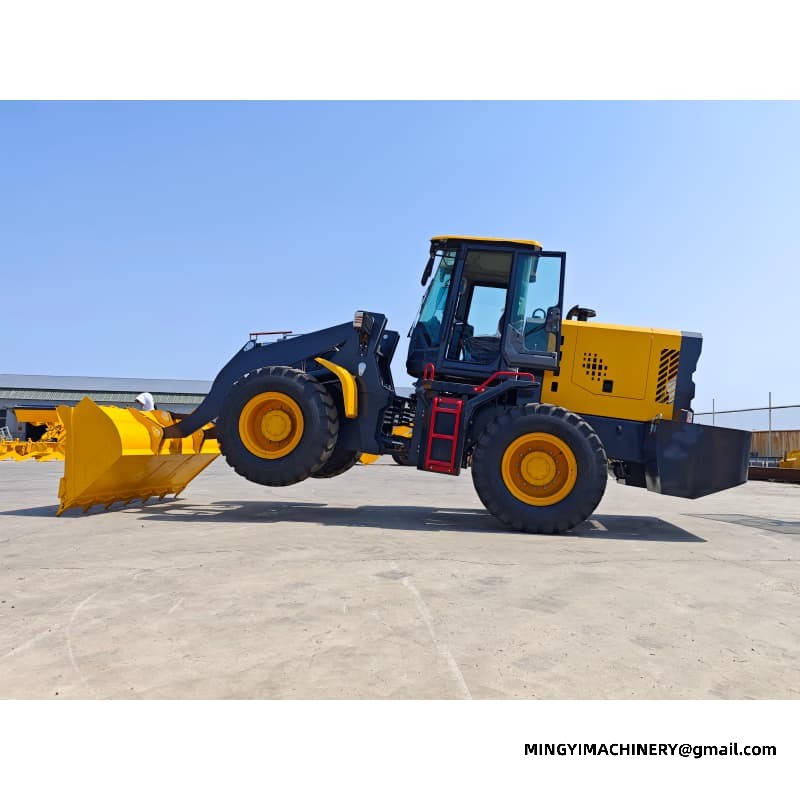
Winter changes three things: the battery has less to give, the oil is thicker, and the operator is working in gloves. The first two are specification questions. 60 Ah (490 engine); 80 Ah (4102 turbo engine) covers the first. The hydraulic side, centre cylinder 45 / side cylinder 45 with a 40 pump (490 engine); 1045 pump (4102 turbo engine), is sized for the loads it will see at working temperature and will simply be slower until it warms.
The third is a machine-layout question and comes down to the rear frame and the tank: 280 mm high x 800 mm wide of rear section and 64.7 L (75# small tank) of fuel. Cold-weather work also means more idling, so tank capacity should be read against winter consumption rather than summer consumption. A machine that needs refuelling at minus ten with an operator standing outside is a specification failure, not a weather problem.
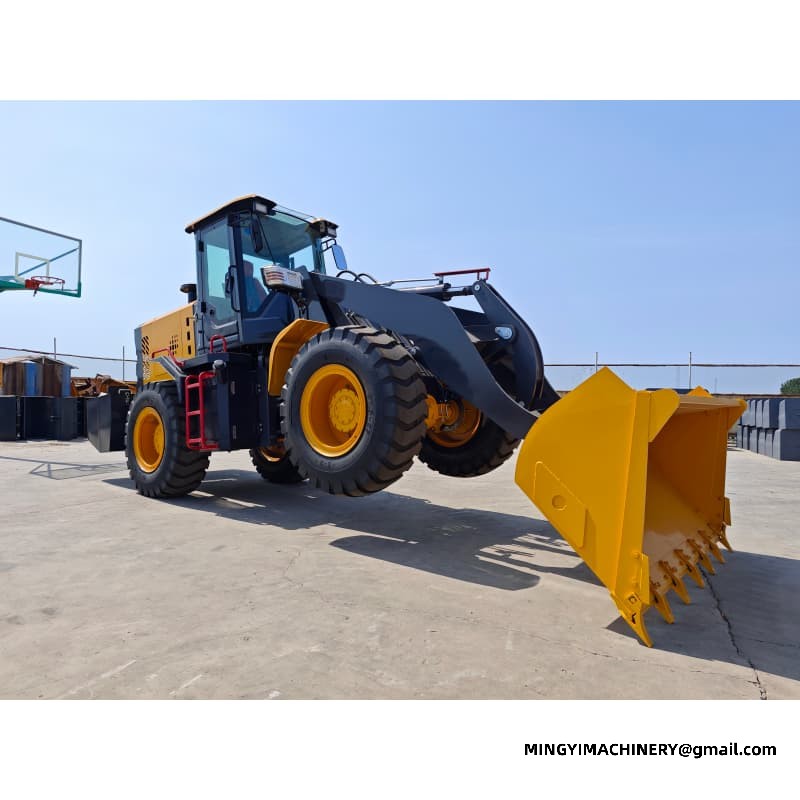
An agricultural loader is a small machine doing varied work, and the specification that matters is the one that lets it into the buildings. Track width 1.5 m (wheel-side reduction axle); 1.45 m (Isuzu axle) on the heavy-duty 4.2 m small-frame wheel-side reduction wheel loader against 1.6 m on the light-duty 3.8 m medium-frame wheel-side reduction wheel loader, footprint 4.25 m against 4.3 m, and dump height 4.2 m against 3.8 m for the wagon or hopper it fills.
Duty is seasonal and mostly light, which is why the light builds exist: a 0.4 m³ bucket with 30 mm cross-member and 20 mm rear hinge plates is correctly specified for silage, bagged goods and yard scraping. Where the machine also does heavy work — muck-out with a loaded bucket, or winter snow clearing — step to the heavier build with 45 mm and 30 mm. Over-specifying takes money once; under-specifying takes a frame.
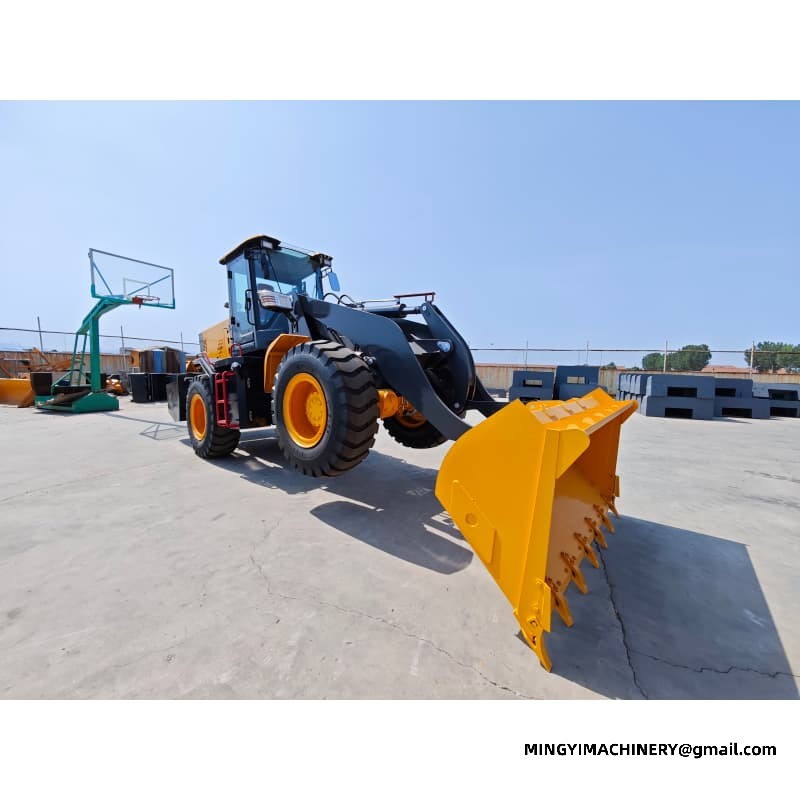
Track width decides two things at once: whether the machine stays upright on a slope, and whether it fits through what you need it to fit through. This build runs 1.6 m, against 1.6 m on the light-duty 4.2 m medium-frame wheel-side reduction wheel loader. Wider is more stable and needs more room. The choice is made by your narrowest gate, not by your widest heap.
The axle behind the track matters as much as the number. A wheel-side reduction axle puts the final reduction at the hub, which lowers the load on the half-shafts and suits soft, rutted or sandy ground. The alternative pattern suits hard, level surfaces and runs cooler at road speed. Where a build offers both, the hub-reduction figure in 1.6 m is the one for quarry floors and unmade haul roads.
| Sample build from the range — light-duty 4.5 m medium-frame wheel-side reduction wheel loader | |
|---|---|
| Bucket capacity | 0.52 m³ |
| Dump height | 4.5 m |
| Track width | 1.6 m |
| Boom arm thickness | 30 mm |
| Boom arm width | 450 mm |
| Boom arm length | 3.35 m |
| Boom arm centre distance | 960 mm |
| Cross-member thickness | 45 mm |
| Front hinge plate thickness | 45 mm |
| Rear hinge plate thickness | 30 mm |
| Rear frame section | 300 mm high x 800 mm wide |
| Hydraulic cylinders | centre cylinder 60 / side cylinder 50 |
| Fuel tank | 70 L (75# large tank) |
| Battery | 80 Ah |
| Front wheel to counterweight | 4.7 m |
| Radiator | 4105 core |
| Work pump | 2063 pump |
| Travel pump | 25 pump |
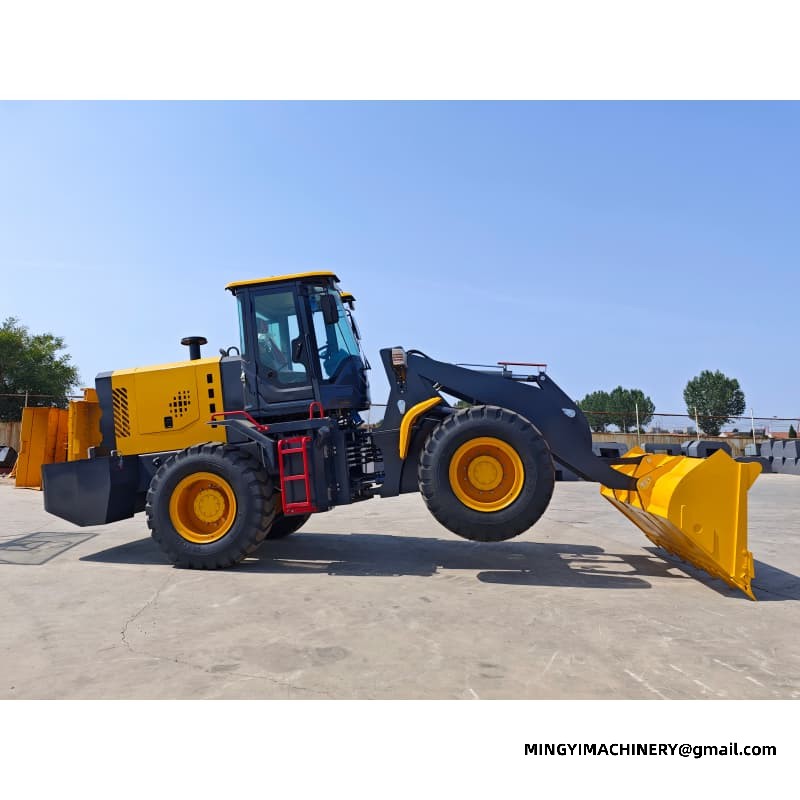
Breakout force is advertised; what you feel in the cab is the combination behind it. On the light-duty 3.5 m medium-frame wheel-side reduction wheel loader that is a centre cylinder 60 / side cylinder 50 cylinder set on a 2.63 m boom with a 900 mm centre distance, lifting a 0.52 m³ bucket to 3.5 m. On the light-duty 4.5 m medium-frame wheel-side reduction wheel loader it is centre cylinder 60 / side cylinder 50 on a 3.35 m arm with 960 mm spacing, lifting 0.52 m³ to 4.5 m.
Heat is the failure mode nobody plans for. A pump working at the top of its flow all shift, in dust, at altitude, will cook its oil — and the 2063 pump on the light-duty 3.5 m medium-frame wheel-side reduction wheel loader and the 2063 pump on the light-duty 4.5 m medium-frame wheel-side reduction wheel loader were each sized against their own cylinder volumes and duty. The matching travel pumps, 25 pump and 25 pump, keep drive independent so a loaded climb does not stall the boom. Specify the third circuit at order time if a hydraulic tool is in the plan; plumbing added later is the most common source of leaks we see in the field.
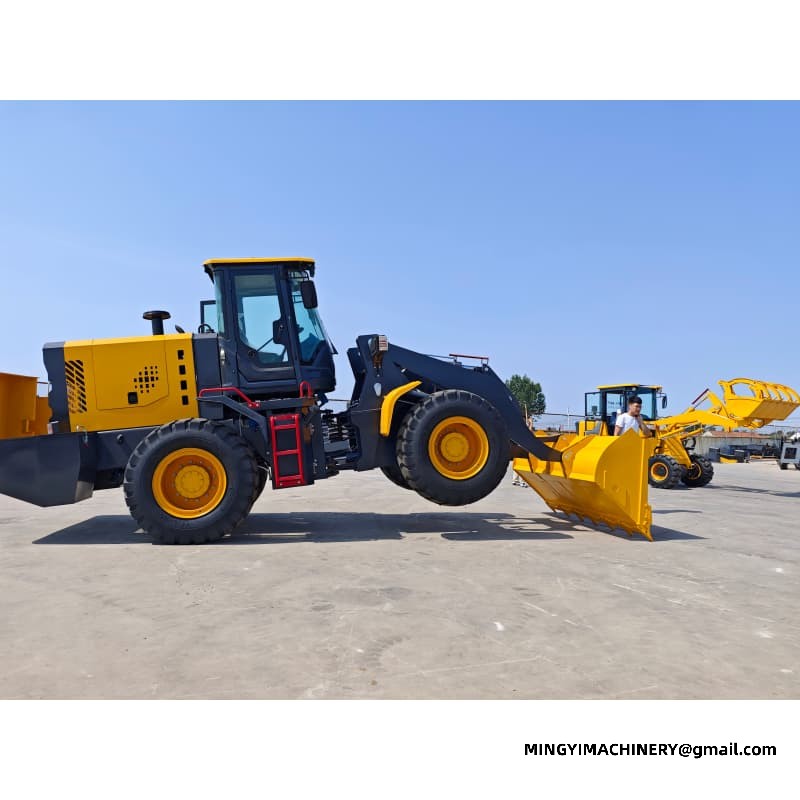
Fuel is visible and downtime is not, which is why fleets optimise the wrong one. A machine with a 64.7 L (75# small tank) tank works a full shift without a refuel stop; that is worth a fraction of what a single day lost to a failed pump takes, and the pump is identified on the sheet as 40 pump (490 engine); 1045 pump (4102 turbo engine).
The parts worth specifying against downtime are the ones that cannot be improvised: the battery rating, 60 Ah (490 engine); 80 Ah (4102 turbo engine), the radiator, 4100 core (490 engine); 4105 core (4102T engine), and the cylinders, centre cylinder 45 / side cylinder 45. All three are simple at build and lengthy in a field, and all three are listed. Read them as an availability decision rather than as a comfort one.
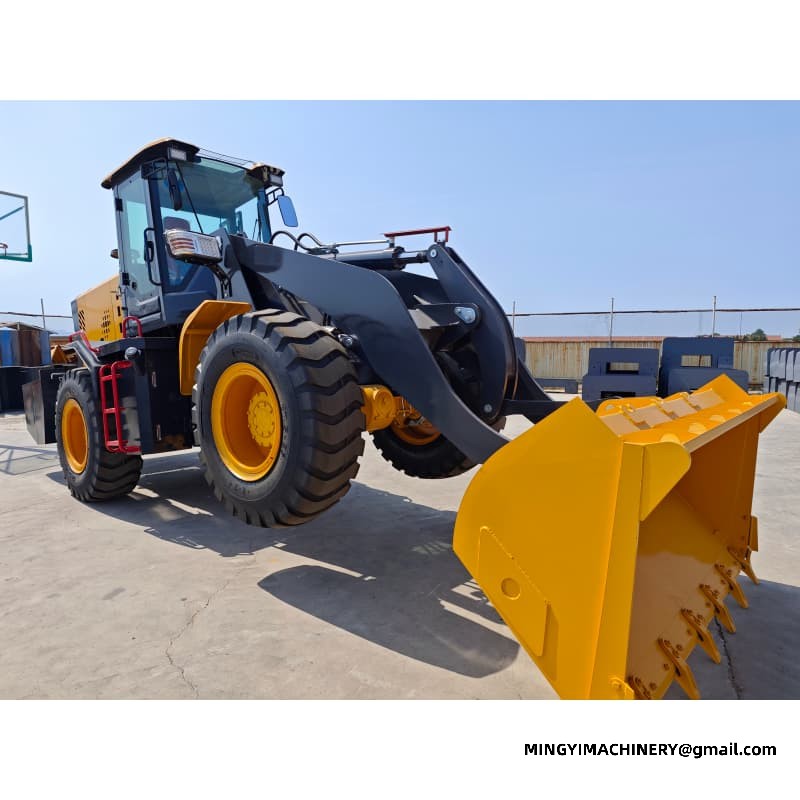
Hold the parts that stop the machine and cannot be improvised: hoses and seals for the centre cylinder 45 / side cylinder 40, a belt set, filters, and a battery to the 60 Ah (490 engine); 80 Ah (4102 turbo engine) rating. Do not hold the parts that are welded in — hinge plates at 30 mm and 20 mm, the 30 mm cross-member. Those are a repair, not a spare, and they are the same steel on every machine in the family.
The pump is the judgement call. 40 pump (490 engine); 1045 pump (4102 turbo engine) is a stocked item and a week of downtime if it is not; the 316 pump fails less often and is the one most fleets choose to order rather than hold. Decide on that by distance from the supplier, not by the effort of the part.
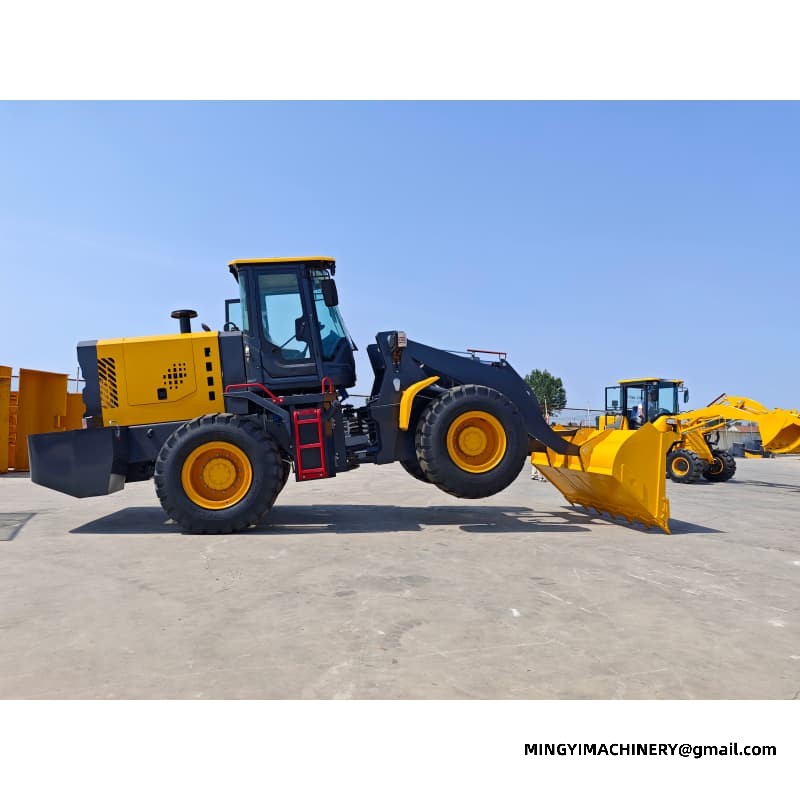
Every unit leaves the factory knock-down: booms and counterweights loose, tanks removed, batteries boxed and disconnected. Because rear frame sections stay within the 200 mm high x 750 mm wide to 280 mm high x 800 mm wide band across the range, two to three loaders ship in one forty-foot container.
What arrives is a machine plus a commissioning job. On the standard 2.4 m low-profile wheel loader that means fitting the 1.85 m boom to the 680 mm mounts, torquing the 16 mm hinge pins, filling the 30.8 L (48# large tank, 20.5/70-16 tyres); 24.6 L (48# small tank, 8.25-16 tyres) tank and the 4100 core cooling system, and connecting the battery. On the light-duty 3.8 m medium-frame wheel-side reduction wheel loader the same sequence applies with 2.9 m, 45 mm, 70 L (75# large tank) and 4105 core. Allow a day per machine, and allow for the fact that the battery will have sat for weeks.
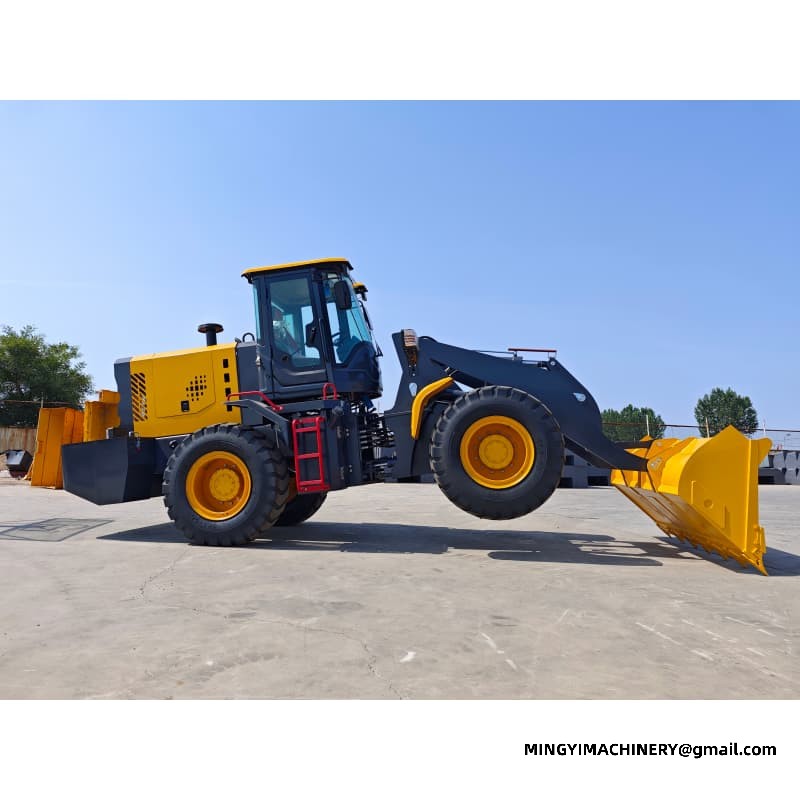
Front wheel to counterweight is the figure that decides whether a machine fits the space you have. Here it is 4.3 m on the light-duty 4.2 m medium-frame wheel-side reduction wheel loader and 4.3 m on the light-duty 3.5 m medium-frame wheel-side reduction wheel loader. Measure your tightest working bay, add the swing of the bucket, and compare — because a loader that has to reverse out of every corner loses more time than a bigger bucket ever recovers.
Track width closes the same question from the side. 1.6 m on this build. Where two figures are listed, the narrower belongs to the hard-ground axle, and a narrow machine on a narrow gate is often the right answer even where the work itself would suit something bigger. The rear frame section, 300 mm high x 800 mm wide, is what keeps a compact machine from feeling flimsy once it is loaded.
How does a earthmoving wheel loader compare with a backhoe loader?
A loader moves more material per pass and carries it higher — 0.52 m³ at 4.5 m on the light-duty 4.5 m medium-frame wheel-side reduction wheel loader — while a backhoe digs below grade. Choose by which job you do most.
Why does boom centre distance matter on a earthmoving wheel loader?
It sets how side loads travel into the frame: 890 mm on the heavy-duty 3.8 m small-frame wheel-side reduction wheel loader against 900 mm on the light-duty 3.5 m medium-frame wheel-side reduction wheel loader. Wider spacing lets the cylinders work through a better lever.
What does commissioning a earthmoving wheel loader involve?
Fit the 1.85 m boom to the 680 mm mounts, torque the hinge pins, fill the 30.8 L (48# large tank, 20.5/70-16 tyres); 24.6 L (48# small tank, 8.25-16 tyres) tank and the 4100 core circuit, and connect the battery. Allow a day per machine.
Can a earthmoving wheel loader be built with a non-standard bucket?
Yes, provided the volume suits the frame: the 0.4 m³ bucket on the heavy-duty 4.2 m small-frame wheel-side reduction wheel loader and the 0.52 m³ bucket on the light-duty 3.8 m medium-frame wheel-side reduction wheel loader are the engineered sizes, and heavier material means a smaller bucket.
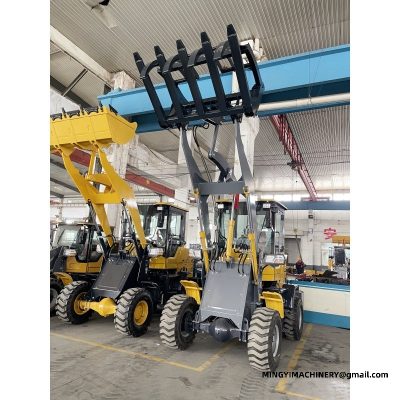
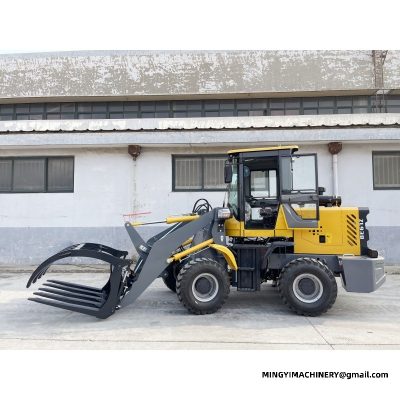
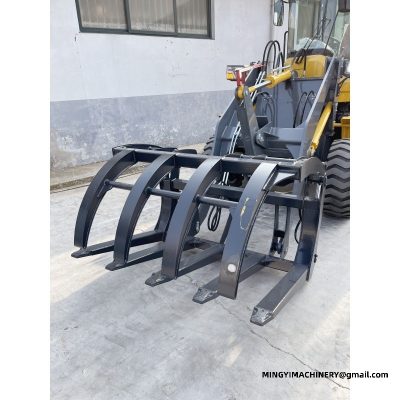
What does a earthmoving wheel loader need to run a grapple?
A grapple sized to the 500 mm boom section and a hydraulic third circuit. The 40 pump (490 engine); 1045 pump (4102 turbo engine) work pump is specified per build, so order the circuit with the machine.
What radiator comes with this earthmoving wheel loader build?
4100 core (490 engine); 4105 core (4102T engine) on the heavy-duty 3.5 m small-frame wheel-side reduction wheel loader and 4100 core (490 engine); 4105 core (4102T engine) on the heavy-duty 3.8 m small-frame wheel-side reduction wheel loader. Where a build offers two engines, the raised core serves the turbo and is the one to specify for dusty work.
How does a earthmoving wheel loader differ from a skid steer?
Articulated steering and a 4.1 m front-to-counterweight length give the loader reach and a smoother ride on rough ground; a skid steer turns in its own length but carries less, higher effort per tonne moved.
Every earthmoving wheel loader in this range ships with the same five recorded figures — boom wall, boom width, front hinge, rear hinge and cross-member — checked against the published table before it leaves the factory. Ask for that record on any unit you are stated.
Reading the early symptoms on Earthmoving Wheel Loader: Boom Geometry and Breakout Behaviour
The symptom is usually not at the fault. A hydraulic function that has become sluggish on Earthmoving Wheel Loader: Boom Geometry and Breakout Behaviour may point to a filter, a relief setting or a pump, and starting with the simple checks avoids the wrong guess.
Planning the season around Earthmoving Wheel Loader: Boom Geometry and Breakout Behaviour
Workload is rarely even across the year, and the machine should be specified for the busy weeks. A Earthmoving Wheel Loader: Boom Geometry and Breakout Behaviour sized only for the average month will be the limiting factor exactly when the work is worth the most.
Contact MINGYI Machinery for the current wheel loader lineup, configuration options and a formal specification for your market. E-mail: sales@mingycn.com | LINE (ID): mingyicn
Loader Machine Supplier: Model Mix, Spares and Shipping Plans · Wheel Loader Manufacturer: Frame Tiers and Parts Commonality · Front End Loader Manufacturer: Weld and Plate Records · Loaders