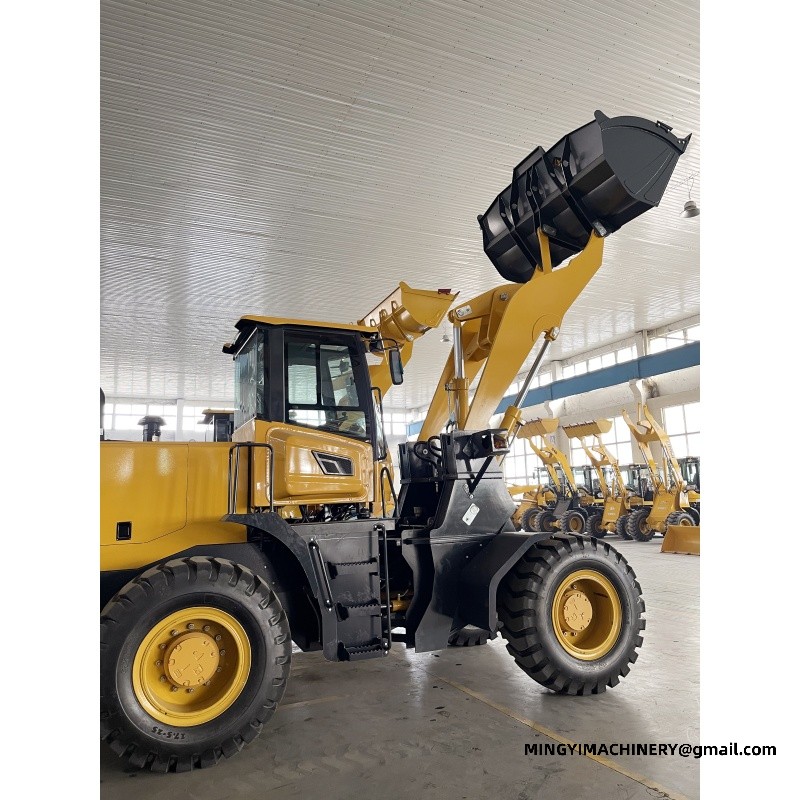
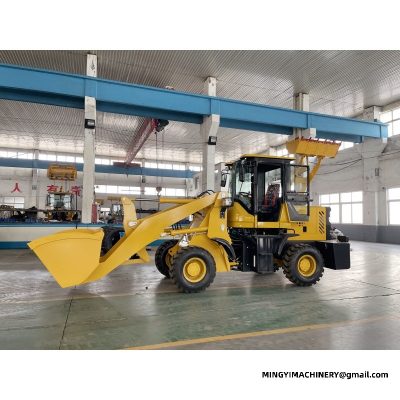
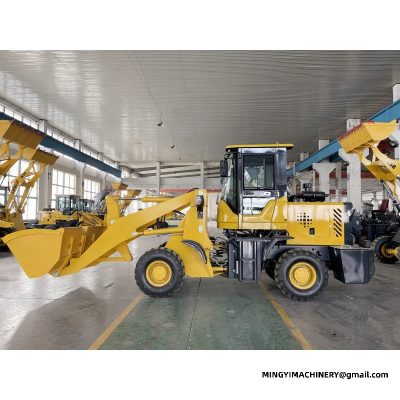
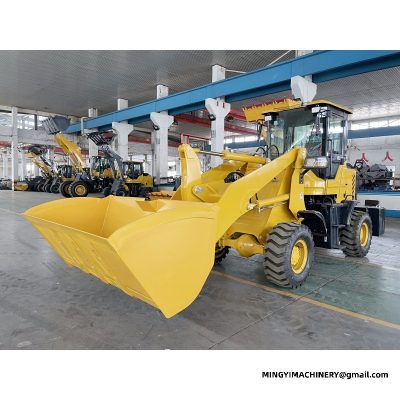
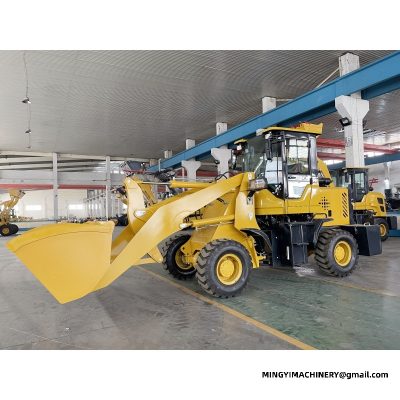
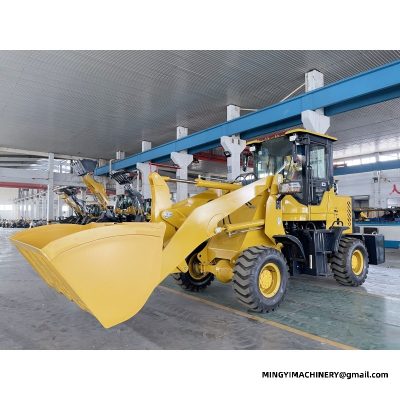
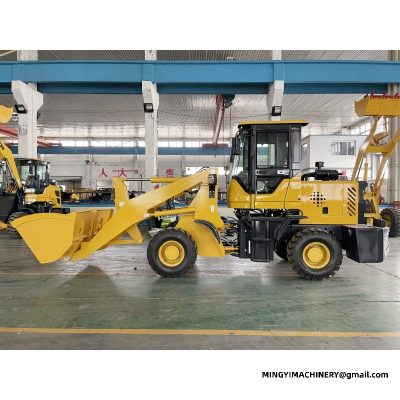
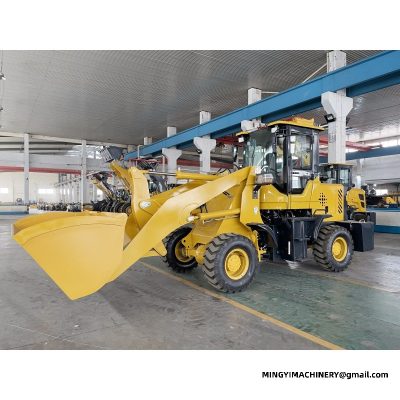
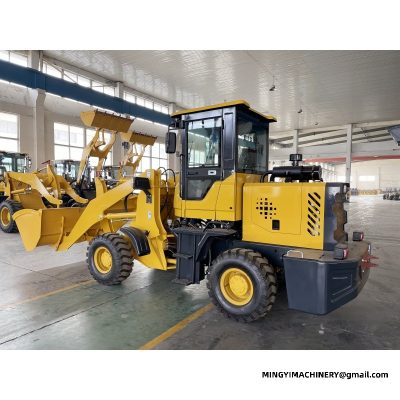
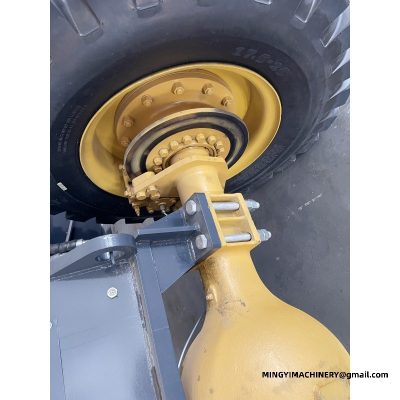
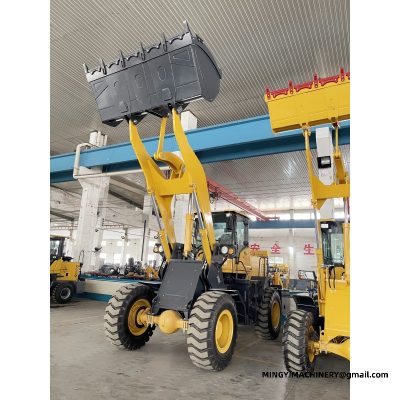
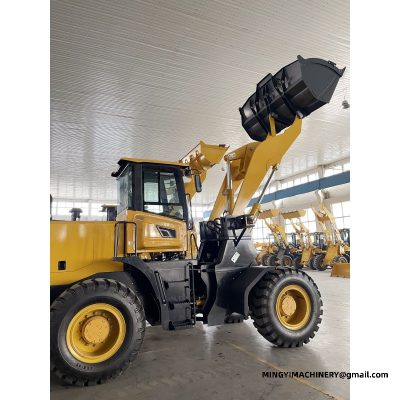
A wheel loader manufacturer is a frame, a boom and a counterweight arranged around one job: moving material from a heap into something that has to carry it away. Every figure on the sheet serves that job or is decoration. Bucket capacity decides how many passes; dump height decides whether the pass is possible; hinge steel decides whether the machine is still tight in year three. Here the buckets run 0.52 m³ to 0.52 m³ and the dump heights 4.2 m to 4.5 m, with front hinge plates of 45 mm and rear plates of 30 mm on the heavier build. Below: how to read them, and what to specify.
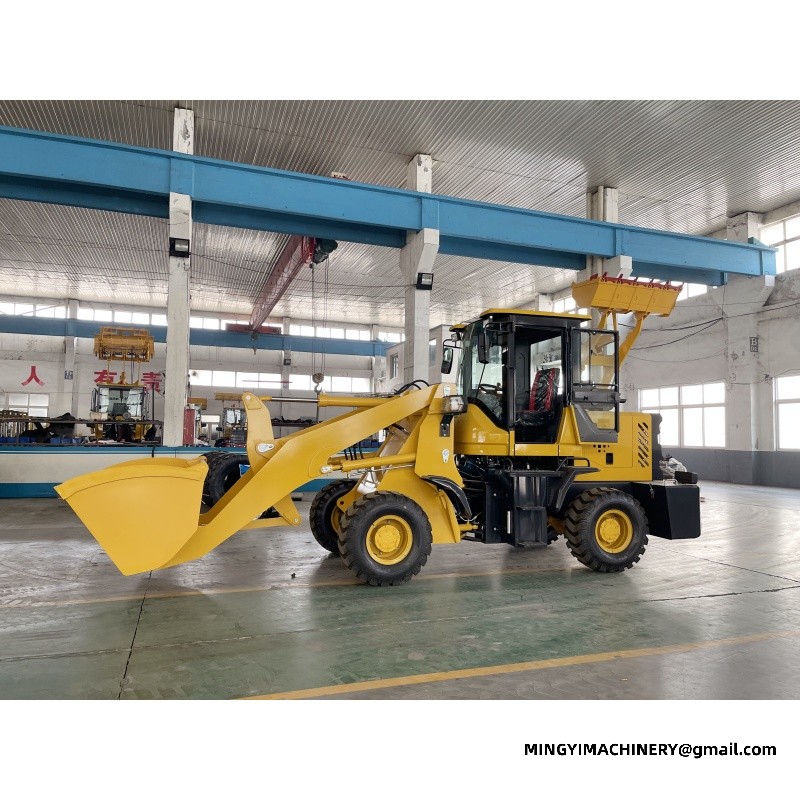
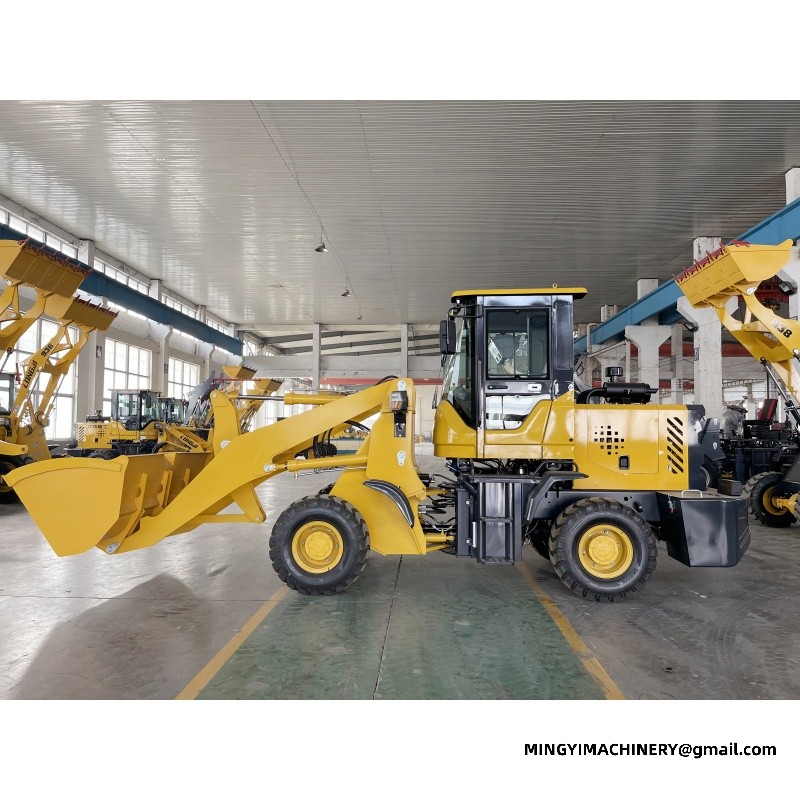
The bucket figures in the table are engineering capacities: 0.38 m³ on the light-duty 3.2 m small-frame wheel-side reduction wheel loader, 0.38 m³ on the light-duty 3.5 m small-frame wheel-side reduction wheel loader. They assume a material density, and the machine is stable with them at full lift because the counterweight and the 3.8 m or 4 m footprint were sized around that density.
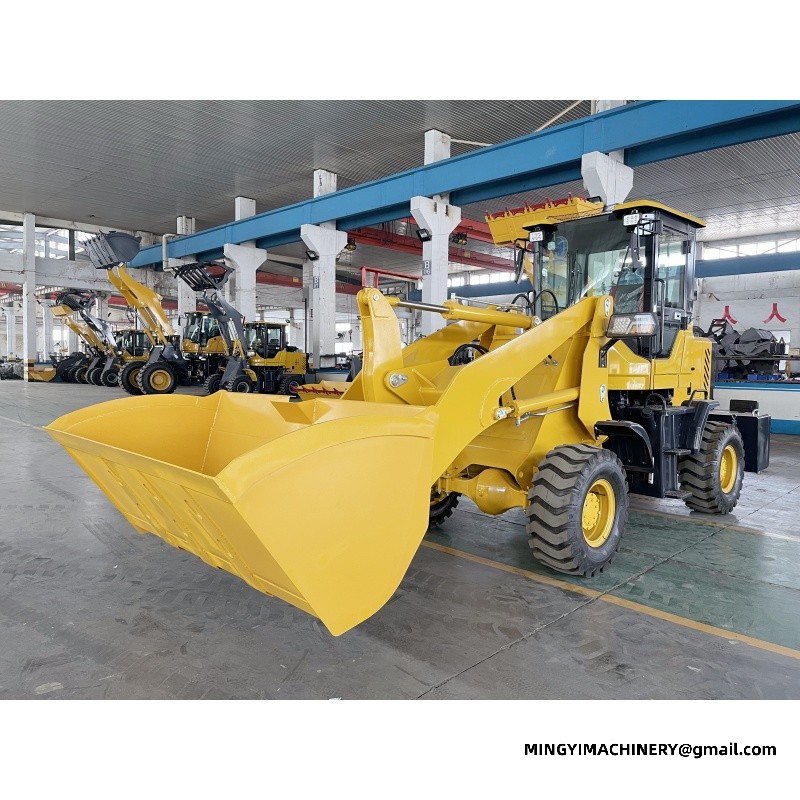
Change the material and you change the limit, not the machine. Light material — grain, woodchip, compost, snow — lets you run a larger bucket and a higher cycle. Heavy material — wet sand, crushed stone, ore — means the 0.38 m³ bucket needs the 14 mm rear hinge plate and 25 mm cross-member behind it, and the 0.38 m³ bucket on the lighter frame is the honest specification for the lighter material. Tell the factory what you are moving and let them match the bucket to it.
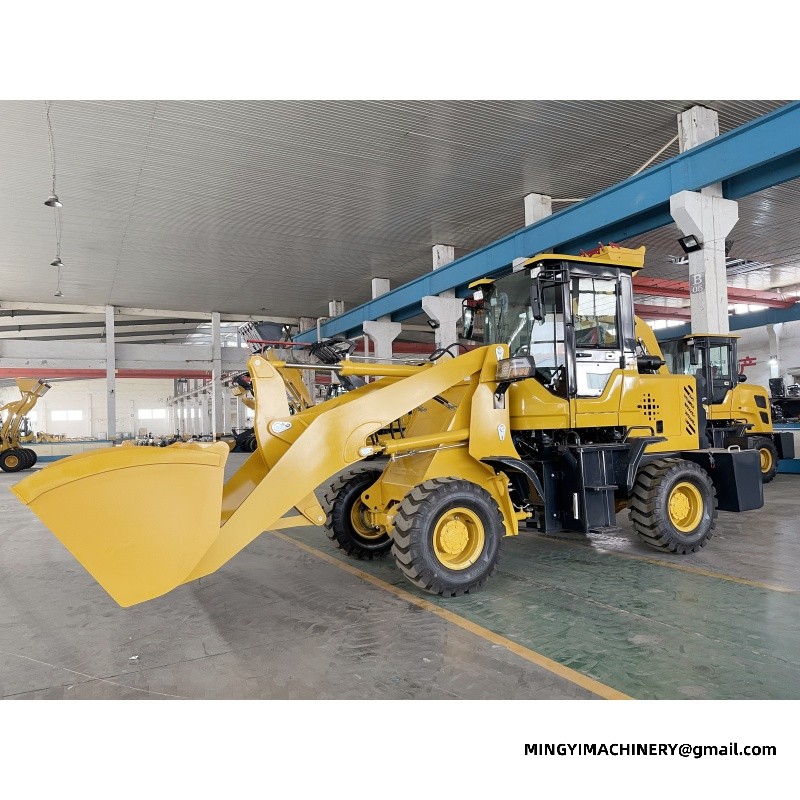
Farm work is governed by access and by the height of the things being filled. The light-duty 3.5 m small-frame wheel-side reduction wheel loader carries 0.38 m³ to 3.5 m on a 1.5 m (wheel-side reduction axle); 1.45 m (Isuzu axle) track with a 4 m footprint; the light-duty 4.2 m medium-frame wheel-side reduction wheel loader carries 0.52 m³ to 4.2 m on 1.6 m with 4.3 m. Gate widths, shed doors and feed-wagon sides are the constraints, and they are all fixed dimensions.
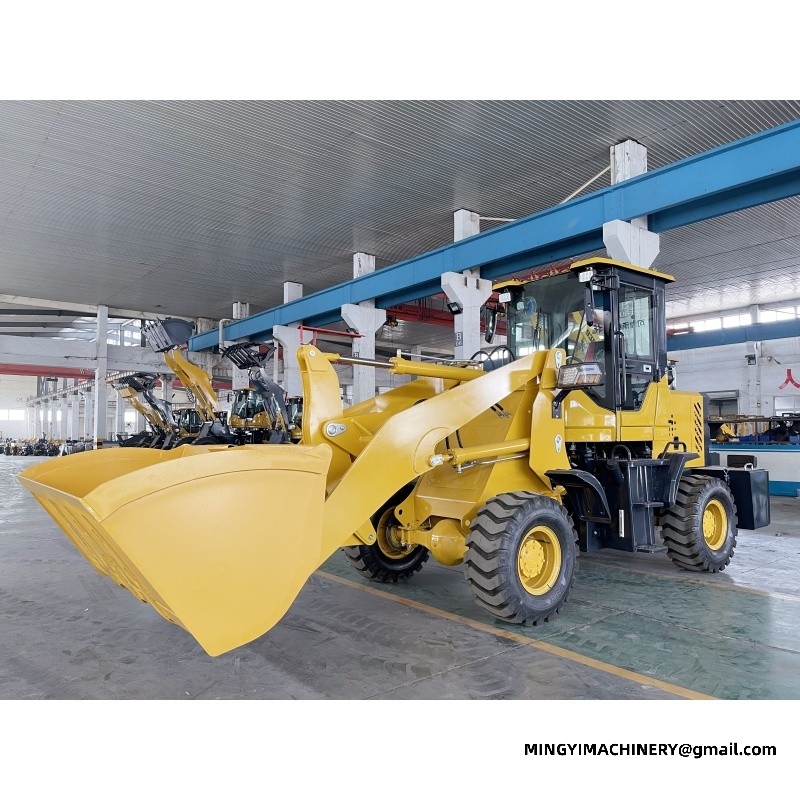
Attachments are where a farm loader earns its second life. Forks for bagged feed and pallets, a bale spear, a grapple for silage, a snow tool for the winter lane. They specification against the boom section, so check 370 mm on the light-duty 3.5 m small-frame wheel-side reduction wheel loader against 450 mm on the light-duty 4.2 m medium-frame wheel-side reduction wheel loader before ordering, and specify the hydraulic circuit at build time if any of them is hydraulically actuated.
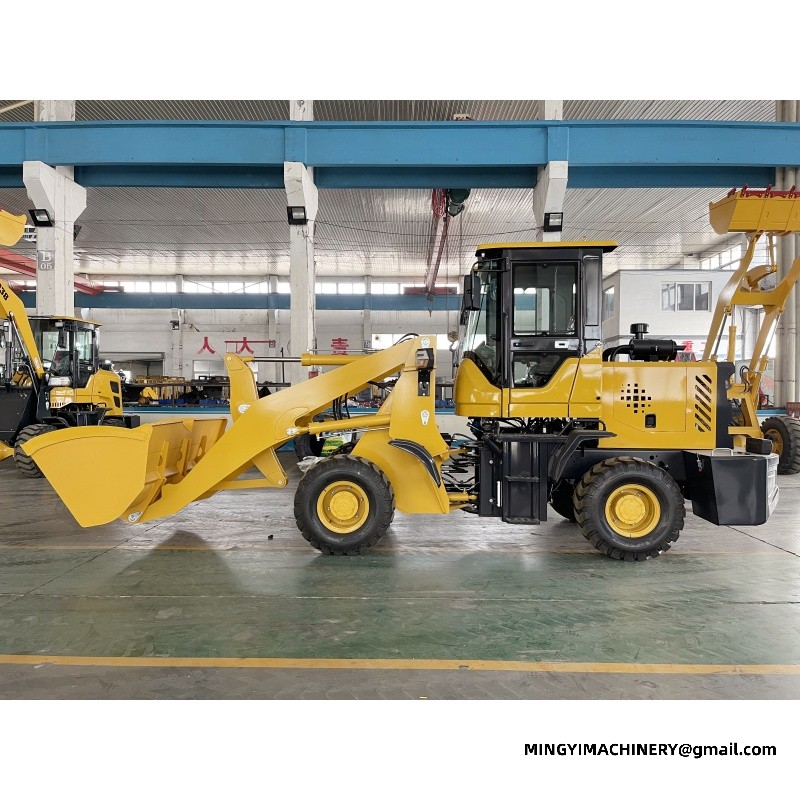
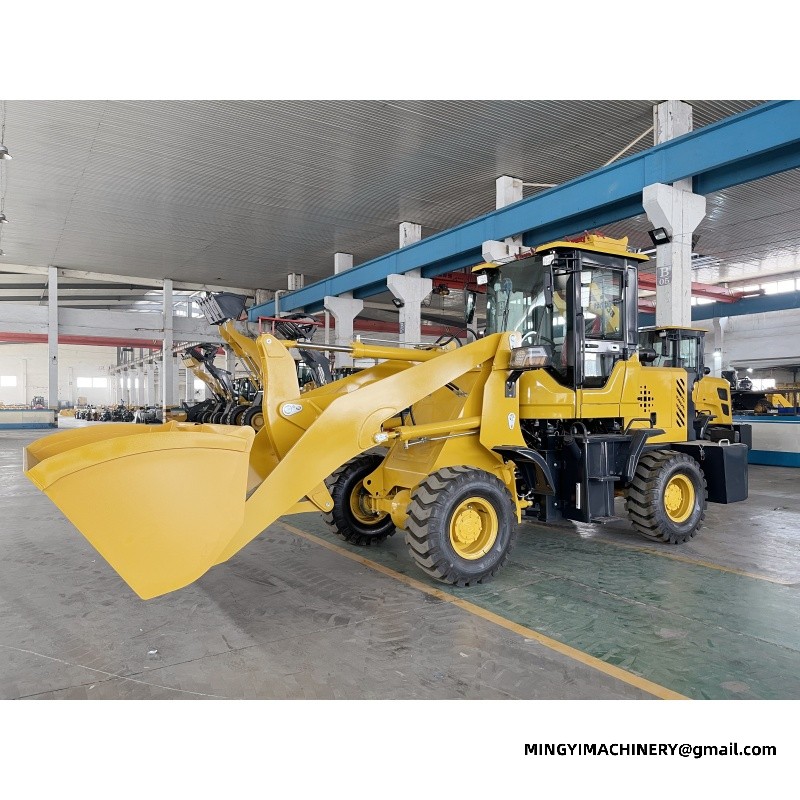
Two dimensions decide whether a loader is usable on a given site: the 4.1 m front-to-counterweight length of the light-duty 3.8 m small-frame wheel-side reduction wheel loader against the 4.7 m of the light-duty 4.5 m medium-frame wheel-side reduction wheel loader, and track width at 1.5 m (wheel-side reduction axle); 1.45 m (Isuzu axle) against 1.6 m. Everything else on the sheet — engine, pump, cylinder bore — matters only after the machine fits.
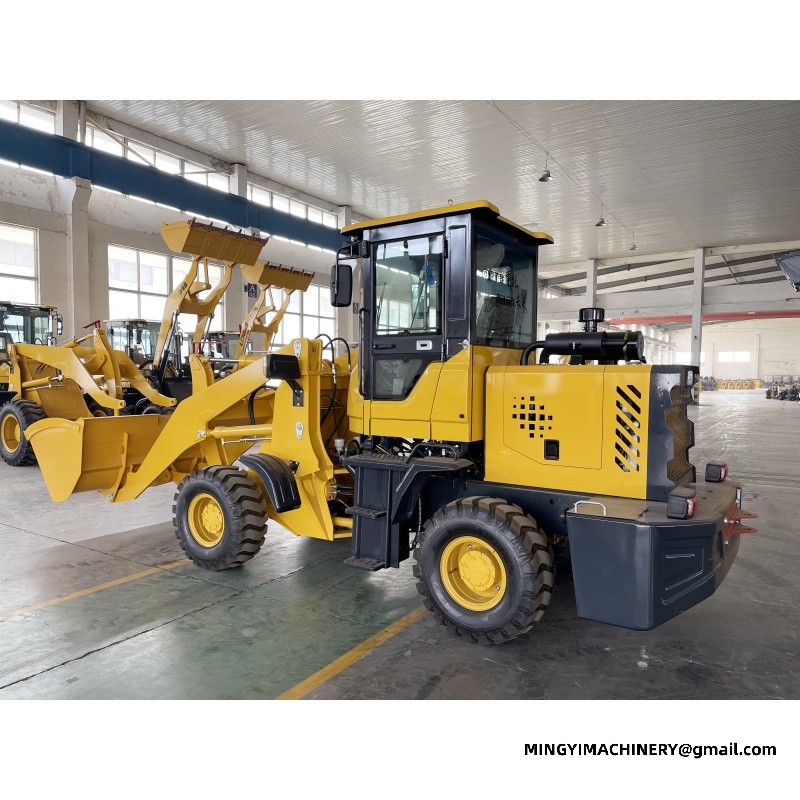
The pairing matters too. A 0.38 m³ bucket lifted to 3.8 m on a 4.1 m footprint is a different machine in practice from a 0.52 m³ bucket at 4.5 m on 4.7 m, even where the track figures are close. Where access is tight, take the shorter machine and accept the extra pass; where the ground is open, take the longer one and take the stability it buys with the 30 mm rear hinge plate.
| Published build data — standard 2.4 m low-profile wheel loader | |
|---|---|
| Bucket capacity | 0.3 m³ |
| Dump height | 2.4 m |
| Track width | 1.2 m (Isuzu axle); 1.3 m (wheel-side reduction axle) |
| Boom arm thickness | 20 mm |
| Boom arm width | 280 mm |
| Boom arm length | 1.85 m |
| Boom arm centre distance | 680 mm |
| Cross-member thickness | 16 mm |
| Front hinge plate thickness | 16 mm |
| Rear hinge plate thickness | 16 mm |
| Rear frame section | 200 mm high x 750 mm wide |
| Hydraulic cylinders | centre cylinder 40 / side cylinder 40 |
| Fuel tank | 30.8 L (48# large tank, 20.5/70-16 tyres); 24.6 L (48# small tank, 8.25-16 tyres) |
| Battery | 45 Ah (24 V) |
| Front wheel to counterweight | 3.5 m |
| Radiator | 4100 core |
| Work pump | 32 pump |
| Travel pump | 316 pump |
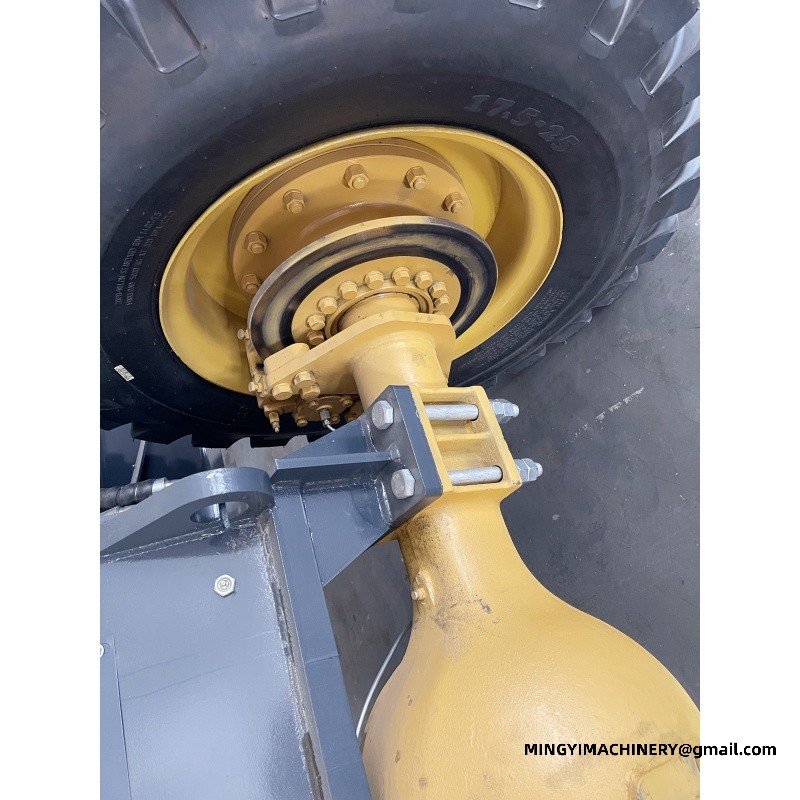
On broken ground the rear frame takes the twisting. Cabin and counterweight sit at one end, the articulation joint at the other, and every rut loads the section between them. Here that section is 230 mm high x 800 mm wide, and it is worth reading as a beam: the height resists vertical bending, the width resists twist.
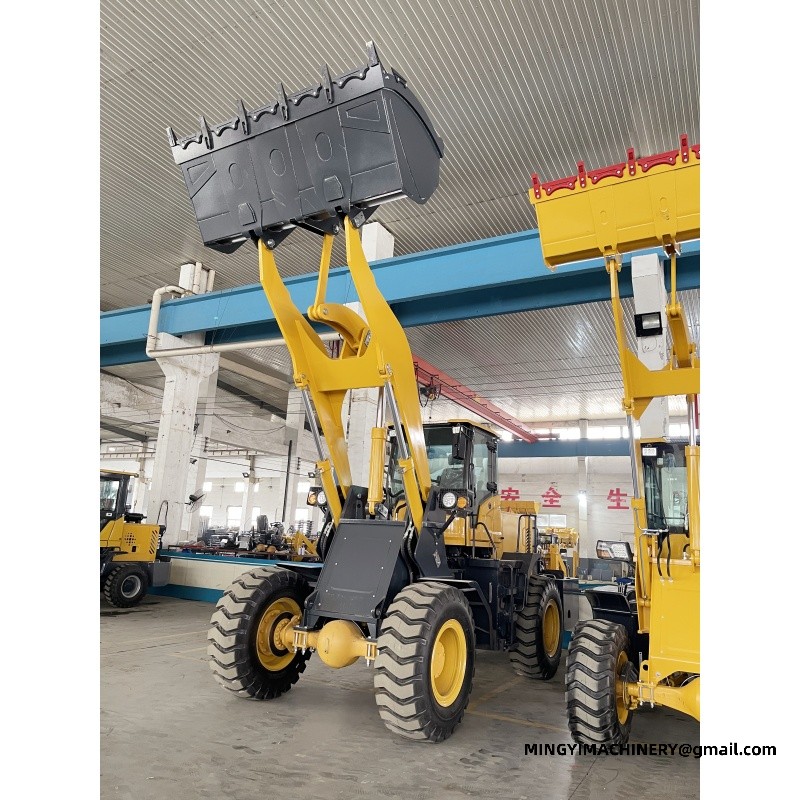
The cross-member is the other half of the same job. 25 mm on the light-duty 3.2 m low-profile wheel loader against 45 mm on the light-duty 4.2 m medium-frame wheel-side reduction wheel loader. Thicker steel there means the mounting faces stay aligned through seasons of flexing, which is what keeps the rear hinge pin, at 14 mm, from wearing oval. Frames rarely break; they go loose, and looseness starts at the pins.
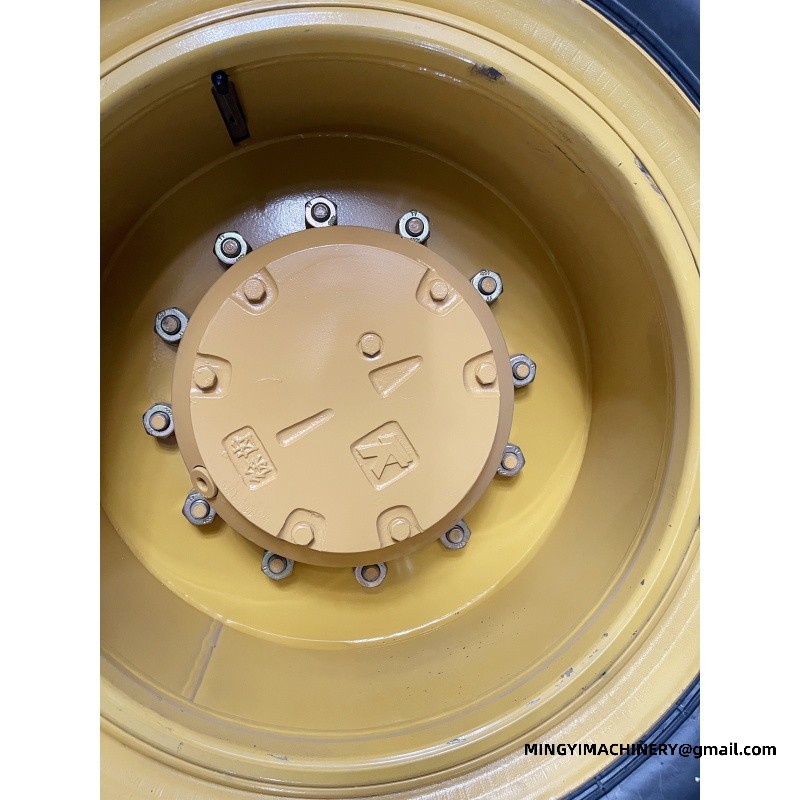
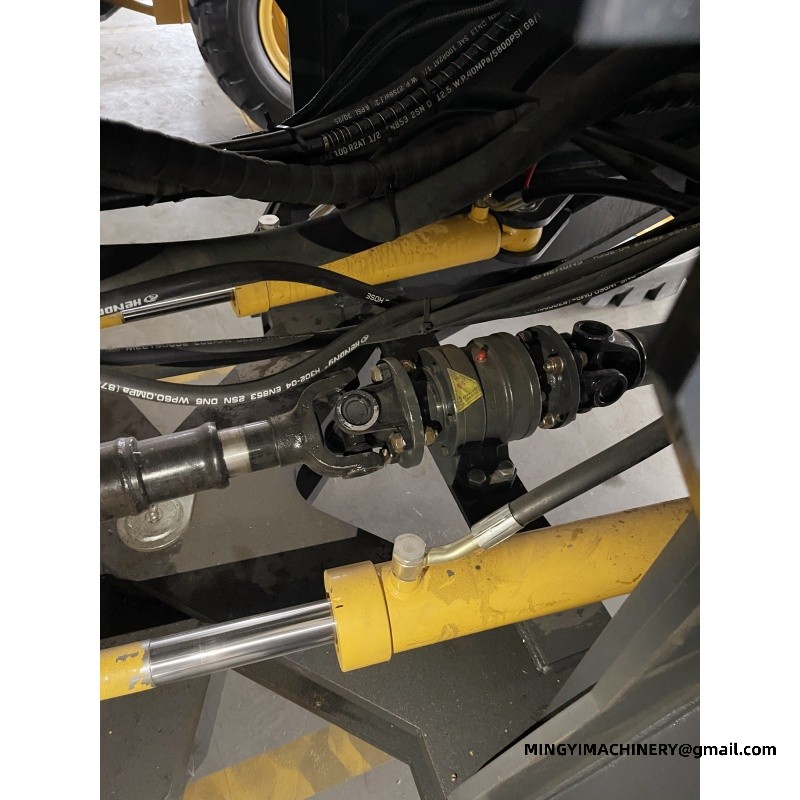
Daily: walk the machine, look at the ground under it, check the coolant level in the 4100 core (490 engine); 4105 core (4102T engine) package, and grease the hinge pins. The hinge is where wear starts, and on the light-duty 3.2 m small-frame wheel-side reduction wheel loader those are 25 mm front and 14 mm rear plates over a 25 mm cross-member — a greasing interval missed there takes pins and bores, not just grease.
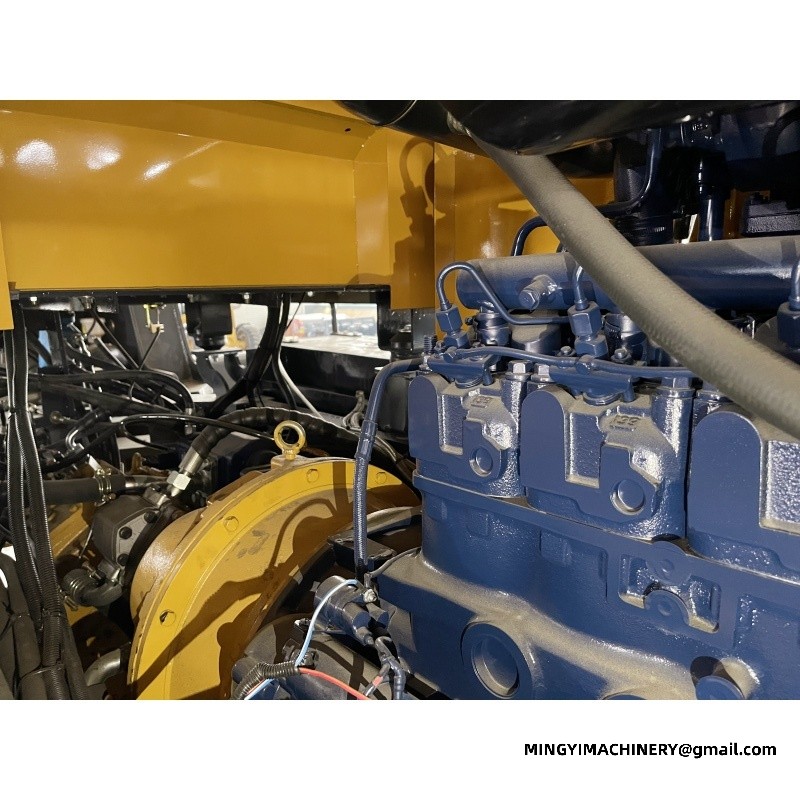
Weekly: check the centre cylinder 45 / side cylinder 40 cylinder rods for scoring, the hoses for chafe, and the 40 pump (490 engine); 1045 pump (4102 turbo engine) and 316 pump connections for weeping. Monthly: torque the boom mount pins to the 890 mm spacing and inspect the cutting edge. On the light-duty 4.2 m medium-frame wheel-side reduction wheel loader the same schedule applies with 4105 core, centre cylinder 60 / side cylinder 50, 2063 pump and 900 mm. None of it is skilled work, and all of it is simpler than the failure it prevents.
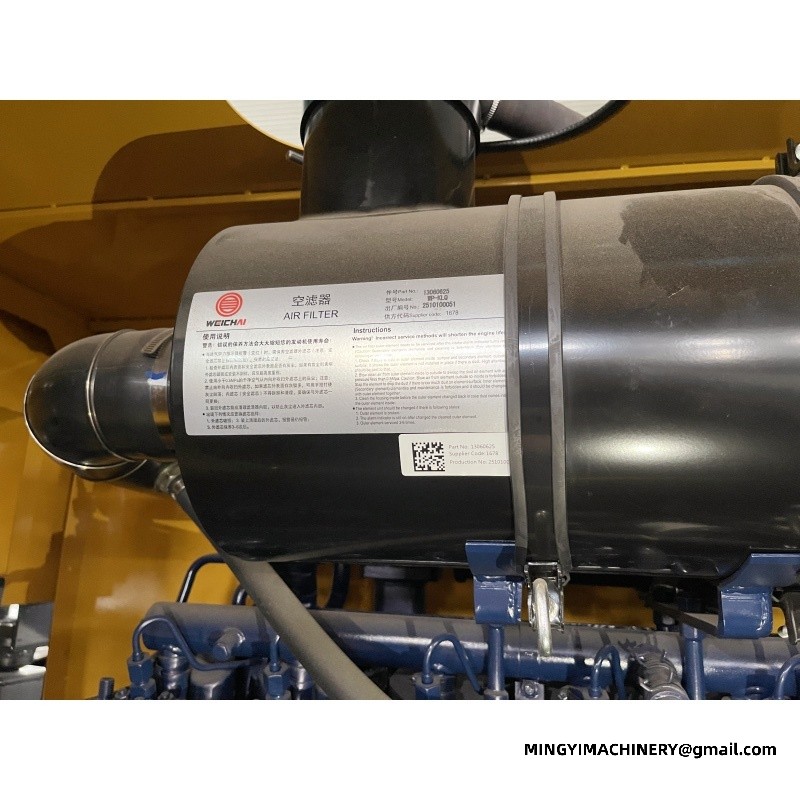
Over a full season, the differences that matter are not the ones on the sales sheet. Two machines, the light-duty 3.5 m small-frame wheel-side reduction wheel loader with 0.38 m³ at 3.5 m and the light-duty 4.2 m small-frame wheel-side reduction wheel loader with 0.38 m³ at 4.2 m, will differ in fuel by less than they differ in uptime, and they will differ in uptime mostly because of the cooling package — 4100 core (490 engine); 4105 core (4102T engine) against 4100 core (490 engine); 4105 core (4102T engine) — and the frame — 14 mm against 20 mm.
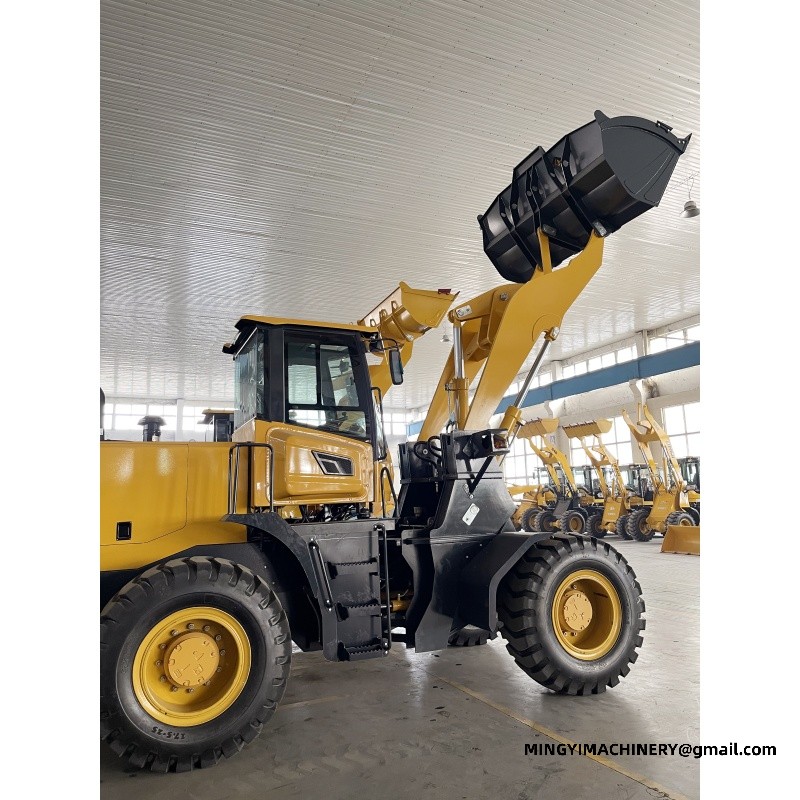
plan on the duty, then check the specification supports it. A light build in a quarry is a false economy; a heavy build on a farm is money spent for nothing. Where the duty is mixed, buy the frame for the hardest week of the year and the bucket for the average one — buckets are simple, frames are not, and the 40 pump (490 engine); 1045 pump (4102 turbo engine) and 316 pump on the light-duty 3.5 m small-frame wheel-side reduction wheel loader will run either.
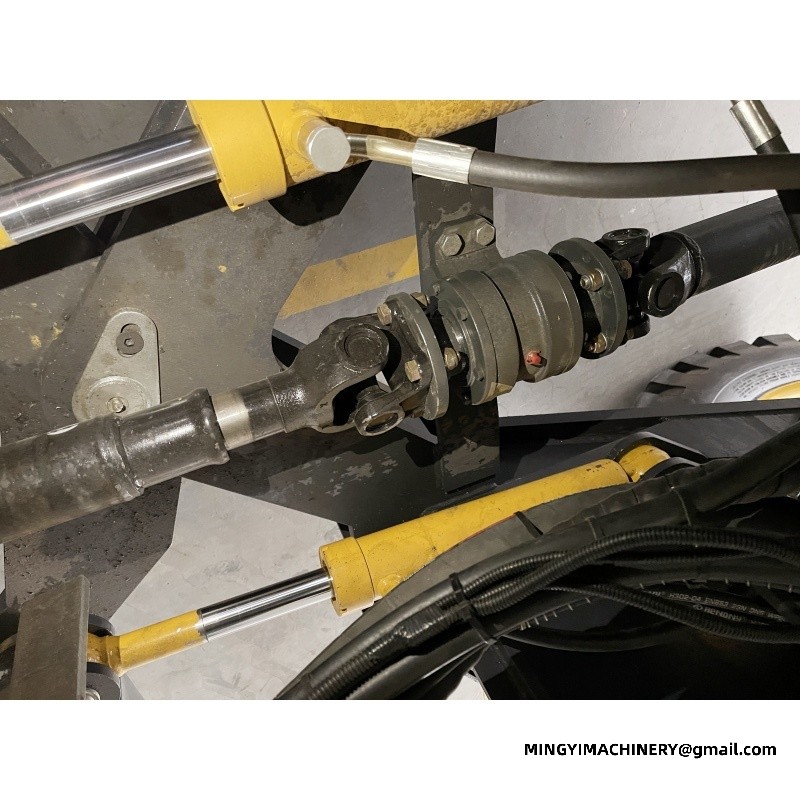
Fleet effort is driven by the size of the spares bin, and that is decided at purchase. Machines sharing an engine share a pump, 2063 pump, a radiator, 4105 core, and a battery rating, 80 Ah. Machines sharing a frame share cylinder sizes, centre cylinder 60 / side cylinder 50, and hinge geometry. Buy within one frame family and the bin halves.
The figures to compare are the ones that differ: bucket 0.52 m³ against 0.52 m³, dump height 4.2 m against 4.5 m, track 1.6 m against 1.6 m. Where those differ, the wearing parts behind them usually differ too. Where they match, one part number covers both machines.
Articulated loaders wear at the pins, and pins wear because they were dry. Front plate 16 mm, rear plate 16 mm, and the cross-member behind them at 16 mm: that assembly is what steering works through, several hundred times a shift. Grease intervals are measured in hours, not months, on a machine doing short cycles.
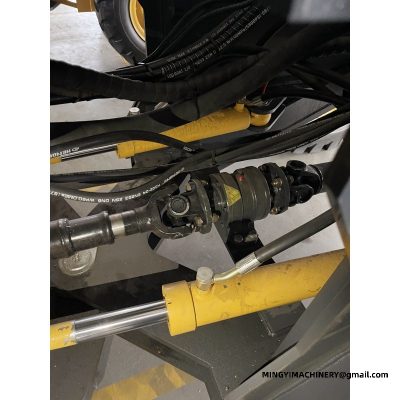
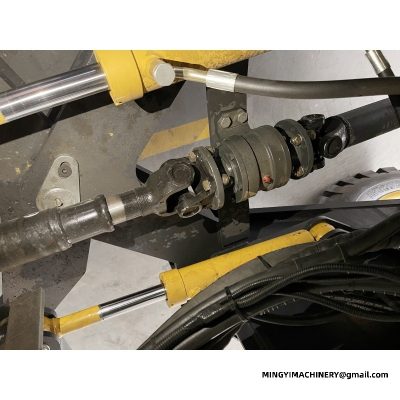
The boom pivots are the second set, and they are the ones an operator feels first. A 1.85 m arm on a 680 mm spacing, lifted by centre cylinder 40 / side cylinder 40, loads its pins every pass. If the machine develops a clunk on lift, look there before looking at the pump — the pump, 32 pump, is usually fine and the pin is usually not.
Do attachments interchange across the wheel loader manufacturer range?
Within a frame family, yes, because the boom section matches. Across families, no: a 370 mm section on the light-duty 3.2 m low-profile wheel loader is not the 450 mm section on the light-duty 4.2 m medium-frame wheel-side reduction wheel loader.
What boom wall thickness does a wheel loader manufacturer need?
30 mm on the light-duty 4.2 m medium-frame wheel-side reduction wheel loader against 30 mm on the light-duty 4.5 m medium-frame wheel-side reduction wheel loader. A long arm on a thin wall lifts on paper and feels vague in the yard, so read wall and length together.
How does a wheel loader manufacturer cope with dust?
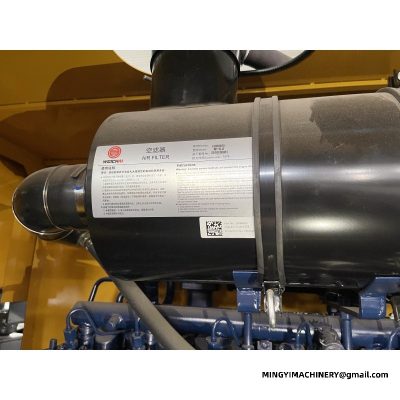
Specify the raised core: 4100 core on the standard 2.4 m low-profile wheel loader against 4100 core (490 engine); 4105 core (4102T engine) on the light-duty 3.8 m small-frame wheel-side reduction wheel loader, and blow the fins out at the end of every shift in fines or grain.
Which wheel loader manufacturer build suits farm work?
The lighter one, for access: a 0.52 m³ bucket at 4.2 m, 1.6 m track and a 4.3 m footprint that turns between sheds. Gate and door widths decide first.
What is the fuel tank capacity of a wheel loader manufacturer?
64.7 L (75# small tank) on the light-duty 3.5 m small-frame wheel-side reduction wheel loader and 70 L (75# large tank) on the light-duty 4.5 m medium-frame wheel-side reduction wheel loader, both sized for a full shift at working throttle without a mid-day refuel.
What separates a light build from a heavy build of a wheel loader manufacturer?
Cross-member and rear hinge plate: 45 mm and 30 mm on the light-duty 4.2 m medium-frame wheel-side reduction wheel loader, against 45 mm and 30 mm on the light-duty 4.5 m medium-frame wheel-side reduction wheel loader. Boom wall and cylinder bore follow.
What should I check before a wheel loader manufacturer works a ramp?
Traction and cooling. A 1.6 m track with wheel-side reduction holds on a ramp where an Isuzu-pattern axle would spin, and the 4105 core radiator keeps working at low speed.
Send the application and the receiving body height and we will match a wheel loader manufacturer to it from the published range — 0.52 m³ bucket at 4.2 m, or 0.52 m³ at 4.5 m — and specification the build, the container plan and the spares package together.
Fuel, oil and fluid quality for Wheel Loader Manufacturer: Frame Tiers and Parts Commonality
Most engine trouble starts with what went into the tank. Clean fuel, stored properly and filtered before it reaches Wheel Loader Manufacturer: Frame Tiers and Parts Commonality, prevents more downtime than any other single habit an owner can adopt.
Planning the season around Wheel Loader Manufacturer: Frame Tiers and Parts Commonality
Workload is rarely even across the year, and the machine should be specified for the busy weeks. A Wheel Loader Manufacturer: Frame Tiers and Parts Commonality sized only for the average month will be the limiting factor exactly when the work is worth the most.
Hot, humid and dusty conditions around Wheel Loader Manufacturer: Frame Tiers and Parts Commonality
Humidity attacks the parts that are not used. Storage in a damp climate means Wheel Loader Manufacturer: Frame Tiers and Parts Commonality needs the exposed metal protected and the machine run regularly, because standing still does more damage than working.
Contact MINGYI Machinery for the current wheel loader lineup, configuration options and a formal specification for your market. E-mail: sales@mingycn.com | LINE (ID): mingyicn
Wheel Loader Factory China: 21 Builds, Three Frame Tiers · Wheel Loader Supplier: Choosing Builds for Your Market · Loader Machine for Construction: Cycle Work Day to Day · Loaders









