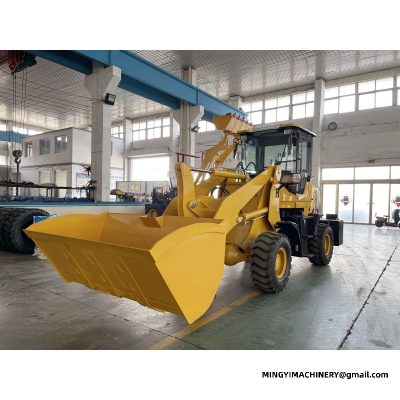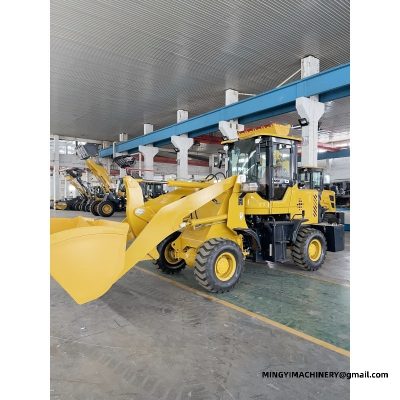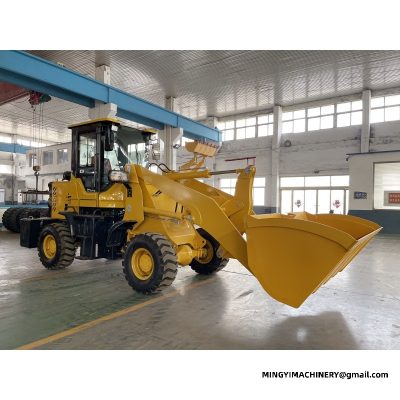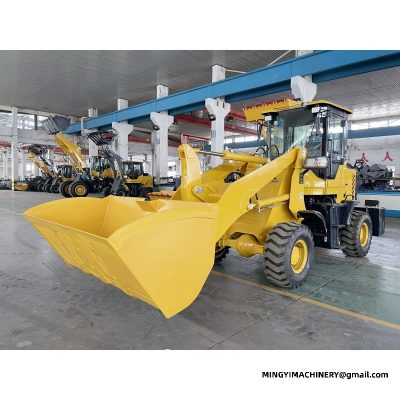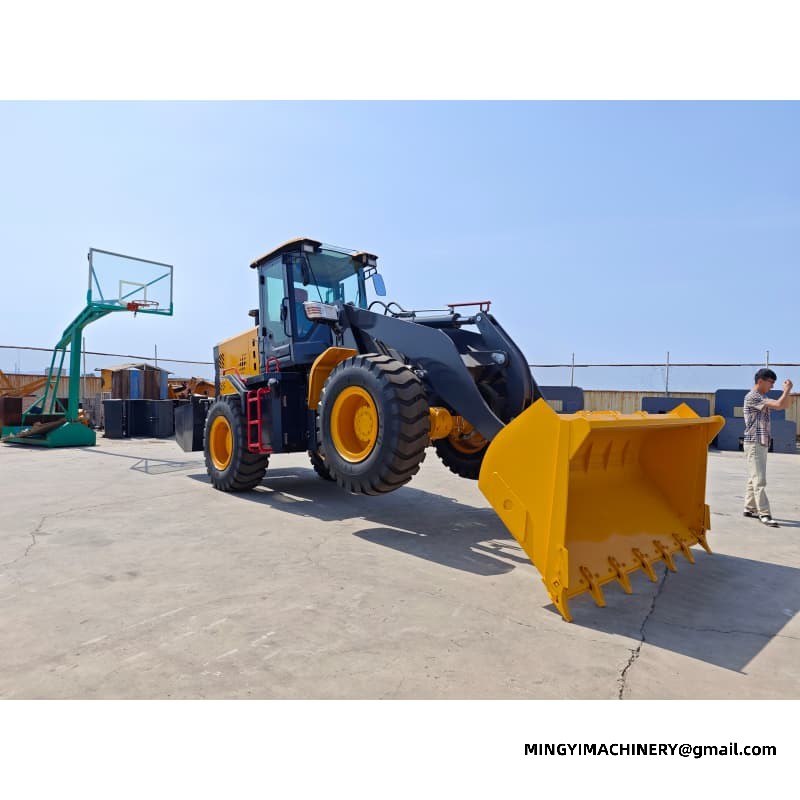
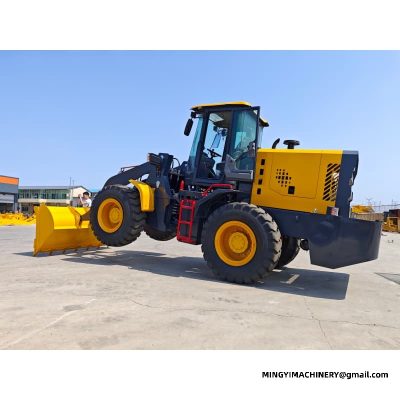
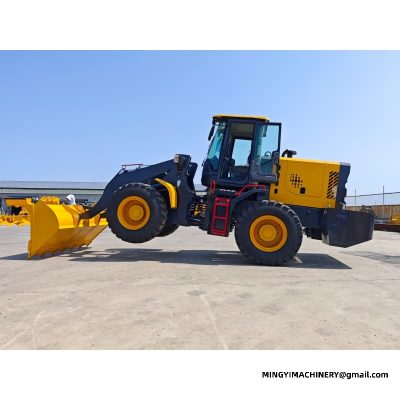
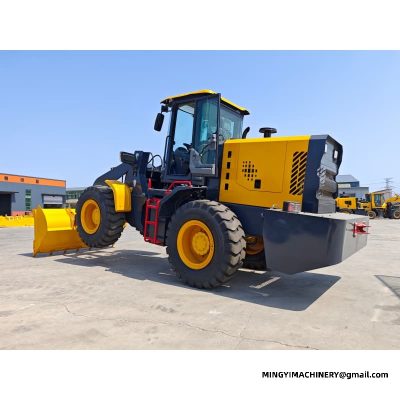
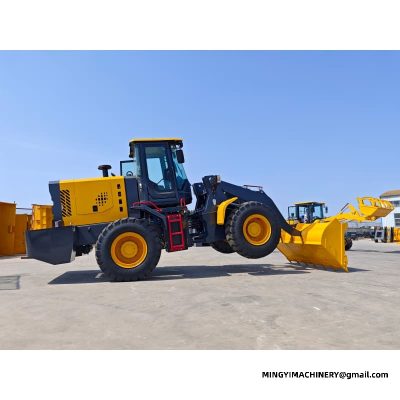
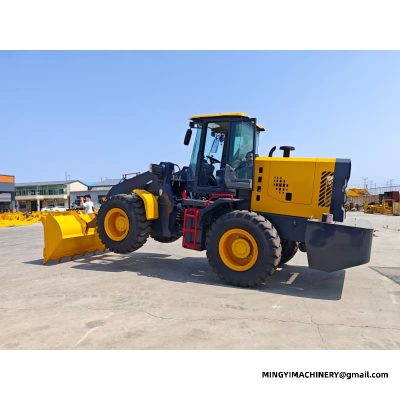
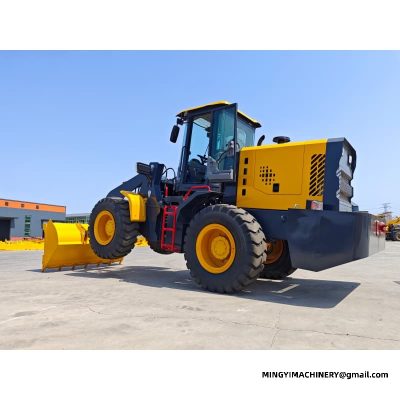
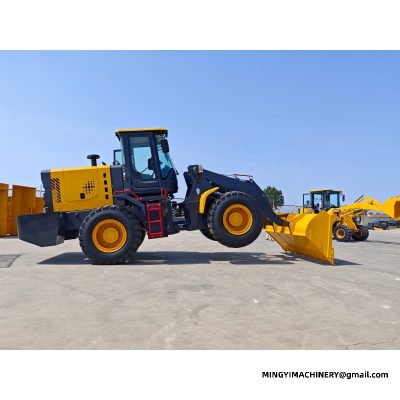
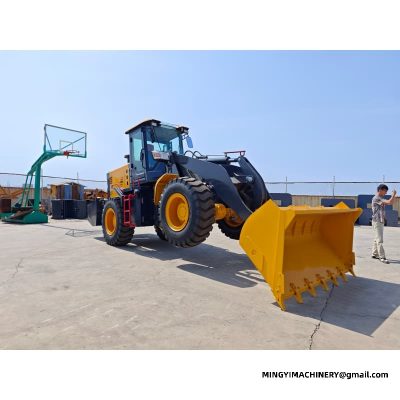
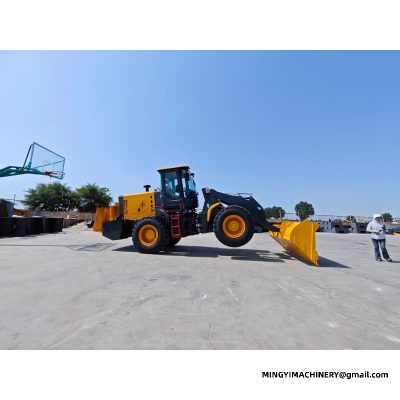
Every loader machine supplier enquiry comes down to three numbers: how much the bucket holds, how high it dumps, and how much steel sits behind the hinge. The rest of a specification sheet is consequence. On this range the first two run from 0.4 m³ on the heavy-duty 4.5 m small-frame wheel-side reduction wheel loader to 0.65 m³ on the heavy-duty 3.5 m medium-frame wheel-side reduction wheel loader, and the third is published per build — 45 mm front and 30 mm rear hinge plates over a 45 mm cross-member. This page sets out how those figures are chosen, what they predict about behaviour on site, and where each build in the range fits.
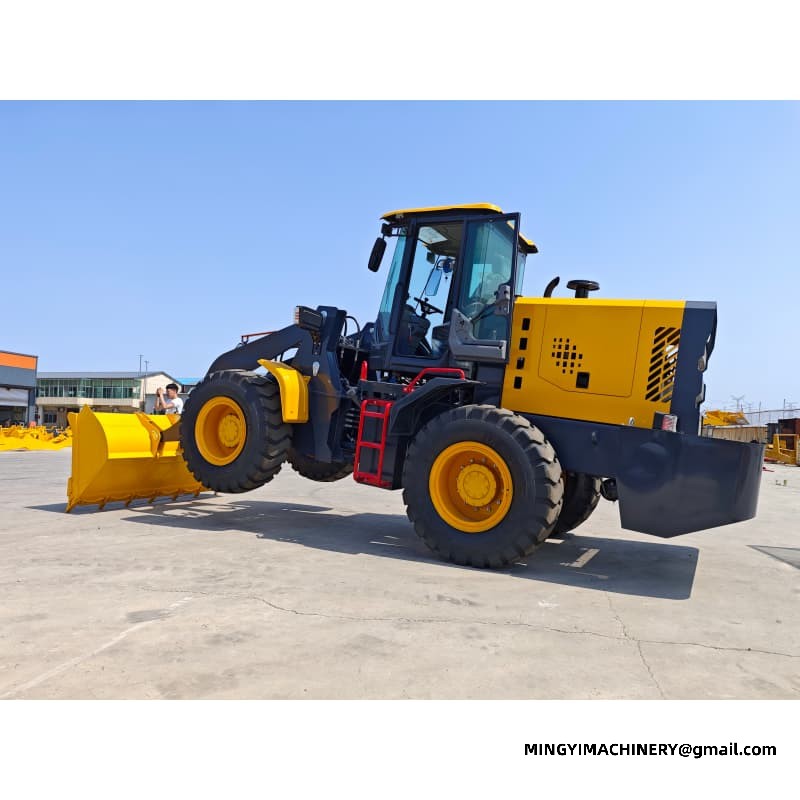
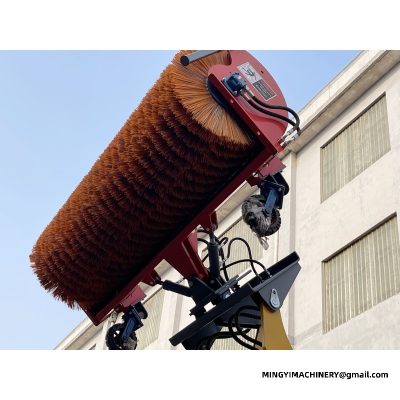
The standard bucket on this build is 0.4 m³, and it is the right tool for loose material moved from a heap to a body. Everything else is a compromise in one direction or another: forks give precision and lose volume, grapples give grip and lose speed, a snow blower gives reach and needs flow the bucket never asked for.
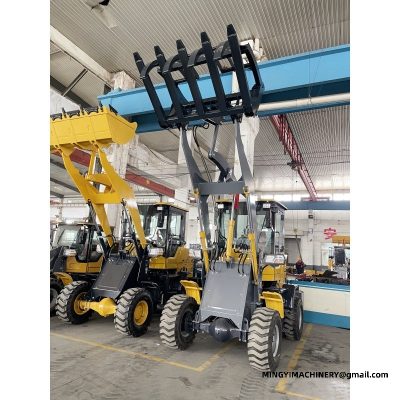
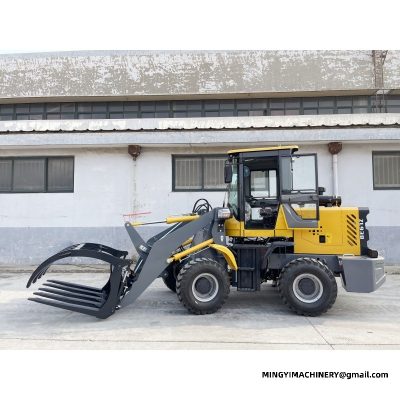
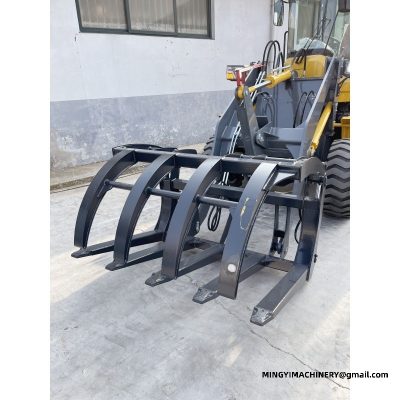
What makes attachments practical is whether the machine can lift them. Boom wall 25 mm and section 430 mm decide how much side load the arm takes, and the hinge plates — 30 mm at the front, 20 mm at the rear — decide how long the frame takes it. A grapple hanging off the end of a long arm is a side load the bucket never produces.
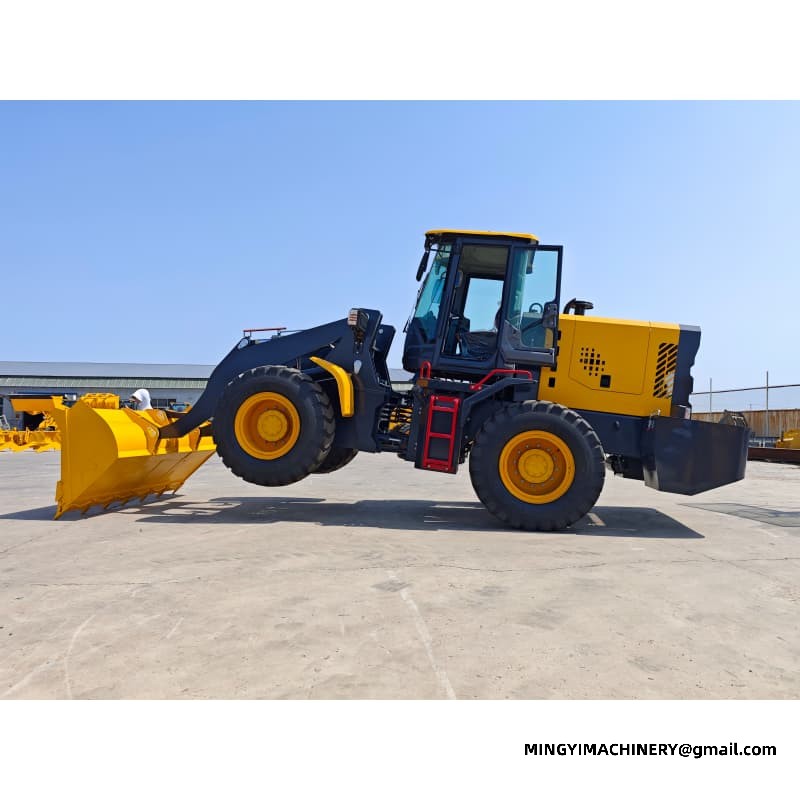
Attachments are specified against the carrier, not against the machine's size class. The figures that matter are the boom section and the hinge geometry: 430 mm on the heavy-duty 3.2 m low-profile wheel loader against 430 mm on the heavy-duty 3.2 m small-frame wheel-side reduction wheel loader, and centre distance 890 mm against 890 mm. Two loaders of the same rated capacity from different frame families will not share a fork frame.
Within one frame family the section and spacing match, so a single tool set covers the light and heavy builds of that frame — a genuine advantage for a mixed fleet. Across families it does not work. If you intend to run hydraulically actuated tools, a grapple, a four-in-one bucket or a hydraulic snow blade, order the third circuit at build time; the 40 pump (490 engine); 1045 pump (4102 turbo engine) and 40 pump (490 engine); 1045 pump (4102 turbo engine) circuits are specified per build and plumbing added later is the most common source of field leaks.
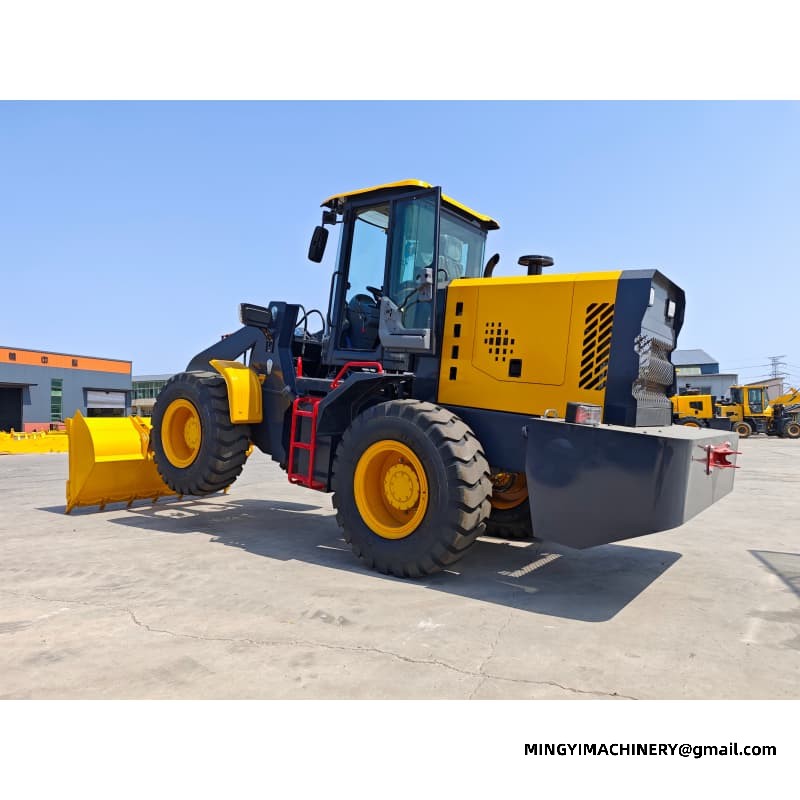
Breakout happens when the bucket is driven into the face and lifted, and it loads the boom in bending. The figures that resist it are wall 25 mm, width 500 mm, and the spacing between the two arms, 890 mm. A wider spacing spreads the load across the pins instead of concentrating it.
Length works against you here. A 3.15 m arm gives reach and height and multiplies the bending moment at the same time, which is why long-arm builds carry thicker walls. On the heavy-duty 4.5 m medium-frame wheel-side reduction wheel loader the same comparison is 3.35 m of length against 30 mm of wall. Where the material is hard to break out, the shorter, thicker combination is usually the better machine.
| Reference specification — heavy-duty 4.5 m small-frame wheel-side reduction wheel loader | |
|---|---|
| Bucket capacity | 0.4 m³ |
| Dump height | 4.5 m |
| Track width | 1.5 m (wheel-side reduction axle); 1.45 m (Isuzu axle) |
| Boom arm thickness | 25 mm |
| Boom arm width | 500 mm |
| Boom arm length | 3.15 m |
| Boom arm centre distance | 890 mm |
| Cross-member thickness | 30 mm |
| Front hinge plate thickness | 30 mm |
| Rear hinge plate thickness | 20 mm |
| Rear frame section | 280 mm high x 800 mm wide |
| Hydraulic cylinders | centre cylinder 45 / side cylinder 45 |
| Fuel tank | 64.7 L (75# small tank) |
| Battery | 60 Ah (490 engine); 80 Ah (4102 turbo engine) |
| Front wheel to counterweight | 4.25 m |
| Radiator | 4100 core (490 engine); 4105 core (4102T engine) |
| Work pump | 40 pump (490 engine); 1045 pump (4102 turbo engine) |
| Travel pump | 316 pump |
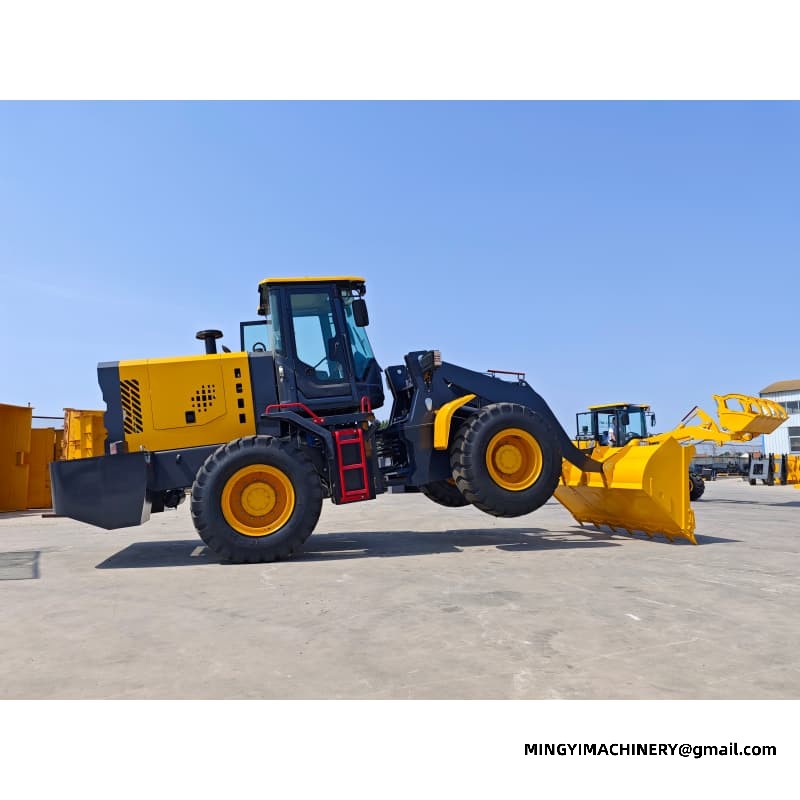
Frames do not usually fail at the boom. They fail at the hinge plates and the cross-member that ties them together, because that is where the articulated joint concentrates every steering and breakout load. On the heavy-duty 3.2 m small-frame wheel-side reduction wheel loader those figures are 30 mm front, 20 mm rear and 30 mm across; on the heavy-duty 4.5 m small-frame wheel-side reduction wheel loader they are 30 mm, 20 mm and 30 mm. The rear frame sections are 280 mm high x 800 mm wide and 280 mm high x 800 mm wide.
Why the rear plate is the one to watch even though it is the thinner of the two: the front hinge sees the boom loads, which are predictable and largely vertical; the rear sees articulation loads, which are sideways, repeated and often shock-loaded when an operator turns while breaking out. A machine specified with a 20 mm rear plate and a 30 mm cross-member will still be tight at year three in reverse-loading cycles where a 20 mm plate has started to ovalise its pin bores. If your fleet keeps machines past warranty, this is the row of the table to read twice.
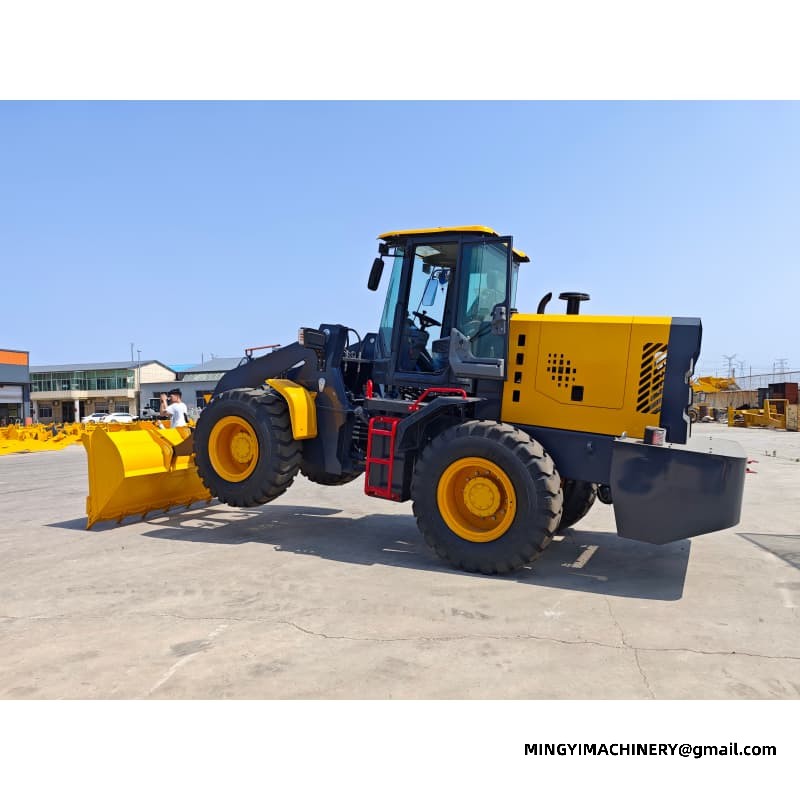
Three takes dominate ownership: fuel, downtime and the residual value of the machine when it is sold. Fuel is set by duty and tank planning — 64.7 L (75# small tank) on the heavy-duty 4.5 m small-frame wheel-side reduction wheel loader, 70 L (75# large tank) on the heavy-duty 4.5 m medium-frame wheel-side reduction wheel loader. Residual value is set by whether the frame is still tight, which is set by the 20 mm and 30 mm rear hinge plates and the 30 mm and 45 mm cross-members.
Downtime is the lengthy one, and it is usually caused by the simplest components: a hose on the centre cylinder 45 / side cylinder 45 circuit, a blocked 4100 core (490 engine); 4105 core (4102T engine) core, a flat battery from a machine that sat on the dock. None of them is a reason to buy a bigger machine, and all of them are reasons to keep a small spares box. plan for filters, hoses and a cutting edge per year, and for pins and bushes every second year.
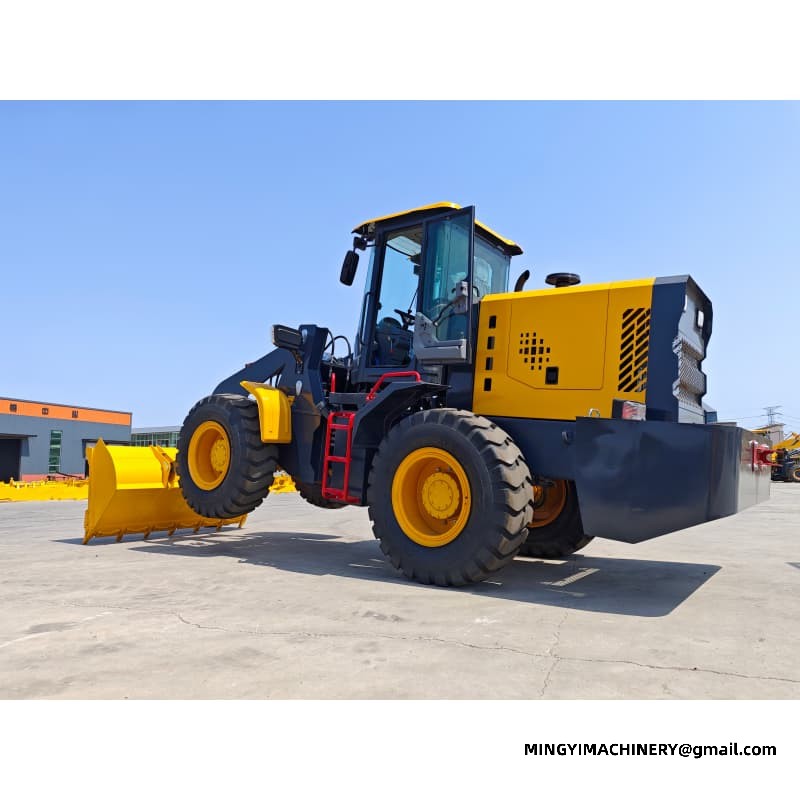
A specification is only as good as the figures on it. Before comparing numbers between suppliers, make sure the same figures appear on both: bucket 0.65 m³, dump height 4.2 m, boom section 520 mm over 30 mm of wall, hinge plates 45 mm front and 30 mm rear, cross-member 45 mm. If a sheet will not give you those five, it is not a specification, it is a description.
The second thing a sheet should let you check is which engine the figures belong to. Where a build offers two engines, the pump and radiator change with it: this one lists 2063 pump and 4105 core. Asking for the build by engine, not by model name, is the single change that prevents most delivery disputes.
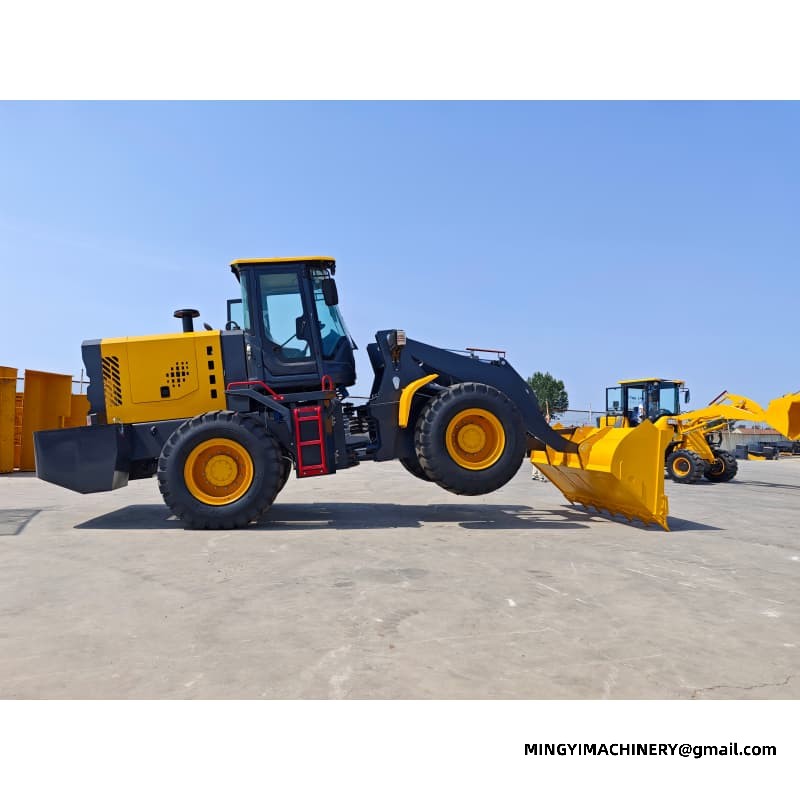
A machine crossing an ocean is exposed to salt air for weeks, and the parts that suffer are the ones that were never painted: cylinder rods, hinge pins and electrical terminals. This build carries centre cylinder 60 / side cylinder 50 and hinge plates of 45 mm and 30 mm; all three should be greased and wrapped before loading rather than cleaned on arrival.
The battery is the other item to plan for. 80 Ah will not survive a long voyage connected, and a flat machine cannot be driven off a container. Specify a disconnect, and specify the radiator, 4105 core, to be checked for fin corrosion on arrival — salt air attacks the core from outside and the symptom is overheating in the first month, which everyone blames on the thermostat.
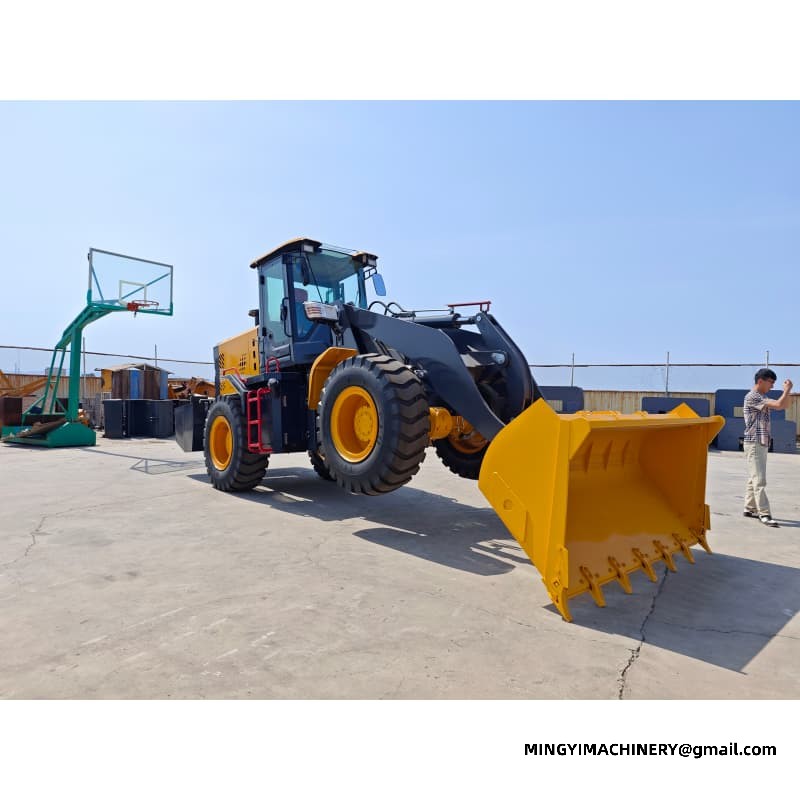
Daily: walk the machine, look at the ground under it, check the coolant level in the 4100 core (490 engine); 4105 core (4102T engine) package, and grease the hinge pins. Weekly: check the cylinder rods for scoring — centre cylinder 45 / side cylinder 45 — and the pins behind the 30 mm front plate for movement. Monthly: check the cross-member and rear frame, 280 mm high x 800 mm wide, for cracks at the weld toes.
None of that needs a workshop, and all of it is what keeps a machine tight. The parts that fail without warning are the ones nobody looks at: the pins, the hoses behind the 40 pump (490 engine); 1045 pump (4102 turbo engine), and the battery terminals on 60 Ah (490 engine); 80 Ah (4102 turbo engine). A ten-minute walk-round finds all three before they stop the machine.
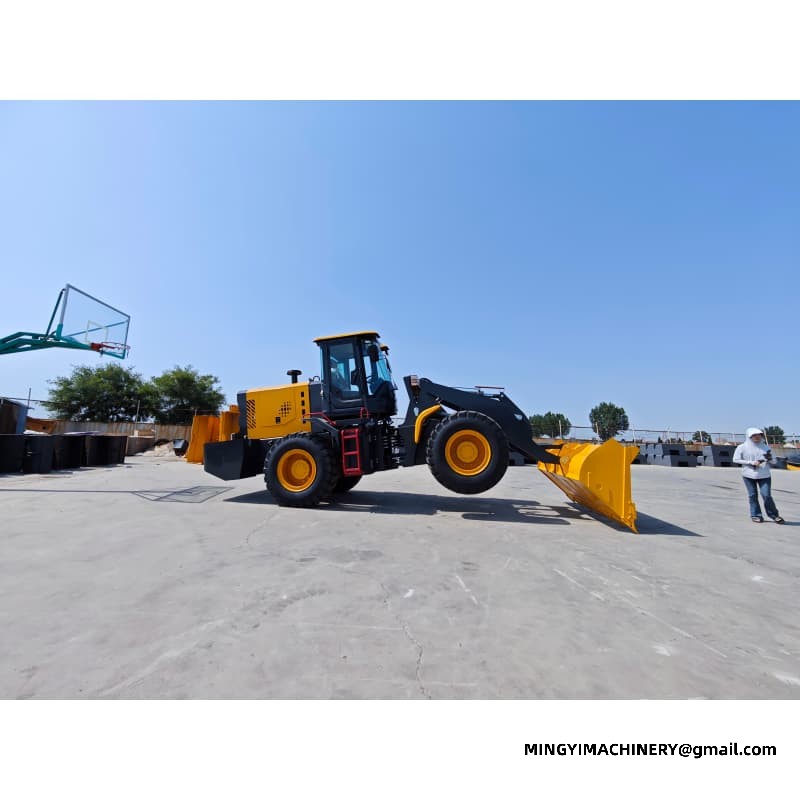
Do attachments interchange across the loader machine supplier range?
Within a frame family, yes, because the boom section matches. Across families, no: a 500 mm section on the heavy-duty 4.5 m small-frame wheel-side reduction wheel loader is not the 500 mm section on the heavy-duty 3.5 m medium-frame wheel-side reduction wheel loader.
What engine options are offered on a loader machine supplier?
Where two are offered, cooling and electrics change with them: 4100 core (490 engine); 4105 core (4102T engine) radiator and 60 Ah (490 engine); 80 Ah (4102 turbo engine) battery on the heavy-duty 3.2 m small-frame wheel-side reduction wheel loader, with the raised core belonging to the turbo option.
How many hours a day can a loader machine supplier run?
As many as the cooling and fuel allow: a 64.7 L (75# small tank) tank on the heavy-duty 3.2 m small-frame wheel-side reduction wheel loader and a 4100 core (490 engine); 4105 core (4102T engine) radiator. In dusty work the radiator, not the tank, is usually what sets the limit.
How are the pumps specified on a loader machine supplier?
Lift and travel are separate circuits: a 32 pump work pump with a 316 pump travel pump, so a loaded climb does not take flow away from the boom.
How much reach does the boom of a loader machine supplier give?
Boom length is 3.15 m on the heavy-duty 4.5 m small-frame wheel-side reduction wheel loader and 3.15 m on the heavy-duty 3.5 m medium-frame wheel-side reduction wheel loader. Length buys reach and takes stability, so match it to the height you actually have to clear.
Which loader machine supplier build suits site work?
The heavier one, because dump height and hinge steel govern the day: 0.65 m³ at 4.2 m with 30 mm rear hinge plates and a 45 mm cross-member.
Is the wheel-side reduction axle worth specifying on a loader machine supplier?
If the ground is soft, rutted or sloped, yes: a 1.6 m track with hub reduction keeps traction where a faster axle would spin. On hard, level ground it is not needed.
The short version for any loader machine supplier: fix the dump height first, check the track against your narrowest opening second, and read the rear hinge plate — 20 mm on the heavy-duty 4.5 m small-frame wheel-side reduction wheel loader, 30 mm on the heavy-duty 3.5 m medium-frame wheel-side reduction wheel loader — third. Everything else on the sheet is detail.
Hot, humid and dusty conditions around Loader Machine Supplier: Model Mix, Spares and Shipping Plans
Humidity attacks the parts that are not used. Storage in a damp climate means Loader Machine Supplier: Model Mix, Spares and Shipping Plans needs the exposed metal protected and the machine run regularly, because standing still does more damage than working.
Wear items and spares worth holding for Loader Machine Supplier: Model Mix, Spares and Shipping Plans
The parts that stop a machine are rarely the parts that are hardest to find. Filters, belts, seals and the ground engaging tools on Loader Machine Supplier: Model Mix, Spares and Shipping Plans are easy to hold and slow to replace, which is why they belong on the shelf rather than on an order.
Reading the early symptoms on Loader Machine Supplier: Model Mix, Spares and Shipping Plans
Machines rarely fail without warning. A change in sound, a slower function or a new leak on Loader Machine Supplier: Model Mix, Spares and Shipping Plans is the machine saying something early, and listening then takes a fraction of the time that waiting does.
Contact MINGYI Machinery for the current wheel loader lineup, configuration options and a formal specification for your market. E-mail: sales@mingycn.com | LINE (ID): mingyicn
Wheel Loader Manufacturer: Frame Tiers and Parts Commonality · Wheel Loader Factory China: 21 Builds, Three Frame Tiers · Heavy Duty Wheel Loader: Steel That Takes the Duty · Loaders