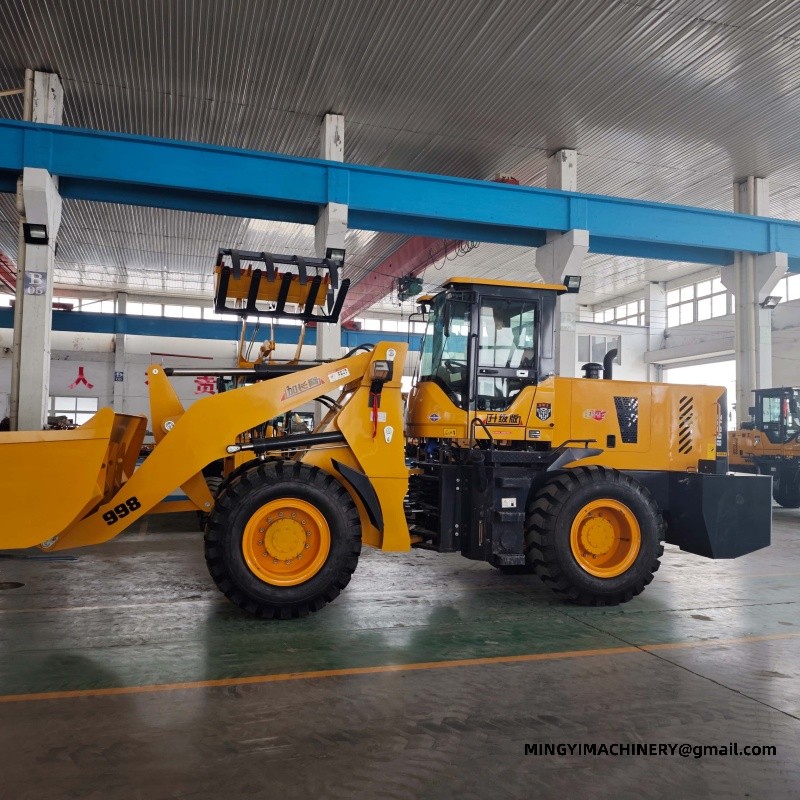
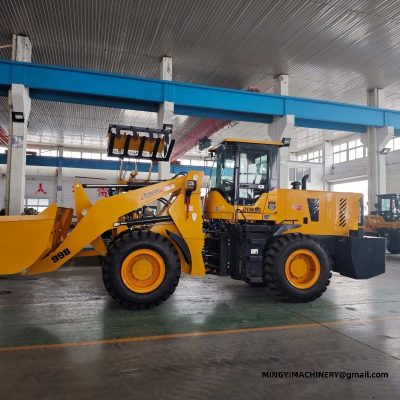
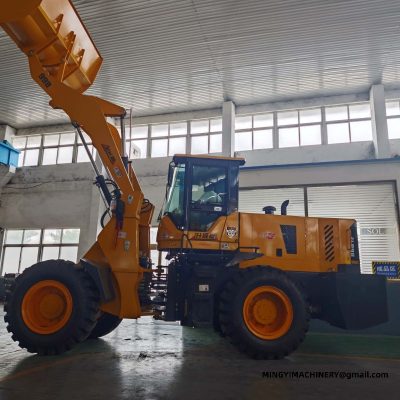
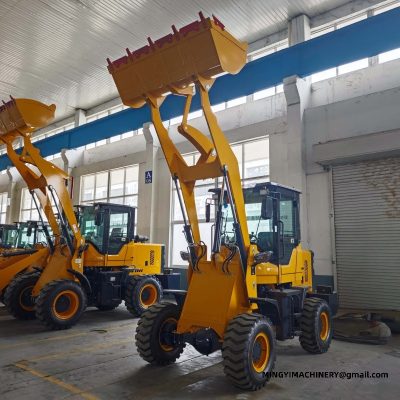
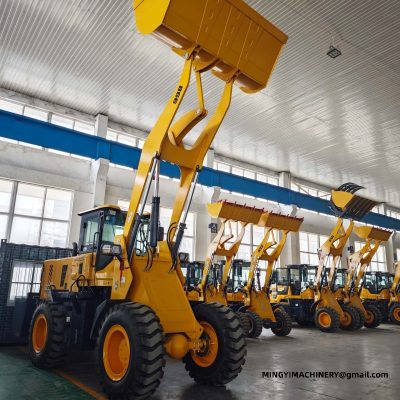
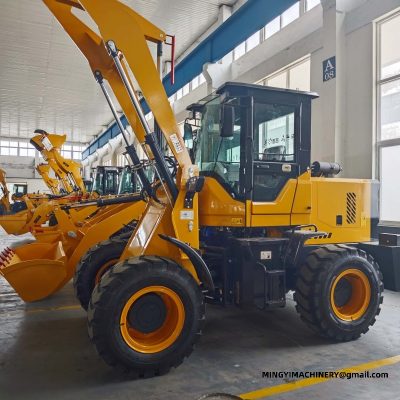
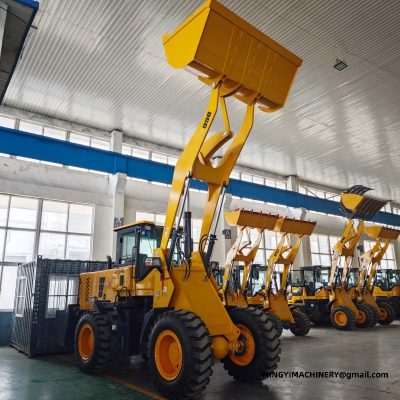
What separates a construction equipment loader that is still tight at year five from one that is loose at year two is visible on the specification sheet, if you know which row to read. It is not the engine and it is not the bucket. It is the rear hinge plate — 14 mm on the light-duty 3.2 m low-profile wheel loader against 14 mm on the light-duty 3.2 m small-frame wheel-side reduction wheel loader — and the cross-member behind it, 25 mm against 25 mm. Add the boom wall, 25 mm against 25 mm, and you have the frame story. The rest of this page covers the hydraulic, cooling, axle and delivery decisions that follow.
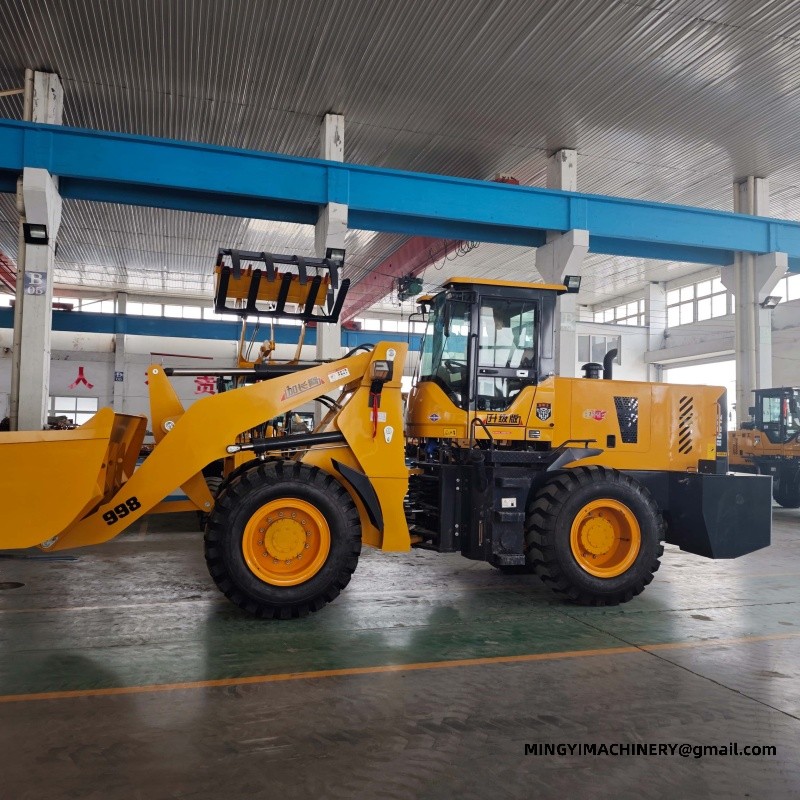
Put the two builds side by side and read four rows only. Bucket: 0.38 m³ against 0.65 m³. Dump height: 3.2 m against 3.5 m. Hinge steel: 25 mm and 14 mm against 45 mm and 30 mm. Cross-member: 25 mm against 45 mm.
Those four decide what the machine can carry, where it can put it, and how long the frame lasts doing it. Everything else on a specification sheet — paint, cab trim, lighting package — is cosmetic next to them. The pumps, 40 pump (490 engine); 1045 pump (4102 turbo engine) against 2063 pump, are the fifth row and matter only if the work is hydraulic rather than loading.
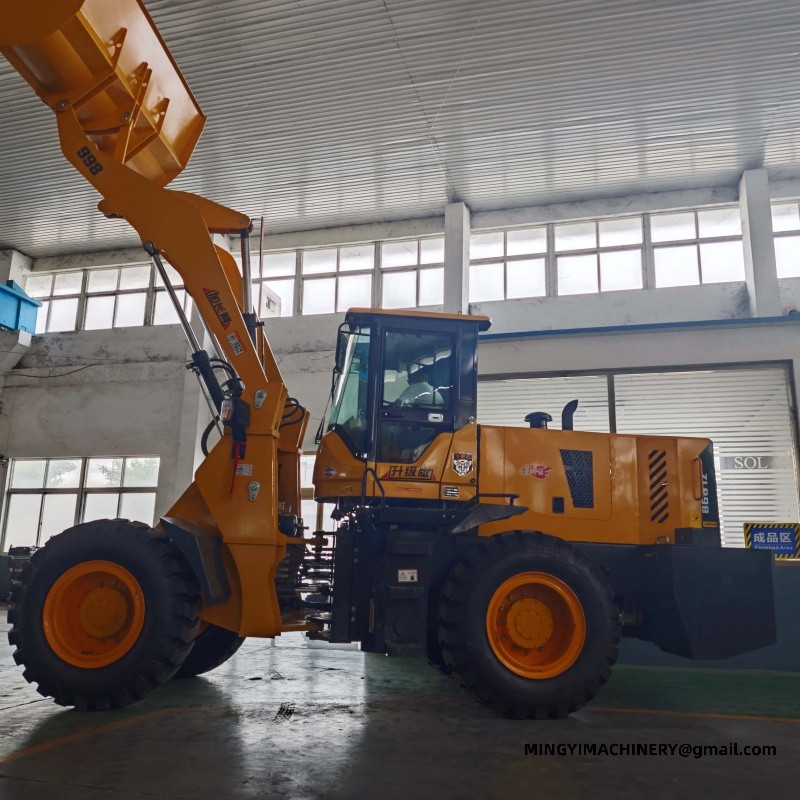
Cold cranking is the one specification that is easy to ignore and impossible to work around at five in the morning. This build is specified with 60 Ah (490 engine); 80 Ah (4102 turbo engine), matched to the engine it has to turn. Capacity in ampere-hours is only half the story; the other half is whether the rating is honest at low temperature, which is why the figure should be read together with the engine option.
Where two engines are offered, the turbo option asks for more from the battery and gets it: the higher rating in 60 Ah (490 engine); 80 Ah (4102 turbo engine) belongs to that build. If the machine will start cold, stop often, or run a short-haul duty with many restarts, specify the higher capacity at the order stage rather than discovering the limit in January.
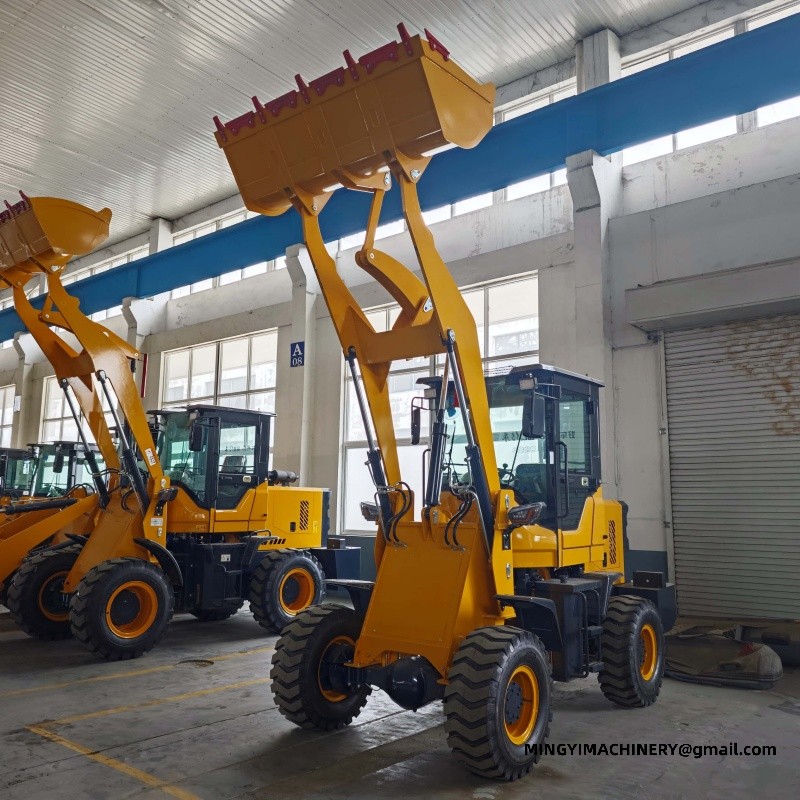
Fuel and cooling capacity are not comfort figures; they are shift-planning figures. A 64.7 L (75# small tank) tank on the light-duty 3.2 m small-frame wheel-side reduction wheel loader is sized so a full working day at operating throttle does not need a mid-shift refuel, which matters on sites where the bowser is a long way from the face. The light-duty 4.2 m small-frame wheel-side reduction wheel loader carries 64.7 L (75# small tank).
The radiator is the other side of the same question. 4100 core (490 engine); 4105 core (4102T engine) on this build against 4100 core (490 engine); 4105 core (4102T engine) on the other. Where a build offers two cores, the raised one serves the turbo engine, and it is the correct specification for dusty work, high ambient temperature, or any duty where the machine spends its day at high load and low speed with little air passing through the core.
| Specification extract — light-duty 4.2 m small-frame wheel-side reduction wheel loader | |
|---|---|
| Bucket capacity | 0.38 m³ |
| Dump height | 4.2 m |
| Track width | 1.5 m (wheel-side reduction axle); 1.45 m (Isuzu axle) |
| Boom arm thickness | 25 mm |
| Boom arm width | 370 mm |
| Boom arm length | 3.15 m |
| Boom arm centre distance | 890 mm |
| Cross-member thickness | 25 mm |
| Front hinge plate thickness | 25 mm |
| Rear hinge plate thickness | 20 mm |
| Rear frame section | 280 mm high x 800 mm wide |
| Hydraulic cylinders | centre cylinder 45 / side cylinder 40 |
| Fuel tank | 64.7 L (75# small tank) |
| Battery | 60 Ah (490 engine); 80 Ah (4102 turbo engine) |
| Front wheel to counterweight | 4.1 m |
| Radiator | 4100 core (490 engine); 4105 core (4102T engine) |
| Work pump | 40 pump (490 engine); 1045 pump (4102 turbo engine) |
| Travel pump | 316 pump |
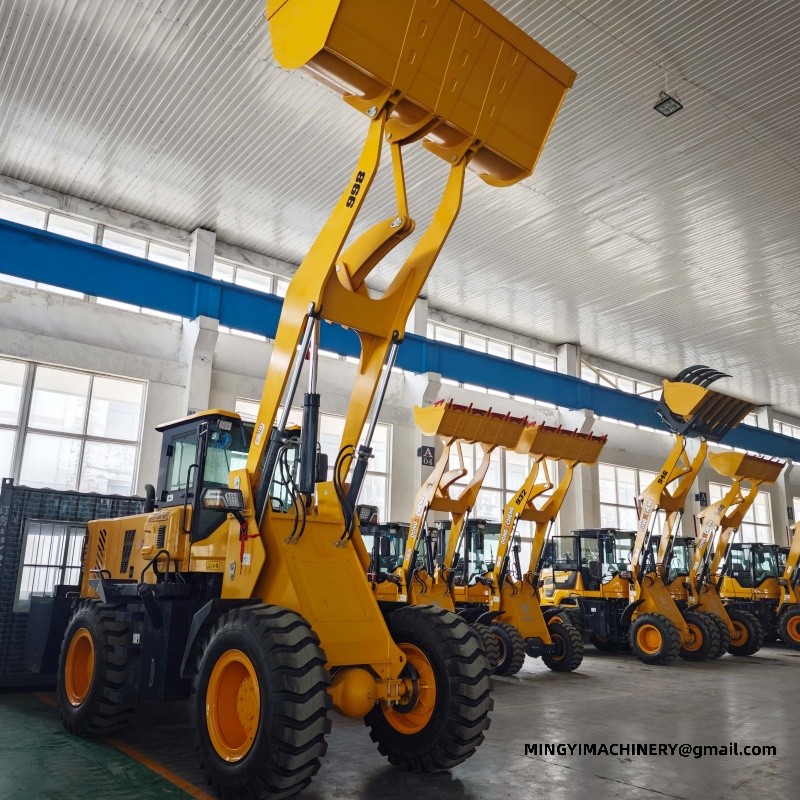
Two figures govern refuelling: tank capacity and consumption per hour, and only the first is published — 64.7 L (75# small tank) on the light-duty 4.2 m small-frame wheel-side reduction wheel loader, 70 L (75# large tank) on the heavy-duty 3.5 m medium-frame wheel-side reduction wheel loader. Consumption depends on duty, and the duty differences between a 0.38 m³ bucket at 4.2 m and a 0.65 m³ bucket at 3.5 m are mostly about how hard the engine works per cycle.
What you can plan on: a machine working a short, level cycle will finish a shift on one tank; the same machine ripping from a face or loading up a ramp will not. If your site has no refuelling point, size the tank to the worst day rather than the average one, and specify the larger option where a build offers it. The cooling package is the other half of the same calculation — 4100 core (490 engine); 4105 core (4102T engine) on the light-duty 4.2 m small-frame wheel-side reduction wheel loader and 4105 core on the heavy-duty 3.5 m medium-frame wheel-side reduction wheel loader — because a machine that stops for temperature stops wherever it is.
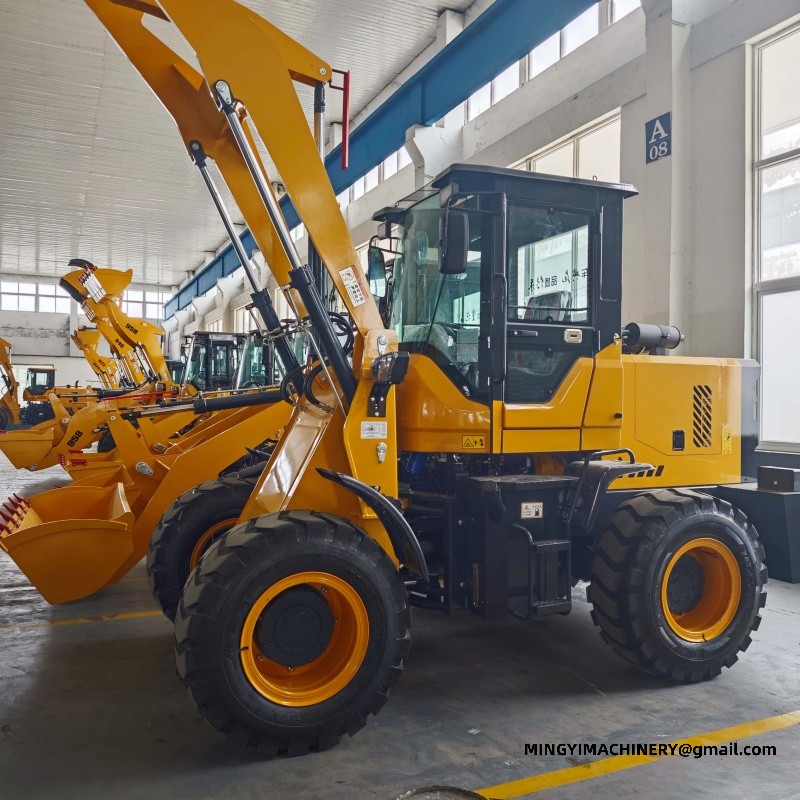
Soft ground punishes driveline parts before it punishes the frame. Sand, clay and loose overburden all increase rolling resistance, which increases torque at the hub, which is exactly where a non-reduction axle is weakest. Where the specification lists two track figures, as it does here at 1.5 m (wheel-side reduction axle); 1.45 m (Isuzu axle), the wider one belongs to the hub-reduction axle and is the specification for that ground.
Hard ground is the opposite case. On concrete, compacted hardstand or a paved yard, rolling resistance is low and sustained travel speed is high, so heat rather than torque becomes the limit. The heavy-duty 4.5 m small-frame wheel-side reduction wheel loader lists 1.5 m (wheel-side reduction axle); 1.45 m (Isuzu axle), and the narrower figure there is the one for hard standing. Matching axle to surface takes nothing at the order stage and saves a driveline later.
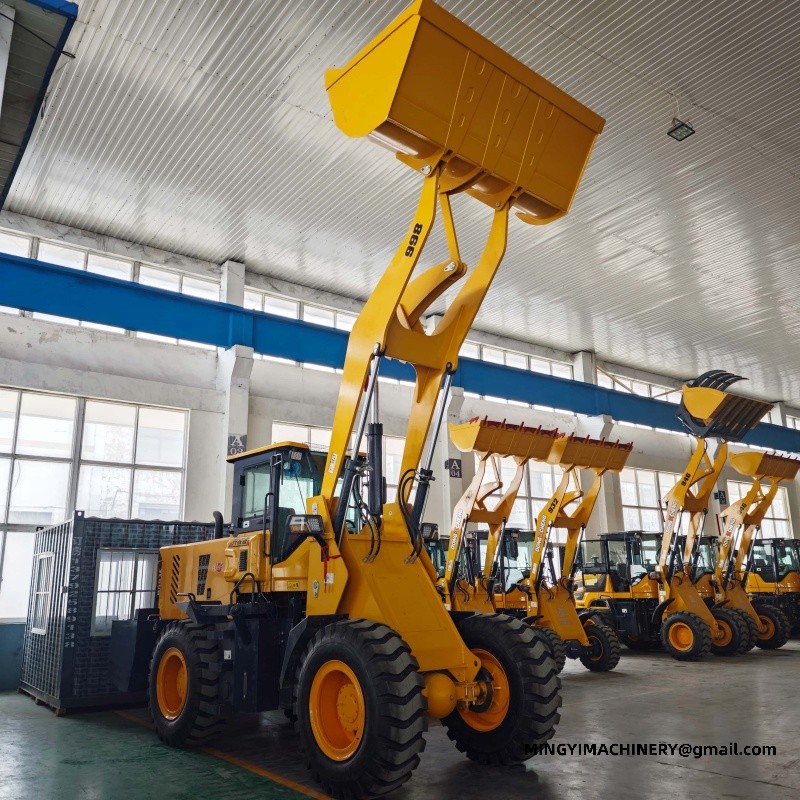
Operators describe a good machine as tight and a tired one as loose, and they are describing the hinge pins. New, the geometry is set by the plates: 25 mm forward, 14 mm aft. After a few thousand hours the geometry is set by how much those plates have allowed the pins to move, which is a function of thickness and of the 25 mm cross-member behind them.
This is why the figures are worth asking for rather than assuming. On the heavy-duty 4.5 m small-frame wheel-side reduction wheel loader the same two numbers are 30 mm and 20 mm. A machine that will spend its life on short cycles — many steering inputs per hour — should be bought on these figures rather than on bucket capacity, because capacity is simple to add and hinge life is not.
Photograph the specification plate, the cylinder markings and the frame plates on the day the machine arrives. Cylinders on this build are centre cylinder 45 / side cylinder 40; the pump is 40 pump (490 engine); 1045 pump (4102 turbo engine); the radiator is 4100 core (490 engine); 4105 core (4102T engine). Those three identify the build more reliably than any nameplate, because they are the parts that change between engine options.
Then photograph the geometry, because it is what a later claim will turn on. Dump height 3.8 m at full lift, arm length 2.61 m, spacing 890 mm, track 1.5 m (wheel-side reduction axle); 1.45 m (Isuzu axle). If a machine ever fails to clear a body it was sold to clear, those four photographs are the difference between a warranty claim and an argument.
A boom that lifts slowly is usually a flow question, not a force question. The cylinders on this build are centre cylinder 45 / side cylinder 40 and the pump is 40 pump (490 engine); 1045 pump (4102 turbo engine); if lift is slow but breakout is normal, look at flow before looking at the cylinders. If breakout is weak as well, look at pressure.
Before either, rule out the simple causes: a blocked return filter, a low oil level, a suction leak, or a relief valve that has been tampered with to make a weak machine feel strong. Raising relief pressure above the setting the 25 mm wall and 25 mm cross-member were specified for is how frames get bent, and it is the most common fault found on machines that arrived second-hand.
Which axle should a construction equipment loader be built with?
Match it to the ground. Track runs 1.5 m (wheel-side reduction axle); 1.45 m (Isuzu axle) on the light-duty 3.8 m small-frame wheel-side reduction wheel loader and 1.6 m on the heavy-duty 3.5 m medium-frame wheel-side reduction wheel loader; wheel-side reduction for soft or rutted surfaces, the Isuzu-pattern axle for hard, level ground.
Will a construction equipment loader start in a cold climate?
With the right pack, yes: 60 Ah (490 engine); 80 Ah (4102 turbo engine) on the light-duty 3.2 m small-frame wheel-side reduction wheel loader, the larger capacity where the turbo engine is fitted. Specify an isolator for anything shipping long-distance.
Can a construction equipment loader take a quick coupler?
Yes, if the coupler is built for the boom section and centre distance — 370 mm wide on 890 mm spacing for the light-duty 3.2 m low-profile wheel loader.
Can a construction equipment loader be built with a non-standard bucket?
Yes, provided the volume suits the frame: the 0.4 m³ bucket on the heavy-duty 4.5 m small-frame wheel-side reduction wheel loader and the 0.65 m³ bucket on the heavy-duty 3.8 m medium-frame wheel-side reduction wheel loader are the engineered sizes, and heavier material means a smaller bucket.
Which figures predict frame life on a construction equipment loader?
Rear hinge plate and cross-member: 20 mm and 25 mm on the light-duty 4.2 m small-frame wheel-side reduction wheel loader, against 30 mm and 45 mm on the heavy-duty 3.8 m medium-frame wheel-side reduction wheel loader. Those two rows separate light duty from heavy duty.
Can one spares kit cover a mixed construction equipment loader fleet?
Within a frame family, largely yes: the centre cylinder 45 / side cylinder 40 cylinder set and the 40 pump (490 engine); 1045 pump (4102 turbo engine) and 316 pump pumps are shared. Across families the cylinder set changes to centre cylinder 60 / side cylinder 50.
How are the pumps specified on a construction equipment loader?
Lift and travel are separate circuits: a 40 pump (490 engine); 1045 pump (4102 turbo engine) work pump with a 316 pump travel pump, so a loaded climb does not take flow away from the boom.
Machines ship knock-down with booms and counterweights packed loose, tanks removed and batteries boxed. Allow a day per unit to commission: torque the pins, fill the 64.7 L (75# small tank) tank and the 4100 core (490 engine); 4105 core (4102T engine) circuit, and check the build figures against the table.
Commissioning Construction Equipment Loader: Sizing for Site and Yard Work on site
The first hour on site should be slow. Before Construction Equipment Loader: Sizing for Site and Yard Work is put to work the fluid levels are rechecked after transport, the fasteners are gone over and the machine is run light so that anything loosened in transit shows up early.
Handover and getting familiar with Construction Equipment Loader: Sizing for Site and Yard Work
The first day with a new machine sets the pattern for the next five years. Handover for Construction Equipment Loader: Sizing for Site and Yard Work covers the control layout, the daily check points and the limits the operator needs to know before the first real load is lifted or carried.
Wear items and spares worth holding for Construction Equipment Loader: Sizing for Site and Yard Work
A spares list should follow the duty cycle. A Construction Equipment Loader: Sizing for Site and Yard Work working every day in abrasive dust consumes filters and cutting edges far faster than the same machine used once a week, and the shelf should be stocked for the harder case.
Contact MINGYI Machinery for the current wheel loader lineup, configuration options and a formal specification for your market. E-mail: sales@mingycn.com | LINE (ID): mingyicn
Earthmoving Wheel Loader: Boom Geometry and Breakout Behaviour · Loader Machine Supplier: Model Mix, Spares and Shipping Plans · Construction Wheel Loader: Specifying for Truck Boards · Loaders









