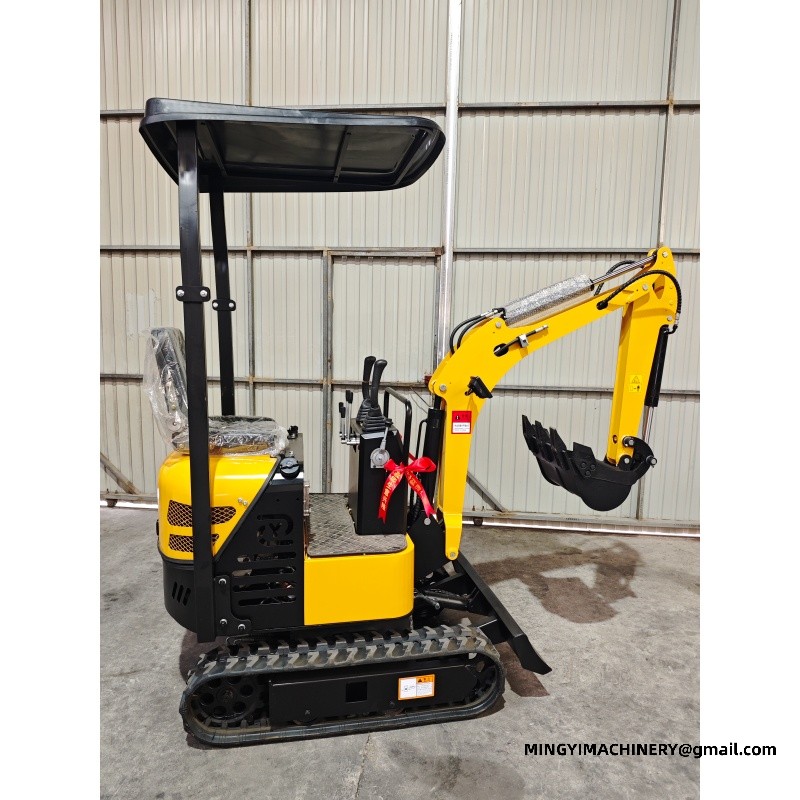
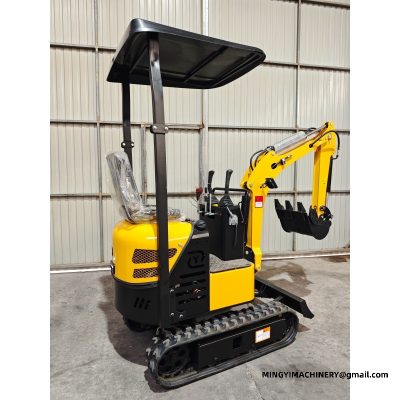
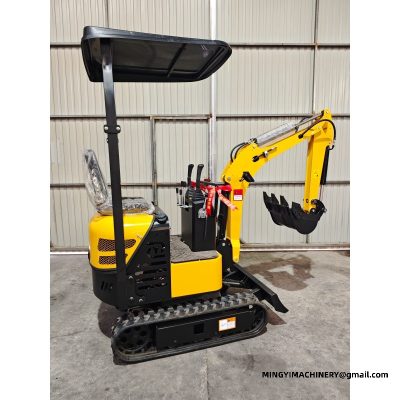
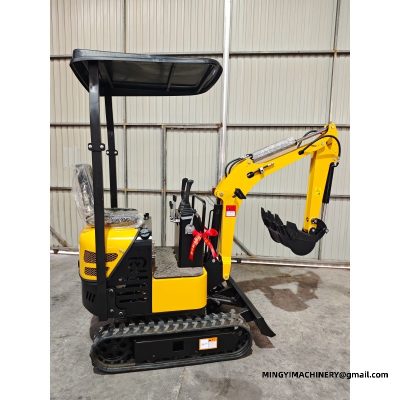
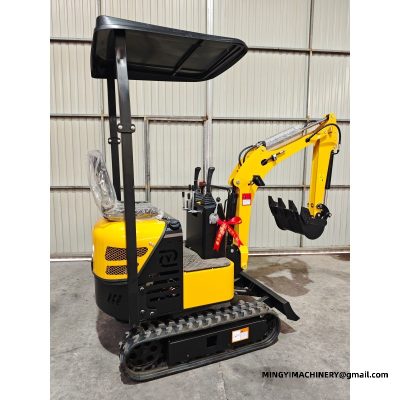
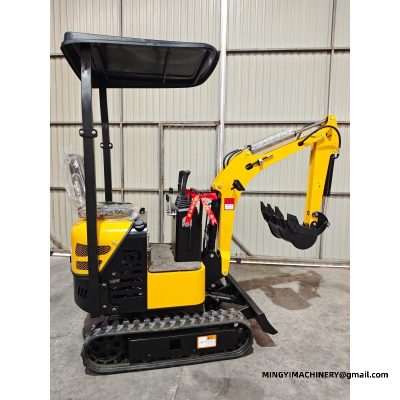
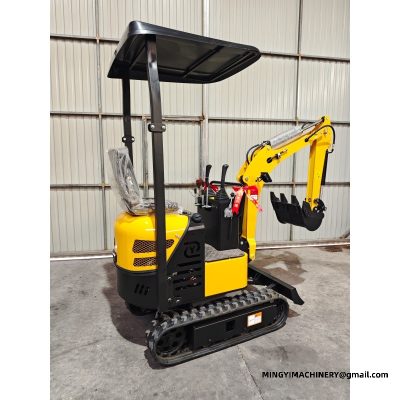
A compact excavator is a machine defined by where it works: sites with limited access, finished surfaces and tight working radii. MINGYI builds compact crawler excavators from 0.8 to 6 tonnes, manufactured to order for export buyers.
The range spans the machine classes a contractor meets most often, from micro units that pass through gates to the heavier three tonne plus diggers that carry breaker hammers and larger buckets. Each build is configured to the buyer's work scope.
What the MINGYI compact range covers
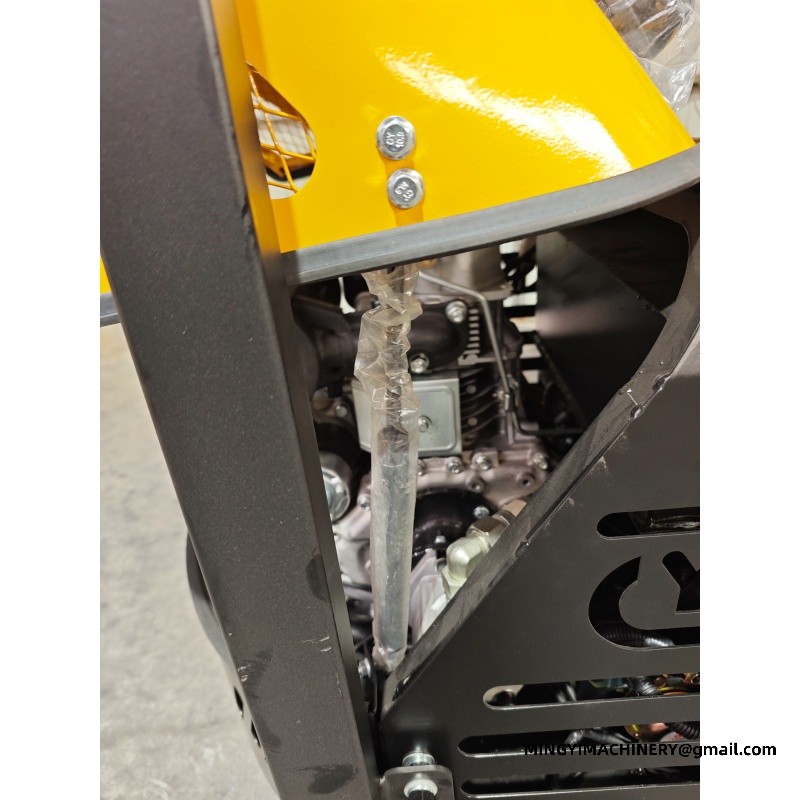
At the small end, the machines handle indoor demolition, landscaping and orchard work where access width rules the site. The heavier classes cover utility trenching, foundation digging and farm earthmoving where the machine has to hold a production pace.
Common configurations include canopy or enclosed cab, rubber or steel tracks with rubber blocks, retractable undercarriages for gateways and swing booms for boundary digging. The hydraulic package runs the full attachment set.
How a compact unit is ordered
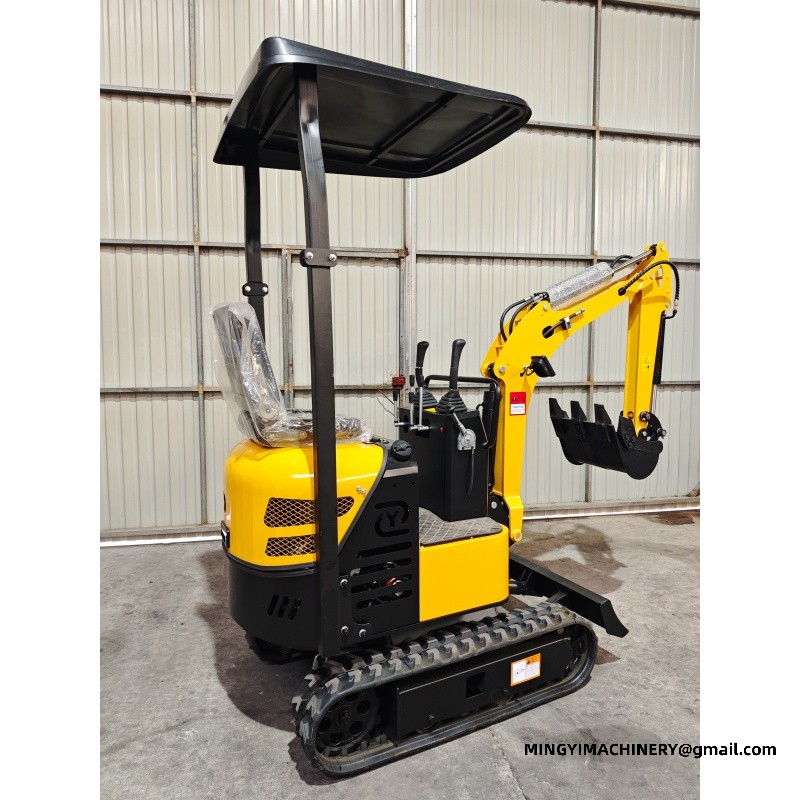
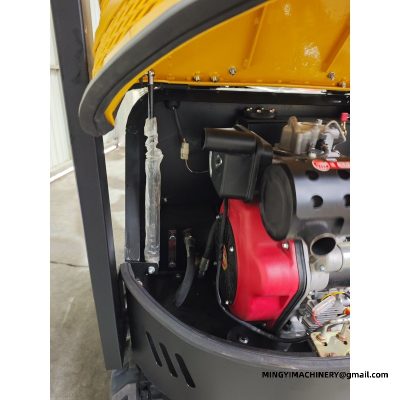
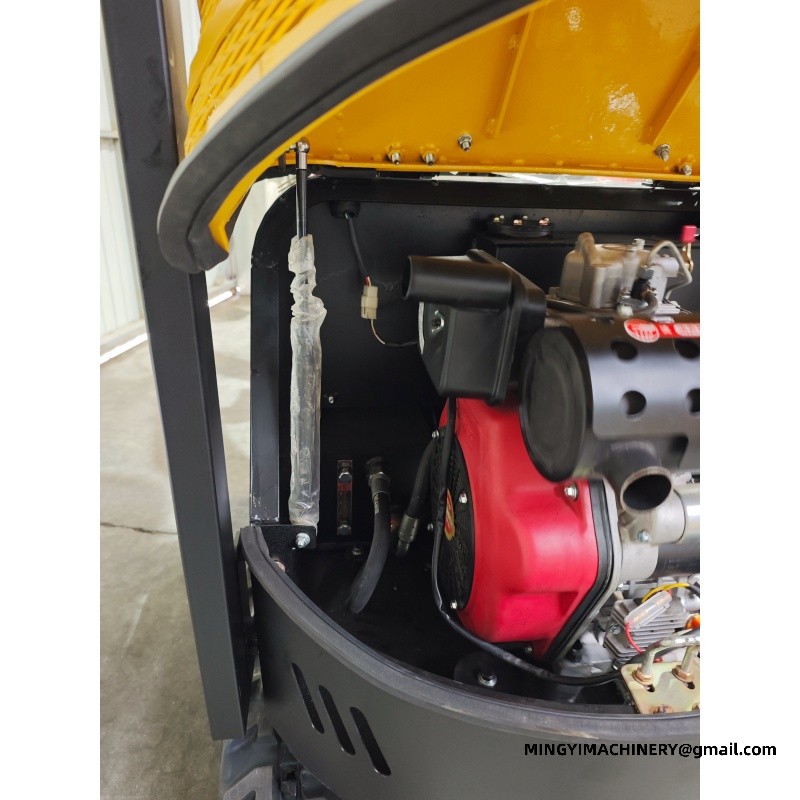
Buyers state the machine class, engine preference from options such as Kubota D722, Kubota D902, YANMAR, Changchai, Laidong, Runtong and YARMAX units, and the track and cabin layout at the ordering stage. The build is then recorded against the machine.
The attachment package is fixed in the same conversation, since a carrier ordered for trenching differs from one ordered for demolition. Spare parts and service information travel with the excavator, and replacement wear items can be ordered with the machine.
Choosing a compact excavator is mainly a question of matching the machine class to the access limits of the work. MINGYI reviews the buyer's site conditions and work list and configures the unit to that specification before build.
Acceptance checks when a compact crawler excavator range arrives A function check before the machine goes to work is worth the hour. Running through the controls, the travel and the attachment circuit on the excavator confirms it is set up as specified and ready for the site. Documentation should arrive with the machine. Parts list, service schedule and any certificates for this class of machine are what the workshop needs later, and they are much easier to obtain at delivery than in month six. Getting compact crawler excavator range through a narrow gap Access decides the machine before output does. With the unit in daily use the limiting dimension is usually the widest point on the way in, so measuring the gate, the corridor and the turning space first saves a wasted delivery and a second visit. Contractors who buy a machine of this size normally have one job in mind that nothing else reaches. The purchase order follows the access measurement, not the other way round, and the build sheet is then settled around it. Interior and light demolition with compact crawler excavator range Breaking out a floor slab, a wall footing or a concrete step is routine work for the equipment on site with a breaker. The machine is small enough to work inside and heavy enough to run the tool at a practical rate. Dust, debris clearance and floor loading all argue for a compact machine indoors. The machine itself spreads its weight over a wider track footprint than a wheeled machine of similar capacity. Working a compact crawler excavator range in confined spaces Clearance above matters as much as around. Door heights, pipework and overhead services set the limit for the model in question indoors, and measuring them first avoids a machine that arrives and cannot be used. Ventilation is the other indoor constraint. Running the machine in that duty inside a closed structure needs air movement, and that is a planning item rather than something to discover after the first hour. Matching compact crawler excavator range to ground conditions Soft ground is a flotation problem, not a power problem. The unit on the job on wide rubber tracks crosses lawn, sand and cultivated soil that would stop a narrower machine or a wheeled unit of the same capacity. Hard and abrasive ground reverses the specification. On rock, demolition rubble or sharp gravel, steel tracks with rubber blocks on a machine built for the work survive conditions that cut a rubber belt quickly. Quick coupler practice on compact crawler excavator range Couplers are specified early because they affect the arm and the hydraulic kit. Adding one to the equipment in service after delivery means new pins, new hoses and a fitment session; adding it at build time is a line on the sheet. For a fleet that shares attachments between machines, a common coupler standard matters more than the coupler brand. The excavator that picks up the same tools as the larger machines keeps the rack usable across the yard. Orchard, vineyard and farm use of this class of machine Orchard and vineyard work is carried out between rows. The unit in daily use with a narrow chassis and a swing boom works down the row without damaging the trees, which is the reason a full-size machine is not used at all. Farms also use a machine of this size for general maintenance - clearing a watercourse, repairing a track, loading a spreader. One carrier with a few attachments covers most of the jobs that would otherwise wait for a contractor. Working the equipment on site through the seasons Seasonal planning smooths the workload. Machines that are busy for a few months and idle for the rest benefit from a service slot in the quiet period, and the machine itself prepared in the off-season starts the busy months reliably. Heat and dust are as limiting as rain. Air intake condition and cooling cleanliness decide how the model in question behaves in a dry season, and both are checked in a minute rather than repaired later. What owners should plan for beyond the machine in that duty Purchase decision is the visible part of the effort. Fuel, filters, tracks or tyres, the operator and the transport between sites are the items that decide what the unit on the job actually demands over a few seasons, and they are worth listing before the order. Downtime is the hidden line item. A machine built for the work waiting on a part earns nothing while it stands, so parts availability and service access belong in the plan as much as fuel does. Daily checks and maintenance on the equipment in service Daily maintenance on the excavator is a short list: engine oil level, coolant, track tension, hydraulic oil level and a look at the hoses. Ten minutes at the start of the shift prevents most of the failures that stop a machine. Track tension is the item most often neglected. This class of machine run with slack tracks wears the undercarriage and can throw a track on a turn; run too tight, the same components wear from the other direction. Boom configuration for the unit in daily use A swing boom lets the machine dig parallel to its tracks without repositioning, which is what makes trenching beside a wall or a fence practical. On a machine of this size this is often the option that decides whether a job is possible at all. Extended and offset boom configurations change reach and working range. The equipment on site with a longer arm reaches further but lifts less at full extension, so the specification is set against the deepest and furthest point on the job list. OEM and fleet customisation of the machine itself Customisation also covers the specification sheet. A fleet buyer may want every machine in that duty delivered with the same coupler, the same engine and the same tool kit so training and parts stock stay simple. Documentation can be prepared to suit the importer. Manuals, parts books and decal sets for the model in question can be supplied with the buyer's own branding where the order size justifies it. Specification data for the unit on the job Where a machine built for the work is being specified for a job list, the table below gives the factory figures that matter most: what the machine weighs, how deep and how far it works, and what it measures on a trailer. These are the reference figures for the equipment in service. MINGYI confirms the final build sheet, including engine and attachment choices, against the destination and the job list before production. Rubber tracks suit paved and landscaped ground because they spread the machine weight and leave the surface intact. Steel tracks with rubber blocks are specified where the ground is rougher or the working day is longer, and the choice can be made per machine rather than accepted as a factory default. Undercarriage selection is a ground question, not a preference question. The excavator running on finished paving needs rubber; the same machine on demolition rubble or rock wears rubber quickly, so steel with rubber blocks becomes the better answer over a full season.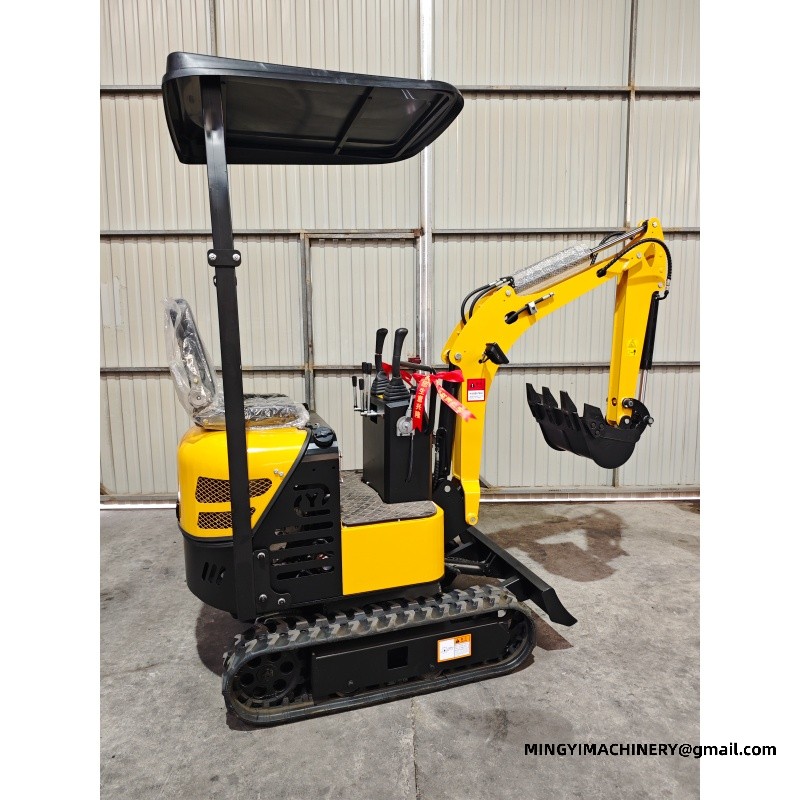
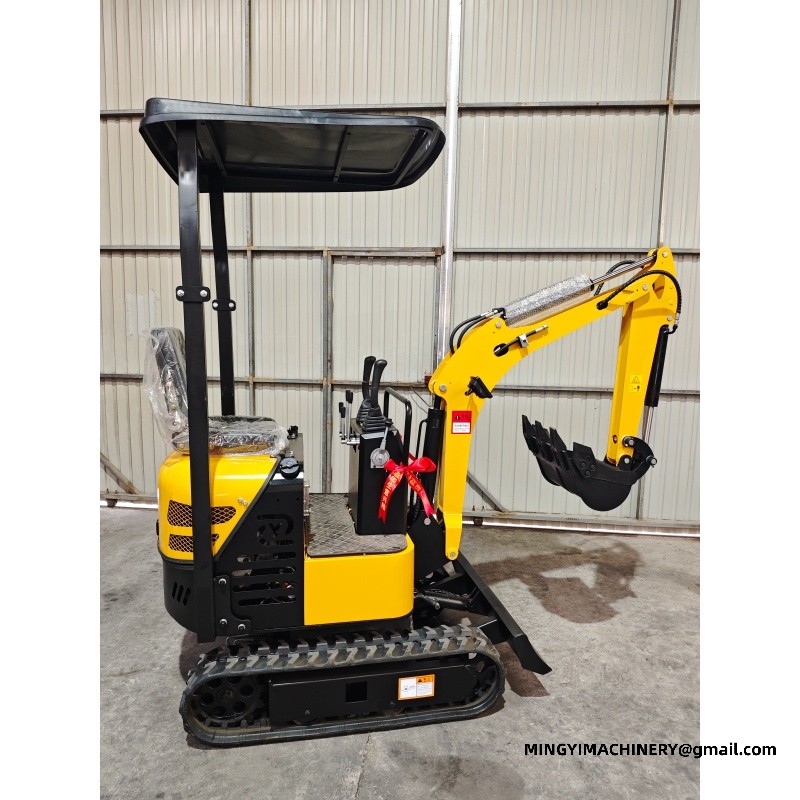
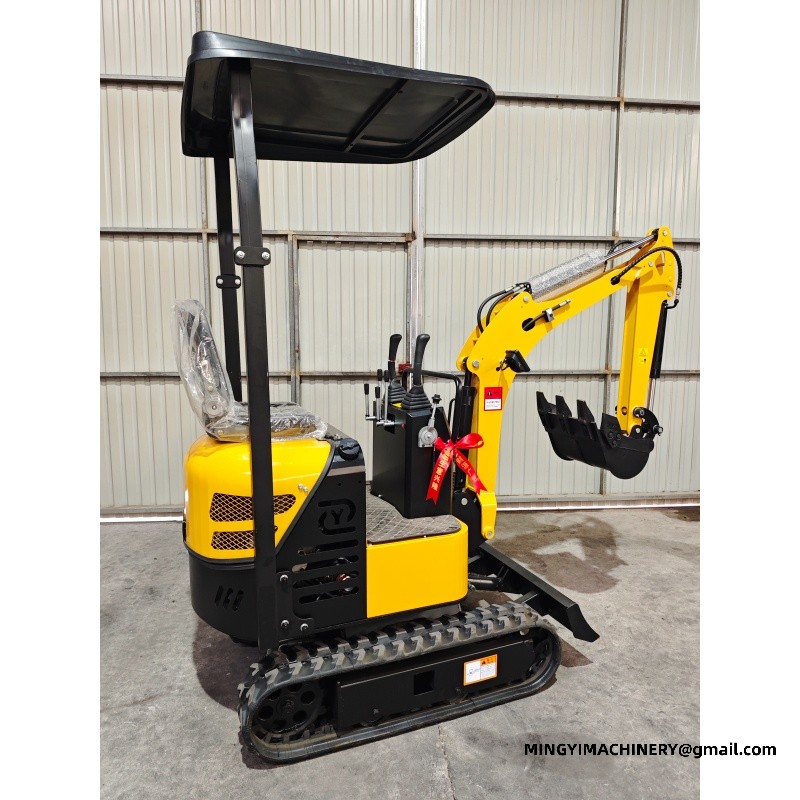
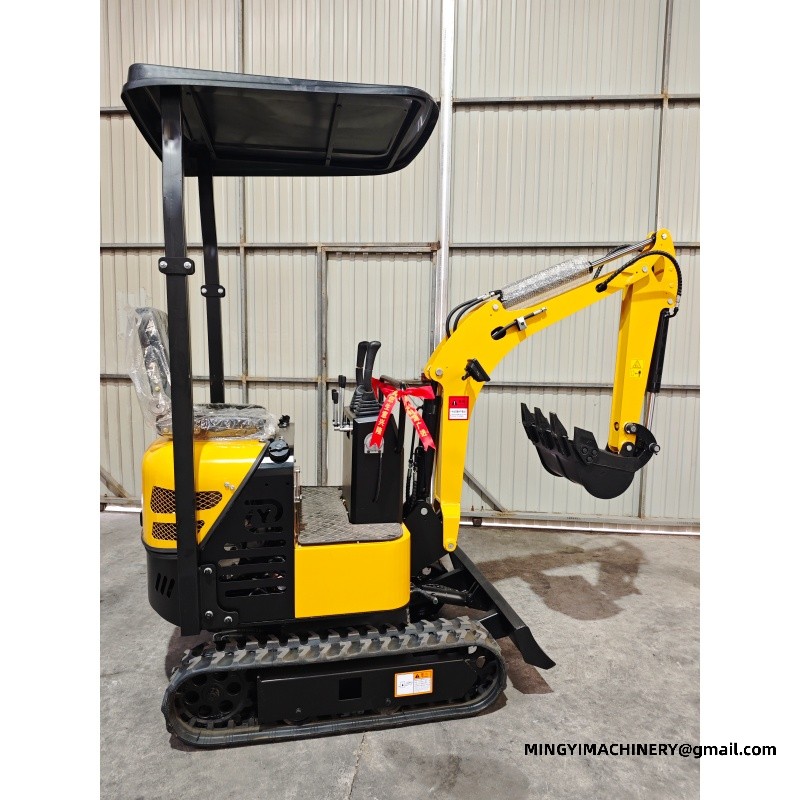
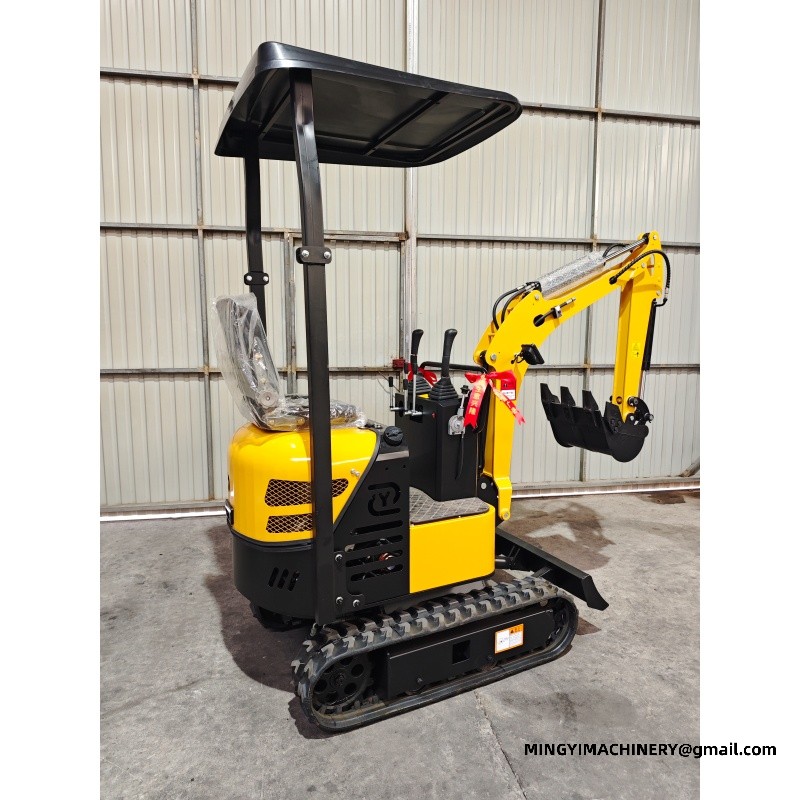
Reference specification — mini excavator range 15W 20-1W 30-2W 30-2L Operating weight 1400 kg (3086.47 lb) 1800 kg (3968.32 lb) 2700 kg (5952.48 lb) 2400 kg (5291 lb) Transport size (L×W×H) 2200 × 930 × 2250 mm 2550 × 1100 × 2200 mm 3000 × 1100 × 2700 mm 2800 × 1500 × 2500 mm Max digging depth 1630 mm (64.17 in) 1800 mm (70.87 in) 2200 mm (86.61 in) 2200 mm (86.61 in) Max digging height 2750 mm (108.27 in) 2820 mm (111.02 in) 3000 mm (118.11 in) 2900 mm (114.17 in) Max dumping height 1960 mm (77.17 in) 2050 mm (80.71 in) 2000 mm (78.74 in) 2100 mm (82.68 in) Max digging radius 2900 mm (114.17 in) 3050 mm (120.08 in) 3800 mm (149.61 in) 3330 mm (131.1 in) Max digging distance 2100 mm (82.68 in) 2300 mm (90.55 in) 3050 mm (120.08 in) 2700 mm (106.3 in) Minimum turning radius 1300 mm (51.18 in) 1450 mm (57.09 in) 1750 mm (68.9 in) 1555 mm (61.22 in) Travel speed 3 km/h (1.86 mph) 5 km/h (3.11 mph) 7 km/h (4.35 mph) 7 km/h (4.35 mph) Gradeability 30° 30° 30° 30° Fuel consumption 1-1.3 L/h (0.264—0.343 gal) 2-3 L/h (0.528—0.793 gal) 2-3 L/h (0.528—0.793 gal) 2-3 L/h (0.528—0.793 gal) Fuel tank capacity 10 L (2.64 gal) 16 L (4.23 gal) 16 L (4.23 gal) 16 L (4.23 gal) Hydraulic oil tank 16 L (4.23 gal) 18 L (4.76 gal) 20 L (5.28 gal) 18 L (4.76 gal) Dozer blade lift height 180 mm (7.09 in) 180 mm (7.09 in) 230 mm (9.06 in) 230 mm (9.06 in) Dozer blade drop depth 210 mm (8.27 in) 210 mm (8.27 in) 280 mm (11.02 in) 280 mm (11.02 in)
Q. How does the class of machine work?
A. Inside the 0.8 to 6 tonne class MINGYI builds as the 08, 12 and 18 models lives most of the site, farm and rental work in the world. A machine that passes the narrowest gap on the job list and still swings the bucket the trench needs is the right size - nothing more complicated than that. MINGYI builds the 08, 12 and 18 models covering the 0.8 to 6 tonne class, and the unit in daily use is where that range meets general site.
Q. Which size should I start with?
A. From access and trench width: the machine must pass the narrowest gap on your jobs and swing the bucket the trench needs. The 0.8 to 6 tonne class MINGYI builds as the 08, 12 and 18 models covers most of that ground, and the class pages set out the trade-offs.
Q. Can I see the machine before it ships?
A. Inspection is arranged at the factory, in person or by a scheduled video walk-around - the same session covers paint, decals and attachment fitment for the general site specification, so the machine inspected is the machine that ships.
Fuel, oil and fluid quality for a machine of this size
Contamination is easier to prevent than to cure. Keeping the filler caps sealed, the funnels clean and the containers closed around the equipment on site is unglamorous work that shows up as reliability later.
Handover and getting familiar with the machine itself
The first day with a new machine sets the pattern for the next five years. Handover for the model in question covers the control layout, the daily check points and the limits the operator needs to know before the first real load is lifted or carried.
E-mail : sales@mingycn.com
LINE ( ID ): mingyicn
Related pages
small excavator for utility contractors · mini excavator for mixed site work · Wheel Loader Series: Three Frame Tiers and 21 Documented Builds · Mini Excavators









