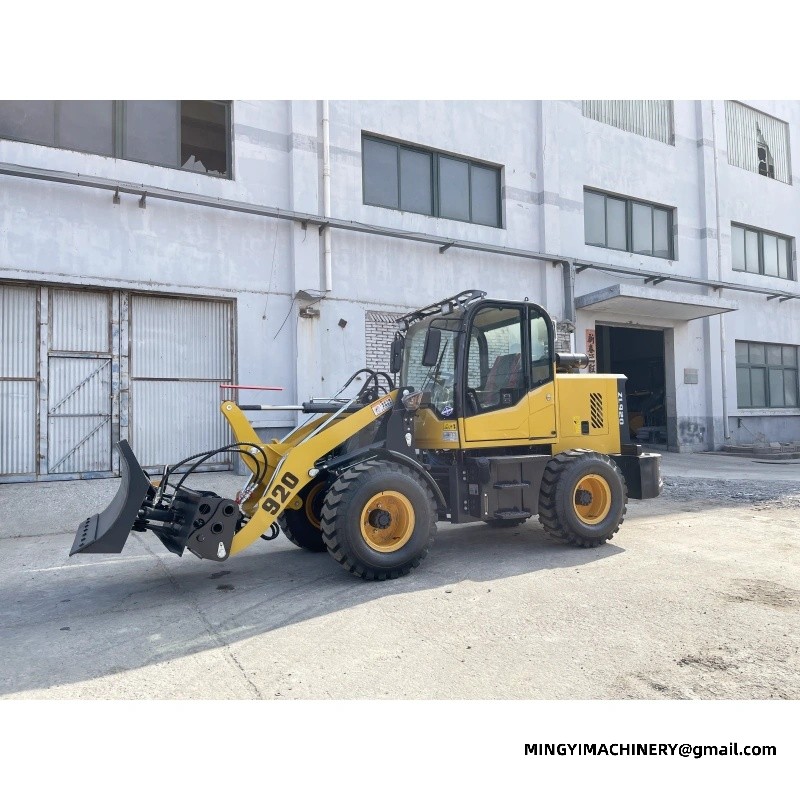
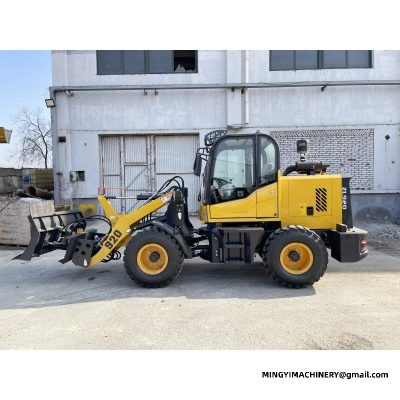
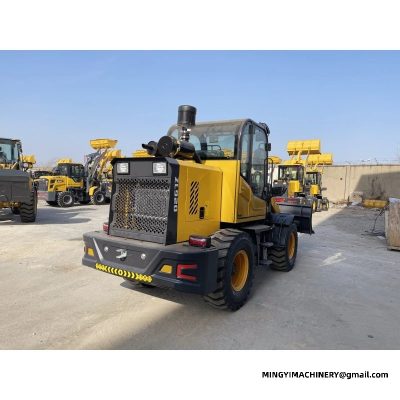
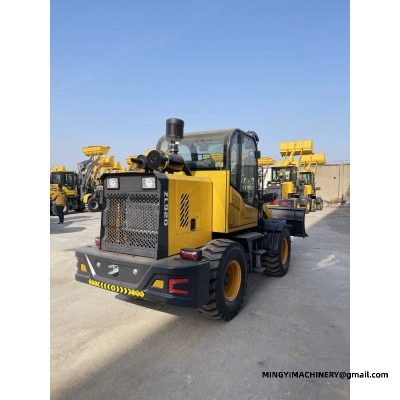
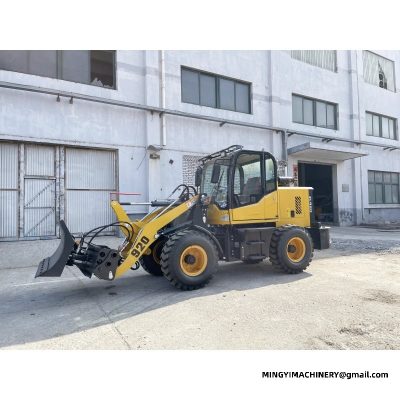
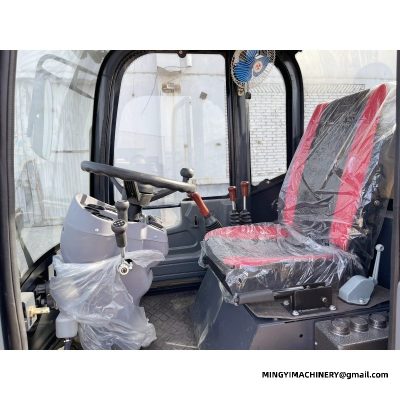
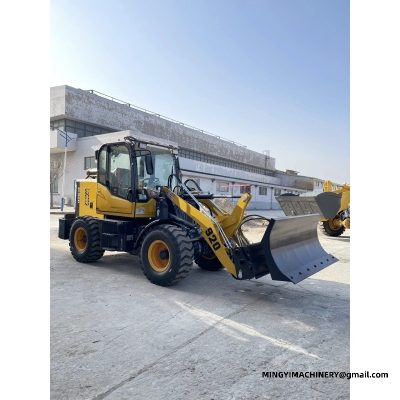
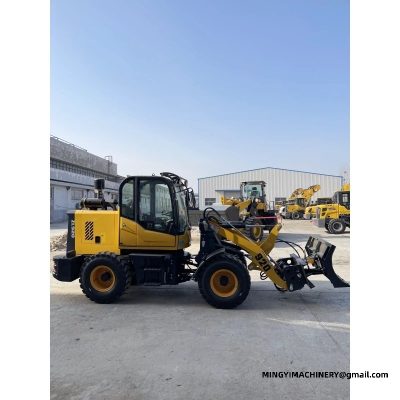
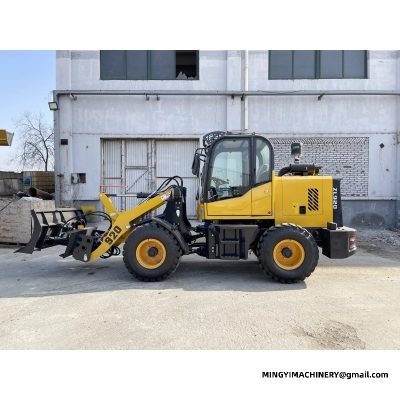
A wheel loader series that cannot turn in the space you have is a wheel loader series that cannot work there, whatever its specification says. Access is a hard constraint and it fails silently: track 1.5 m (wheel-side reduction axle); 1.45 m (Isuzu axle) on the light-duty 3.5 m small-frame wheel-side reduction wheel loader against 1.5 m (wheel-side reduction axle); 1.45 m (Isuzu axle) on the light-duty 3.8 m small-frame wheel-side reduction wheel loader, footprint 4 m against 4.1 m. Once access is settled, the real selection begins — bucket 0.38 m³ or 0.38 m³, dump height 3.5 m or 3.8 m, and the hinge and cross-member steel that decides whether the frame lasts. All of it is set out below.
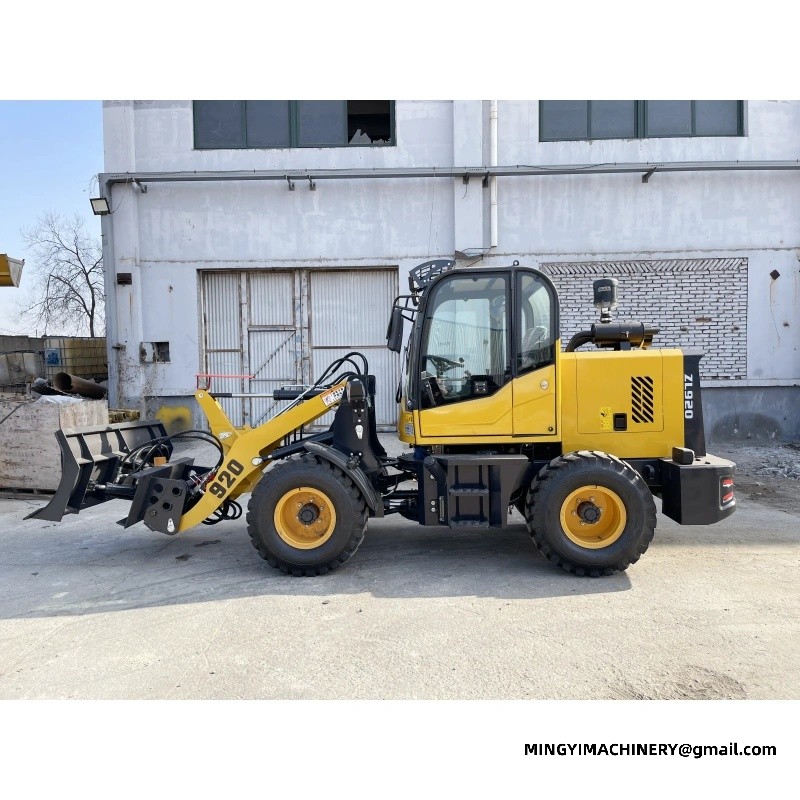
Capacity is bought and rarely used. If the receiving bodies sit below 4.5 m and the material is dense, a 0.4 m³ bucket that fills completely is faster than a 0.38 m³ bucket that fills to two-thirds, and it puts less into the hinge plates doing it.
Size matters twice more. A shorter machine, 4.25 m front wheel to counterweight against 4.1 m, works a tighter bay and turns inside its own length. A narrower one, 1.5 m (wheel-side reduction axle); 1.45 m (Isuzu axle) against 1.5 m (wheel-side reduction axle); 1.45 m (Isuzu axle), passes gates the other cannot. Where the work is confined, buy on dimensions and let capacity follow.
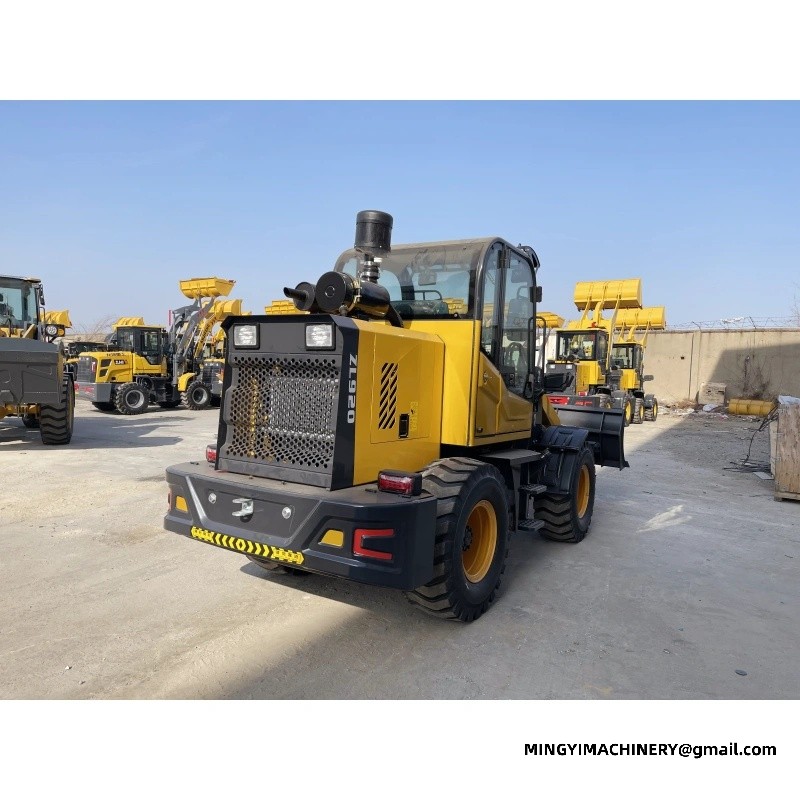
Winter changes three things: the battery has less to give, the oil is thicker, and the operator is working in gloves. The first two are specification questions. 60 Ah (490 engine); 80 Ah (4102 turbo engine) covers the first. The hydraulic side, centre cylinder 45 / side cylinder 40 with a 40 pump (490 engine); 1045 pump (4102 turbo engine), is sized for the loads it will see at working temperature and will simply be slower until it warms.
The third is a machine-layout question and comes down to the rear frame and the tank: 280 mm high x 800 mm wide of rear section and 64.7 L (75# small tank) of fuel. Cold-weather work also means more idling, so tank capacity should be read against winter consumption rather than summer consumption. A machine that needs refuelling at minus ten with an operator standing outside is a specification failure, not a weather problem.
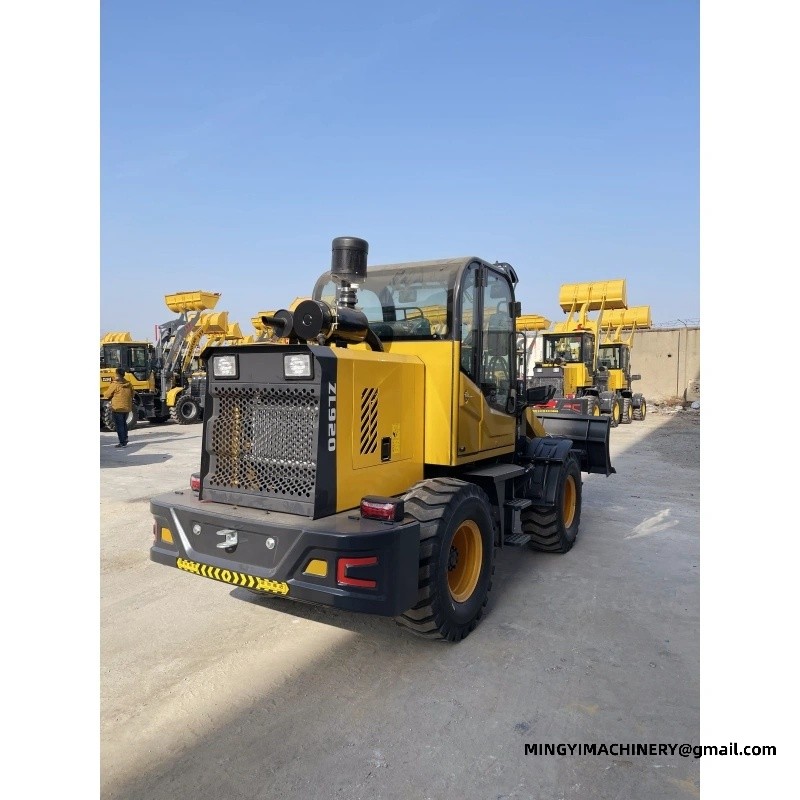
The first hour of running tells you more than the first month of paperwork. Watch the cooling: 4100 core (490 engine); 4105 core (4102T engine) should hold temperature at working load without the fan running continuously. Listen to the hydraulics: centre cylinder 45 / side cylinder 40 on a 40 pump (490 engine); 1045 pump (4102 turbo engine) should lift a full 0.38 m³ bucket to 4.2 m without the relief valve complaining.
Then check the electrical side under load, which is what the 60 Ah (490 engine); 80 Ah (4102 turbo engine) rating exists for. Restart the machine hot, restart it cold, and watch the cranking. A battery that is marginal on day one will fail in the first cold week, and it is far easier to settle at commissioning than six months later.
| Specification extract — heavy-duty 3.5 m medium-frame wheel-side reduction wheel loader | |
|---|---|
| Bucket capacity | 0.65 m³ |
| Dump height | 3.5 m |
| Track width | 1.6 m |
| Boom arm thickness | 30 mm |
| Boom arm width | 500 mm |
| Boom arm length | 3.15 m |
| Boom arm centre distance | 920 mm |
| Cross-member thickness | 45 mm |
| Front hinge plate thickness | 45 mm |
| Rear hinge plate thickness | 30 mm |
| Rear frame section | 300 mm high x 800 mm wide |
| Hydraulic cylinders | centre cylinder 60 / side cylinder 50 |
| Fuel tank | 70 L (75# large tank) |
| Battery | 80 Ah |
| Front wheel to counterweight | 4.55 m |
| Radiator | 4105 core |
| Work pump | 2063 pump |
| Travel pump | 25 pump |
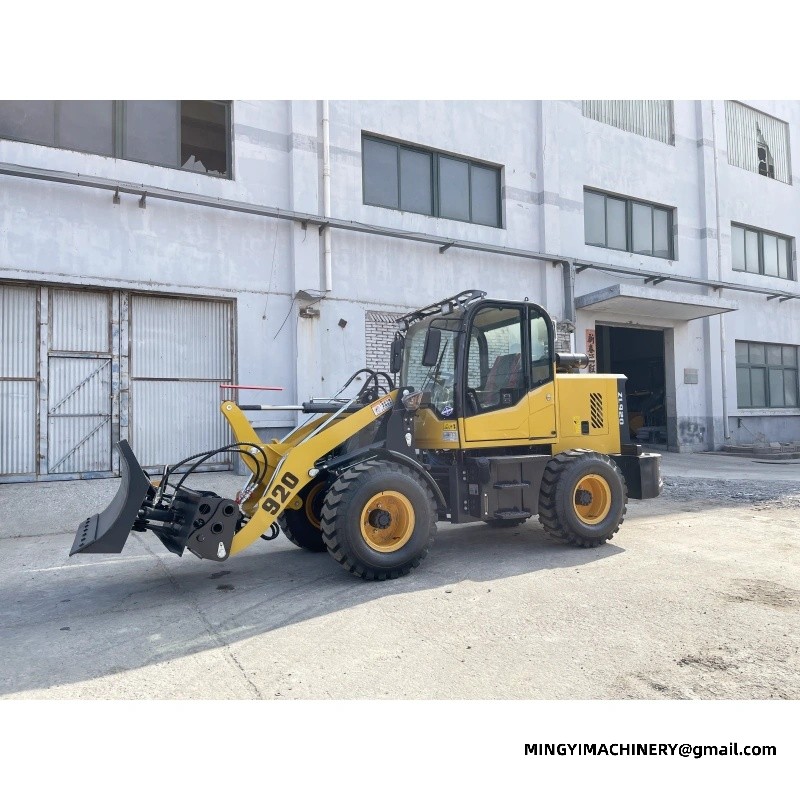
Frames do not usually break; they go loose, and looseness starts at the pins. The parts that govern it are the rear hinge plate, 20 mm, the cross-member behind it, 25 mm, and the rear frame section, 280 mm high x 800 mm wide. Buy on those three and the machine will still feel tight in year five.
Duty decides how long that takes. A machine loading twenty trucks a day ages differently from one moving material for two hours. On the heavy-duty 4.2 m medium-frame wheel-side reduction wheel loader the same three figures are 30 mm, 45 mm and 300 mm high x 800 mm wide; choosing between them is choosing how much duty the frame was built for, and it is the decision that outlasts every other option on the order.
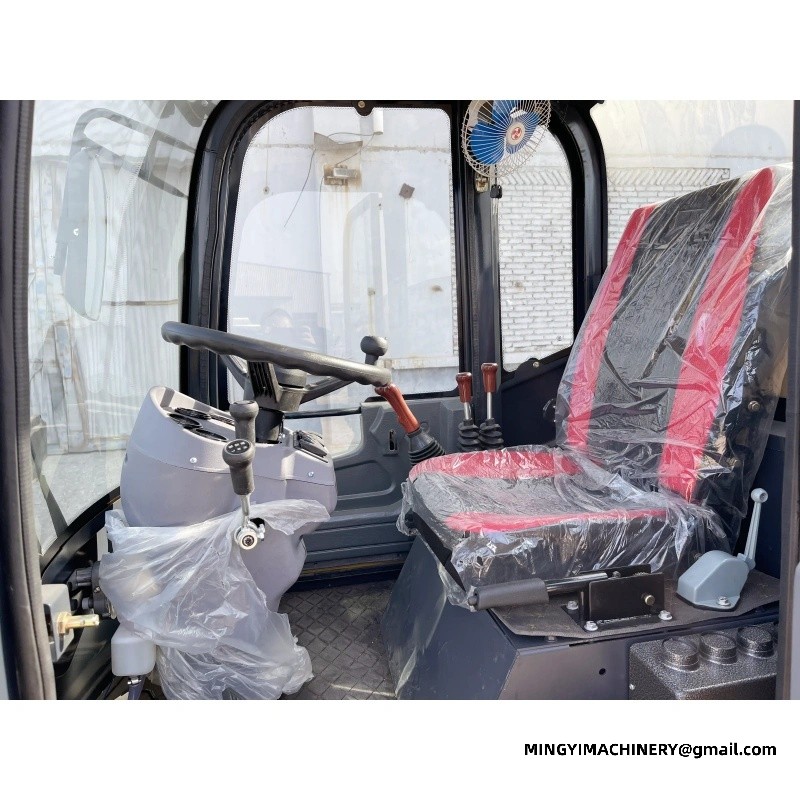
Second-hand buyers check three things and none of them is the hour meter. They rock the hinge and look for movement at the 45 mm front and 30 mm rear plates. They look along the boom for twist, which is a 520 mm section and 960 mm spacing question. They start it cold and listen, which is a 80 Ah question.
Steel thickness is what makes the first check pass or fail, and it is on the sheet: cross-member 45 mm, rear frame 300 mm high x 800 mm wide. A machine built with those figures published and verifiable is easier to sell than one with a lower hour count and no specification, because the buyer can check the claim instead of trusting it.
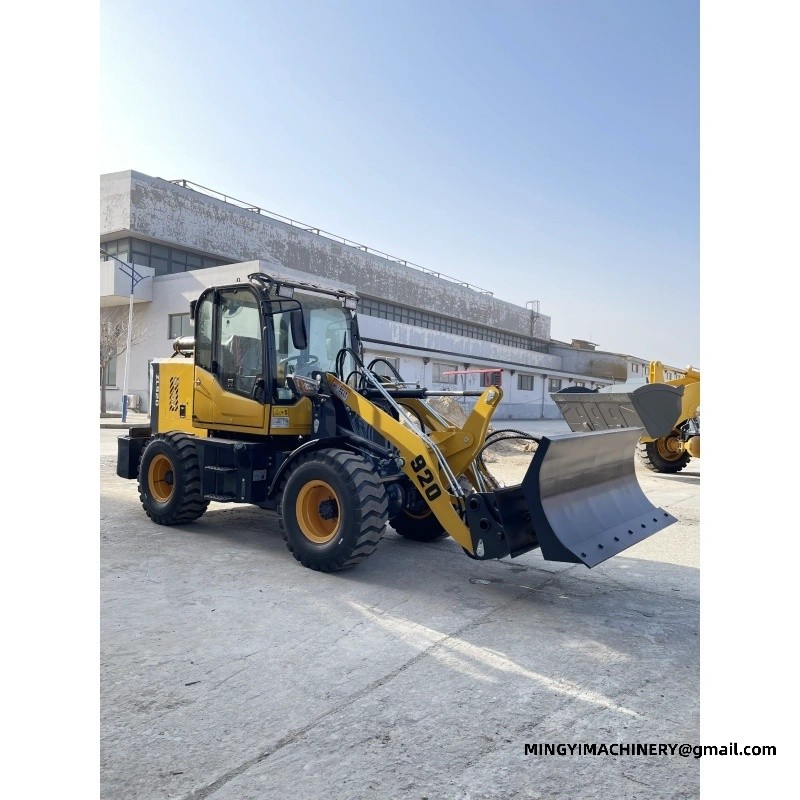
A radiator does not fail; it gets blocked. On this build the core is 4100 core (490 engine); 4105 core (4102T engine), and in dusty or chaff-heavy work it needs cleaning from the clean side outwards, in the reverse direction to normal airflow, because pushing debris further into the fins makes the blockage permanent.
Watch the cap and the seat while you are there. A system that loses pressure boils at a lower temperature, and the symptom is intermittent overheating under load that disappears on the level - - which is routinely misdiagnosed as a pump problem. The pump is 40 pump (490 engine); 1045 pump (4102 turbo engine); the travel circuit is 316 pump; neither produces that symptom. A cap does.
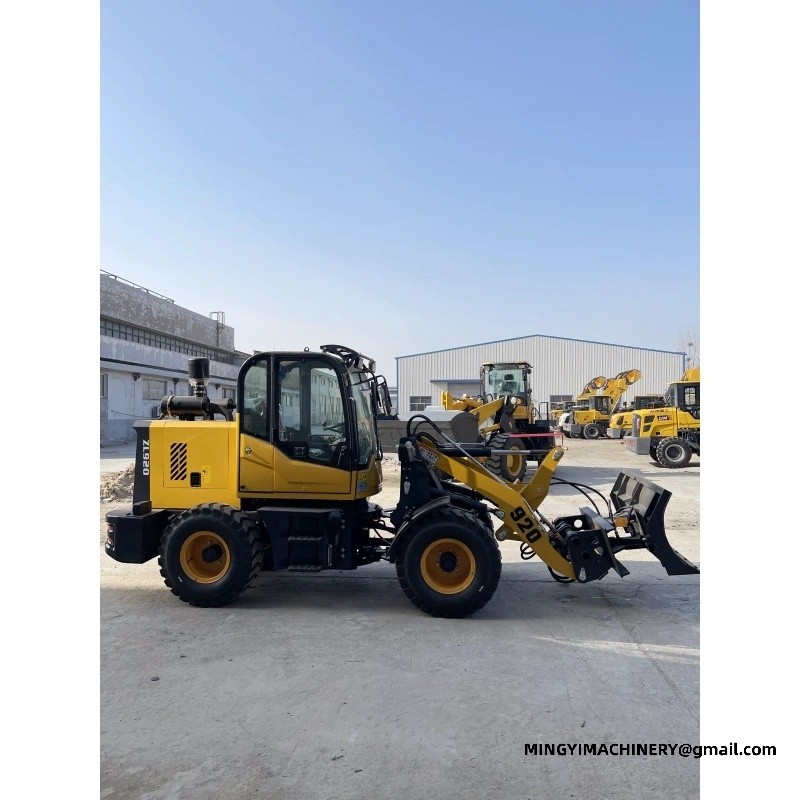
Fleet size falls out of cycle count, and cycle count falls out of bucket volume and dump height together. Take the daily tonnage, divide by what one bucket carries at 0.38 m³, and check that the receiving bodies sit under 3.5 m. If they do not, the calculation is wrong before it starts, and the heavy-duty 4.5 m medium-frame wheel-side reduction wheel loader at 4.5 m is the machine the fleet actually needs.
Reserve capacity matters more than peak capacity because a fleet runs on its worst day, with one machine down and the face further away. Specifying the whole fleet on one build keeps that simple: same centre cylinder 45 / side cylinder 40, same 40 pump (490 engine); 1045 pump (4102 turbo engine), same 1.5 m (wheel-side reduction axle); 1.45 m (Isuzu axle), so one spare parts bin covers every machine and any operator can take any unit.
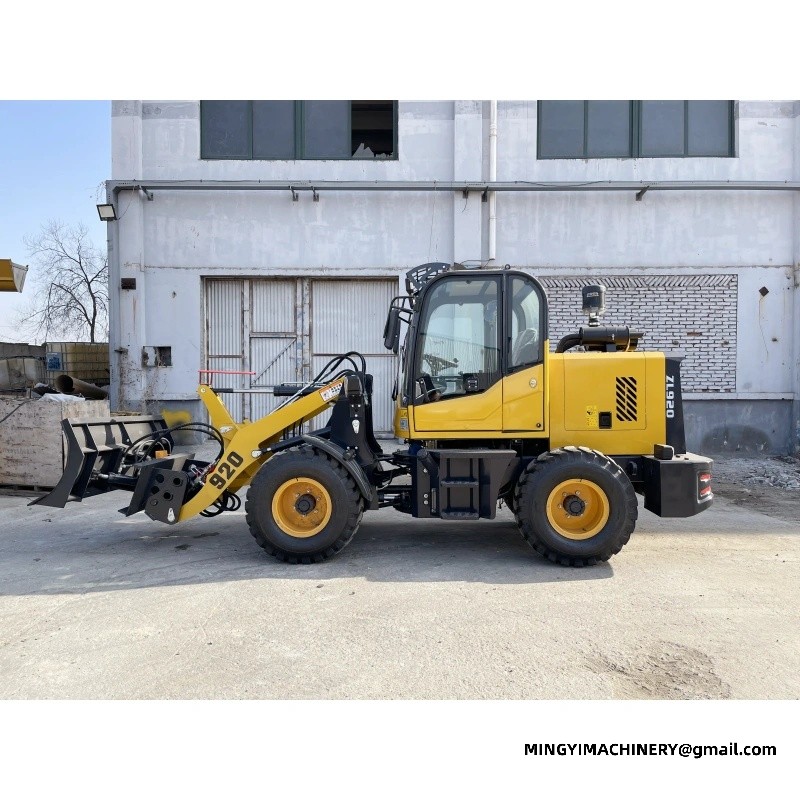
Stockpile work is the hardest duty a loader sees: the machine drives into a face, breaks out, reverses under load and turns, all day. The components that govern life are the rear hinge plate, the cross-member and the cooling pack. On the light-duty 3.8 m small-frame wheel-side reduction wheel loader those are 14 mm and 25 mm with 4100 core (490 engine); 4105 core (4102T engine); on the heavy-duty 4.5 m medium-frame wheel-side reduction wheel loader they are 30 mm and 45 mm with 4105 core.
Traction is the second half. A stockyard floor is rarely compacted and often rutted, which argues for the wheel-side reduction axle and the 1.6 m track rather than the lighter axle. Add the raised radiator core where the material is fine and dry — cement raw meal, lime, crushed fines — because a blanked core stops the machine in the middle of a shift, and a stopped loader stops everything behind it.
A loader is a tool carrier that happens to come with a bucket. What it can carry is decided at the factory — section width and pin geometry — which is why the heavy-duty 4.5 m small-frame wheel-side reduction wheel loader with its 500 mm section and the heavy-duty 4.5 m medium-frame wheel-side reduction wheel loader with 520 mm do not share tooling even where their bucket capacities look close.
Plan the tool set with the machine order. Bucket plus forks covers most general work; add a grapple for silage, scrap or demolition; add a snow tool where winters are real. If any tool is hydraulically actuated, order the third circuit now, because the 40 pump (490 engine); 1045 pump (4102 turbo engine) on the heavy-duty 4.5 m small-frame wheel-side reduction wheel loader and the 2063 pump on the heavy-duty 4.5 m medium-frame wheel-side reduction wheel loader were sized for the base machine and a retrofit means a valve block, plumbing and labour in the field.
Will a wheel loader series start in a cold climate?
With the right pack, yes: 60 Ah (490 engine); 80 Ah (4102 turbo engine) on the light-duty 3.5 m small-frame wheel-side reduction wheel loader, the larger capacity where the turbo engine is fitted. Specify an isolator for anything shipping long-distance.
What does commissioning a wheel loader series involve?
Fit the 3.16 m boom to the 960 mm mounts, torque the hinge pins, fill the 70 L (75# large tank) tank and the 4105 core circuit, and connect the battery. Allow a day per machine.
What engine options are offered on a wheel loader series?
Where two are offered, cooling and electrics change with them: 4100 core (490 engine); 4105 core (4102T engine) radiator and 60 Ah (490 engine); 80 Ah (4102 turbo engine) battery on the light-duty 3.8 m small-frame wheel-side reduction wheel loader, with the raised core belonging to the turbo option.
Which figures predict frame life on a wheel loader series?
Rear hinge plate and cross-member: 14 mm and 25 mm on the light-duty 3.5 m small-frame wheel-side reduction wheel loader, against 30 mm and 45 mm on the heavy-duty 4.2 m medium-frame wheel-side reduction wheel loader. Those two rows separate light duty from heavy duty.
What should I check before a wheel loader series works a ramp?
Traction and cooling. A 1.6 m track with wheel-side reduction holds on a ramp where an Isuzu-pattern axle would spin, and the 4105 core radiator keeps working at low speed.
Where is the extra steel in a heavier wheel loader series?
Boom wall 25 mm against 25 mm, front hinge 25 mm against 30 mm, rear hinge 14 mm against 20 mm, cross-member 25 mm against 30 mm.
How do I verify the build of a wheel loader series on delivery?
Five figures against the published table: boom wall 25 mm, boom width 370 mm, front hinge 25 mm, rear hinge 14 mm and cross-member 25 mm.
Machines ship knock-down with booms and counterweights packed loose, tanks removed and batteries boxed. Allow a day per unit to commission: torque the pins, fill the 64.7 L (75# small tank) tank and the 4100 core (490 engine); 4105 core (4102T engine) circuit, and check the build figures against the table.
Pre-delivery inspection before Wheel Loader Series: Three Frame Tiers and 21 Documented Builds leaves the shop
What the customer sees on arrival is decided before departure. The walk-around given to Wheel Loader Series: Three Frame Tiers and 21 Documented Builds covers the same points the operator will check on day one, so there are no surprises when the crate is opened at the destination.
Documents that travel with Wheel Loader Series: Three Frame Tiers and 21 Documented Builds
Keeping the documents together is part of ownership. The manual, the service record and the build sheet for Wheel Loader Series: Three Frame Tiers and 21 Documented Builds belong in one folder, and the machine is easier to sell later when that folder is complete.
Commissioning Wheel Loader Series: Three Frame Tiers and 21 Documented Builds on site
The machine should be introduced to the site as well as the operator. Walking the route Wheel Loader Series: Three Frame Tiers and 21 Documented Builds will take, noting the soft spots and the turns, prevents the kind of first-day incident that has nothing to do with the machine.
Contact MINGYI Machinery for the current wheel loader lineup, configuration options and a formal specification for your market. E-mail: sales@mingycn.com | LINE (ID): mingyicn
Wheel Loader: Sizing, Boom Geometry and Frame Selection · Front End Loader: Frame Tiers, Attachments and Duty Selection · Wheel Loader for Mining: Tyres, Ramps and Haul Roads · Loaders









