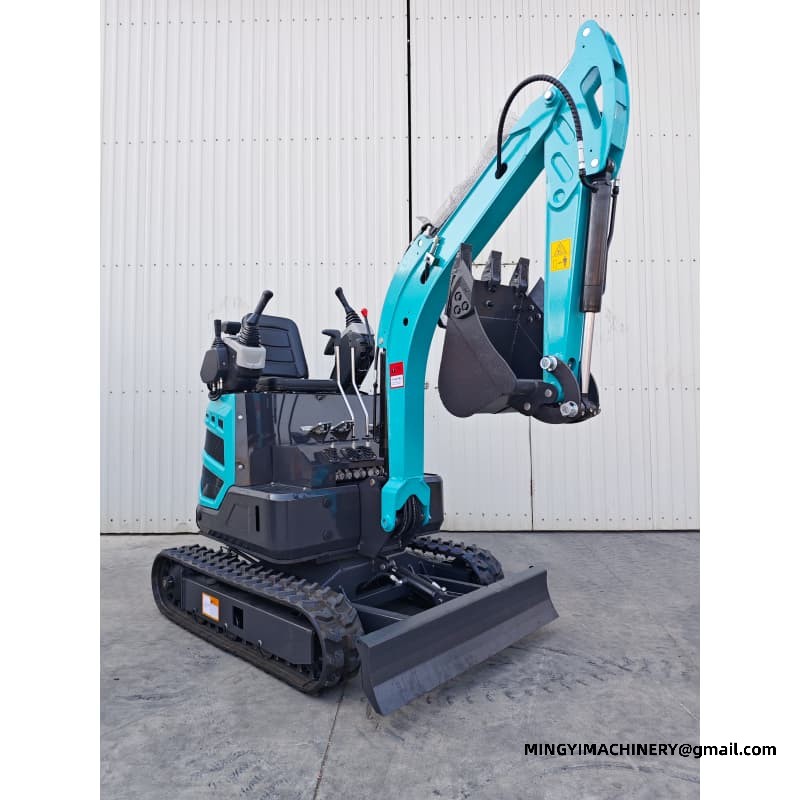
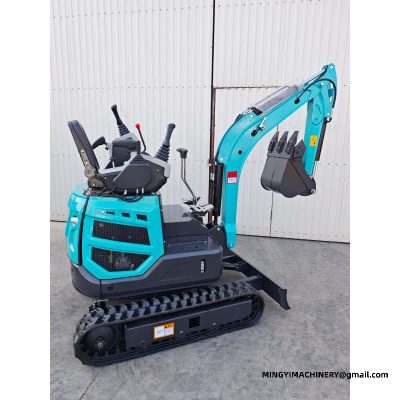
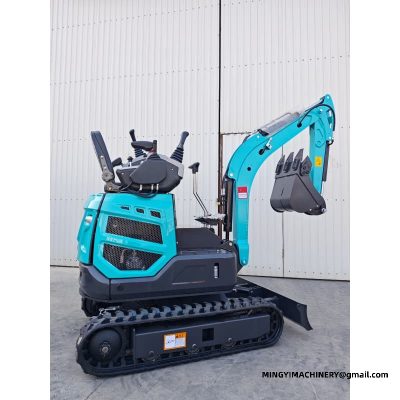
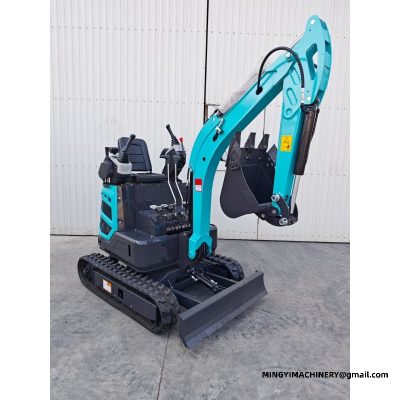
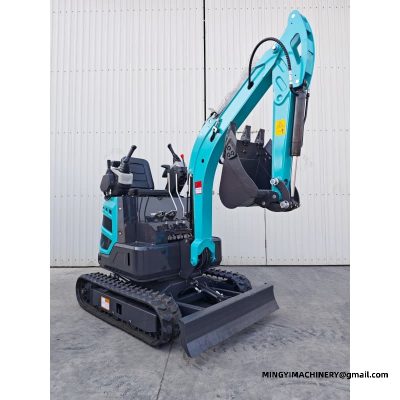
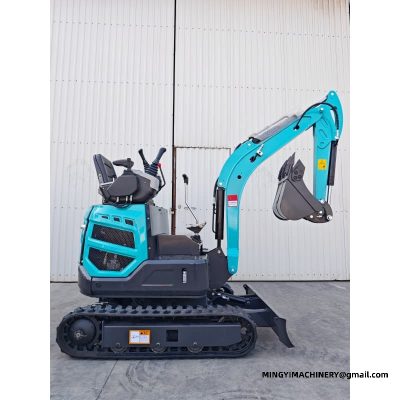
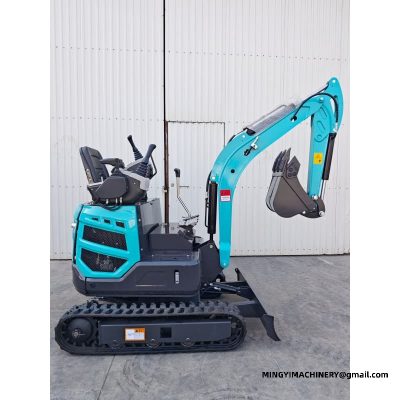
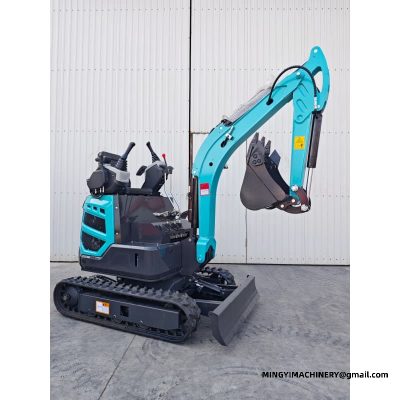
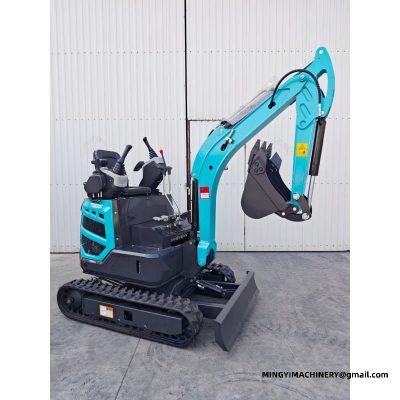
The excavator has to justify itself across a season of varied work. On a farm it may dig drainage one week, clear a fence line the next and open a trench for a water pipe after that.
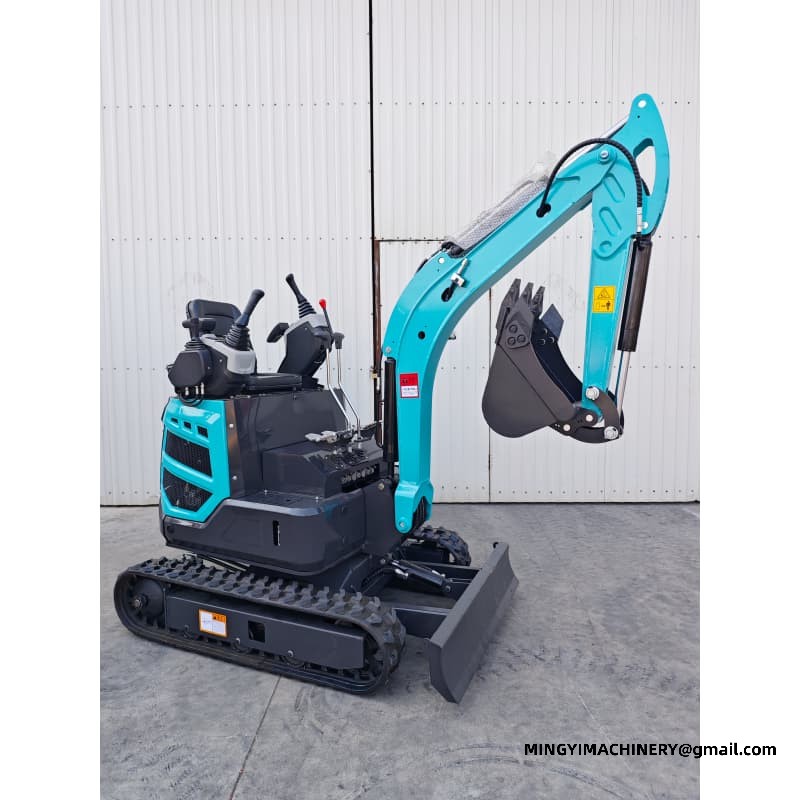
MINGYI builds compact crawler excavators for farm use, with the specification chosen for the soil, the buildings and the field access the machine will meet.
Farm duties for a small excavator
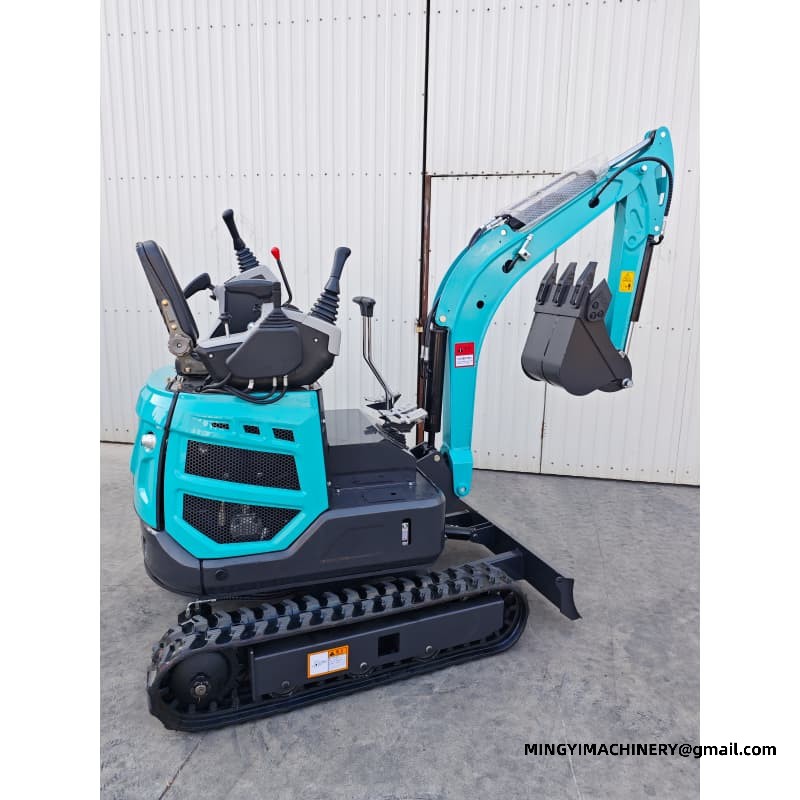
Farm work is rarely one job repeated. Digging and clearing ditches, opening drainage, moving manure and soil, lifting posts and clearing scrub are all tasks a small excavator can take on where a larger machine would not be practical.
The machine also has to travel between fields. A compact unit can be moved on a trailer behind a farm vehicle, which makes it useful across a holding without the effort of dedicated haulage.
Fitting a farm excavator around seasonal work
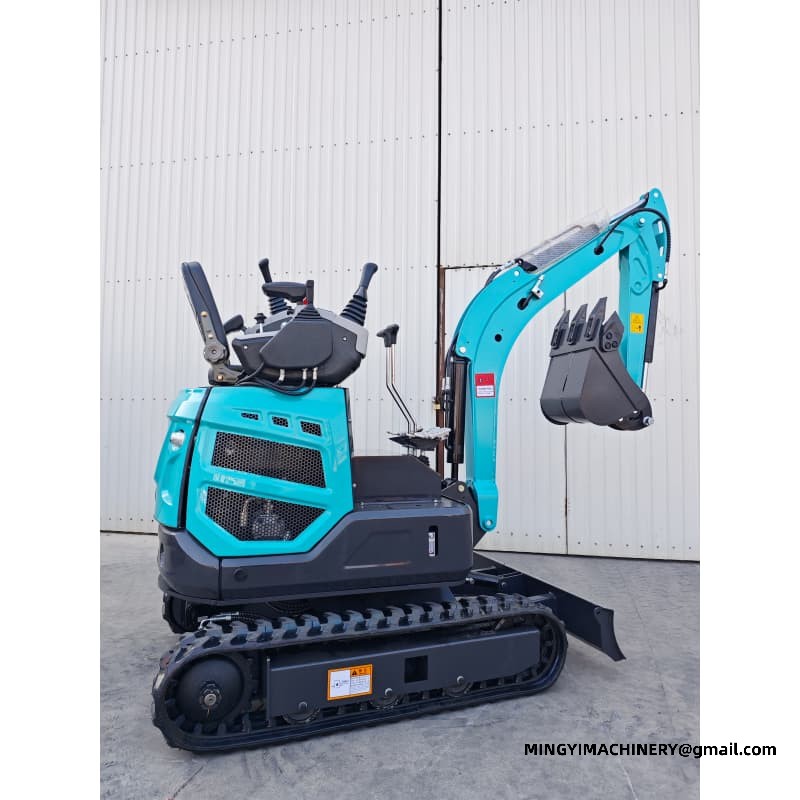
Attachments let one machine cover the seasons. A bucket for digging, a rake for clearing, a grab for timber and posts, and an auger for fencing mean the excavator stays useful from spring through to winter.
Tracks suit the farm as well. Rubber tracks let the machine cross yards, tracks and grass without cutting them up, which matters on a working holding where the same routes are used every day.
A farm excavator earns its place by being available for whatever the season brings. Choosing the tracks and attachments for the whole year, rather than one job, keeps the machine working on the holding.
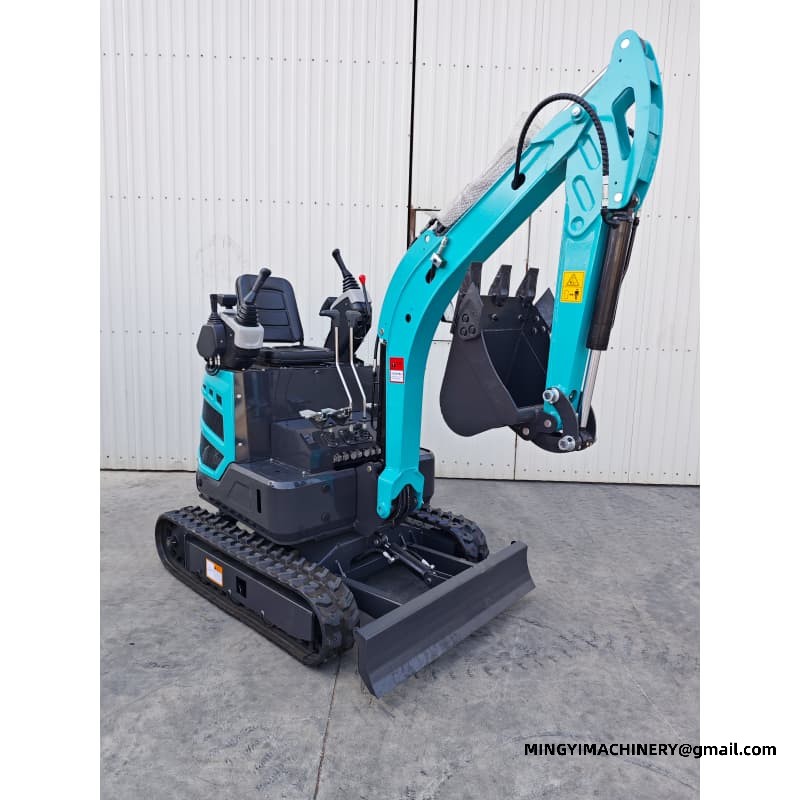
Canopy or enclosed cab on a small farm excavator A canopy keeps the machine light and the operator aware of the surroundings, which suits short jobs in warm weather. A fully enclosed cab is specified where rain, dust or cold are part of the working year, and it can be added to this class of machine as a retrofit rather than only at build time. Enclosure also changes noise and dust exposure. A sealed cab on the unit in daily use keeps dust out on dry sites and lets the machine work through weather that would otherwise stop a canopy machine for the day. Lifting and material handling with a small farm excavator Lifting with a machine built to dig needs a plan. The load, the radius and the ground under the equipment on site all matter, and the safe figure is the one on the chart rather than the one that looks possible. Stability changes with reach. A load a machine of this size handles close in becomes a different proposition at full extension, so the working radius belongs in the plan before the lift rather than during it. Working a small farm excavator through the seasons Seasonal planning smooths the workload. Machines that are busy for a few months and idle for the rest benefit from a service slot in the quiet period, and the machine itself prepared in the off-season starts the busy months reliably. Heat and dust are as limiting as rain. Air intake condition and cooling cleanliness decide how the model in question behaves in a dry season, and both are checked in a minute rather than repaired later. Specifying small farm excavator against a job list The practical way to specify is to write the job list first: the narrowest access, the deepest trench, the heaviest tool and the surfaces the machine must cross. The machine in that duty is then matched to those four numbers. Useful information to send with an enquiry includes working width, required digging depth, ground conditions and the attachment set. Those four items let the factory specify the unit on the job that fits rather than a generic build. Boom configuration for small farm excavator A swing boom lets the machine dig parallel to its tracks without repositioning, which is what makes trenching beside a wall or a fence practical. On a machine built for the work this is often the option that decides whether a job is possible at all. Detachable boom sections are used where transport length matters. The equipment in service that has to travel on a standard trailer can be built so the arm comes off for the road and goes back on at the site. Quick coupler practice on small farm excavator A quick coupler is the single option that changes how a machine is used day to day. Fitted to the excavator, it turns an attachment change from a two-person workshop job into a task the operator does alone in minutes. Couplers are specified early because they affect the arm and the hydraulic kit. Adding one to this class of machine after delivery means new pins, new hoses and a fitment session; adding it at build time is a line on the sheet. Working on slopes and uneven ground with the unit in daily use Slope work is a stability question before it is a traction question. Knowing the gradient a machine of this size is rated for, and working across rather than straight up where the ground allows, removes most of the risk. Planning the direction of travel helps. Working so that the equipment on site is stable under load and not required to turn on a slope is a decision made before the job starts, not a correction made during it. Trailering and moving the machine itself Transport weight and width decide whether a machine needs a specialist haulier. The model in question sized to travel on a standard plant trailer behind a suitable vehicle moves with the crew rather than on a scheduled low loader. Detachable components reduce transport length. The machine in that duty built with a removable arm section or a folding step fits a shorter trailer and may avoid an oversize movement permit. Operator technique for the unit on the job Output on a compact machine comes from placement rather than power. An experienced operator keeps a machine built for the work working inside the swing arc, positions once and digs a full run instead of repositioning for every bucket. Stability is the third. The equipment in service working across the tracks rather than over the corners keeps the machine steady and the undercarriage loaded evenly, which shows up as track life at the end of the season. OEM and fleet customisation of the excavator Distributors and rental fleets usually need the machine to look like theirs. Paint, decals, seat colour and attachment branding can be specified on this class of machine at build time rather than applied after import. Documentation can be prepared to suit the importer. Manuals, parts books and decal sets for the unit in daily use can be supplied with the buyer's own branding where the order size justifies it. Hiring versus owning a machine of this size Availability is part of the decision. Owning the equipment on site means it is there on the day the ground is ready; hiring means competing for the same machine at the same time as everyone else in the season. Ownership brings obligations that hiring does not. Storage, servicing, insurance and an operator are the items to set against the hire rate before deciding which way the machine itself should be supplied. Parts, service and support for the model in question Support after delivery is a parts question. Wearing items for the machine in that duty - filters, belts, track components, bucket teeth and pins - are the items a buyer should plan to hold before the first service interval. Engine parts availability usually drives the engine choice. The unit on the job built with an engine the local network already carries is serviced from stock rather than from an international order. Attachments that turn a machine built for the work into several machines The base machine is a carrier; the tool on the end of the arm decides the task. The equipment in service fitted with a toothed bucket digs, and the same machine with a breaker, an auger or a grab does work that would otherwise need a second unit on site. Attachment lists are best written before delivery. Specifying the excavator with the tools the job list needs avoids the work and delay of adding hydraulics later, and a quick coupler makes the swap a few minutes instead of a workshop job. Specification data for this class of machine Buyers comparing the unit in daily use usually start from four numbers - weight, digging depth, reach and transport width - because those are the ones that decide whether the machine can be delivered and whether it can do the job once it is there. Figures are factory figures and are confirmed on the build sheet for a machine of this size. Where a job sits between two models, the larger machine usually takes less time than the smaller one spends on rework. Confined sites are decided by dimensions. Overall width, tail swing and the space needed to work the arm are what let the equipment on site operate inside a building, between walls or in a courtyard. Ventilation is the other indoor constraint. Running the machine itself inside a closed structure needs air movement, and that is a planning item rather than something to discover after the first hour.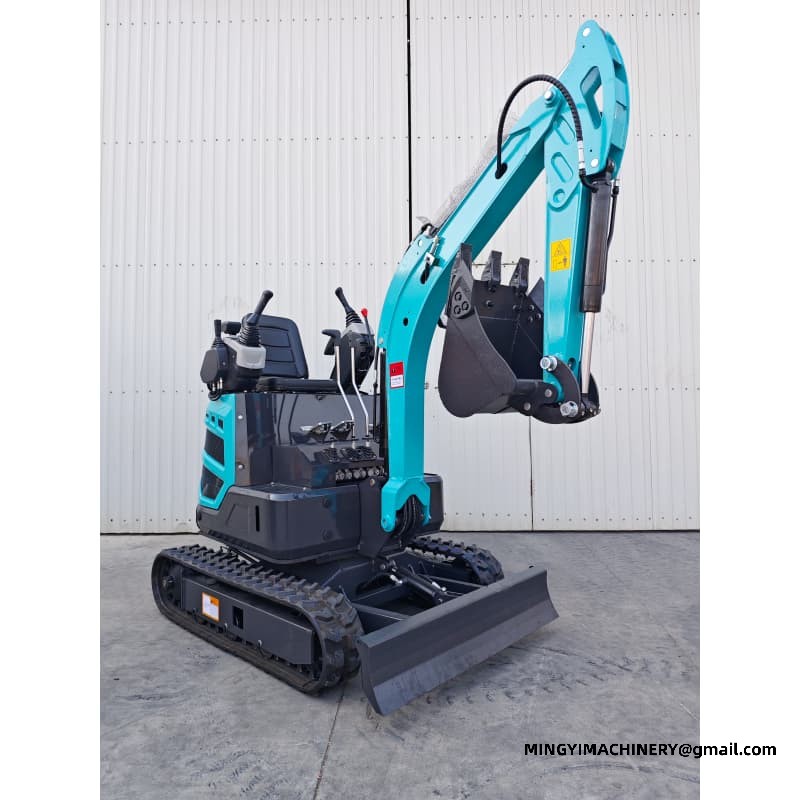
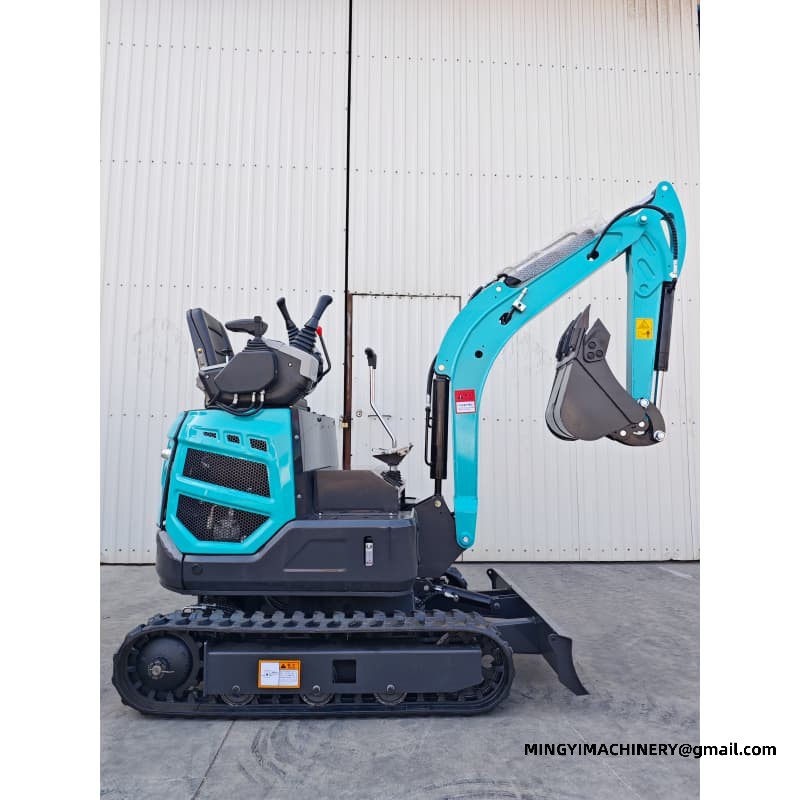
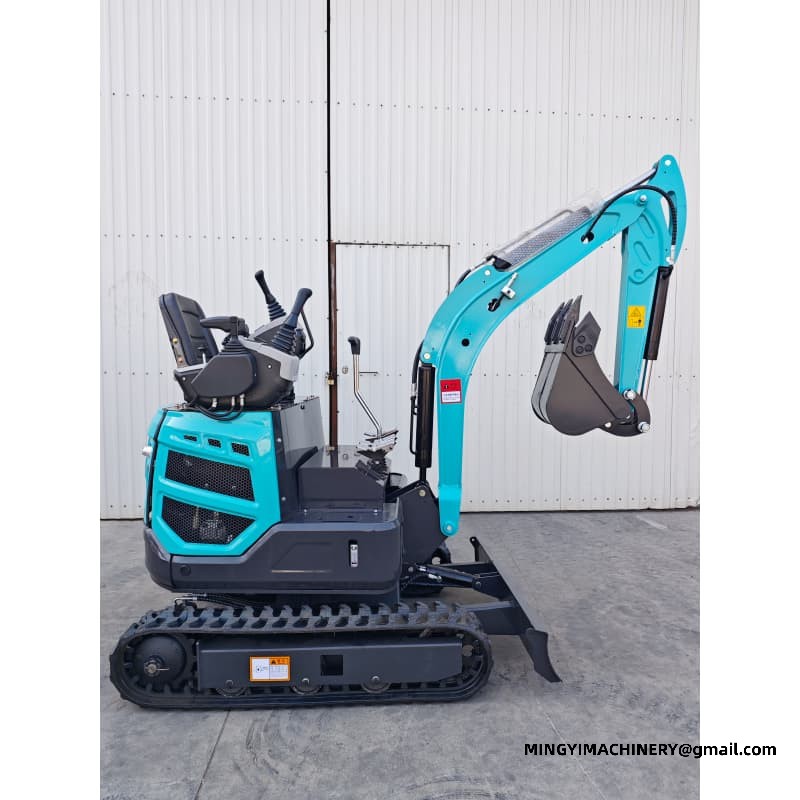
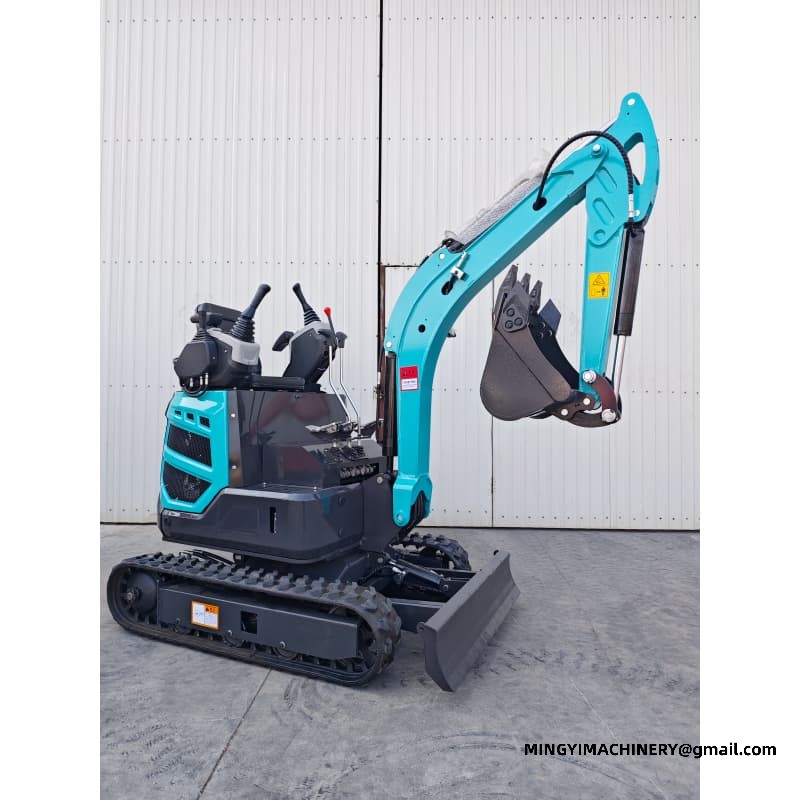
Reference specification — mini excavator range 15W 20-1WL 09L 30-2L Operating weight 1400 kg (3086.47 lb) 1900 kg (4188.78 lb) 1100 kg (2425.08 lb) 2400 kg (5291 lb) Transport size (L×W×H) 2200 × 930 × 2250 mm 2550 × 1100 × 2200 mm 2300 × 720 × 1870 mm 2800 × 1500 × 2500 mm Max digging depth 1630 mm (64.17 in) 1800 mm (70.87 in) 1400 mm (55.12 in) 2200 mm (86.61 in) Max digging height 2750 mm (108.27 in) 2820 mm (111.02 in) 2800 mm (110.24 in) 2900 mm (114.17 in) Max dumping height 1960 mm (77.17 in) 2050 mm (80.71 in) 1880 mm (74.02 in) 2100 mm (82.68 in) Max digging radius 2900 mm (114.17 in) 3050 mm (120.08 in) 2490 mm (98.03 in) 3330 mm (131.1 in) Max digging distance 2100 mm (82.68 in) 2300 mm (90.55 in) 2000 mm (78.74 in) 2700 mm (106.3 in) Minimum turning radius 1300 mm (51.18 in) 1450 mm (57.09 in) 1400 mm (55.12 in) 1555 mm (61.22 in) Travel speed 3 km/h (1.86 mph) 5 km/h (3.11 mph) 3 km/h (1.86 mph) 7 km/h (4.35 mph) Gradeability 30° 30° 30° 30° Fuel consumption 1-1.3 L/h (0.264—0.343 gal) 2-3 L/h (0.528—0.793 gal) 1-1.3 L/h (0.264—0.343 gal) 2-3 L/h (0.528—0.793 gal) Fuel tank capacity 10 L (2.64 gal) 16 L (4.23 gal) 8 L (2.11 gal) 16 L (4.23 gal) Hydraulic oil tank 16 L (4.23 gal) 18 L (4.76 gal) 16 L (4.23 gal) 18 L (4.76 gal) Dozer blade lift height 180 mm (7.09 in) 180 mm (7.09 in) 180 mm (7.09 in) 230 mm (9.06 in) Dozer blade drop depth 210 mm (8.27 in) 210 mm (8.27 in) 210 mm (8.27 in) 280 mm (11.02 in)
Q. What is the model in question?
A. Farm and orchard work is seasonal and varied - trenching at planting, drainage before the rains, clearing and grading after harvest - and one compact machine covers most of that calendar. One compact excavator with a bucket, an auger and a rake covers most of the farm calendar without hiring specialists. MINGYI builds the 08, 12 and 18 models covering the 0.8 to 6 tonne class, and the machine in that duty is where that range meets farm.
Q. Will it damage crop ground?
A. Not when set up for it: rubber tracks and a light footprint are why the farm pages pair track choice with boom reach. Plan the runs along the headland and the field looks the same after the machine as before.
Q. Can I see the machine before it ships?
A. Inspection is arranged at the factory, in person or by a scheduled video walk-around - the same session covers paint, decals and attachment fitment for the farm specification, so the machine inspected is the machine that ships.
Pre-delivery inspection before the unit on the job leaves the shop
The last hour before packing is the best time to find a fault. Running a machine built for the work through its full working cycle, checking for leaks under load and confirming that the controls match the specification avoids a conversation across time zones later.
Planning the season around the equipment in service
The calendar decides more than the specification does. Planning when the excavator will be working, when it will be serviced and when it can be spared keeps the maintenance out of the weeks that matter.
E-mail : sales@mingycn.com
LINE ( ID ): mingyicn
Related pages
micro hydraulic excavator · small construction excavator · Wheel Loader Supplier: Spares, Lead Times and Container Plans · Mini Excavators









