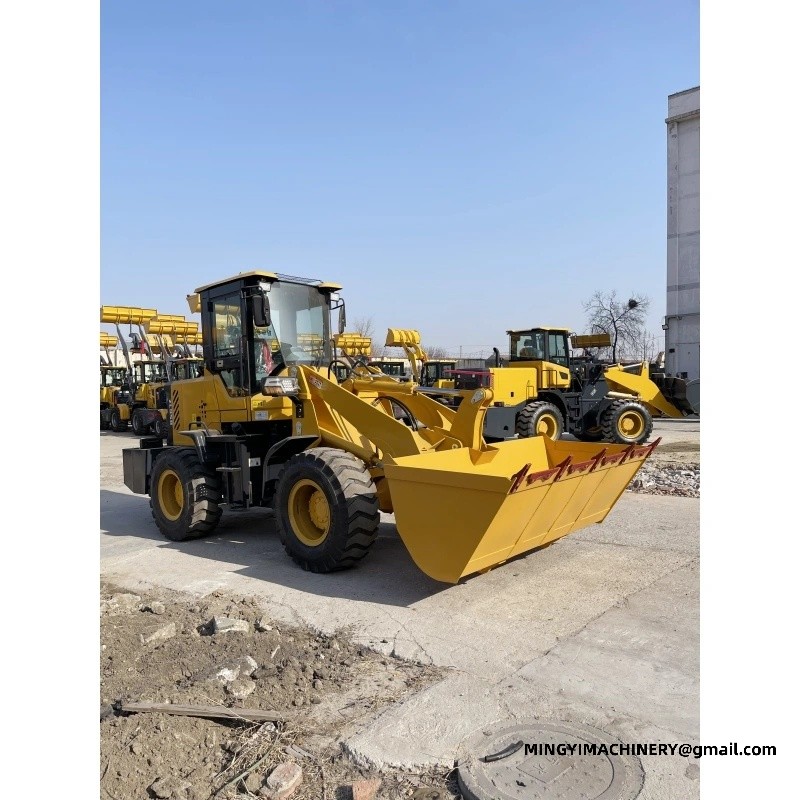
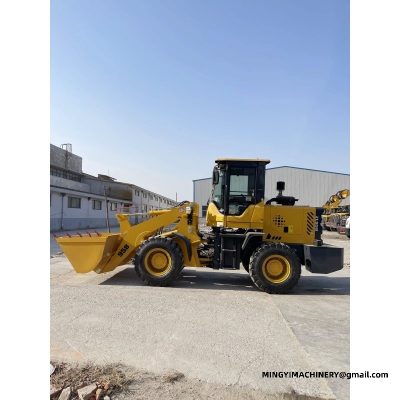
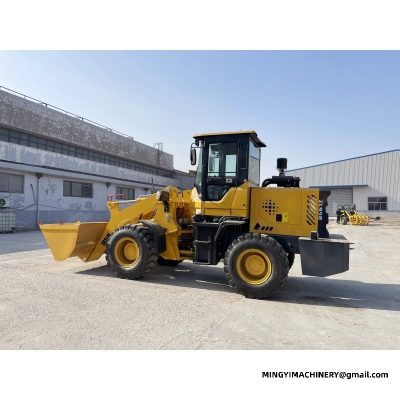
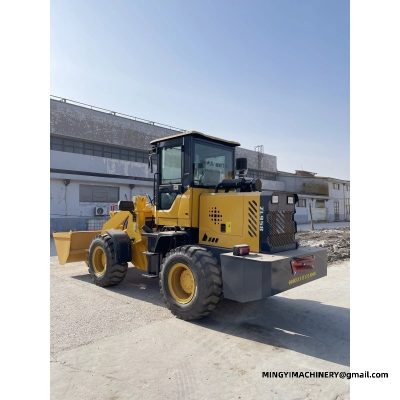
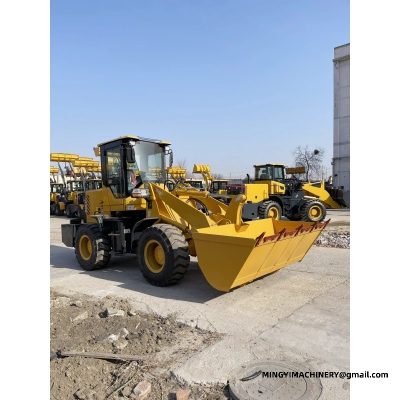
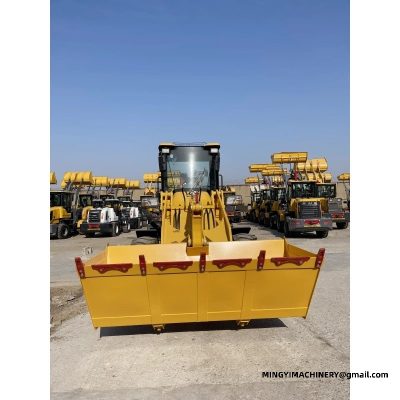
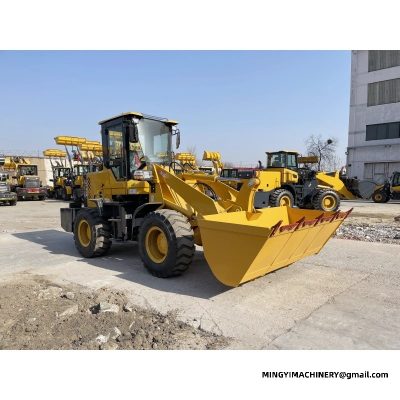
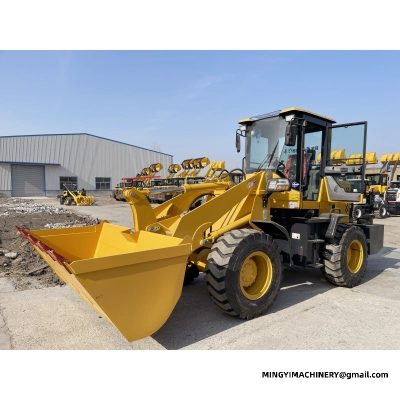
Buying a wheel loader supplier on capacity alone is the most common and most lengthy mistake in this class of machine.Capacity is simple to advertise and easy to change; stability, reach and frame life are neither. The light-duty 3.2 m small-frame wheel-side reduction wheel loader carries 0.38 m³ to 3.2 m on a 2.3 m boom with a 890 mm centre distance, while the light-duty 3.5 m small-frame wheel-side reduction wheel loader carries 0.38 m³ to 3.5 m on 2.62 m and 890 mm. Those are the figures that decide what the machine can do on your site, and this page walks through them in the order a buyer should read them.
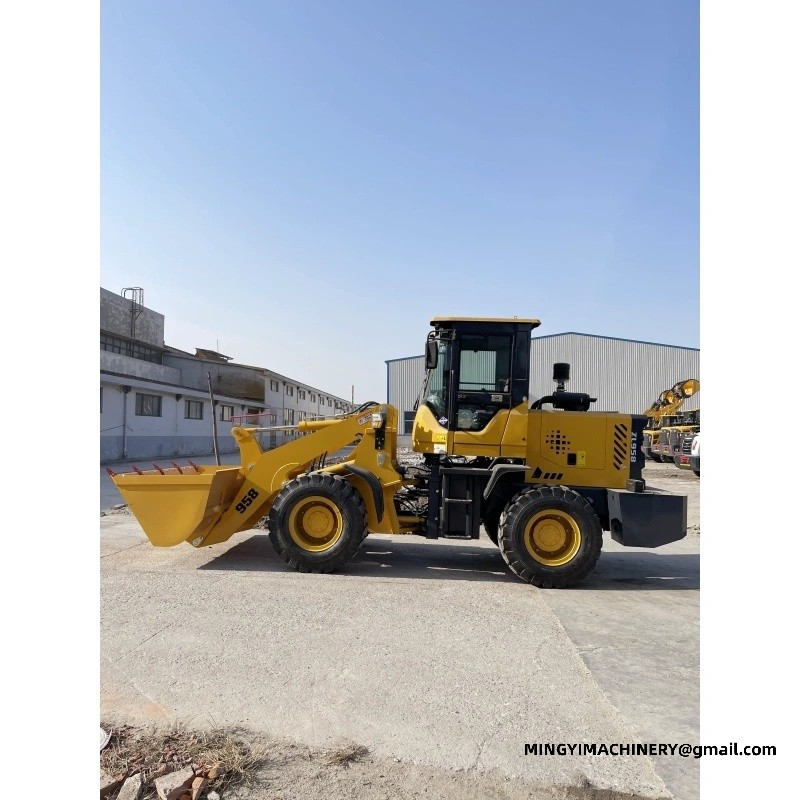
Adding a circuit after delivery is possible and never as good as specifying it at build. The pump is the constraint: 40 pump (490 engine); 1045 pump (4102 turbo engine) on this machine, 316 pump alongside it. Flow has to be shared, and a circuit added later shares it through plumbing that was not laid out for it.
The cylinders are less often the limit than people assume. centre cylinder 45 / side cylinder 40 gives the mechanical advantage; the pump gives the speed. If an attachment works but works slowly, look at flow before looking at bore. If it works but the arm twists, look at section instead: 370 mm of width and 890 mm of spacing resist that, and neither can be improved after the frame is welded.
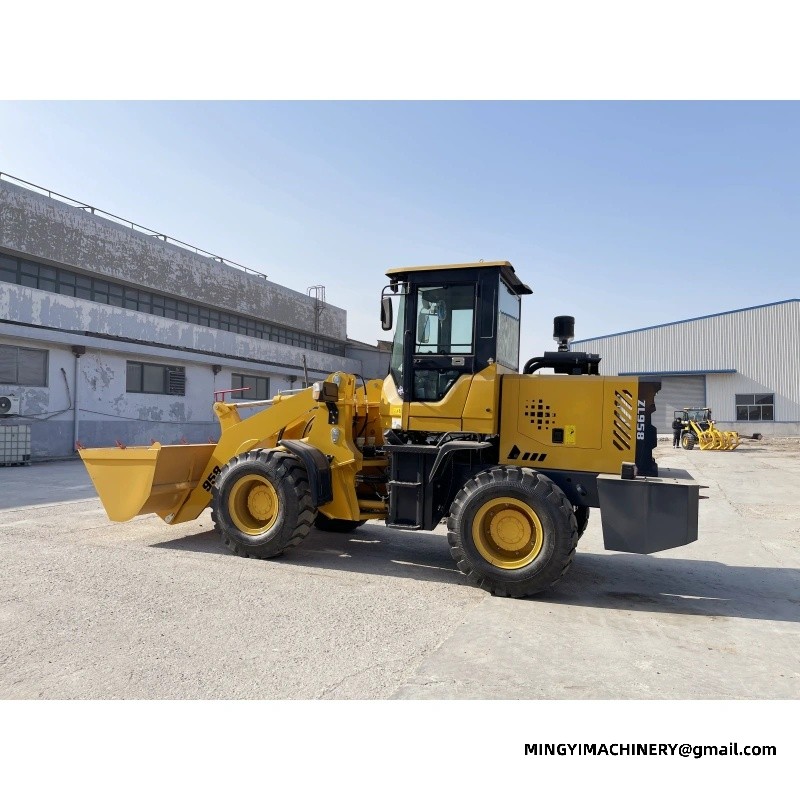
Every axle specification is a compromise between traction and speed, and the range resolves it with two families: 1.5 m (wheel-side reduction axle); 1.45 m (Isuzu axle) track on the heavy-duty 4.5 m small-frame wheel-side reduction wheel loader and 1.6 m on the heavy-duty 3.8 m medium-frame wheel-side reduction wheel loader. The wider track adds stability; the reduction layout decides whether the torque reaches the ground. Ask which ground the machine will spend eighty per cent of its hours on, then read the axle line.
Stability also comes from elsewhere in the table. The heavy-duty 4.5 m small-frame wheel-side reduction wheel loader carries a 4.25 m front-wheel-to-counterweight length and a 0.4 m³ bucket at 4.5 m; the heavy-duty 3.8 m medium-frame wheel-side reduction wheel loader carries 4.55 m with 0.65 m³ at 3.8 m. A wide track on a short wheelbase is less stable than a narrower track on a long one, which is why the footprint figure belongs in the same conversation as the axle. On soft or rutted ground, take the hub reduction every time.
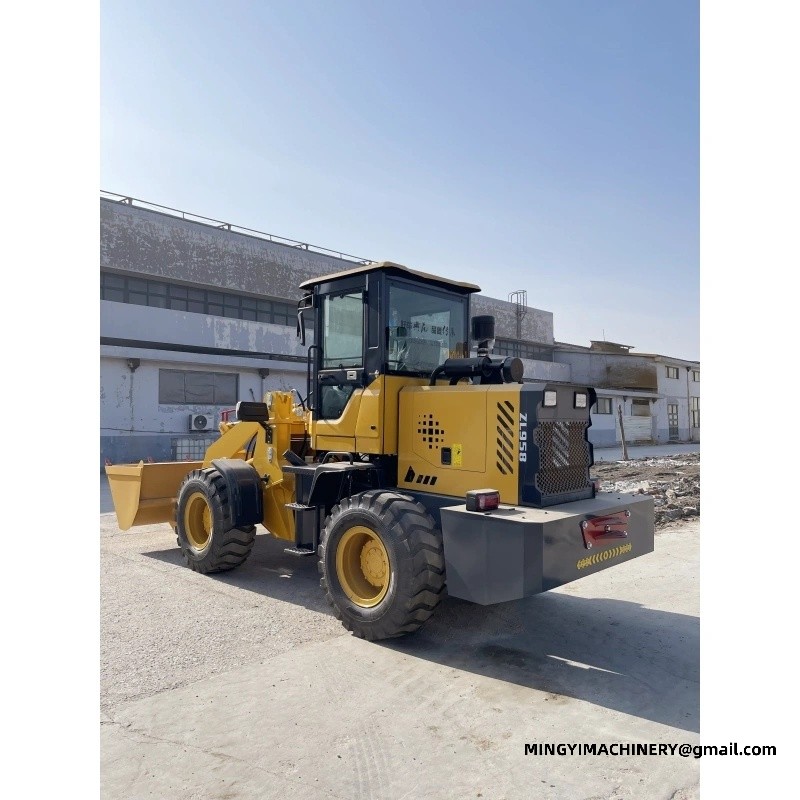
The boom is the part that turns engine power into a loaded bucket at height, and four figures describe it. Length runs 2.61 m on the light-duty 3.8 m small-frame wheel-side reduction wheel loader against 3.16 m on the heavy-duty 4.2 m medium-frame wheel-side reduction wheel loader; wall thickness 25 mm against 30 mm; section width 370 mm against 520 mm; and the mount spacing — boom centre distance — 890 mm against 960 mm. Read together, those four numbers tell you more about how a machine will behave than bucket capacity ever will.
Length buys reach and takes stability, because every extra millimetre moves the load centre further from the front axle. Wall thickness resists bending; section width resists twisting. Centre distance is the one most buyers never ask about, and it is the one that decides whether the arm takes a side load cleanly or twists the pins — which matters the moment an operator digs one corner of the bucket into a heap instead of squaring up to it. On the light-duty 3.8 m small-frame wheel-side reduction wheel loader the combination of a 2.61 m arm, a 25 mm wall and a 890 mm spacing is matched to a 0.38 m³ bucket, and that match is what keeps the frame tight over a full season.
| Specification extract — heavy-duty 4.5 m small-frame wheel-side reduction wheel loader | |
|---|---|
| Bucket capacity | 0.4 m³ |
| Dump height | 4.5 m |
| Track width | 1.5 m (wheel-side reduction axle); 1.45 m (Isuzu axle) |
| Boom arm thickness | 25 mm |
| Boom arm width | 500 mm |
| Boom arm length | 3.15 m |
| Boom arm centre distance | 890 mm |
| Cross-member thickness | 30 mm |
| Front hinge plate thickness | 30 mm |
| Rear hinge plate thickness | 20 mm |
| Rear frame section | 280 mm high x 800 mm wide |
| Hydraulic cylinders | centre cylinder 45 / side cylinder 45 |
| Fuel tank | 64.7 L (75# small tank) |
| Battery | 60 Ah (490 engine); 80 Ah (4102 turbo engine) |
| Front wheel to counterweight | 4.25 m |
| Radiator | 4100 core (490 engine); 4105 core (4102T engine) |
| Work pump | 40 pump (490 engine); 1045 pump (4102 turbo engine) |
| Travel pump | 316 pump |
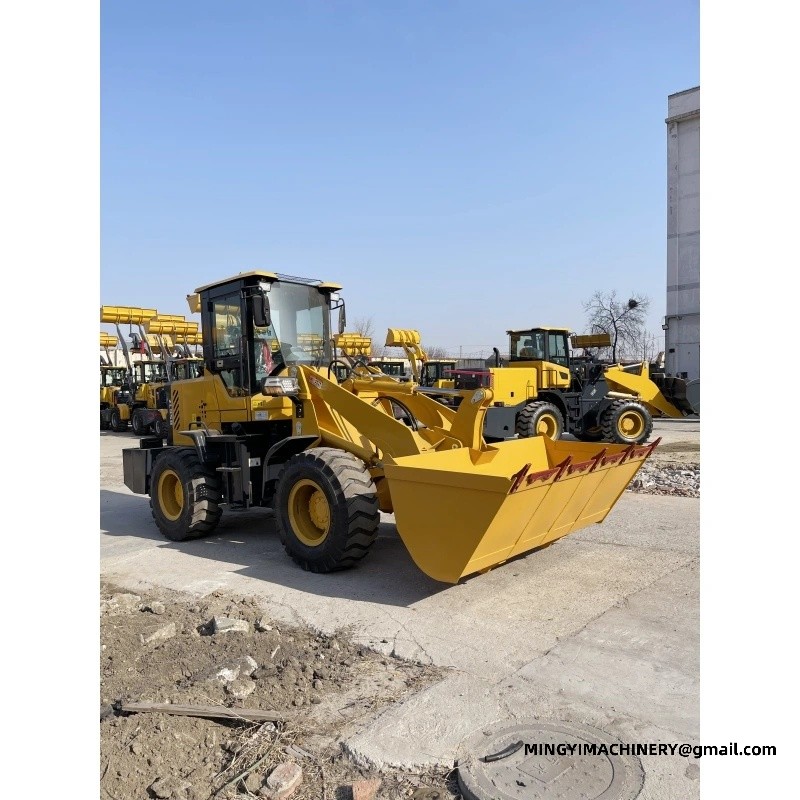
Cold cranking is the one specification that is easy to ignore and impossible to work around at five in the morning. This build is specified with 60 Ah (490 engine); 80 Ah (4102 turbo engine), matched to the engine it has to turn. Capacity in ampere-hours is only half the story; the other half is whether the rating is honest at low temperature, which is why the figure should be read together with the engine option.
Where two engines are offered, the turbo option asks for more from the battery and gets it: the higher rating in 60 Ah (490 engine); 80 Ah (4102 turbo engine) belongs to that build. If the machine will start cold, stop often, or run a short-haul duty with many restarts, specify the higher capacity at the order stage rather than discovering the limit in January.
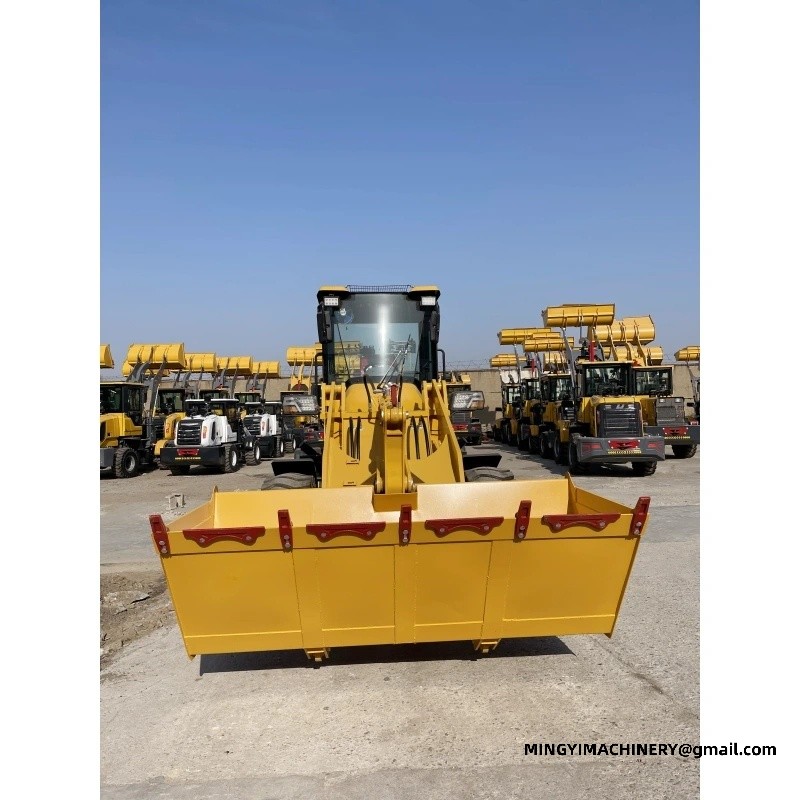
Front-wheel-to-counterweight length is the figure that decides whether a machine fits your site: 3.8 m on the light-duty 3.2 m small-frame wheel-side reduction wheel loader against 4.55 m on the heavy-duty 4.2 m medium-frame wheel-side reduction wheel loader. Track width is the second: 1.5 m (wheel-side reduction axle); 1.45 m (Isuzu axle) against 1.6 m. Together they set the turning circle and the narrowest gap the machine will pass, and they are the two numbers least likely to be stated in a sales conversation.
Access is a hard constraint and it fails silently. A loader that cannot turn in a shed is a loader that cannot work in that shed, whatever its bucket capacity. Compare 3.8 m at 1.5 m (wheel-side reduction axle); 1.45 m (Isuzu axle) on the light-duty 3.2 m small-frame wheel-side reduction wheel loader with 4.55 m at 1.6 m on the heavy-duty 4.2 m medium-frame wheel-side reduction wheel loader, measure your tightest turn and your narrowest doorway, and buy the machine that passes. Where the gap is marginal, the 3.8 m machine with its 0.38 m³ bucket will earn more than the 4.55 m one with 0.65 m³.
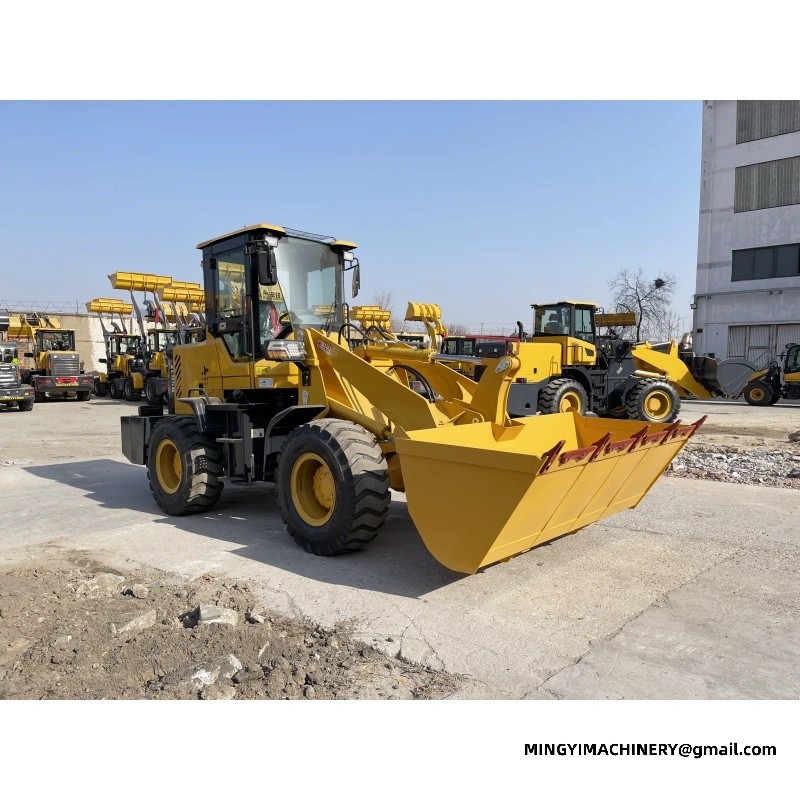
Fuel capacity on this range is specified per frame rather than per model: 64.7 L (75# small tank) on the heavy-duty 4.5 m small-frame wheel-side reduction wheel loader and 70 L (75# large tank) on the heavy-duty 4.2 m medium-frame wheel-side reduction wheel loader. Both are intended to cover a full shift at working throttle, and both assume the machine is not idling for hours between loads — idling is where a "full day" tank becomes a half-day tank.
Plan refuelling around the tank, not around the clock. On the heavy-duty 4.5 m small-frame wheel-side reduction wheel loader with 64.7 L (75# small tank) and a 0.4 m³ bucket at 4.5 m, a day of continuous loading will run the tank down; on the heavy-duty 4.2 m medium-frame wheel-side reduction wheel loader with 70 L (75# large tank) and 0.65 m³ at 4.2 m, the same day leaves allowance. Where a site has no bowser, that allowance is the difference between finishing at four and stopping at two.
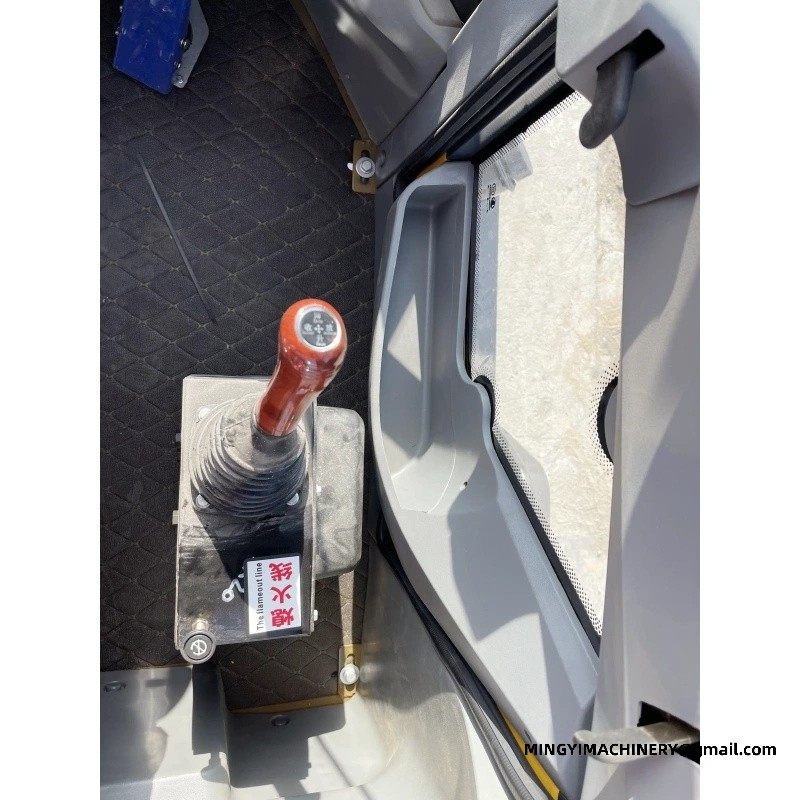
A machine crossing an ocean is exposed to salt air for weeks, and the parts that suffer are the ones that were never painted: cylinder rods, hinge pins and electrical terminals. This build carries centre cylinder 45 / side cylinder 40 and hinge plates of 25 mm and 20 mm; all three should be greased and wrapped before loading rather than cleaned on arrival.
The battery is the other item to plan for. 60 Ah (490 engine); 80 Ah (4102 turbo engine) will not survive a long voyage connected, and a flat machine cannot be driven off a container. Specify a disconnect, and specify the radiator, 4100 core (490 engine); 4105 core (4102T engine), to be checked for fin corrosion on arrival — salt air attacks the core from outside and the symptom is overheating in the first month, which everyone blames on the thermostat.
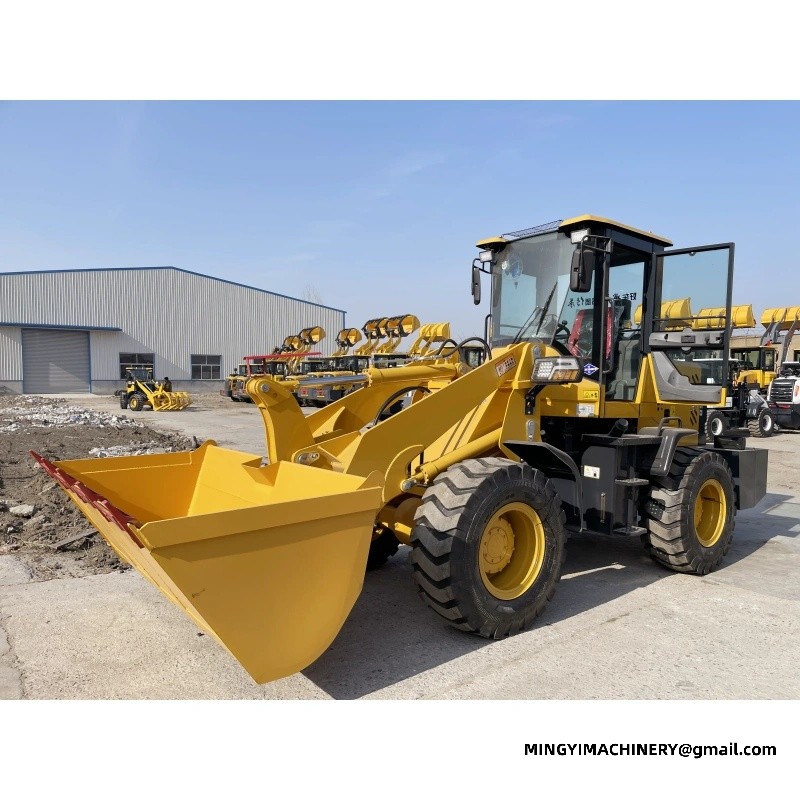
Ask any yard operator which part fails first and the answer is the articulation, not the engine. The rear hinge plate takes every reversing and turning load: 14 mm on the light-duty 3.2 m small-frame wheel-side reduction wheel loader against 30 mm on the heavy-duty 4.2 m medium-frame wheel-side reduction wheel loader, on cross-members of 25 mm and 45 mm respectively. That pair of figures predicts whether the machine is still tight at year three.
The rest of the specification follows the duty. A 0.38 m³ bucket at 3.2 m with centre cylinder 45 / side cylinder 40 cylinders is right for loose stock and loading out; 0.65 m³ at 4.2 m with centre cylinder 60 / side cylinder 50 is right where the machine has to break out of a face. Ground decides the axle — 1.5 m (wheel-side reduction axle); 1.45 m (Isuzu axle) against 1.6 m — and the material decides the radiator.
What does the cross-member figure tell me about a wheel loader supplier?
How well the frame resists the twisting that articulation puts into it: 25 mm on the light-duty 4.2 m small-frame wheel-side reduction wheel loader against 45 mm on the heavy-duty 3.8 m medium-frame wheel-side reduction wheel loader. It is the clearest marker of build class.
Which wheel loader supplier build suits farm work?
The lighter one, for access: a 0.38 m³ bucket at 4.2 m, 1.5 m (wheel-side reduction axle); 1.45 m (Isuzu axle) track and a 4.1 m footprint that turns between sheds. Gate and door widths decide first.
What should the first service on a wheel loader supplier cover?
Torque the hinge pins, grease the 890 mm boom mounts, check the centre cylinder 45 / side cylinder 45 cylinder connections and the 4100 core (490 engine); 4105 core (4102T engine) cooling circuit, then re-check the build figures.
How are the pumps specified on a wheel loader supplier?
Lift and travel are separate circuits: a 40 pump (490 engine); 1045 pump (4102 turbo engine) work pump with a 316 pump travel pump, so a loaded climb does not take flow away from the boom.
What radiator comes with this wheel loader supplier build?
4100 core (490 engine); 4105 core (4102T engine) on the light-duty 3.8 m small-frame wheel-side reduction wheel loader and 4105 core on the heavy-duty 4.2 m medium-frame wheel-side reduction wheel loader. Where a build offers two engines, the raised core serves the turbo and is the one to specify for dusty work.
What is the smallest wheel loader supplier in the range?
The entry low-profile builds: a 0.4 m³ bucket at 4.5 m, 1.5 m (wheel-side reduction axle); 1.45 m (Isuzu axle) track and a 4.25 m front-to-counterweight length for indoor and nursery work.
What spares should I keep for a wheel loader supplier?
Filters, a hose set for the centre cylinder 45 / side cylinder 40 cylinders, pins and bushes for the 890 mm boom mounts and a cutting edge. One pump per fleet is usually enough.
Machines ship knock-down with booms and counterweights packed loose, tanks removed and batteries boxed. Allow a day per unit to commission: torque the pins, fill the 64.7 L (75# small tank) tank and the 4100 core (490 engine); 4105 core (4102T engine) circuit, and check the build figures against the table.
Planning the season around Wheel Loader Supplier: Spares, Lead Times and Container Plans
Downtime is simplest when it is planned. Booking the service for Wheel Loader Supplier: Spares, Lead Times and Container Plans in the quiet part of the season takes nothing from the schedule, while the same work in the busy weeks gives up a day of output every time.
Documents that travel with Wheel Loader Supplier: Spares, Lead Times and Container Plans
The machine is only half of what arrives. The parts book, the service schedule and the declarations that come with Wheel Loader Supplier: Spares, Lead Times and Container Plans are what let the owner register, insure and maintain it without a second round of emails.
Contact MINGYI Machinery for the current wheel loader lineup, configuration options and a formal specification for your market. E-mail: sales@mingycn.com | LINE (ID): mingyicn
China Wheel Loader Factory: Builds, QC and Export Loading · Heavy Duty Wheel Loader: Cross-Members, Hinge Steel and Duty · Wheel Loader Manufacturer | China Factory: Checking Shipments · Loaders









