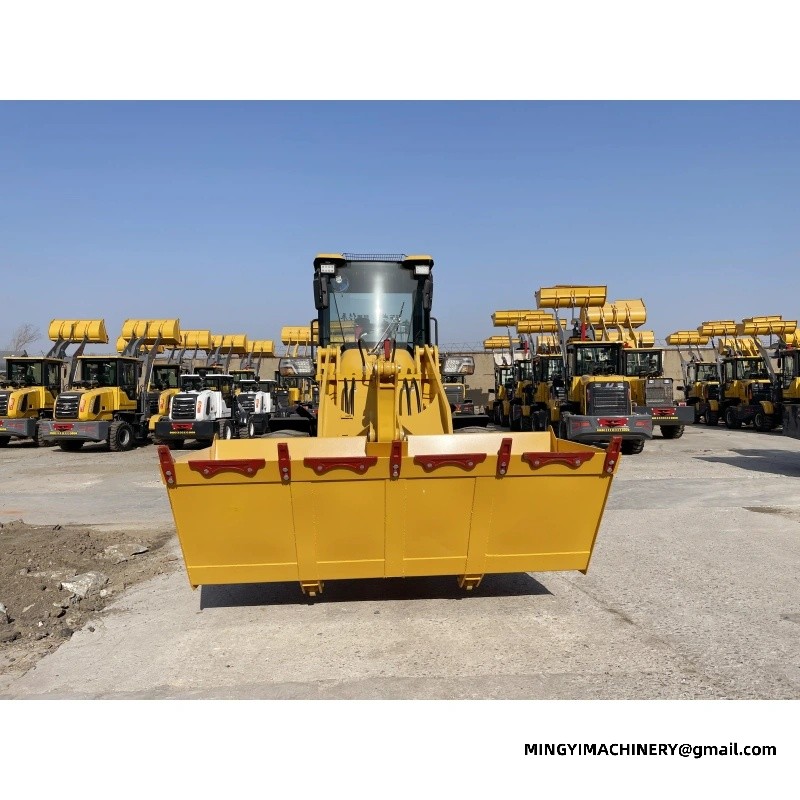
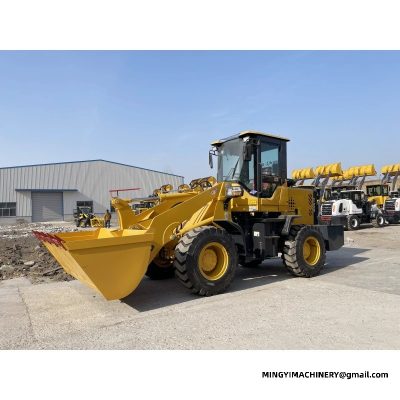
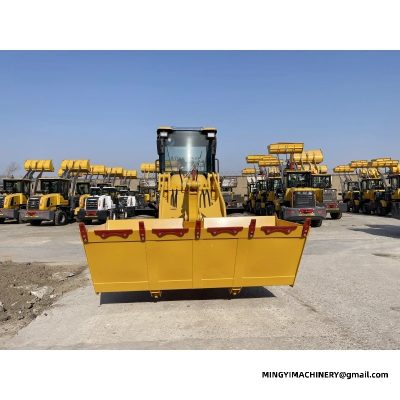
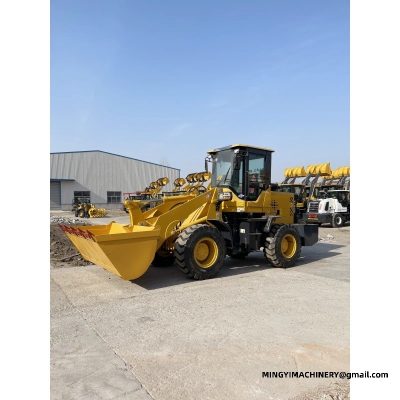
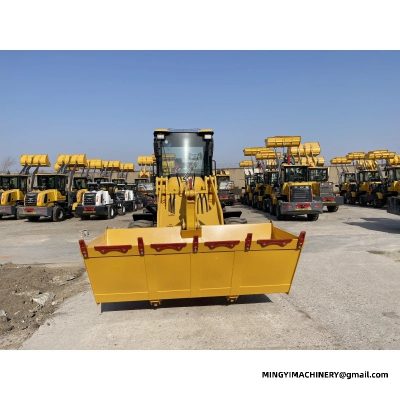
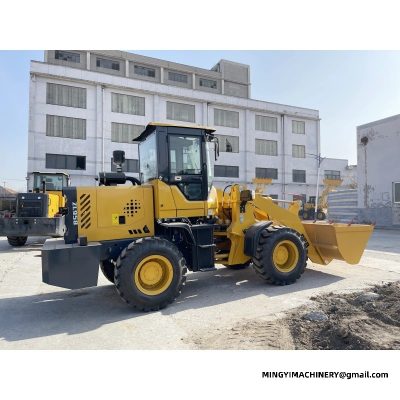
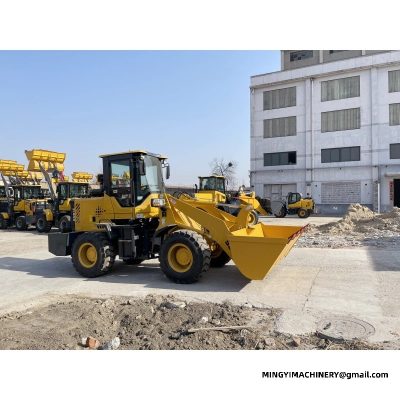
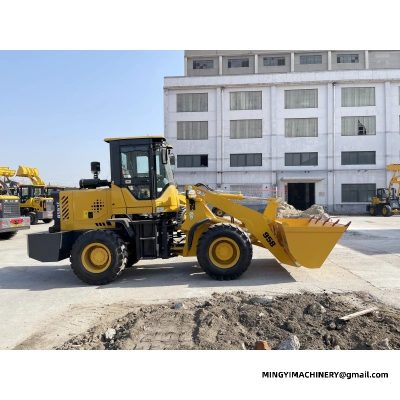
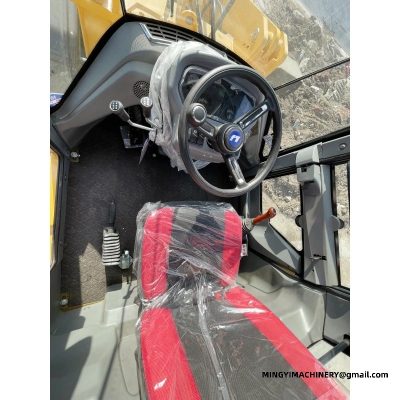
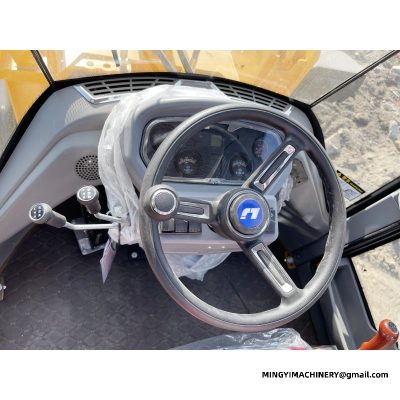
Specify a heavy duty wheel loader from the work backwards, not from the catalogue forwards. Start with what it loads into — that fixes dump height, 3.5 m on the heavy-duty 3.5 m medium-frame wheel-side reduction wheel loader or 3.8 m on the heavy-duty 3.8 m medium-frame wheel-side reduction wheel loader. Then the narrowest gap it must pass — that fixes track, 1.6 m or 1.6 m. Only then look at bucket volume, 0.65 m³ or 0.65 m³. What follows is the full sequence, with the steel, hydraulic and cooling figures that separate one build from the next and the reasoning behind each.
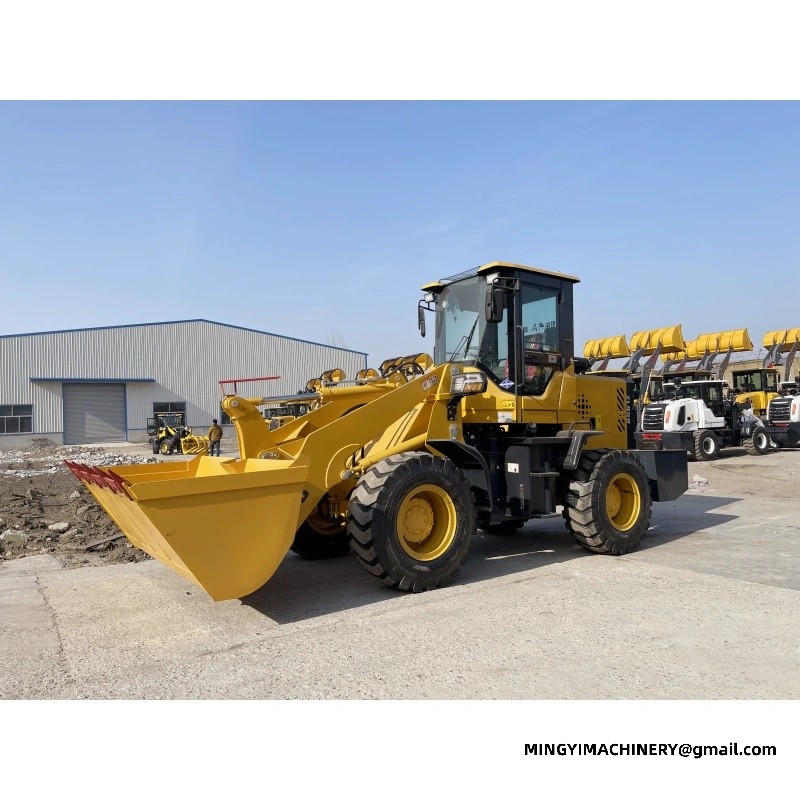
Breakout happens when the bucket is driven into the face and lifted, and it loads the boom in bending. The figures that resist it are wall 25 mm, width 430 mm, and the spacing between the two arms, 890 mm. A wider spacing spreads the load across the pins instead of concentrating it.
Length works against you here. A 2.3 m arm gives reach and height and multiplies the bending moment at the same time, which is why long-arm builds carry thicker walls. On the heavy-duty 4.5 m medium-frame wheel-side reduction wheel loader the same comparison is 3.35 m of length against 30 mm of wall. Where the material is hard to break out, the shorter, thicker combination is usually the better machine.
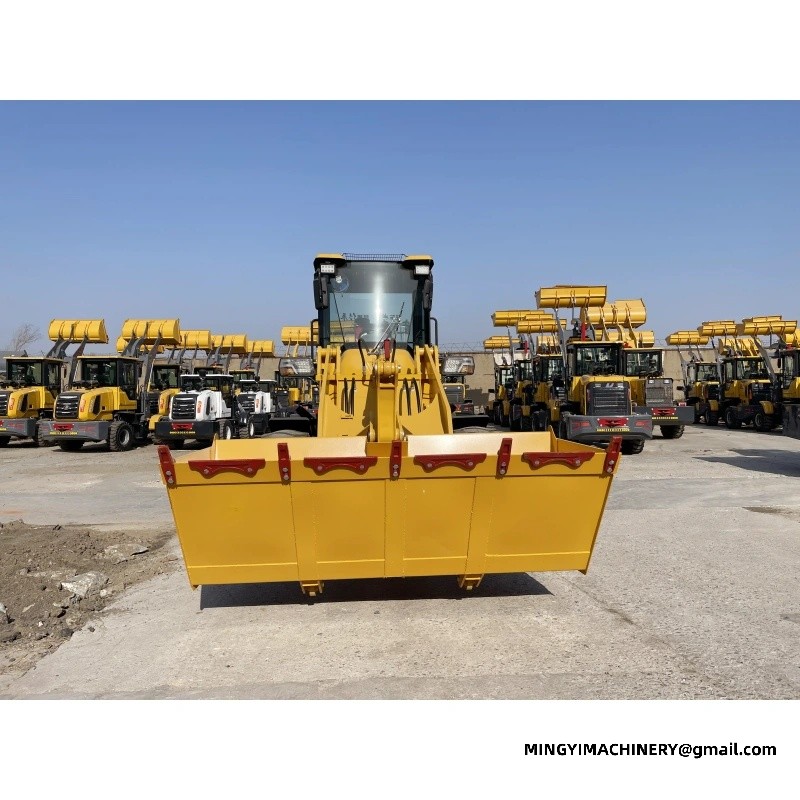
A battery specification is really an engine specification in disguise. 60 Ah (490 engine); 80 Ah (4102 turbo engine) tells you what the engine needs to turn over, and where two figures are listed it tells you the build is offered with more than one engine. The larger figure is the turbo; the smaller, the naturally aspirated option.
Match that to how the machine will be used. Continuous duty — one start, one long shift — is easy on a battery. Intermittent duty — yard work where the engine is stopped every time the operator gets out — is the hard case, and it is where the higher rating earns its keep. The rest of the electrical load is modest, so cranking is what the 60 Ah (490 engine); 80 Ah (4102 turbo engine) figure is really buying.
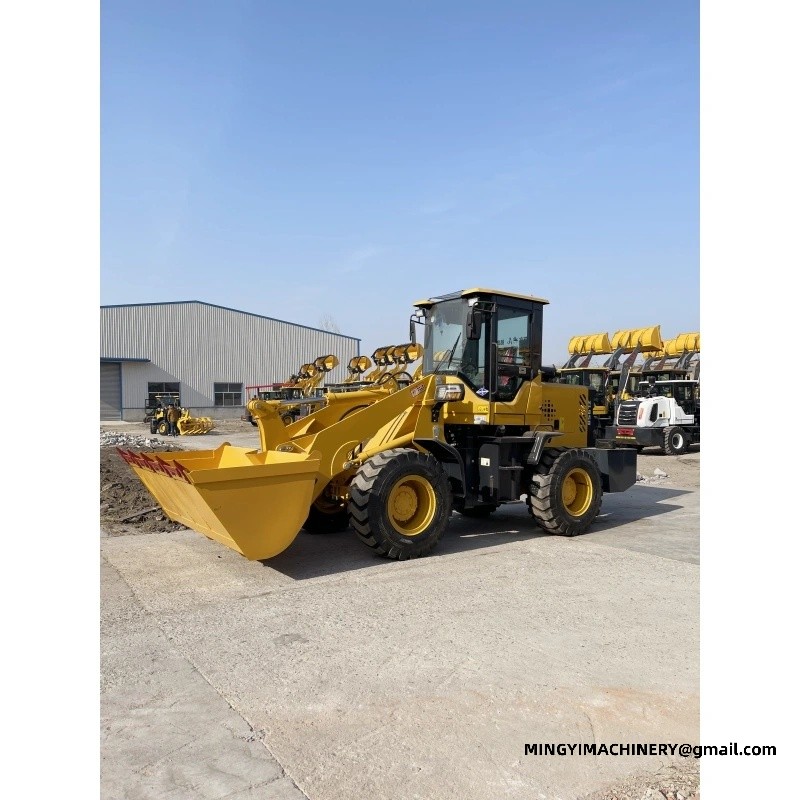
On builds with two engine options the cooling package changes with the engine, which is why the radiator line in the table reads as a pair: 4100 core (490 engine); 4105 core (4102T engine) on the heavy-duty 3.5 m small-frame wheel-side reduction wheel loader and 4105 core on the heavy-duty 3.5 m medium-frame wheel-side reduction wheel loader. The 4100 core serves the 490 engine; the 4105 raised core serves the 4102 turbo. The raised core is not a marketing variant — it is more core area in the same footprint, and it is the difference between finishing a dusty shift and stopping at noon to blow out the fins.
Where the machine will work is the deciding factor. Grain handling, lime, cement raw meal, crushing and screening all load a radiator with fine material; road building on a wet day does not. If the application is dusty, specify the raised core and a reversible fan if offered. Then check the rest of the package matches: 64.7 L (75# small tank) fuel on the heavy-duty 3.5 m small-frame wheel-side reduction wheel loader against 70 L (75# large tank) on the heavy-duty 3.5 m medium-frame wheel-side reduction wheel loader, and the battery at 60 Ah (490 engine); 80 Ah (4102 turbo engine) against 80 Ah.
| Reference specification — heavy-duty 3.5 m medium-frame wheel-side reduction wheel loader | |
|---|---|
| Bucket capacity | 0.65 m³ |
| Dump height | 3.5 m |
| Track width | 1.6 m |
| Boom arm thickness | 30 mm |
| Boom arm width | 500 mm |
| Boom arm length | 3.15 m |
| Boom arm centre distance | 920 mm |
| Cross-member thickness | 45 mm |
| Front hinge plate thickness | 45 mm |
| Rear hinge plate thickness | 30 mm |
| Rear frame section | 300 mm high x 800 mm wide |
| Hydraulic cylinders | centre cylinder 60 / side cylinder 50 |
| Fuel tank | 70 L (75# large tank) |
| Battery | 80 Ah |
| Front wheel to counterweight | 4.55 m |
| Radiator | 4105 core |
| Work pump | 2063 pump |
| Travel pump | 25 pump |
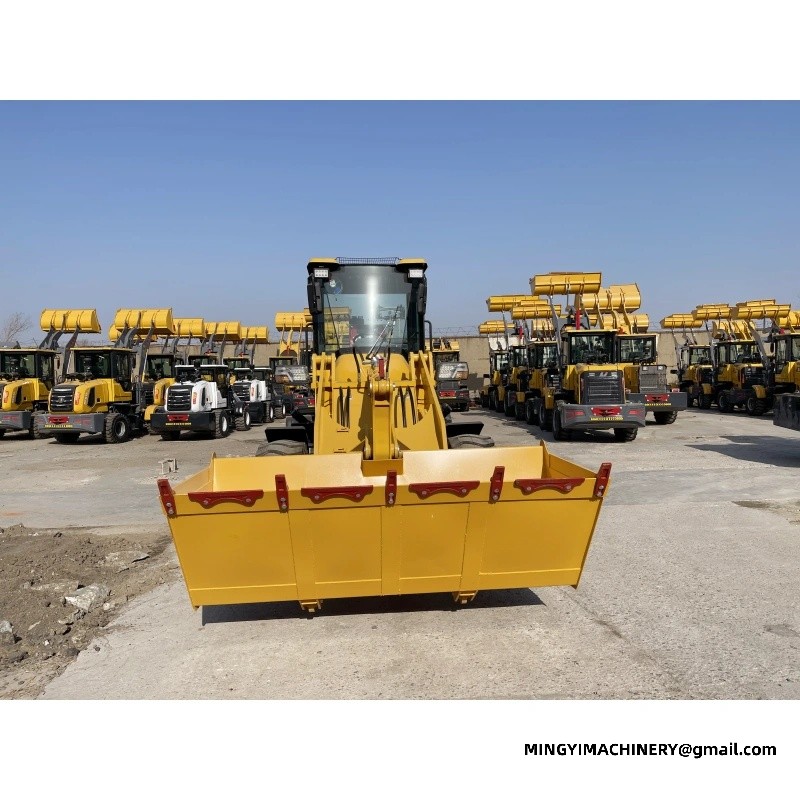
The distance from the front wheel to the rear of the counterweight is a stability specification dressed as a dimension. On the standard 2.8 m low-profile wheel loader it is 3.5 m working with a 0.3 m³ bucket at 2.8 m; on the heavy-duty 4.2 m medium-frame wheel-side reduction wheel loader it is 4.55 m with 0.65 m³ at 4.2 m. Longer means more counterweight leverage, which is what lets a machine carry a full bucket high without lifting the rear wheels.
Longer also means a bigger turning circle, and that is the trade. In an open pit or a wide yard the 4.55 m machine with its 1.6 m track is plainly the better tool. In a livestock shed, a nursery or an indoor renovation job, the 3.5 m machine on 1.2 m (Isuzu axle); 1.3 m (wheel-side reduction axle) will do work the other cannot start. Measure first; the specification only tells you what you are choosing between.
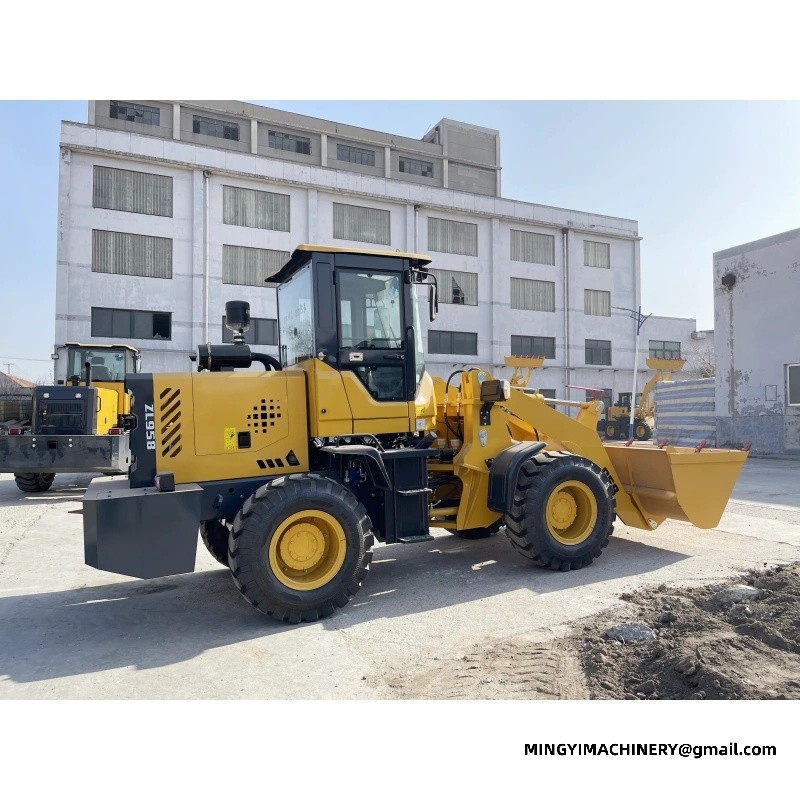
Four numbers describe a loader frame: front hinge plate, rear hinge plate, cross-member thickness and rear frame section. The heavy-duty 3.5 m small-frame wheel-side reduction wheel loader lists 30 mm, 20 mm, 30 mm and 280 mm high x 800 mm wide. The heavy-duty 3.8 m medium-frame wheel-side reduction wheel loader lists 45 mm, 30 mm, 45 mm and 300 mm high x 800 mm wide. Everything else on a specification sheet — paint, cab trim, lighting package — is cosmetic next to those four.
The rear frame section is the one that surprises people. A wider rear frame lets the counterweight bolt directly to the chassis instead of hanging off brackets, and bracket-mounted counterweights crack. On the heavy-duty 3.5 m small-frame wheel-side reduction wheel loader the 280 mm high x 800 mm wide section carries the ballast for a 0.4 m³ bucket at 3.5 m; on the heavy-duty 3.8 m medium-frame wheel-side reduction wheel loader the 300 mm high x 800 mm wide section carries it for 0.65 m³ at 3.8 m. Compare those against the 4.1 m and 4.55 m front-wheel-to-counterweight lengths and you have the whole stability picture in four figures.
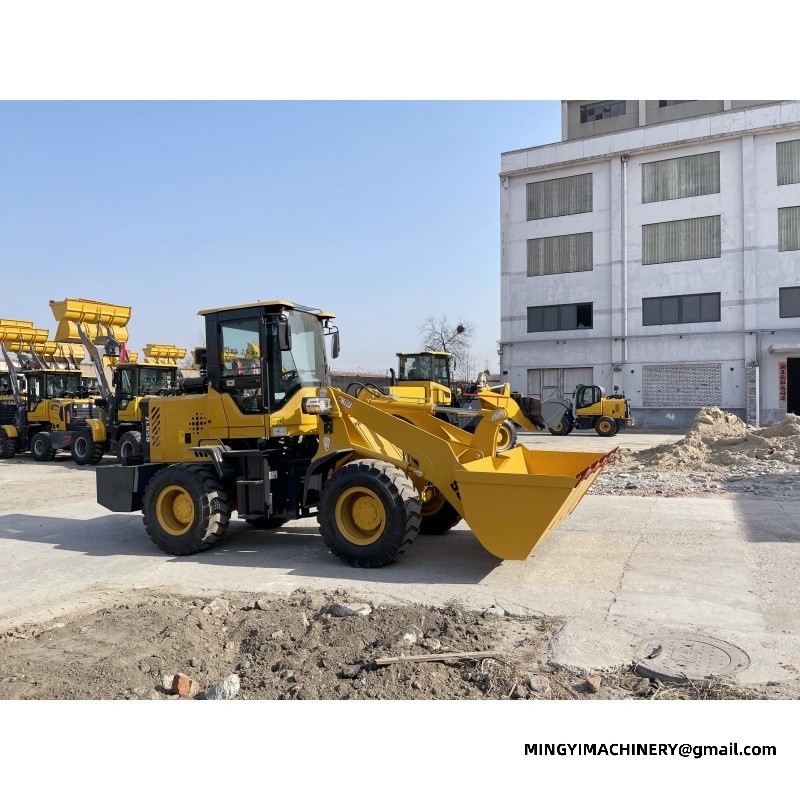
Relief pressure is only half the story; the other half is lever geometry, and lever geometry is decided by the boom and hinge dimensions. The standard 2.8 m low-profile wheel loader pairs a centre cylinder 45 / side cylinder 40 cylinder set with a 680 mm boom centre distance and a 2.05 m arm; the heavy-duty 3.5 m small-frame wheel-side reduction wheel loader pairs centre cylinder 45 / side cylinder 40 with a 890 mm spacing and a 2.62 m arm. Wider spacing means the cylinders work through a better lever, which is how a bigger bucket is lifted without simply raising system pressure and heat.
Pump pairing is the second half. Work pump and travel pump are separate circuits on both machines — 32 pump and 316 pump on the standard 2.8 m low-profile wheel loader, 40 pump (490 engine); 1045 pump (4102 turbo engine) and 316 pump on the heavy-duty 3.5 m small-frame wheel-side reduction wheel loader — so steering and drive do not steal flow from the boom at the top of a lift. If you intend to run hydraulically actuated attachments, a grapple or a four-in-one bucket, order the third circuit at build time; retrofitting a valve block and plumbing in the field takes far more than specifying it on the order.
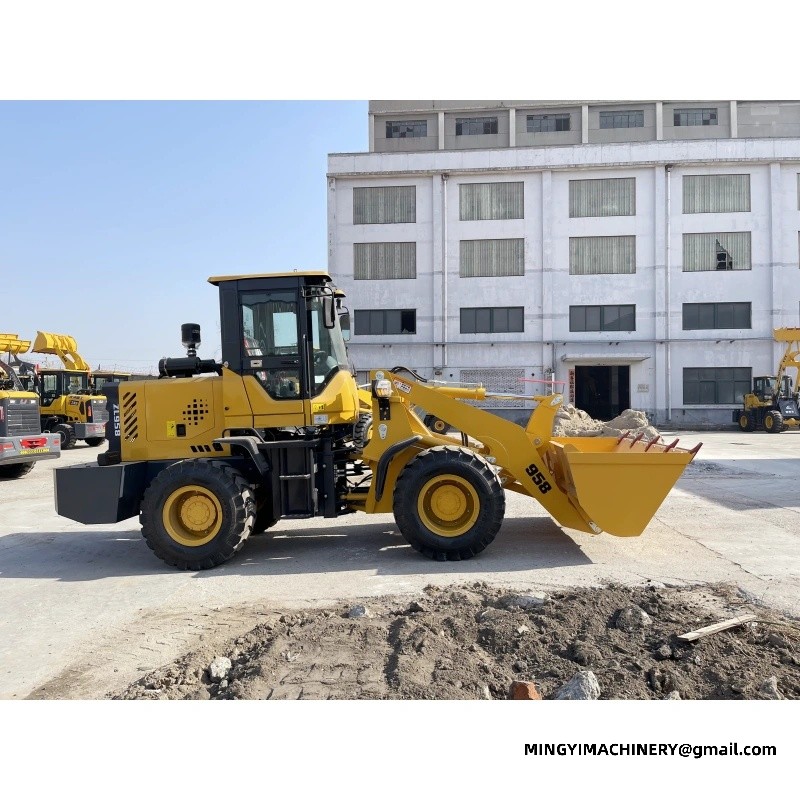
Machines kept past warranty should be bought on steel. Hinge plates 30 mm and 20 mm, cross-member 30 mm, rear frame 280 mm high x 800 mm wide: those are the figures that decide whether year five is a service year or a rebuild year.
The second decision is how repairable the machine is, and that is a parts question. Cylinders centre cylinder 45 / side cylinder 45, pump 40 pump (490 engine); 1045 pump (4102 turbo engine), radiator 4100 core (490 engine); 4105 core (4102T engine), battery 60 Ah (490 engine); 80 Ah (4102 turbo engine): if all four are standard items within the range, a machine can be kept indefinitely. If any is unique to one build, it cannot, and that is worth knowing before the order rather than at year six.
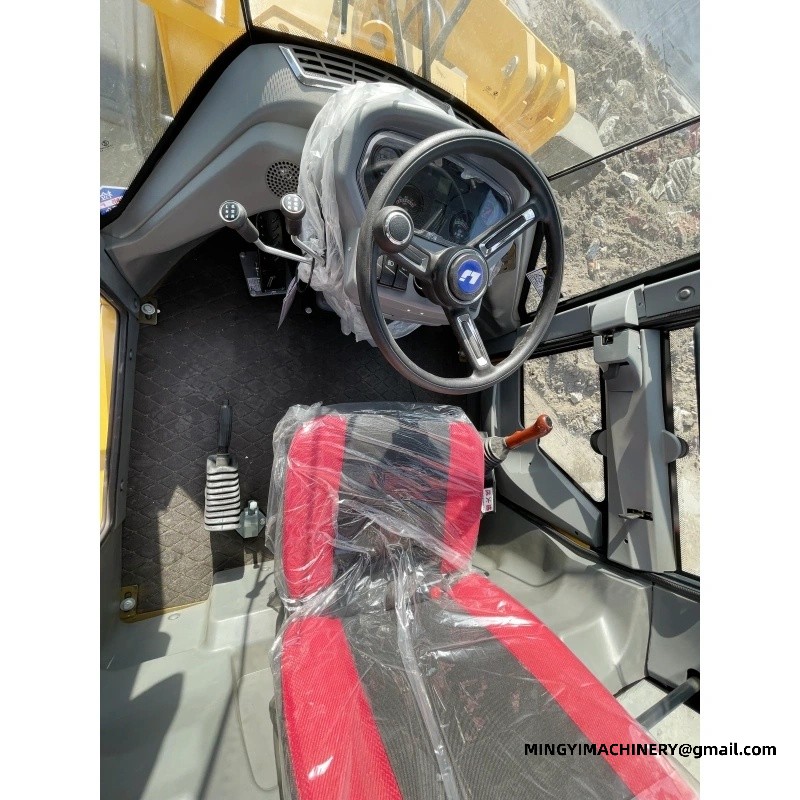
Front wheel to counterweight is the figure that decides whether a machine fits the space you have. Here it is 4.55 m on the heavy-duty 3.8 m medium-frame wheel-side reduction wheel loader and 4.95 m on the heavy-duty 4.5 m medium-frame wheel-side reduction wheel loader. Measure your tightest working bay, add the swing of the bucket, and compare — because a loader that has to reverse out of every corner loses more time than a bigger bucket ever recovers.
Track width closes the same question from the side. 1.6 m on this build. Where two figures are listed, the narrower belongs to the hard-ground axle, and a narrow machine on a narrow gate is often the right answer even where the work itself would suit something bigger. The rear frame section, 300 mm high x 800 mm wide, is what keeps a compact machine from feeling flimsy once it is loaded.
Do attachments interchange across the heavy duty wheel loader range?
Within a frame family, yes, because the boom section matches. Across families, no: a 500 mm section on the heavy-duty 3.5 m medium-frame wheel-side reduction wheel loader is not the 500 mm section on the heavy-duty 3.8 m medium-frame wheel-side reduction wheel loader.
How is a heavy duty wheel loader prepared for export?
Knock-down: booms and counterweights packed loose, tanks removed, batteries boxed and disconnected. Rear frame sections stay between 230 mm high x 800 mm wide and 280 mm high x 800 mm wide.
How often should the articulation of a heavy duty wheel loader be greased?
Every shift in stockpile or face work, weekly in light duty. The 45 mm front and 30 mm rear plates take every steering load, and missed greasing takes pins and bores.
Which figures predict frame life on a heavy duty wheel loader?
Rear hinge plate and cross-member: 20 mm and 30 mm on the heavy-duty 3.2 m low-profile wheel loader, against 20 mm and 30 mm on the heavy-duty 3.2 m small-frame wheel-side reduction wheel loader. Those two rows separate light duty from heavy duty.
What separates a light build from a heavy build of a heavy duty wheel loader?
Cross-member and rear hinge plate: 30 mm and 20 mm on the heavy-duty 3.5 m small-frame wheel-side reduction wheel loader, against 45 mm and 30 mm on the heavy-duty 3.5 m medium-frame wheel-side reduction wheel loader. Boom wall and cylinder bore follow.
What radiator comes with this heavy duty wheel loader build?
4100 core (490 engine); 4105 core (4102T engine) on the heavy-duty 3.2 m low-profile wheel loader and 4100 core (490 engine); 4105 core (4102T engine) on the heavy-duty 3.5 m small-frame wheel-side reduction wheel loader. Where a build offers two engines, the raised core serves the turbo and is the one to specify for dusty work.
How does a heavy duty wheel loader differ from a skid steer?
Articulated steering and a 4.1 m front-to-counterweight length give the loader reach and a smoother ride on rough ground; a skid steer turns in its own length but carries less, higher effort per tonne moved.
The short version for any heavy duty wheel loader: fix the dump height first, check the track against your narrowest opening second, and read the rear hinge plate — 30 mm on the heavy-duty 3.5 m medium-frame wheel-side reduction wheel loader, 30 mm on the heavy-duty 3.8 m medium-frame wheel-side reduction wheel loader — third. Everything else on the sheet is detail.
Planning the season around Heavy Duty Wheel Loader: Cross-Members, Hinge Steel and Duty
Workload is rarely even across the year, and the machine should be specified for the busy weeks. A Heavy Duty Wheel Loader: Cross-Members, Hinge Steel and Duty sized only for the average month will be the limiting factor exactly when the work is worth the most.
Later additions and retrofits on Heavy Duty Wheel Loader: Cross-Members, Hinge Steel and Duty
Later changes are easier when they were anticipated. Asking for the extra hydraulic circuit or the heavier mounting plate on Heavy Duty Wheel Loader: Cross-Members, Hinge Steel and Duty at build time adds little and leaves the option open.
Contact MINGYI Machinery for the current wheel loader lineup, configuration options and a formal specification for your market. E-mail: sales@mingycn.com | LINE (ID): mingyicn
Construction Wheel Loader: Truck Board Heights and Cycle Work · Mining Wheel Loader: Cooling, Traction and Frame Specification · Wheel Loader: The Checks Before First Start · Loaders









