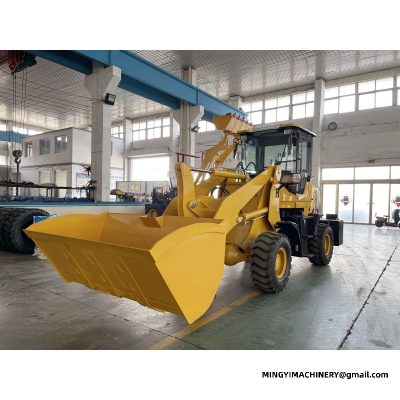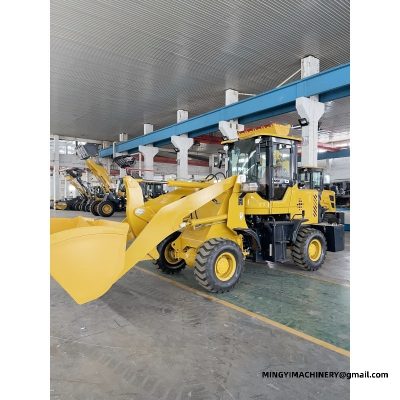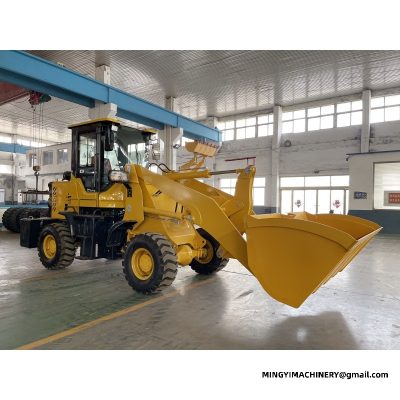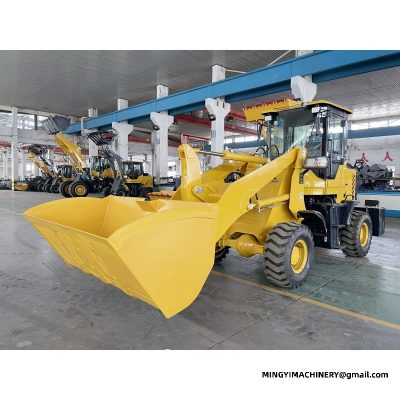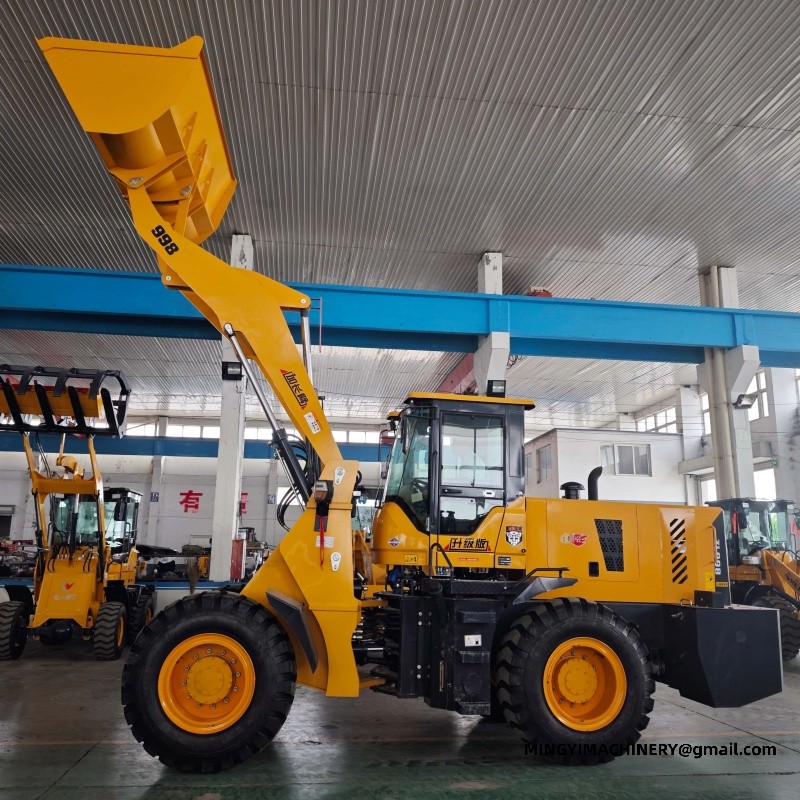
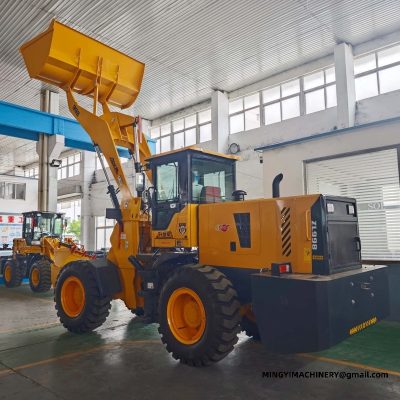
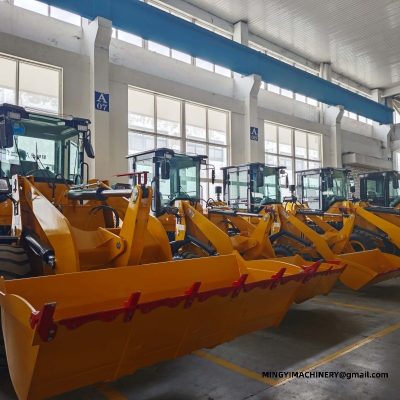
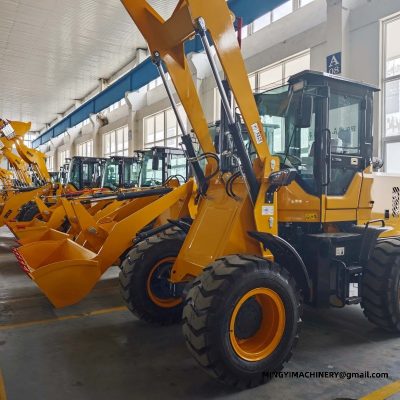
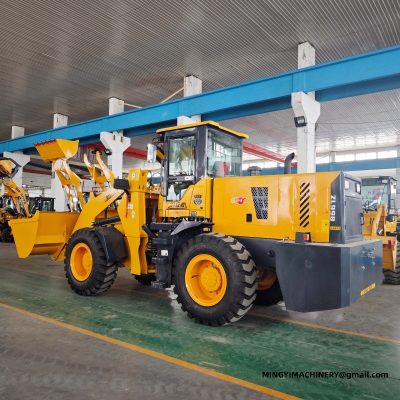
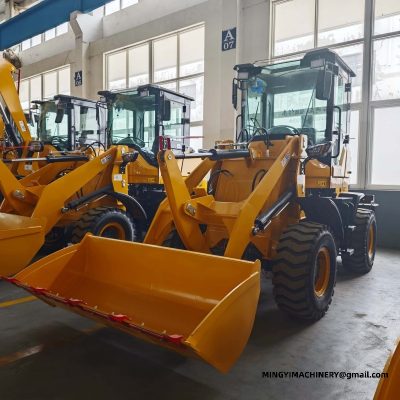
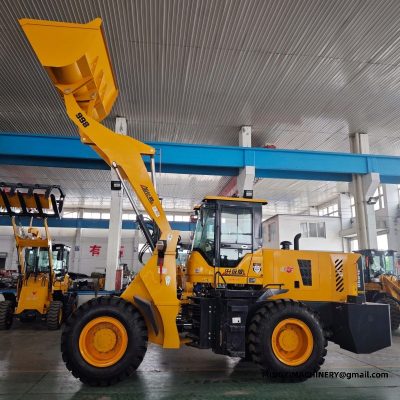
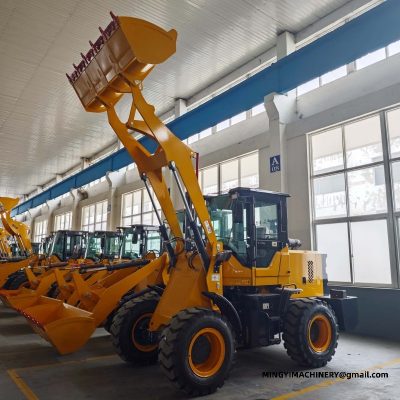
A mining wheel loader that cannot turn in the space you have is a mining wheel loader that cannot work there, whatever its specification says. Access is a hard constraint and it fails silently: track 1.5 m (wheel-side reduction axle); 1.45 m (Isuzu axle) on the heavy-duty 3.2 m low-profile wheel loader against 1.5 m (wheel-side reduction axle); 1.45 m (Isuzu axle) on the heavy-duty 3.2 m small-frame wheel-side reduction wheel loader, footprint 4.1 m against 4.1 m. Once access is settled, the real selection begins — bucket 0.4 m³ or 0.4 m³, dump height 3.2 m or 3.2 m, and the hinge and cross-member steel that decides whether the frame lasts. All of it is set out below.
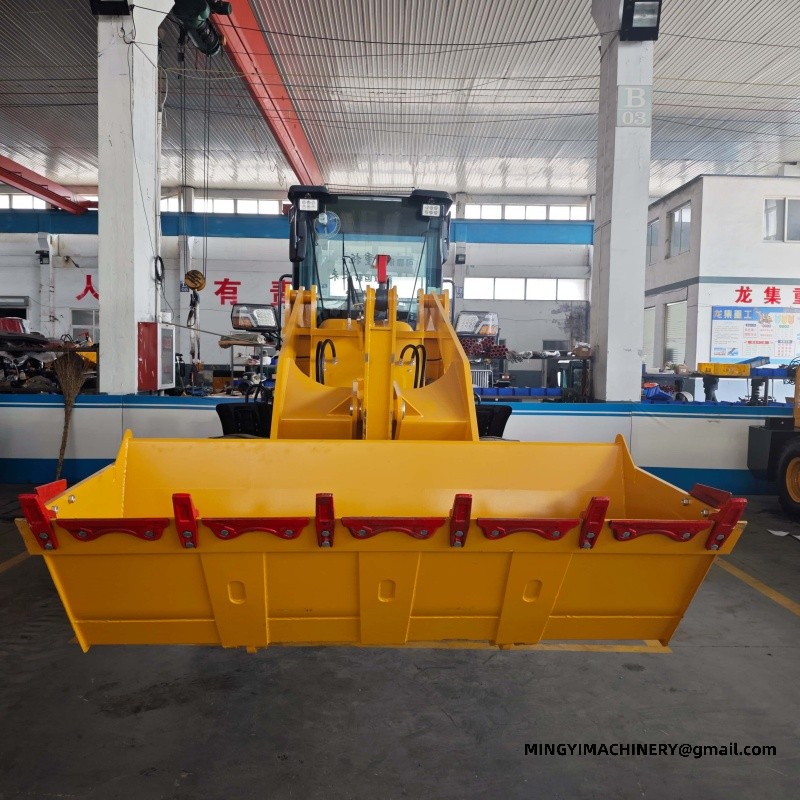
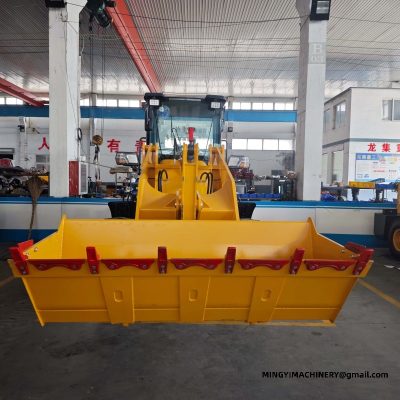
0.4 m³ on the heavy-duty 3.2 m low-profile wheel loader is a volume, and what it means depends entirely on what goes into it. Sand, gravel and crushed rock all weigh differently per cubic metre, and a bucket that is correct for one will overload the frame with another. The frame limit is the cross-member at 30 mm and the hinge plates behind it.
The practical method is to work backwards from the receiving body. If a truck takes four passes from 0.4 m³, it takes three from 0.4 m³ on the heavy-duty 3.8 m small-frame wheel-side reduction wheel loader, and the saving is real only if the loader clears the board — 3.2 m here against 3.8 m. Capacity without clearance is a specification that looks better in a brochure than on a site.
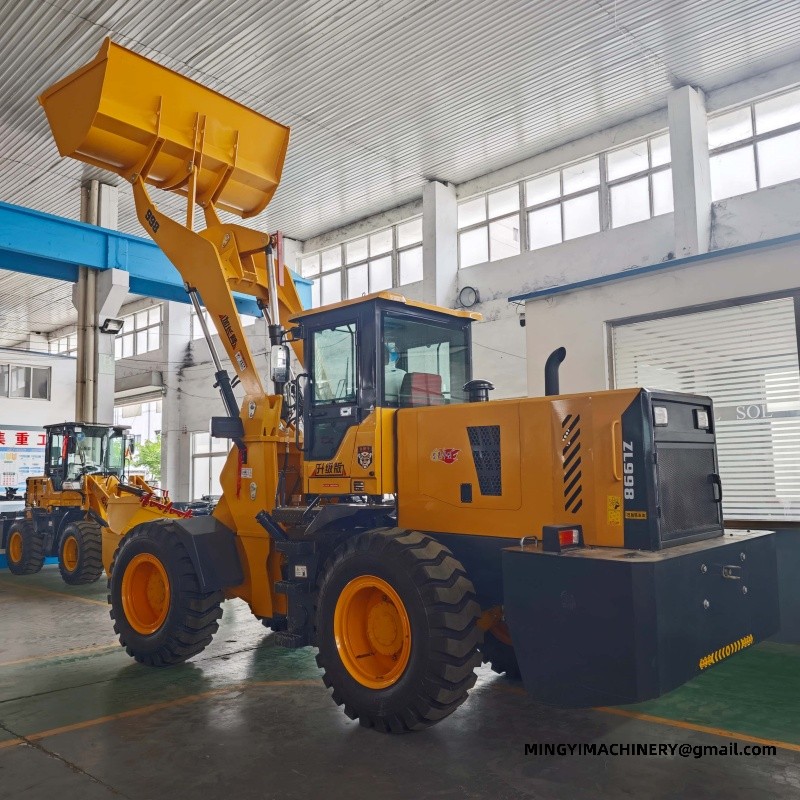
Two loaders can carry the same bucket and behave nothing alike, and the boom is usually why. Compare the heavy-duty 3.2 m low-profile wheel loader with the heavy-duty 3.8 m small-frame wheel-side reduction wheel loader: bucket 0.4 m³ against 0.4 m³, but boom length 2.3 m against 2.61 m and section width 430 mm against 430 mm. The longer arm reaches further and dumps higher; the wider section survives being levered sideways. Both matter, and neither appears in a headline specification.
Wall thickness is the figure that separates a boom engineered for the frame from one merely bolted to it. The heavy-duty 3.2 m low-profile wheel loader runs 25 mm; the heavy-duty 3.8 m small-frame wheel-side reduction wheel loader runs 25 mm. Centre distance — 890 mm against 890 mm — completes the picture, because pin loads fall as spacing rises. If your work involves breaking out from a stockpile face rather than shovelling loose stock, ask for those three numbers before you ask about bucket volume.
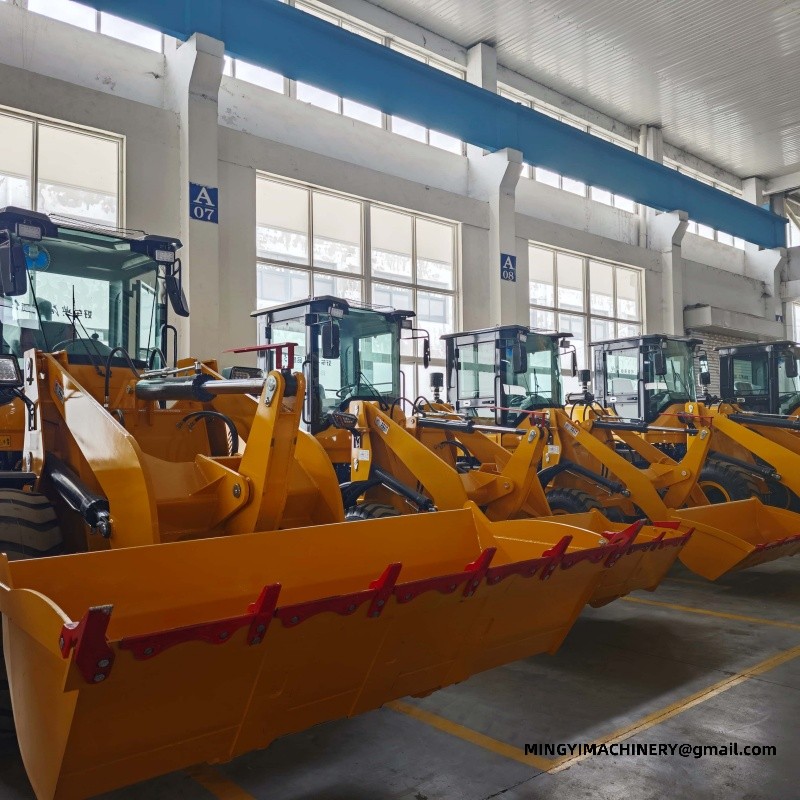
Cooling capacity is sized to the engine's heat rejection, so it appears in the table as a specification rather than a choice: 4100 core (490 engine); 4105 core (4102T engine) on the heavy-duty 3.2 m small-frame wheel-side reduction wheel loader, 4105 core on the light-duty 3.8 m medium-frame wheel-side reduction wheel loader. Where the build offers two engines — the 490 with a 4100 core, the 4102 turbo with a 4105 raised core — the raised core is the one for hot climates, high altitude and any site where fine material hangs in the air.
Practical advice that takes nothing: blow the core out at the end of every shift in dusty work, in the reverse direction to airflow, and check the cap seat before blaming the radiator. On the heavy-duty 3.2 m small-frame wheel-side reduction wheel loader the 4100 core (490 engine); 4105 core (4102T engine) core sits behind a 280 mm high x 800 mm wide rear frame with limited airflow at low engine speed; on the light-duty 3.8 m medium-frame wheel-side reduction wheel loader the 4105 core core is served by the same 25 pump driven circuit. Neither is difficult to keep clean, and both will lose a season to neglect.
| Specification extract — heavy-duty 4.2 m small-frame wheel-side reduction wheel loader | |
|---|---|
| Bucket capacity | 0.4 m³ |
| Dump height | 4.2 m |
| Track width | 1.5 m (wheel-side reduction axle); 1.45 m (Isuzu axle) |
| Boom arm thickness | 25 mm |
| Boom arm width | 500 mm |
| Boom arm length | 3.15 m |
| Boom arm centre distance | 890 mm |
| Cross-member thickness | 30 mm |
| Front hinge plate thickness | 30 mm |
| Rear hinge plate thickness | 20 mm |
| Rear frame section | 280 mm high x 800 mm wide |
| Hydraulic cylinders | centre cylinder 45 / side cylinder 45 |
| Fuel tank | 64.7 L (75# small tank) |
| Battery | 60 Ah (490 engine); 80 Ah (4102 turbo engine) |
| Front wheel to counterweight | 4.25 m |
| Radiator | 4100 core (490 engine); 4105 core (4102T engine) |
| Work pump | 40 pump (490 engine); 1045 pump (4102 turbo engine) |
| Travel pump | 316 pump |
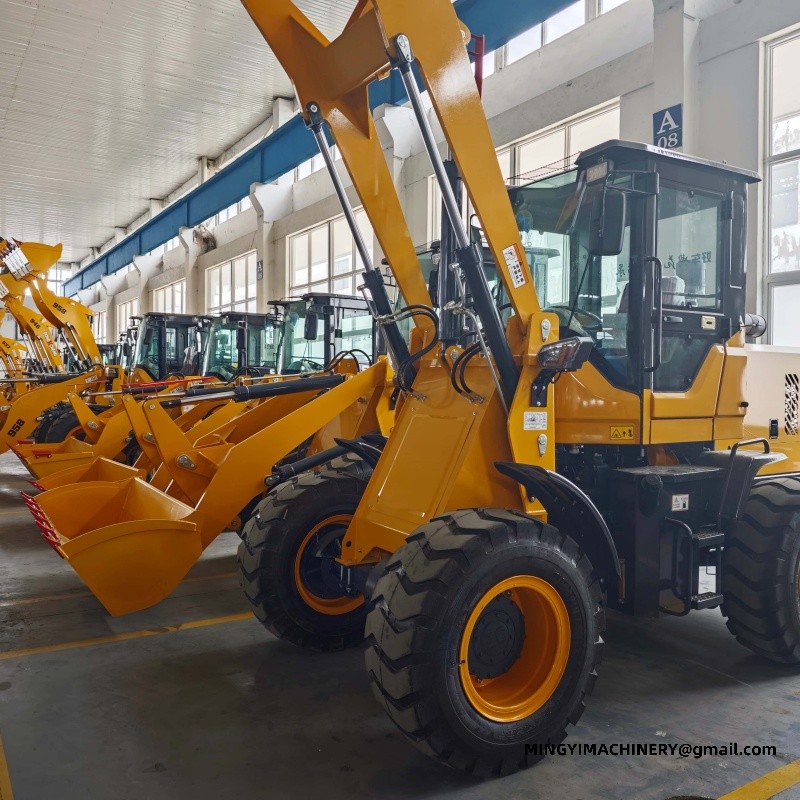
Every loader purchase starts with the thing being loaded into. On this range the choice runs from 3.2 m on the heavy-duty 3.2 m small-frame wheel-side reduction wheel loader to 4.2 m on the heavy-duty 4.2 m small-frame wheel-side reduction wheel loader, and the gap between those two figures is the gap between a machine that feeds a small mixer and one that feeds a highway truck.
Take the measurement at the highest point the bucket must clear, on the near side, with the truck loaded — a suspension that settles under load lowers the board. Then add allowance for the operator's approach angle. The heavy-duty 3.2 m small-frame wheel-side reduction wheel loader at 3.2 m with a 0.4 m³ bucket and a 2.3 m arm is a compact answer; the heavy-duty 4.2 m small-frame wheel-side reduction wheel loader at 4.2 m with 0.4 m³ and a 3.15 m arm is the answer where the board is high.
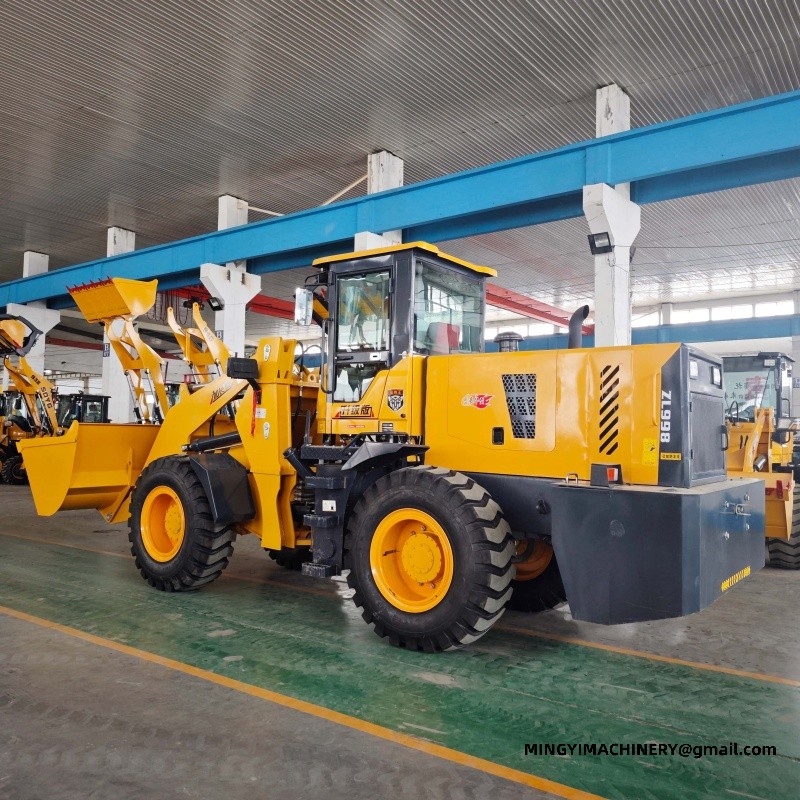
An articulated loader turns by bending in the middle, and the hinge is where that bending happens. Front plate 45 mm, rear plate 30 mm. The front is the thicker of the two on every build in the range, because it carries the boom and the payload directly, while the rear carries the engine and the counterweight through every steering movement and is sized for the twisting those movements produce rather than for the weight alone.
Pin wear is how hinges fail, and it shows up as a machine that wanders and a steering that feels vague. The cross-member is what prevents it: 45 mm holding the two sides of the frame at a fixed distance so the pins stay square. Compare 45 mm on the light-duty 4.2 m medium-frame wheel-side reduction wheel loader and the difference in plate thickness starts to make sense — they are specified together, not separately.
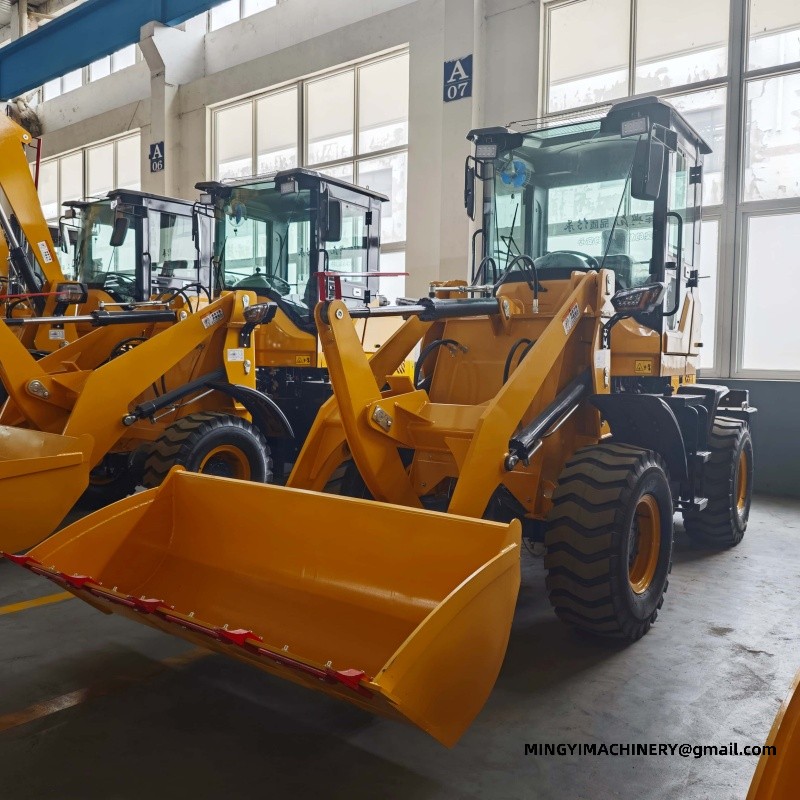
Lift and tilt come from a cylinder set and a pump pair, and both are specified per build. The heavy-duty 3.2 m low-profile wheel loader runs centre cylinder 45 / side cylinder 45 with a 40 pump (490 engine); 1045 pump (4102 turbo engine) work pump and a 316 pump travel pump; the heavy-duty 3.2 m small-frame wheel-side reduction wheel loader runs centre cylinder 45 / side cylinder 45 with a 40 pump (490 engine); 1045 pump (4102 turbo engine) work pump and a 316 pump travel pump. Splitting lift from travel is what keeps boom speed up while the machine is climbing a ramp loaded.
Cycle time is a product, not a published figure: bucket fill, lift height, travel distance and the operator's line all move it. What you can compare honestly is the hardware behind it. A centre cylinder 45 / side cylinder 45 set working a 2.3 m arm to 3.2 m is a different proposition from a centre cylinder 45 / side cylinder 45 set working 2.3 m to 3.2 m. On a short haul the smaller combination wins; over a longer push, or where the bucket is digging rather than shovelling, the larger bore and the 890 mm centre distance earn back the extra seconds of lift.
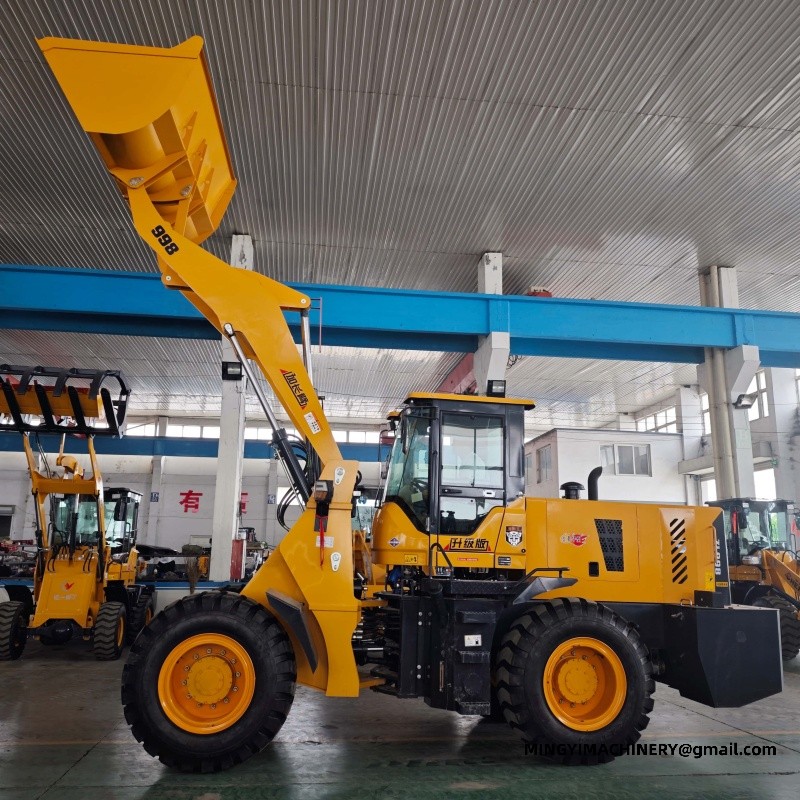
Indoor work changes the priority completely. Height clearance replaces dump height as the first figure, and the machine has to lift its load under a lintel rather than over a truck board. The heavy-duty 4.2 m small-frame wheel-side reduction wheel loader reaches 4.2 m, which is the outdoor figure; what matters indoors is whether that height is usable in the space available.
Length and track matter next. 4.25 m from front wheel to counterweight and 1.5 m (wheel-side reduction axle); 1.45 m (Isuzu axle) of track. Ventilation matters too, which is an engine question rather than a frame one, and the cooling specification is the place it shows: 4100 core (490 engine); 4105 core (4102T engine), sized for air that is not moving. Where the machine works inside, the larger core is the safer specification even in a temperate climate.
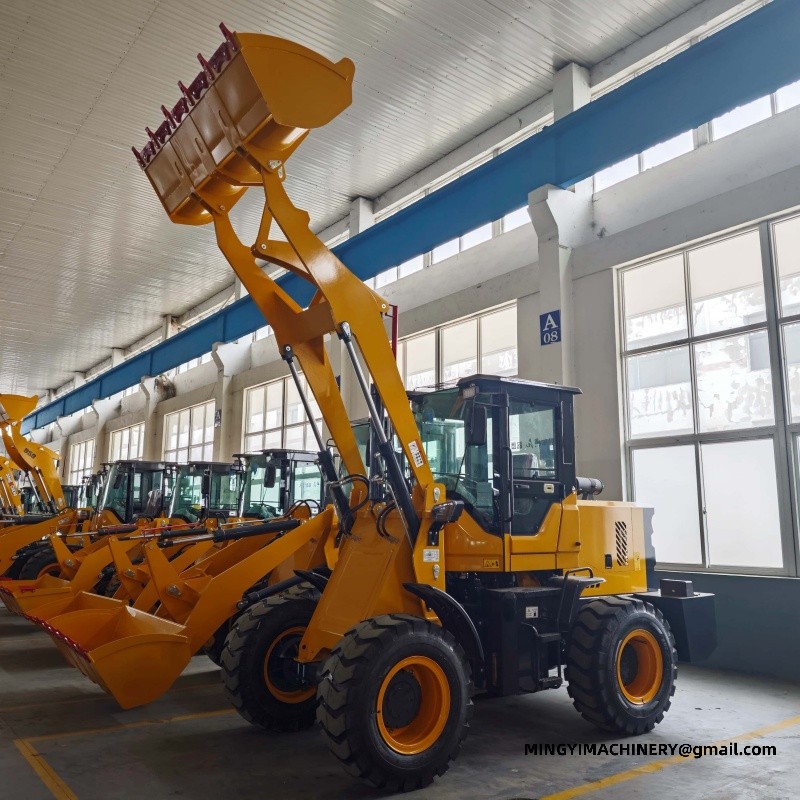
A machine that wanders on the road and feels vague in the turn has worn hinge pins. The plates are 30 mm front and 20 mm rear over a 30 mm cross-member; when the pin bores ovalise, the geometry the frame was built to hold is gone, and no amount of steering adjustment brings it back.
Check it by loading the bucket, holding the machine on a slope and watching the joint while an operator rocks the steering. Movement there is wear; movement at the rear, over the 280 mm high x 800 mm wide section, is a different and more serious problem. Catching the first case takes a set of pins; missing it takes a frame.
What bucket capacity should a mining wheel loader be specified with?
Match it to the material and to the body being filled: 0.4 m³ on the heavy-duty 3.2 m small-frame wheel-side reduction wheel loader against 0.52 m³ on the light-duty 3.5 m medium-frame wheel-side reduction wheel loader. Heavy material limits volume before the frame does.
Can a mining wheel loader take a quick coupler?
Yes, if the coupler is built for the boom section and centre distance — 430 mm wide on 890 mm spacing for the heavy-duty 3.5 m small-frame wheel-side reduction wheel loader.
What should the first service on a mining wheel loader cover?
Torque the hinge pins, grease the 890 mm boom mounts, check the centre cylinder 45 / side cylinder 45 cylinder connections and the 4100 core (490 engine); 4105 core (4102T engine) cooling circuit, then re-check the build figures.
What separates a light build from a heavy build of a mining wheel loader?
Cross-member and rear hinge plate: 30 mm and 20 mm on the heavy-duty 3.2 m low-profile wheel loader, against 45 mm and 30 mm on the light-duty 3.8 m medium-frame wheel-side reduction wheel loader. Boom wall and cylinder bore follow.
Which mining wheel loader build suits site work?
The heavier one, because dump height and hinge steel govern the day: 0.52 m³ at 4.2 m with 30 mm rear hinge plates and a 45 mm cross-member.
Where is the extra steel in a heavier mining wheel loader?
Boom wall 25 mm against 25 mm, front hinge 30 mm against 30 mm, rear hinge 20 mm against 20 mm, cross-member 30 mm against 30 mm.
Is the wheel-side reduction axle worth specifying on a mining wheel loader?
If the ground is soft, rutted or sloped, yes: a 1.6 m track with hub reduction keeps traction where a faster axle would spin. On hard, level ground it is not needed.
Whether the duty is farm, site or stockpile, the mining wheel loader choice comes back to ground, board height and cycle count. Tell us those three and the build follows: axle, radiator, cylinder set and the 0.4 m³ or 0.4 m³ bucket to suit.
Fuel, oil and fluid quality for Mining Wheel Loader: Cooling, Traction and Frame Specification
Fluid quality is a storage problem before it is a machine problem. Water and sediment in a drum will find the injection system of Mining Wheel Loader: Cooling, Traction and Frame Specification eventually, and a settling period is nothing compared with a pump.
Planning the season around Mining Wheel Loader: Cooling, Traction and Frame Specification
Downtime is simplest when it is planned. Booking the service for Mining Wheel Loader: Cooling, Traction and Frame Specification in the quiet part of the season takes nothing from the schedule, while the same work in the busy weeks gives up a day of output every time.
Contact MINGYI Machinery for the current wheel loader lineup, configuration options and a formal specification for your market. E-mail: sales@mingycn.com | LINE (ID): mingyicn
Agricultural Wheel Loader: Access, Attachments and Light Builds · Payloader Machine: What the Name Covers and How to Specify One · Hydraulic Wheel Loader: Pumps, Hoses and Daily Checks · Loaders