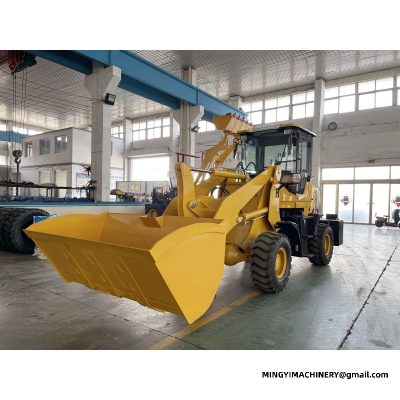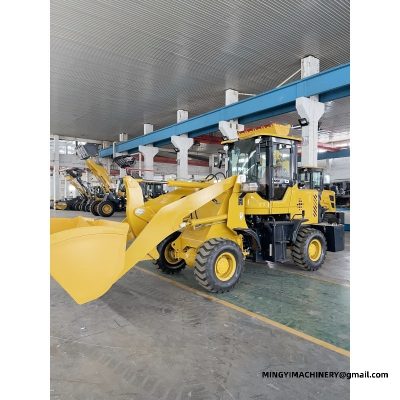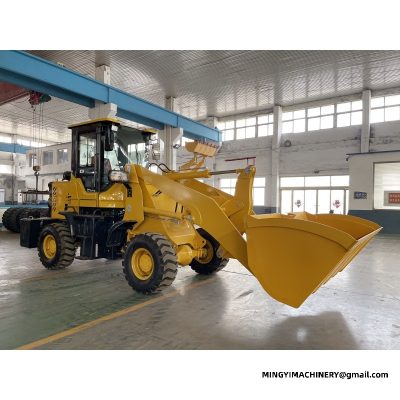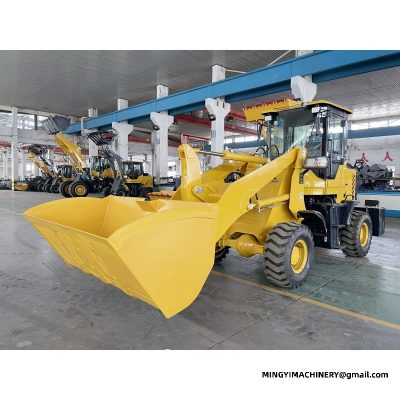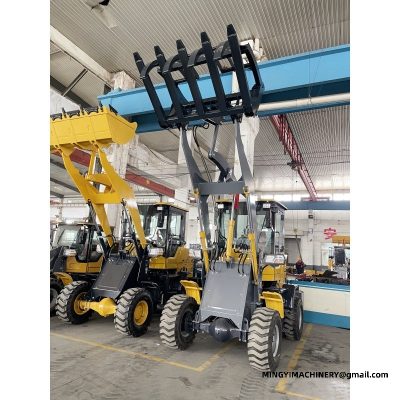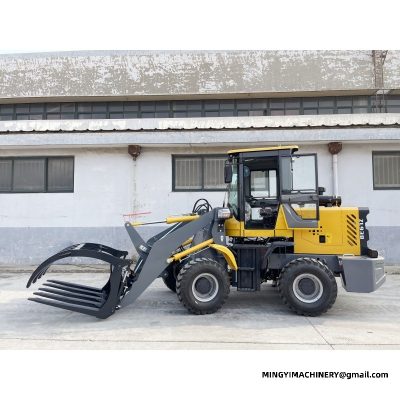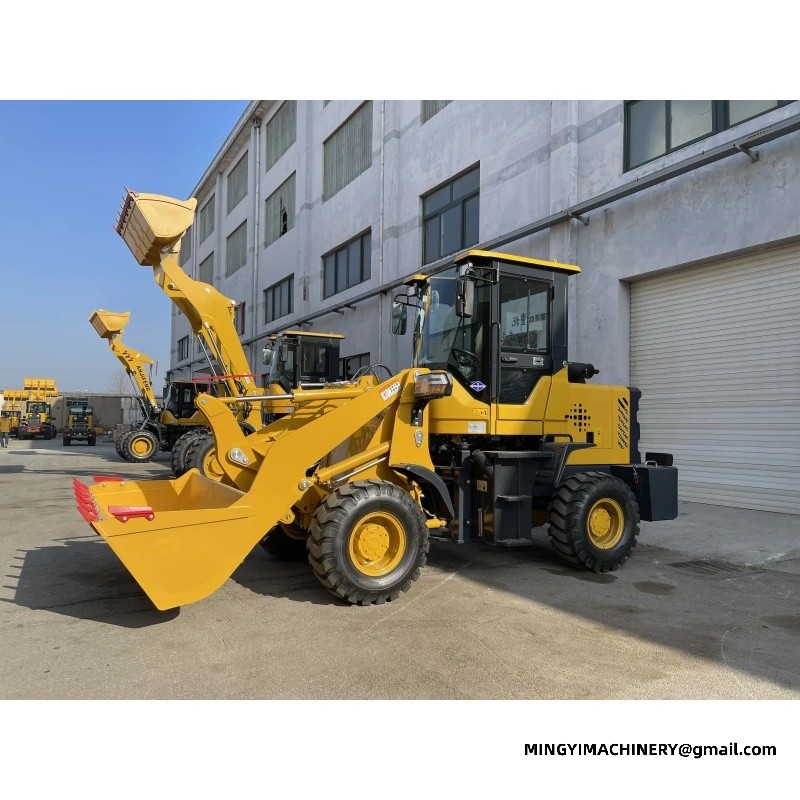
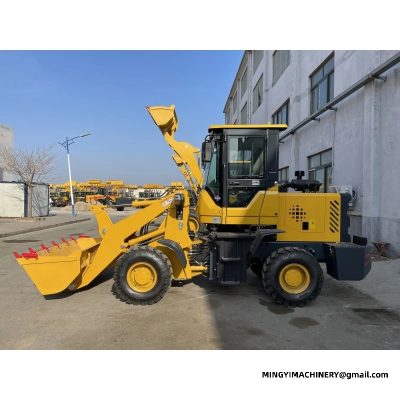
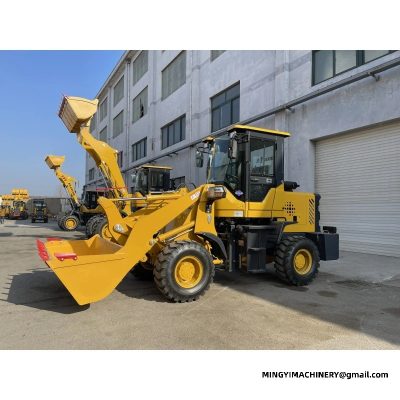
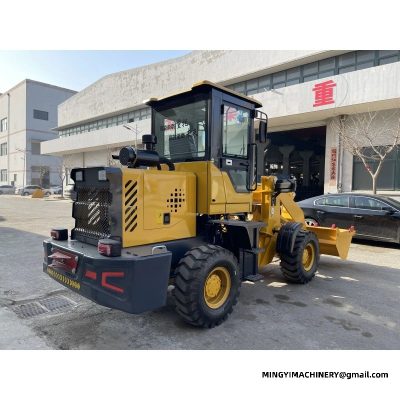
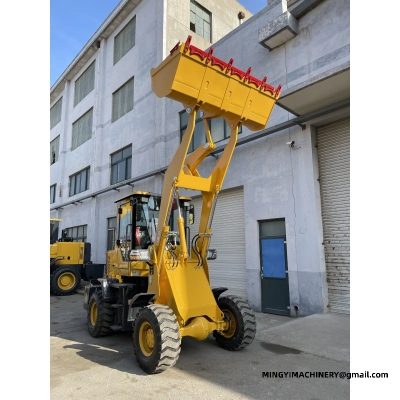
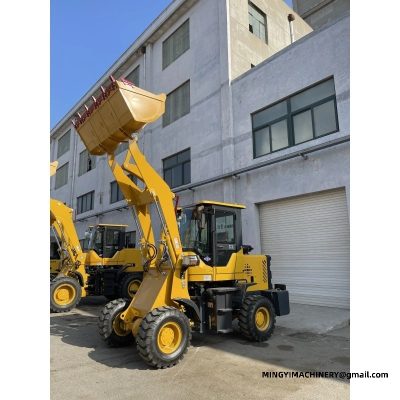
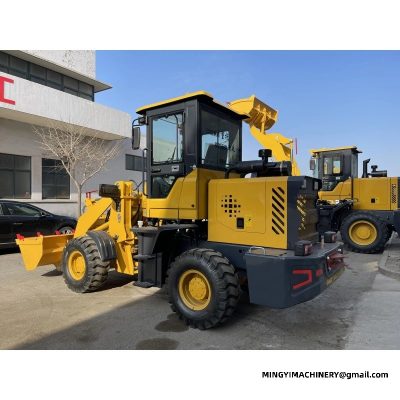
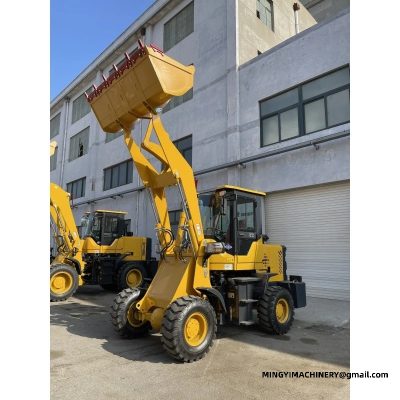
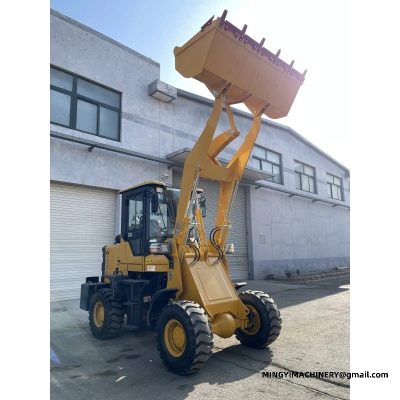
Most hydraulic wheel loader problems are decided before the machine arrives. A bucket that is too big for the material, a dump height that misses the board by a hand's width, a hinge plate thinner than the duty needs — none of those can be fixed afterwards, and all of them are printed on the sheet. This page walks the figures in the order an owner meets them: what the machine carries, where it puts it, what wears first, and what to check before it leaves the factory. Two builds run through the comparisons, the light-duty 3.8 m medium-frame wheel-side reduction wheel loader at 3.8 m and the light-duty 4.2 m medium-frame wheel-side reduction wheel loader at 4.2 m.
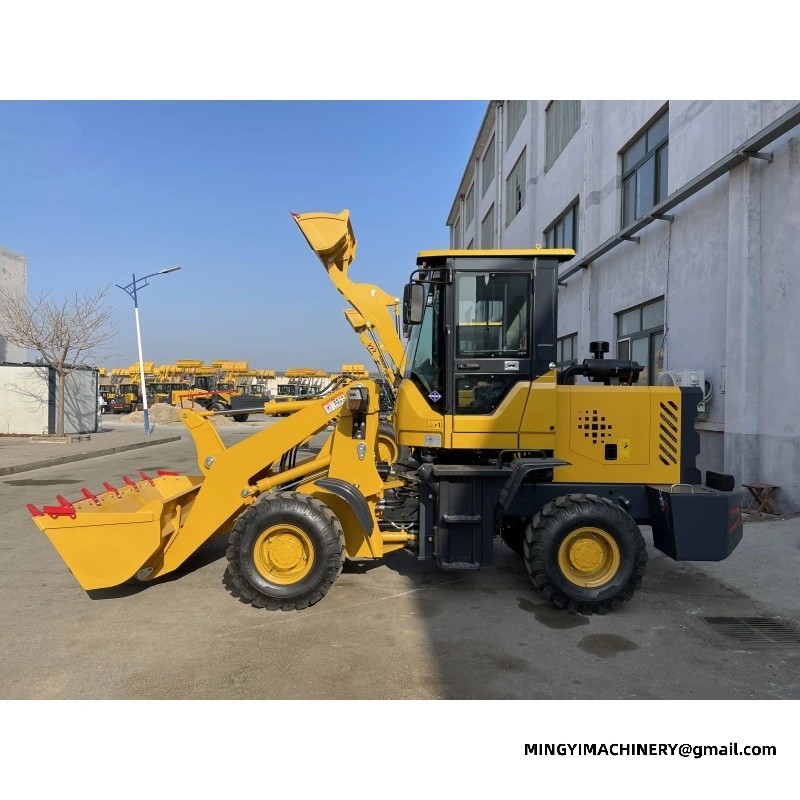
The two axle options on this range are differentiated by track: 1.5 m (wheel-side reduction axle); 1.45 m (Isuzu axle) on the light-duty 3.8 m small-frame wheel-side reduction wheel loader, 1.6 m on the light-duty 4.2 m medium-frame wheel-side reduction wheel loader. Behind the number is a different reduction layout. The Isuzu-pattern bridge is lighter, faster on hard ground and simpler to service. The wheel-side reduction bridge puts the final drive at the hub, which lowers the load on the shafts and raises the torque available at the tyre.
Choose by surface and gradient. On compacted hardstanding and long haul roads the Isuzu-pattern axle is the better machine; on a soft lane, a loading ramp or an uncompacted stockyard, hub reduction is what keeps the machine moving when a wheel would otherwise spin. Track width interacts with it: 1.5 m (wheel-side reduction axle); 1.45 m (Isuzu axle) on the light-duty 3.8 m small-frame wheel-side reduction wheel loader and 1.6 m on the light-duty 4.2 m medium-frame wheel-side reduction wheel loader are the figures to check against your narrowest gate, door or aisle before anything else on the sheet.
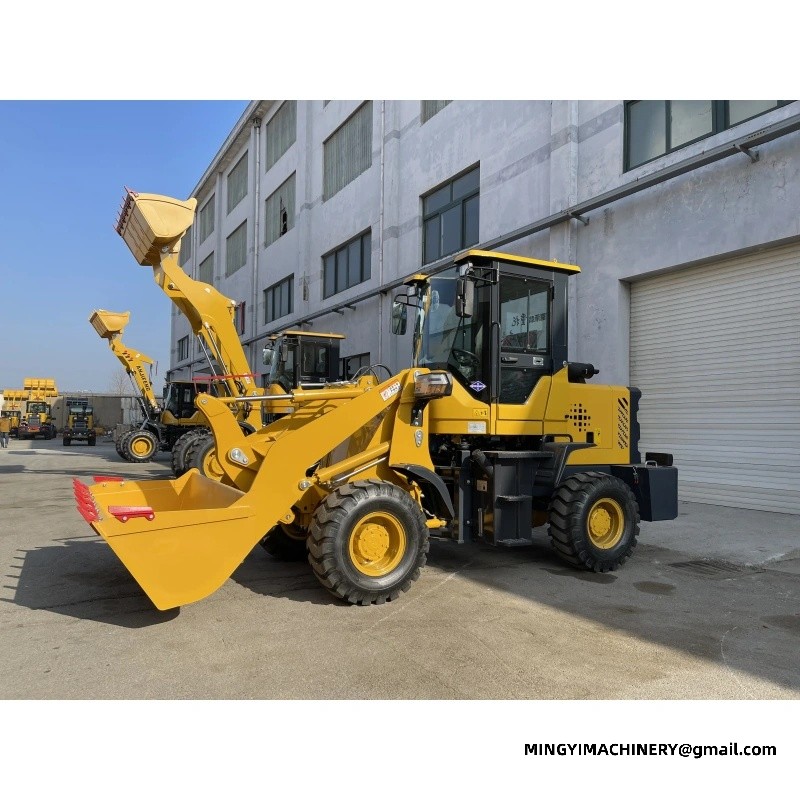
A battery specification is really an engine specification in disguise. 60 Ah (490 engine); 80 Ah (4102 turbo engine) tells you what the engine needs to turn over, and where two figures are listed it tells you the build is offered with more than one engine. The larger figure is the turbo; the smaller, the naturally aspirated option.
Match that to how the machine will be used. Continuous duty — one start, one long shift — is easy on a battery. Intermittent duty — yard work where the engine is stopped every time the operator gets out — is the hard case, and it is where the higher rating earns its keep. The rest of the electrical load is modest, so cranking is what the 60 Ah (490 engine); 80 Ah (4102 turbo engine) figure is really buying.
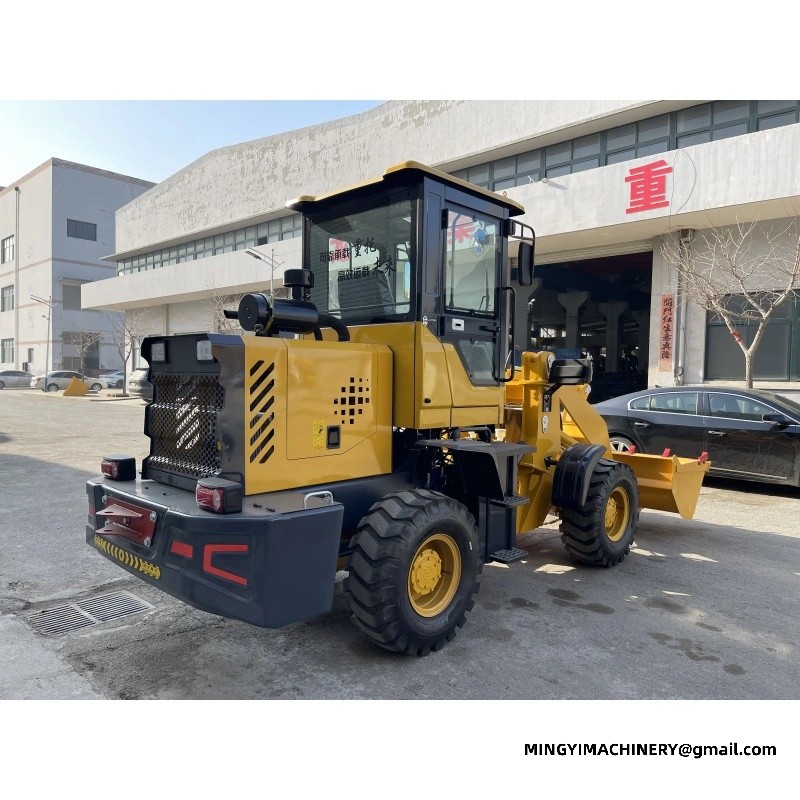
Three things stop a loader mid-shift, and two of them are in the specification. Fuel is the first: 30.8 L (48# large tank, 20.5/70-16 tyres); 24.6 L (48# small tank, 8.25-16 tyres) on the standard 2.4 m low-profile wheel loader. Cooling is the second: 4100 core, and it is the one that announces itself as a gradual loss of power rather than a stoppage, so it gets ignored until the machine is derating every afternoon.
The third is electrical, and it is specified as well: 45 Ah (24 V). Cranking capacity falls with temperature, so a battery that starts a warm engine happily can fail the same engine at dawn in winter. Where the build offers two ratings, the higher one belongs to the turbo option and is worth specifying for cold climates or for machines that start cold and stop often.
| Published build data — light-duty 4.2 m medium-frame wheel-side reduction wheel loader | |
|---|---|
| Bucket capacity | 0.52 m³ |
| Dump height | 4.2 m |
| Track width | 1.6 m |
| Boom arm thickness | 30 mm |
| Boom arm width | 450 mm |
| Boom arm length | 2.9 m |
| Boom arm centre distance | 900 mm |
| Cross-member thickness | 45 mm |
| Front hinge plate thickness | 45 mm |
| Rear hinge plate thickness | 30 mm |
| Rear frame section | 300 mm high x 800 mm wide |
| Hydraulic cylinders | centre cylinder 60 / side cylinder 50 |
| Fuel tank | 70 L (75# large tank) |
| Battery | 80 Ah |
| Front wheel to counterweight | 4.3 m |
| Radiator | 4105 core |
| Work pump | 2063 pump |
| Travel pump | 25 pump |
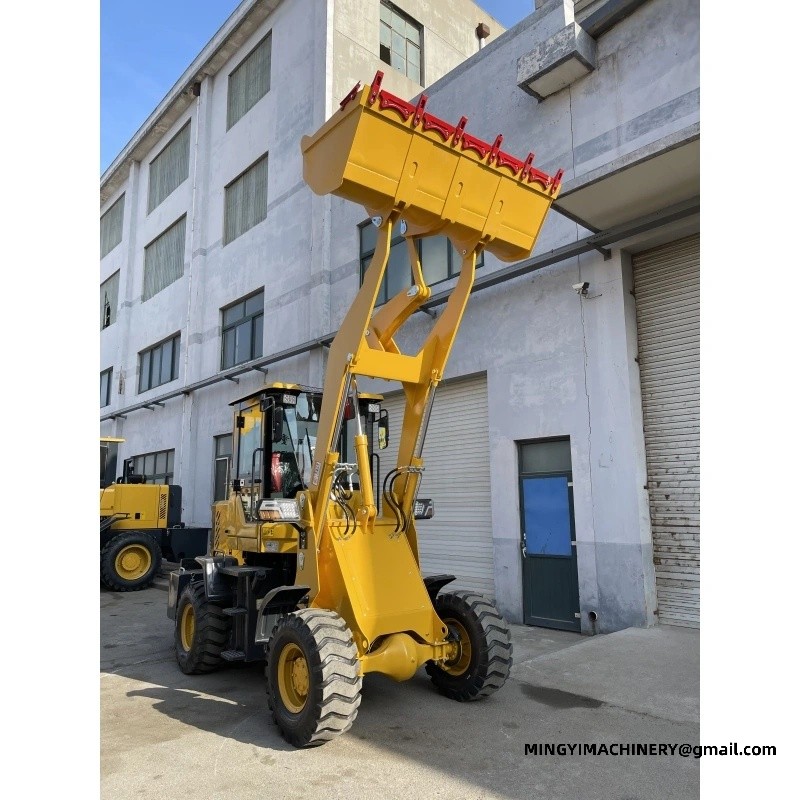
Farm work is governed by access and by the height of the things being filled. The light-duty 3.8 m medium-frame wheel-side reduction wheel loader carries 0.52 m³ to 3.8 m on a 1.6 m track with a 4.3 m footprint; the light-duty 4.2 m medium-frame wheel-side reduction wheel loader carries 0.52 m³ to 4.2 m on 1.6 m with 4.3 m. Gate widths, shed doors and feed-wagon sides are the constraints, and they are all fixed dimensions.
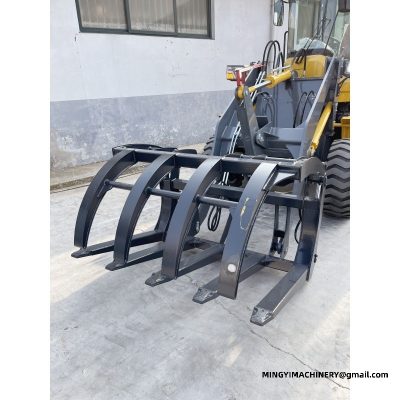
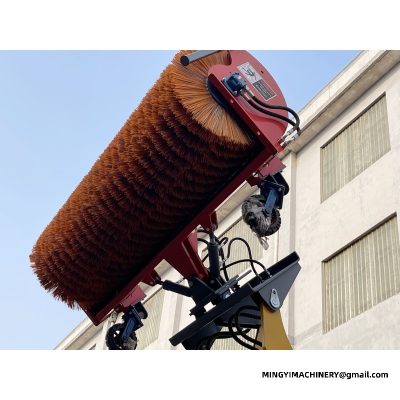
Attachments are where a farm loader earns its second life. Forks for bagged feed and pallets, a bale spear, a grapple for silage, a snow tool for the winter lane. They specification against the boom section, so check 430 mm on the light-duty 3.8 m medium-frame wheel-side reduction wheel loader against 450 mm on the light-duty 4.2 m medium-frame wheel-side reduction wheel loader before ordering, and specify the hydraulic circuit at build time if any of them is hydraulically actuated.
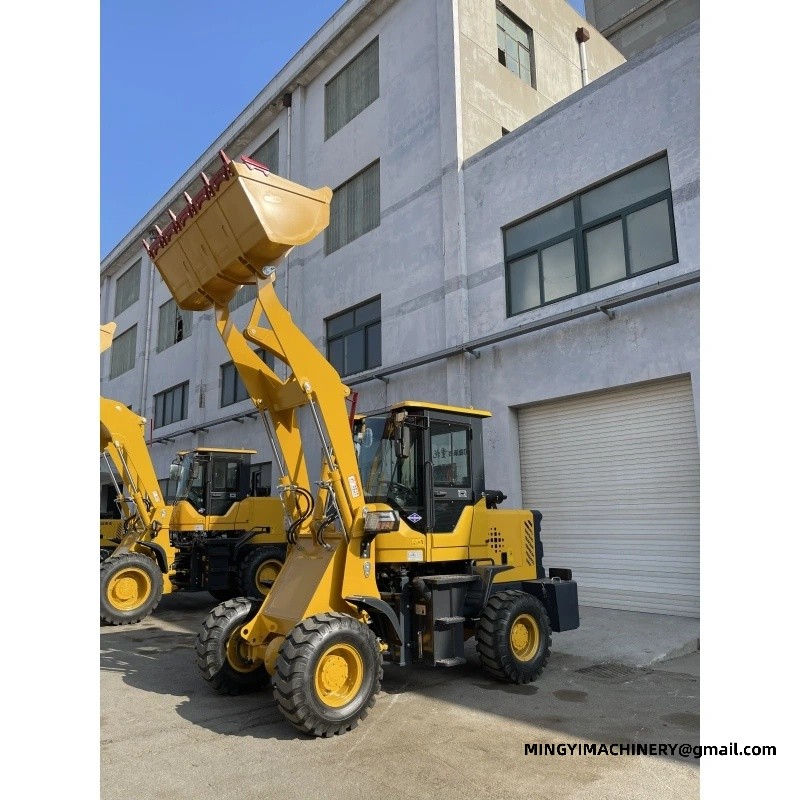
Track width decides two things at once: whether the machine stays upright on a slope, and whether it fits through what you need it to fit through. This build runs 1.5 m (wheel-side reduction axle); 1.45 m (Isuzu axle), against 1.5 m (wheel-side reduction axle); 1.45 m (Isuzu axle) on the light-duty 3.8 m small-frame wheel-side reduction wheel loader. Wider is more stable and needs more room. The choice is made by your narrowest gate, not by your widest heap.
The axle behind the track matters as much as the number. A wheel-side reduction axle puts the final reduction at the hub, which lowers the load on the half-shafts and suits soft, rutted or sandy ground. The alternative pattern suits hard, level surfaces and runs cooler at road speed. Where a build offers both, the hub-reduction figure in 1.5 m (wheel-side reduction axle); 1.45 m (Isuzu axle) is the one for quarry floors and unmade haul roads.
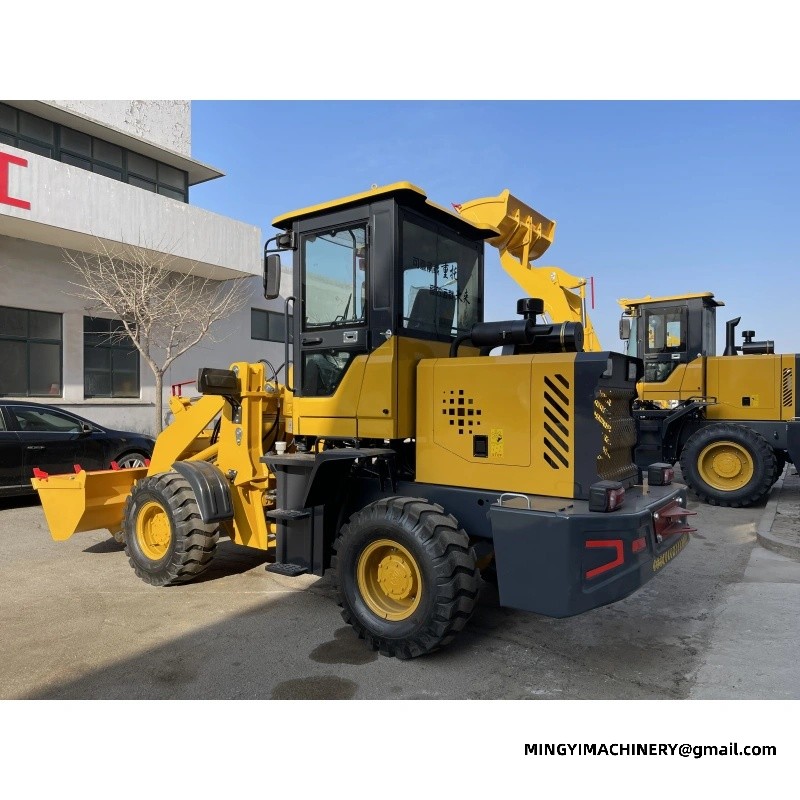
Articulated steering lets a loader turn inside its footprint, and every one of those turns is carried by two plates. Front hinge 25 mm, rear hinge 14 mm. The rear is the heavier because it carries the counterweight and the whole rear frame through every steering input.
Short wheelbase machines articulate harder and more often, which is why plate thickness matters more on a compact build, not less. At 4 m front wheel to counterweight and 1.5 m (wheel-side reduction axle); 1.45 m (Isuzu axle) of track, this machine will spend its life turning in tight spaces; a 25 mm cross-member is what keeps those plates in line while it does.
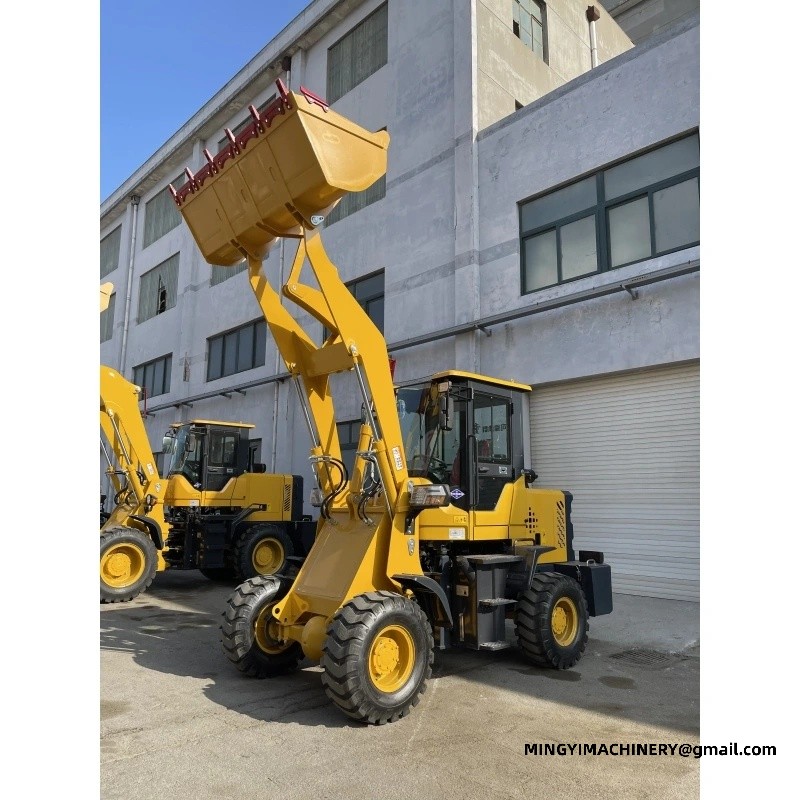
Daily: walk the machine, look at the ground under it, check the coolant level in the 4100 core package, and grease the hinge pins. Weekly: check the cylinder rods for scoring — centre cylinder 40 / side cylinder 40 — and the pins behind the 16 mm front plate for movement. Monthly: check the cross-member and rear frame, 200 mm high x 750 mm wide, for cracks at the weld toes.
None of that needs a workshop, and all of it is what keeps a machine tight. The parts that fail without warning are the ones nobody looks at: the pins, the hoses behind the 32 pump, and the battery terminals on 45 Ah (24 V). A ten-minute walk-round finds all three before they stop the machine.
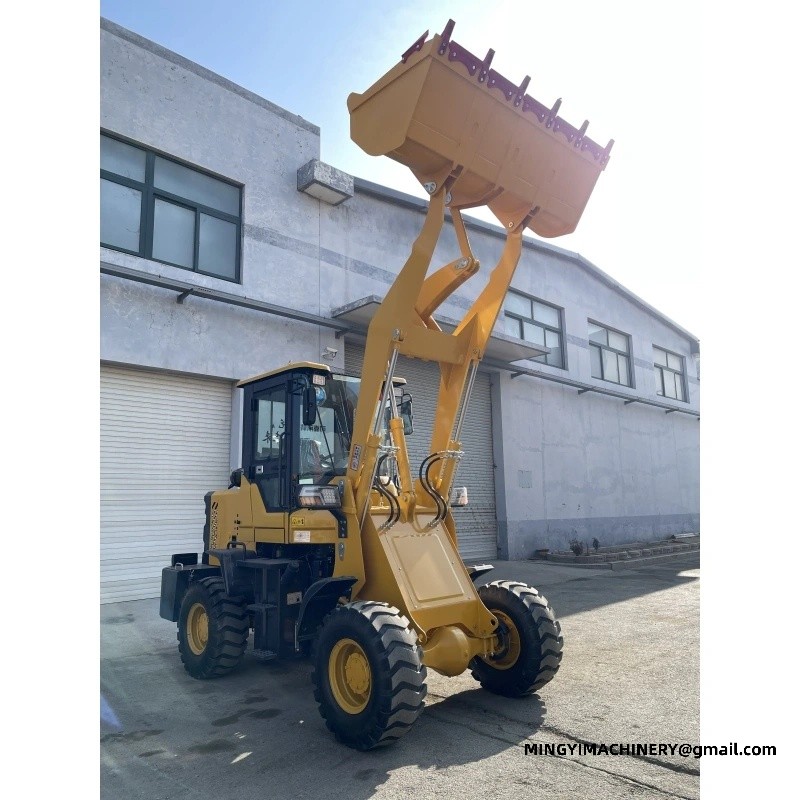
Fleet size falls out of cycle count, and cycle count falls out of bucket volume and dump height together. Take the daily tonnage, divide by what one bucket carries at 0.38 m³, and check that the receiving bodies sit under 3.2 m. If they do not, the calculation is wrong before it starts, and the light-duty 4.2 m medium-frame wheel-side reduction wheel loader at 4.2 m is the machine the fleet actually needs.
Reserve capacity matters more than peak capacity because a fleet runs on its worst day, with one machine down and the face further away. Specifying the whole fleet on one build keeps that simple: same centre cylinder 45 / side cylinder 40, same 40 pump (490 engine); 1045 pump (4102 turbo engine), same 1.5 m (wheel-side reduction axle); 1.45 m (Isuzu axle), so one spare parts bin covers every machine and any operator can take any unit.
What do I check the day a hydraulic wheel loader is delivered?
Bucket 0.38 m³, lift 3.8 m, cylinders centre cylinder 45 / side cylinder 40, track 1.5 m (wheel-side reduction axle); 1.45 m (Isuzu axle) and length 4.1 m. Photograph all five; they settle any later question about what was ordered.
Is a hydraulic wheel loader noisy to work beside?
Engine and hydraulic noise, with the pump a contributor: 40 pump (490 engine); 1045 pump (4102 turbo engine) on this build. A pump that is cavitating is louder than a healthy one, so noise is also a diagnostic.
What does winter duty change on a hydraulic wheel loader?
Cold cranking, oil viscosity and operator access. Battery 60 Ah (490 engine); 80 Ah (4102 turbo engine) covers the first; the 64.7 L (75# small tank) tank covers the longer idling that cold work brings.
What paperwork should come with a hydraulic wheel loader?
A specification listing bucket 0.38 m³, lift 3.2 m, cylinders centre cylinder 45 / side cylinder 40, core 4100 core (490 engine); 4105 core (4102T engine), battery 60 Ah (490 engine); 80 Ah (4102 turbo engine) and track 1.5 m (wheel-side reduction axle); 1.45 m (Isuzu axle). If those six are present, parts and warranty questions are answerable.
Can worn pins on a hydraulic wheel loader be repaired?
Yes, if the plates are sound. Re-machining restores geometry for a while; once the 25 mm cross-member and 280 mm high x 800 mm wide rear section have been flexing, it will not hold.
What makes a used hydraulic wheel loader easy to sell?
A verifiable specification. Bucket 0.38 m³, lift 3.2 m, plates 25 mm and 14 mm and a 25 mm cross-member can all be measured, and a buyer who can check them will pay for the certainty.
Which tyre fitment does a hydraulic wheel loader use?
It follows the tank and axle specification: 70 L (75# large tank) on this build. The larger fitment goes with the larger tank and the heavier duty.
Where the duty is continuous rather than intermittent, the cooling and electrical rows move up the list: 4105 core of core and 80 Ah of battery on the light-duty 3.8 m medium-frame wheel-side reduction wheel loader. Where it is intermittent, the frame rows do. Deciding which case you are in is most of the specification.
A second operator for Hydraulic Wheel Loader: Pumps, Hoses and Daily Checks
A machine that only one person can use is a single point of failure. Training a second operator on Hydraulic Wheel Loader: Pumps, Hoses and Daily Checks takes a day and removes the dependency that otherwise governs holidays, illness and busy weeks.
Planning the season around Hydraulic Wheel Loader: Pumps, Hoses and Daily Checks
Downtime is simplest when it is planned. Booking the service for Hydraulic Wheel Loader: Pumps, Hoses and Daily Checks in the quiet part of the season takes nothing from the schedule, while the same work in the busy weeks gives up a day of output every time.
Reading the early symptoms on Hydraulic Wheel Loader: Pumps, Hoses and Daily Checks
Operators notice things first because they hear the machine every day. Encouraging the person on Hydraulic Wheel Loader: Pumps, Hoses and Daily Checks to report small changes, and acting on them, is the most effective maintenance programme there is.
Moving Hydraulic Wheel Loader: Pumps, Hoses and Daily Checks between sites
Travel time is not working time, and it should be planned as its own item. The hours spent moving Hydraulic Wheel Loader: Pumps, Hoses and Daily Checks between jobs are hours not worked, and a trailer that matches the machine reduces them every single trip.
Contact MINGYI Machinery for the current wheel loader lineup, configuration options and a formal specification for your market. E-mail: sales@mingycn.com | LINE (ID): mingyicn
Wheel Loader Manufacturer: Questions to Ask the Factory · Wheel Loader Factory China: Build Records and Traceability · Wheel Loader for Aggregate Yard: Stockpiles and Haul Cycles · Wheel Loader