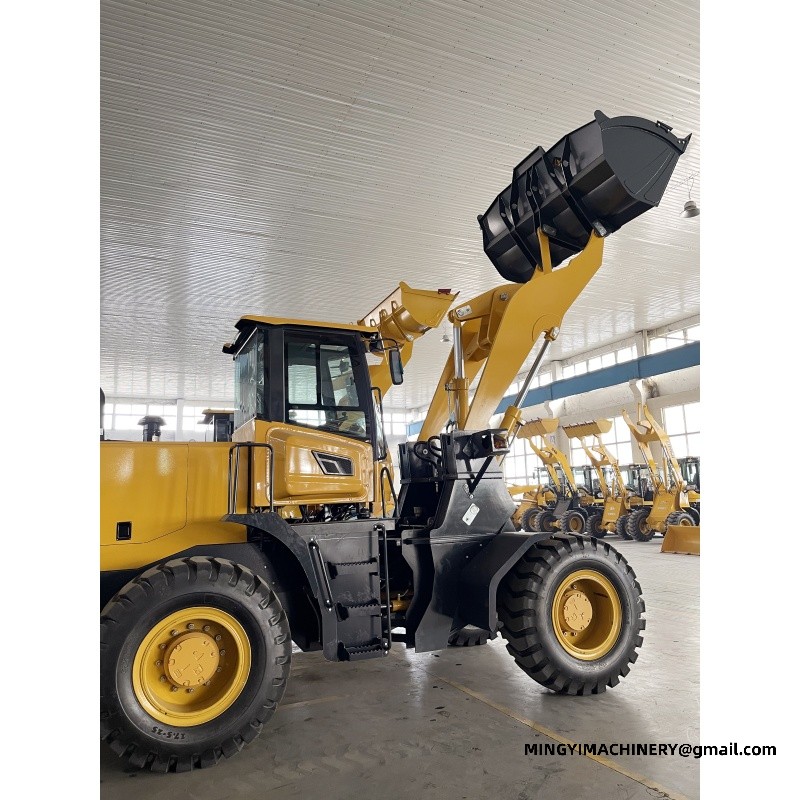
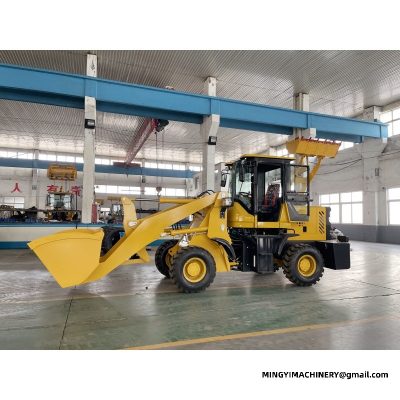
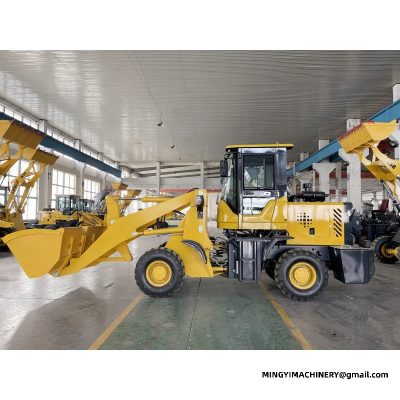
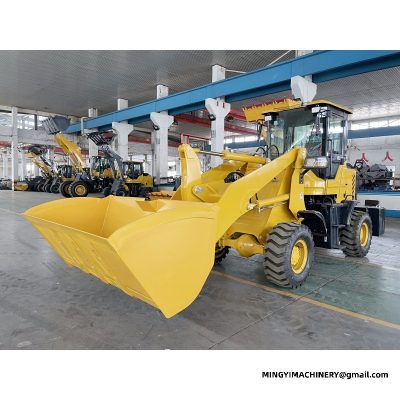
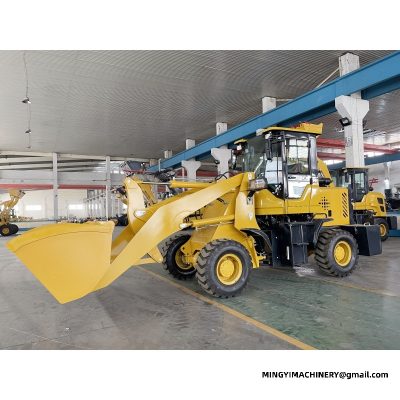
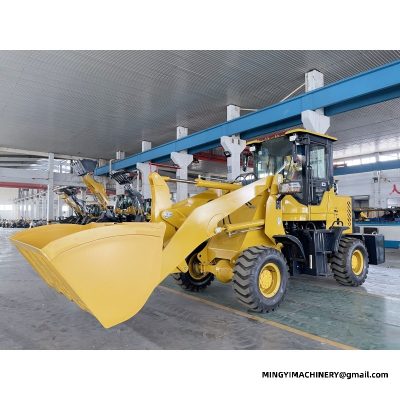
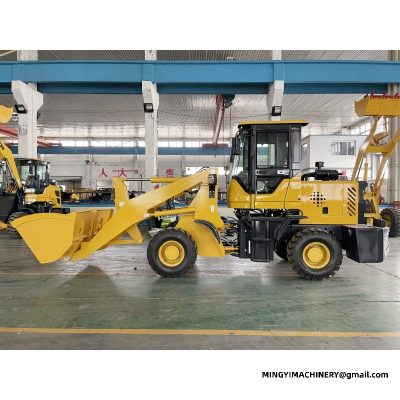
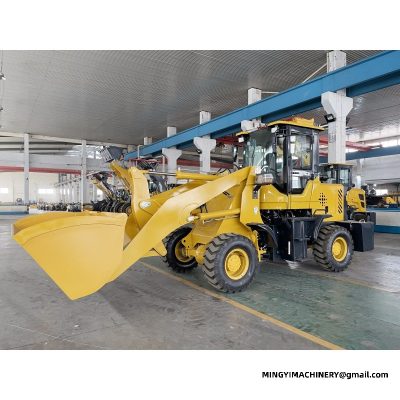
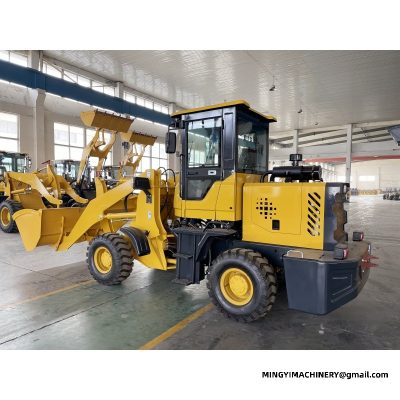
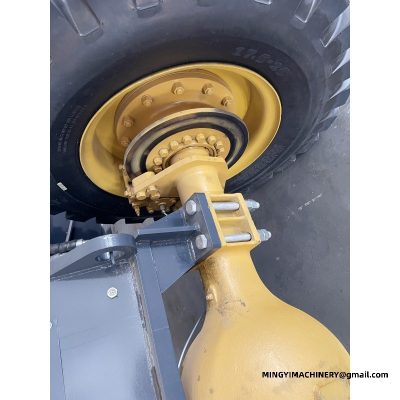
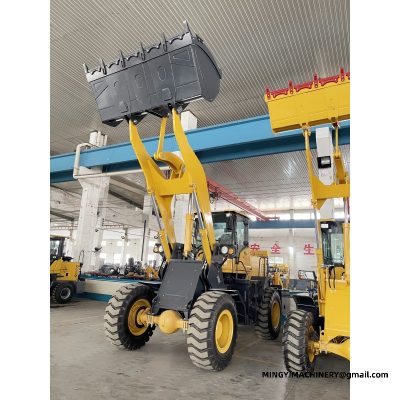
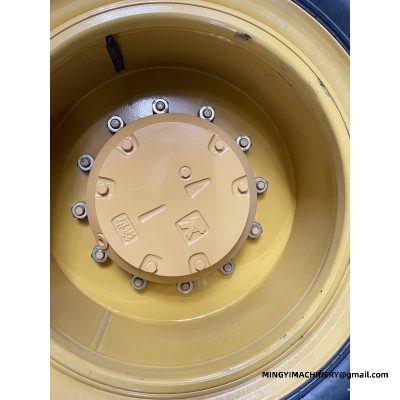
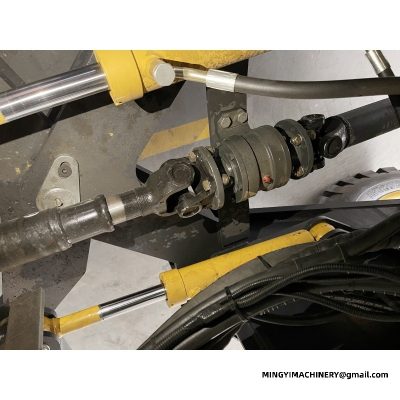
Everything on a wheel loader manufacturer is a compromise, and the sheet shows which one was made. Reach against stability. Capacity against weight. Speed against heat. The heavy-duty 4.5 m medium-frame wheel-side reduction wheel loader runs a 3.35 m arm with a 30 mm wall and 960 mm of spacing behind a 0.65 m³ bucket; the standard 2.8 m low-profile wheel loader runs 2.05 m, 20 mm and 680 mm behind 0.3 m³. Neither is the better machine in the abstract. This page is about reading those trade-offs against your own ground, your own bodies and your own shift pattern.
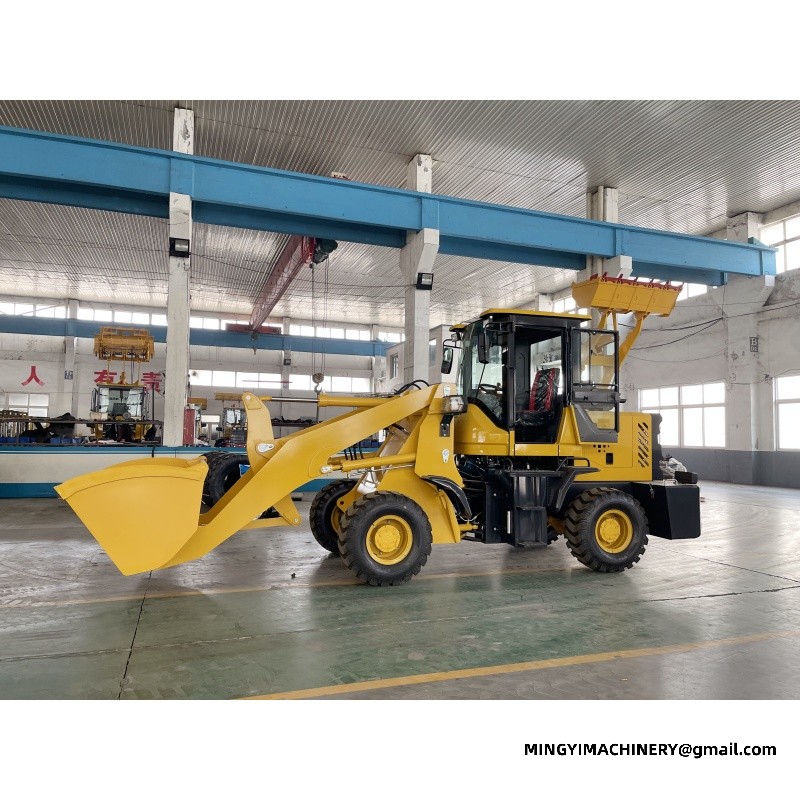
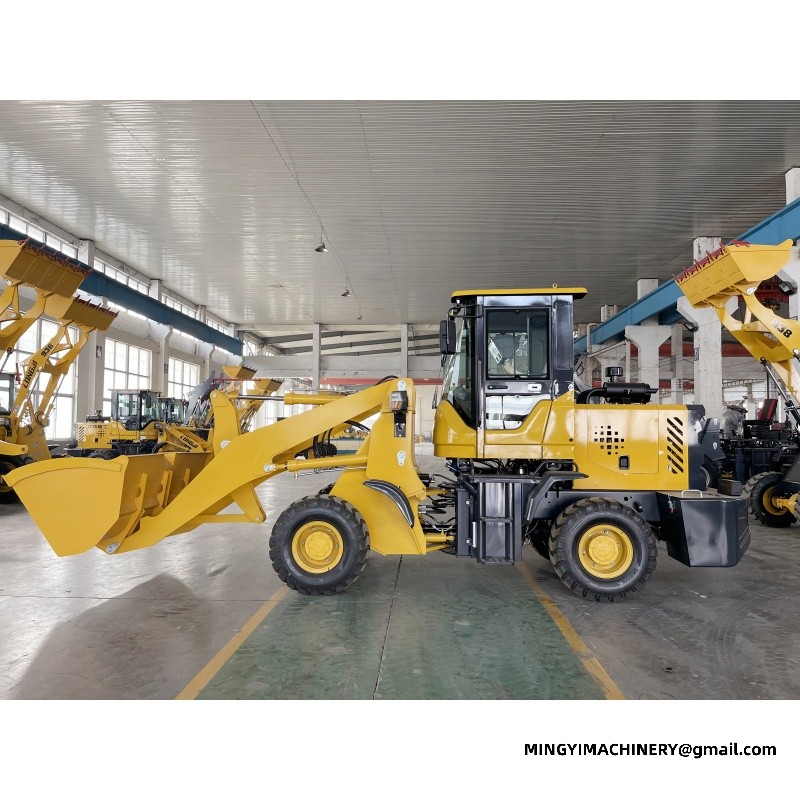
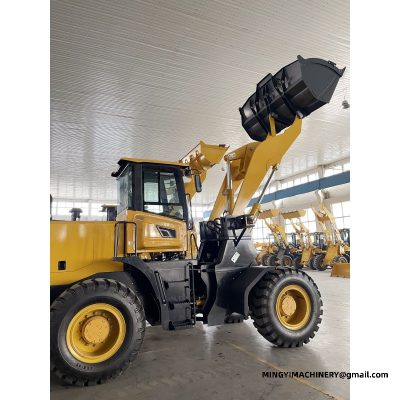
Two loaders can carry the same bucket and behave nothing alike, and the boom is usually why. Compare the heavy-duty 4.5 m medium-frame wheel-side reduction wheel loader with the standard 2.8 m low-profile wheel loader: bucket 0.65 m³ against 0.3 m³, but boom length 3.35 m against 2.05 m and section width 520 mm against 300 mm. The longer arm reaches further and dumps higher; the wider section survives being levered sideways. Both matter, and neither appears in a headline specification.
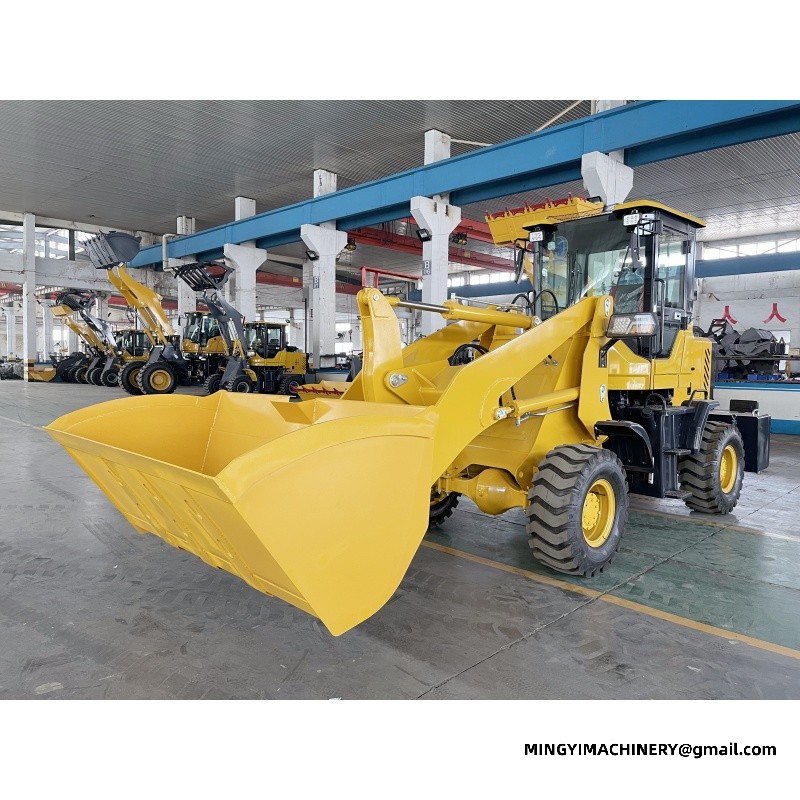
Wall thickness is the figure that separates a boom engineered for the frame from one merely bolted to it. The heavy-duty 4.5 m medium-frame wheel-side reduction wheel loader runs 30 mm; the standard 2.8 m low-profile wheel loader runs 20 mm. Centre distance — 960 mm against 680 mm — completes the picture, because pin loads fall as spacing rises. If your work involves breaking out from a stockpile face rather than shovelling loose stock, ask for those three numbers before you ask about bucket volume.
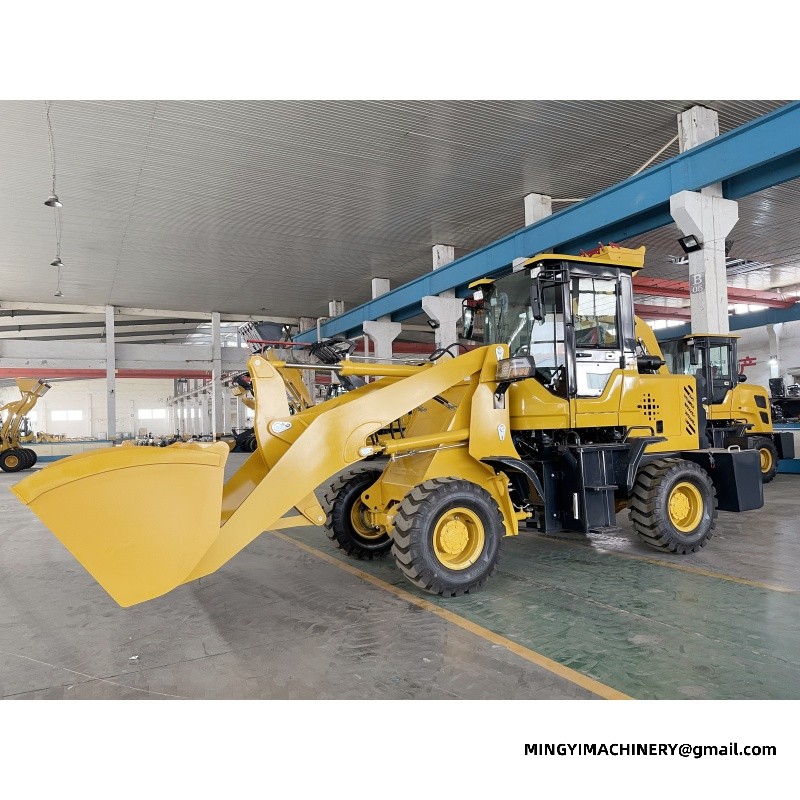
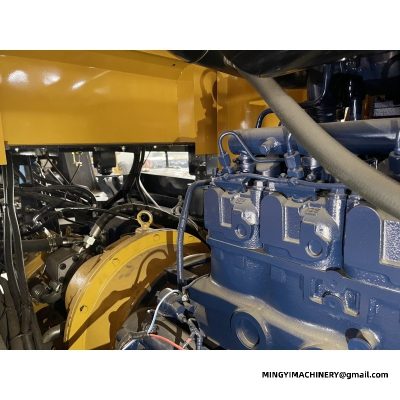
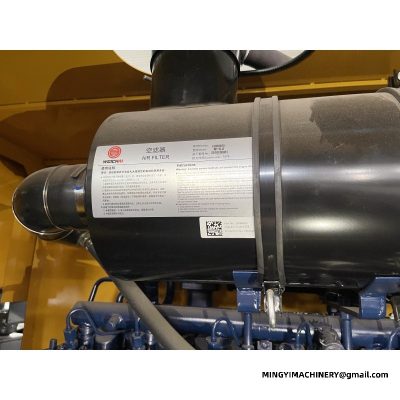
Airborne dust is the hardest thing a cooling system has to deal with, because it blocks the fin passages from the outside while the engine keeps producing heat. Core size is the buffer: 4100 core (490 engine); 4105 core (4102T engine) here against 4105 core on the light-duty 3.5 m medium-frame wheel-side reduction wheel loader. Screen area and access for cleaning matter as much as volume, so ask how the core is mounted before asking how big it is.
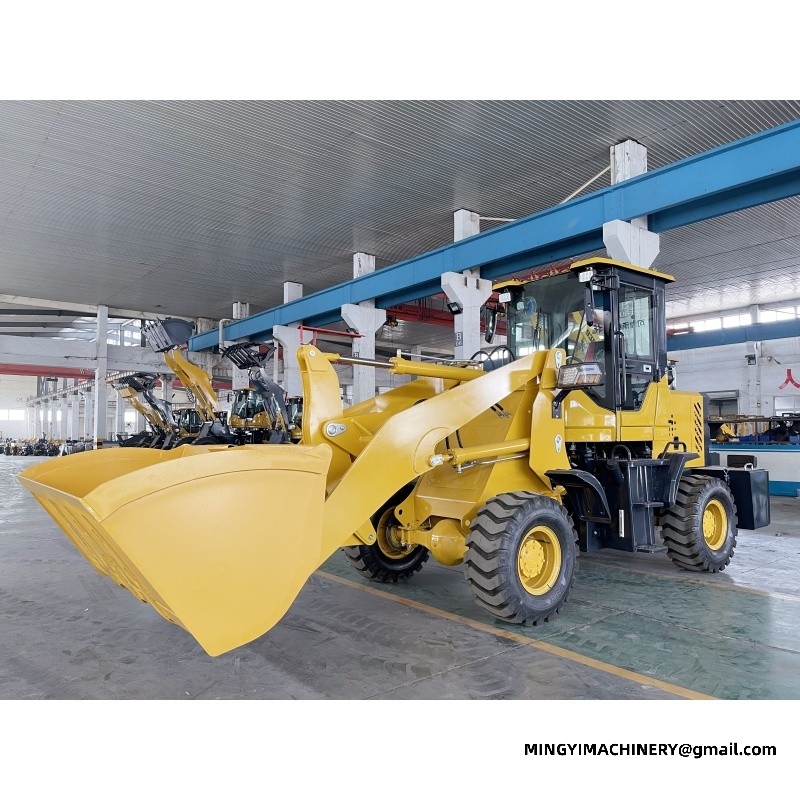
Work pumps generate heat too, not only the engine. This build runs 40 pump (490 engine); 1045 pump (4102 turbo engine) alongside 316 pump, and sustained hydraulic work in a hot climate adds load that the radiator was not sized for on a temperate machine. Where the duty is continuous rather than intermittent — a stockpile that never stops rather than a site that loads three trucks an hour — specify the larger core even if the engine is the same.
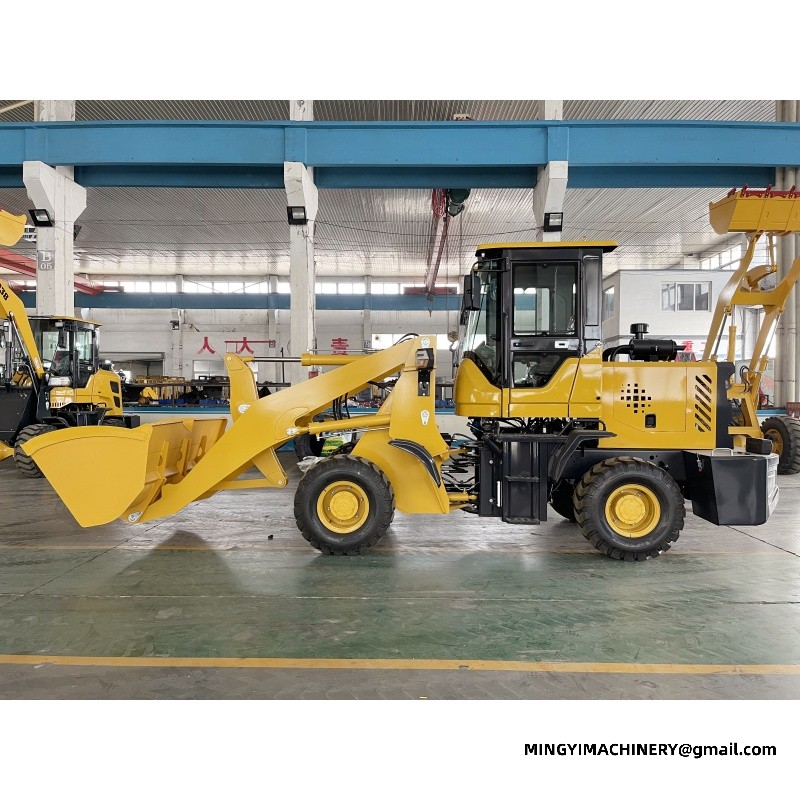
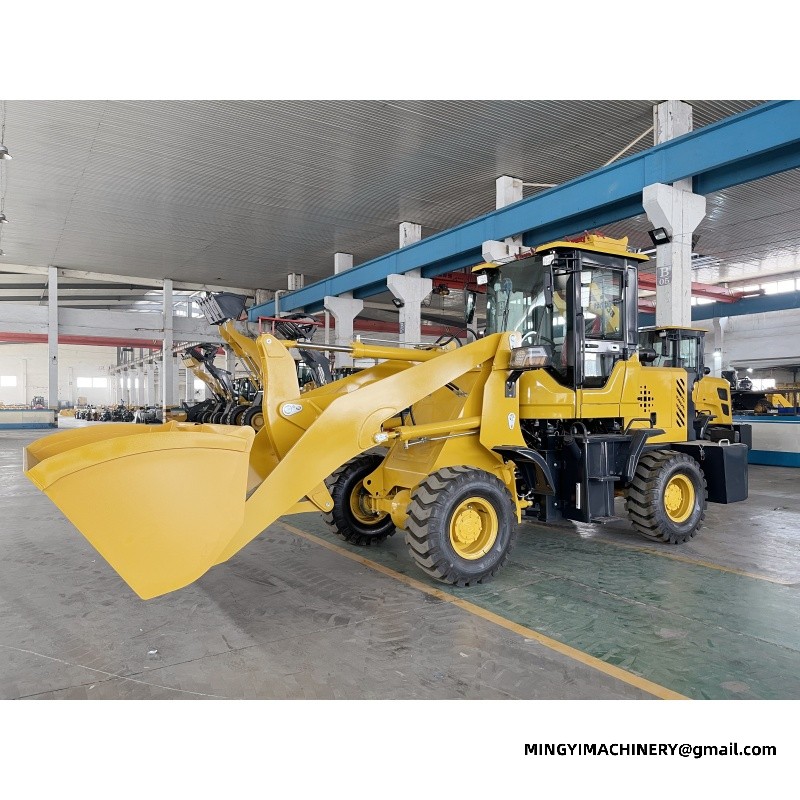
Battery capacity appears in the table as 80 Ah for the heavy-duty 4.5 m medium-frame wheel-side reduction wheel loader and 45 Ah (24 V) for the standard 2.8 m low-profile wheel loader. On builds with two engine options the two figures track the engines: the naturally aspirated unit cranks on less, the turbo needs more, and the 24 V system exists precisely because cranking a turbo diesel at minus ten needs the extra headroom.
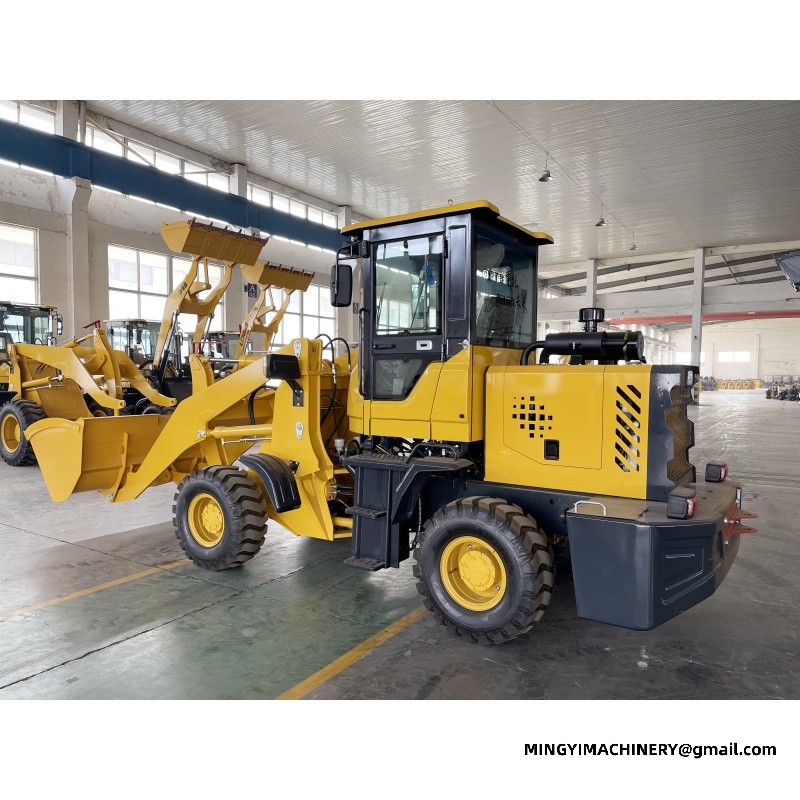
What buyers should confirm before dispatch is not the capacity but the condition and the connections. Machines ship with batteries disconnected and boxed, so the first start is also the first check of every terminal. On the heavy-duty 4.5 m medium-frame wheel-side reduction wheel loader that pack feeds the 4105 core cooling circuit's fan drive and the instrument cluster; on the standard 2.8 m low-profile wheel loader it feeds 4100 core and the same cluster. A marginal earth shows up as a slow crank in winter and as gauge flicker in summer.
| Specification extract — heavy-duty 3.2 m small-frame wheel-side reduction wheel loader | |
|---|---|
| Bucket capacity | 0.4 m³ |
| Dump height | 3.2 m |
| Track width | 1.5 m (wheel-side reduction axle); 1.45 m (Isuzu axle) |
| Boom arm thickness | 25 mm |
| Boom arm width | 430 mm |
| Boom arm length | 2.3 m |
| Boom arm centre distance | 890 mm |
| Cross-member thickness | 30 mm |
| Front hinge plate thickness | 30 mm |
| Rear hinge plate thickness | 20 mm |
| Rear frame section | 280 mm high x 800 mm wide |
| Hydraulic cylinders | centre cylinder 45 / side cylinder 45 |
| Fuel tank | 64.7 L (75# small tank) |
| Battery | 60 Ah (490 engine); 80 Ah (4102 turbo engine) |
| Front wheel to counterweight | 4.1 m |
| Radiator | 4100 core (490 engine); 4105 core (4102T engine) |
| Work pump | 40 pump (490 engine); 1045 pump (4102 turbo engine) |
| Travel pump | 316 pump |
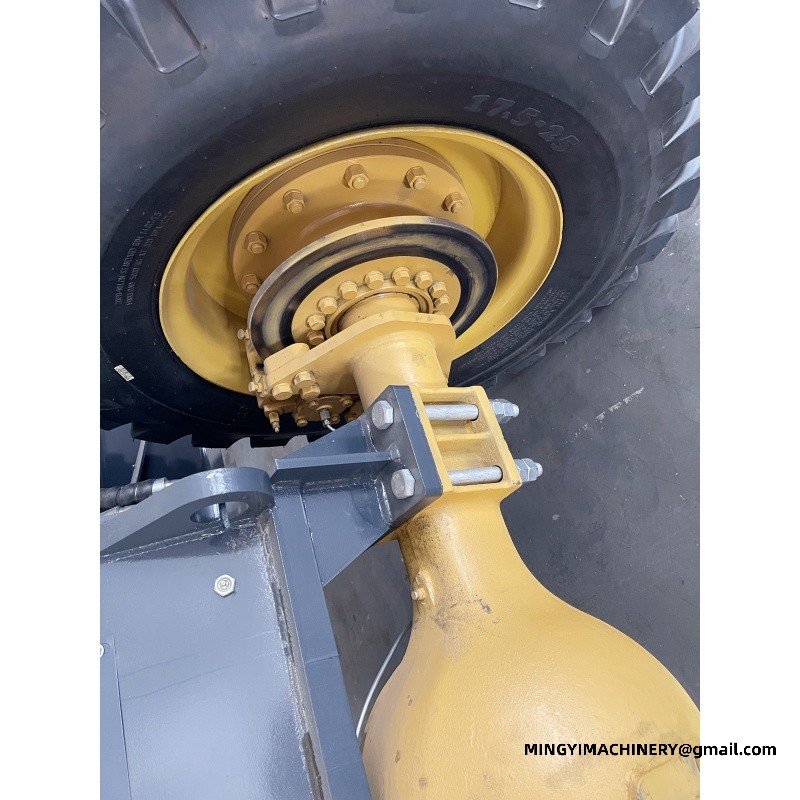
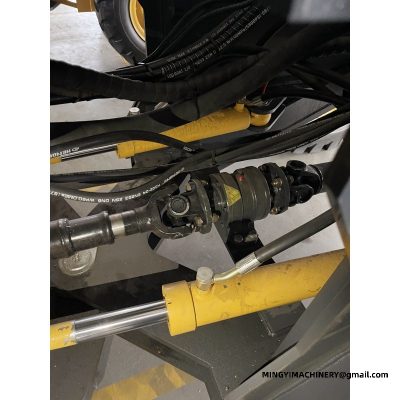
Relief pressure is only half the story; the other half is lever geometry, and lever geometry is decided by the boom and hinge dimensions. The heavy-duty 4.5 m medium-frame wheel-side reduction wheel loader pairs a centre cylinder 60 / side cylinder 50 cylinder set with a 960 mm boom centre distance and a 3.35 m arm; the standard 2.8 m low-profile wheel loader pairs centre cylinder 45 / side cylinder 40 with a 680 mm spacing and a 2.05 m arm. Wider spacing means the cylinders work through a better lever, which is how a bigger bucket is lifted without simply raising system pressure and heat.
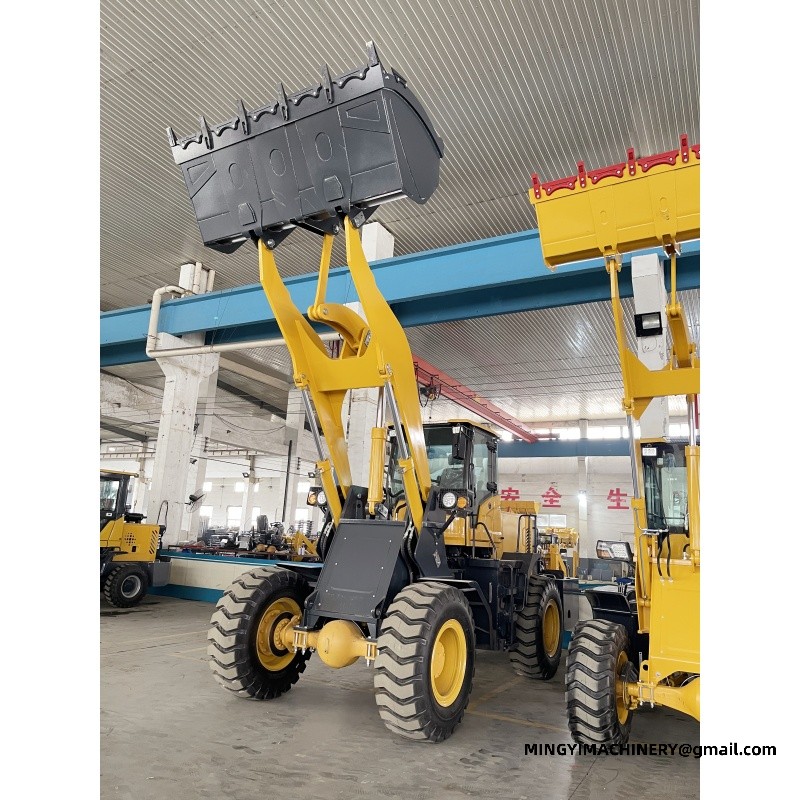
Pump pairing is the second half. Work pump and travel pump are separate circuits on both machines — 2063 pump and 25 pump on the heavy-duty 4.5 m medium-frame wheel-side reduction wheel loader, 32 pump and 316 pump on the standard 2.8 m low-profile wheel loader — so steering and drive do not steal flow from the boom at the top of a lift. If you intend to run hydraulically actuated attachments, a grapple or a four-in-one bucket, order the third circuit at build time; retrofitting a valve block and plumbing in the field takes far more than specifying it on the order.
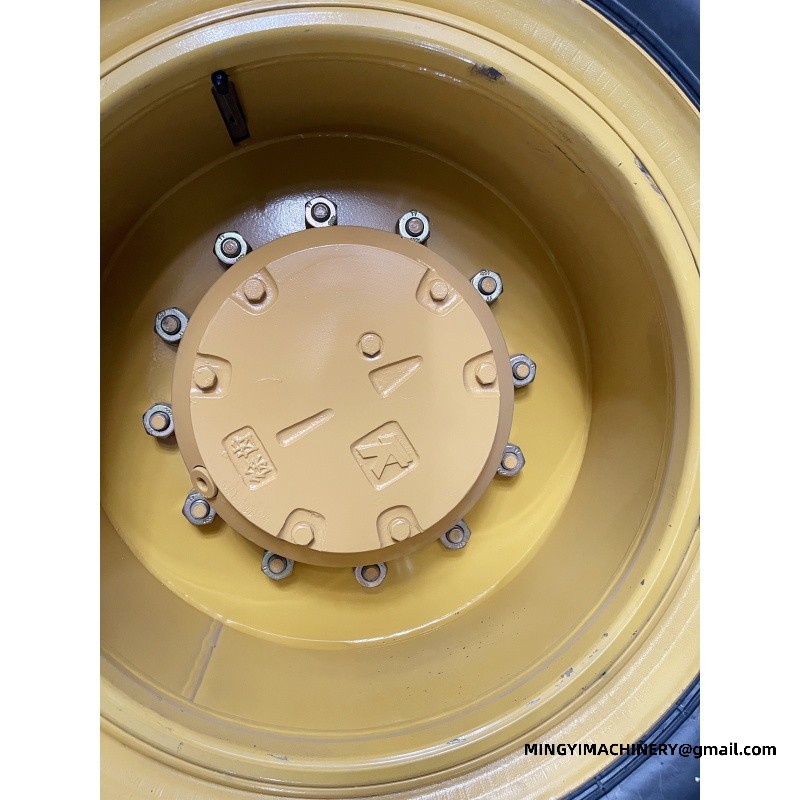
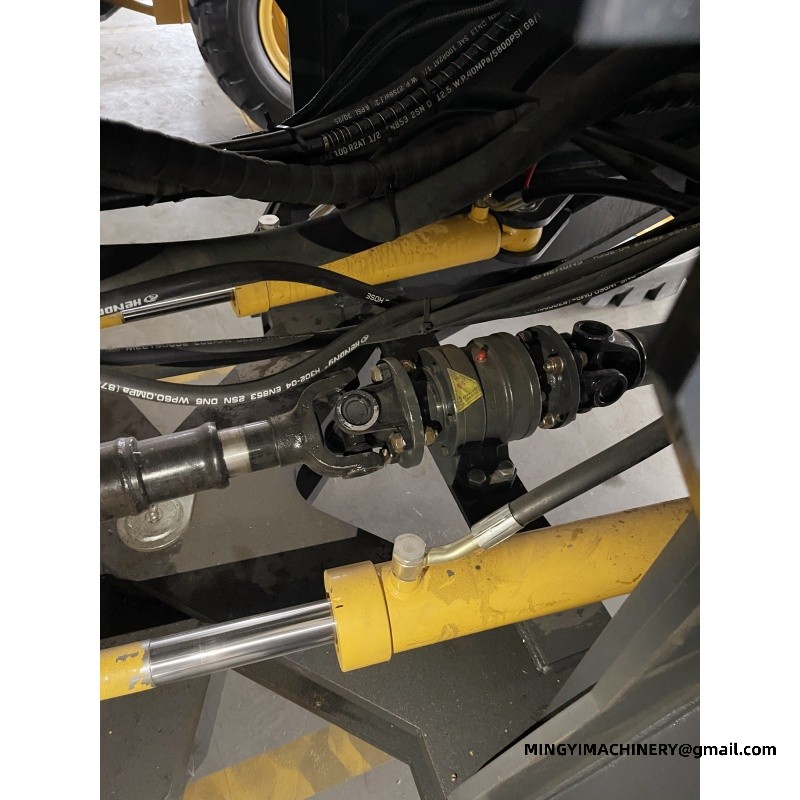
Second-hand buyers check three things and none of them is the hour meter. They rock the hinge and look for movement at the 30 mm front and 20 mm rear plates. They look along the boom for twist, which is a 430 mm section and 890 mm spacing question. They start it cold and listen, which is a 60 Ah (490 engine); 80 Ah (4102 turbo engine) question.
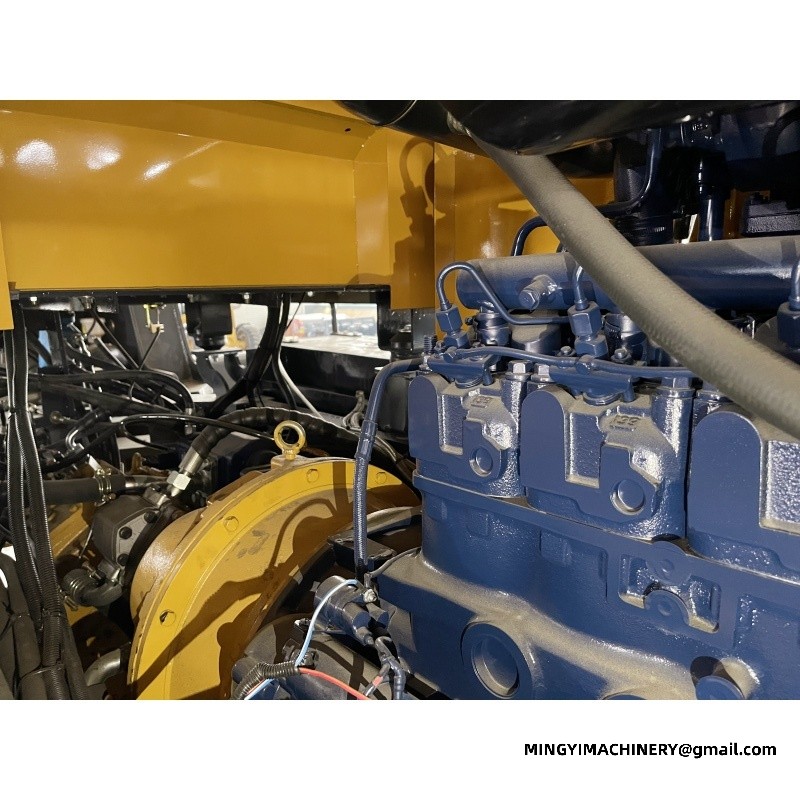
Steel thickness is what makes the first check pass or fail, and it is on the sheet: cross-member 30 mm, rear frame 280 mm high x 800 mm wide. A machine built with those figures published and verifiable is easier to sell than one with a lower hour count and no specification, because the buyer can check the claim instead of trusting it.
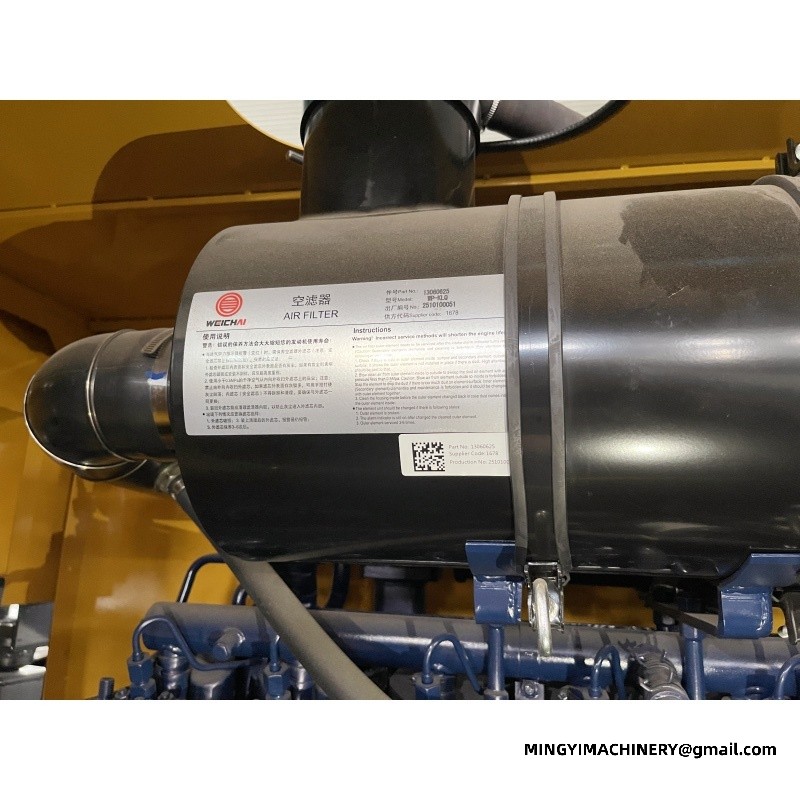
Construction duty is repetitive, dusty and unforgiving of a light frame. Specified for it, the standard 2.8 m low-profile wheel loader carries a 0.3 m³ bucket to 2.8 m on 16 mm front and 16 mm rear hinge plates with a 16 mm cross-member and a 200 mm high x 750 mm wide rear frame. Lighter builds — the heavy-duty 4.5 m medium-frame wheel-side reduction wheel loader at 0.65 m³, 4.5 m, 30 mm and 45 mm — suit smaller sites and lighter material.
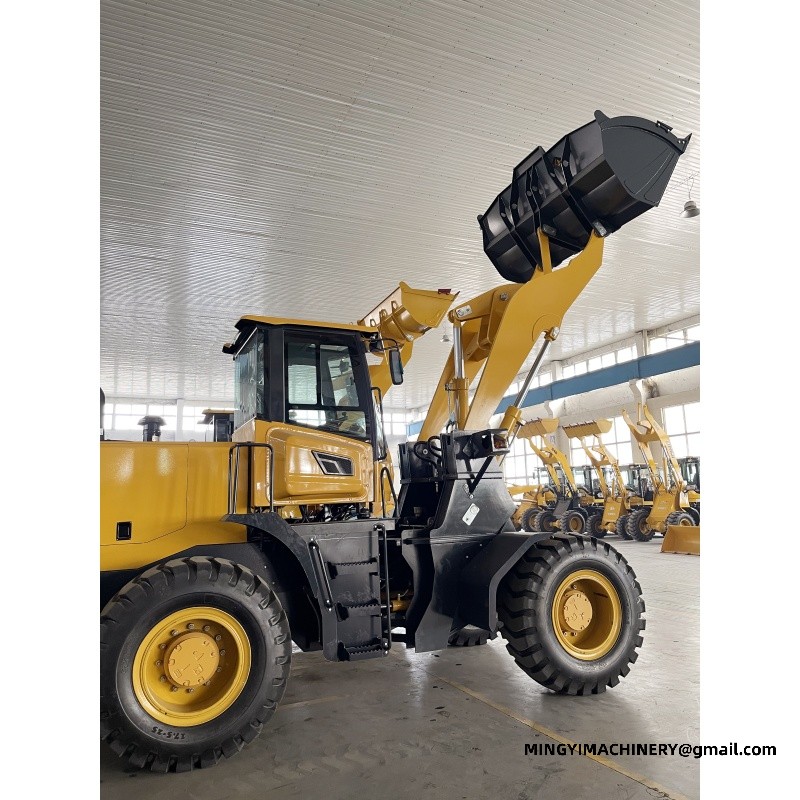
Two site conditions change the specification. The first is the board height of the trucks, which fixes dump height and is measured, not guessed. The second is ground: a rough, rutted site with soft spots wants the wheel-side reduction axle at 1.2 m (Isuzu axle); 1.3 m (wheel-side reduction axle) track over the lighter axle, and a site with long internal haul roads wants the opposite. Tell the factory both and the axle choice follows from the site, not from the catalogue.
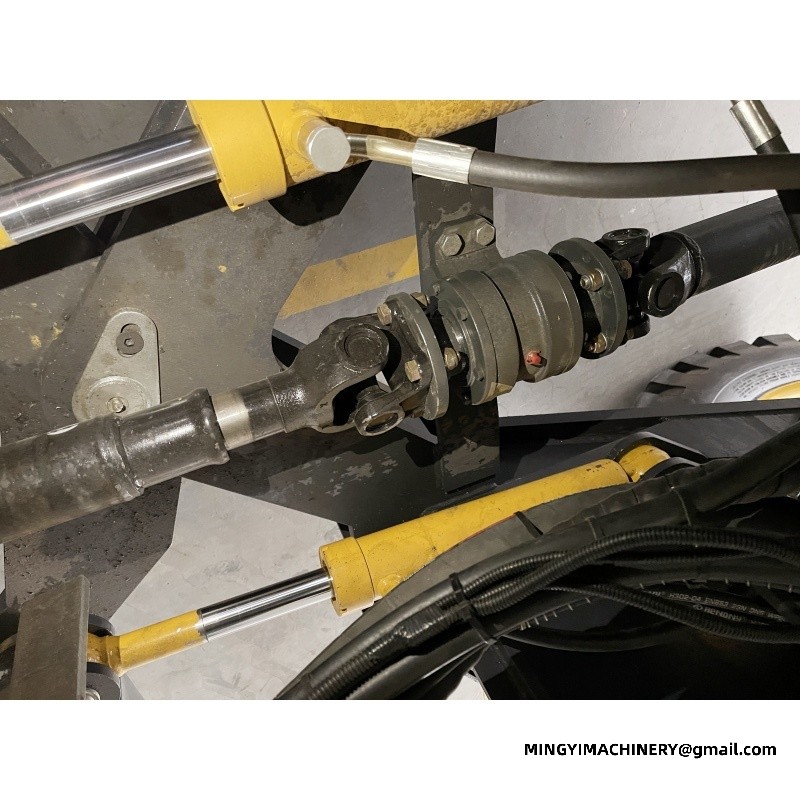
Spares consolidate by frame family rather than by model, which is the point of building a range this way. One cylinder seal kit covers the centre cylinder 60 / side cylinder 50 set across the builds that share it; one pump set covers 2063 pump and 25 pump; pins, bushes and cutting edges are common within a family. On the heavy-duty 4.5 m medium-frame wheel-side reduction wheel loader and the standard 2.8 m low-profile wheel loader, where the two share a family, that is four line items.
What to keep on the shelf depends on the duty. A single machine on a farm needs a cutting edge, a hydraulic hose set, filters and a pin and bush kit. A fleet in a quarry needs those plus a cylinder seal kit, a pump, and one spare wheel-end. Because the 45 mm and 16 mm cross-members and the 30 mm and 16 mm hinge plates differ between builds, order wear parts against the model name, not against the frame.
Articulated loaders wear at the pins, and pins wear because they were dry. Front plate 30 mm, rear plate 20 mm, and the cross-member behind them at 30 mm: that assembly is what steering works through, several hundred times a shift. Grease intervals are measured in hours, not months, on a machine doing short cycles.
The boom pivots are the second set, and they are the ones an operator feels first. A 2.62 m arm on a 890 mm spacing, lifted by centre cylinder 45 / side cylinder 40, loads its pins every pass. If the machine develops a clunk on lift, look there before looking at the pump — the pump, 40 pump (490 engine); 1045 pump (4102 turbo engine), is usually fine and the pin is usually not.
What affects operator fatigue on a wheel loader manufacturer?
Seat, visibility and how much the machine has to be corrected. A tight frame wanders less; a loose one behind the 16 mm plate is tiring to hold on the road.
How is a wheel loader manufacturer transported between sites?
On a low-loader, arm strapped down, secured to the frame rather than the cylinders. Front wheel to counterweight is 4.1 m and track is 1.5 m (wheel-side reduction axle); 1.45 m (Isuzu axle), which is what the haulier needs.
Why does my wheel loader manufacturer turn over slowly on cold mornings?
Cranking capacity falls with temperature, and the rating is 60 Ah (490 engine); 80 Ah (4102 turbo engine) on this build. Where two engines are offered the higher rating belongs to the turbo; specify it if the machine starts cold or stops often.
How often should the hinge pins of a wheel loader manufacturer be greased?
Measured in hours, not weeks, on short-cycle work. The pins behind the 45 mm and 30 mm plates take every steering input; dry pins are how a frame goes loose.
Can a wheel loader manufacturer work safely on a slope?
Track decides that: 1.6 m on this build, with the wider figure belonging to the hub-reduction axle. Work up and down the slope rather than across it.
How far can a wheel loader manufacturer travel under its own power?
Short moves between faces, not road haulage. The travel circuit is 25 pump and sustained high-speed running generates heat the 4105 core core was not sized to reject.
How much does material weight matter on a wheel loader manufacturer?
It sets the real limit, not the bucket. Volume is 0.4 m³; what the frame takes is set by the 30 mm cross-member and the 280 mm high x 800 mm wide rear section behind it.
Every figure stated on this page — bucket 0.65 m³, lift 4.5 m, hinge plates 45 mm and 30 mm — comes from the published build data for the heavy-duty 4.5 m medium-frame wheel-side reduction wheel loader and the standard 2.8 m low-profile wheel loader. Send your board heights, material and shift pattern and the comparison can be run against your own numbers.
Handover and getting familiar with Wheel Loader Manufacturer: Questions to Ask the Factory
Operators who come from a different machine need a short conversion. The controls on Wheel Loader Manufacturer: Questions to Ask the Factory follow the usual pattern, but the response, the sightlines and the stopping distance are learned by doing rather than by reading.
A second operator for Wheel Loader Manufacturer: Questions to Ask the Factory
A machine that only one person can use is a single point of failure. Training a second operator on Wheel Loader Manufacturer: Questions to Ask the Factory takes a day and removes the dependency that otherwise governs holidays, illness and busy weeks.
Contact MINGYI Machinery for the current wheel loader lineup, configuration options and a formal specification for your market. E-mail: sales@mingycn.com | LINE (ID): mingyicn
Wheel Loader Factory China: Build Records and Traceability · Wheel Loader Supplier: Keeping One Build in Stock · Wheel Loader for Construction Site: Board Heights and Turn Space · Wheel Loader









