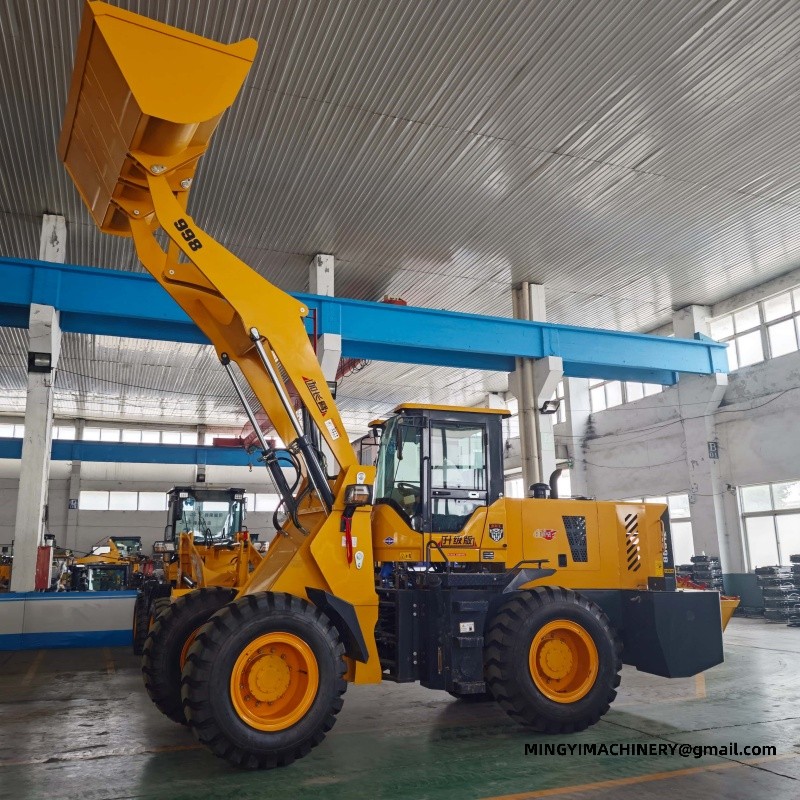
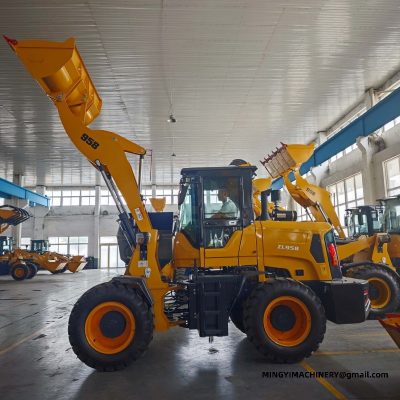
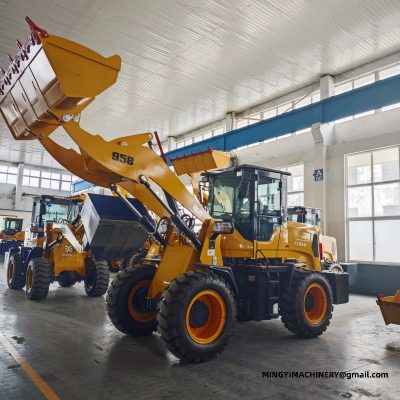
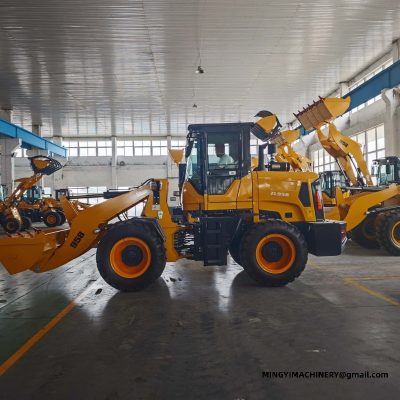
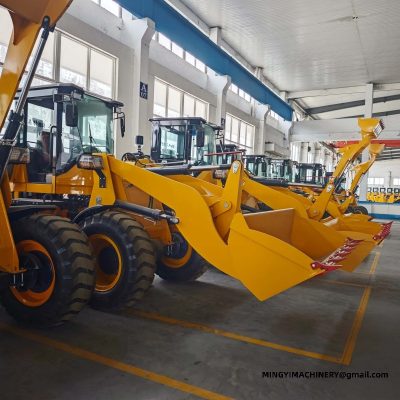
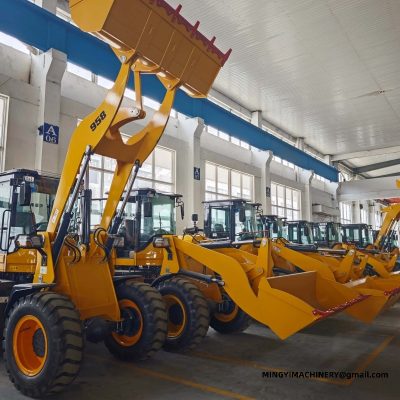
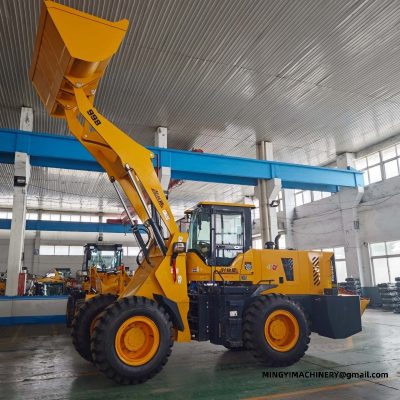
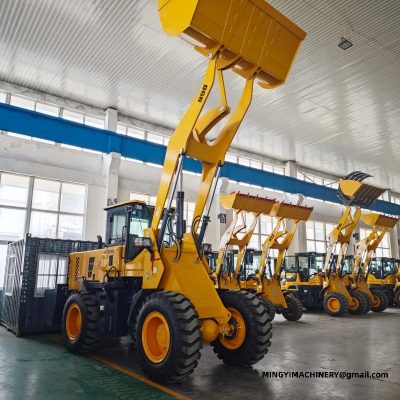
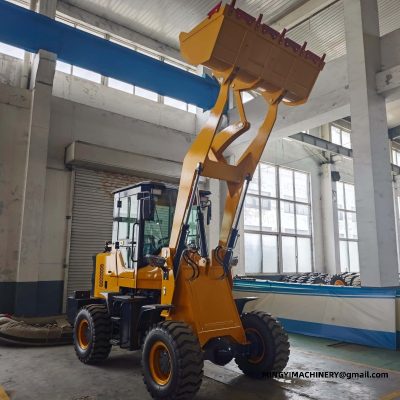
The specification gap between two payloader machine builds is usually steel, and the steel is in four places. Boom wall: 30 mm against 30 mm. Front hinge plate: 45 mm against 45 mm. Rear hinge plate: 30 mm against 30 mm. Cross-member: 45 mm against 45 mm. Everything else — the 0.52 m³ bucket against the 0.52 m³ bucket, the centre cylinder 60 / side cylinder 50 cylinder set against centre cylinder 60 / side cylinder 50 — follows from those four. This page goes through each in turn, then through the cooling, axle and delivery questions that decide the rest.
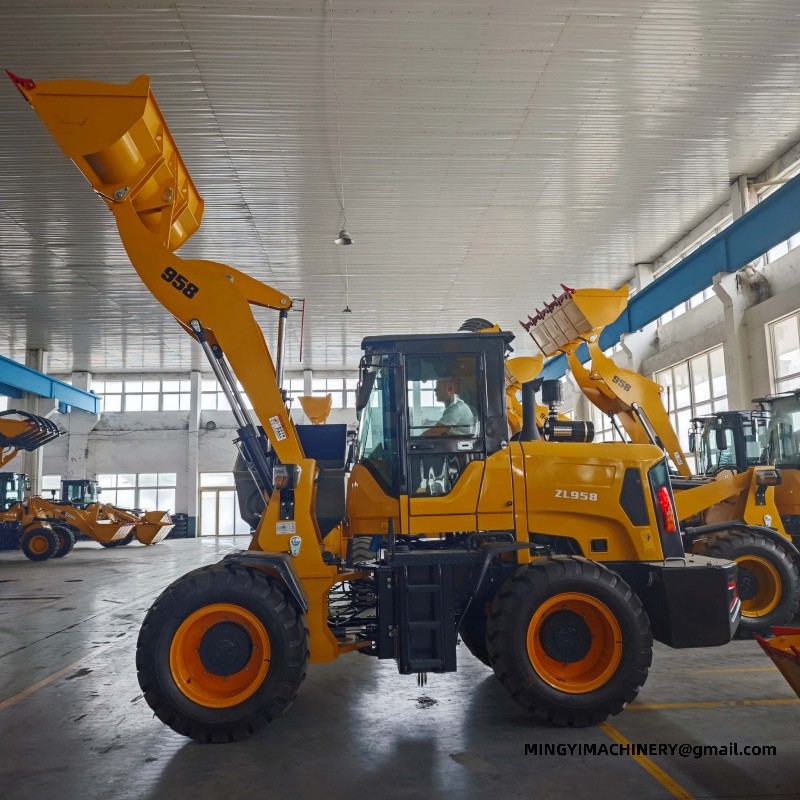
A loading cycle is four movements repeated a few hundred times a shift: approach, fill, lift, dump. Each one loads a different part of the machine, and the specification that matters changes with the movement. Filling asks for bucket volume and breakout, so 0.38 m³ on the light-duty 3.5 m small-frame wheel-side reduction wheel loader is the first figure to read. Lifting asks for boom section and cylinder size, which is 25 mm of wall and centre cylinder 45 / side cylinder 40. Dumping asks for height over the receiving board, 3.5 m here against 4.5 m on the light-duty 4.5 m medium-frame wheel-side reduction wheel loader.
The approach is the movement nobody specifies for, and it is where frames age. Every run at a face loads the front hinge plate, 25 mm on this build against 14 mm at the rear; the rear plate carries the weight of the counterweight and the swing of the whole rear frame, which is why it is the heavier of the two. A 4 m wheelbase keeps the machine settled when the bucket meets resistance rather than air.
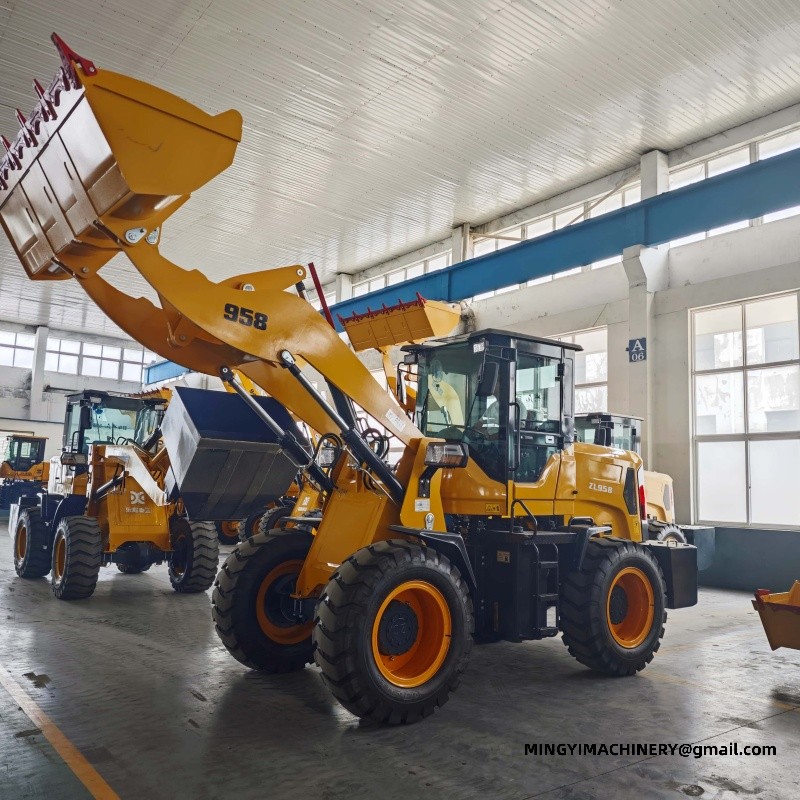
Electrical specification is short but consequential. The light-duty 3.5 m small-frame wheel-side reduction wheel loader lists 60 Ah (490 engine); 80 Ah (4102 turbo engine); the light-duty 4.2 m medium-frame wheel-side reduction wheel loader lists 80 Ah. Where a build offers two engines, the higher capacity belongs to the turbo — more compression to turn, more glow-plug load, and in a cold market that difference is the whole of a morning.
Beyond the battery, specify an isolator switch and confirm the alternator output matches the load you intend to add. Work lights, a beacon, a reversing alarm and a hydraulic third-circuit solenoid all draw from the same pack, and the 40 pump (490 engine); 1045 pump (4102 turbo engine) driven hydraulics on the light-duty 3.5 m small-frame wheel-side reduction wheel loader do not reduce that draw. On the light-duty 4.2 m medium-frame wheel-side reduction wheel loader the same applies with 2063 pump. If the machine will sit for more than a month before commissioning, specify the isolator and a maintenance charge interval.
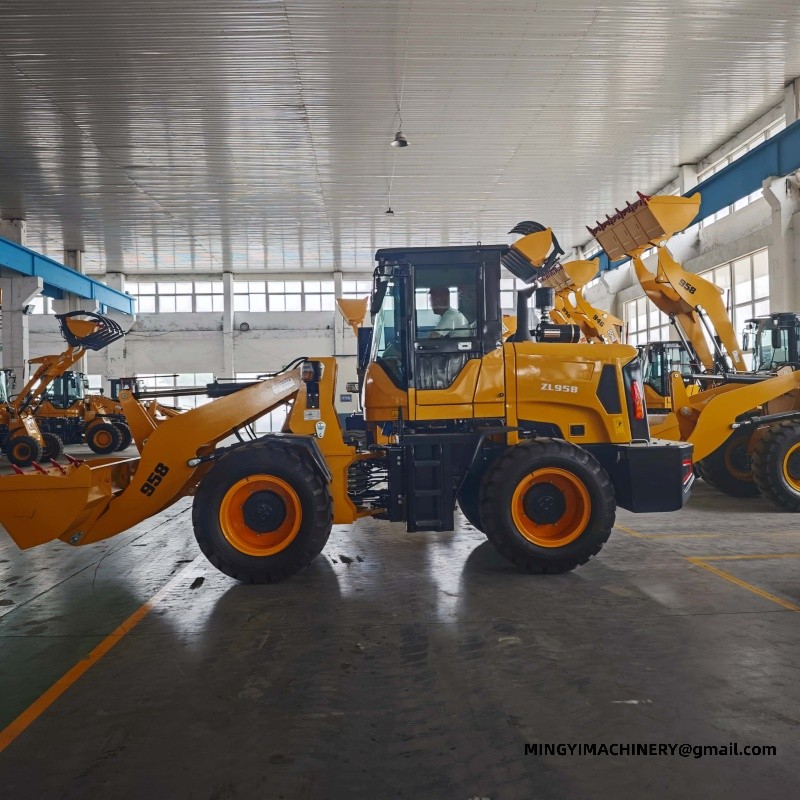
Front-wheel-to-counterweight length is the figure that decides whether a machine fits your site: 4 m on the light-duty 3.2 m low-profile wheel loader against 4 m on the light-duty 3.5 m small-frame wheel-side reduction wheel loader. Track width is the second: 1.5 m (wheel-side reduction axle); 1.45 m (Isuzu axle) against 1.5 m (wheel-side reduction axle); 1.45 m (Isuzu axle). Together they set the turning circle and the narrowest gap the machine will pass, and they are the two numbers least likely to be stated in a sales conversation.
Access is a hard constraint and it fails silently. A loader that cannot turn in a shed is a loader that cannot work in that shed, whatever its bucket capacity. Compare 4 m at 1.5 m (wheel-side reduction axle); 1.45 m (Isuzu axle) on the light-duty 3.2 m low-profile wheel loader with 4 m at 1.5 m (wheel-side reduction axle); 1.45 m (Isuzu axle) on the light-duty 3.5 m small-frame wheel-side reduction wheel loader, measure your tightest turn and your narrowest doorway, and buy the machine that passes. Where the gap is marginal, the 4 m machine with its 0.38 m³ bucket will earn more than the 4 m one with 0.38 m³.
| Reference specification — light-duty 3.5 m medium-frame wheel-side reduction wheel loader | |
|---|---|
| Bucket capacity | 0.52 m³ |
| Dump height | 3.5 m |
| Track width | 1.6 m |
| Boom arm thickness | 30 mm |
| Boom arm width | 430 mm |
| Boom arm length | 2.63 m |
| Boom arm centre distance | 900 mm |
| Cross-member thickness | 45 mm |
| Front hinge plate thickness | 45 mm |
| Rear hinge plate thickness | 30 mm |
| Rear frame section | 300 mm high x 800 mm wide |
| Hydraulic cylinders | centre cylinder 60 / side cylinder 50 |
| Fuel tank | 70 L (75# large tank) |
| Battery | 80 Ah |
| Front wheel to counterweight | 4.3 m |
| Radiator | 4105 core |
| Work pump | 2063 pump |
| Travel pump | 25 pump |
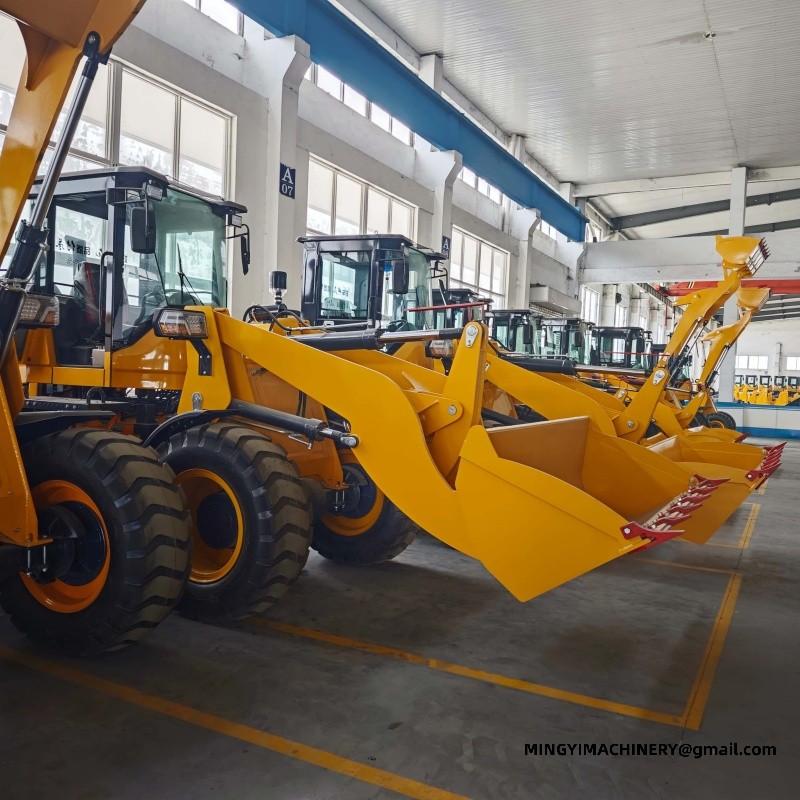
Relief pressure is only half the story; the other half is lever geometry, and lever geometry is decided by the boom and hinge dimensions. The light-duty 3.5 m small-frame wheel-side reduction wheel loader pairs a centre cylinder 45 / side cylinder 40 cylinder set with a 890 mm boom centre distance and a 2.62 m arm; the light-duty 3.8 m medium-frame wheel-side reduction wheel loader pairs centre cylinder 60 / side cylinder 50 with a 900 mm spacing and a 2.9 m arm. Wider spacing means the cylinders work through a better lever, which is how a bigger bucket is lifted without simply raising system pressure and heat.
Pump pairing is the second half. Work pump and travel pump are separate circuits on both machines — 40 pump (490 engine); 1045 pump (4102 turbo engine) and 316 pump on the light-duty 3.5 m small-frame wheel-side reduction wheel loader, 2063 pump and 25 pump on the light-duty 3.8 m medium-frame wheel-side reduction wheel loader — so steering and drive do not steal flow from the boom at the top of a lift. If you intend to run hydraulically actuated attachments, a grapple or a four-in-one bucket, order the third circuit at build time; retrofitting a valve block and plumbing in the field takes far more than specifying it on the order.
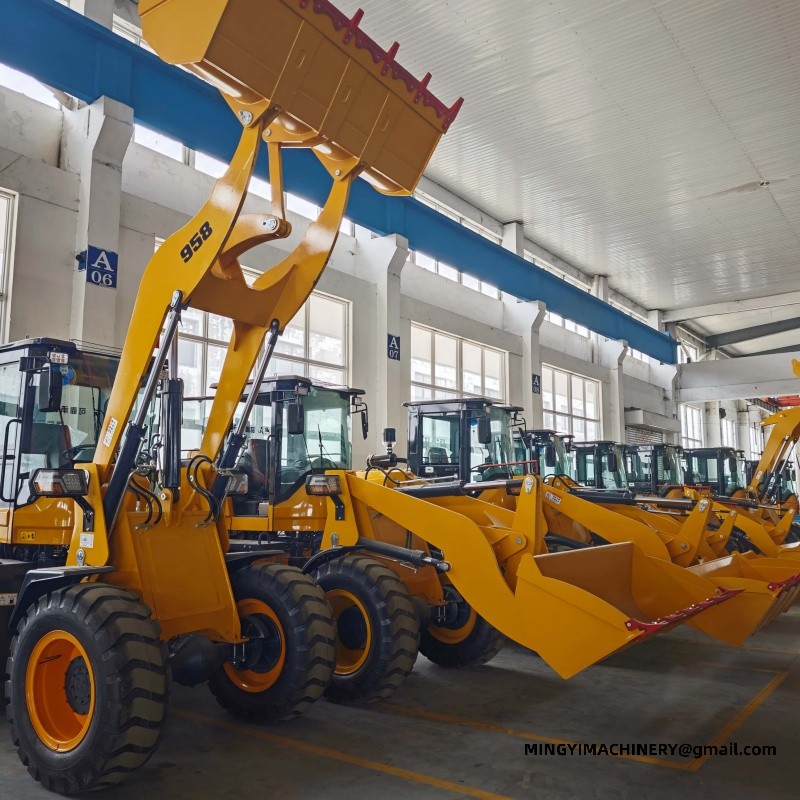
Frames do not usually break; they go loose, and looseness starts at the pins. The parts that govern it are the rear hinge plate, 14 mm, the cross-member behind it, 25 mm, and the rear frame section, 230 mm high x 800 mm wide. Buy on those three and the machine will still feel tight in year five.
Duty decides how long that takes. A machine loading twenty trucks a day ages differently from one moving material for two hours. On the light-duty 3.8 m medium-frame wheel-side reduction wheel loader the same three figures are 30 mm, 45 mm and 280 mm high x 800 mm wide; choosing between them is choosing how much duty the frame was built for, and it is the decision that outlasts every other option on the order.
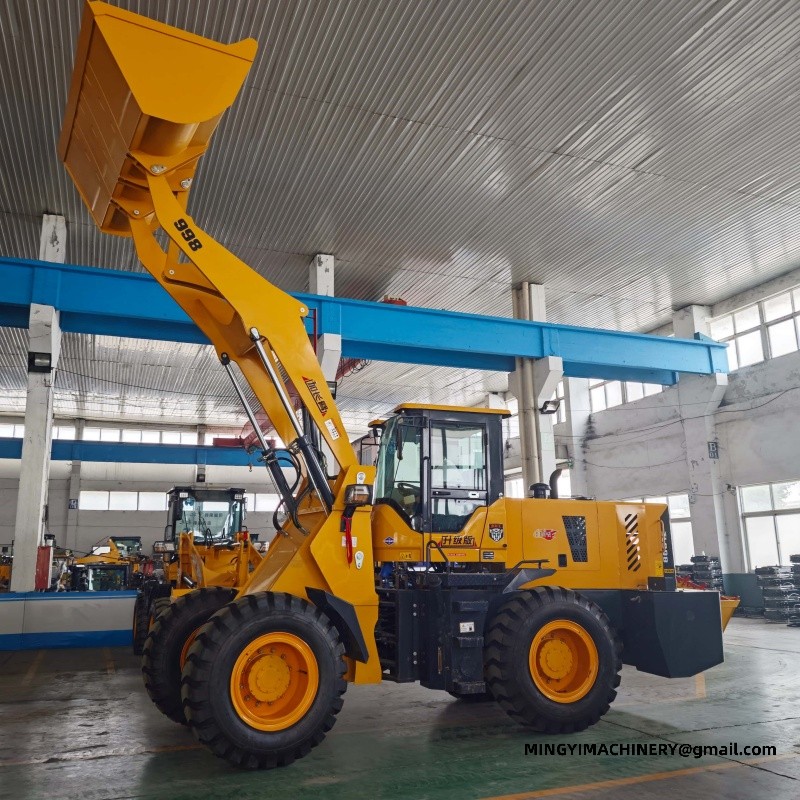
Model names are marketing; build codes are what the shop floor works from. Two machines with the same name can leave the factory with different hinge steel, and the difference is invisible until something wears. On this range the differences are published: 25 mm of cross-member against 45 mm, 25 mm of front hinge plate against 45 mm.
Specify the machine the way you would specify a pump: by the numbers. Bucket 0.38 m³, dump height 3.2 m, cylinders centre cylinder 45 / side cylinder 40, track 1.5 m (wheel-side reduction axle); 1.45 m (Isuzu axle). Write those into the order and the confirmation, and the machine that arrives is the machine you compared. Anything else relies on a name meaning the same thing to two people.
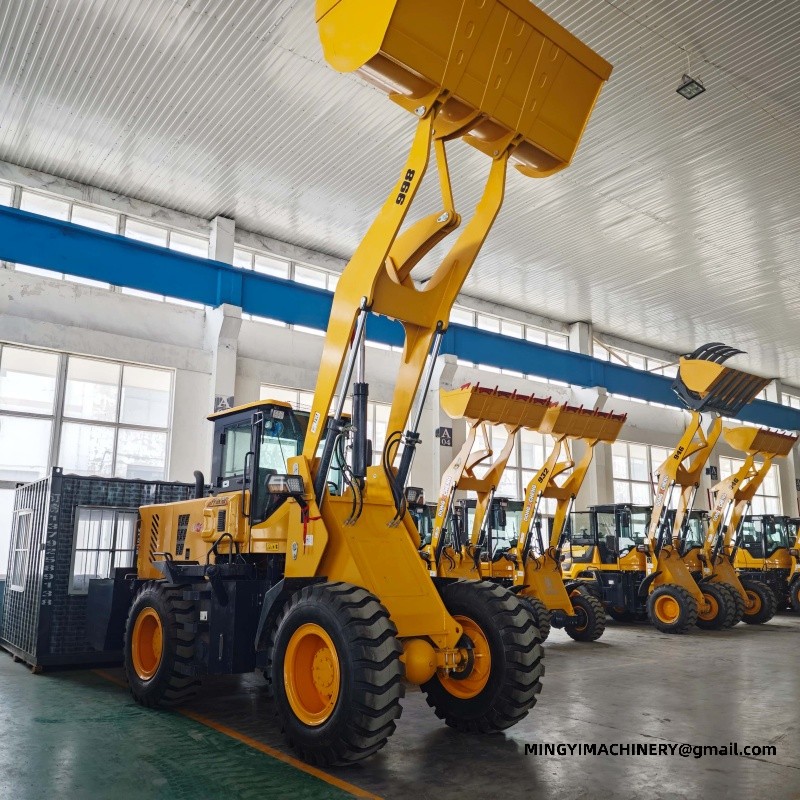
A site loader spends its life doing the same cycle, and the cycle punishes three components: the rear hinge, the cooling pack and the tyres. On the light-duty 3.5 m small-frame wheel-side reduction wheel loader the rear hinge is 14 mm over a 25 mm cross-member; on the light-duty 4.2 m medium-frame wheel-side reduction wheel loader it is 30 mm over 45 mm. Which of those you need depends on how often the machine turns under load.
Cycle time is the economics. A 0.38 m³ bucket at 3.5 m on a 2.62 m arm loaded by centre cylinder 45 / side cylinder 40 cylinders is quick in a tight site; a 0.52 m³ bucket at 4.2 m on a 2.9 m arm with centre cylinder 60 / side cylinder 50 is quicker where there is room to work. Neither is universally faster, and any supplier who claims otherwise is describing a different site from yours.
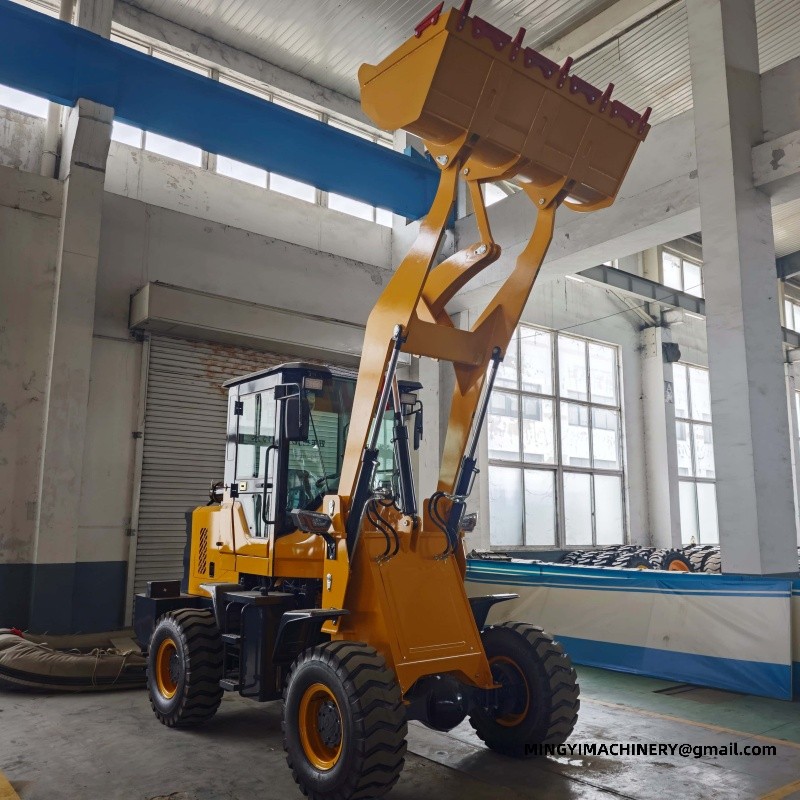
A loader standing idle while a truck reverses is the most common waste on a site, and it is usually a layout problem rather than a machine problem. What the machine contributes is turn radius and visibility, and both come out of the dimensions: 4.3 m from front wheel to counterweight, 1.6 m of track, and a rear frame section of 300 mm high x 800 mm wide. A shorter machine turns inside its own length and works a tighter bay.
The other half is dump geometry. With 4.2 m of clearance and a 2.9 m arm, the light-duty 4.2 m medium-frame wheel-side reduction wheel loader can stand back from the body and still place material where the driver wants it, which is safer than crowding the board. The light-duty 4.5 m medium-frame wheel-side reduction wheel loader reaches 4.5 m with a 3.35 m arm; on a narrow bay the shorter of the two may be the faster machine even if it holds less.
What bucket capacity should a payloader machine be specified with?
Match it to the material and to the body being filled: 0.38 m³ on the light-duty 3.5 m small-frame wheel-side reduction wheel loader against 0.52 m³ on the light-duty 3.8 m medium-frame wheel-side reduction wheel loader. Heavy material limits volume before the frame does.
Will a payloader machine start in a cold climate?
With the right pack, yes: 60 Ah (490 engine); 80 Ah (4102 turbo engine) on the light-duty 3.2 m low-profile wheel loader, the larger capacity where the turbo engine is fitted. Specify an isolator for anything shipping long-distance.
How many hours a day can a payloader machine run?
As many as the cooling and fuel allow: a 70 L (75# large tank) tank on the light-duty 3.5 m medium-frame wheel-side reduction wheel loader and a 4105 core radiator. In dusty work the radiator, not the tank, is usually what sets the limit.
Can a payloader machine work indoors?
The low-profile builds can, where height and footprint allow: 4.3 m front-to-counterweight length and 1.6 m track on the light-duty 3.5 m medium-frame wheel-side reduction wheel loader. Ventilation is the other constraint to check.
Can a payloader machine be used for snow clearance?
Yes, with a snow tool specified against the boom section — 370 mm on the light-duty 3.2 m small-frame wheel-side reduction wheel loader — and the third circuit ordered if the tool is hydraulically actuated.
What spares should I keep for a payloader machine?
Filters, a hose set for the centre cylinder 60 / side cylinder 50 cylinders, pins and bushes for the 900 mm boom mounts and a cutting edge. One pump per fleet is usually enough.
How wide is a payloader machine?
Track width is 1.5 m (wheel-side reduction axle); 1.45 m (Isuzu axle) on the light-duty 3.2 m small-frame wheel-side reduction wheel loader and 1.6 m on the light-duty 3.5 m medium-frame wheel-side reduction wheel loader. Check it against the narrowest gate, door or aisle before anything else on the sheet.
Five figures settle any payloader machine enquiry: dump height, track width, boom wall, rear hinge plate and cross-member. On the light-duty 3.8 m medium-frame wheel-side reduction wheel loader those are 3.8 m, 1.6 m, 30 mm, 30 mm and 45 mm. Send us yours and we will tell you which build meets them.
Pre-delivery inspection before Payloader Machine: What the Name Covers and How to Specify One leaves the shop
The last hour before packing is the best time to find a fault. Running Payloader Machine: What the Name Covers and How to Specify One through its full working cycle, checking for leaks under load and confirming that the controls match the specification avoids a conversation across time zones later.
Packing, loading and shipment of Payloader Machine: What the Name Covers and How to Specify One
The paperwork matters as much as the packing. Serial numbers, dimensions and weights recorded for Payloader Machine: What the Name Covers and How to Specify One at loading are the same figures the destination needs, and a mismatch here loses more days than the voyage itself.
Contact MINGYI Machinery for the current wheel loader lineup, configuration options and a formal specification for your market. E-mail: sales@mingycn.com | LINE (ID): mingyicn
Bucket Loader Machine: Matching Bucket Volume to Material Weight · Construction Equipment Loader: Sizing for Site and Yard Work · Wheel Loader Factory China: Build Records and Traceability · Loaders









