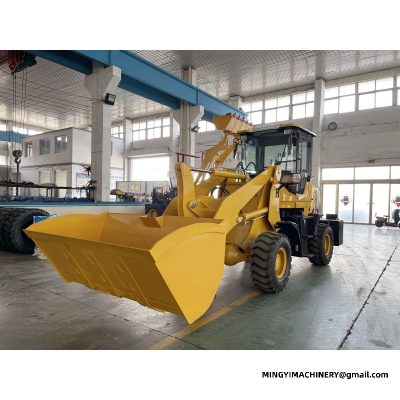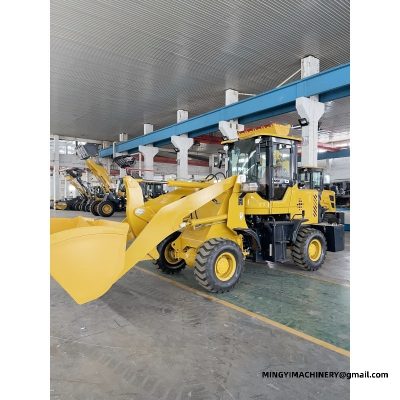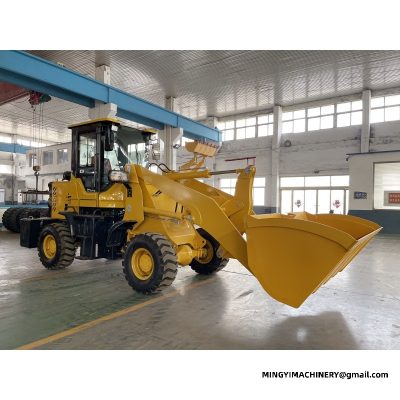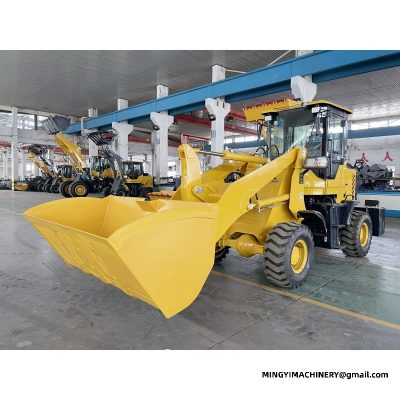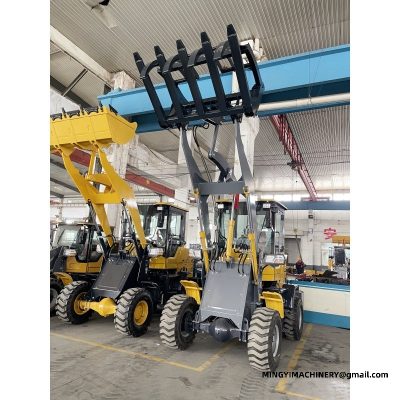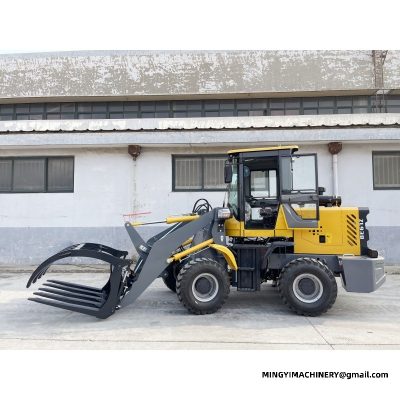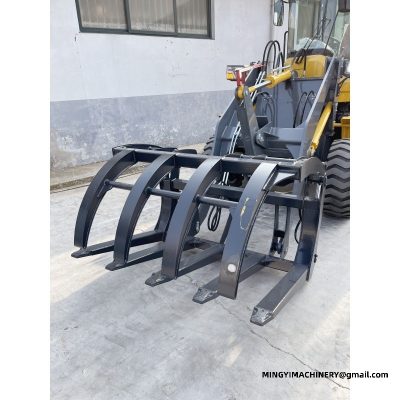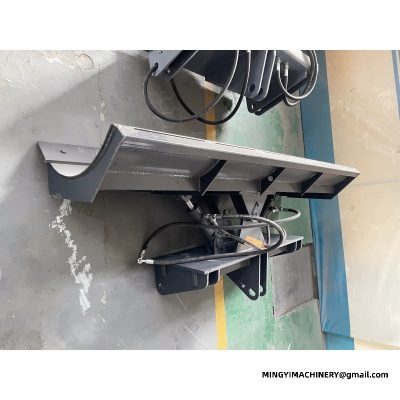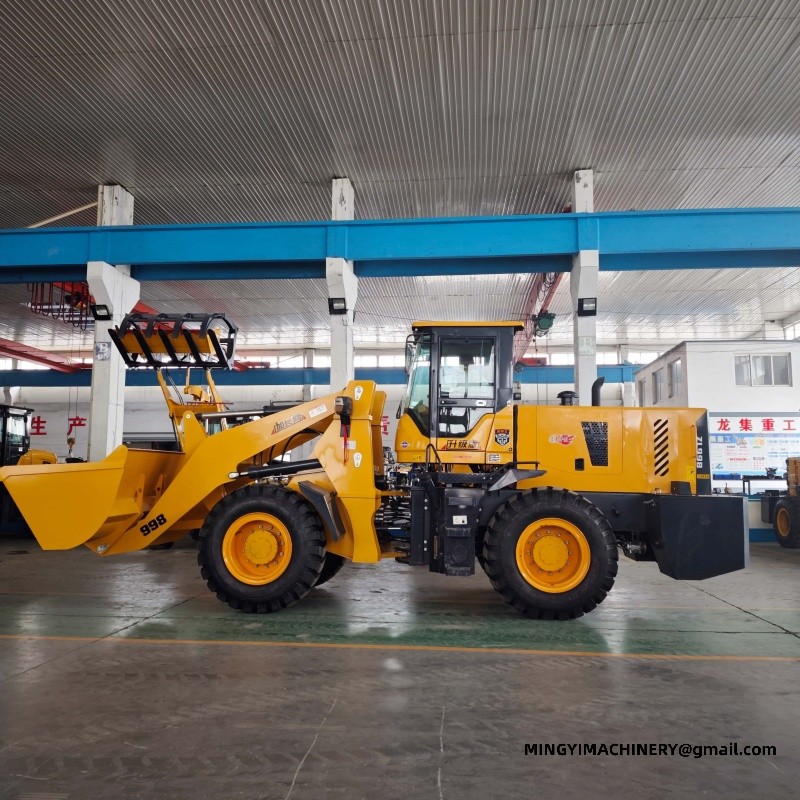
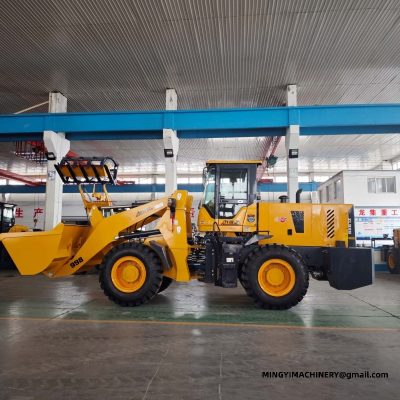
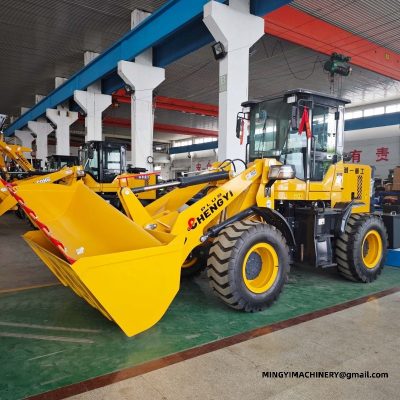
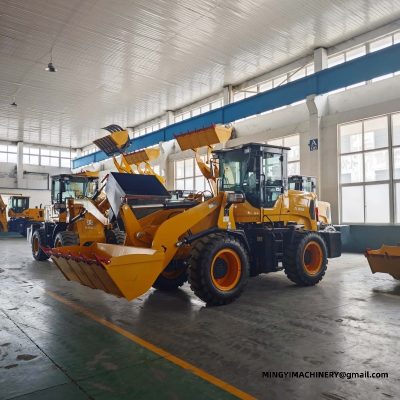
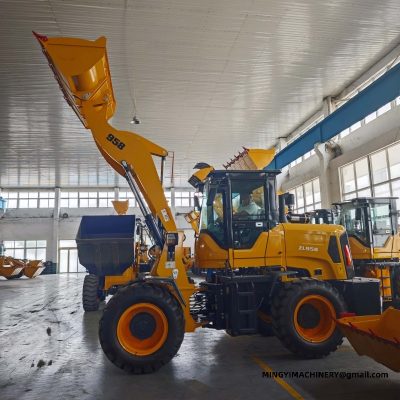
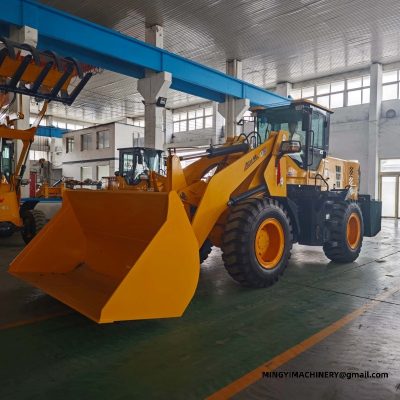
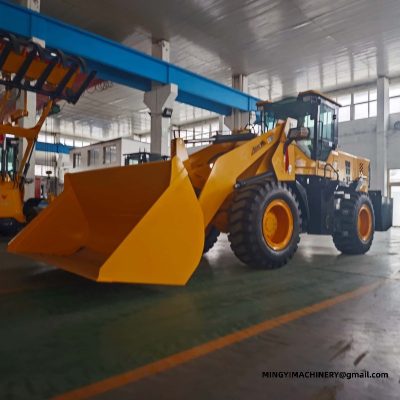
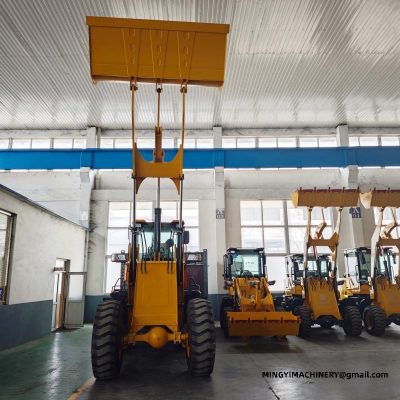
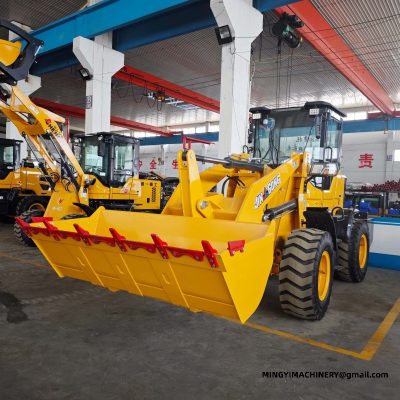
Three frame tiers, twenty-one documented builds, one parts package per tier: that is the whole agricultural wheel loader range in a line. The tiers separate on boom section and hinge steel rather than on paint — 25 mm boom wall and 25 mm cross-member at the bottom, 25 mm and 25 mm on the heavier build — and the builds within a tier share cylinders, pumps and attachments. Buckets run 0.38 m³ to 0.38 m³ and dump heights 3.8 m to 4.2 m. Here is how to place yourself on that ladder.
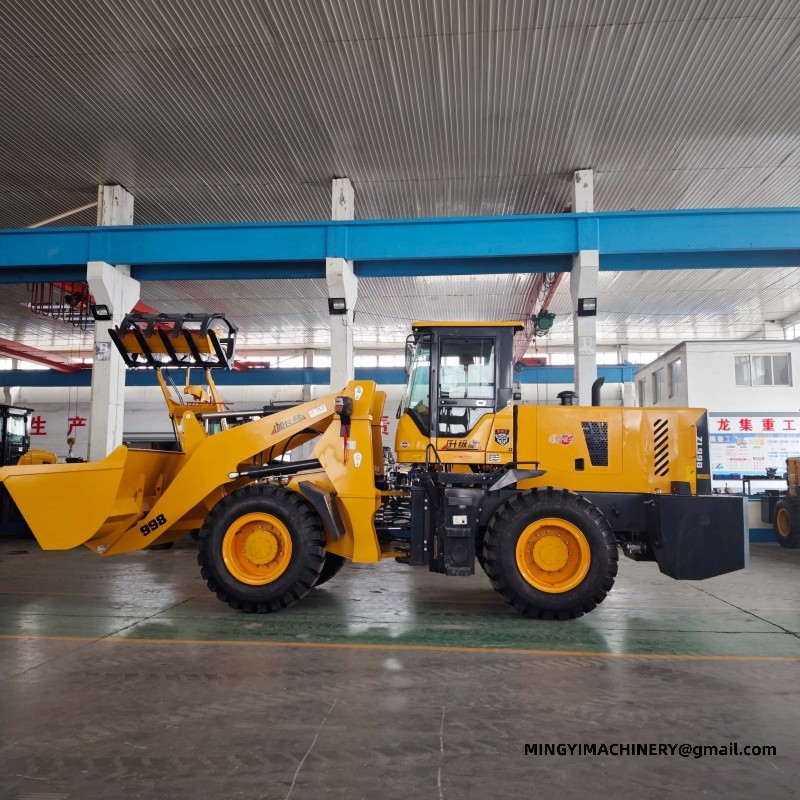
A boom is a beam, and a beam is specified by length, section and material thickness. On the light-duty 3.8 m small-frame wheel-side reduction wheel loader that means 2.61 m long, 370 mm wide and 25 mm thick, mounted on a 890 mm centre distance. On the heavy-duty 3.5 m medium-frame wheel-side reduction wheel loader the same three figures are 3.15 m, 500 mm and 30 mm on a 920 mm spacing. Those six numbers decide breakout behaviour, side-load tolerance and how the machine feels on the last metre of lift.
The practical test is simple. If your day is loose material on level ground, a shorter arm on a tight machine will out-cycle a longer one, because every millimetre of reach is travel time. If your day is faces, banks and truck loading, the longer arm of the two — 3.15 m at 3.5 m — earns its keep, provided the 30 mm wall and 500 mm section are there to carry it. Ask which bucket the boom was engineered around — 0.38 m³ on the light-duty 3.8 m small-frame wheel-side reduction wheel loader, 0.65 m³ on the heavy-duty 3.5 m medium-frame wheel-side reduction wheel loader — and you will know whether the arm and the frame were designed together.
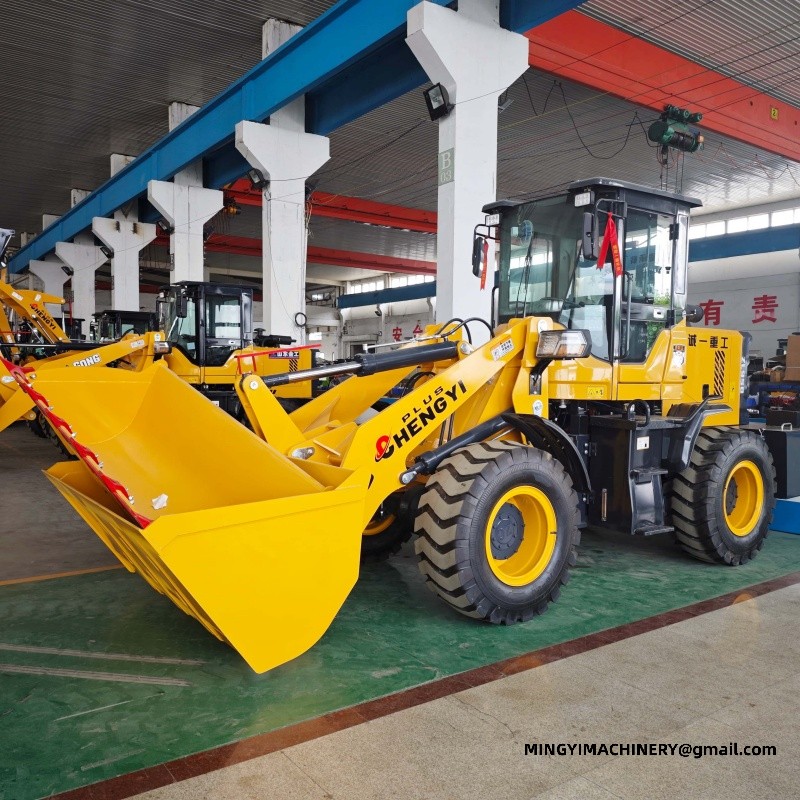
The bucket figures in the table are engineering capacities: 0.4 m³ on the heavy-duty 4.5 m small-frame wheel-side reduction wheel loader, 0.65 m³ on the heavy-duty 3.5 m medium-frame wheel-side reduction wheel loader. They assume a material density, and the machine is stable with them at full lift because the counterweight and the 4.25 m or 4.55 m footprint were sized around that density.
Change the material and you change the limit, not the machine. Light material — grain, woodchip, compost, snow — lets you run a larger bucket and a higher cycle. Heavy material — wet sand, crushed stone, ore — means the 0.65 m³ bucket needs the 30 mm rear hinge plate and 45 mm cross-member behind it, and the 0.4 m³ bucket on the lighter frame is the honest specification for the lighter material. Tell the factory what you are moving and let them match the bucket to it.
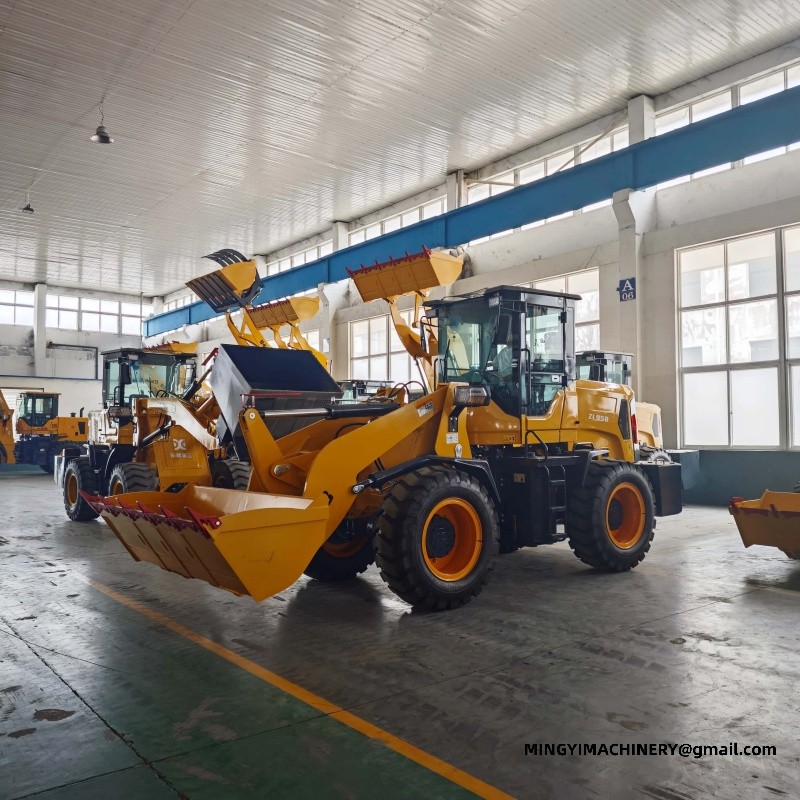
Capacity is bought and rarely used. If the receiving bodies sit below 4.2 m and the material is dense, a 0.65 m³ bucket that fills completely is faster than a 0.65 m³ bucket that fills to two-thirds, and it puts less into the hinge plates doing it.
Size matters twice more. A shorter machine, 4.55 m front wheel to counterweight against 4.55 m, works a tighter bay and turns inside its own length. A narrower one, 1.6 m against 1.6 m, passes gates the other cannot. Where the work is confined, buy on dimensions and let capacity follow.
| Sample build from the range — heavy-duty 4.5 m medium-frame wheel-side reduction wheel loader | |
|---|---|
| Bucket capacity | 0.65 m³ |
| Dump height | 4.5 m |
| Track width | 1.6 m |
| Boom arm thickness | 30 mm |
| Boom arm width | 520 mm |
| Boom arm length | 3.35 m |
| Boom arm centre distance | 960 mm |
| Cross-member thickness | 45 mm |
| Front hinge plate thickness | 45 mm |
| Rear hinge plate thickness | 30 mm |
| Rear frame section | 300 mm high x 800 mm wide |
| Hydraulic cylinders | centre cylinder 60 / side cylinder 50 |
| Fuel tank | 70 L (75# large tank) |
| Battery | 80 Ah |
| Front wheel to counterweight | 4.95 m |
| Radiator | 4105 core |
| Work pump | 2063 pump |
| Travel pump | 25 pump |
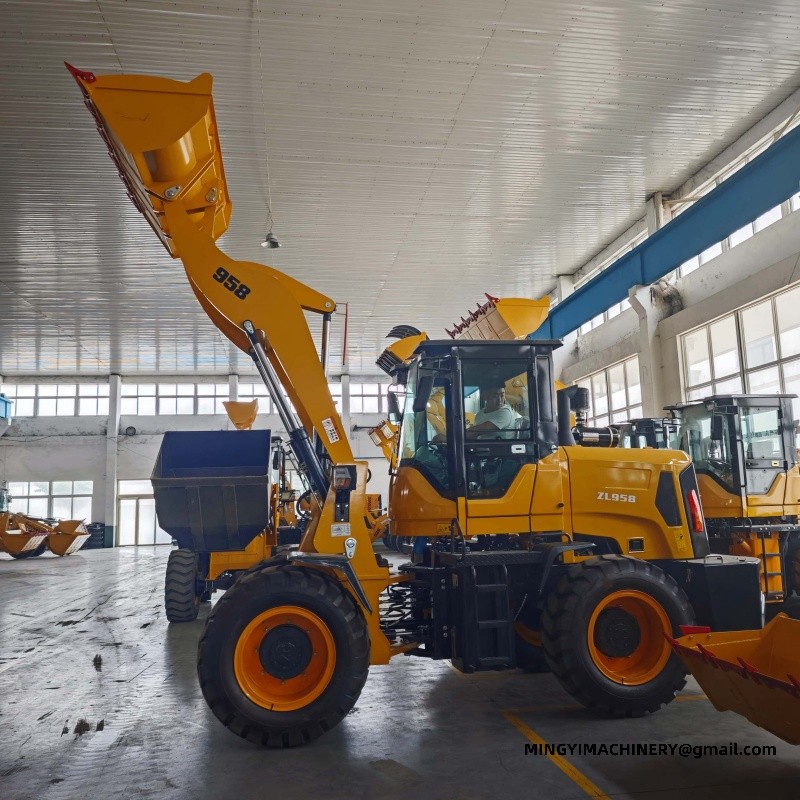
Work out how many passes fill the body, then work backwards. A body that takes four passes from a 0.65 m³ bucket will take three from 0.65 m³, but only if the machine can clear the board, and that is the part people get wrong. The heavy-duty 4.2 m medium-frame wheel-side reduction wheel loader reaches 4.2 m; the heavy-duty 3.8 m medium-frame wheel-side reduction wheel loader reaches 3.8 m. If the board sits between those two figures, the capacity comparison is academic.
The second check is whether the machine can dump without striking. Dump height is measured at the bucket edge with the arm at full lift, so the clearance you actually have is that figure less the height of the material crest. On the heavy-duty 4.2 m medium-frame wheel-side reduction wheel loader the arm is 3.16 m and the spacing between the arms is 960 mm; a longer arm with a wider spacing tips a bucket cleanly instead of rolling it off the corner.
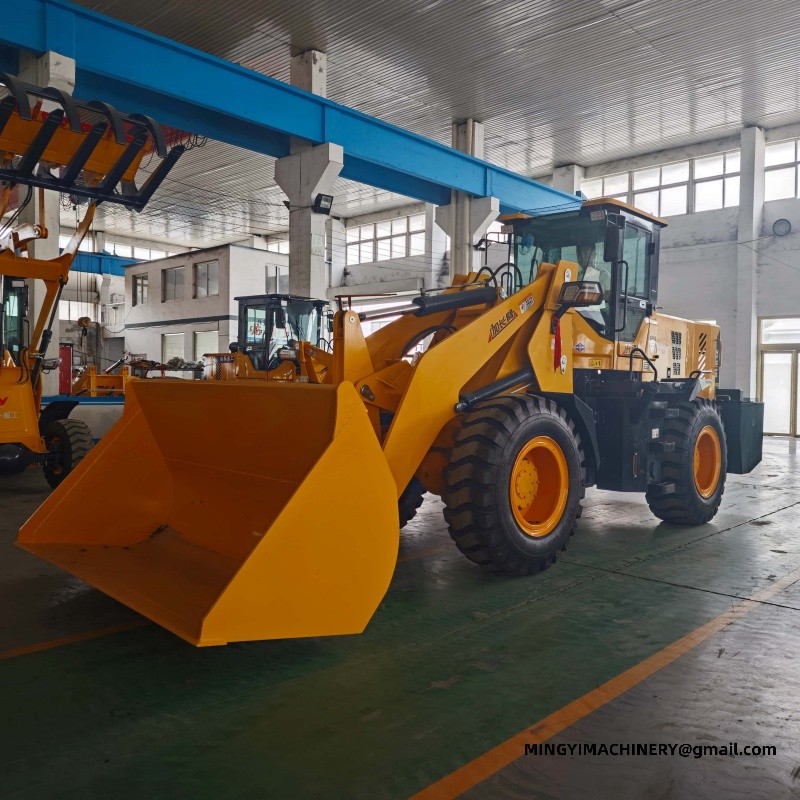
Three things stop a loader mid-shift, and two of them are in the specification. Fuel is the first: 64.7 L (75# small tank) on the light-duty 4.2 m small-frame wheel-side reduction wheel loader. Cooling is the second: 4100 core (490 engine); 4105 core (4102T engine), and it is the one that announces itself as a gradual loss of power rather than a stoppage, so it gets ignored until the machine is derating every afternoon.
The third is electrical, and it is specified as well: 60 Ah (490 engine); 80 Ah (4102 turbo engine). Cranking capacity falls with temperature, so a battery that starts a warm engine happily can fail the same engine at dawn in winter. Where the build offers two ratings, the higher one belongs to the turbo option and is worth specifying for cold climates or for machines that start cold and stop often.
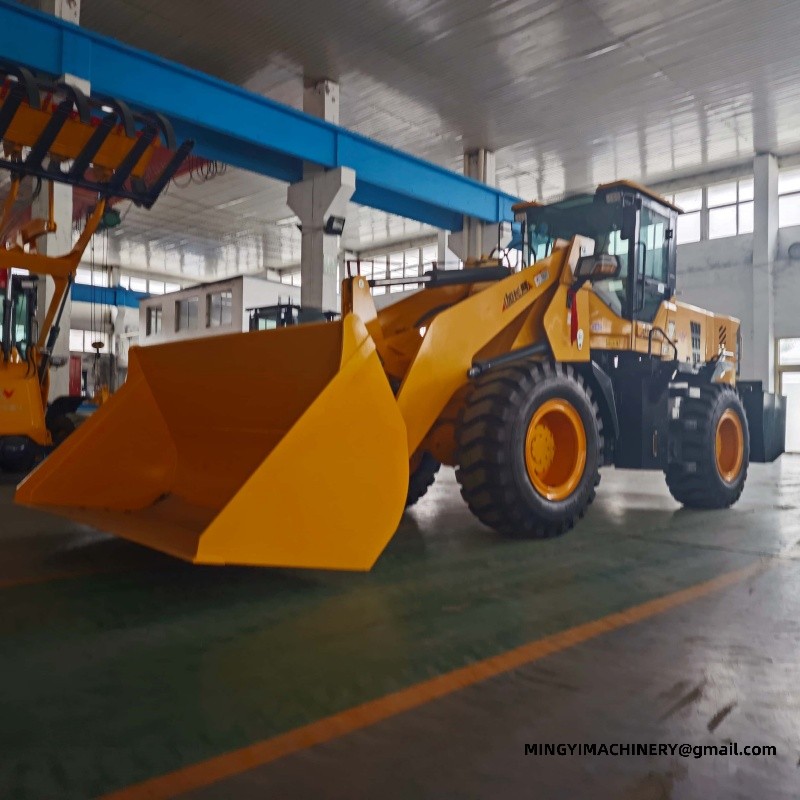
The battery is specified against the engine it has to crank: 60 Ah (490 engine); 80 Ah (4102 turbo engine) on the light-duty 4.2 m small-frame wheel-side reduction wheel loader and 80 Ah on the heavy-duty 4.5 m medium-frame wheel-side reduction wheel loader. Where a build lists two figures, they belong to two engine options — a smaller capacity for the naturally aspirated unit, a larger one for the turbo — and the difference is starting torque in cold weather rather than anything you would notice in July.
For fleets shipping to cold markets, specify the larger capacity and a battery isolator; machines shipped knock-down arrive with batteries boxed and disconnected, and a machine that has sat for six weeks at anchor will not crank on a marginal battery. Check the rest of the electrical package at the same time — the 40 pump (490 engine); 1045 pump (4102 turbo engine) and 316 pump circuits on the light-duty 4.2 m small-frame wheel-side reduction wheel loader share the same harness, and a poor earth there presents as slow hydraulics rather than as an electrical fault.
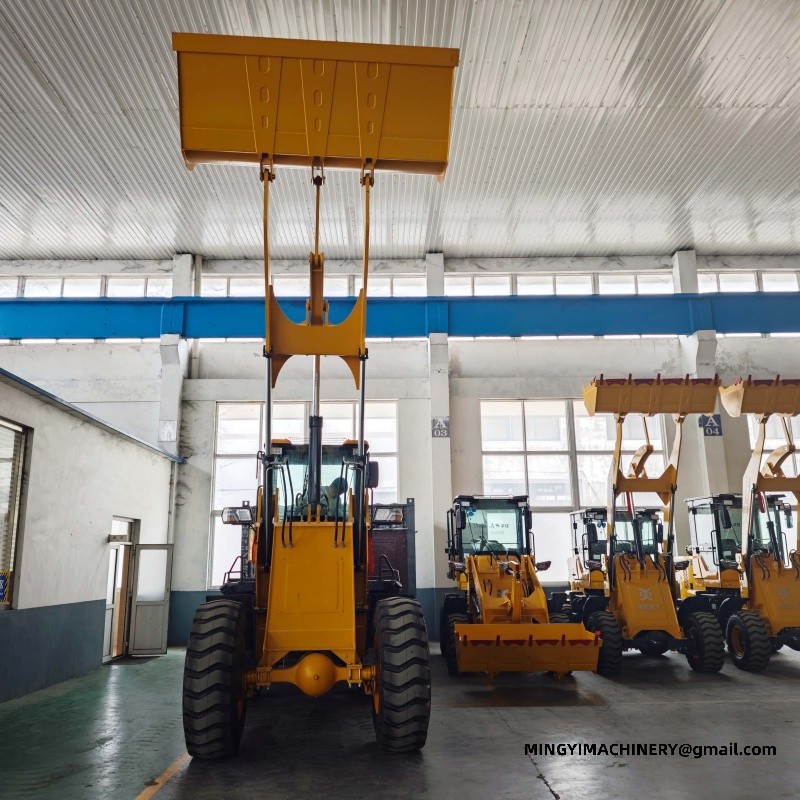
Four numbers describe a loader frame: front hinge plate, rear hinge plate, cross-member thickness and rear frame section. The standard 2.8 m low-profile wheel loader lists 16 mm, 16 mm, 16 mm and 200 mm high x 750 mm wide. The heavy-duty 3.8 m medium-frame wheel-side reduction wheel loader lists 45 mm, 30 mm, 45 mm and 300 mm high x 800 mm wide. Everything else on a specification sheet — paint, cab trim, lighting package — is cosmetic next to those four.
The rear frame section is the one that surprises people. A wider rear frame lets the counterweight bolt directly to the chassis instead of hanging off brackets, and bracket-mounted counterweights crack. On the standard 2.8 m low-profile wheel loader the 200 mm high x 750 mm wide section carries the ballast for a 0.3 m³ bucket at 2.8 m; on the heavy-duty 3.8 m medium-frame wheel-side reduction wheel loader the 300 mm high x 800 mm wide section carries it for 0.65 m³ at 3.8 m. Compare those against the 3.5 m and 4.55 m front-wheel-to-counterweight lengths and you have the whole stability picture in four figures.
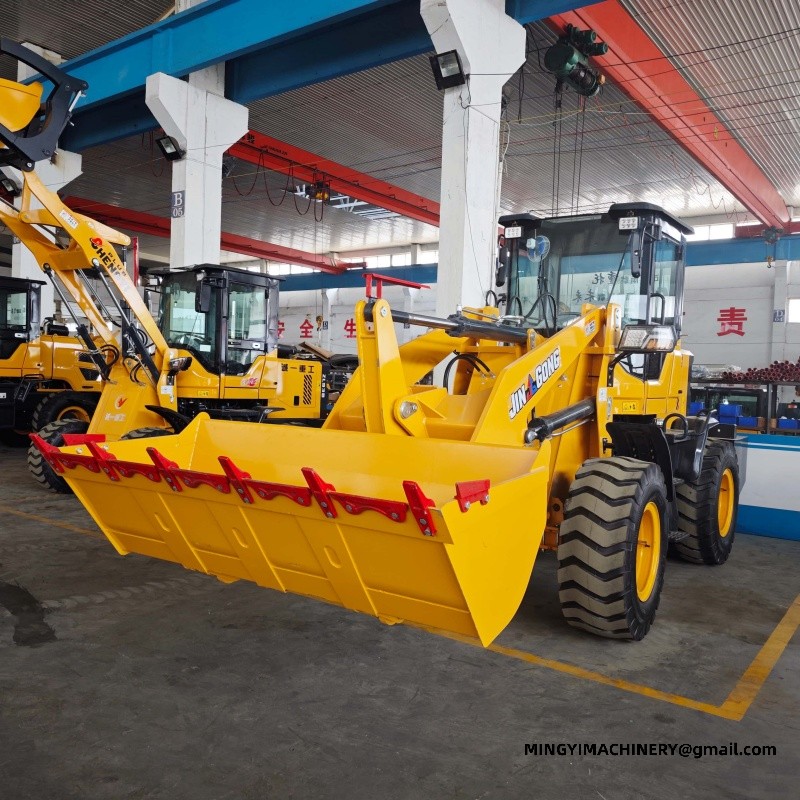
Site work is a truck-loading problem. The machine fills, reverses, turns, approaches and dumps, several hundred times a day, and the numbers that govern it are dump height, hinge steel and cycle time. The heavy-duty 4.5 m small-frame wheel-side reduction wheel loader brings 0.4 m³ at 4.5 m with 30 mm and 20 mm hinge plates; the heavy-duty 3.8 m medium-frame wheel-side reduction wheel loader brings 0.65 m³ at 3.8 m with 45 mm and 30 mm.
Backfilling and heel-in work load the rear hinge harder than loading does, because the machine turns while pushing. That is why the rear plate figure — 20 mm against 30 mm — is the one to read for a site machine, ahead of engine power. Add the cooling question: site dust loads a radiator fast, so the raised core and the 4105 core package earn their keep where the 4100 core (490 engine); 4105 core (4102T engine) spec would need blowing out at lunch.
How does a agricultural wheel loader compare with a backhoe loader?
A loader moves more material per pass and carries it higher — 0.65 m³ at 3.5 m on the heavy-duty 3.5 m medium-frame wheel-side reduction wheel loader — while a backhoe digs below grade. Choose by which job you do most.
What is the fuel tank capacity of a agricultural wheel loader?
30.8 L (48# large tank, 20.5/70-16 tyres); 24.6 L (48# small tank, 8.25-16 tyres) on the standard 2.8 m low-profile wheel loader and 64.7 L (75# small tank) on the light-duty 3.8 m small-frame wheel-side reduction wheel loader, both sized for a full shift at working throttle without a mid-day refuel.
How often should the articulation of a agricultural wheel loader be greased?
Every shift in stockpile or face work, weekly in light duty. The 30 mm front and 20 mm rear plates take every steering load, and missed greasing takes pins and bores.
What is the largest agricultural wheel loader in the range?
The medium-frame heavy builds: a 0.65 m³ bucket at 3.8 m on a 2.9 m boom with centre cylinder 60 / side cylinder 50 cylinders.
Can a agricultural wheel loader be used for snow clearance?
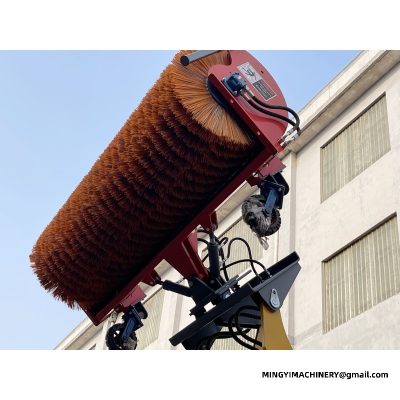
Yes, with a snow tool specified against the boom section — 370 mm on the light-duty 3.8 m small-frame wheel-side reduction wheel loader — and the third circuit ordered if the tool is hydraulically actuated.
Can a agricultural wheel loader run a hydraulic attachment?
Yes, provided the third circuit is ordered with the machine. The 40 pump (490 engine); 1045 pump (4102 turbo engine) work pump and 316 pump travel pump are specified per build, and plumbing added later is the usual source of leaks.
How do I verify the build of a agricultural wheel loader on delivery?
Five figures against the published table: boom wall 25 mm, boom width 500 mm, front hinge 30 mm, rear hinge 20 mm and cross-member 30 mm.
Models, options and container plans are stated per order against the actual mix. Send the application, the material and the receiving body height, and we will specify the agricultural wheel loader — axle, radiator, bucket and third circuit — in one pass.
Pre-delivery inspection before Agricultural Wheel Loader: Access, Attachments and Light Builds leaves the shop
Inspection is a list, not a glance. Before Agricultural Wheel Loader: Access, Attachments and Light Builds is released the fluid levels, belt tension, electrical connections and safety decals are each ticked off, and anything that fails stays in the shop rather than travelling with the machine.
Cold weather and winter care for Agricultural Wheel Loader: Access, Attachments and Light Builds
Cold exposes weak batteries, thick oil and water in the fuel. Preparing Agricultural Wheel Loader: Access, Attachments and Light Builds for winter means the right grade of oil, a battery in good condition and fuel that will not wax in the tank overnight.
Contact MINGYI Machinery for the current wheel loader lineup, configuration options and a formal specification for your market. E-mail: sales@mingycn.com | LINE (ID): mingyicn
Payloader Machine: What the Name Covers and How to Specify One · Bucket Loader Machine: Matching Bucket Volume to Material Weight · Wheel Loader Manufacturer: Questions to Ask the Factory · Loaders