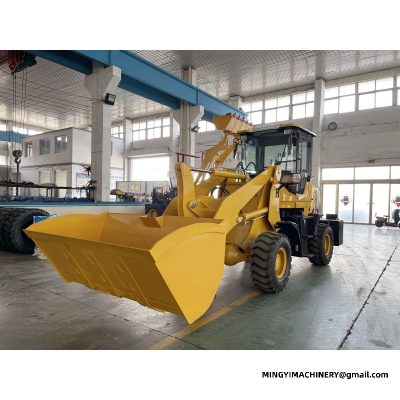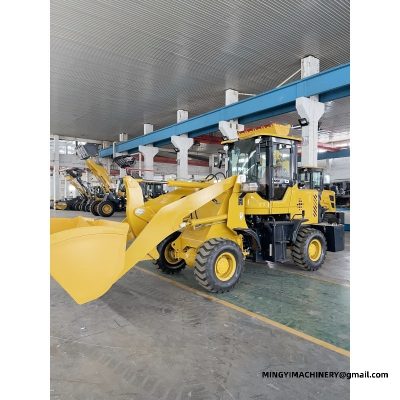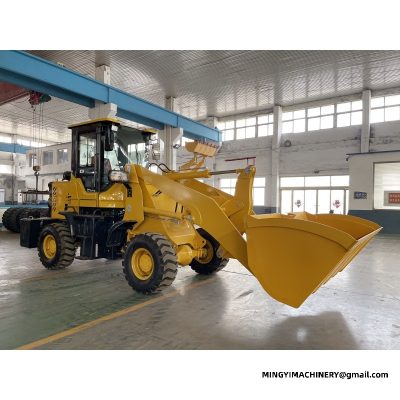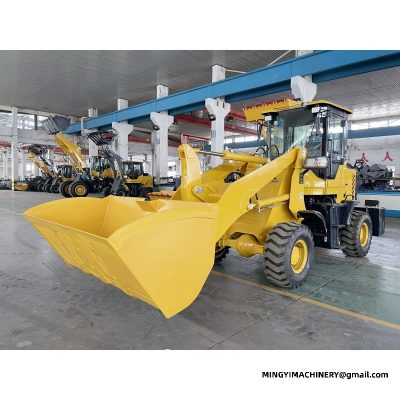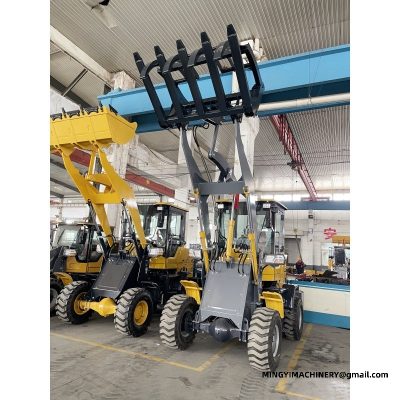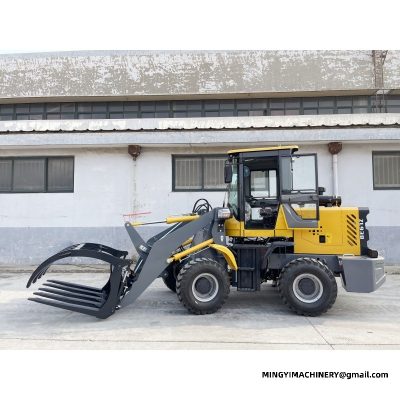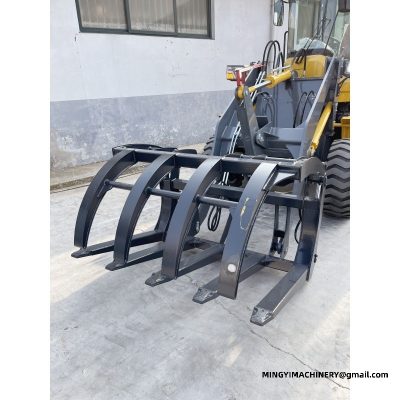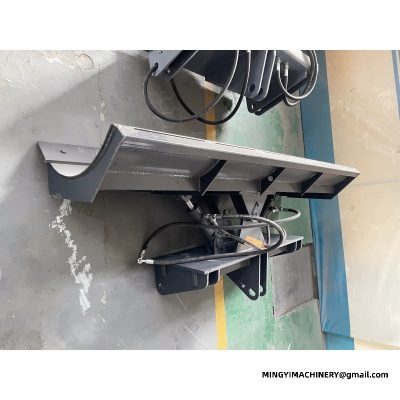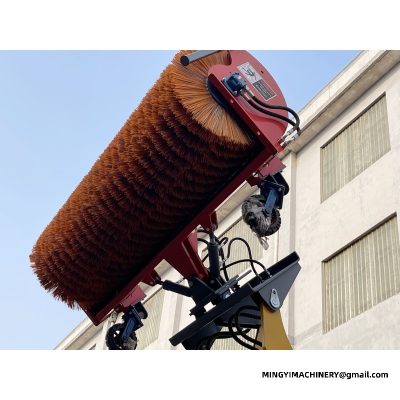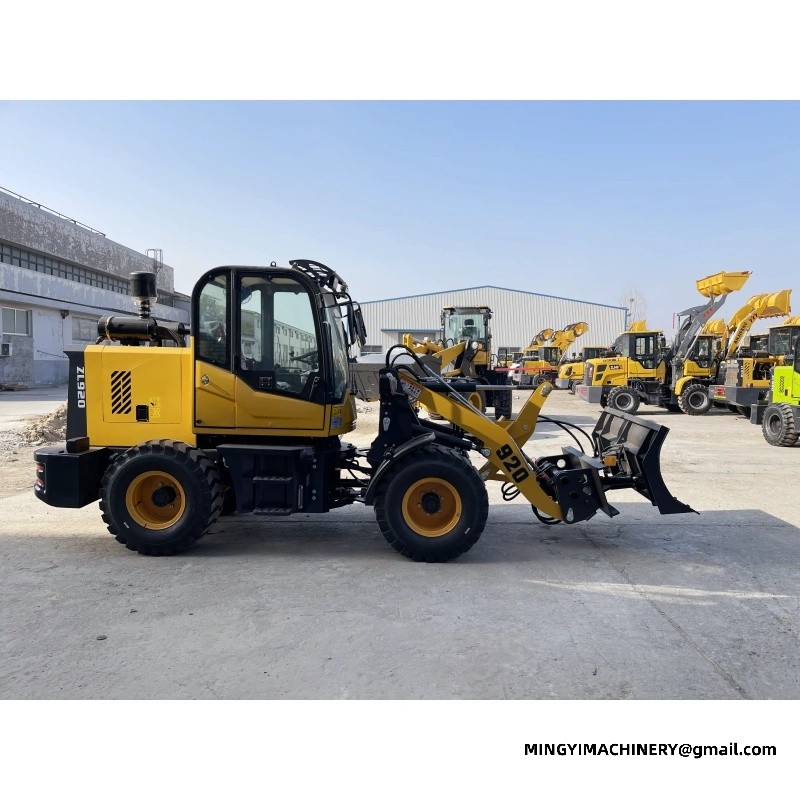
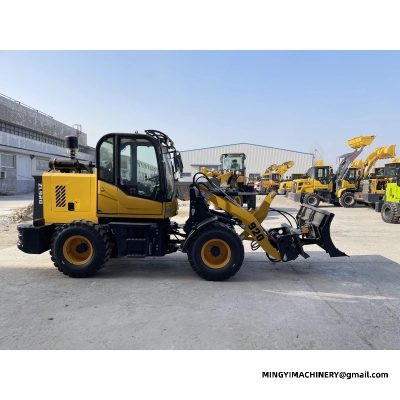
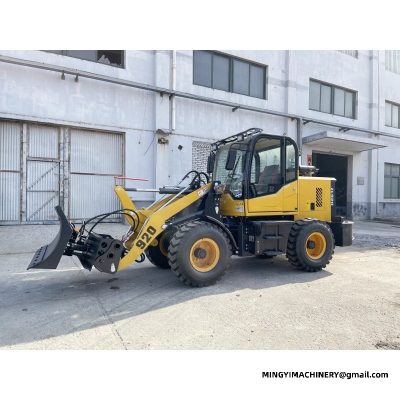
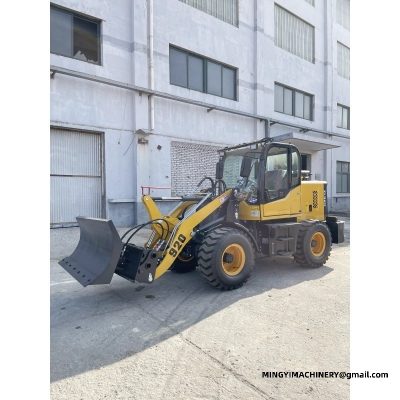
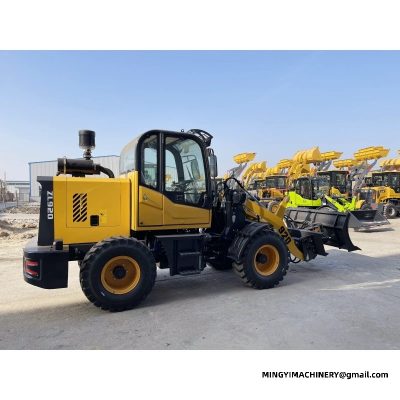
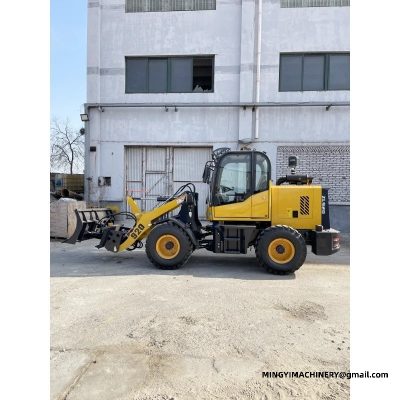
Two loaders can share a name and behave nothing alike. The difference is in the rows nobody reads: cross-member thickness, rear frame section, pump size, tyre fitment. Across this range those rows are published, which makes comparison possible rather than theoretical. Taking the heavy-duty 3.2 m small-frame wheel-side reduction wheel loader with its 0.4 m³ bucket and 3.2 m of lift against the heavy-duty 3.5 m small-frame wheel-side reduction wheel loader with 0.4 m³ and 3.5 m, this page sets out which figures change behaviour on site, which change the maintenance burden, and which change nothing at all.
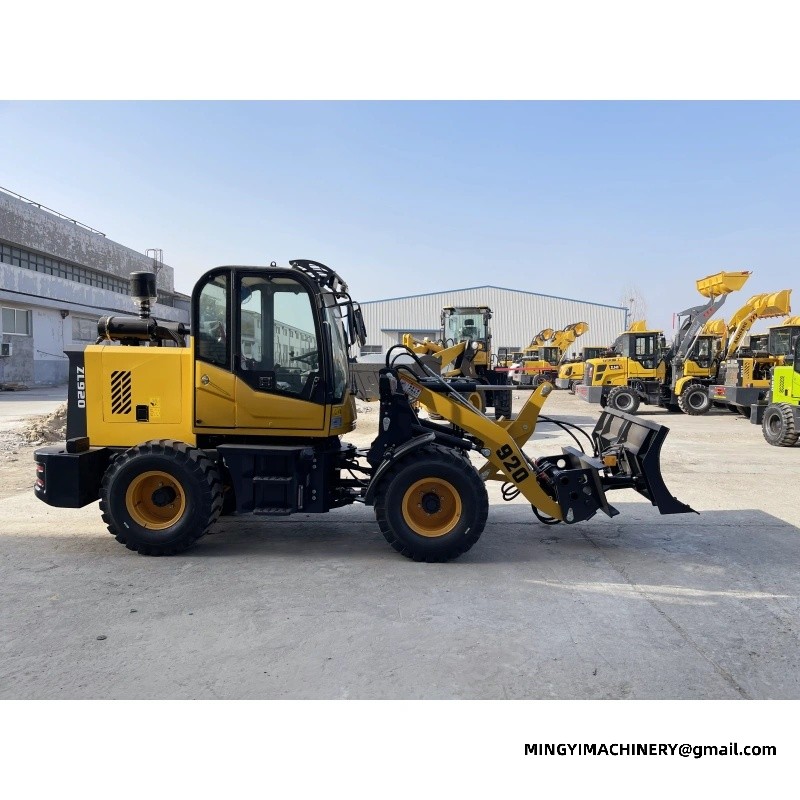
Bucket capacity is the first figure stated and the last one that should be decided. The heavy-duty 3.2 m small-frame wheel-side reduction wheel loader carries 0.4 m³; the heavy-duty 3.5 m small-frame wheel-side reduction wheel loader carries 0.4 m³. What those volumes mean depends on the material: a heaped bucket of dry sand weighs far less than the same heaped bucket of wet gravel or crushed rock, and the machine's stability, not its volume, sets the real limit.
Match the bucket to the receiving body and the material, in that order. A 0.4 m³ bucket at 3.2 m clearing a low pan mixer is correctly specified; the same bucket feeding a highway truck is a slow day. Against that, a 0.4 m³ bucket at 3.5 m needs the frame behind it — 30 mm front and 20 mm rear hinge plates, a 30 mm cross-member — or it will be a fast machine with a short life.
The useful way to read a range is as three decisions: how high, how heavy, and how wide. How high is dump height, 3.8 m against 4.2 m. How heavy is the steel, cross-member 45 mm against 45 mm and rear frame 280 mm high x 800 mm wide against 300 mm high x 800 mm wide. How wide is track, 1.6 m against 1.6 m.
Once those three are settled, the bucket follows from the material and the boom from the height: 0.52 m³ on a 2.9 m arm here, 0.52 m³ on 2.9 m there. Reading it in that order means the specification is decided by the work rather than by whichever machine happened to be in stock.
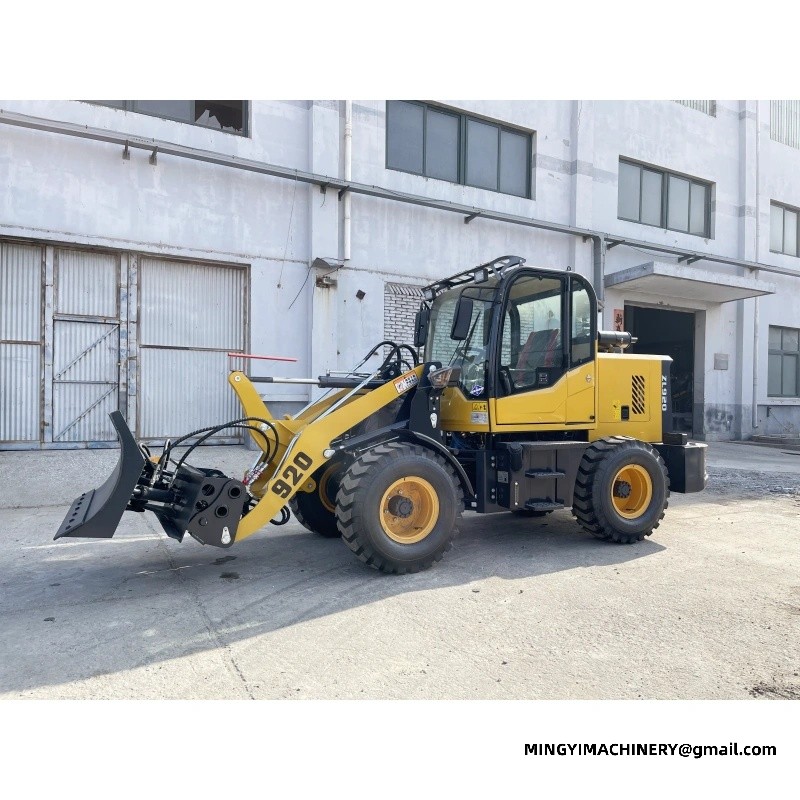
Front-wheel-to-counterweight length is the figure that decides whether a machine fits your site: 4.1 m on the heavy-duty 3.2 m small-frame wheel-side reduction wheel loader against 4.1 m on the heavy-duty 3.5 m small-frame wheel-side reduction wheel loader. Track width is the second: 1.5 m (wheel-side reduction axle); 1.45 m (Isuzu axle) against 1.5 m (wheel-side reduction axle); 1.45 m (Isuzu axle). Together they set the turning circle and the narrowest gap the machine will pass, and they are the two numbers least likely to be stated in a sales conversation.
Access is a hard constraint and it fails silently. A loader that cannot turn in a shed is a loader that cannot work in that shed, whatever its bucket capacity. Compare 4.1 m at 1.5 m (wheel-side reduction axle); 1.45 m (Isuzu axle) on the heavy-duty 3.2 m small-frame wheel-side reduction wheel loader with 4.1 m at 1.5 m (wheel-side reduction axle); 1.45 m (Isuzu axle) on the heavy-duty 3.5 m small-frame wheel-side reduction wheel loader, measure your tightest turn and your narrowest doorway, and buy the machine that passes. Where the gap is marginal, the 4.1 m machine with its 0.4 m³ bucket will earn more than the 4.1 m one with 0.4 m³.
| Sample build from the range — light-duty 3.8 m medium-frame wheel-side reduction wheel loader | |
|---|---|
| Bucket capacity | 0.52 m³ |
| Dump height | 3.8 m |
| Track width | 1.6 m |
| Boom arm thickness | 30 mm |
| Boom arm width | 430 mm |
| Boom arm length | 2.9 m |
| Boom arm centre distance | 900 mm |
| Cross-member thickness | 45 mm |
| Front hinge plate thickness | 45 mm |
| Rear hinge plate thickness | 30 mm |
| Rear frame section | 280 mm high x 800 mm wide |
| Hydraulic cylinders | centre cylinder 60 / side cylinder 50 |
| Fuel tank | 70 L (75# large tank) |
| Battery | 80 Ah |
| Front wheel to counterweight | 4.3 m |
| Radiator | 4105 core |
| Work pump | 2063 pump |
| Travel pump | 25 pump |
Two figures govern refuelling: tank capacity and consumption per hour, and only the first is published — 64.7 L (75# small tank) on the heavy-duty 3.2 m small-frame wheel-side reduction wheel loader, 64.7 L (75# small tank) on the heavy-duty 3.5 m small-frame wheel-side reduction wheel loader. Consumption depends on duty, and the duty differences between a 0.4 m³ bucket at 3.2 m and a 0.4 m³ bucket at 3.5 m are mostly about how hard the engine works per cycle.
What you can plan on: a machine working a short, level cycle will finish a shift on one tank; the same machine ripping from a face or loading up a ramp will not. If your site has no refuelling point, size the tank to the worst day rather than the average one, and specify the larger option where a build offers it. The cooling package is the other half of the same calculation — 4100 core (490 engine); 4105 core (4102T engine) on the heavy-duty 3.2 m small-frame wheel-side reduction wheel loader and 4100 core (490 engine); 4105 core (4102T engine) on the heavy-duty 3.5 m small-frame wheel-side reduction wheel loader — because a machine that stops for temperature stops wherever it is.
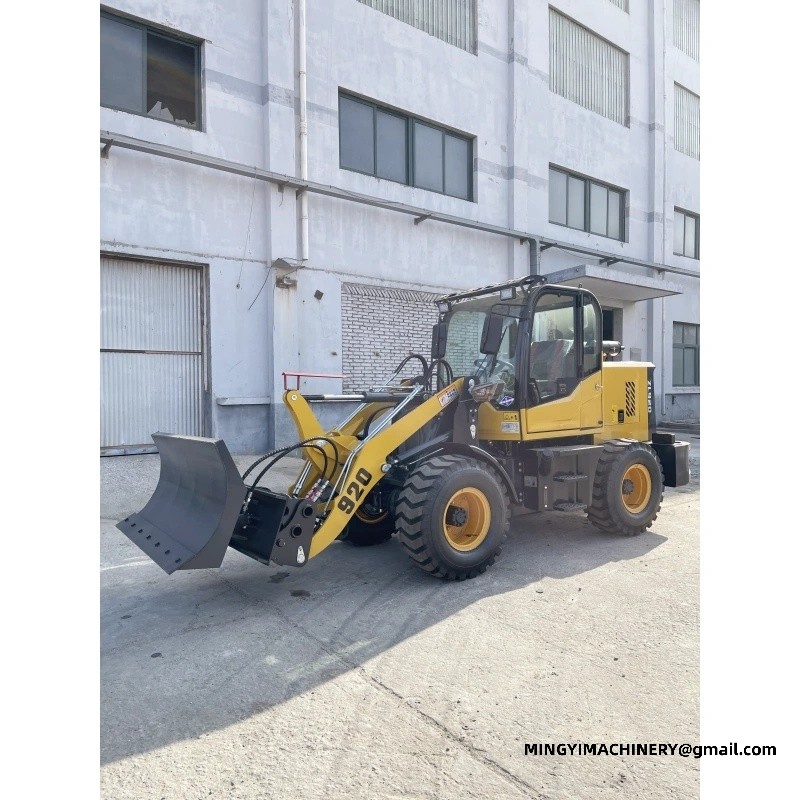
Three takes dominate ownership: fuel, downtime and the residual value of the machine when it is sold. Fuel is set by duty and tank planning — 64.7 L (75# small tank) on the heavy-duty 3.2 m small-frame wheel-side reduction wheel loader, 64.7 L (75# small tank) on the heavy-duty 3.5 m small-frame wheel-side reduction wheel loader. Residual value is set by whether the frame is still tight, which is set by the 20 mm and 20 mm rear hinge plates and the 30 mm and 30 mm cross-members.
Downtime is the lengthy one, and it is usually caused by the simplest components: a hose on the centre cylinder 45 / side cylinder 45 circuit, a blocked 4100 core (490 engine); 4105 core (4102T engine) core, a flat battery from a machine that sat on the dock. None of them is a reason to buy a bigger machine, and all of them are reasons to keep a small spares box. plan for filters, hoses and a cutting edge per year, and for pins and bushes every second year.
Machines ship knock-down, and rear frame width is what decides how many fit a box. Across the range that figure stays between 280 mm high x 800 mm wide and 280 mm high x 800 mm wide, which allows two to three units in a forty-foot container with booms and counterweights packed loose, tanks removed and batteries boxed disconnected.
Plan the container around the model mix rather than around a unit count. A pair of the heavy-duty 3.2 m small-frame wheel-side reduction wheel loader with its 4.1 m footprint loads differently from the heavy-duty 3.5 m small-frame wheel-side reduction wheel loader at 4.1 m, and a mixed order can often be arranged to use the space better than a uniform one. Container plans are stated per order against the actual mix.
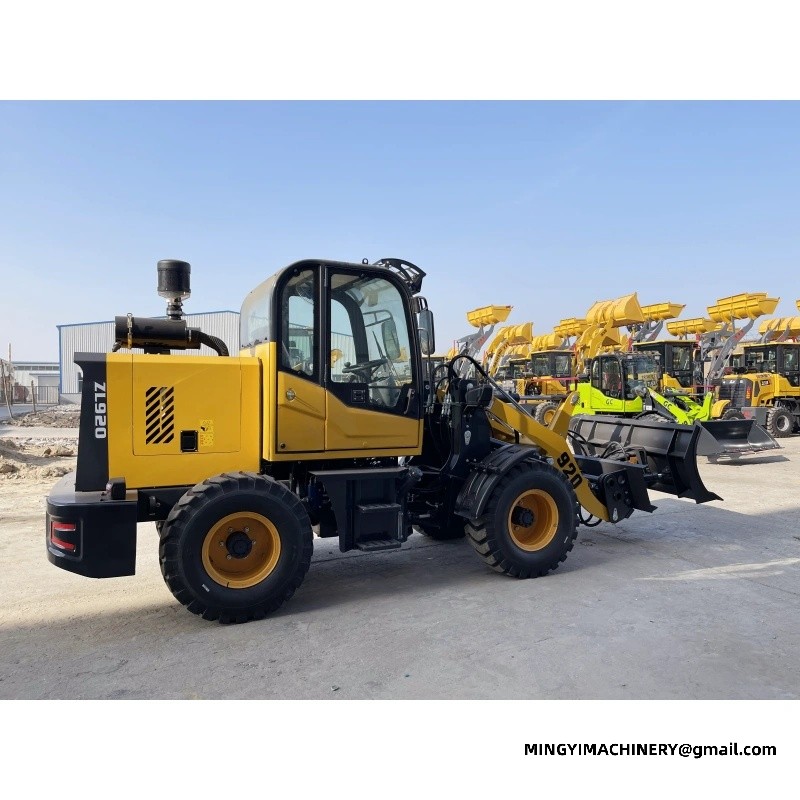
Shipping is a dimensions problem before it is a freight problem. Front wheel to counterweight is 4.3 m on this build and 4.7 m on the light-duty 4.5 m medium-frame wheel-side reduction wheel loader; track is 1.6 m. Those two figures, plus the bucket, decide how many units fit a container and whether the machine travels assembled.
Dump height matters here for a reason that surprises people: a machine shipped with the arm raised will not fit under a container door. At 4.2 m of lift height the arm has to be strapped down, and the securing points are on the frame — the 300 mm high x 800 mm wide rear section and the cross-member behind it, not the cylinders.
A radiator does not fail; it gets blocked. On this build the core is 4105 core, and in dusty or chaff-heavy work it needs cleaning from the clean side outwards, in the reverse direction to normal airflow, because pushing debris further into the fins makes the blockage permanent.
Watch the cap and the seat while you are there. A system that loses pressure boils at a lower temperature, and the symptom is intermittent overheating under load that disappears on the level - - which is routinely misdiagnosed as a pump problem. The pump is 2063 pump; the travel circuit is 25 pump; neither produces that symptom. A cap does.
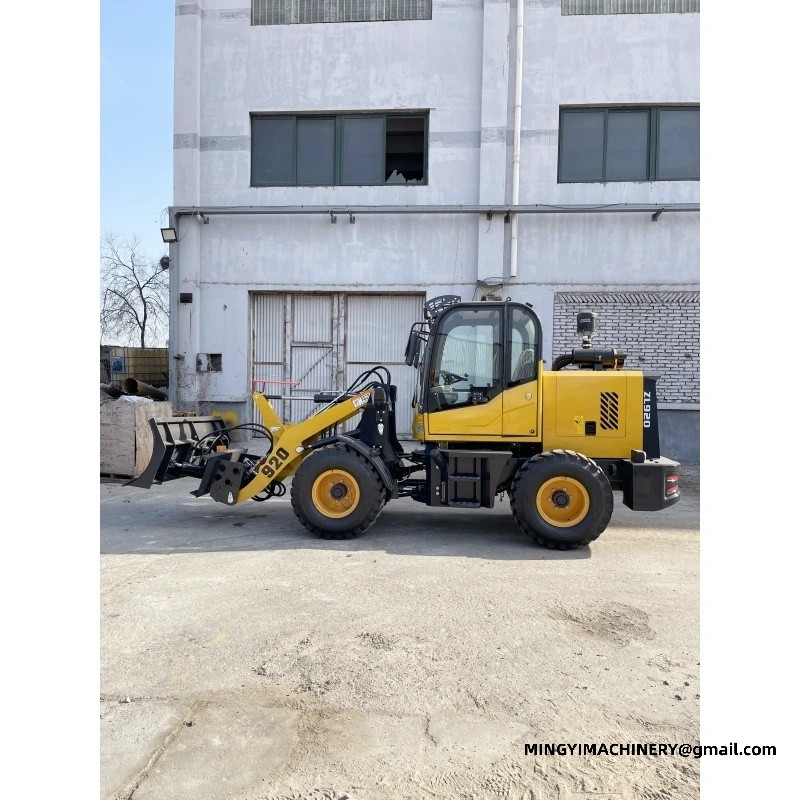
How do I clean the radiator on a wheel loader working in dust?
From the clean side outwards, against normal airflow, so debris comes out rather than being pushed deeper. The core on this build is 4100 core (490 engine); 4105 core (4102T engine); blocked fins are the usual cause of gradual power loss.
Can a wheel loader be used with forks?
Yes, and the load centre moves forward, so capacity drops. Check the boom section, 500 mm wide with 890 mm of spacing, before hanging a long carriage off it.
Is a wheel loader noisy to work beside?
Engine and hydraulic noise, with the pump a contributor: 40 pump (490 engine); 1045 pump (4102 turbo engine) on this build. A pump that is cavitating is louder than a healthy one, so noise is also a diagnostic.
Can a wheel loader work inside a building?
Clearance and ventilation are the constraints. Lift height is 4.2 m and the core is 4100 core (490 engine); 4105 core (4102T engine), which has to reject heat into air that is not moving.
Can worn pins on a wheel loader be repaired?
Yes, if the plates are sound. Re-machining restores geometry for a while; once the 30 mm cross-member and 280 mm high x 800 mm wide rear section have been flexing, it will not hold.
Is it worth rebuilding an older wheel loader?
If the frame is tight, yes: cylinders centre cylinder 45 / side cylinder 40, pump 40 pump (490 engine); 1045 pump (4102 turbo engine) and core 4100 core (490 engine); 4105 core (4102T engine) are all replaceable. If the pins have ovalised their bores, the geometry will not come back.
How much does material weight matter on a wheel loader?
It sets the real limit, not the bucket. Volume is 0.4 m³; what the frame takes is set by the 30 mm cross-member and the 280 mm high x 800 mm wide rear section behind it.
Those are the rows that decide how a wheel loader behaves once it is working. The full table for every build in the range is available on request, along with the engine options that change the pump, radiator and battery figures stated here.
Later additions and retrofits on Wheel Loader: The Checks Before First Start
Most additions are easier to plan than to add. Hydraulic services, mounting brackets and electrical capacity on Wheel Loader: The Checks Before First Start are build items, and deciding them at the specification stage is far easier than doing it later.
Handover and getting familiar with Wheel Loader: The Checks Before First Start
Operators who come from a different machine need a short conversion. The controls on Wheel Loader: The Checks Before First Start follow the usual pattern, but the response, the sightlines and the stopping distance are learned by doing rather than by reading.
Pre-delivery inspection before Wheel Loader: The Checks Before First Start leaves the shop
Inspection is a list, not a glance. Before Wheel Loader: The Checks Before First Start is released the fluid levels, belt tension, electrical connections and safety decals are each ticked off, and anything that fails stays in the shop rather than travelling with the machine.
Packing, loading and shipment of Wheel Loader: The Checks Before First Start
The paperwork matters as much as the packing. Serial numbers, dimensions and weights recorded for Wheel Loader: The Checks Before First Start at loading are the same figures the destination needs, and a mismatch here loses more days than the voyage itself.
Contact MINGYI Machinery for the current wheel loader lineup, configuration options and a formal specification for your market. E-mail: sales@mingycn.com | LINE (ID): mingyicn
Front End Loader: Attachment Changes and Hydraulics · Hydraulic Wheel Loader: Pumps, Hoses and Daily Checks · Wheel Loader for Construction Site: Tipper Clearance and Cycle Time · Wheel Loader