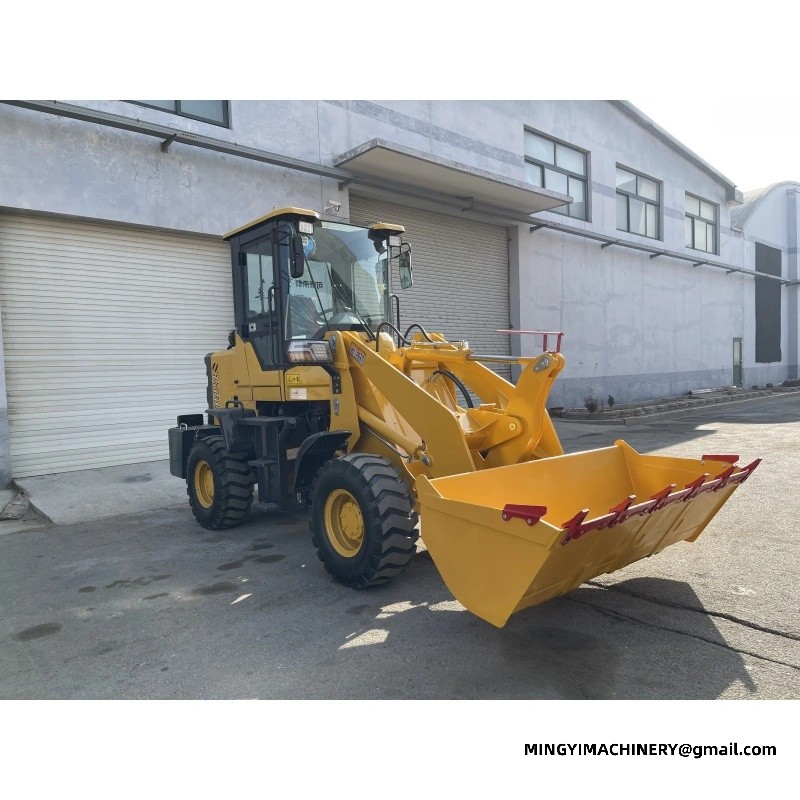
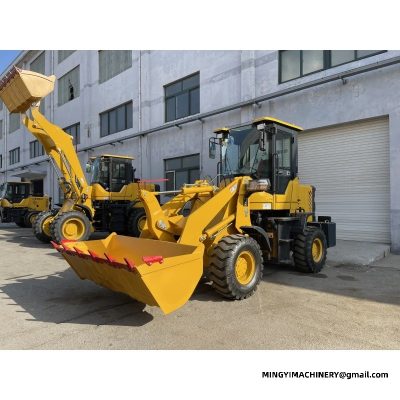
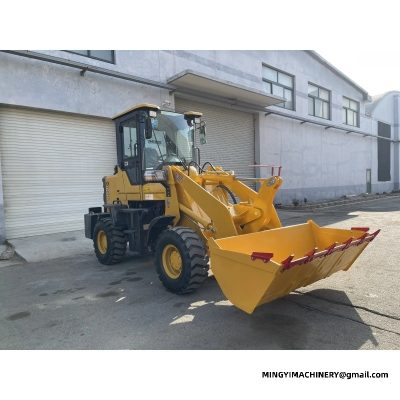
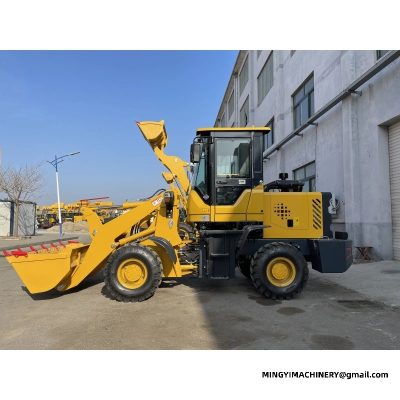
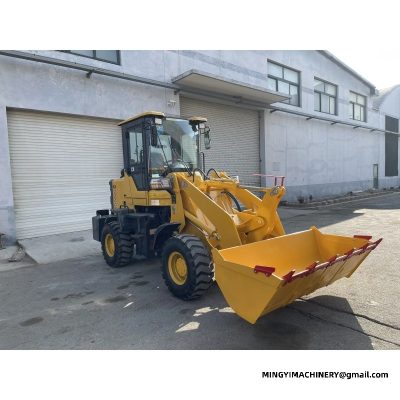
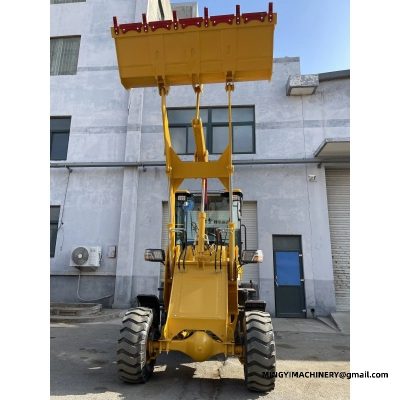
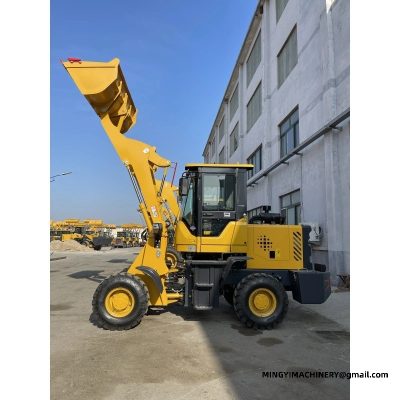
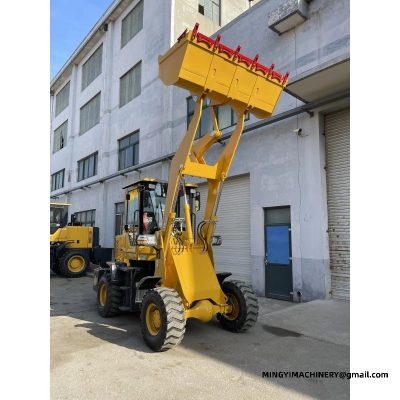
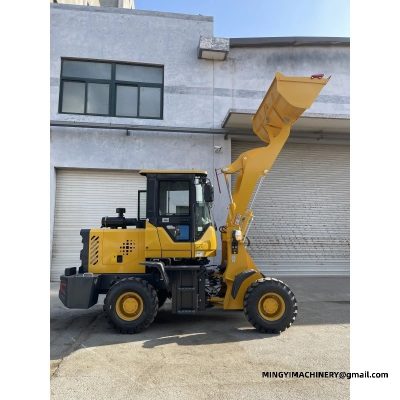
Specification sheets exist so that two people can mean the same thing. Without them, a front end loader order is a name and a hope. With them, it is a bucket of 0.38 m³, a lift of 4.2 m, a track of 1.5 m (wheel-side reduction axle); 1.45 m (Isuzu axle), cylinders of centre cylinder 45 / side cylinder 40 and a radiator of 4100 core (490 engine); 4105 core (4102T engine). This page is written for the moment before an order goes in: which rows to pin down, which to leave flexible, and which will come back to matter at delivery. The light-duty 4.2 m small-frame wheel-side reduction wheel loader and the heavy-duty 4.5 m small-frame wheel-side reduction wheel loader carry the comparisons.
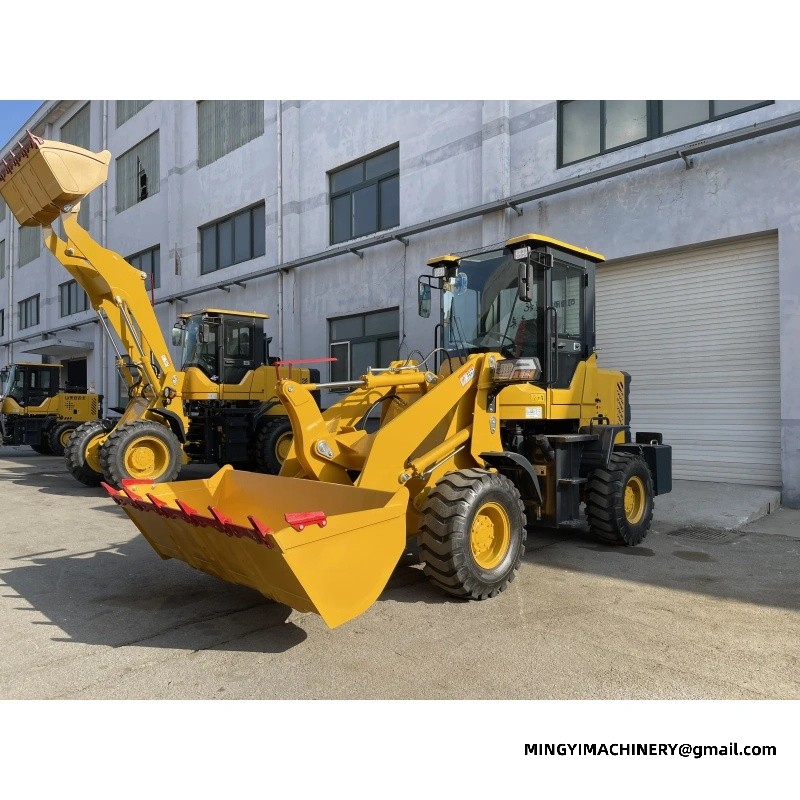
A loader is a tool carrier that happens to come with a bucket. What it can carry is decided at the factory — section width and pin geometry — which is why the light-duty 4.2 m small-frame wheel-side reduction wheel loader with its 370 mm section and the heavy-duty 4.5 m small-frame wheel-side reduction wheel loader with 500 mm do not share tooling even where their bucket capacities look close.
Plan the tool set with the machine order. Bucket plus forks covers most general work; add a grapple for silage, scrap or demolition; add a snow tool where winters are real. If any tool is hydraulically actuated, order the third circuit now, because the 40 pump (490 engine); 1045 pump (4102 turbo engine) on the light-duty 4.2 m small-frame wheel-side reduction wheel loader and the 40 pump (490 engine); 1045 pump (4102 turbo engine) on the heavy-duty 4.5 m small-frame wheel-side reduction wheel loader were sized for the base machine and a retrofit means a valve block, plumbing and labour in the field.
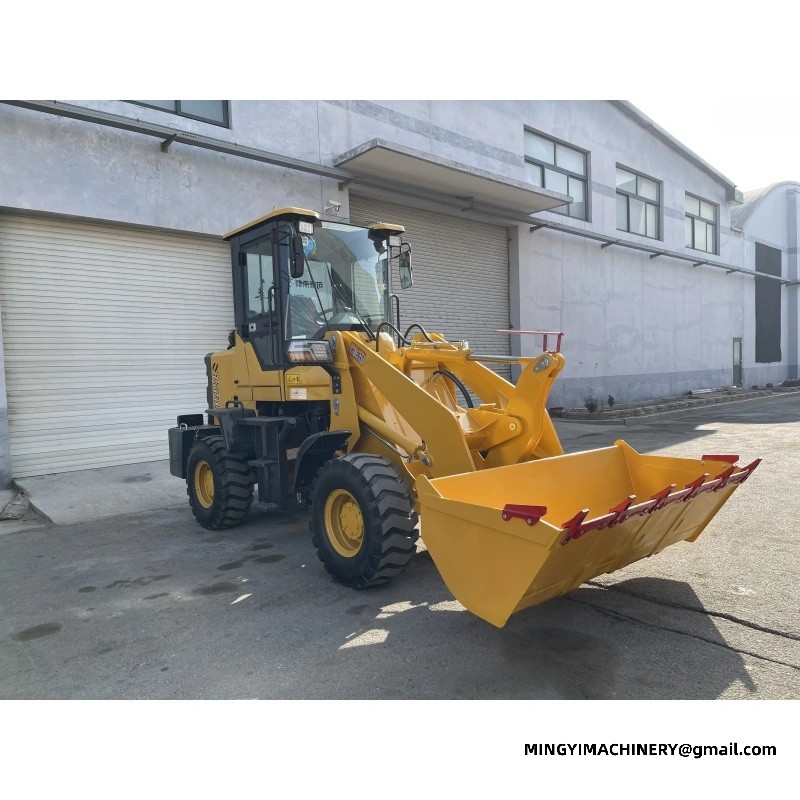
Breakout happens when the bucket is driven into the face and lifted, and it loads the boom in bending. The figures that resist it are wall 25 mm, width 370 mm, and the spacing between the two arms, 890 mm. A wider spacing spreads the load across the pins instead of concentrating it.
Length works against you here. A 3.15 m arm gives reach and height and multiplies the bending moment at the same time, which is why long-arm builds carry thicker walls. On the heavy-duty 3.2 m low-profile wheel loader the same comparison is 2.3 m of length against 25 mm of wall. Where the material is hard to break out, the shorter, thicker combination is usually the better machine.
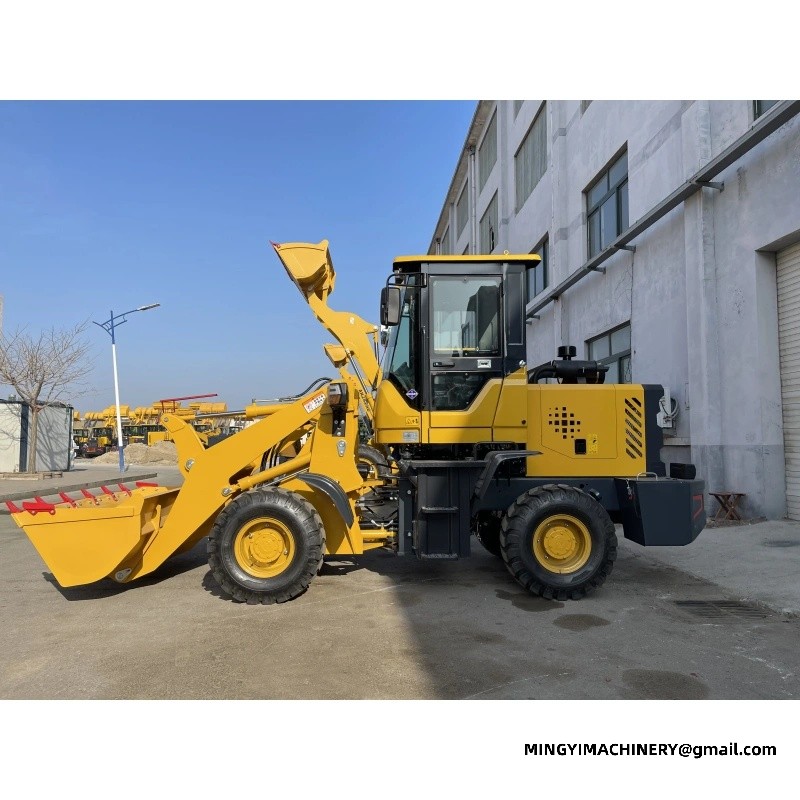
Put the two builds side by side and read four rows only. Bucket: 0.65 m³ against 0.65 m³. Dump height: 3.5 m against 4.2 m. Hinge steel: 45 mm and 30 mm against 45 mm and 30 mm. Cross-member: 45 mm against 45 mm.
Those four decide what the machine can carry, where it can put it, and how long the frame lasts doing it. Everything else on a specification sheet — paint, cab trim, lighting package — is cosmetic next to them. The pumps, 2063 pump against 2063 pump, are the fifth row and matter only if the work is hydraulic rather than loading.
| Reference specification — heavy-duty 3.2 m low-profile wheel loader | |
|---|---|
| Bucket capacity | 0.4 m³ |
| Dump height | 3.2 m |
| Track width | 1.5 m (wheel-side reduction axle); 1.45 m (Isuzu axle) |
| Boom arm thickness | 25 mm |
| Boom arm width | 430 mm |
| Boom arm length | 2.3 m |
| Boom arm centre distance | 890 mm |
| Cross-member thickness | 30 mm |
| Front hinge plate thickness | 30 mm |
| Rear hinge plate thickness | 20 mm |
| Rear frame section | 230 mm high x 800 mm wide |
| Hydraulic cylinders | centre cylinder 45 / side cylinder 45 |
| Fuel tank | 54 L (50# tank) |
| Battery | 60 Ah (490 engine); 80 Ah (4102 turbo engine) |
| Front wheel to counterweight | 4.1 m |
| Radiator | 4100 core (490 engine); 4105 core (4102T engine) |
| Work pump | 40 pump (490 engine); 1045 pump (4102 turbo engine) |
| Travel pump | 316 pump |
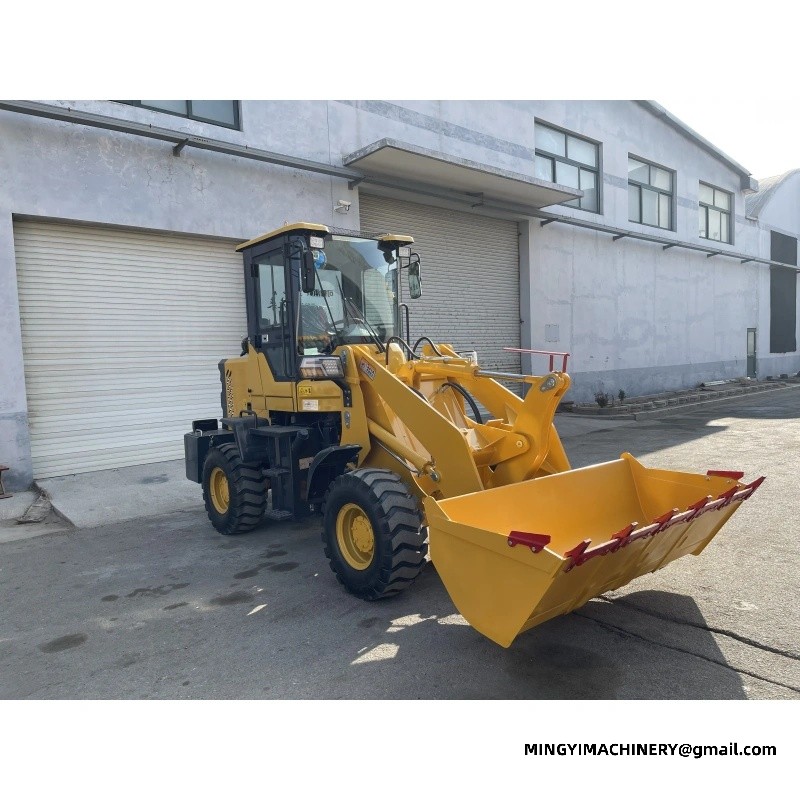
On broken ground the rear frame takes the twisting. Cabin and counterweight sit at one end, the articulation joint at the other, and every rut loads the section between them. Here that section is 200 mm high x 750 mm wide, and it is worth reading as a beam: the height resists vertical bending, the width resists twist.
The cross-member is the other half of the same job. 16 mm on the standard 2.8 m low-profile wheel loader against 45 mm on the heavy-duty 4.2 m medium-frame wheel-side reduction wheel loader. Thicker steel there means the mounting faces stay aligned through seasons of flexing, which is what keeps the rear hinge pin, at 16 mm, from wearing oval. Frames rarely break; they go loose, and looseness starts at the pins.
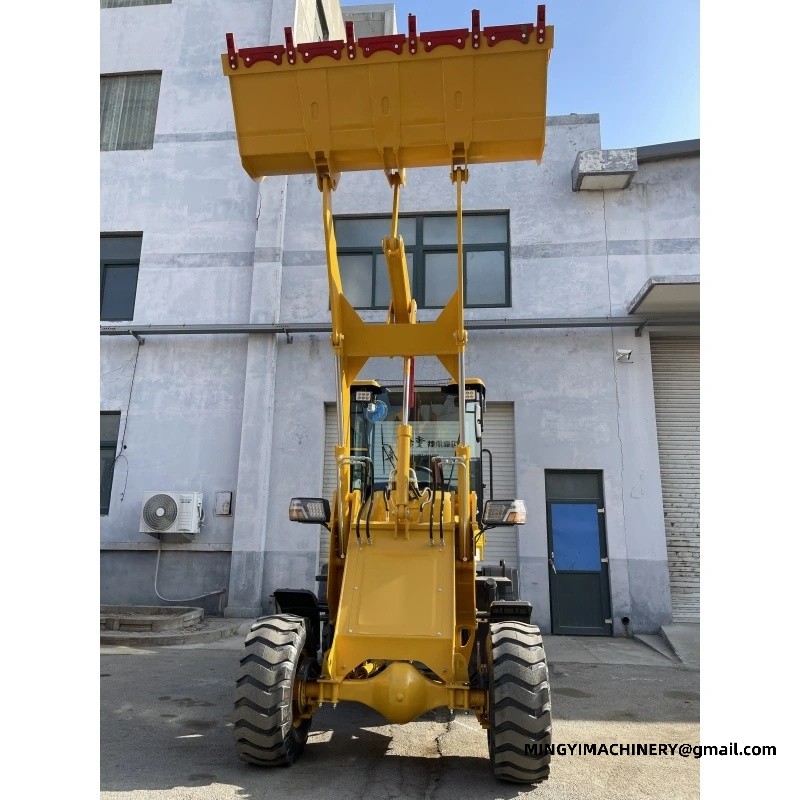
An articulated loader turns by bending in the middle, and the hinge is where that bending happens. Front plate 45 mm, rear plate 30 mm. The front is the thicker of the two on every build in the range, because it carries the boom and the payload directly, while the rear carries the engine and the counterweight through every steering movement and is sized for the twisting those movements produce rather than for the weight alone.
Pin wear is how hinges fail, and it shows up as a machine that wanders and a steering that feels vague. The cross-member is what prevents it: 45 mm holding the two sides of the frame at a fixed distance so the pins stay square. Compare 45 mm on the heavy-duty 4.5 m medium-frame wheel-side reduction wheel loader and the difference in plate thickness starts to make sense — they are specified together, not separately.
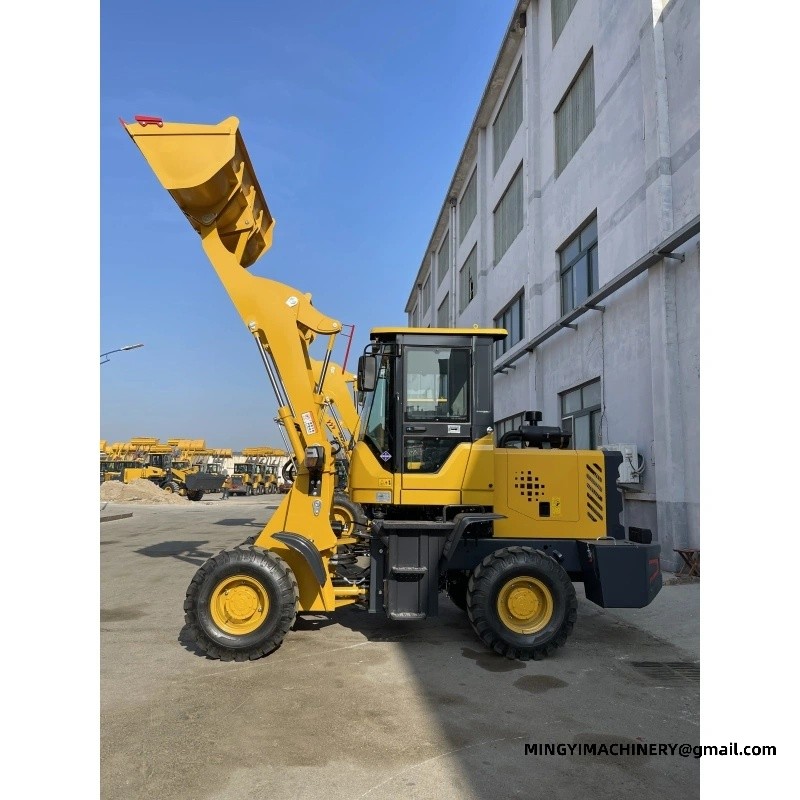
Acceptance takes twenty minutes and prevents a season of argument. Measure the bucket, 0.3 m³ on this build. Measure dump height with the arm at full lift, 2.8 m. Read the cylinders, centre cylinder 45 / side cylinder 40. Check the track, 1.2 m (Isuzu axle); 1.3 m (wheel-side reduction axle). Check the length from front wheel to counterweight, 3.5 m. Those five are on the sheet and on the machine.
The steel is harder to verify and worth verifying anyway, because it is what the money bought. Hinge plates 16 mm and 16 mm, cross-member 16 mm, boom wall 20 mm on a 300 mm section. A tape across the plate edge and a magnet will tell you whether the frame matches the order.
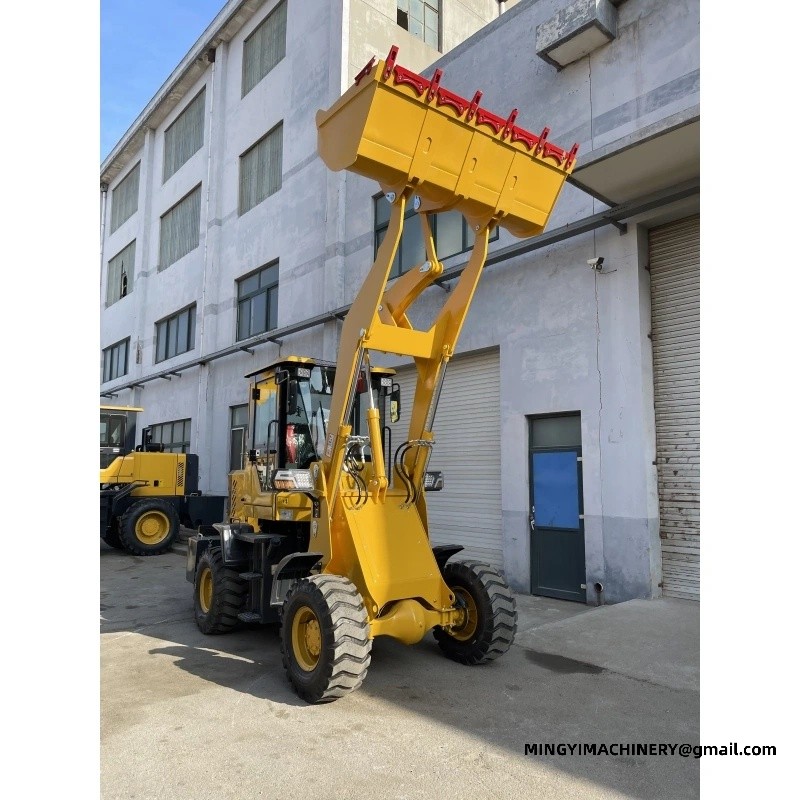
A loader that is greased, cool and clean will run for years on its original frame. The components that need attention are the articulation — 25 mm and 20 mm hinge plates on the light-duty 4.2 m small-frame wheel-side reduction wheel loader — the boom mounts at 890 mm, and the cooling pack, 4100 core (490 engine); 4105 core (4102T engine).
Set the intervals by duty, not by calendar. A machine working a dusty stockyard needs its core blown out daily; the same machine on a farm needs it monthly. A machine loading a face needs its pins greased every shift; one moving pallets needs it weekly. The specification tells you what to check — centre cylinder 45 / side cylinder 40 cylinders, 40 pump (490 engine); 1045 pump (4102 turbo engine) and 316 pump on the light-duty 4.2 m small-frame wheel-side reduction wheel loader, centre cylinder 45 / side cylinder 45, 40 pump (490 engine); 1045 pump (4102 turbo engine) and 316 pump on the heavy-duty 4.5 m small-frame wheel-side reduction wheel loader — and the duty tells you how often.
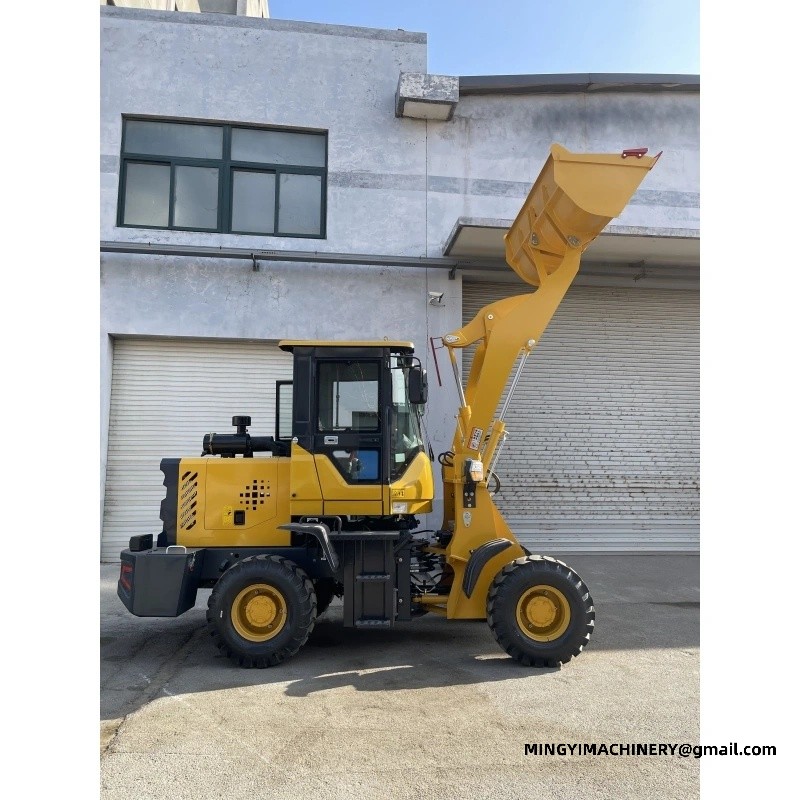
Work from the longest dimension. 4.1 m from front wheel to counterweight on this machine, 4.95 m on the heavy-duty 4.5 m medium-frame wheel-side reduction wheel loader. The bucket usually comes off; the counterweight usually stays, because removing it changes the securing plan far more than the space it saves.
Track is the second constraint, 1.5 m (wheel-side reduction axle); 1.45 m (Isuzu axle), and it is the one that decides whether two machines can travel side by side. Where a build offers two axles the track differs slightly between them, so confirm which axle is on the unit before booking space. Fuel is drained to a residue for shipping, and the tank on this build is 54 L (50# tank); that figure matters for the hazmat paperwork rather than for the loading plan.
How do I choose the axle on a front end loader?
By surface. Track is 1.5 m (wheel-side reduction axle); 1.45 m (Isuzu axle) here; where two figures are listed the wider one is the hub-reduction axle for soft or rutted ground, the narrower one suits hard standing.
Should I go up a bucket size on a front end loader?
Only if the material is light enough to fill it. 0.4 m³ against 0.65 m³ looks like a gain on paper and is a loss on dense material, and the extra weight lands on the hinge.
What does a daily check on a front end loader actually consist of?
Look at the ground under the machine, check coolant and oil, grease the hinge pins behind the 25 mm front and 20 mm rear plates, and glance at the cylinder rods. Ten minutes, every shift.
Why does my front end loader bucket only fill two-thirds?
The material is denser than the bucket was matched to. At 0.4 m³ on the heavy-duty 3.2 m low-profile wheel loader against 0.65 m³ on the heavy-duty 3.8 m medium-frame wheel-side reduction wheel loader, a smaller bucket that fills completely moves more per hour than a larger one that does not.
Why does my front end loader turn over slowly on cold mornings?
Cranking capacity falls with temperature, and the rating is 60 Ah (490 engine); 80 Ah (4102 turbo engine) on this build. Where two engines are offered the higher rating belongs to the turbo; specify it if the machine starts cold or stops often.
Is it worth rebuilding an older front end loader?
If the frame is tight, yes: cylinders centre cylinder 45 / side cylinder 40, pump 32 pump and core 4100 core are all replaceable. If the pins have ovalised their bores, the geometry will not come back.
What is involved in changing attachments on a front end loader?
Mechanical mounting plus hydraulics. The cylinders are centre cylinder 45 / side cylinder 45 and the pump is 40 pump (490 engine); 1045 pump (4102 turbo engine); flow, not force, is usually what limits an added service.
If the comparison here is close, decide on the rows that outlast the job: cross-member 25 mm against 30 mm, rear frame 280 mm high x 800 mm wide against 280 mm high x 800 mm wide. Capacity can be changed with a bucket; steel cannot be changed at all.
Storage and long idle periods for Front End Loader: Attachment Changes and Hydraulics
A stored machine should be brought back carefully. Before Front End Loader: Attachment Changes and Hydraulics returns to work the fluids, the brakes and the controls are checked, because months of standing change more than a weekend does.
Fuel, oil and fluid quality for Front End Loader: Attachment Changes and Hydraulics
Contamination is easier to prevent than to cure. Keeping the filler caps sealed, the funnels clean and the containers closed around Front End Loader: Attachment Changes and Hydraulics is unglamorous work that shows up as reliability later.
Hot, humid and dusty conditions around Front End Loader: Attachment Changes and Hydraulics
Tropical operation is a specification question as much as a maintenance one. The cooling capacity, the sealing and the corrosion protection fitted to Front End Loader: Attachment Changes and Hydraulics are what make the difference once the ambient temperature rises.
Documents that travel with Front End Loader: Attachment Changes and Hydraulics
A clear parts book saves more time than any other document. When Front End Loader: Attachment Changes and Hydraulics needs a replacement, the illustration and the part number are what turn a phone call into a shipment instead of a description.
Contact MINGYI Machinery for the current wheel loader lineup, configuration options and a formal specification for your market. E-mail: sales@mingycn.com | LINE (ID): mingyicn
Hydraulic Wheel Loader: Pumps, Hoses and Daily Checks · Wheel Loader Manufacturer: Questions to Ask the Factory · Wheel Loader for Material Handling: Pallet, Bagged and Bulk Load Duty · Wheel Loader









