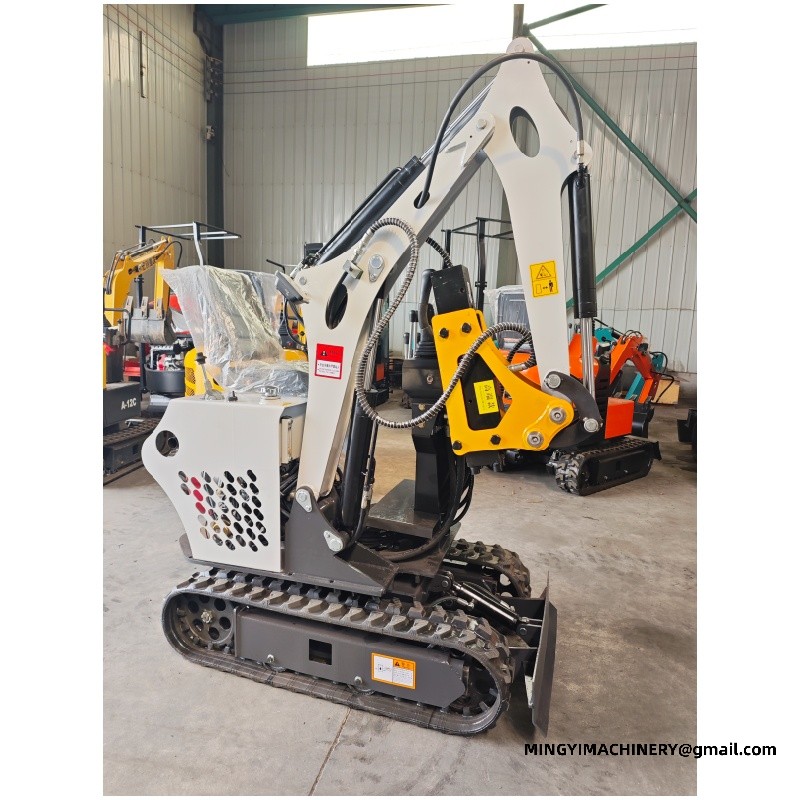
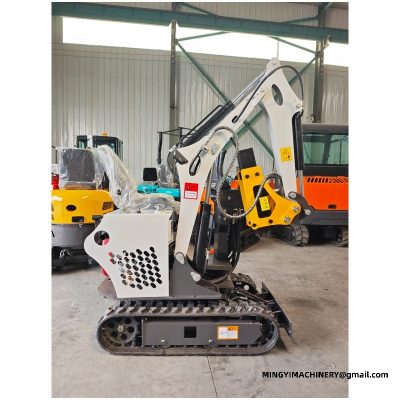
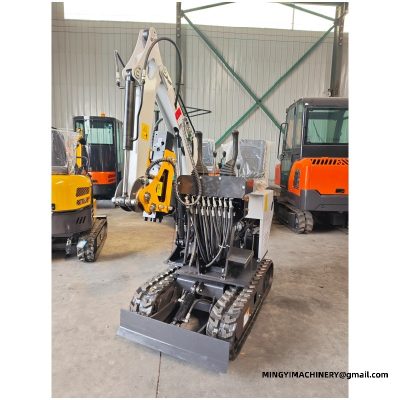
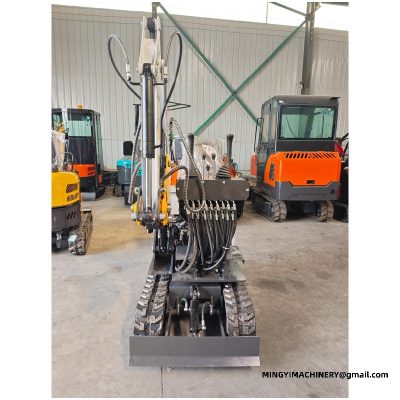
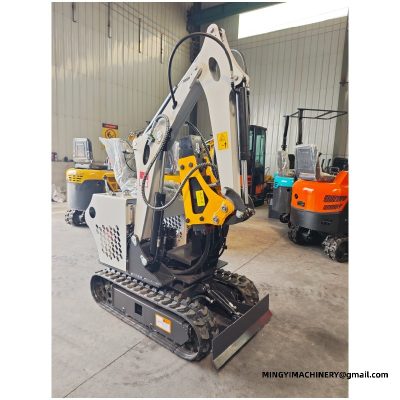
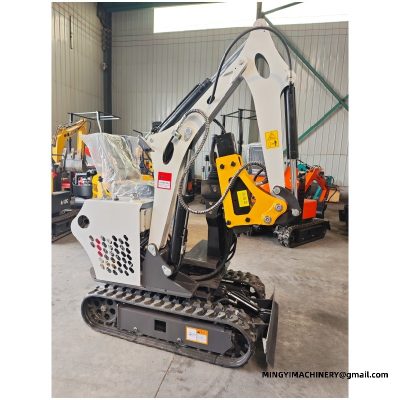
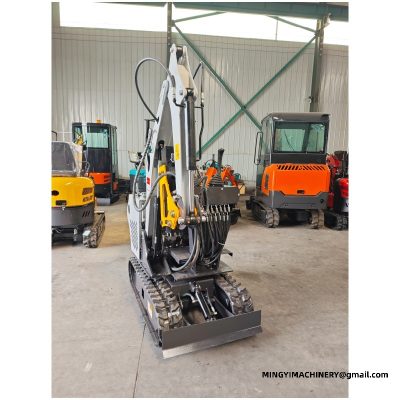
Planting work is slow when it is done by hand and untidy when it is done with the wrong machine. A mini excavator used for planting carries the tool to the position, prepares the ground, and lifts the stock without compacting the soil around it.
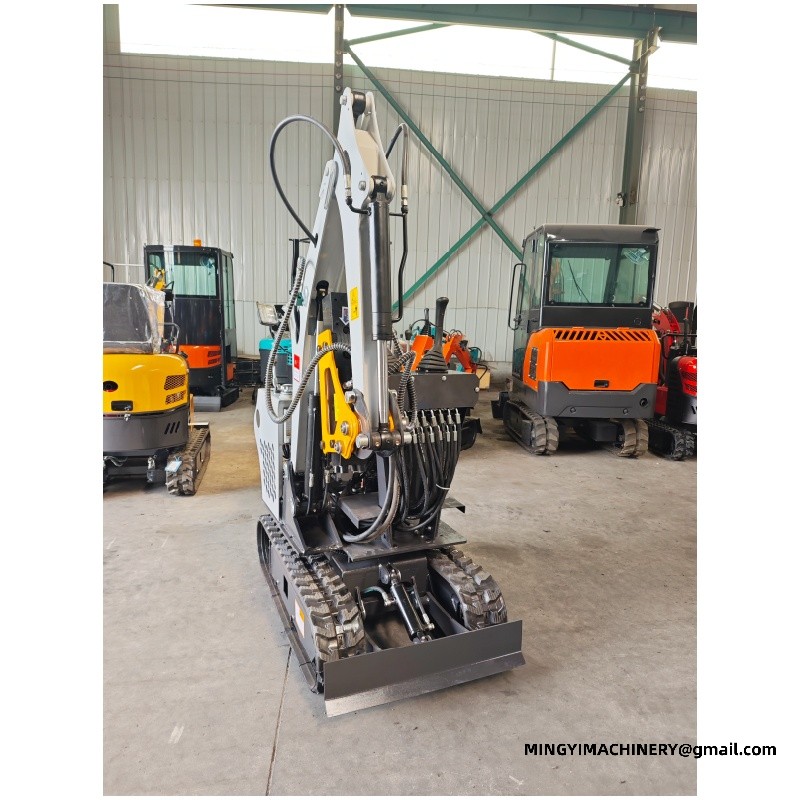
MINGYI builds compact crawler units with rubber tracks, which is the undercarriage that suits planted ground. The machine can travel between beds and along a border without cutting into the surface it crosses.
Preparing ground before garden planting
Good planting starts with the soil, and compacted ground has to be loosened before anything goes into it. A rotary tiller or a soil loosener on the machine breaks the layer in place, and the bucket is then used only to move material aside.
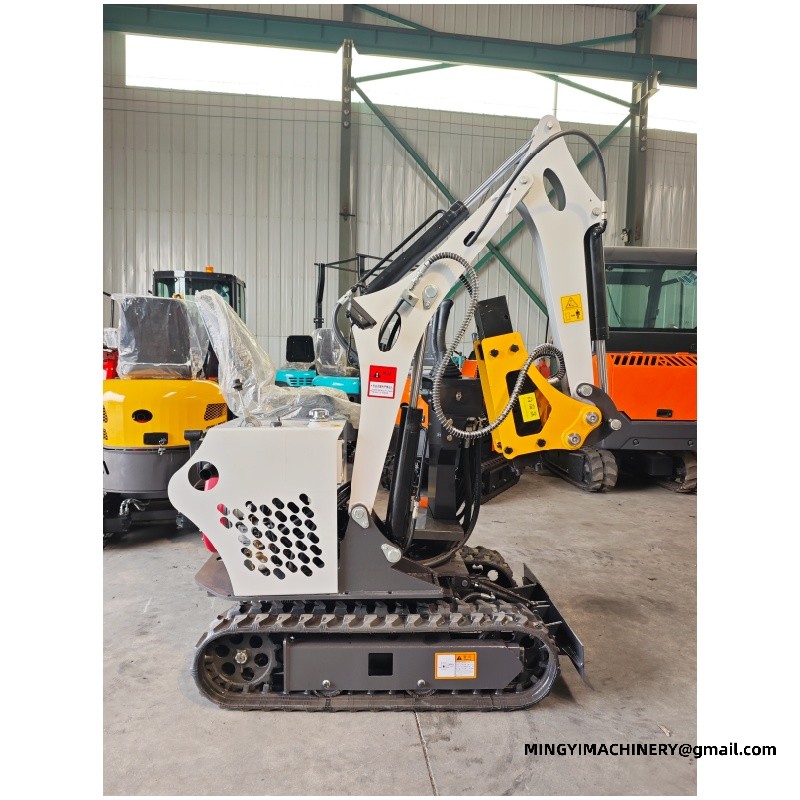
Where a bed has to be formed to a level, a tilting bucket trims the surface without the machine repositioning. That accuracy matters when the planting plan is already set out and the finished levels have to match the surrounding garden.
Lifting plants and trees with an excavator
Lifting stock is the part of the job a bucket handles badly. A plant grabber or a grass and tree grabber holds a root ball or a bundled shrub securely, so it can be carried to the hole upright and set without being dropped.
Where planting is followed by a fence or a trellis, an auger on the same coupler drills the post holes in line. One machine then prepares the ground, plants the stock and sets the posts without a second visit.
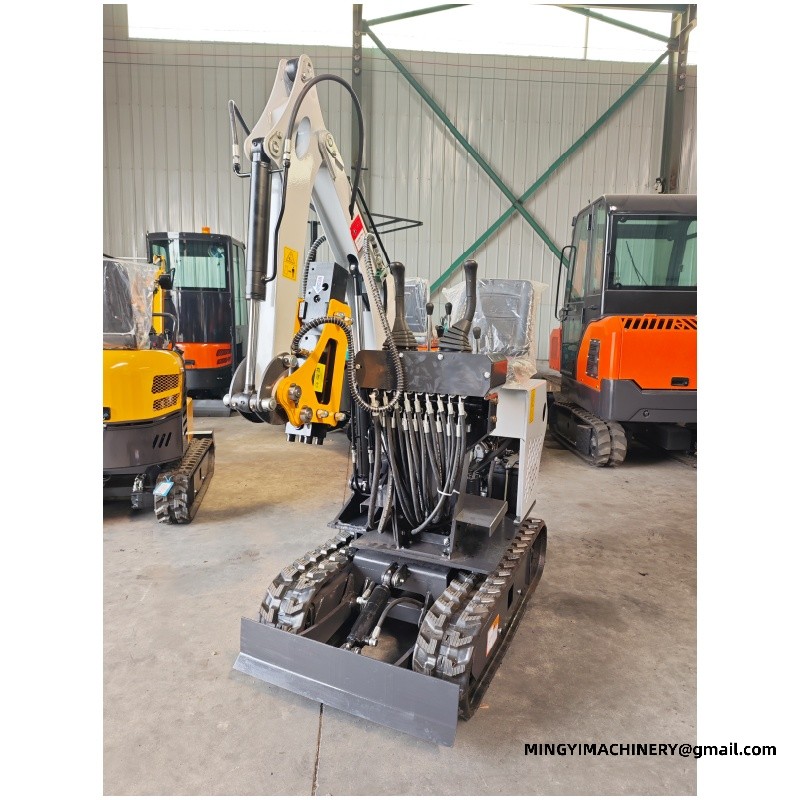
Planting work suits a compact excavator because the machine can be gentle as well as accurate. Specified with rubber tracks, a tiller and a grab, it prepares ground and places stock without the damage a heavier machine would leave behind.
Canopy or enclosed cab on a mini excavator for garden planting A canopy keeps the machine light and the operator aware of the surroundings, which suits short jobs in warm weather. A fully enclosed cab is specified where rain, dust or cold are part of the working year, and it can be added to the excavator as a retrofit rather than only at build time. Enclosure also changes noise and dust exposure. A sealed cab on this class of machine keeps dust out on dry sites and lets the machine work through weather that would otherwise stop a canopy machine for the day. Municipal and public works with mini excavator for garden planting Drainage repair, tree planting, footway reconstruction and cemetery work are all within the range of the unit in daily use. The jobs are small individually and continuous across the year. Noise and surface protection matter on public work. A machine of this size on rubber tracks across paving, with a sealed cab for the operator, suits the conditions better than a larger tracked machine. Lifting and material handling with a mini excavator for garden planting Lifting with a machine built to dig needs a plan. The load, the radius and the ground under the machine itself all matter, and the safe figure is the one on the chart rather than the one that looks possible. Stability changes with reach. A load the equipment on site handles close in becomes a different proposition at full extension, so the working radius belongs in the plan before the lift rather than during it. Running mini excavator for garden planting in a rental fleet Rental fleets buy for utilisation, not for a single job. The model in question with a quick coupler and a common attachment standard is hired more often because it suits more of the calls that come in. The specification that rents best is usually the simplest one to explain at the counter. The machine in that duty with rubber tracks, a canopy and a coupler covers the majority of weekend and short-term hires. Orchard, vineyard and farm use of mini excavator for garden planting Orchard and vineyard work is carried out between rows. The unit on the job with a narrow chassis and a swing boom works down the row without damaging the trees, which is the reason a full-size machine is not used at all. Ditching, fertilising and drainage on farmland suit a machine built for the work because the work is spread over a large area in short bursts. The machine travels behind a pickup and works where it stops. Operator technique for mini excavator for garden planting The second habit is tool discipline. Running the equipment in service with the right bucket width for the trench means less spoil, less reinstatement and a cleaner job than a wide bucket and a lot of trimming. Stability is the third. The excavator working across the tracks rather than over the corners keeps the machine steady and the undercarriage loaded evenly, which shows up as track life at the end of the season. Trenching work with this class of machine Service trenches are the most common reason the unit in daily use is hired. Water, sewage, cable and gas runs are narrow, shallow and often close to existing services, which is exactly the work a full-size machine cannot do safely. Depth control matters more on service work than speed. A machine of this size working beside live services is chosen because it can be placed precisely and stopped instantly, which is what the job actually requires. Working near live services with the equipment on site Digging near water, gas and cable is a precision job. The machine itself is used here because the operator can work in short controlled cuts and because the machine can be positioned without driving over the run being exposed. Utility crews specify the model in question with a narrow bucket and good visibility for exactly this reason: the machine has to stop at the service, not at the edge of the operator's view. Working the machine in that duty through the seasons Seasonal planning smooths the workload. Machines that are busy for a few months and idle for the rest benefit from a service slot in the quiet period, and the unit on the job prepared in the off-season starts the busy months reliably. Heat and dust are as limiting as rain. Air intake condition and cooling cleanliness decide how a machine built for the work behaves in a dry season, and both are checked in a minute rather than repaired later. Working the equipment in service in confined spaces Confined sites are decided by dimensions. Overall width, tail swing and the space needed to work the arm are what let the excavator operate inside a building, between walls or in a courtyard. Ventilation is the other indoor constraint. Running this class of machine inside a closed structure needs air movement, and that is a planning item rather than something to discover after the first hour. What owners should plan for beyond the unit in daily use The useful comparison is demand per working hour, not demand per machine. A machine of this size that works more hours a year spreads its standing takes over more output, which is why utilisation usually matters more than the invoice figure. Downtime is the hidden line item. The equipment on site waiting on a part earns nothing while it stands, so parts availability and service access belong in the plan as much as fuel does. OEM and fleet customisation of the machine itself Distributors and rental fleets usually need the machine to look like theirs. Paint, decals, seat colour and attachment branding can be specified on the model in question at build time rather than applied after import. Customisation also covers the specification sheet. A fleet buyer may want every machine in that duty delivered with the same coupler, the same engine and the same tool kit so training and parts stock stay simple. Specification data for the unit on the job The figures below are the factory figures for the models most often matched to a machine built for the work. They are the numbers to check against the site: the depth the work needs, the reach from one position, and the width of the narrowest point on the route in. Figures are factory figures and are confirmed on the build sheet for the equipment in service. Where a job sits between two models, the larger machine usually takes less time than the smaller one spends on rework. Machines leave the factory prepared for container or flat rack shipment. The excavator is normally shipped with the attachment set and the spare parts list agreed in advance so the container is planned once. Buyers who import regularly plan the spare parts with the machine. This class of machine ordered with a wearing-parts kit arrives ready to work rather than ready to wait for the first service interval.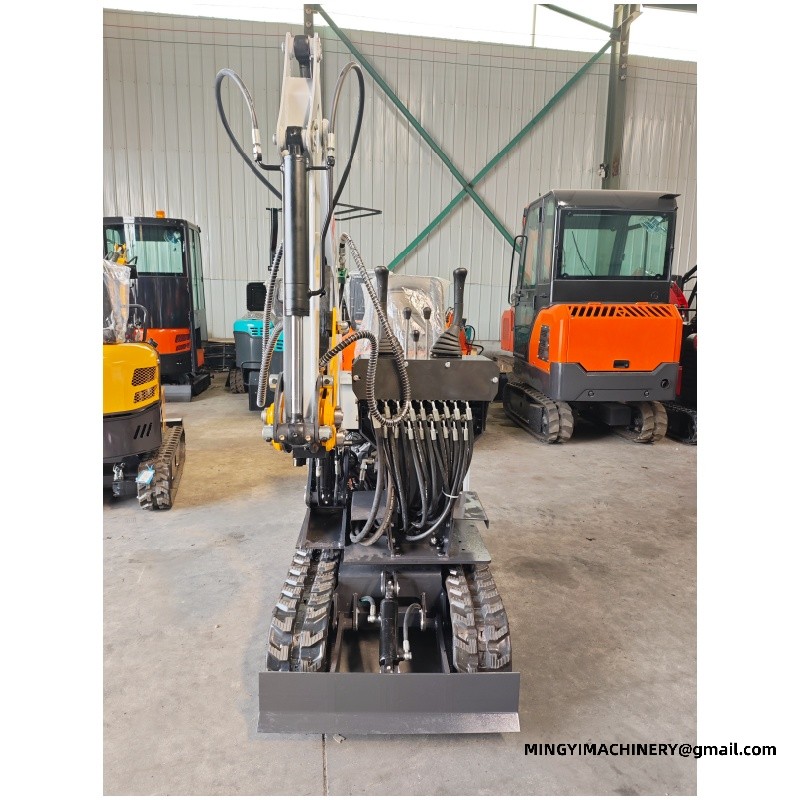
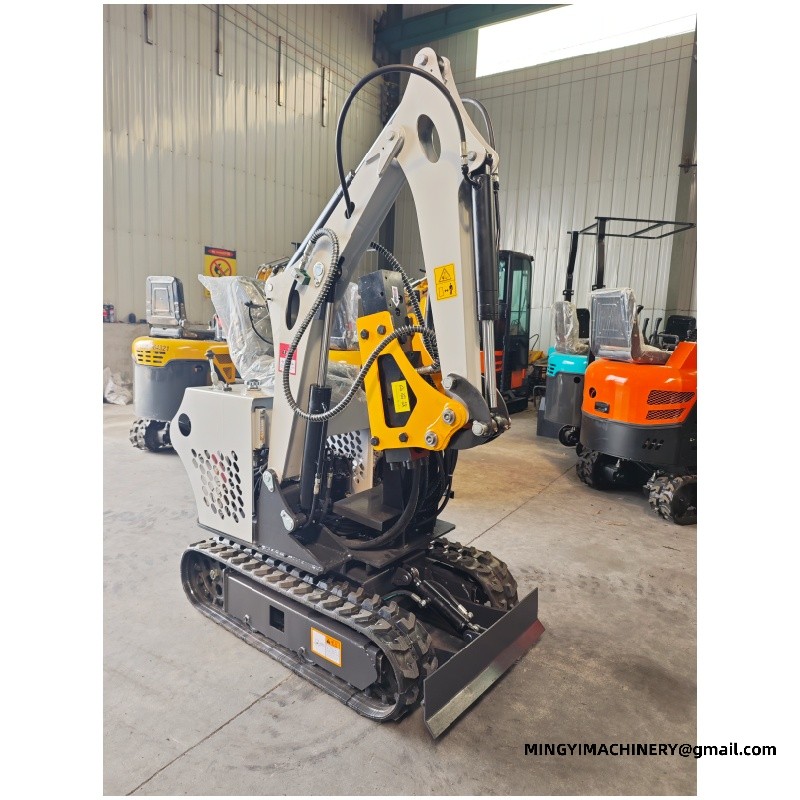
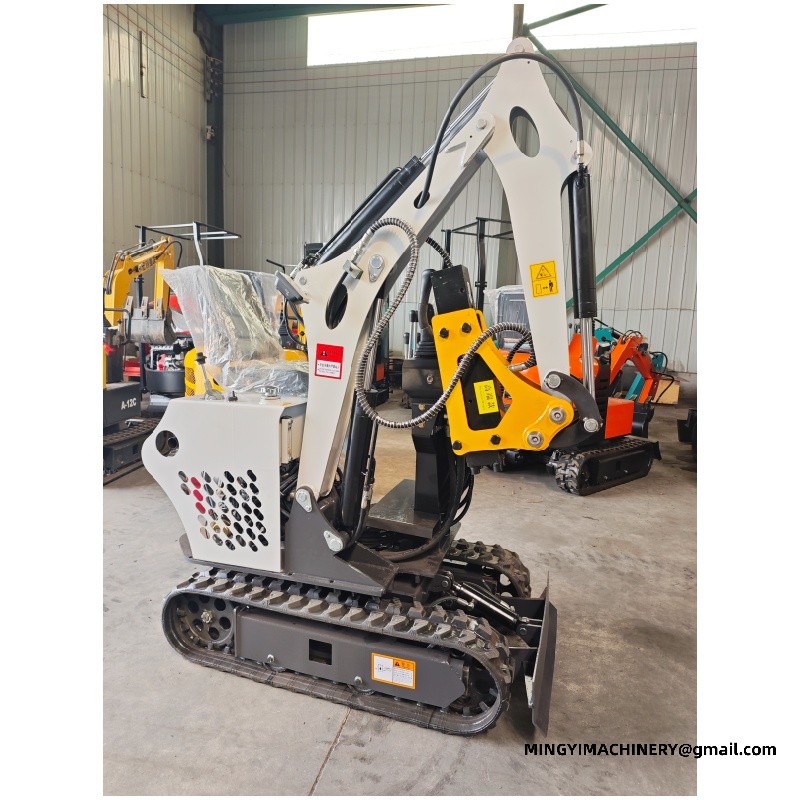
Reference specification — mini excavator range 20-1WL 30-1W 20-2L 25L Operating weight 1900 kg (4188.78 lb) 2900 kg (6393.41 lb) 1900 kg (4188.78 lb) 2200 kg (4850.17 lb) Transport size (L×W×H) 2550 × 1100 × 2200 mm 3000 × 1250 × 2780 mm 2600 × 1300 × 2344 mm 3000 × 1300 × 2700 mm Max digging depth 1800 mm (70.87 in) 2200 mm (86.61 in) 2100 mm (82.68 in) 2300 mm (90.55 in) Max digging height 2820 mm (111.02 in) 3400 mm (133.86 in) 2880 mm (113.39 in) 3100 mm (122.05 in) Max dumping height 2050 mm (80.71 in) 2400 mm (94.49 in) 2100 mm (82.68 in) 2050 mm (80.71 in) Max digging radius 3050 mm (120.08 in) 4000 mm (157.48 in) 3215 mm (126.57 in) 3900 mm (153.54 in) Max digging distance 2300 mm (90.55 in) 2800 mm (110.24 in) 2460 mm (96.85 in) 3100 mm (125.05 in) Minimum turning radius 1450 mm (57.09 in) 2000 mm (78.74 in) 1587 mm (62.48 in) 1800 mm (70.87 in) Travel speed 5 km/h (3.11 mph) 5 km/h (3.11 mph) 5 km/h (3.11 mph) 7 km/h (4.35 mph) Gradeability 30° 30° 30° 30° Fuel consumption 2-3 L/h (0.528—0.793 gal) 2-3 L/h (0.528—0.793 gal) 2-3 L/h (0.528—0.793 gal) 2-3 L/h (0.528—0.793 gal) Fuel tank capacity 16 L (4.23 gal) 16 L (4.23 gal) 16 L (4.23 gal) 16 L (4.23 gal) Hydraulic oil tank 18 L (4.76 gal) 20 L (5.28 gal) 18 L (4.76 gal) 18 L (4.76 gal) Dozer blade lift height 180 mm (7.09 in) 420 mm (16.54 in) 180 mm (7.09 in) 230 mm (9.06 in) Dozer blade drop depth 210 mm (8.27 in) 210 mm (8.27 in) 210 mm (8.27 in) 280 mm (11.02 in)
Q. Who chooses the unit in daily use?
A. Between crops and livestock, the compact excavator earns its place as the farm utility machine. Rubber tracks and a swing boom protect roots and irrigation lines while the carrier stays on the headland. For garden planting applications the practical route is to send the job list to the factory and let the build sheet answer it - which is exactly what this page invites.
Q. How does the machine move between fields and rows?
A. On rubber tracks at low ground pressure, or by trailer between farms - the transport pages cover ramp and tie-down practice. In orchards and vineyards the swing boom digs across the rows while the carrier stays on the headland.
Q. Can I see the machine before it ships?
A. Inspection is arranged at the factory, in person or by a scheduled video walk-around - the same session covers paint, decals and attachment fitment for the garden planting specification, so the machine inspected is the machine that ships.
Commissioning a machine of this size on site
The machine should be introduced to the site as well as the operator. Walking the route the equipment on site will take, noting the soft spots and the turns, prevents the kind of first-day incident that has nothing to do with the machine.
Storage and long idle periods for the machine itself
Rubber, seals and hoses age whether the machine works or not. Keeping the model in question out of direct sun and off damp ground slows that, and running it briefly at intervals keeps everything moving.
E-mail : sales@mingycn.com
LINE ( ID ): mingyicn
Related pages
compact construction digger · compact digger for site preparation · Agricultural Wheel Loader: Access, Attachments and Light Builds · Mini Excavators









