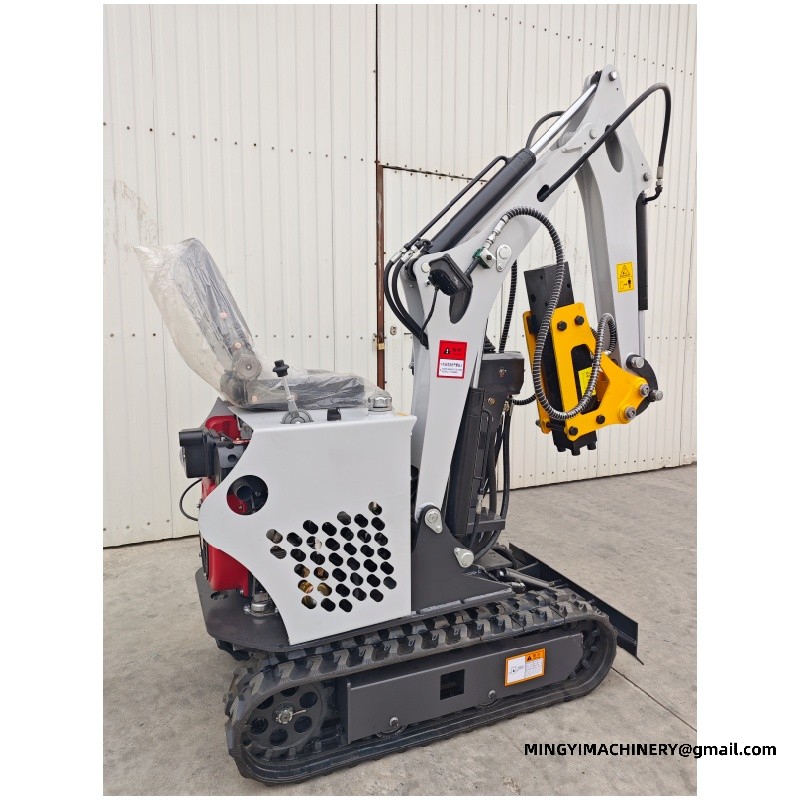
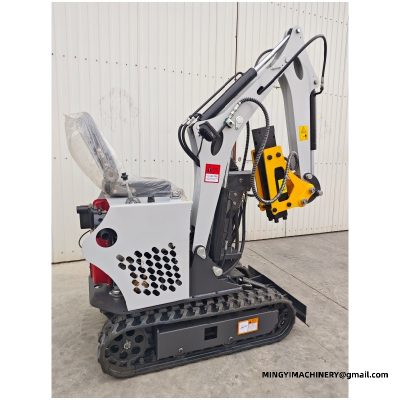
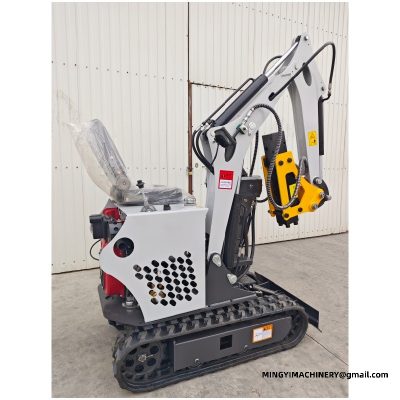
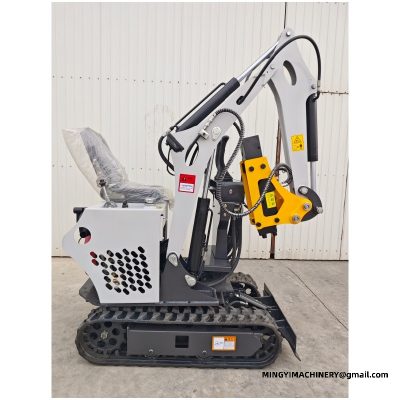
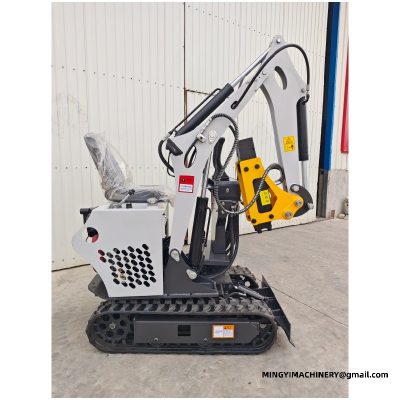
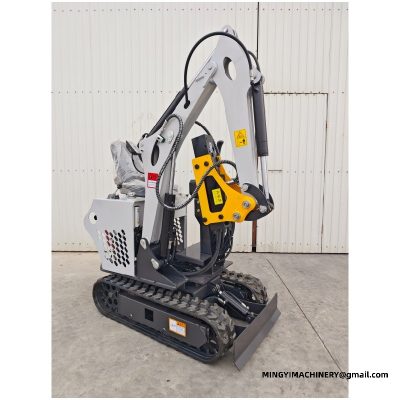
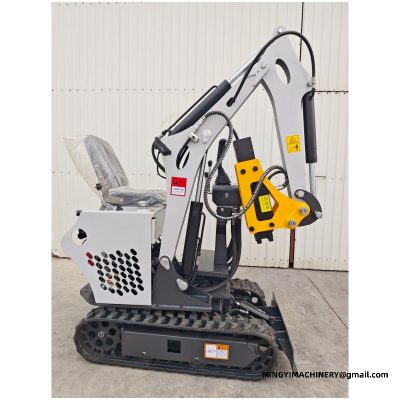
Indoor work asks a different set of questions of an excavator than an open site does: how it enters the building, how it behaves on a finished floor, and how much noise and exhaust it produces while the rest of the building is in use. MINGYI supplies micro hydraulic excavators for this kind of interior job.
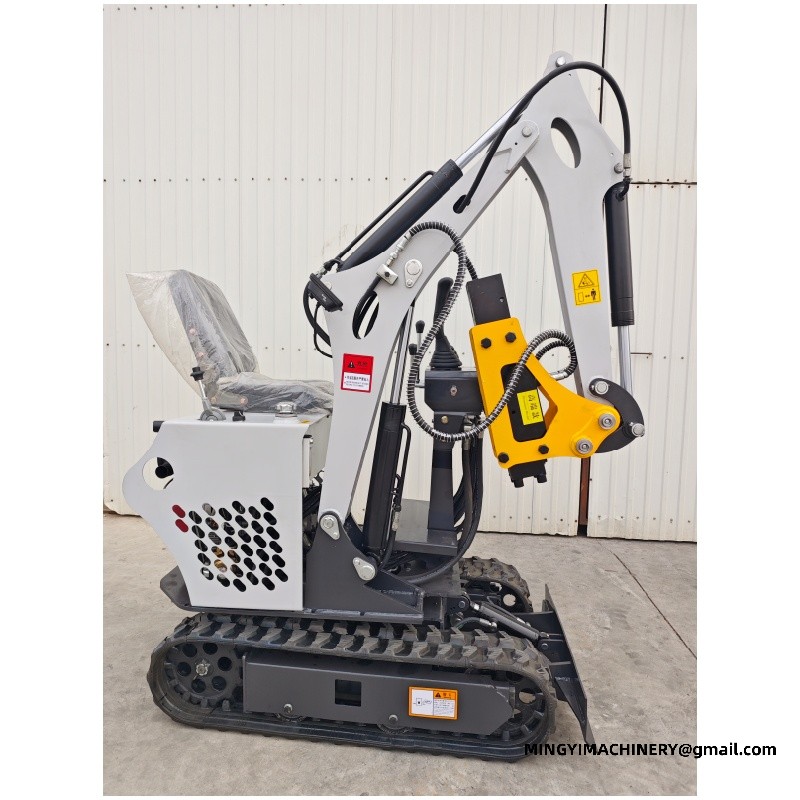
The machine is small enough to be brought in through normal access and used for breaking out and clearing within a standing structure rather than for ground excavation.
Bringing a micro excavator into a building
The first limit indoors is access, so the machine has to pass the entry, the lift or the lobby that the site provides. A micro excavator with a narrow body and low canopy can be taken to the working floor without stripping out the route first.
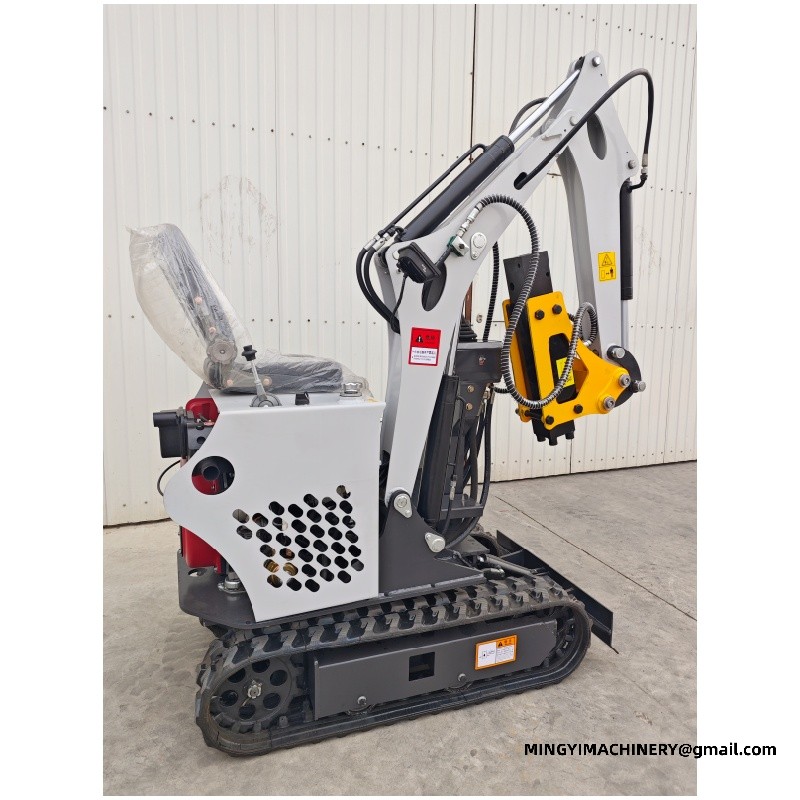
Because the surface is a slab rather than open ground, rubber tracks are usually fitted to protect the floor. The machine moves in, does its work, and leaves through the same path.
Demolition and clearing inside a structure
Interior work means breaking out walls, screeds and fittings, so a breaker hammer is the tool most often carried. A bucket then removes the rubble, while a grabber or front fork handles timber and general waste.
Noise and fumes are managed by running the machine in short, planned spells with the engine matched to the building's limits. Buyers confirm the engine and the attachment set with MINGYI when the order is placed.
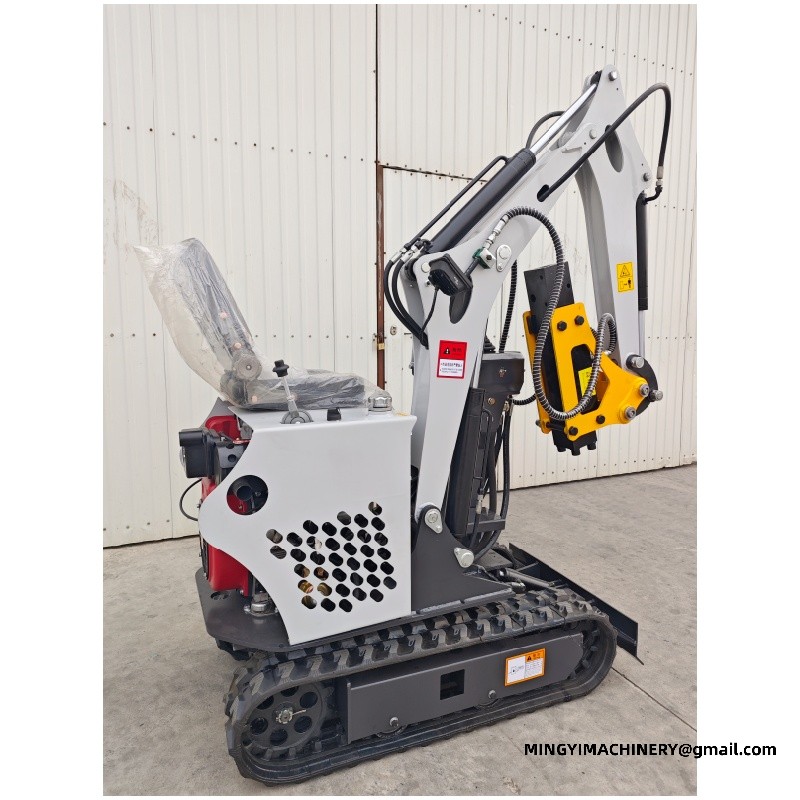
For indoor work, the details to send MINGYI are the access route into the building, the floor material and the attachments needed to break out and clear the area.
Export packing and shipping of micro hydraulic excavator for indoor work Export documentation, decals and paint are settled before packing. Asking for them with the class of machine order avoids a second handling session and keeps the machine on the booked vessel. Buyers who import regularly plan the spare parts with the machine. The excavator ordered with a wearing-parts kit arrives ready to work rather than ready to wait for the first service interval. Noise, dust and working near occupied buildings Work near housing or occupied premises brings constraints that open sites do not. Start times, exhaust condition and how often the unit in daily use needs to reverse are the practical limits that neighbours notice. Dust control is often part of the same conversation. Water, timing and work sequence reduce what leaves the site, and agreeing them in advance keeps a machine of this size working rather than stopped after a complaint. Acceptance checks when a micro hydraulic excavator for indoor work arrives A function check before the machine goes to work is worth the hour. Running through the controls, the travel and the attachment circuit on the equipment on site confirms it is set up as specified and ready for the site. Documentation should arrive with the machine. Parts list, service schedule and any certificates for the machine itself are what the workshop needs later, and they are much easier to obtain at delivery than in month six. Specifying micro hydraulic excavator for indoor work against a job list The practical way to specify is to write the job list first: the narrowest access, the deepest trench, the heaviest tool and the surfaces the machine must cross. The model in question is then matched to those four numbers. Useful information to send with an enquiry includes working width, required digging depth, ground conditions and the attachment set. Those four items let the factory specify the machine in that duty that fits rather than a generic build. Lifting and material handling with a micro hydraulic excavator for indoor work Lifting with a machine built to dig needs a plan. The load, the radius and the ground under the machine built for the work all matter, and the safe figure is the one on the chart rather than the one that looks possible. Stability changes with reach. A load the unit on the job handles close in becomes a different proposition at full extension, so the working radius belongs in the plan before the lift rather than during it. Working a micro hydraulic excavator for indoor work in confined spaces Confined sites are decided by dimensions. Overall width, tail swing and the space needed to work the arm are what let the equipment in service operate inside a building, between walls or in a courtyard. Ventilation is the other indoor constraint. Running the excavator inside a closed structure needs air movement, and that is a planning item rather than something to discover after the first hour. Orchard, vineyard and farm use of this class of machine Orchard and vineyard work is carried out between rows. The unit in daily use with a narrow chassis and a swing boom works down the row without damaging the trees, which is the reason a full-size machine is not used at all. Farms also use a machine of this size for general maintenance - clearing a watercourse, repairing a track, loading a spreader. One carrier with a few attachments covers most of the jobs that would otherwise wait for a contractor. Working the equipment on site through the seasons Seasonal planning smooths the workload. Machines that are busy for a few months and idle for the rest benefit from a service slot in the quiet period, and the machine itself prepared in the off-season starts the busy months reliably. Heat and dust are as limiting as rain. Air intake condition and cooling cleanliness decide how the model in question behaves in a dry season, and both are checked in a minute rather than repaired later. Running the machine in that duty in a rental fleet Rental fleets buy for utilisation, not for a single job. The unit on the job with a quick coupler and a common attachment standard is hired more often because it suits more of the calls that come in. The specification that rents best is usually the simplest one to explain at the counter. A machine built for the work with rubber tracks, a canopy and a coupler covers the majority of weekend and short-term hires. Attachments that turn the equipment in service into several machines The base machine is a carrier; the tool on the end of the arm decides the task. The excavator fitted with a toothed bucket digs, and the same machine with a breaker, an auger or a grab does work that would otherwise need a second unit on site. Attachment lists are best written before delivery. Specifying this class of machine with the tools the job list needs avoids the work and delay of adding hydraulics later, and a quick coupler makes the swap a few minutes instead of a workshop job. Matching the unit in daily use to ground conditions Hard and abrasive ground reverses the specification. On rock, demolition rubble or sharp gravel, steel tracks with rubber blocks on a machine of this size survive conditions that cut a rubber belt quickly. Mixed sites are common and argue for a compromise specification. Most buyers choose rubber for the equipment on site and accept the wear, unless the majority of the work is on material that will damage it. Parts, service and support for the machine itself Support after delivery is a parts question. Wearing items for the model in question - filters, belts, track components, bucket teeth and pins - are the items a buyer should plan to hold before the first service interval. Engine parts availability usually drives the engine choice. The machine in that duty built with an engine the local network already carries is serviced from stock rather than from an international order. Specification data for the unit on the job Where a machine built for the work is being specified for a job list, the table below gives the factory figures that matter most: what the machine weighs, how deep and how far it works, and what it measures on a trailer. Every value shown is as built for the equipment in service; options such as cab, side swing or a telescopic undercarriage change the transport dimensions and are confirmed at order stage. Landscape contractors use the excavator for planting holes, pond excavation, grading and retaining work. The machine is light enough to cross finished lawn and narrow enough to work between established trees. Grass cutting heads, rakes and tillers extend this class of machine into ground care. The same carrier that digs a border in spring can cut and clear the same area later in the season.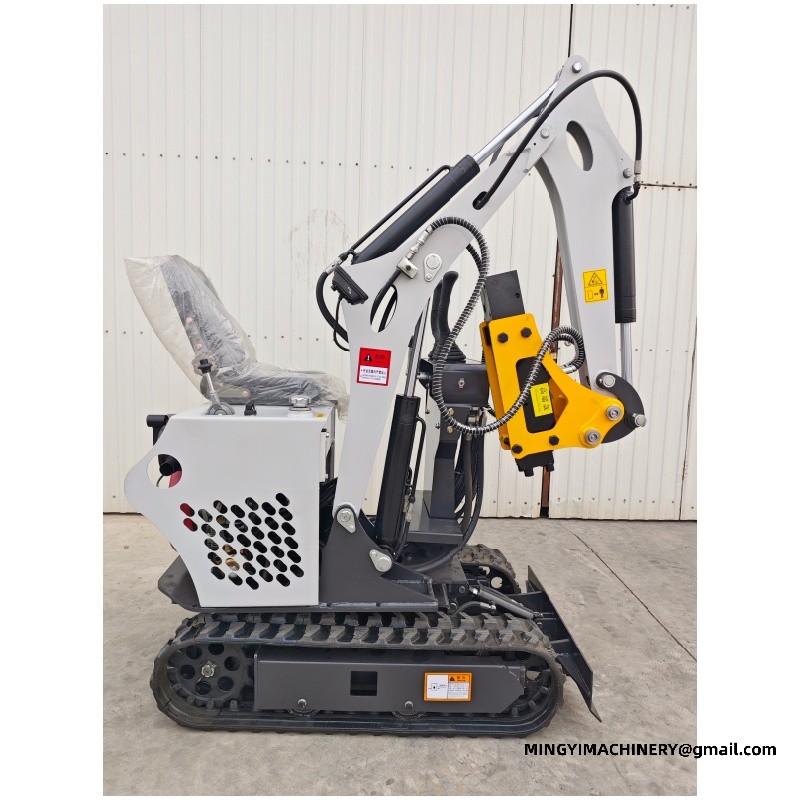
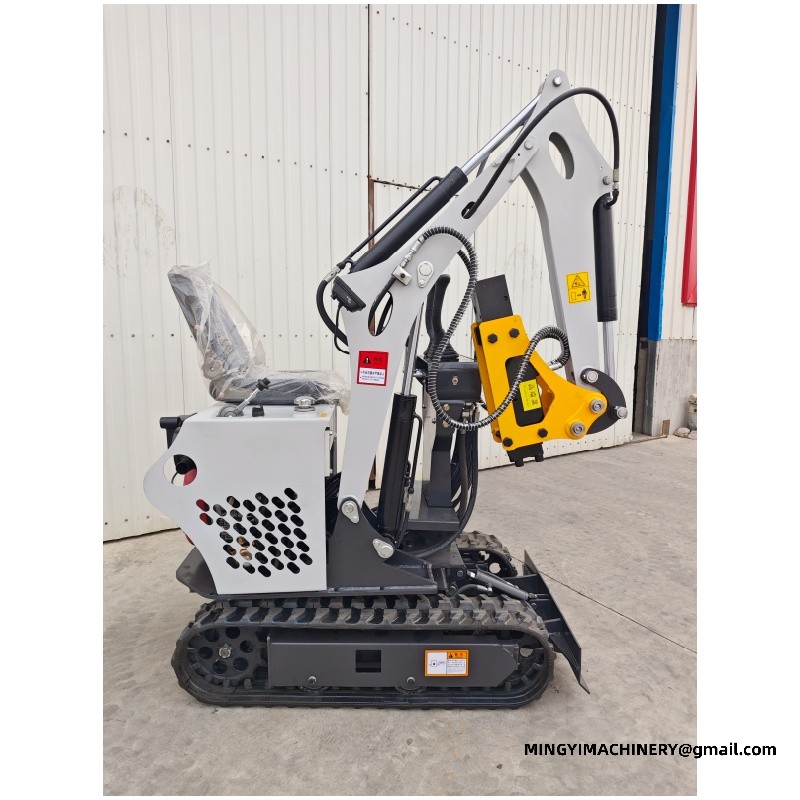
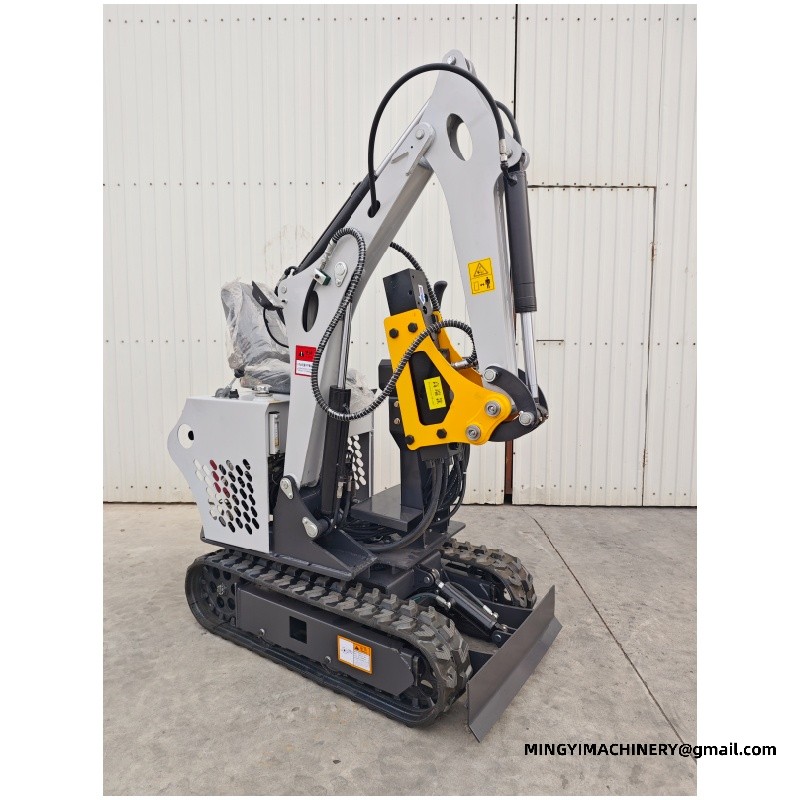
Reference specification — mini excavator range 13W 20-1WL 20-3W 30-2L Operating weight 1300 kg (2866.01 lb) 1900 kg (4188.78 lb) 1900 kg (4188.78 lb) 2400 kg (5291 lb) Transport size (L×W×H) 2200 × 930 × 2250 mm 2550 × 1100 × 2200 mm 2550 × 1100 × 2200 mm 2800 × 1500 × 2500 mm Max digging depth 1630 mm (64.17 in) 1800 mm (70.87 in) 1800 mm (70.87 in) 2200 mm (86.61 in) Max digging height 2750 mm (108.27 in) 2820 mm (111.02 in) 2820 mm (111.02 in) 2900 mm (114.17 in) Max dumping height 1960 mm (77.17 in) 2050 mm (80.71 in) 2050 mm (80.71 in) 2100 mm (82.68 in) Max digging radius 2900 mm (114.17 in) 3050 mm (120.08 in) 3050 mm (120.08 in) 3330 mm (131.1 in) Max digging distance 2100 mm (82.68 in) 2300 mm (90.55 in) 2300 mm (90.55 in) 2700 mm (106.3 in) Minimum turning radius 1300 mm (51.18 in) 1450 mm (57.09 in) 1450 mm (57.09 in) 1555 mm (61.22 in) Travel speed 3 km/h (1.86 mph) 5 km/h (3.11 mph) 5 km/h (3.11 mph) 7 km/h (4.35 mph) Gradeability 30° 30° 30° 30° Fuel consumption 1-1.3 L/h (0.264—0.343 gal) 2-3 L/h (0.528—0.793 gal) 2-3 L/h (0.528—0.793 gal) 2-3 L/h (0.528—0.793 gal) Fuel tank capacity 10 L (2.64 gal) 16 L (4.23 gal) 16 L (4.23 gal) 16 L (4.23 gal) Hydraulic oil tank 16 L (4.23 gal) 18 L (4.76 gal) 18 L (4.76 gal) 18 L (4.76 gal) Dozer blade lift height 180 mm (7.09 in) 180 mm (7.09 in) 180 mm (7.09 in) 230 mm (9.06 in) Dozer blade drop depth 210 mm (8.27 in) 210 mm (8.27 in) 210 mm (8.27 in) 280 mm (11.02 in)
Q. Who chooses the unit in daily use?
A. Access decides whether a compact excavator is on the job at all: gates, doorways, basements, elevator rooms and rows between benches set hard limits on width and tail radius. Inside a basement or behind a boundary the machine digs footings, breaks floors and grades the sub-base at rates hand work cannot touch. For indoor work applications the practical route is to send the job list to the factory and let the build sheet answer it - which is exactly what this page invites.
Q. How does the machine get through a narrow opening?
A. Retractable or variable-width frames narrow for the passage then widen for stability, and zero tail swing keeps the counterweight inside the track line. Measure the gap first, then match the class - the smallest machines pass where a wheelbarrow would struggle.
Q. Can I see the machine before it ships?
A. Inspection is arranged at the factory, in person or by a scheduled video walk-around - the same session covers paint, decals and attachment fitment for the indoor work specification, so the machine inspected is the machine that ships.
Packing, loading and shipment of a machine of this size
The paperwork matters as much as the packing. Serial numbers, dimensions and weights recorded for the equipment on site at loading are the same figures the destination needs, and a mismatch here loses more days than the voyage itself.
Moving the machine itself between sites
A machine that works on one site still has to reach the next. The overall dimensions and the operating weight of the model in question decide what trailer or truck is needed, and that decision belongs before the job is booked.
E-mail : sales@mingycn.com
LINE ( ID ): mingyicn
Related pages
compact earth digger · mini excavator for garden · Loader Machine Supplier: Model Mix, Spares and Shipping Plans · Mini Excavators









