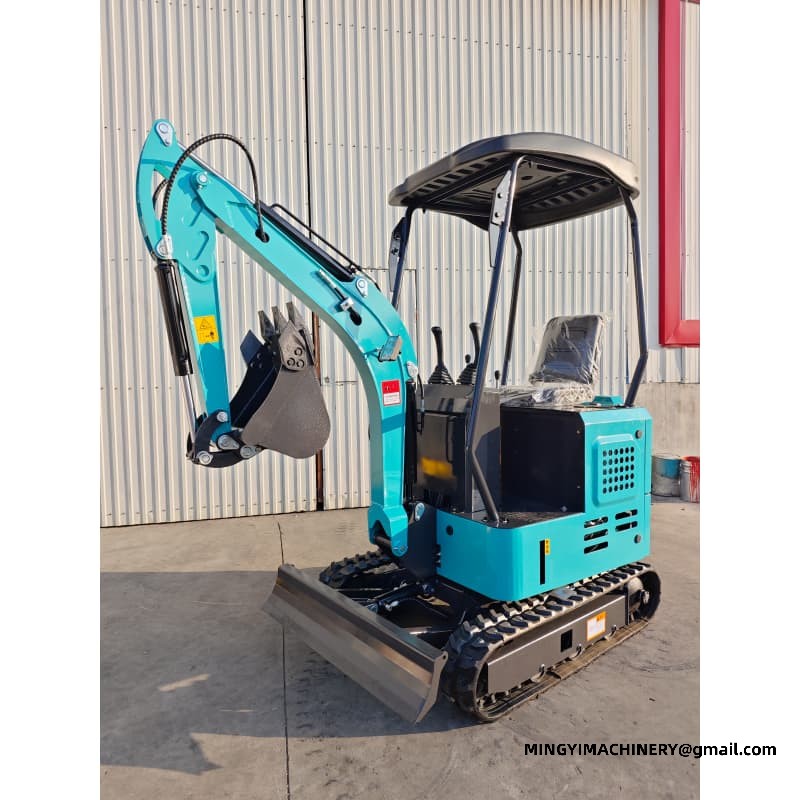
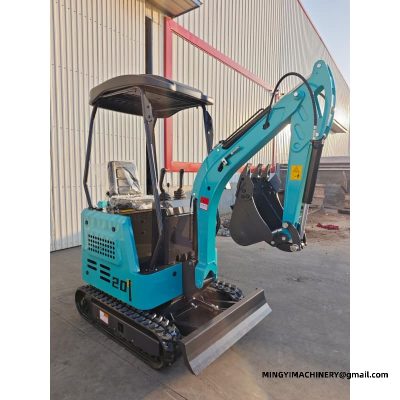
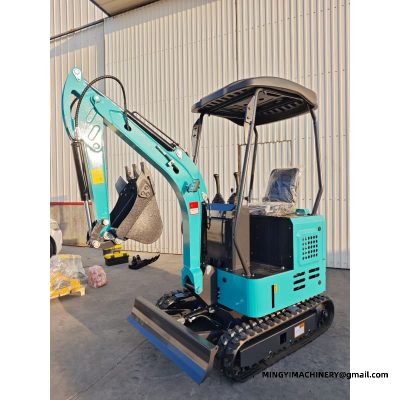
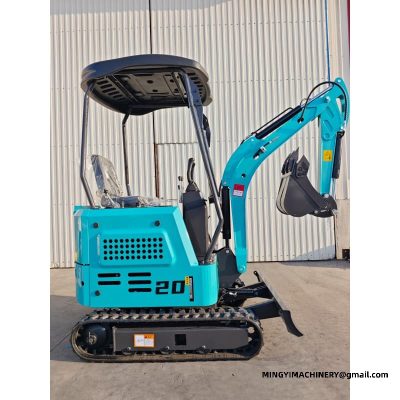
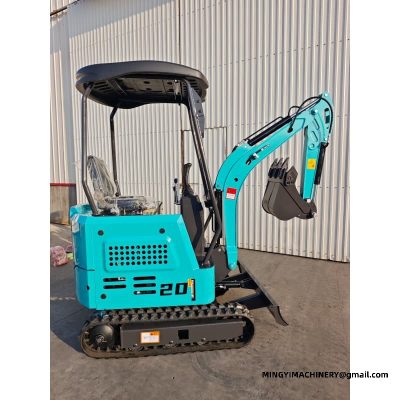
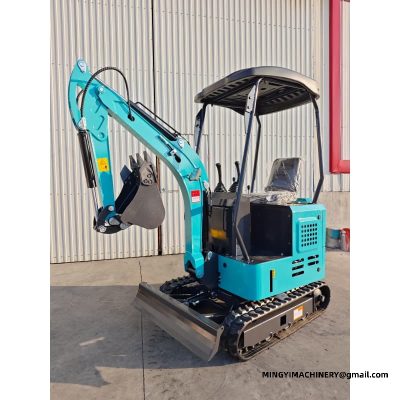
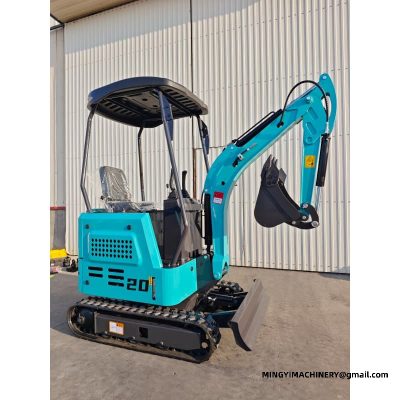
A working farm asks a lot of a small machine. The same excavator may be cleaning a ditch in the morning, moving a gate post in the afternoon and clearing a yard before evening, often with the operator working alone.
MINGYI builds compact crawler excavators to order, and machines for farm use are usually specified with a broad attachment set rather than a single purpose one. Track type and engine are chosen to suit the ground the farm actually has.
Mini excavators on working farms
Farm work is varied and often improvised. A compact excavator earns its keep by being ready for whatever the day brings: ditching, drainage, muck handling, fence work and small building jobs.
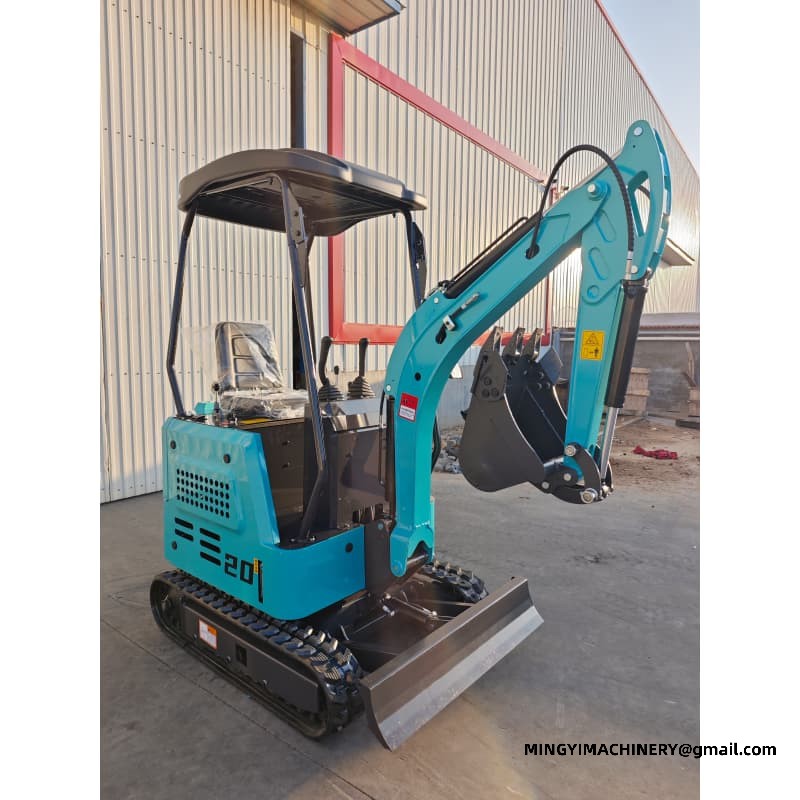
Because the machine is usually worked by a small team or one person, ease of use matters. Simple controls and quick attachment changes cut the time between tasks, which is what keeps the machine in use rather than parked.
Ditching, fencing and yard work with one machine
Drainage and ditching are the core duties on most farms. A trenching bucket opens the run, while a grading or ditching bucket shapes the sides and keeps the fall consistent along the length.
Fencing follows the same pattern. An auger or a post driver replaces the digging bucket, and a grab or front fork handles the materials. Each item is listed against the machine so the farm can add to the set in later orders.
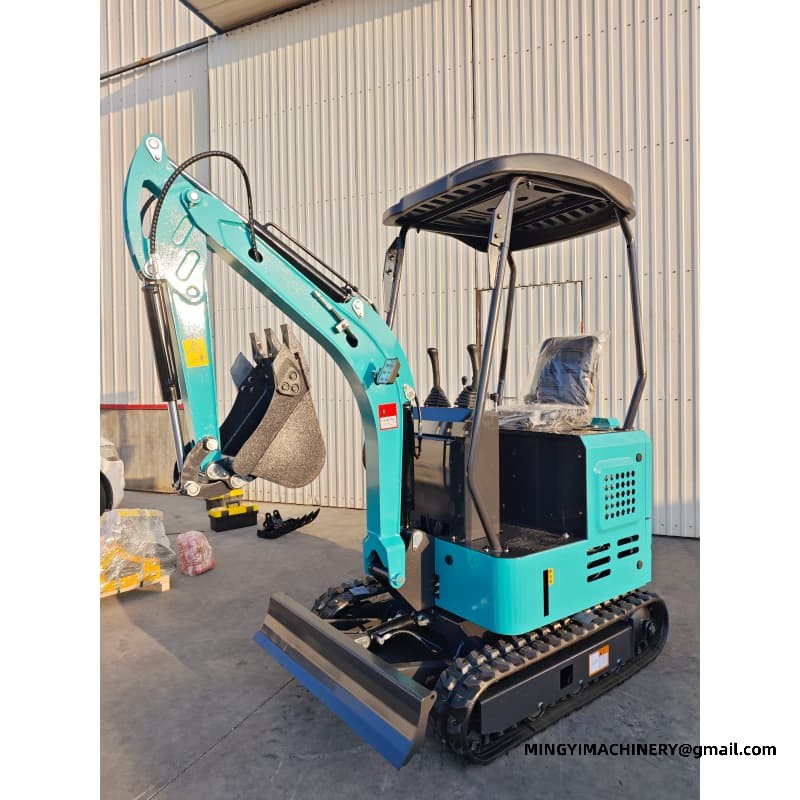
On a farm the compact excavator has to be a general purpose machine rather than a specialist one. A unit specified with a wide attachment set pays for itself across ditching, fencing and yard work in the same season.
Municipal and public works with mini excavator for farm work Municipal crews work on streets, footpaths and parks where the public is present. The excavator is specified because it occupies little space, works inside a small exclusion zone and can be moved on a standard trailer. Noise and surface protection matter on public work. This class of machine on rubber tracks across paving, with a sealed cab for the operator, suits the conditions better than a larger tracked machine. Canopy or enclosed cab on a mini excavator for farm work The cab decision follows the climate and the hours. Operators working a full shift in the unit in daily use benefit from a sealed cab with wipers and heating; operators stepping on and off every few minutes usually prefer the canopy for the visibility and the quick exit. Enclosure also changes noise and dust exposure. A sealed cab on a machine of this size keeps dust out on dry sites and lets the machine work through weather that would otherwise stop a canopy machine for the day. Running mini excavator for farm work in a rental fleet The specification that rents best is usually the simplest one to explain at the counter. The equipment on site with rubber tracks, a canopy and a coupler covers the majority of weekend and short-term hires. Fleet buyers also weigh transport. The machine itself that a customer can tow on a normal licence and a standard trailer is a hire that does not need a delivery truck, which changes how often it goes out. Hiring versus owning a mini excavator for farm work Availability is part of the decision. Owning the model in question means it is there on the day the ground is ready; hiring means competing for the same machine at the same time as everyone else in the season. Ownership brings obligations that hiring does not. Storage, servicing, insurance and an operator are the items to set against the hire rate before deciding which way the machine in that duty should be supplied. Trenching work with mini excavator for farm work Trench quality depends on the bucket width and the operator, not on machine size. The unit on the job with a narrow bucket and a swing boom cuts a clean run along a boundary without disturbing the ground either side of it. Depth control matters more on service work than speed. A machine built for the work working beside live services is chosen because it can be placed precisely and stopped instantly, which is what the job actually requires. Acceptance checks when a mini excavator for farm work arrives Delivery day is the best time to find a problem. Checking the specification against the order, the fluid levels, the fasteners and any transport damage while the excavator is still on the trailer is faster than claiming later. Documentation should arrive with the machine. Parts list, service schedule and any certificates for the equipment in service are what the workshop needs later, and they are much easier to obtain at delivery than in month six. OEM and fleet customisation of this class of machine Distributors and rental fleets usually need the machine to look like theirs. Paint, decals, seat colour and attachment branding can be specified on the unit in daily use at build time rather than applied after import. Customisation also covers the specification sheet. A fleet buyer may want every machine of this size delivered with the same coupler, the same engine and the same tool kit so training and parts stock stay simple. Hydraulic circuits on the equipment on site Auxiliary hydraulic lines are what let a machine drive a tool rather than only a bucket. The machine itself specified with the right circuits and flow runs a breaker or an auger without an add-on power pack bolted to the frame. Flow and pressure are matched to the tool, not to the machine size. Asking for the attachment list first means the model in question leaves the factory with circuits that suit the heaviest tool the buyer intends to run. What owners should plan for beyond the machine in that duty Purchase decision is the visible part of the effort. Fuel, filters, tracks or tyres, the operator and the transport between sites are the items that decide what the unit on the job actually demands over a few seasons, and they are worth listing before the order. The useful comparison is demand per working hour, not demand per machine. A machine built for the work that works more hours a year spreads its standing takes over more output, which is why utilisation usually matters more than the invoice figure. Working near live services with the equipment in service The risk on utility work is not machine power but machine placement. The excavator that fits the working width leaves the surrounding ground undisturbed, which keeps the trench stable and the reinstatement small. Utility crews specify this class of machine with a narrow bucket and good visibility for exactly this reason: the machine has to stop at the service, not at the edge of the operator's view. Operator technique for the unit in daily use Output on a compact machine comes from placement rather than power. An experienced operator keeps a machine of this size working inside the swing arc, positions once and digs a full run instead of repositioning for every bucket. Stability is the third. The equipment on site working across the tracks rather than over the corners keeps the machine steady and the undercarriage loaded evenly, which shows up as track life at the end of the season. Engine options behind the machine itself Two buyers can order the same the machine in that duty and receive different engines. The decision is rarely about peak power; it is about which parts counter is closest to the site and which engine the local mechanic already knows. Engine choice is also an emissions and documentation question for some markets. Listing the available units with the model in question enquiry lets the factory confirm what can be supplied and documented for the destination country. Specification data for the unit on the job Where a machine built for the work is being specified for a job list, the table below gives the factory figures that matter most: what the machine weighs, how deep and how far it works, and what it measures on a trailer. Figures are factory figures and are confirmed on the build sheet for the equipment in service. Where a job sits between two models, the larger machine usually takes less time than the smaller one spends on rework. Track tension is the item most often neglected. The excavator run with slack tracks wears the undercarriage and can throw a track on a turn; run too tight, the same components wear from the other direction. Greasing is the second item. The slew ring, the boom and arm pins and the bucket linkage on this class of machine take grease daily in dusty work, and the intervals shorten further when the machine is used in water or mud.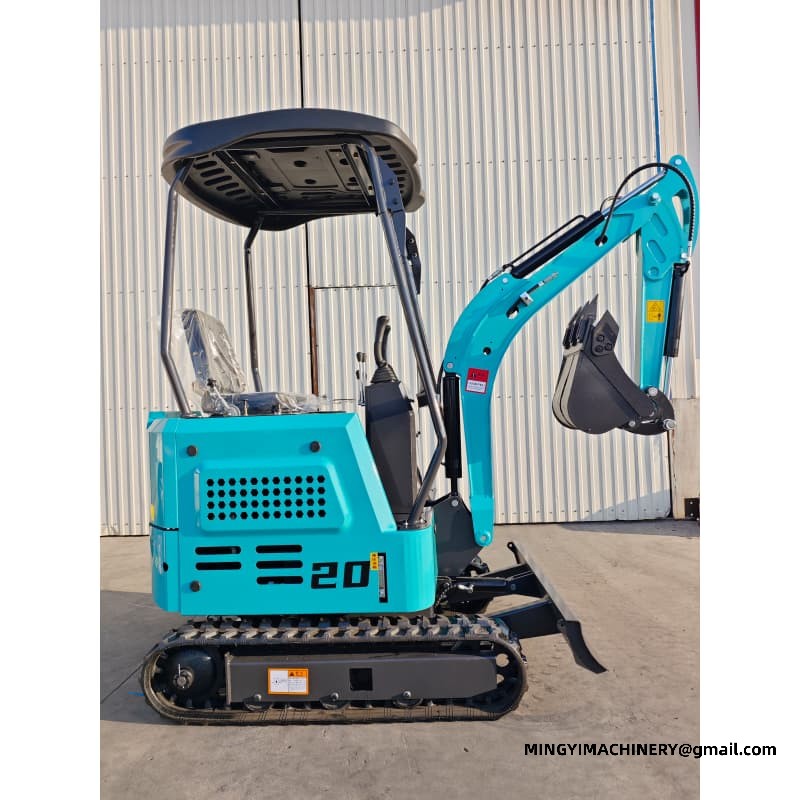
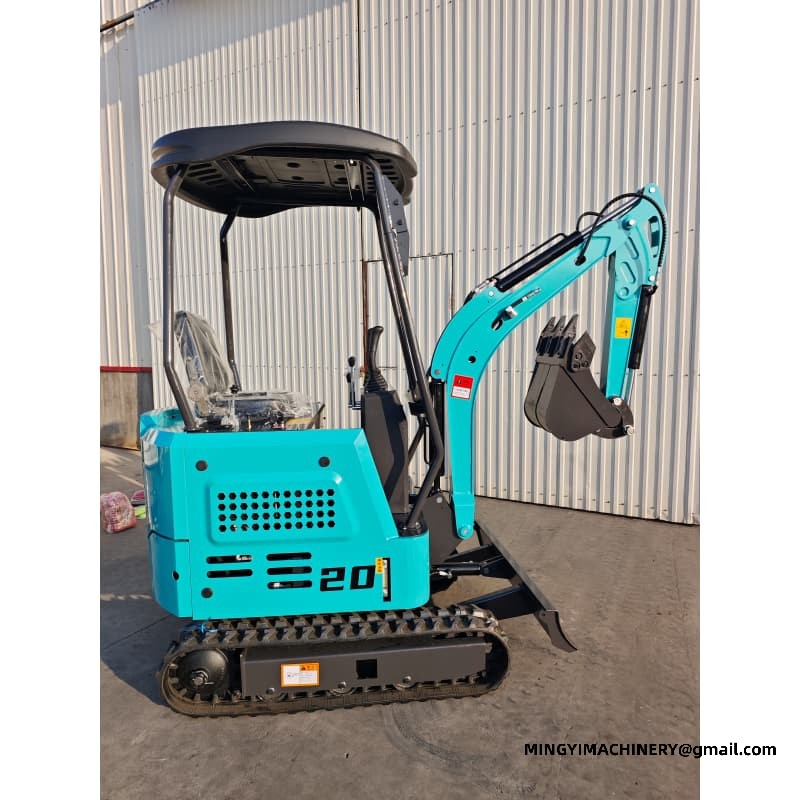
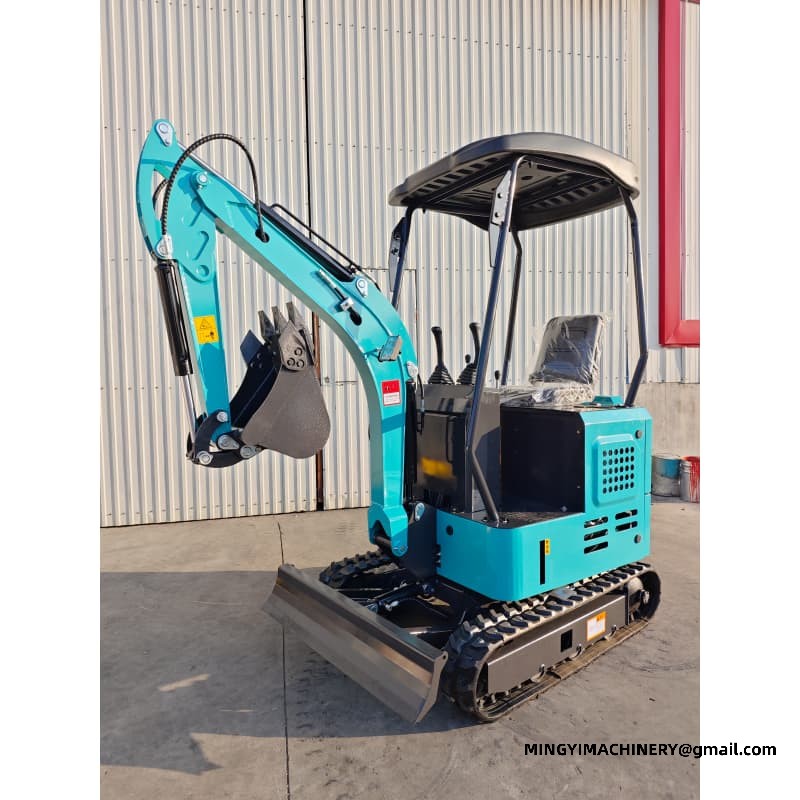
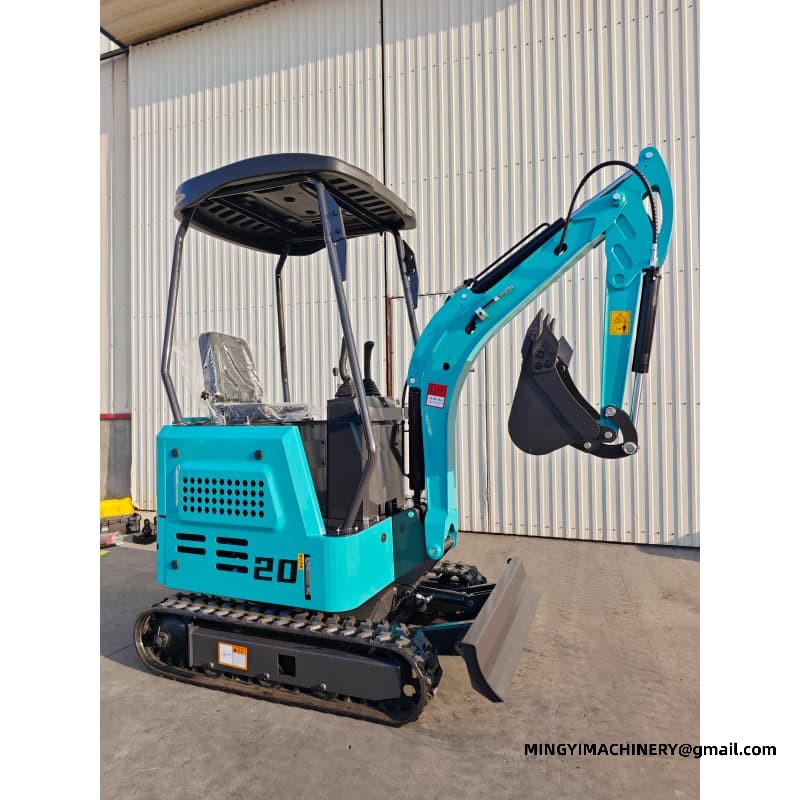
Reference specification — mini excavator range 20-3W 30-1W 30-2W 15L Operating weight 1900 kg (4188.78 lb) 2900 kg (6393.41 lb) 2700 kg (5952.48 lb) 1400 kg (3086.47 lb) Transport size (L×W×H) 2550 × 1100 × 2200 mm 3000 × 1250 × 2780 mm 3000 × 1100 × 2700 mm 2200 × 930 × 2250 mm Max digging depth 1800 mm (70.87 in) 2200 mm (86.61 in) 2200 mm (86.61 in) 1700 mm (66.93 in) Max digging height 2820 mm (111.02 in) 3400 mm (133.86 in) 3000 mm (118.11 in) 2750 mm (108.27 in) Max dumping height 2050 mm (80.71 in) 2400 mm (94.49 in) 2000 mm (78.74 in) 1960 mm (77.17 in) Max digging radius 3050 mm (120.08 in) 4000 mm (157.48 in) 3800 mm (149.61 in) 2900 mm (114.17 in) Max digging distance 2300 mm (90.55 in) 2800 mm (110.24 in) 3050 mm (120.08 in) 2300 mm (90.55 in) Minimum turning radius 1450 mm (57.09 in) 2000 mm (78.74 in) 1750 mm (68.9 in) 1450 mm (57.09 in) Travel speed 5 km/h (3.11 mph) 5 km/h (3.11 mph) 7 km/h (4.35 mph) 3 km/h (1.86 mph) Gradeability 30° 30° 30° 30° Fuel consumption 2-3 L/h (0.528—0.793 gal) 2-3 L/h (0.528—0.793 gal) 2-3 L/h (0.528—0.793 gal) 1-1.3 L/h (0.264—0.343 gal) Fuel tank capacity 16 L (4.23 gal) 16 L (4.23 gal) 16 L (4.23 gal) 10 L (2.64 gal) Hydraulic oil tank 18 L (4.76 gal) 20 L (5.28 gal) 20 L (5.28 gal) 16 L (4.23 gal) Dozer blade lift height 180 mm (7.09 in) 420 mm (16.54 in) 230 mm (9.06 in) 180 mm (7.09 in) Dozer blade drop depth 210 mm (8.27 in) 210 mm (8.27 in) 280 mm (11.02 in) 210 mm (8.27 in)
Q. Who chooses the unit in daily use?
A. Farm and orchard work is seasonal and varied - trenching at planting, drainage before the rains, clearing and grading after harvest - and one compact machine covers most of that calendar. Rubber tracks and a swing boom protect roots and irrigation lines while the carrier stays on the headland. A machine of this size is one of the pages buyers land on when comparing machines for farm work, and the factory treats it as a specification conversation rather than a catalogue line.
Q. How does the machine move between fields and rows?
A. On rubber tracks at low ground pressure, or by trailer between farms - the transport pages cover ramp and tie-down practice. In orchards and vineyards the swing boom digs across the rows while the carrier stays on the headland.
Q. Can I see the machine before it ships?
A. Inspection is arranged at the factory, in person or by a scheduled video walk-around - the same session covers paint, decals and attachment fitment for the farm work specification, so the machine inspected is the machine that ships.
Commissioning the equipment on site on site
The first hour on site should be slow. Before the machine itself is put to work the fluid levels are rechecked after transport, the fasteners are gone over and the machine is run light so that anything loosened in transit shows up early.
Storage and long idle periods for the model in question
Rubber, seals and hoses age whether the machine works or not. Keeping the machine in that duty out of direct sun and off damp ground slows that, and running it briefly at intervals keeps everything moving.
E-mail : sales@mingycn.com
LINE ( ID ): mingyicn
Related pages
mini excavator for site clearance · mini excavator for home use · Wheel Loader Supplier: Choosing Builds for Your Market · Mini Excavators









