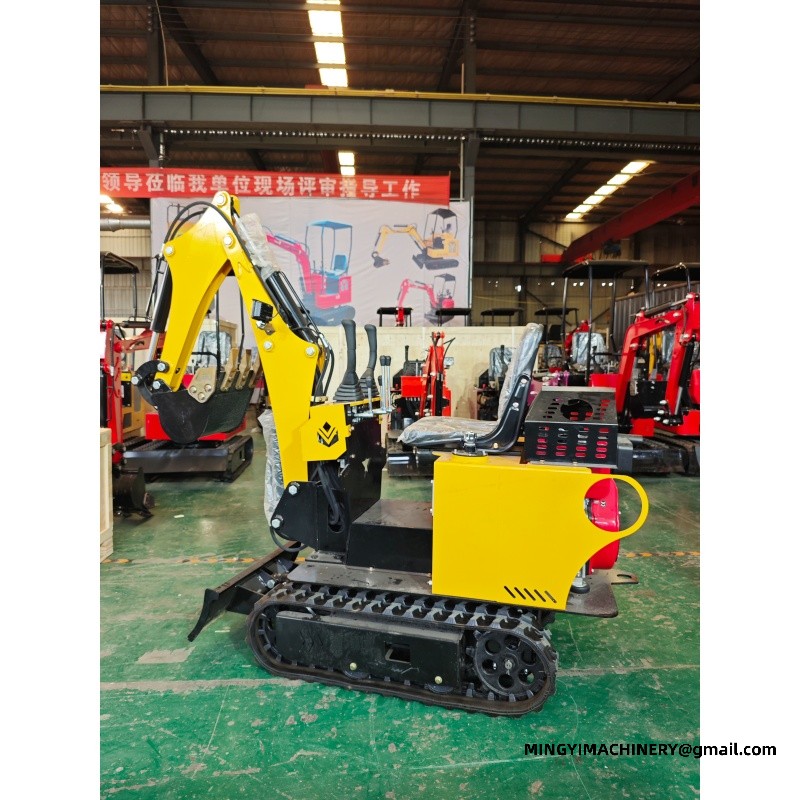
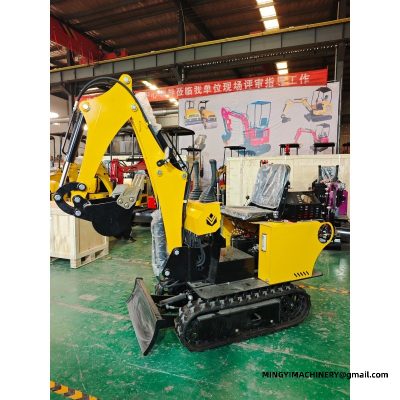
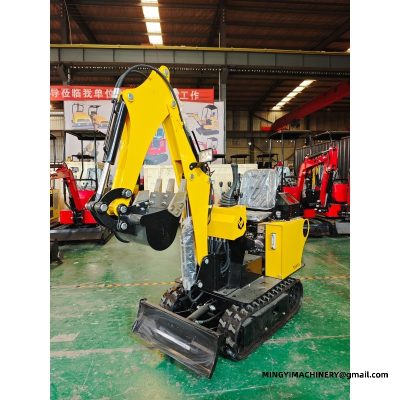
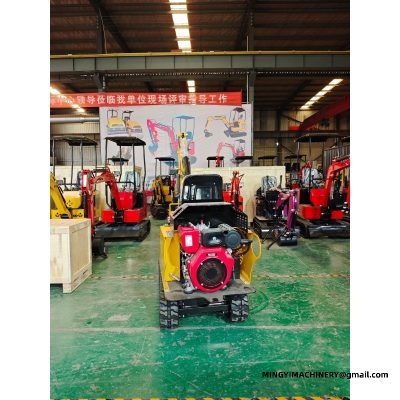
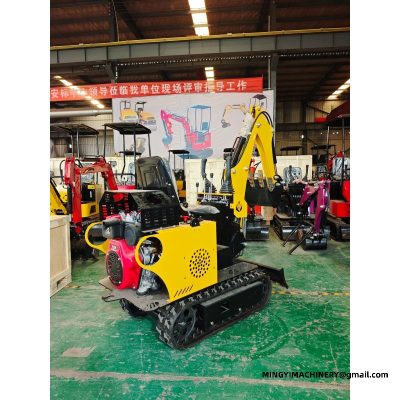
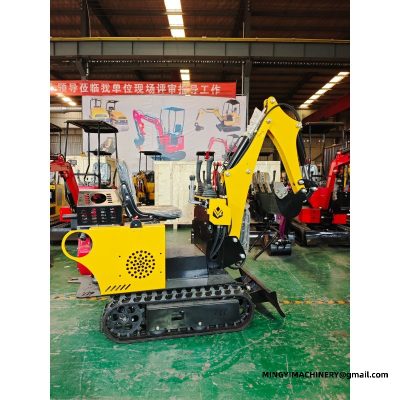
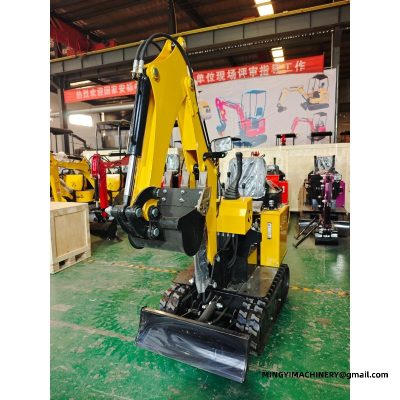
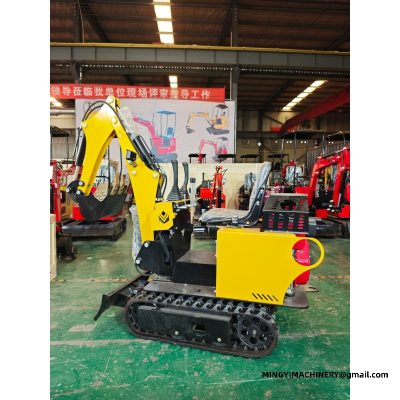
A small digging machine that spends its life on abrasive ground has to be built to take it. Rubber, pins, bushes and cutting edges all wear, and the machine that survives longest is the one whose wear points are easy to inspect and replace.
MINGYI builds compact crawler diggers to order, with undercarriage and attachment choices that reflect the ground they will work on. Steel tracks with rubber blocks are often specified where the surface is stony or rough.
Building a crawler digger for long service
Durability on a compact machine is mostly a matter of undercarriage choice and access. Steel tracks with rubber blocks resist the cuts and tears that wear rubber tracks out quickly on rough sites.
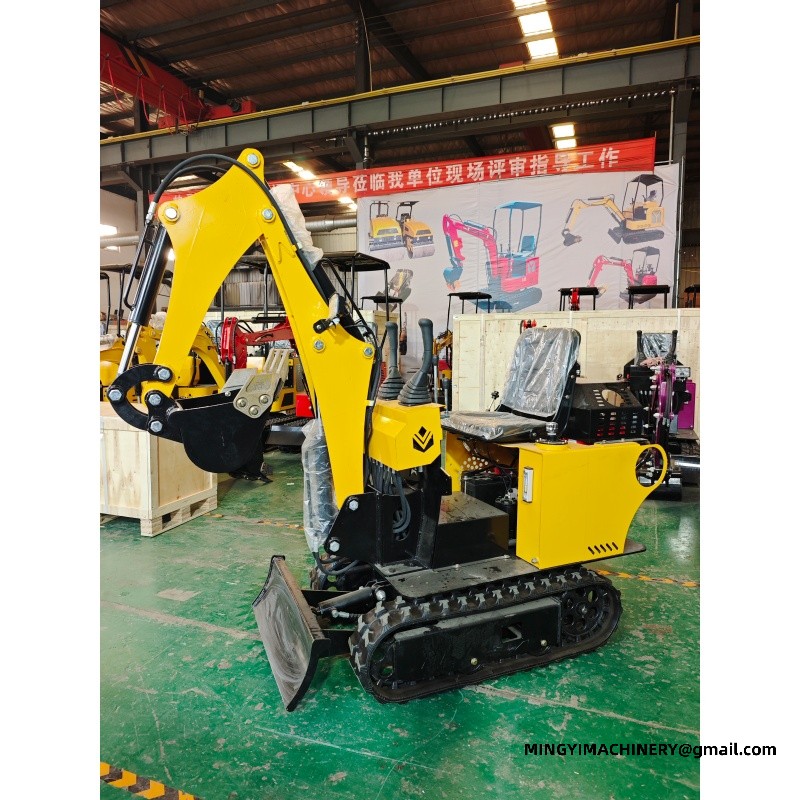
A frame designed so that pins, bushes and hoses can be reached without dismantling the machine makes routine inspection realistic. That is what turns a servicing schedule into something that actually happens.
Wear points and daily checks on abrasive sites
The items that fail first are predictable. Bucket teeth, cutting edges, track rubber and hose ends are consumed steadily on stony ground, and checking them at the start of a shift prevents most mid job breakdowns.
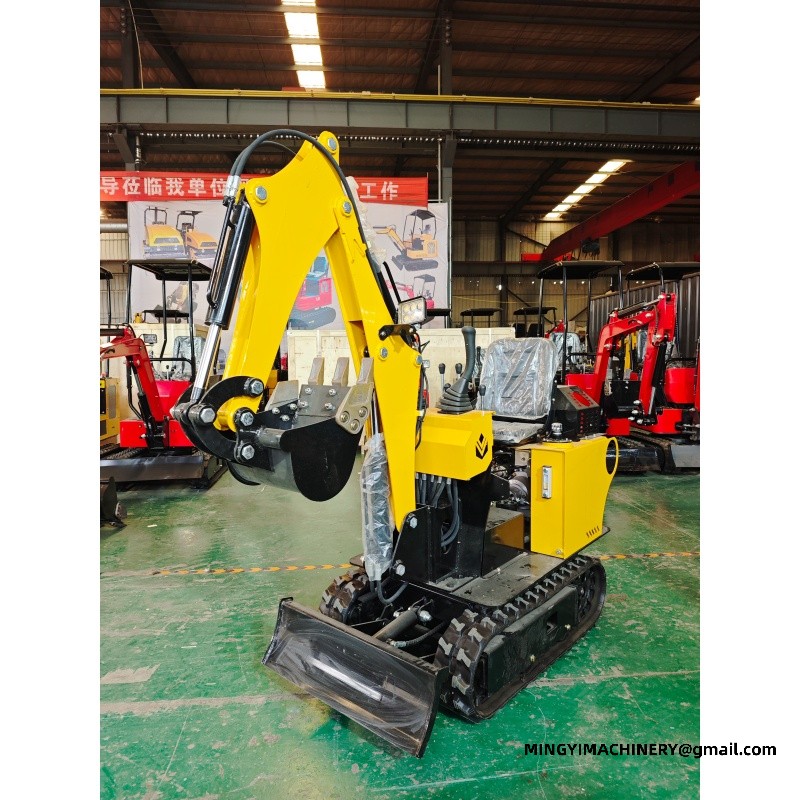
Attachments add further points of wear, so the set fitted to the machine is part of the durability picture. A breaker, a ripper or a grab puts different loads through the linkage, and the machine is specified to match.
A digging machine lasts because its weak points are looked after, not because it is heavier than the next one. Specifying the undercarriage for the ground and the attachments for the work is the practical route to long service.
Matching durable crawler small digging machine to ground conditions Soft ground is a flotation problem, not a power problem. The excavator on wide rubber tracks crosses lawn, sand and cultivated soil that would stop a narrower machine or a wheeled unit of the same capacity. Mixed sites are common and argue for a compromise specification. Most buyers choose rubber for this class of machine and accept the wear, unless the majority of the work is on material that will damage it. Operator technique for durable crawler small digging machine Output on a compact machine comes from placement rather than power. An experienced operator keeps the unit in daily use working inside the swing arc, positions once and digs a full run instead of repositioning for every bucket. Stability is the third. A machine of this size working across the tracks rather than over the corners keeps the machine steady and the undercarriage loaded evenly, which shows up as track life at the end of the season. What owners should plan for beyond the durable crawler small digging machine Purchase decision is the visible part of the effort. Fuel, filters, tracks or tyres, the operator and the transport between sites are the items that decide what the equipment on site actually demands over a few seasons, and they are worth listing before the order. The useful comparison is demand per working hour, not demand per machine. The machine itself that works more hours a year spreads its standing takes over more output, which is why utilisation usually matters more than the invoice figure. Orchard, vineyard and farm use of durable crawler small digging machine Orchard and vineyard work is carried out between rows. The model in question with a narrow chassis and a swing boom works down the row without damaging the trees, which is the reason a full-size machine is not used at all. Ditching, fertilising and drainage on farmland suit the machine in that duty because the work is spread over a large area in short bursts. The machine travels behind a pickup and works where it stops. Boom configuration for durable crawler small digging machine A swing boom lets the machine dig parallel to its tracks without repositioning, which is what makes trenching beside a wall or a fence practical. On the unit on the job this is often the option that decides whether a job is possible at all. Detachable boom sections are used where transport length matters. A machine built for the work that has to travel on a standard trailer can be built so the arm comes off for the road and goes back on at the site. Canopy or enclosed cab on a durable crawler small digging machine A canopy keeps the machine light and the operator aware of the surroundings, which suits short jobs in warm weather. A fully enclosed cab is specified where rain, dust or cold are part of the working year, and it can be added to the equipment in service as a retrofit rather than only at build time. The cab decision follows the climate and the hours. Operators working a full shift in the excavator benefit from a sealed cab with wipers and heating; operators stepping on and off every few minutes usually prefer the canopy for the visibility and the quick exit. Hiring versus owning this class of machine Availability is part of the decision. Owning the unit in daily use means it is there on the day the ground is ready; hiring means competing for the same machine at the same time as everyone else in the season. Ownership brings obligations that hiring does not. Storage, servicing, insurance and an operator are the items to set against the hire rate before deciding which way a machine of this size should be supplied. Specifying the equipment on site against a job list The practical way to specify is to write the job list first: the narrowest access, the deepest trench, the heaviest tool and the surfaces the machine must cross. The machine itself is then matched to those four numbers. Buyers who skip this step either over-buy or under-buy. The model in question specified only from machine size tends to arrive without the coupler, the circuits or the track type the work actually needs. Noise, dust and working near occupied buildings Work near housing or occupied premises brings constraints that open sites do not. Start times, exhaust condition and how often the machine in that duty needs to reverse are the practical limits that neighbours notice. Enclosure and machine condition both reduce noise. The unit on the job with intact panels, sound mounts and a maintained exhaust is measurably quieter than the same machine with loose guards, and the difference matters on restricted sites. Working a machine built for the work in confined spaces Confined sites are decided by dimensions. Overall width, tail swing and the space needed to work the arm are what let the equipment in service operate inside a building, between walls or in a courtyard. Clearance above matters as much as around. Door heights, pipework and overhead services set the limit for the excavator indoors, and measuring them first avoids a machine that arrives and cannot be used. Attachments that turn this class of machine into several machines The base machine is a carrier; the tool on the end of the arm decides the task. The unit in daily use fitted with a toothed bucket digs, and the same machine with a breaker, an auger or a grab does work that would otherwise need a second unit on site. Most of the daily variety on a machine of this size comes from the attachment rack rather than from the machine itself. Bucket, breaker, auger, ripper, rake and grab cover the large majority of the work a contractor will see. Specification data for the equipment on site The figures below are the factory figures for the models most often matched to the machine itself. They are the numbers to check against the site: the depth the work needs, the reach from one position, and the width of the narrowest point on the route in. Figures are factory figures and are confirmed on the build sheet for the model in question. Where a job sits between two models, the larger machine usually takes less time than the smaller one spends on rework. Road repair generates short, interrupted jobs - a patch, a drainage connection, a kerb line. The machine in that duty is economical here because it travels on a small trailer and starts working minutes after arriving. Breaking out a failed slab and backfilling the same hole in one visit is normal work for the unit on the job. The breaker and the bucket come off the same coupler, so the road is reopened the same day.
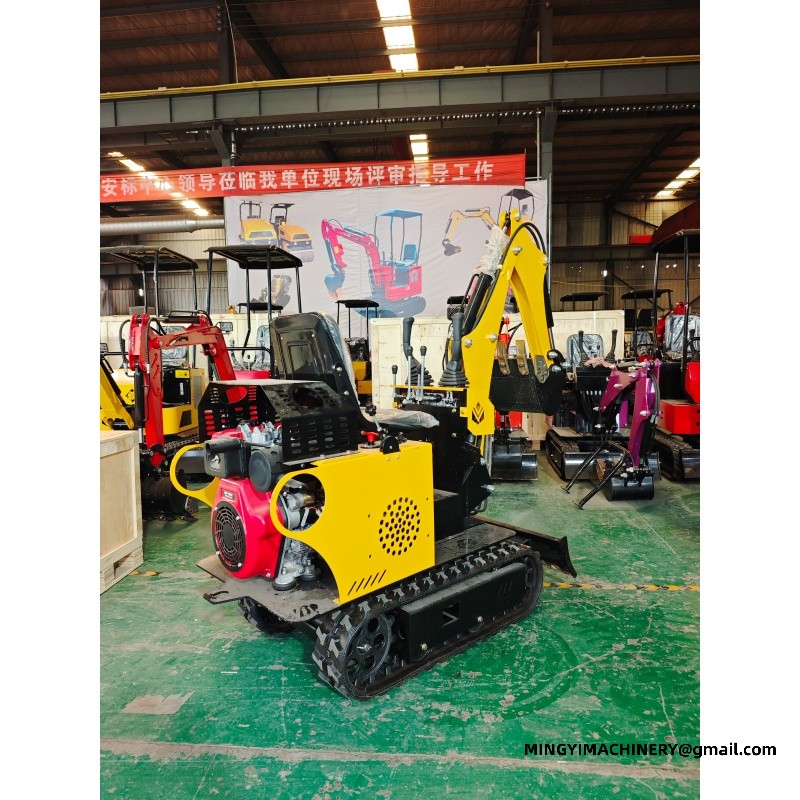
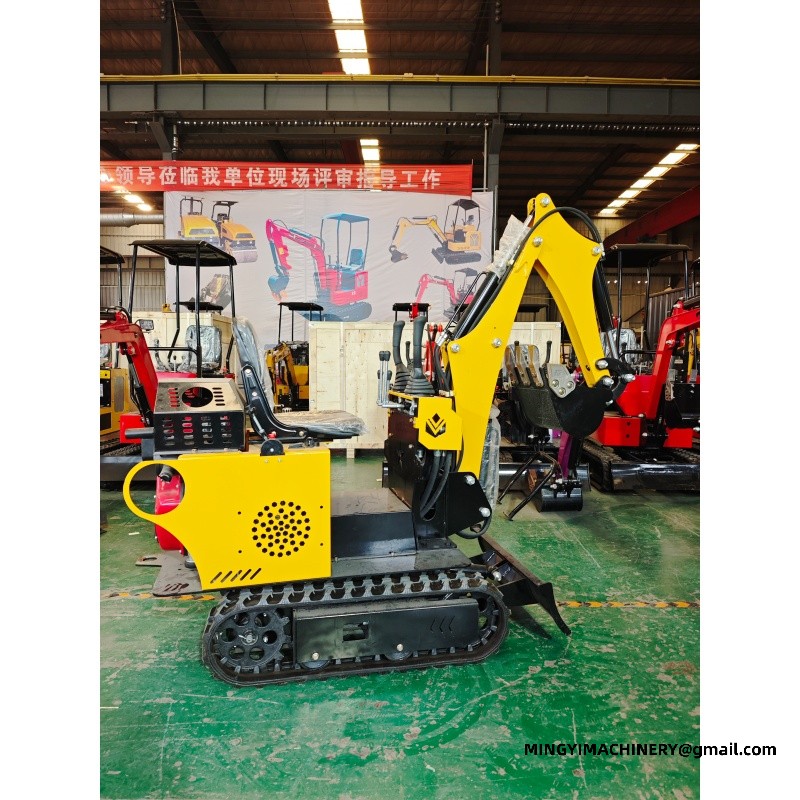
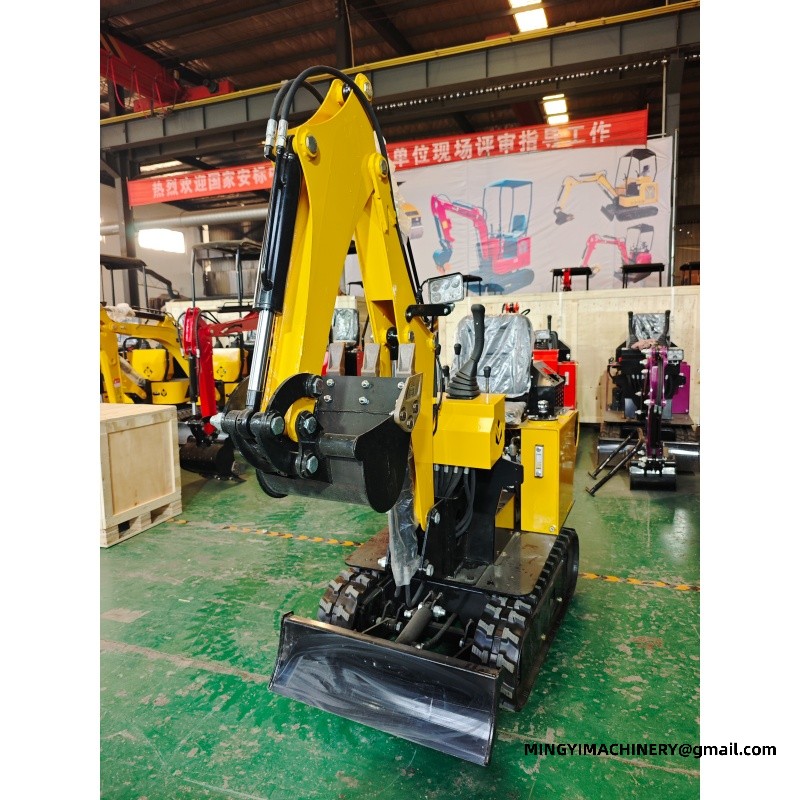
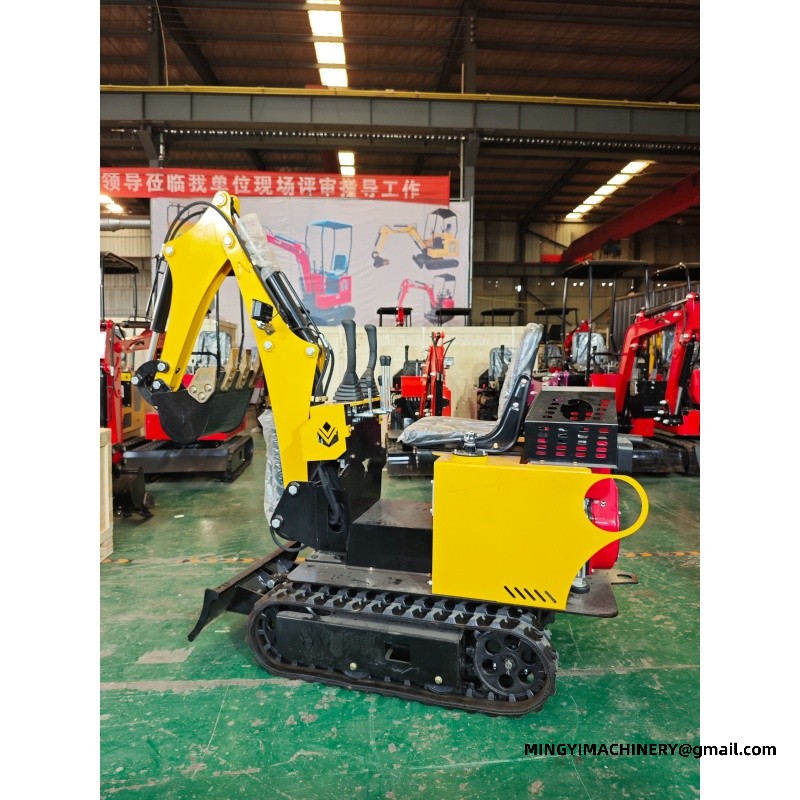
Reference specification — mini excavator range 09W 12W 20-3W 30-2L Operating weight 1100 kg (2425.08 lb) 1200 kg (2645.55 lb) 1900 kg (4188.78 lb) 2400 kg (5291 lb) Transport size (L×W×H) 1800 × 750 × 1970 mm 2200 × 930 × 2250 mm 2550 × 1100 × 2200 mm 2800 × 1500 × 2500 mm Max digging depth 1250 mm (49.21 in) 1630 mm (64.17 in) 1800 mm (70.87 in) 2200 mm (86.61 in) Max digging height 2800 mm (110.24 in) 2750 mm (108.27 in) 2820 mm (111.02 in) 2900 mm (114.17 in) Max dumping height 1700 mm (66.93 in) 1960 mm (77.17 in) 2050 mm (80.71 in) 2100 mm (82.68 in) Max digging radius 2570 mm (101.18 in) 2900 mm (114.17 in) 3050 mm (120.08 in) 3330 mm (131.1 in) Max digging distance 1869 mm (73.58 in) 2100 mm (82.68 in) 2300 mm (90.55 in) 2700 mm (106.3 in) Minimum turning radius 1000 mm (39.37 in) 1300 mm (51.18 in) 1450 mm (57.09 in) 1555 mm (61.22 in) Travel speed 3 km/h (1.86 mph) 3 km/h (1.86 mph) 5 km/h (3.11 mph) 7 km/h (4.35 mph) Gradeability 30° 30° 30° 30° Fuel consumption 1-1.3 L/h (0.264—0.343 gal) 1-1.3 L/h (0.264—0.343 gal) 2-3 L/h (0.528—0.793 gal) 2-3 L/h (0.528—0.793 gal) Fuel tank capacity 8 L (2.11 gal) 10 L (2.64 gal) 16 L (4.23 gal) 16 L (4.23 gal) Hydraulic oil tank 16 L (4.23 gal) 16 L (4.23 gal) 18 L (4.76 gal) 18 L (4.76 gal) Dozer blade lift height 180 mm (7.09 in) 180 mm (7.09 in) 180 mm (7.09 in) 230 mm (9.06 in) Dozer blade drop depth 210 mm (8.27 in) 210 mm (8.27 in) 210 mm (8.27 in) 280 mm (11.02 in)
Q. What is a machine built for the work used for?
A. The class sets the trade: access on one side, reach and lift on the other, and every compact buyer picks their point on that line. A machine that passes the narrowest gap on the job list and still swings the bucket the trench needs is the right size - nothing more complicated than that. Read the equipment in service together with the engine, track and attachment pages: jobs around durable digging are decided by how those choices line up, not by any single number on the sheet.
Q. Which size should I start with?
A. From access and trench width: the machine must pass the narrowest gap on your jobs and swing the bucket the trench needs. The 0.8 to 6 tonne class MINGYI builds as the 08, 12 and 18 models covers most of that ground, and the class pages set out the trade-offs.
Q. Which models does MINGYI build?
A. The 08, 12 and 18 models cover the 0.8 to 6 tonne class with engine, track, cab and attachment options across the range - dealer programmes can mix models in one shipment, and each durable digging machine is confirmed on its own build sheet.
Keeping a service record for the excavator
A written record is worth more than a good memory. Dates, hours and the parts fitted on this class of machine turn a guess about the next service into a fact, and they are the first thing a buyer asks to see.
Cold weather and winter care for the unit in daily use
Cold exposes weak batteries, thick oil and water in the fuel. Preparing a machine of this size for winter means the right grade of oil, a battery in good condition and fuel that will not wax in the tank overnight.
E-mail : sales@mingycn.com
LINE ( ID ): mingyicn
Related pages
portable lightweight household digger · multifunctional compact excavator · Wheel Loader Series: Reliable Builds from Entry to Medium Frame · Mini Excavators









