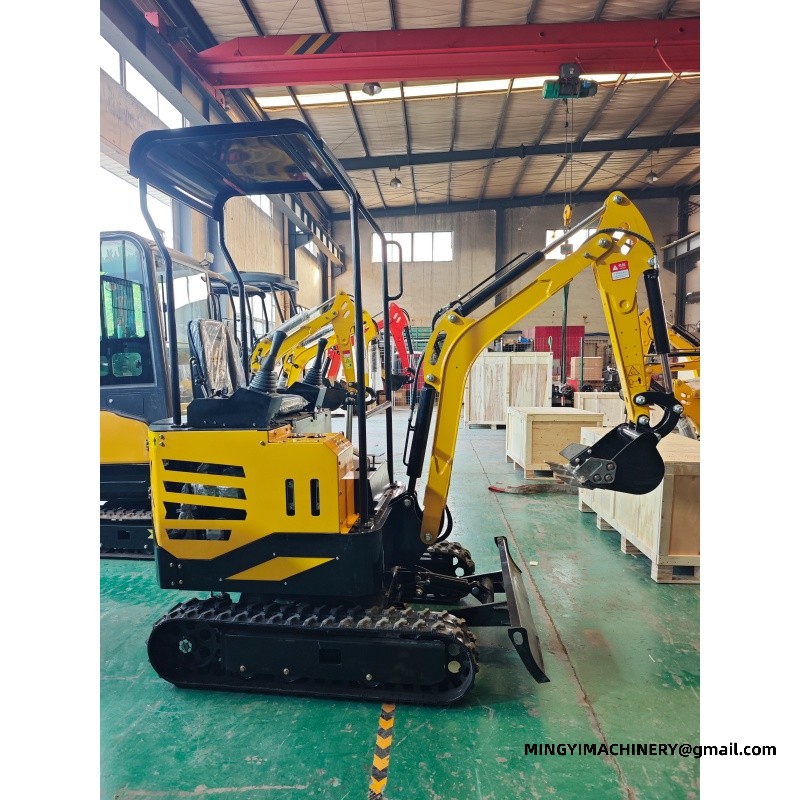
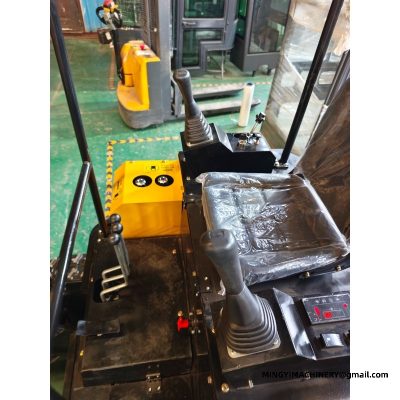
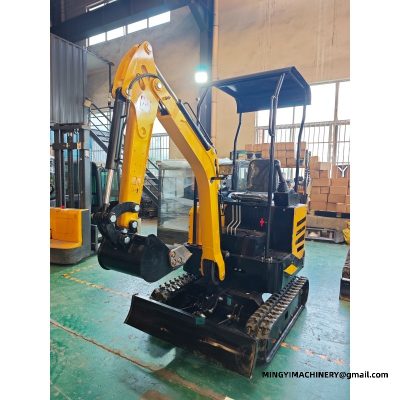
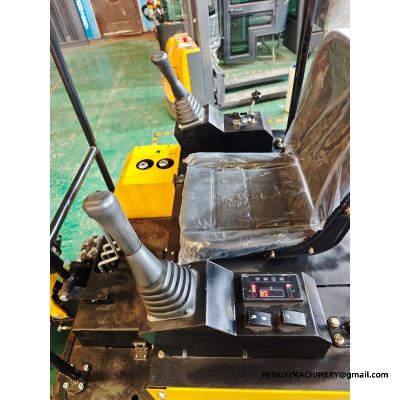
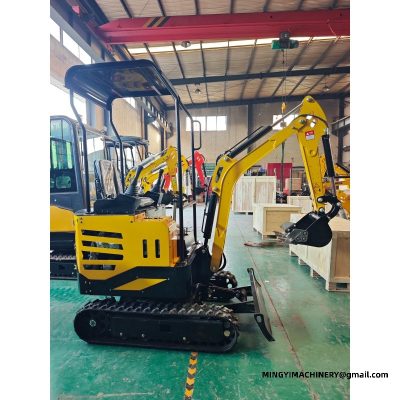
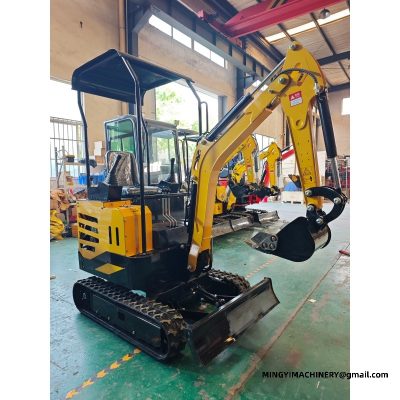
Farm and garden work asks a machine to be gentle and useful in equal measure. It digs ponds and drainage in the fields, trenches irrigation lines through the polytunnel, plants and removes trees, and then crosses the lawn to reach the next job without leaving a scar. MINGYI builds its machines for that balance.
The compact classes, from the 08 series upward through the 1 to 3.5 tonnes band, suit this duty because weight and width matter as much as digging force. This page covers the work and the configuration that fits it.
Work around the farm and garden
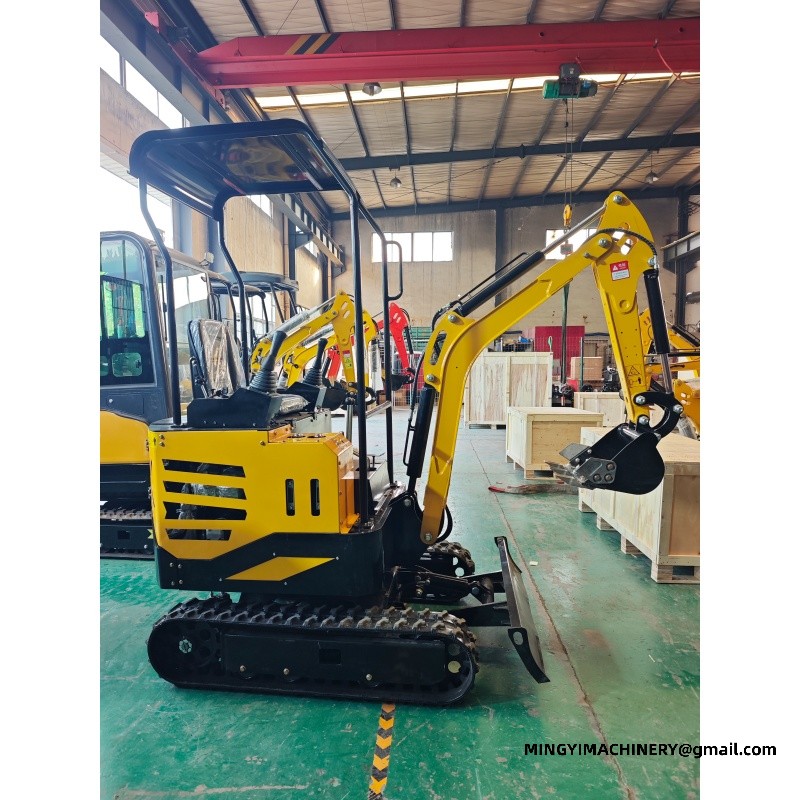
On the farm the machine digs field drainage, cleans ditches, digs gate and fence post holes with an auger, and clears stone picked from the land. The greenhouse sees it at work with a rotary tiller and a root digger, and the orchard with a tree grabber and hedge pruner.
In the garden it shapes beds, digs tree pits and small ponds, trenches for irrigation and lighting runs, and lifts and replants established shrubs with a plant grabber. The front fork and ladder attachments cover the estate maintenance jobs that appear alongside the digging.
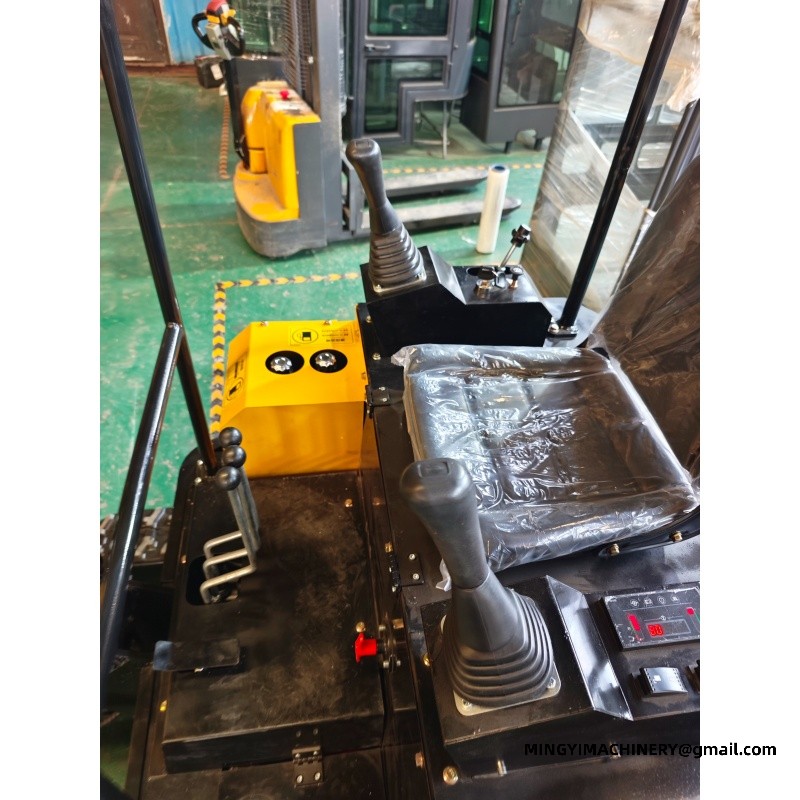
Configuration for mixed ground
Rubber tracks are the default for work around lawns and driveways, moving to steel tracks with rubber blocks where the farm half of the year is mud and stone. The quick coupler matters here, since the attachment changes are frequent and the operator works alone.
The engine is chosen for simplicity of support in rural use, with Changchai, Laidong and Youpu installations common in this duty, and the attachment list is confirmed at the ordering stage. The specification is then recorded against the machine.
List the jobs the machine will cover across the year, from field drainage to garden planting, and the configuration will be drawn from it. Mingyi Machinery packs each machine with spare parts and the service information a rural workshop needs.
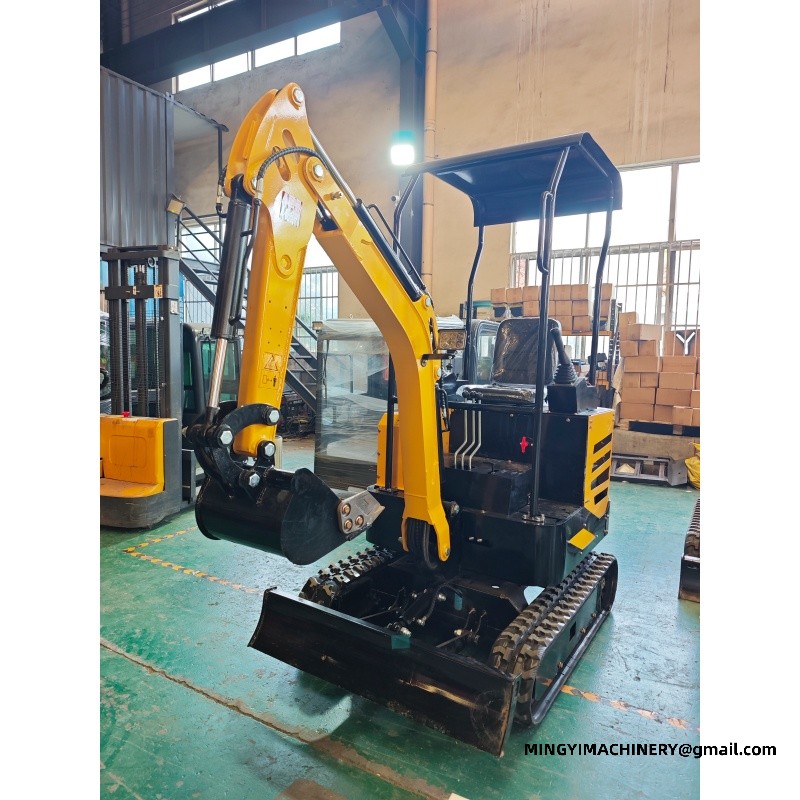
Landscaping and ground care with farm and garden mini excavator Landscape contractors use the excavator for planting holes, pond excavation, grading and retaining work. The machine is light enough to cross finished lawn and narrow enough to work between established trees. On soft landscape work the surface is the constraint. This class of machine on rubber tracks crosses turf without stripping it, which is why the same jobs are not given to a wheeled machine. Orchard, vineyard and farm use of farm and garden mini excavator Ditching, fertilising and drainage on farmland suit the unit in daily use because the work is spread over a large area in short bursts. The machine travels behind a pickup and works where it stops. Farms also use a machine of this size for general maintenance - clearing a watercourse, repairing a track, loading a spreader. One carrier with a few attachments covers most of the jobs that would otherwise wait for a contractor. Quick coupler practice on farm and garden mini excavator Couplers are specified early because they affect the arm and the hydraulic kit. Adding one to the equipment on site after delivery means new pins, new hoses and a fitment session; adding it at build time is a line on the sheet. For a fleet that shares attachments between machines, a common coupler standard matters more than the coupler brand. The machine itself that picks up the same tools as the larger machines keeps the rack usable across the yard. Working near live services with farm and garden mini excavator Digging near water, gas and cable is a precision job. The model in question is used here because the operator can work in short controlled cuts and because the machine can be positioned without driving over the run being exposed. The risk on utility work is not machine power but machine placement. The machine in that duty that fits the working width leaves the surrounding ground undisturbed, which keeps the trench stable and the reinstatement small. Operator technique for farm and garden mini excavator Output on a compact machine comes from placement rather than power. An experienced operator keeps the unit on the job working inside the swing arc, positions once and digs a full run instead of repositioning for every bucket. The second habit is tool discipline. Running a machine built for the work with the right bucket width for the trench means less spoil, less reinstatement and a cleaner job than a wide bucket and a lot of trimming. Hiring versus owning a farm and garden mini excavator The choice follows the hours. Work that fills a few weeks a year is usually better hired, while the equipment in service that would be on site most weeks starts to justify ownership once the transport and booking time is counted. Availability is part of the decision. Owning the excavator means it is there on the day the ground is ready; hiring means competing for the same machine at the same time as everyone else in the season. Trailering and moving this class of machine Transport weight and width decide whether a machine needs a specialist haulier. The unit in daily use sized to travel on a standard plant trailer behind a suitable vehicle moves with the crew rather than on a scheduled low loader. Loading practice matters as much as the numbers. A machine of this size is driven up ramps under its own power with the boom lowered and the tracks aligned, and secured at the points the manufacturer specifies. Hydraulic circuits on the equipment on site Flow and pressure are matched to the tool, not to the machine size. Asking for the attachment list first means the machine itself leaves the factory with circuits that suit the heaviest tool the buyer intends to run. Hydraulic specification is easier to settle at build time than to correct later. The model in question delivered without auxiliary lines can still dig, but every additional tool becomes a retrofit project. Specifying the machine in that duty against a job list Buyers who skip this step either over-buy or under-buy. The unit on the job specified only from machine size tends to arrive without the coupler, the circuits or the track type the work actually needs. Useful information to send with an enquiry includes working width, required digging depth, ground conditions and the attachment set. Those four items let the factory specify a machine built for the work that fits rather than a generic build. Municipal and public works with the equipment in service Municipal crews work on streets, footpaths and parks where the public is present. The excavator is specified because it occupies little space, works inside a small exclusion zone and can be moved on a standard trailer. Drainage repair, tree planting, footway reconstruction and cemetery work are all within the range of this class of machine. The jobs are small individually and continuous across the year. Parts, service and support for the unit in daily use Engine parts availability usually drives the engine choice. A machine of this size built with an engine the local network already carries is serviced from stock rather than from an international order. Remote support is handled by video. The equipment on site fault can often be diagnosed on a walk-around call with the panel open, which is faster than waiting for a visit and avoids shipping a part that is not needed. Noise, dust and working near occupied buildings Enclosure and machine condition both reduce noise. The machine itself with intact panels, sound mounts and a maintained exhaust is measurably quieter than the same machine with loose guards, and the difference matters on restricted sites. Dust control is often part of the same conversation. Water, timing and work sequence reduce what leaves the site, and agreeing them in advance keeps the model in question working rather than stopped after a complaint. Specification data for the machine in that duty The figures below are the factory figures for the models most often matched to the unit on the job. They are the numbers to check against the site: the depth the work needs, the reach from one position, and the width of the narrowest point on the route in. Figures are factory figures and are confirmed on the build sheet for a machine built for the work. Where a job sits between two models, the larger machine usually takes less time than the smaller one spends on rework. Attachment lists are best written before delivery. Specifying the equipment in service with the tools the job list needs avoids the work and delay of adding hydraulics later, and a quick coupler makes the swap a few minutes instead of a workshop job. Most of the daily variety on the excavator comes from the attachment rack rather than from the machine itself. Bucket, breaker, auger, ripper, rake and grab cover the large majority of the work a contractor will see.
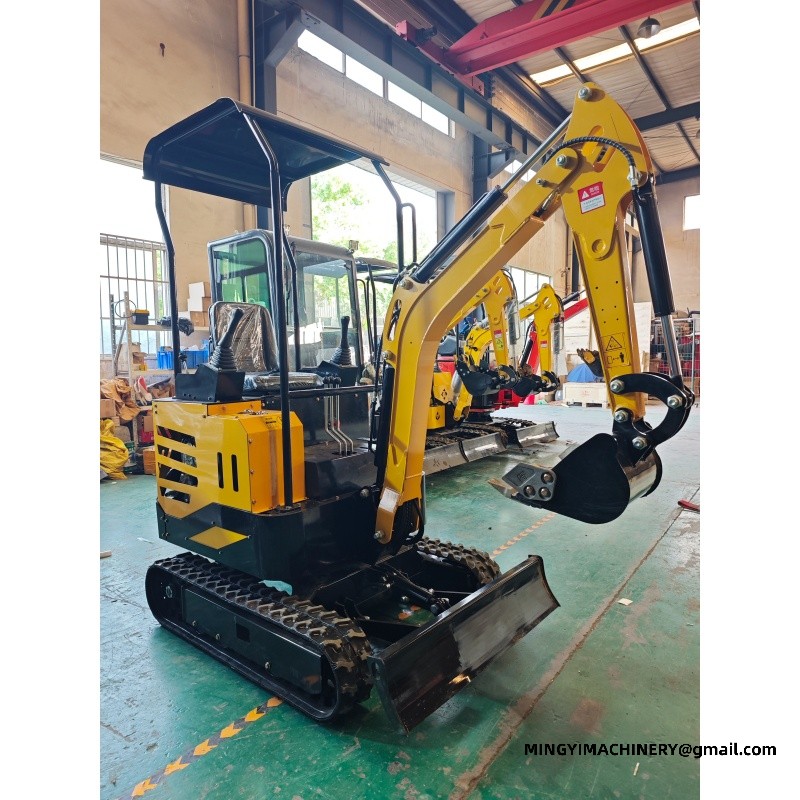
Reference specification — mini excavator range 12W 20-1WL 30-1W 15L Operating weight 1200 kg (2645.55 lb) 1900 kg (4188.78 lb) 2900 kg (6393.41 lb) 1400 kg (3086.47 lb) Transport size (L×W×H) 2200 × 930 × 2250 mm 2550 × 1100 × 2200 mm 3000 × 1250 × 2780 mm 2200 × 930 × 2250 mm Max digging depth 1630 mm (64.17 in) 1800 mm (70.87 in) 2200 mm (86.61 in) 1700 mm (66.93 in) Max digging height 2750 mm (108.27 in) 2820 mm (111.02 in) 3400 mm (133.86 in) 2750 mm (108.27 in) Max dumping height 1960 mm (77.17 in) 2050 mm (80.71 in) 2400 mm (94.49 in) 1960 mm (77.17 in) Max digging radius 2900 mm (114.17 in) 3050 mm (120.08 in) 4000 mm (157.48 in) 2900 mm (114.17 in) Max digging distance 2100 mm (82.68 in) 2300 mm (90.55 in) 2800 mm (110.24 in) 2300 mm (90.55 in) Minimum turning radius 1300 mm (51.18 in) 1450 mm (57.09 in) 2000 mm (78.74 in) 1450 mm (57.09 in) Travel speed 3 km/h (1.86 mph) 5 km/h (3.11 mph) 5 km/h (3.11 mph) 3 km/h (1.86 mph) Gradeability 30° 30° 30° 30° Fuel consumption 1-1.3 L/h (0.264—0.343 gal) 2-3 L/h (0.528—0.793 gal) 2-3 L/h (0.528—0.793 gal) 1-1.3 L/h (0.264—0.343 gal) Fuel tank capacity 10 L (2.64 gal) 16 L (4.23 gal) 16 L (4.23 gal) 10 L (2.64 gal) Hydraulic oil tank 16 L (4.23 gal) 18 L (4.76 gal) 20 L (5.28 gal) 16 L (4.23 gal) Dozer blade lift height 180 mm (7.09 in) 180 mm (7.09 in) 420 mm (16.54 in) 180 mm (7.09 in) Dozer blade drop depth 210 mm (8.27 in) 210 mm (8.27 in) 210 mm (8.27 in) 210 mm (8.27 in)
Q. What is this class of machine?
A. Farm and orchard work is seasonal and varied - trenching at planting, drainage before the rains, clearing and grading after harvest - and one compact machine covers most of that calendar. Between farms the machine moves by trailer, and the transport pages cover ramp and tie-down practice. The unit in daily use is one of the pages buyers land on when comparing machines for farm garden, and the factory treats it as a specification conversation rather than a catalogue line.
Q. How does the machine move between fields and rows?
A. On rubber tracks at low ground pressure, or by trailer between farms - the transport pages cover ramp and tie-down practice. In orchards and vineyards the swing boom digs across the rows while the carrier stays on the headland.
Q. Which models does MINGYI build?
A. The 08, 12 and 18 models cover the 0.8 to 6 tonne class with engine, track, cab and attachment options across the range - dealer programmes can mix models in one shipment, and each farm garden machine is confirmed on its own build sheet.
Packing, loading and shipment of a machine of this size
Container loading is a planning exercise. The overall dimensions and the operating weight of the equipment on site decide whether it ships whole, partly disassembled or with the attachment removed, and that decision is made before the booking.
Keeping a service record for the machine itself
Patterns show up in the record before they show up in the machine. Rising oil consumption or a filter that keeps blocking on the model in question is obvious on paper long before it becomes a failure on site.
E-mail : sales@mingycn.com
LINE ( ID ): mingyicn
Related pages
pocket sized mini excavator · small crawler excavator for farm use · Wheel Loader Snow Blower: Specifying the Third Circuit · Mini Excavators









