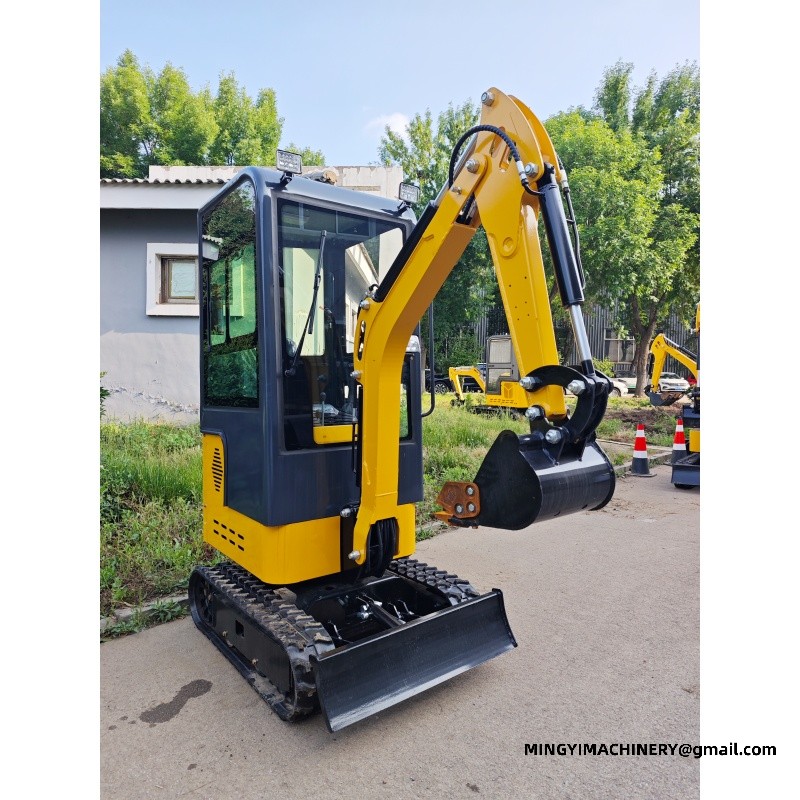
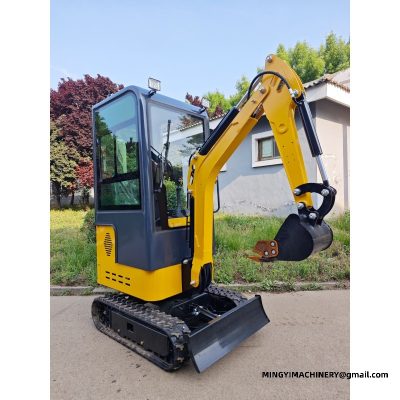
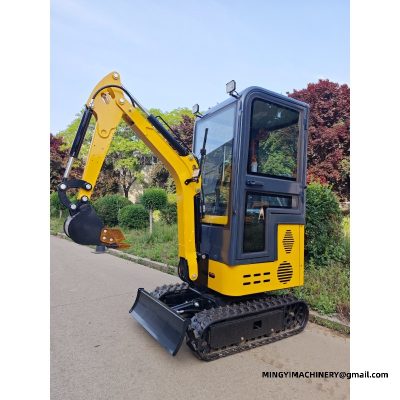
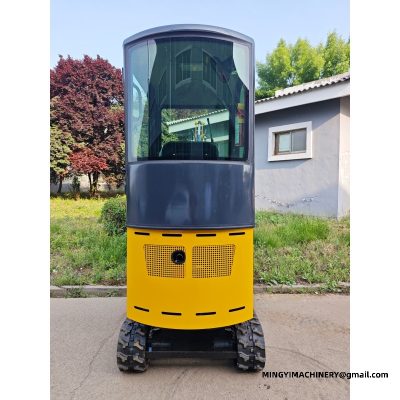
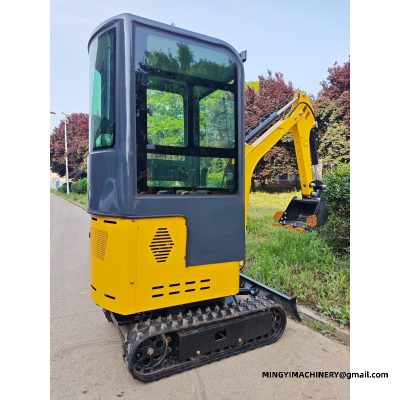
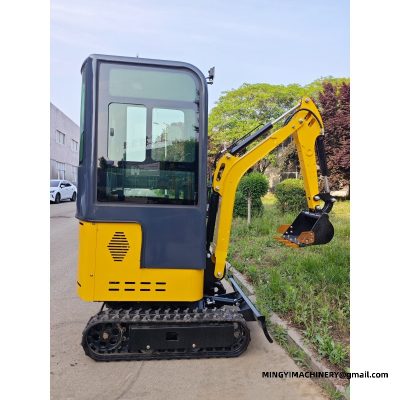
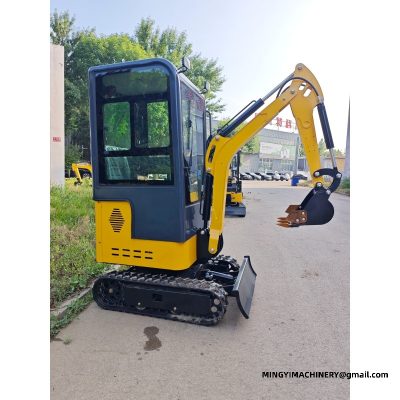
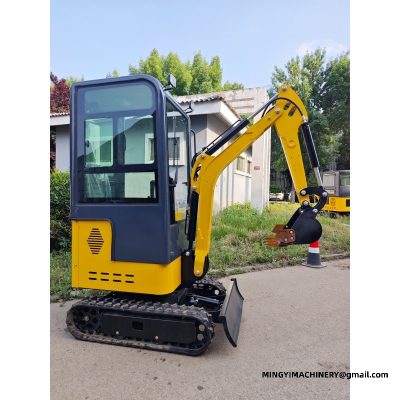
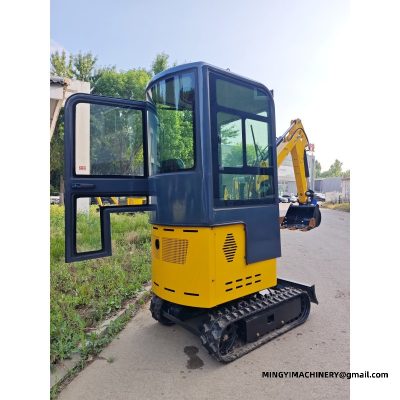
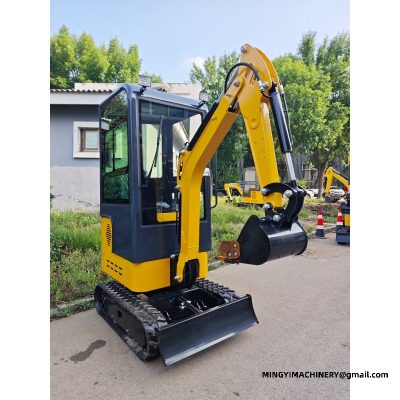
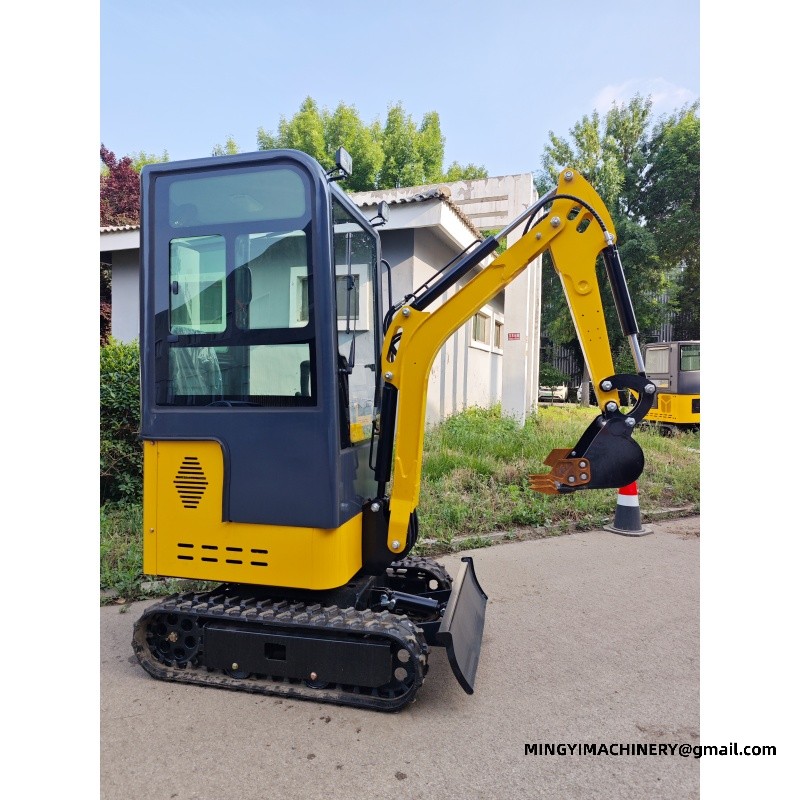
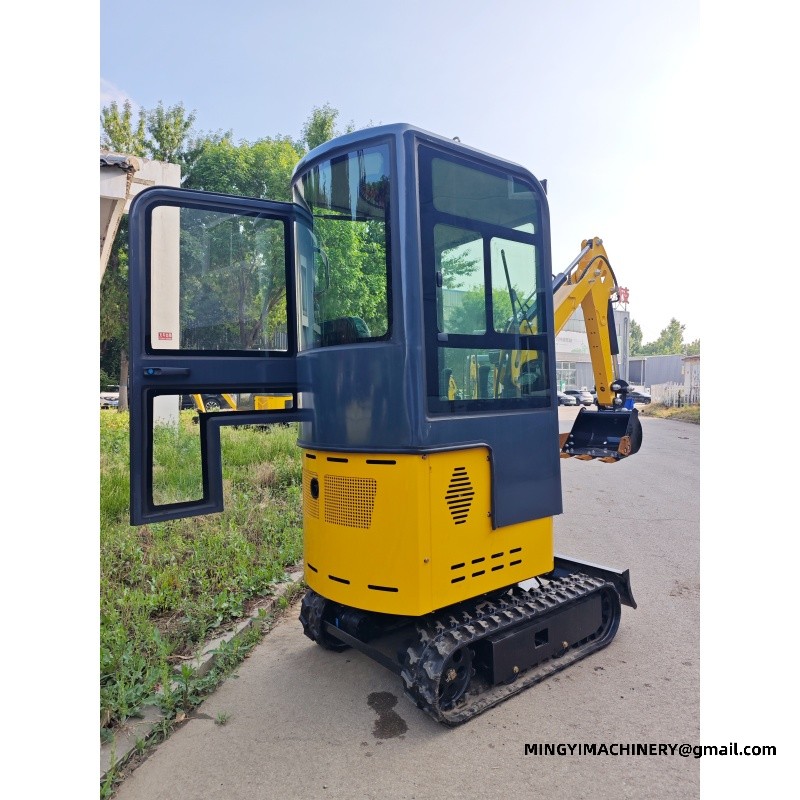
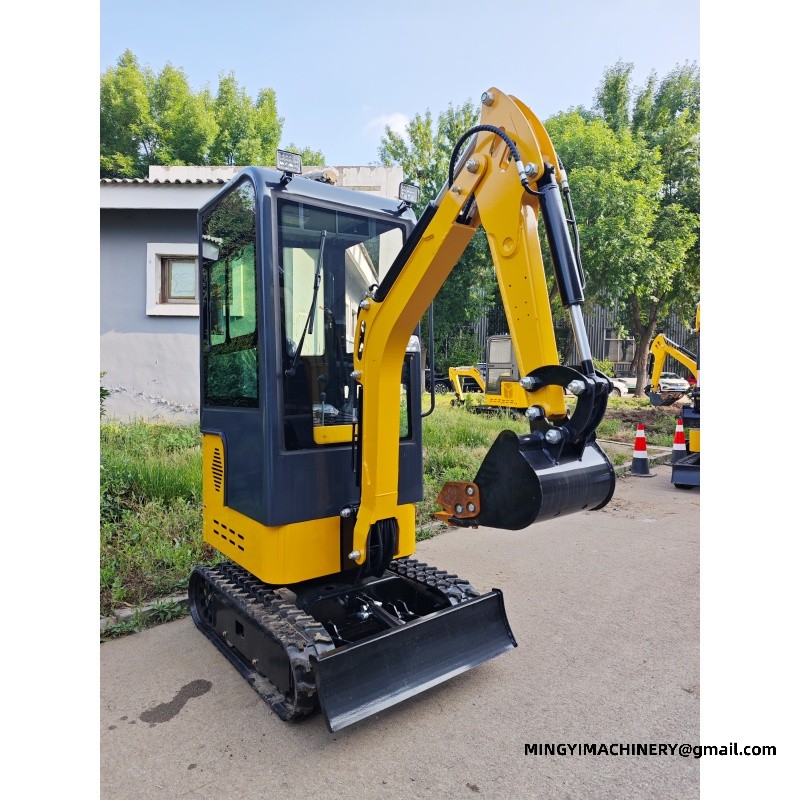
Working on slopes changes what matters in an excavator. Traction and stability outrank outright digging force, because the machine has to hold its position on wet grass, terrace ground and dig at the same time. MINGYI specifies its machines for hillside work with those priorities.
The terracing, orchard and hillside land work common in upland agriculture is the natural home of this configuration. This page sets out the slope duties and the build that supports them.
Hillside and terrace work
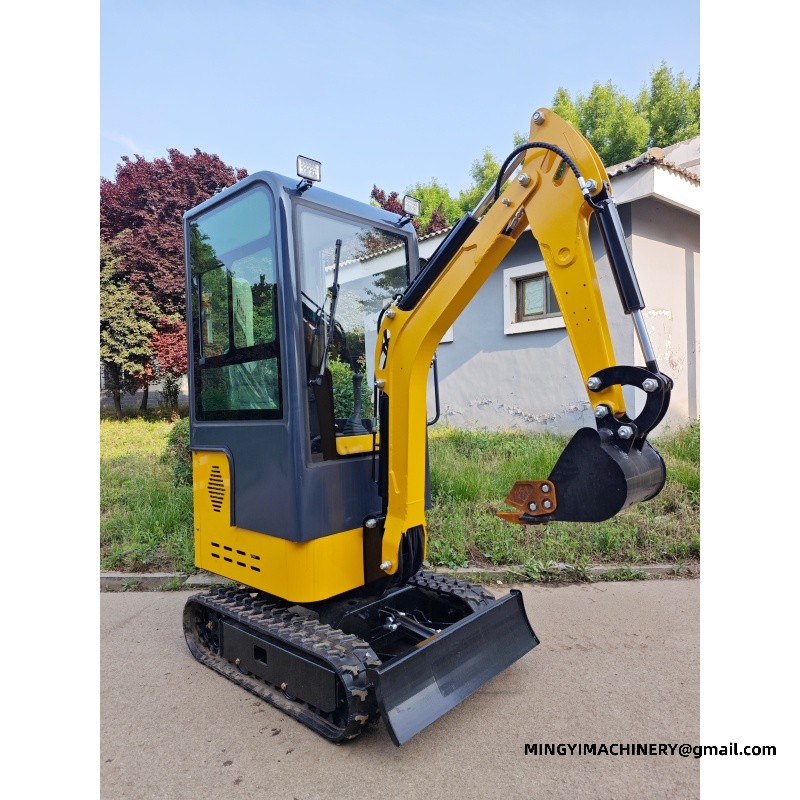
The machine builds terraces on sloping land, cuts the drainage that keeps the terraces dry, and digs the planting holes along the contour. On established ground it cleans ditches running across the slope and clears the runoff channels that form after heavy rain.
Working across a slope is also a safety matter. The track grip and the low centre of the compact classes, within the 1 to 3.5 tonnes band for preference, keep the machine planted while the arm digs below or beside it on the hillside.
The slope working specification
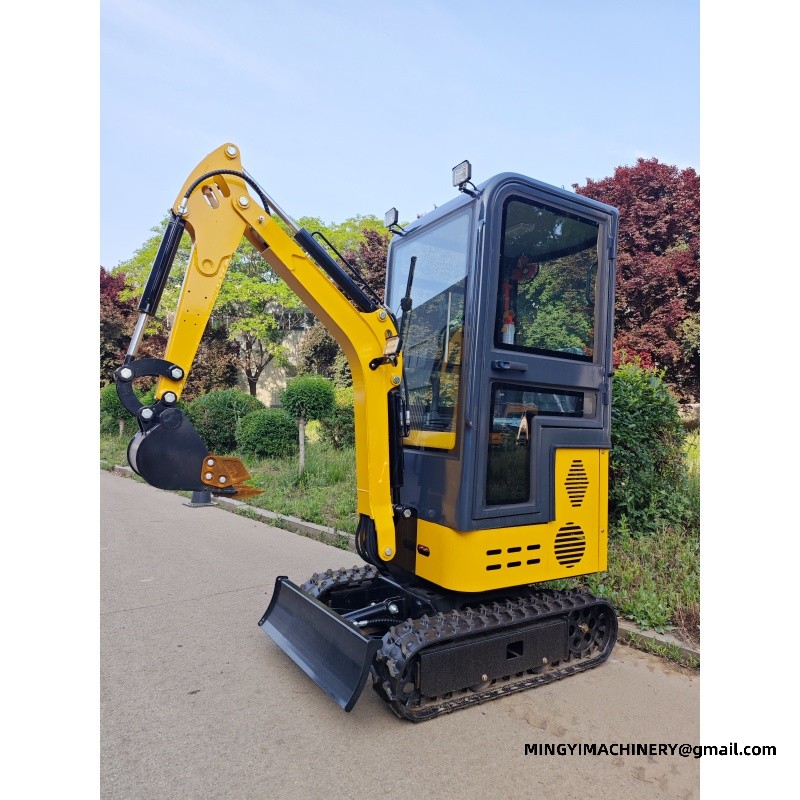
Steel tracks with rubber blocks are the usual choice for slope work, since wet grass and soft ground are the normal surface and grip is the limiting factor. Where the machine also crosses farmyards and lanes, the blocks keep those surfaces usable.
A swing boom earns its place on terraces, reaching the work below the machine while the tracks stay level on the bench. Confirm the steepest grade and the surface conditions at the ordering stage, and the undercarriage will be selected accordingly.
State the gradients you work on and what the surface is like at its worst, and the hillside configuration will follow. Mingyi Machinery ships each machine with spare parts and service documentation for remote working.
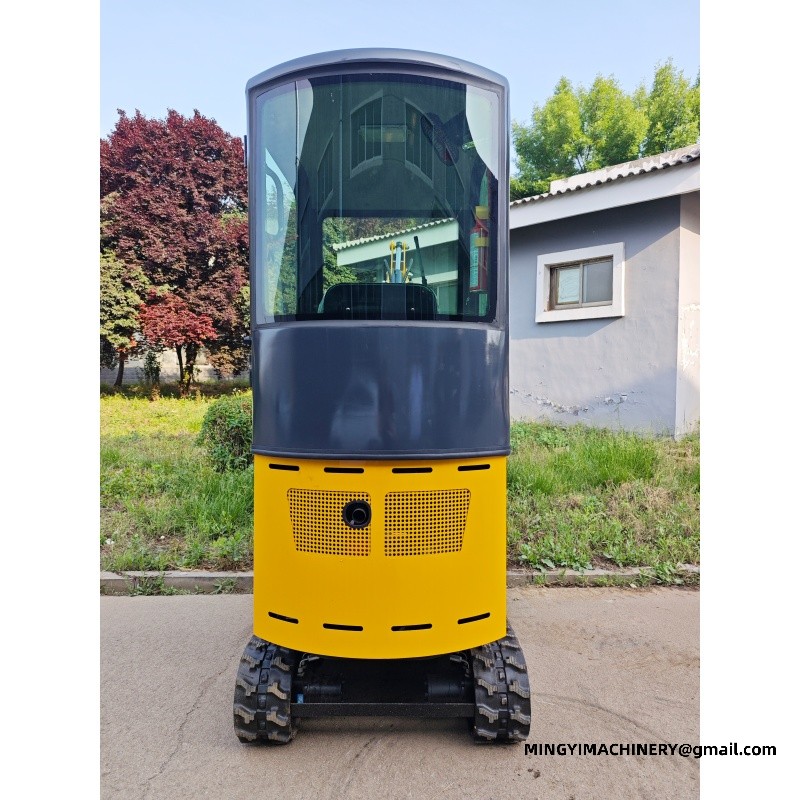
Getting mini excavator for slope and hill work through a narrow gap The first question on most job lists is whether the machine can reach the work at all. The excavator is chosen against the narrowest point on the route - a garden gate, a doorway, a gap between two walls - because a machine that arrives and then cannot pass loses a day, not an hour. Access decides the machine before output does. With this class of machine the limiting dimension is usually the widest point on the way in, so measuring the gate, the corridor and the turning space first saves a wasted delivery and a second visit. Working on slopes and uneven ground with mini excavator for slope and hill work Slope work is a stability question before it is a traction question. Knowing the gradient the unit in daily use is rated for, and working across rather than straight up where the ground allows, removes most of the risk. Planning the direction of travel helps. Working so that the a machine of this size is stable under load and not required to turn on a slope is a decision made before the job starts, not a correction made during it. Interior and light demolition with mini excavator for slope and hill work Breaking out a floor slab, a wall footing or a concrete step is routine work for the equipment on site with a breaker. The machine is small enough to work inside and heavy enough to run the tool at a practical rate. Dust, debris clearance and floor loading all argue for a compact machine indoors. The machine itself spreads its weight over a wider track footprint than a wheeled machine of similar capacity. Attachments that turn mini excavator for slope and hill work into several machines The base machine is a carrier; the tool on the end of the arm decides the task. The model in question fitted with a toothed bucket digs, and the same machine with a breaker, an auger or a grab does work that would otherwise need a second unit on site. Most of the daily variety on the machine in that duty comes from the attachment rack rather than from the machine itself. Bucket, breaker, auger, ripper, rake and grab cover the large majority of the work a contractor will see. Boom configuration for mini excavator for slope and hill work A swing boom lets the machine dig parallel to its tracks without repositioning, which is what makes trenching beside a wall or a fence practical. On the unit on the job this is often the option that decides whether a job is possible at all. Detachable boom sections are used where transport length matters. A machine built for the work that has to travel on a standard trailer can be built so the arm comes off for the road and goes back on at the site. Running mini excavator for slope and hill work in a rental fleet Rental fleets buy for utilisation, not for a single job. The equipment in service with a quick coupler and a common attachment standard is hired more often because it suits more of the calls that come in. Fleet buyers also weigh transport. The excavator that a customer can tow on a normal licence and a standard trailer is a hire that does not need a delivery truck, which changes how often it goes out. Landscaping and ground care with this class of machine Grass cutting heads, rakes and tillers extend the unit in daily use into ground care. The same carrier that digs a border in spring can cut and clear the same area later in the season. On soft landscape work the surface is the constraint. A machine of this size on rubber tracks crosses turf without stripping it, which is why the same jobs are not given to a wheeled machine. Trailering and moving the equipment on site Loading practice matters as much as the numbers. The machine itself is driven up ramps under its own power with the boom lowered and the tracks aligned, and secured at the points the manufacturer specifies. Detachable components reduce transport length. The model in question built with a removable arm section or a folding step fits a shorter trailer and may avoid an oversize movement permit. Acceptance checks when the machine in that duty arrives Delivery day is the best time to find a problem. Checking the specification against the order, the fluid levels, the fasteners and any transport damage while the machine built for the work is still on the trailer is faster than claiming later. Documentation should arrive with the machine. Parts list, service schedule and any certificates for the unit on the job are what the workshop needs later, and they are much easier to obtain at delivery than in month six. What owners should plan for beyond the equipment in service The useful comparison is demand per working hour, not demand per machine. The excavator that works more hours a year spreads its standing takes over more output, which is why utilisation usually matters more than the invoice figure. Downtime is the hidden line item. This class of machine waiting on a part earns nothing while it stands, so parts availability and service access belong in the plan as much as fuel does. Specification data for the unit in daily use The figures below are the factory figures for the models most often matched to a machine of this size. They are the numbers to check against the site: the depth the work needs, the reach from one position, and the width of the narrowest point on the route in. These are the reference figures for the equipment on site. MINGYI confirms the final build sheet, including engine and attachment choices, against the destination and the job list before production. The practical way to specify is to write the job list first: the narrowest access, the deepest trench, the heaviest tool and the surfaces the machine must cross. The machine itself is then matched to those four numbers. Useful information to send with an enquiry includes working width, required digging depth, ground conditions and the attachment set. Those four items let the factory specify the model in question that fits rather than a generic build.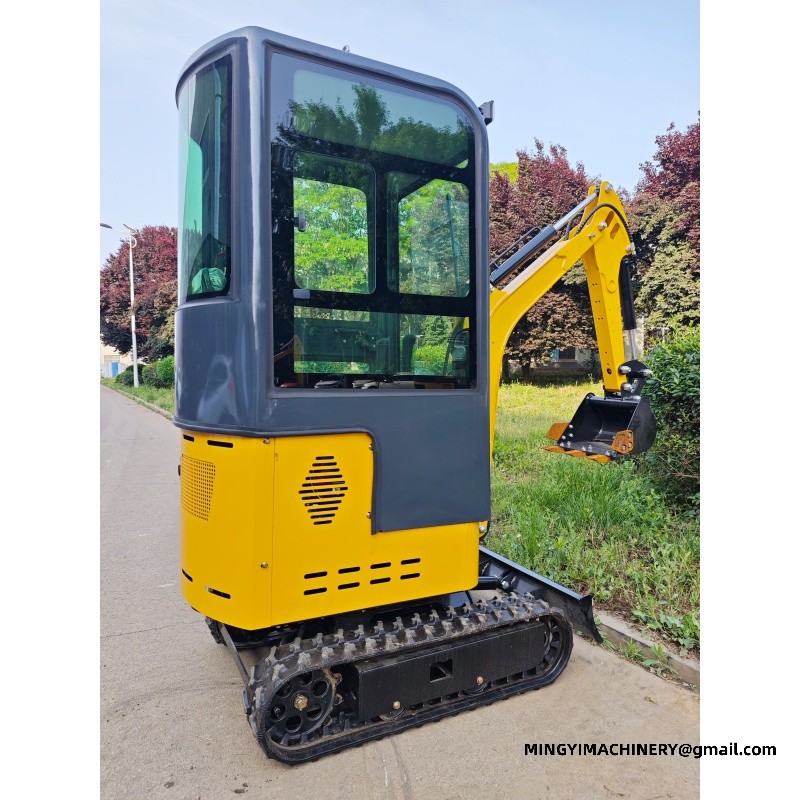
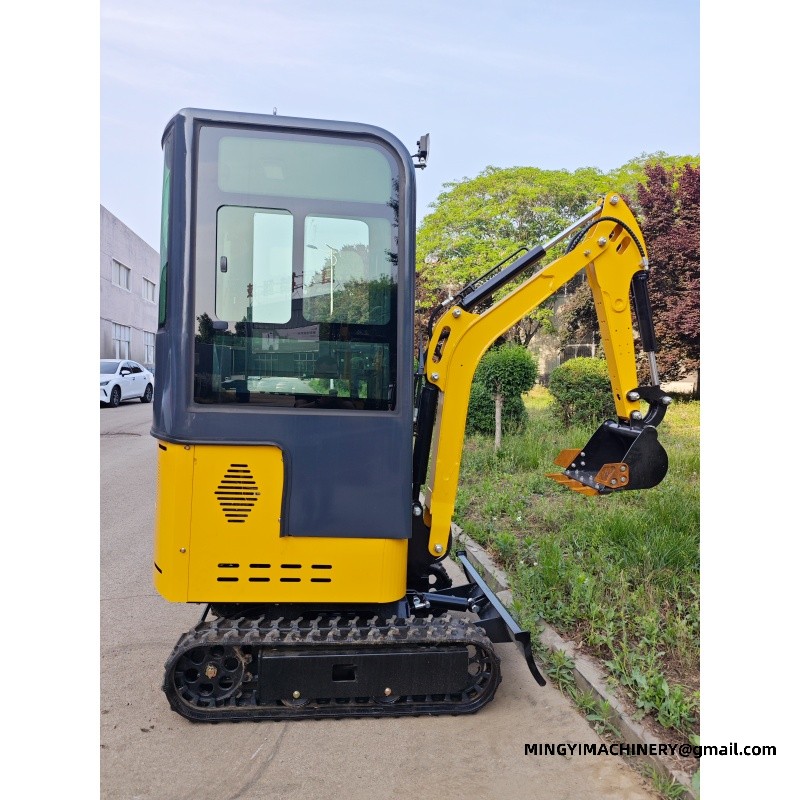
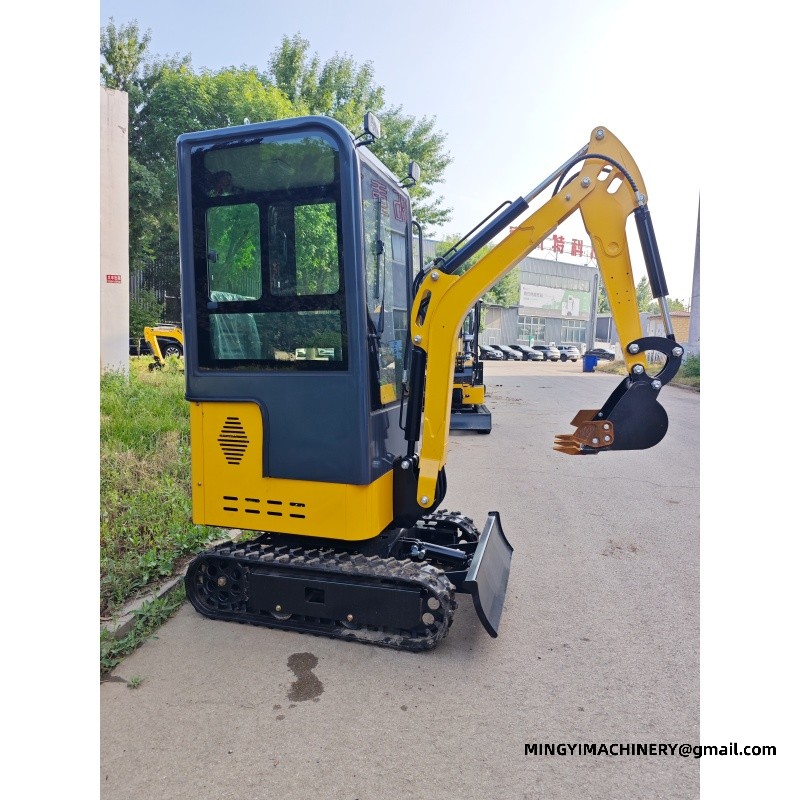
Reference specification — mini excavator range 09W 15W 20-1WL 12L Operating weight 1100 kg (2425.08 lb) 1400 kg (3086.47 lb) 1900 kg (4188.78 lb) 1200 kg (2645.55 lb) Transport size (L×W×H) 1800 × 750 × 1970 mm 2200 × 930 × 2250 mm 2550 × 1100 × 2200 mm 2200 × 930 × 2250 mm Max digging depth 1250 mm (49.21 in) 1630 mm (64.17 in) 1800 mm (70.87 in) 1700 mm (66.93 in) Max digging height 2800 mm (110.24 in) 2750 mm (108.27 in) 2820 mm (111.02 in) 2600 mm (102.36 in) Max dumping height 1700 mm (66.93 in) 1960 mm (77.17 in) 2050 mm (80.71 in) 1800 mm (70.87 in) Max digging radius 2570 mm (101.18 in) 2900 mm (114.17 in) 3050 mm (120.08 in) 2900 mm (114.17 in) Max digging distance 1869 mm (73.58 in) 2100 mm (82.68 in) 2300 mm (90.55 in) 2300 mm (90.55 in) Minimum turning radius 1000 mm (39.37 in) 1300 mm (51.18 in) 1450 mm (57.09 in) 1450 mm (57.09 in) Travel speed 3 km/h (1.86 mph) 3 km/h (1.86 mph) 5 km/h (3.11 mph) 3 km/h (1.86 mph) Gradeability 30° 30° 30° 30° Fuel consumption 1-1.3 L/h (0.264—0.343 gal) 1-1.3 L/h (0.264—0.343 gal) 2-3 L/h (0.528—0.793 gal) 1-1.3 L/h (0.264—0.343 gal) Fuel tank capacity 8 L (2.11 gal) 10 L (2.64 gal) 16 L (4.23 gal) 10 L (2.64 gal) Hydraulic oil tank 16 L (4.23 gal) 16 L (4.23 gal) 18 L (4.76 gal) 16 L (4.23 gal) Dozer blade lift height 180 mm (7.09 in) 180 mm (7.09 in) 180 mm (7.09 in) 180 mm (7.09 in) Dozer blade drop depth 210 mm (8.27 in) 210 mm (8.27 in) 210 mm (8.27 in) 210 mm (8.27 in)
Q. Who chooses the machine in that duty?
A. Wetland, mud and hillside work is a track and stability problem first, and the machine is set up for it before it is bought. Widen the shoes, keep the slew slow and work from mats when the ground is truly wet. The unit on the job is one of the pages buyers land on when comparing machines for slope and hill work, and the factory treats it as a specification conversation rather than a catalogue line.
Q. How do you work on wet or soft ground?
A. Widen the shoes or run longer tracks to spread the load, keep the slew slow and work from mats when the ground is truly wet. The ground decides the track, not the other way round.
Q. What about colours and branding?
A. OEM colours and decals are part of the build: private-label machines carry the buyer brand on the standard MINGYI platform, and the slope and hill work order confirms colours, marks and documents before production starts.
Keeping a service record for a machine built for the work
The record should follow the machine, not the owner. When the equipment in service changes hands the service history travels with it, and a complete folder is often the difference between a quick sale and a long one.
Planning the season around the excavator
Workload is rarely even across the year, and the machine should be specified for the busy weeks. This class of machine sized only for the average month will be the limiting factor exactly when the work is worth the most.
Documents that travel with the unit in daily use
Documentation should match the machine that was actually built. The sheet supplied with a machine of this size records the configuration as delivered, because the generic catalogue description is not what the customer needs when ordering a part.
E-mail : sales@mingycn.com
LINE ( ID ): mingyicn
Night work and lighting on mini excavator for slope and hill work
Work lamps should cover the working area and the travel path separately, since a beam set for loading usually leaves the route dark.
Reflective markings on the machine help everyone else on site, and they are simple to add and easy to replace.
A lighting check belongs at the start of every night shift, together with a look at the warning beacon and the brake lights.
Common operator mistakes with mini excavator for slope and hill work
Ignoring a small change in sound or feel is the mistake that turns a service item into a repair, and reporting it early is the habit worth building.
Related pages
mini construction digger · practical mini excavator for contractors · Construction Wheel Loader: Site Loading, Backfill, Hardstands · Mini Excavators









