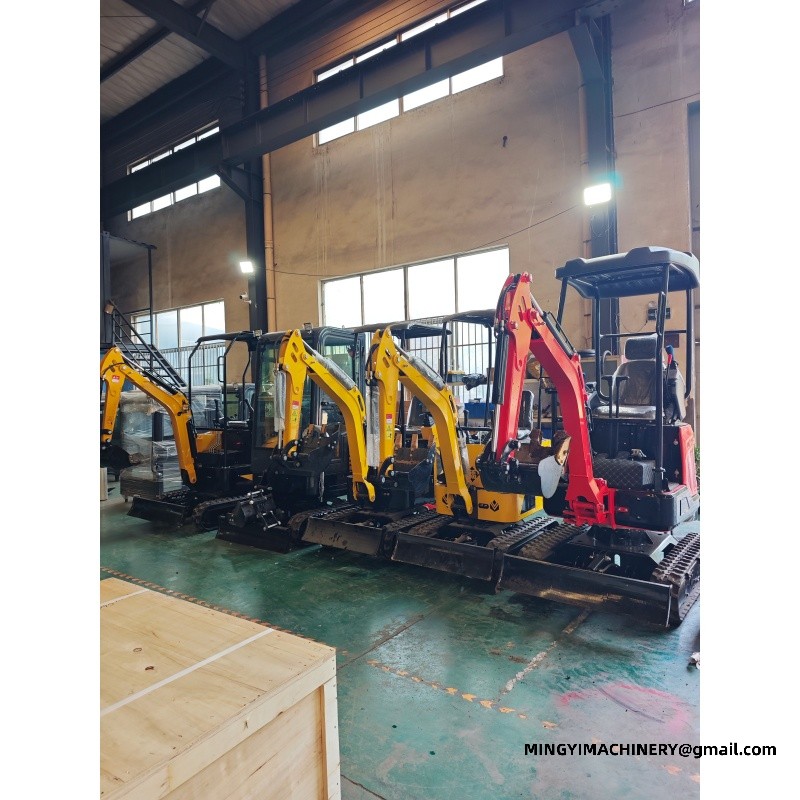
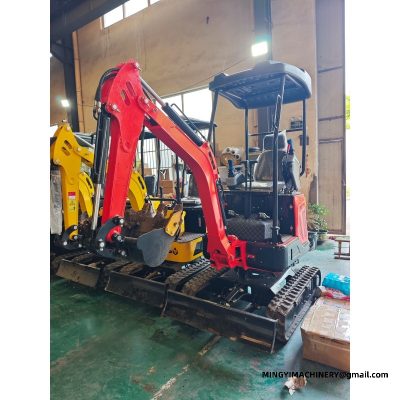
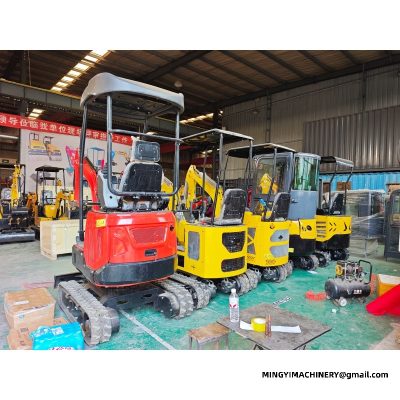
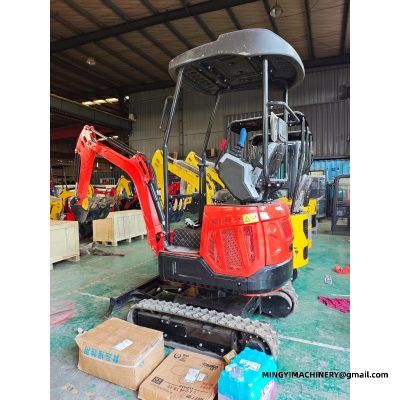
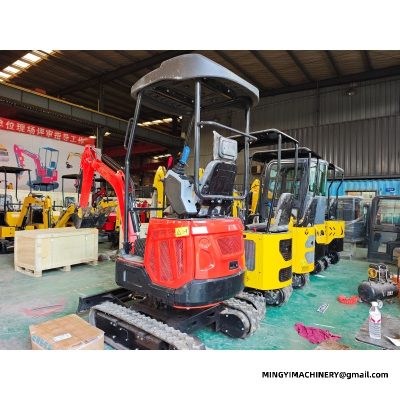
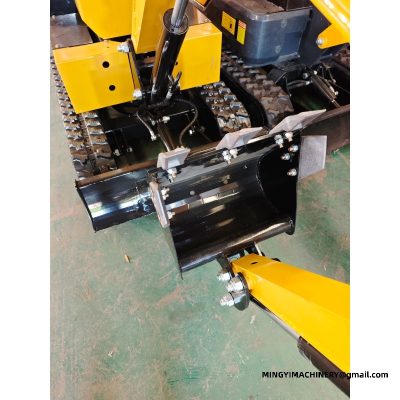
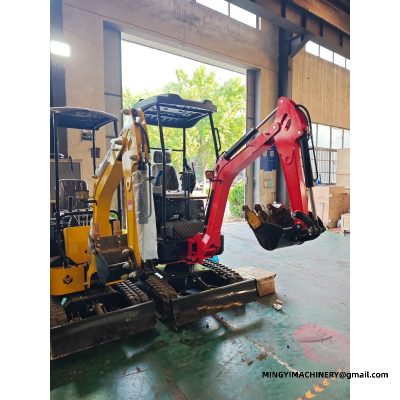
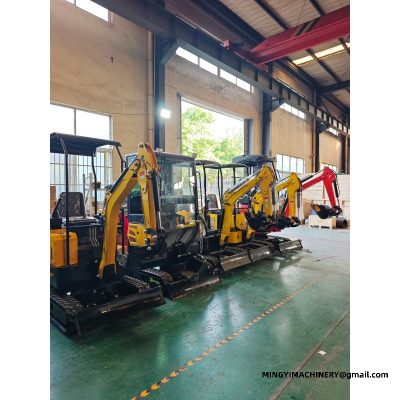
Household work puts a small machine into the spaces people live in: the side passage, the rear garden, the ground under a conservatory or shed. Noise and fumes matter in those places, which is why the household configuration of the MINGYI mini excavator is specified for quiet, contained operation.
The electric drive suits this duty. It removes the exhaust problem from enclosed and semi enclosed spaces and keeps the operating noise low enough for work in occupied areas. This page covers the household jobs and how the machine is ordered.
Jobs around the house
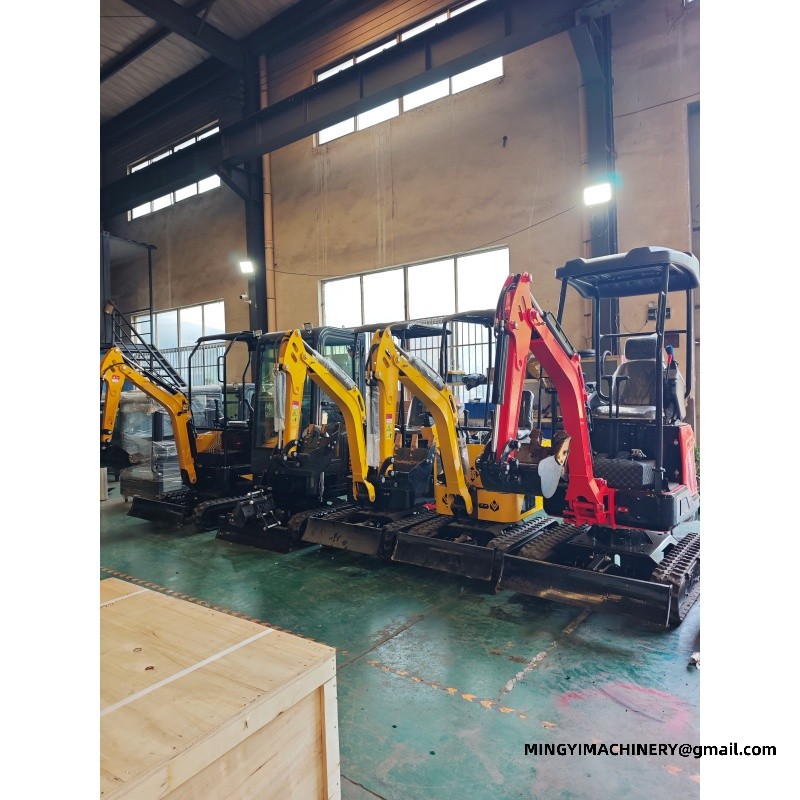
The work includes digging garden ponds, trenching for garden power and water runs, planting and removing trees and shrubs, and removing old paths and small slabs with the breaker hammer. Where a shed or outbuilding is being rebuilt, the same machine handles the footings and the removal.
The smallest classes in the 0.8 to 6 tonnes range are the ones that pass through side gates and doorways, especially with a retractable undercarriage. The machine can reach rear gardens without dismantling fences, which is often the reason the job was put off.
Specifying a household machine
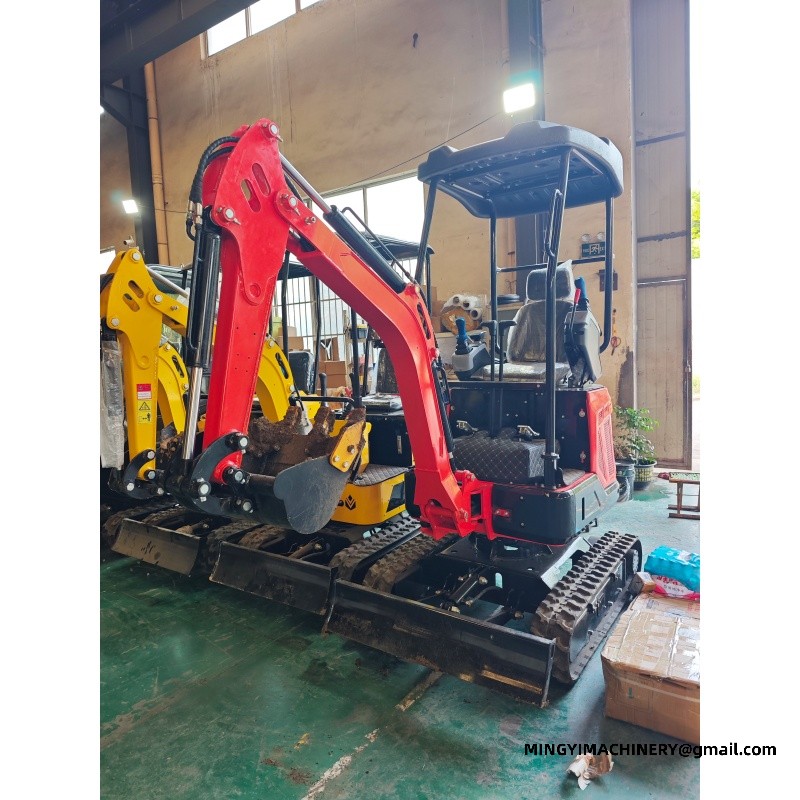
Confirm the narrowest access point and the surface the machine will cross, since these fix the class and the track choice. Rubber tracks are standard for garden and paved work, keeping lawns and slabs usable once the job is finished.
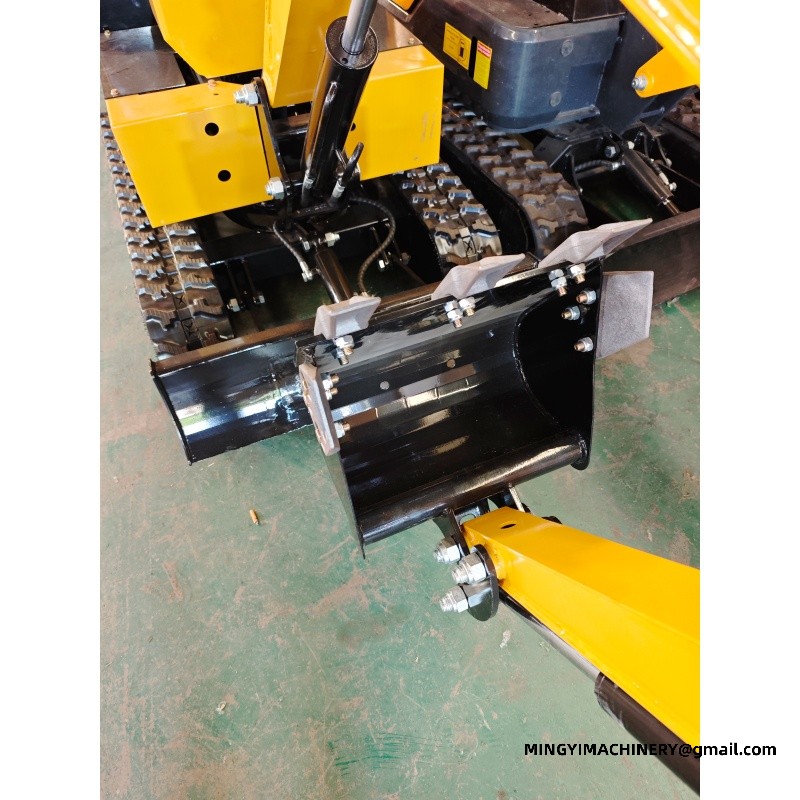
The attachment list for household work usually includes a digging bucket, a small breaker hammer, an auger for post holes and a grabber for planting and clearance. All of it is agreed with MINGYI at the ordering stage and recorded against the machine.
Send the access width and the list of household jobs you have queued, and the electric machine will be specified around them. Each unit ships with spare parts and the service information needed for its quiet running maintenance.
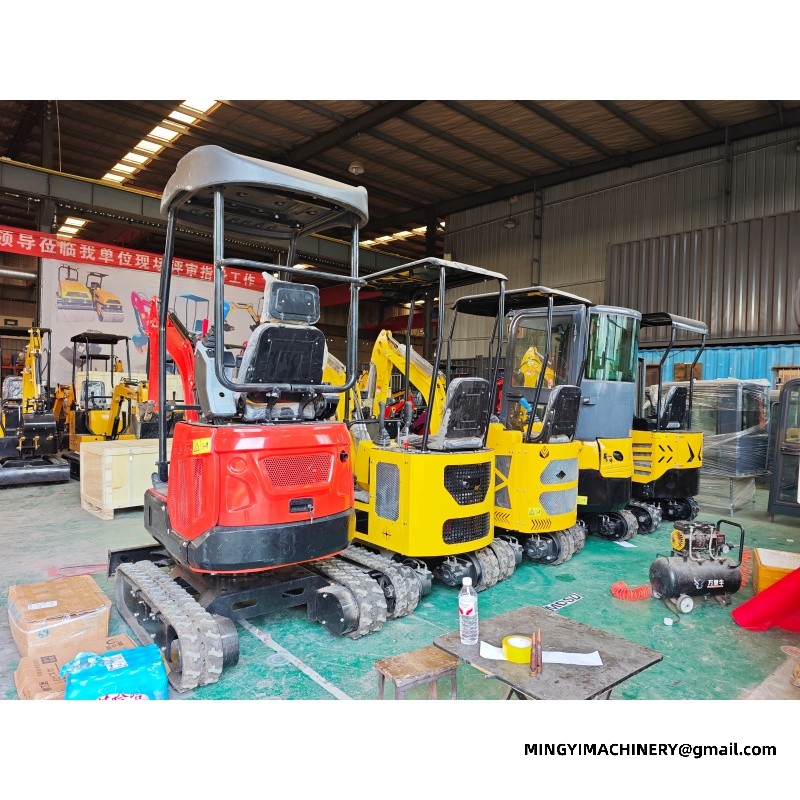
Lifting and material handling with a household electric mini excavator Lifting with a machine built to dig needs a plan. The load, the radius and the ground under the class of machine all matter, and the safe figure is the one on the chart rather than the one that looks possible. Ground condition under the machine is part of every lift. Soft or uneven support is the common factor in handling incidents, and checking it takes less time than recovering the excavator that has settled. Hydraulic circuits on a household electric mini excavator Flow and pressure are matched to the tool, not to the machine size. Asking for the attachment list first means the unit in daily use leaves the factory with circuits that suit the heaviest tool the buyer intends to run. Hydraulic specification is easier to settle at build time than to correct later. A machine of this size delivered without auxiliary lines can still dig, but every additional tool becomes a retrofit project. Track choice for household electric mini excavator Rubber tracks suit paved and landscaped ground because they spread the machine weight and leave the surface intact. Steel tracks with rubber blocks are specified where the ground is rougher or the working day is longer, and the choice can be made per machine rather than accepted as a factory default. Track type changes what the machine can cross and what it leaves behind. Buyers specify rubber for lawns, driveways and municipal work, and steel with rubber blocks for sites where sharp material would cut a rubber belt in a week. Working a household electric mini excavator in confined spaces Clearance above matters as much as around. Door heights, pipework and overhead services set the limit for the equipment on site indoors, and measuring them first avoids a machine that arrives and cannot be used. Ventilation is the other indoor constraint. Running the machine itself inside a closed structure needs air movement, and that is a planning item rather than something to discover after the first hour. OEM and fleet customisation of household electric mini excavator Customisation also covers the specification sheet. A fleet buyer may want every machine in that duty delivered with the same coupler, the same engine and the same tool kit so training and parts stock stay simple. Documentation can be prepared to suit the importer. Manuals, parts books and decal sets for the model in question can be supplied with the buyer's own branding where the order size justifies it. Attachments that turn household electric mini excavator into several machines Attachment lists are best written before delivery. Specifying the unit on the job with the tools the job list needs avoids the work and delay of adding hydraulics later, and a quick coupler makes the swap a few minutes instead of a workshop job. Most of the daily variety on a machine built for the work comes from the attachment rack rather than from the machine itself. Bucket, breaker, auger, ripper, rake and grab cover the large majority of the work a contractor will see. Engine options behind the equipment in service Power unit selection is settled against the service network the buyer already uses. MINGYI offers Kubota D722, Kubota D902, YANMAR, Changchai, Laidong, Runtong, YARMAX, Youpu 2V80 and Youpu 195, so a fleet running one brand of engine can keep the same filters, the same parts supplier and the same mechanic. Two buyers can order the same the excavator and receive different engines. The decision is rarely about peak power; it is about which parts counter is closest to the site and which engine the local mechanic already knows. Matching this class of machine to ground conditions Soft ground is a flotation problem, not a power problem. The unit in daily use on wide rubber tracks crosses lawn, sand and cultivated soil that would stop a narrower machine or a wheeled unit of the same capacity. Hard and abrasive ground reverses the specification. On rock, demolition rubble or sharp gravel, steel tracks with rubber blocks on a machine of this size survive conditions that cut a rubber belt quickly. Acceptance checks when the equipment on site arrives Delivery day is the best time to find a problem. Checking the specification against the order, the fluid levels, the fasteners and any transport damage while the model in question is still on the trailer is faster than claiming later. A function check before the machine goes to work is worth the hour. Running through the controls, the travel and the attachment circuit on the machine itself confirms it is set up as specified and ready for the site. Noise, dust and working near occupied buildings Enclosure and machine condition both reduce noise. The machine in that duty with intact panels, sound mounts and a maintained exhaust is measurably quieter than the same machine with loose guards, and the difference matters on restricted sites. Dust control is often part of the same conversation. Water, timing and work sequence reduce what leaves the site, and agreeing them in advance keeps the unit on the job working rather than stopped after a complaint. Hiring versus owning a machine built for the work The choice follows the hours. Work that fills a few weeks a year is usually better hired, while the equipment in service that would be on site most weeks starts to justify ownership once the transport and booking time is counted. Availability is part of the decision. Owning the excavator means it is there on the day the ground is ready; hiring means competing for the same machine at the same time as everyone else in the season. Interior and light demolition with this class of machine Interior demolition is an access and a weight question. The unit in daily use that fits through a doorway and works on a suspended floor does jobs that would otherwise be done by hand or by a larger machine that cannot enter. Dust, debris clearance and floor loading all argue for a compact machine indoors. A machine of this size spreads its weight over a wider track footprint than a wheeled machine of similar capacity. Working near live services with the equipment on site Utility crews specify the machine itself with a narrow bucket and good visibility for exactly this reason: the machine has to stop at the service, not at the edge of the operator's view. Specification data for the model in question The figures below are the factory figures for the models most often matched to the machine in that duty. They are the numbers to check against the site: the depth the work needs, the reach from one position, and the width of the narrowest point on the route in. Figures are factory figures and are confirmed on the build sheet for the unit on the job. Where a job sits between two models, the larger machine usually takes less time than the smaller one spends on rework. Digging near water, gas and cable is a precision job. A machine built for the work is used here because the operator can work in short controlled cuts and because the machine can be positioned without driving over the run being exposed. The risk on utility work is not machine power but machine placement. The equipment in service that fits the working width leaves the surrounding ground undisturbed, which keeps the trench stable and the reinstatement small.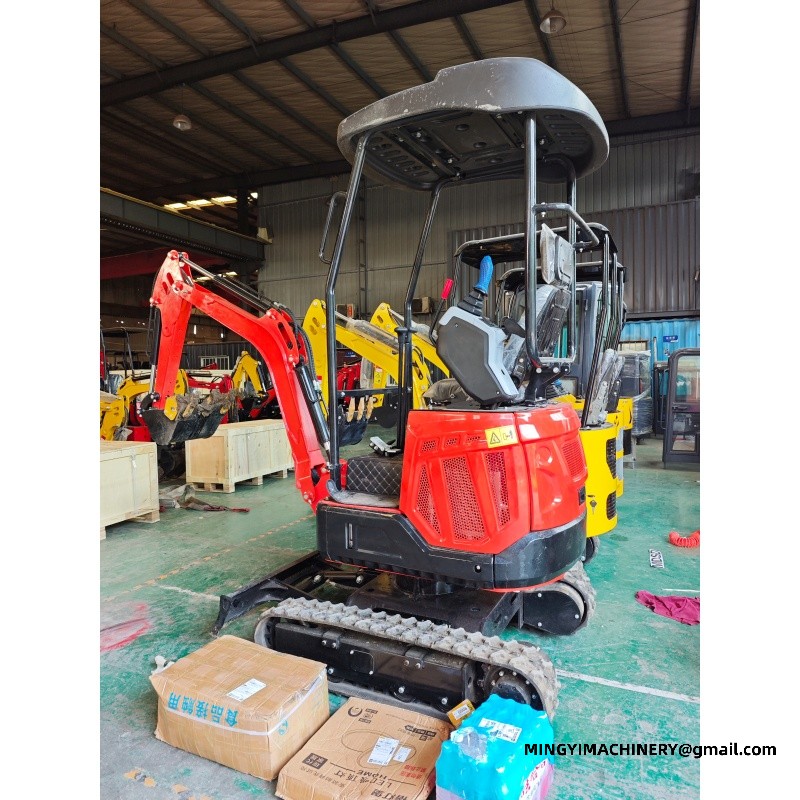
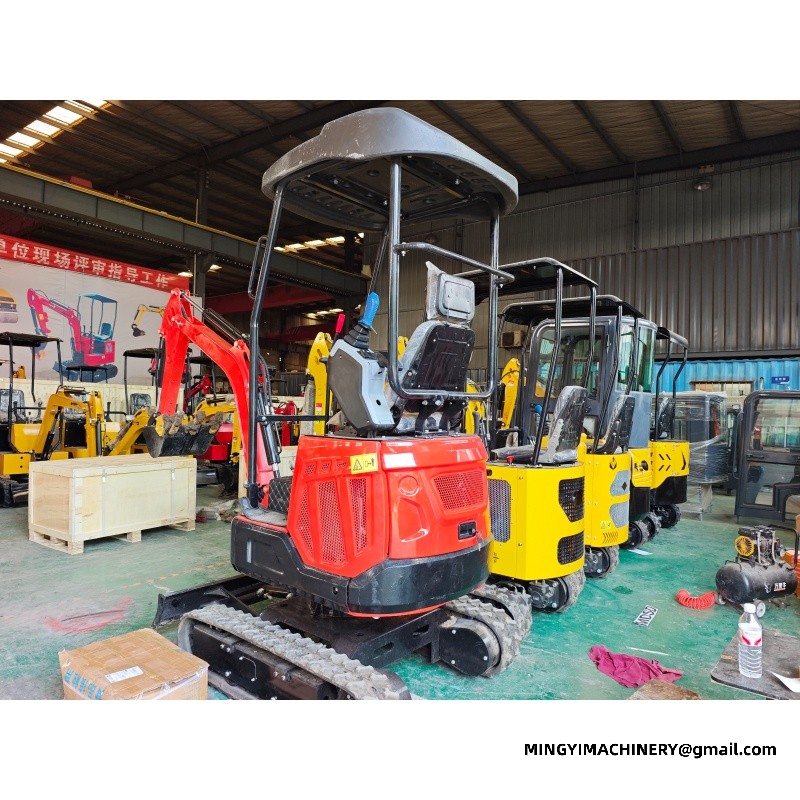
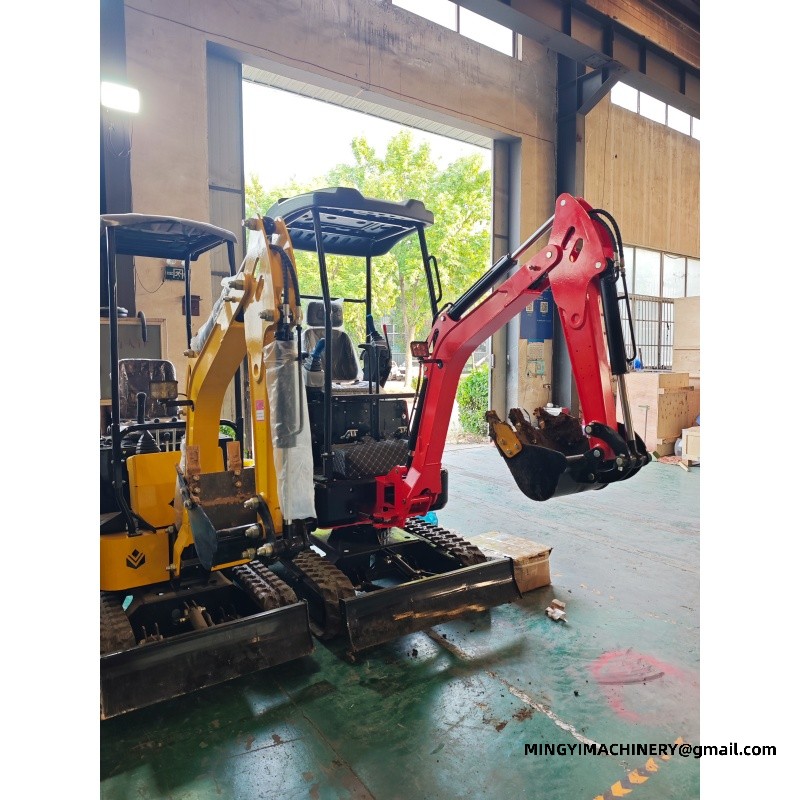
Reference specification — mini excavator range 15W 20-1WL 20-3W 30-2W Operating weight 1400 kg (3086.47 lb) 1900 kg (4188.78 lb) 1900 kg (4188.78 lb) 2700 kg (5952.48 lb) Transport size (L×W×H) 2200 × 930 × 2250 mm 2550 × 1100 × 2200 mm 2550 × 1100 × 2200 mm 3000 × 1100 × 2700 mm Max digging depth 1630 mm (64.17 in) 1800 mm (70.87 in) 1800 mm (70.87 in) 2200 mm (86.61 in) Max digging height 2750 mm (108.27 in) 2820 mm (111.02 in) 2820 mm (111.02 in) 3000 mm (118.11 in) Max dumping height 1960 mm (77.17 in) 2050 mm (80.71 in) 2050 mm (80.71 in) 2000 mm (78.74 in) Max digging radius 2900 mm (114.17 in) 3050 mm (120.08 in) 3050 mm (120.08 in) 3800 mm (149.61 in) Max digging distance 2100 mm (82.68 in) 2300 mm (90.55 in) 2300 mm (90.55 in) 3050 mm (120.08 in) Minimum turning radius 1300 mm (51.18 in) 1450 mm (57.09 in) 1450 mm (57.09 in) 1750 mm (68.9 in) Travel speed 3 km/h (1.86 mph) 5 km/h (3.11 mph) 5 km/h (3.11 mph) 7 km/h (4.35 mph) Gradeability 30° 30° 30° 30° Fuel consumption 1-1.3 L/h (0.264—0.343 gal) 2-3 L/h (0.528—0.793 gal) 2-3 L/h (0.528—0.793 gal) 2-3 L/h (0.528—0.793 gal) Fuel tank capacity 10 L (2.64 gal) 16 L (4.23 gal) 16 L (4.23 gal) 16 L (4.23 gal) Hydraulic oil tank 16 L (4.23 gal) 18 L (4.76 gal) 18 L (4.76 gal) 20 L (5.28 gal) Dozer blade lift height 180 mm (7.09 in) 180 mm (7.09 in) 180 mm (7.09 in) 230 mm (9.06 in) Dozer blade drop depth 210 mm (8.27 in) 210 mm (8.27 in) 210 mm (8.27 in) 280 mm (11.02 in)
Q. Who chooses the excavator?
A. Control quality is what separates a compact excavator that fights the operator from one that finishes the day with clean trench walls. High-flow and twin-line circuits exist for attachments that drink more than the standard circuit serves. MINGYI builds the 08, 12 and 18 models covering the 0.8 to 6 tonne class, and this class of machine is where that range meets household electric.
Q. What do pilot controls change in practice?
A. Finesse: the operator meters boom and bucket instead of switching them, which shows in trench walls, grading finish and fatigue at the end of the shift.
Q. Which models does MINGYI build?
A. The 08, 12 and 18 models cover the 0.8 to 6 tonne class with engine, track, cab and attachment options across the range - dealer programmes can mix models in one shipment, and each household electric machine is confirmed on its own build sheet.
Handover and getting familiar with the unit in daily use
The first day with a new machine sets the pattern for the next five years. Handover for a machine of this size covers the control layout, the daily check points and the limits the operator needs to know before the first real load is lifted or carried.
Fuel, oil and fluid quality for the equipment on site
Contamination is easier to prevent than to cure. Keeping the filler caps sealed, the funnels clean and the containers closed around the machine itself is unglamorous work that shows up as reliability later.
E-mail : sales@mingycn.com
LINE ( ID ): mingyicn
Related pages
compact excavator for demolition · mini digger for water conservancy work · China Wheel Loader Factory Supplier: Specs and Order Process · Mini Excavators









