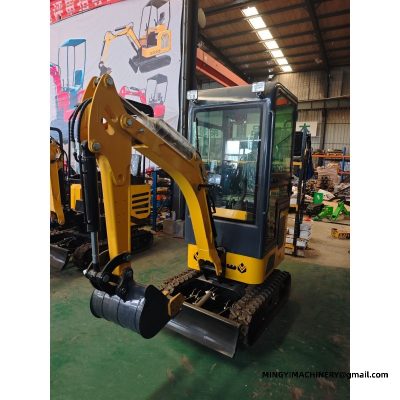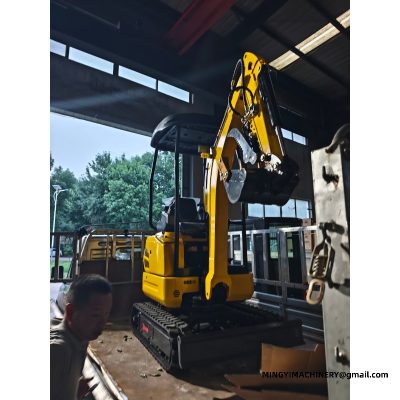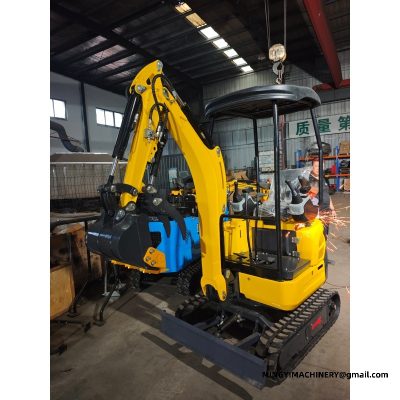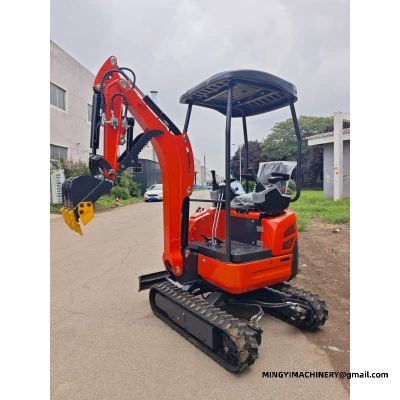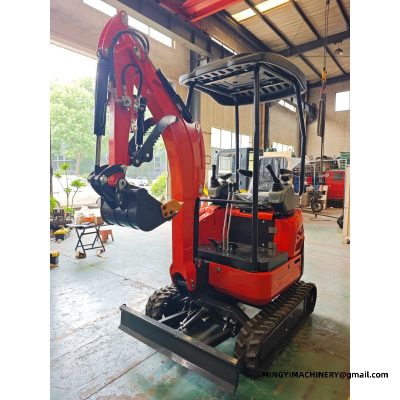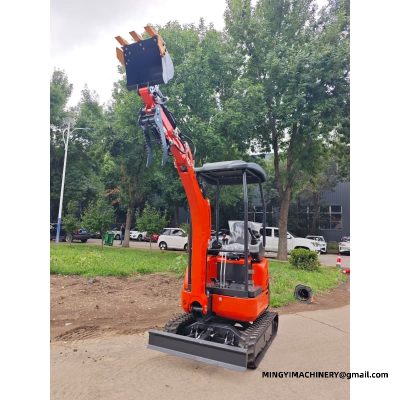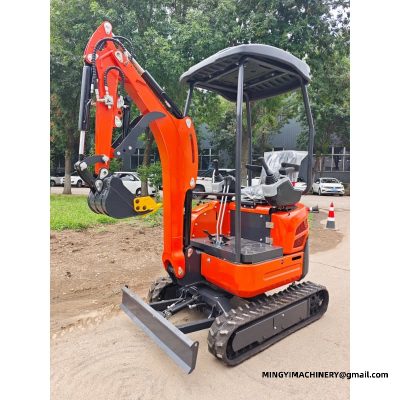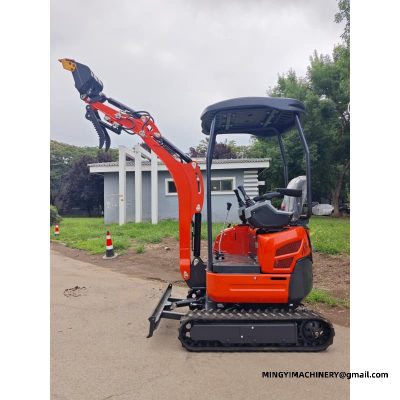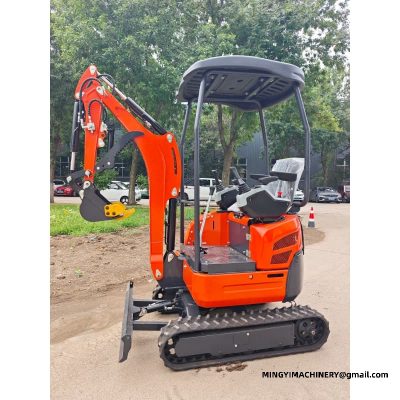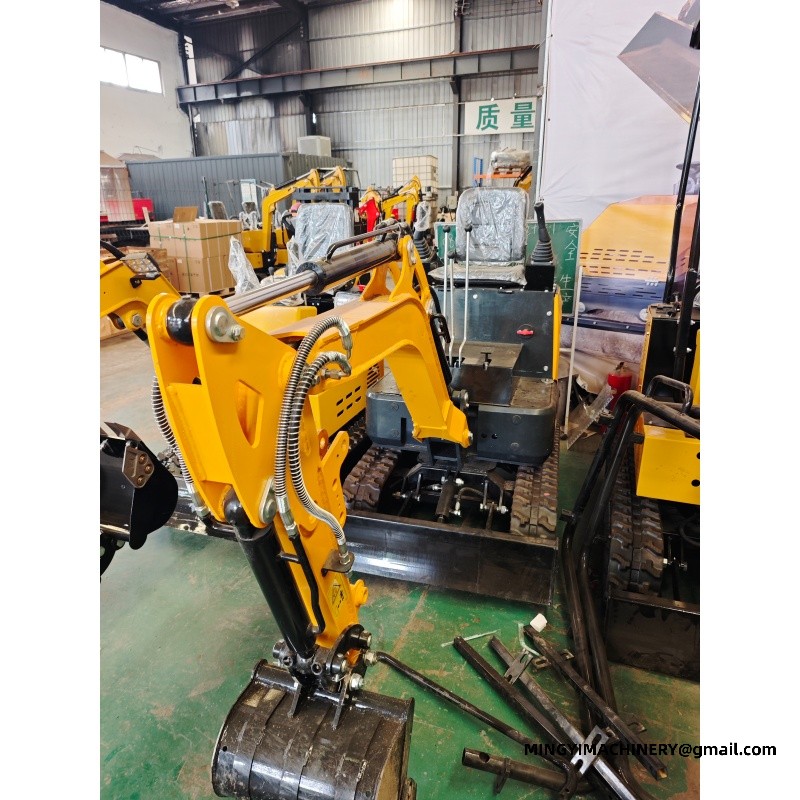
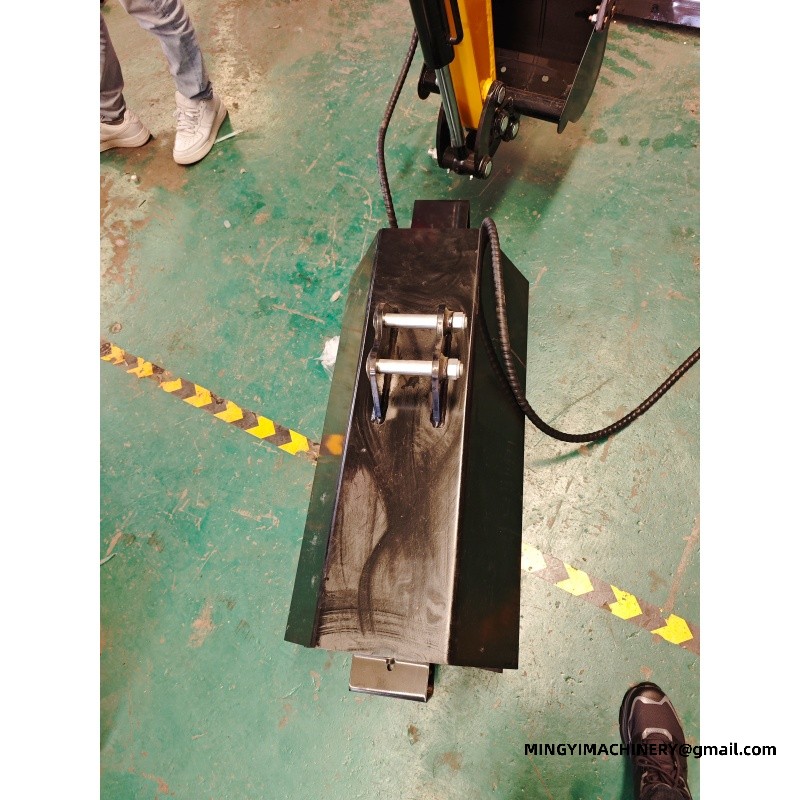
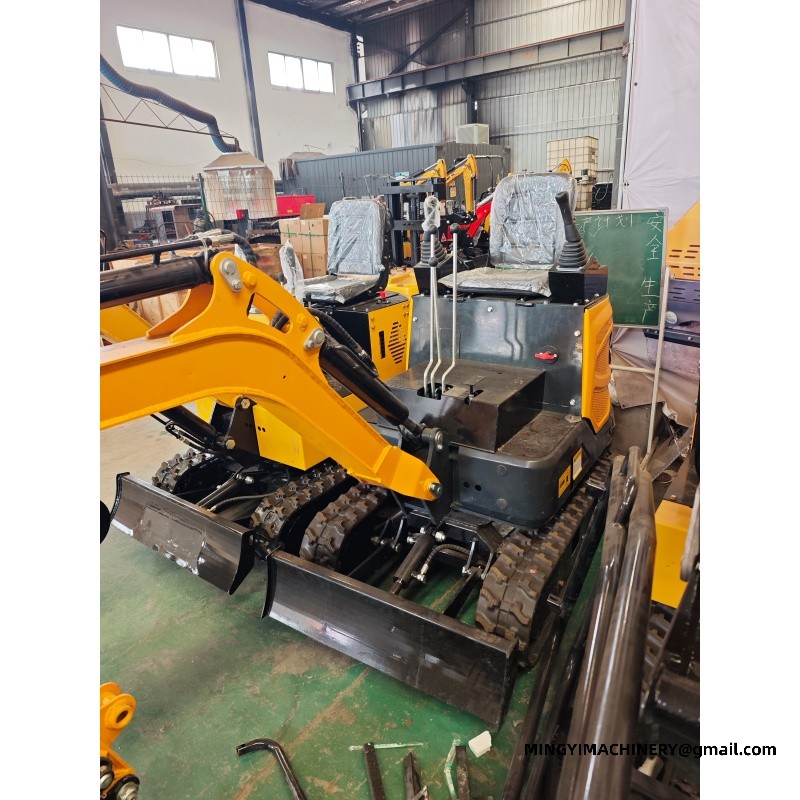
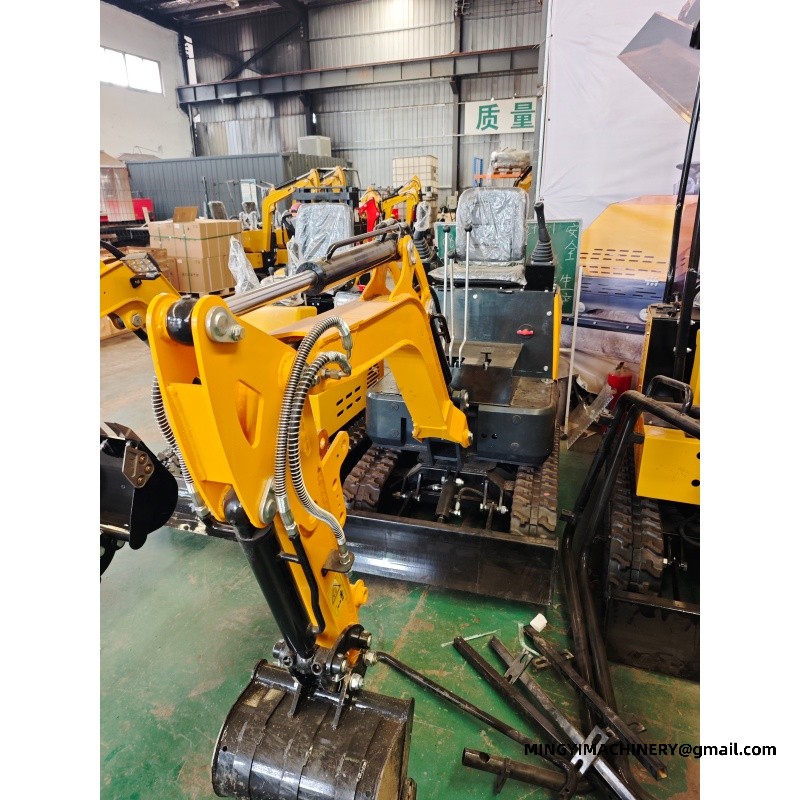
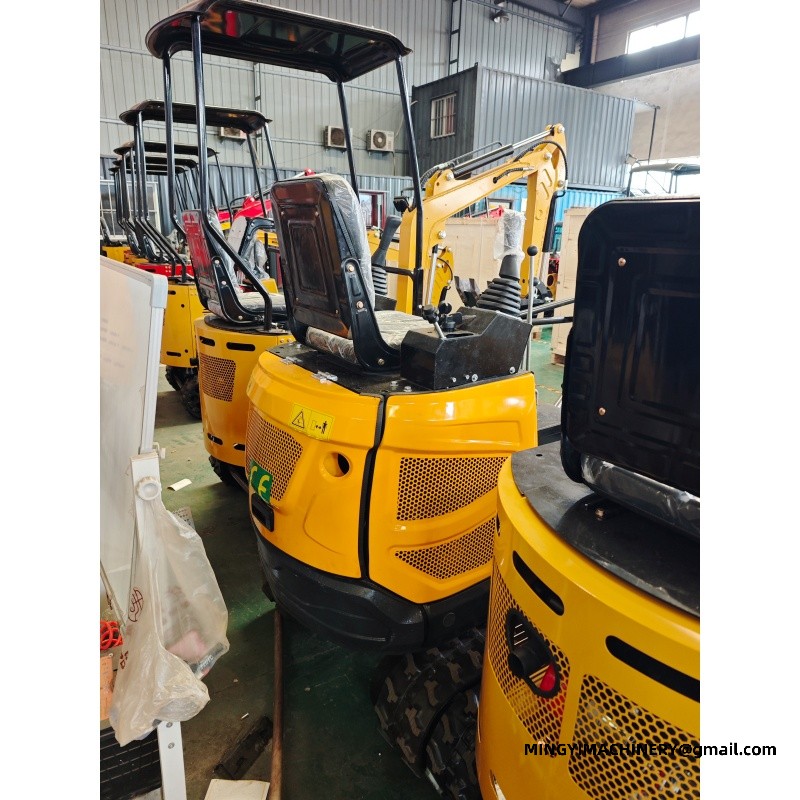
Some sites change job from one day to the next, and the machine has to change with them. An adjustable compact excavator is one whose boom, undercarriage or attachment set can be set up so a single carrier covers several different tasks.
MINGYI builds compact excavators to order, which suits this way of buying. Boom arrangement, track type and the attachment list are agreed at the ordering stage, so the machine arrives able to work the way the site does.
This page explains what adjustable means in practice: which arrangements can be changed, what the undercarriage and hydraulic choices affect, how a coupler turns one machine into a set of tools, and what to check each morning.
What adjustable means on a compact excavator
An adjustable compact excavator is one whose main arrangements can be set to suit the job before it ships. Boom configuration, undercarriage width, track type and the attachment list are agreed at the ordering stage rather than discovered on site.
This suits buyers whose work changes from one contract to the next. A contractor who digs foundations one month and clears a narrow lane the next does not want two machines if one carrier can be set up for both.
The adjustment is not a gadget added at the end. It is a set of choices made while the machine is being built, recorded against the order so later additions match what is already fitted.
Boom and arm arrangements for different tasks
Reach and breakout pull a compact machine in opposite directions. A longer arrangement reaches further and loads a truck more easily, while a shorter one digs harder close to the tracks.
Choosing between them starts from the work the machine will do most often, not from the largest figure on the sheet. Most owners find the extra reach unused and the lost power noticeable.
A two-piece or offset boom suits work alongside walls and around obstacles, where the machine has to dig beside itself rather than straight ahead.
The arm length is matched to the bucket sizes the machine will actually carry. An arm that can only use one bucket removes the flexibility the configuration was chosen for.
Undercarriage choices: rubber tracks, steel tracks and width
The undercarriage decides where the machine can go. Rubber tracks suit finished surfaces and paved areas, steel tracks suit rock and demolition debris where cutting damage is likely.
Track width can often be set to suit the access. A narrow setting gets through a gate or along a garden path, a wider one gives stability when the boom is working at full reach.
Ground pressure follows from the same choice. Wider shoes and a wider gauge let the machine work on soft ground without sinking, which matters on unmade sites.
Clearance underneath matters too. A machine that grounds itself on a rut is not only stuck, it is at risk of damaging the parts that are hardest to reach in a workshop.
Hydraulic circuits and auxiliary lines
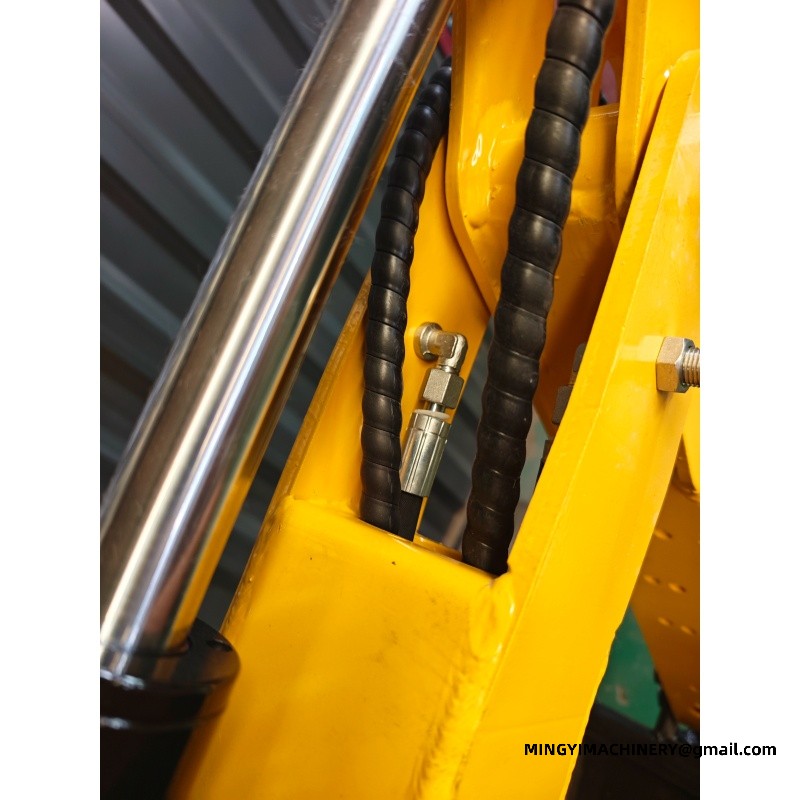
The hydraulic provision decides which attachments the machine can run. Auxiliary circuits, flow and the controls are specified together with the attachment list, not added when a new tool arrives.
A machine intended to run a breaker needs the circuit, the return arrangement and the protection that a breaker requires. Fitting one later is possible but rarely as clean as specifying it first.
Control layout follows from the attachment set. The movements the operator makes most often should be the easiest ones, and that is a decision made at the ordering stage.
Filtration and cooling have to suit continuous duty with an attachment running. Machines used with a breaker all day need more cooling capacity than machines that dig in short bursts.
Attachment sets that suit one carrier
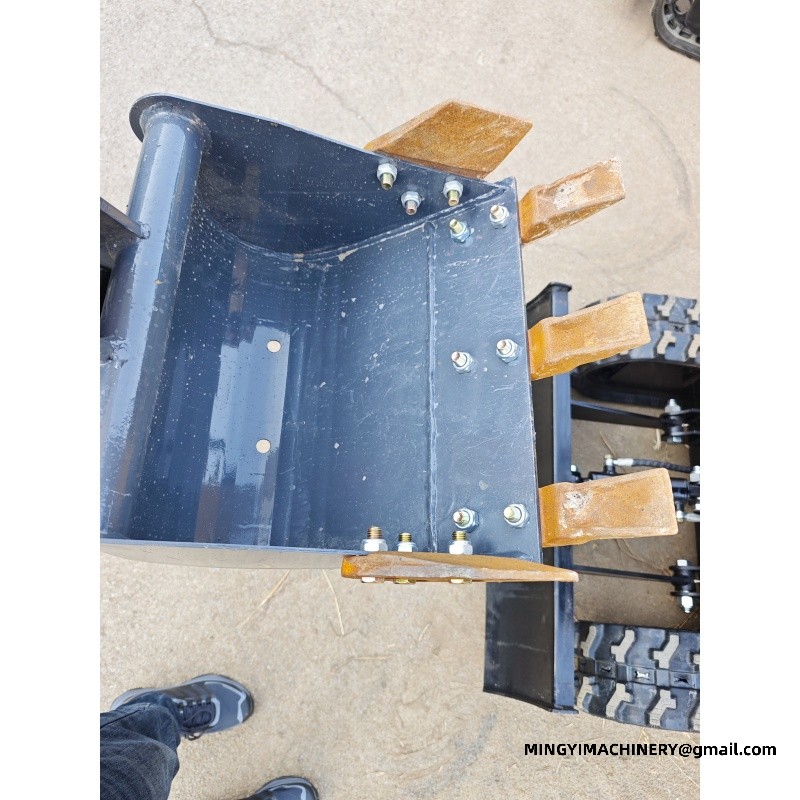
The point of an adjustable machine is that one carrier covers several jobs. Digging buckets in a few widths, a grading bucket, a breaker, an auger and a grab cover most of the work a compact machine is asked to do.
Choosing the set at the start is simpler than adding later, because the hydraulic provision and the coupler can be matched to the whole list in one go.
The set is recorded against the machine. When a new attachment is ordered months later, the pin dimensions and the hydraulic connection are already known.
Owners who plan the full range of tasks at the start tend to use the machine more and move it between jobs rather than leaving one attachment fitted for a year.
Quick couplers and changeover time
A quick coupler is what turns a set of attachments into a working system. With one fitted, the operator can change tools without leaving the cab.
Changeover time matters more than it appears. A machine that loses a quarter of an hour at every tool change loses a noticeable part of the working day on a job with mixed tasks.
The coupler has to match both the carrier and the attachments. Pin dimensions, spacing and the locking arrangement are specified together, so the set stays interchangeable.
Locking and the check before work resumes are part of the daily routine. A coupler that is not confirmed locked is a safety problem, not an inconvenience.
Working in confined spaces
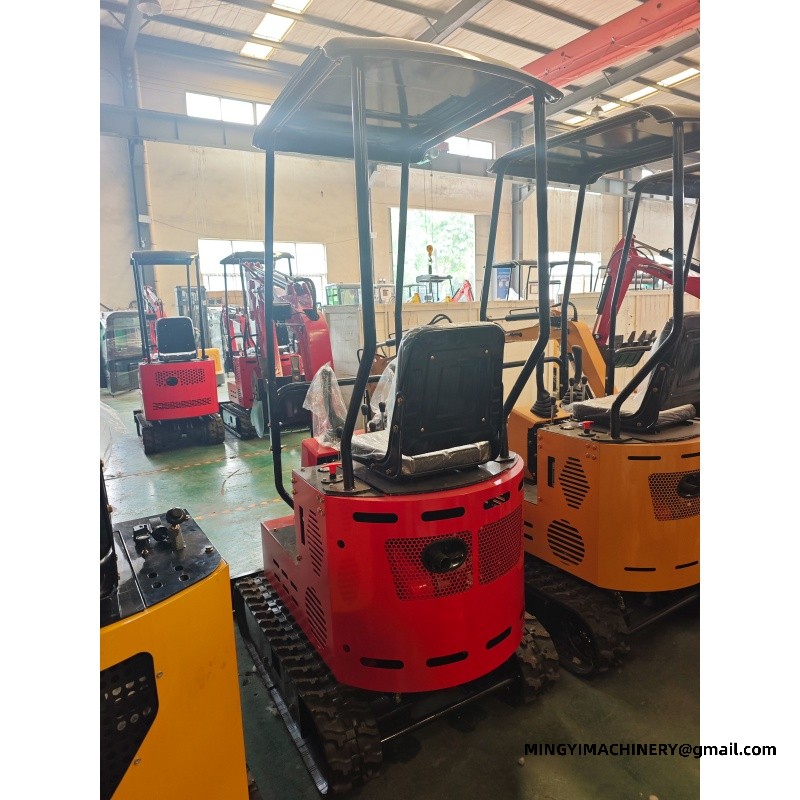
Much of the work for a machine this size happens where there is no room. Width, rear overhang and visibility decide whether the job can be done at all.
A short tail arrangement keeps the counterweight inside the track width, so the operator can work against a wall without constant checking behind the seat.
Visibility to the bucket and to the ground around the tracks reduces the need for a second person on site, which is worth a great deal on small contracts.
Lighting and guarding suit the same conditions. Work inside buildings or after dark needs the machine to be visible as well as capable.
Transport between sites
A compact excavator spends a good part of its life on a trailer, so the transport arrangement is part of the specification.
Overall width, height with the cab and the weight on the trailer decide what vehicle can move it, and that decides how quickly the machine can be put on the next job.
Tie-down points, the position of the dozer blade and the way the boom is stowed all affect loading. A machine that loads awkwardly wastes time on every move.
The transport width should be checked against the narrowest access the machine has to pass through, not against the site where it happens to be working this week.
Daily checks and wear parts
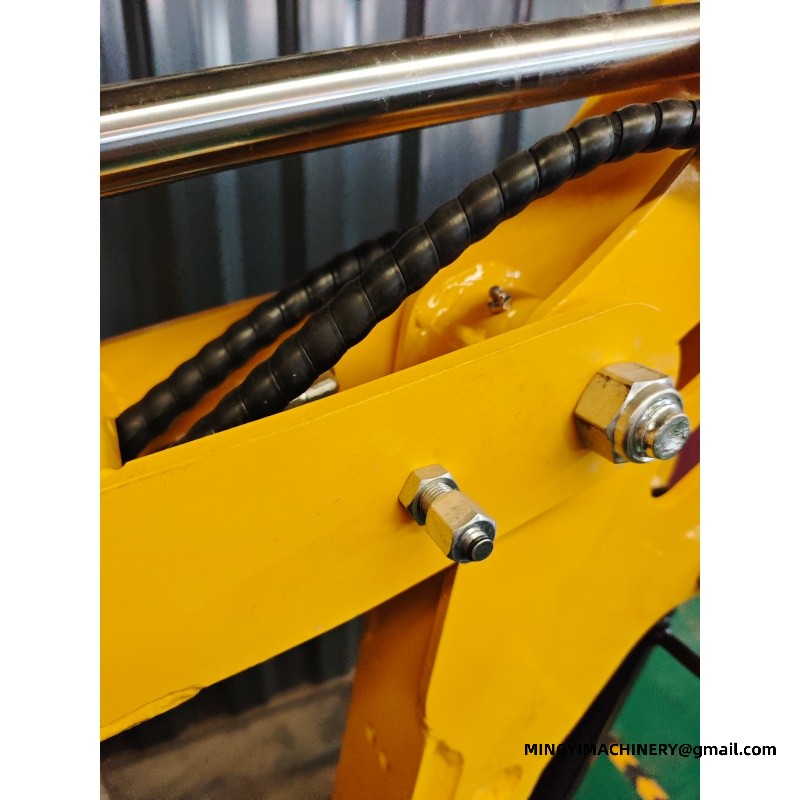
The daily walk-around takes minutes and prevents most of the failures that stop a machine. Fluid levels, track tension, visible hoses and the attachment pins are the items worth checking every morning.
Pins and bushes take the wear on a machine that changes attachments often. Greasing on the stated interval does more for these than any other single habit.
Track tension suits the ground. Too tight on a rocky site accelerates wear, too loose on a slope risks the track coming off at an inconvenient moment.
Filters and cutting edges are stocked rather than ordered. The machines that keep working are the ones whose wear parts are already in the van.
Ordering an adjustable configuration
Ordering starts from the work, not from the model name. The jobs the machine must cover, the ground it will meet, the transport available and the attachment list are the four things worth settling first.
Configuration is then agreed in writing, together with the documents, the parts and tools, and the training or commissioning support required at the destination.
Because the machine is built to order, changes are easiest before production starts. That is why the specification conversation is the most valuable part of the process.
The agreed configuration is recorded against the order, so a repeat machine or a later attachment matches what is already in the yard.
Working on slopes and soft ground
A compact machine is often asked to work where the ground is not level. Stability on a slope depends on the track gauge, the weight distribution and where the boom is pointing.
The undercarriage width chosen at the ordering stage affects this directly. A wider setting gives more stability when working across a slope, a narrow one is needed to get through a gate.
On soft ground the machine should be worked with the tracks bearing evenly, and the dozer blade used as a support rather than left dragging behind.
Operators who understand how the machine sits on the ground get more from it and recover it less often. That understanding is worth more than any single feature.
Matching the machine to the operator
A machine used by several people has to suit all of them. Seat adjustment, control effort and visibility are what make that possible.
Controls that are predictable at low speed make the difference on careful work such as grading or working close to a wall.
Where one operator uses the machine most of the time, their preference on control pattern and seat position is worth settling before delivery.
A short handover on the day the machine arrives prevents most of the early confusion, and it is the most valuable training there is.
Keeping the machine working between contracts
A machine that stands for weeks between jobs develops its own problems: a flat battery, seized pins, a track left under tension and moisture where it should not be.
The routine between contracts is short: relieve track tension, protect exposed rod surfaces, keep the battery charged and store attachments under cover where possible.
Before the next contract, the walk-around is worth repeating in full, since a machine that has stood is not the same as a machine that was working last week.
Owners who keep to this routine spend far less time recovering a machine that has been left standing.
Why build-to-order suits this class
Compact machines are bought for a specific set of jobs more often than larger ones, which is why building to order suits this size particularly well.
The buyer usually knows the access width, the transport available and the attachments wanted. Those are exactly the items that can be settled before the machine is built.
The alternative is buying a standard machine and adapting it on site, which usually takes more time and gives a less tidy result.
Because the configuration is recorded, a second machine can be ordered to match the first, which is what turns one good purchase into a consistent small fleet.
Blade, stabilisers and setting up before digging
The dozer blade is not only for clearing. Used properly it levels the machine before digging and gives a stable base when working at reach.
Position matters: a blade too far forward reduces stability, one too far back gives no support. The operator learns the position that suits the ground within a few jobs.
Where the machine is fitted with stabilisers, they are used on firm ground and avoided on soft ground where they will simply sink.
Setting up takes a minute and changes how the machine behaves for the rest of the task. It is the habit that separates a tidy job from a messy one.
Common mistakes when specifying an adjustable machine
The most common mistake is ordering for the largest job the machine might ever meet. The result is a heavier, wider machine that struggles with the everyday work.
The second is leaving the attachment list until after delivery, which usually means the hydraulic provision does not suit the tools bought later.
The third is forgetting the transport. A configuration that works perfectly on site is useless if it cannot get through the gate or onto the trailer.
All three are avoided by settling the jobs, the attachments and the transport before the order is placed, which is what the ordering conversation is for.
Related pages
Mini Excavators · Loaders · Skid-Steer Loader · 4x4 Rough Terrain Forklift · three tonne small excavator · mini excavator manufacturer for export · Wheel Loader Manufacturer: Frame Builds, Range and Export Terms · China Wheel Loader Factory: How Each Model Is Built and Checked · About Mingyi Machinery · Contact Mingyi Machinery