Ground damage is a visible effort. A machine that leaves deep ruts across a lawn, a sports field or a reinstated verge has created work that nobody planned for, and the repair often takes more than the excavation itself.
A mini excavator on rubber tracks avoids most of that. MINGYI fits rubber tracks as an option across its compact crawler range, and each machine is assembled to order with the track type chosen for the surfaces it will cross.
Ground pressure and surface damage
Rubber tracks spread the weight of the machine over a longer and wider contact area than steel shoes, which lowers the pressure applied to the surface underneath. On turf the result is a faint track rather than a cut one.
The shape of the track helps as well. A rubber belt flexes over small irregularities instead of punching through them, so kerbs, edging and buried services are less likely to be disturbed as the machine passes over.
Rubber tracks in daily use
The advantage is not limited to lawns. Rubber tracks are quieter on hard surfaces, which matters in residential and public work, and they do not scar asphalt or block paving the way steel shoes can.
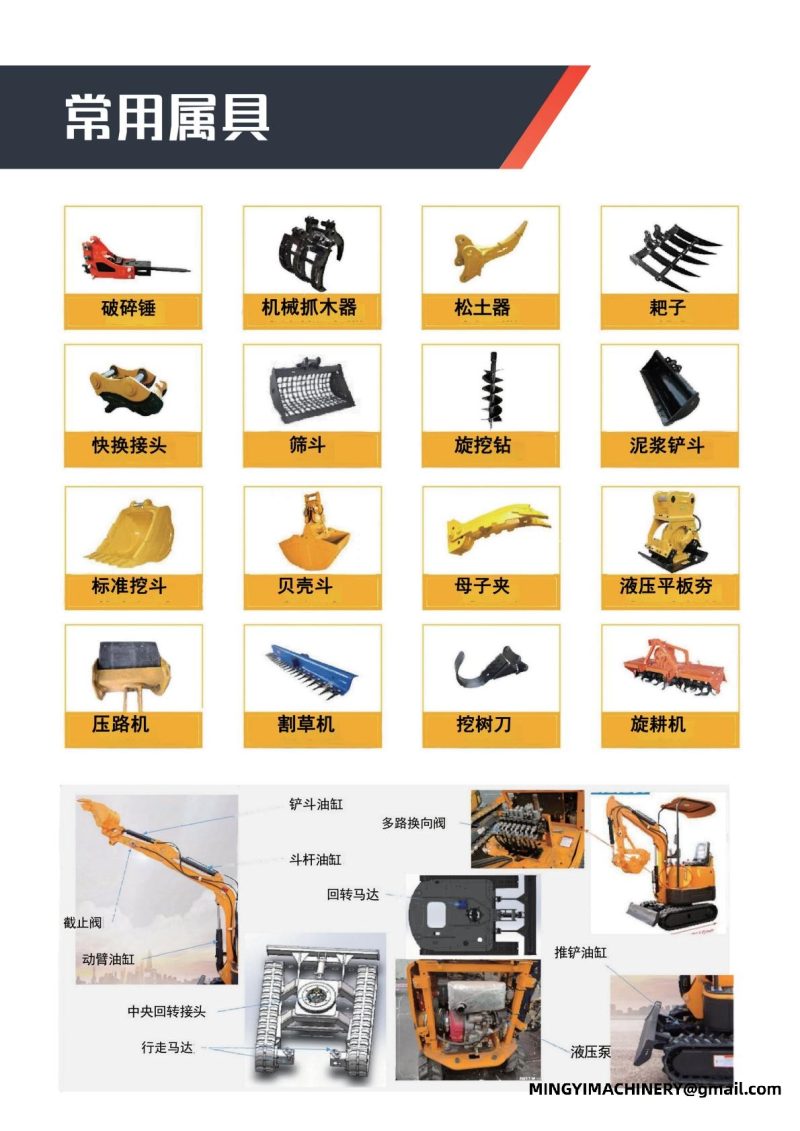
They are not the answer everywhere. In wet, loose or heavily rooted ground, steel tracks with rubber blocks provide more traction, and the blocks can be renewed as they wear. The choice between the two is confirmed at the ordering stage, along with the attachment set.
For any contract where the ground has to be handed back in good condition, the undercarriage is a specification decision rather than a detail. A mini excavator on rubber tracks keeps the job within the reinstatement plan it was specified against.
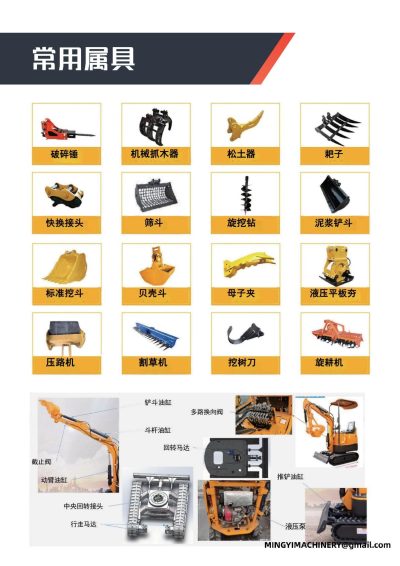
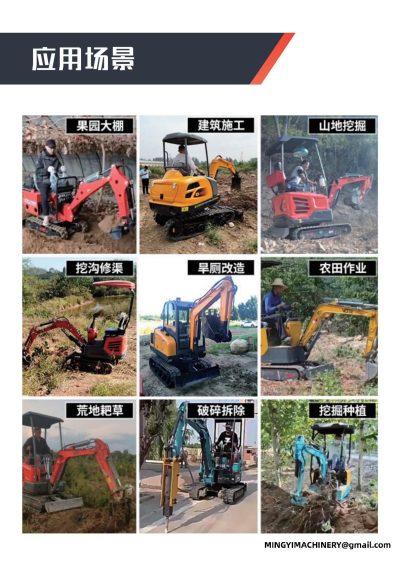
Working on slopes and uneven ground with turf-friendly rubber track mini excavator Ground that looks level often is not. The excavator crossing a filled trench, a soft edge or a hidden void behaves differently from one on undisturbed ground, and those are the places worth walking before driving. Planning the direction of travel helps. Working so that the this class of machine is stable under load and not required to turn on a slope is a decision made before the job starts, not a correction made during it. Getting turf-friendly rubber track mini excavator through a narrow gap Access decides the machine before output does. With the unit in daily use the limiting dimension is usually the widest point on the way in, so measuring the gate, the corridor and the turning space first saves a wasted delivery and a second visit. Contractors who buy a machine of this size normally have one job in mind that nothing else reaches. The purchase order follows the access measurement, not the other way round, and the build sheet is then settled around it. Running turf-friendly rubber track mini excavator in a rental fleet Rental fleets buy for utilisation, not for a single job. The equipment on site with a quick coupler and a common attachment standard is hired more often because it suits more of the calls that come in. Fleet buyers also weigh transport. The machine itself that a customer can tow on a normal licence and a standard trailer is a hire that does not need a delivery truck, which changes how often it goes out. Attachments that turn turf-friendly rubber track mini excavator into several machines The base machine is a carrier; the tool on the end of the arm decides the task. The model in question fitted with a toothed bucket digs, and the same machine with a breaker, an auger or a grab does work that would otherwise need a second unit on site. Most of the daily variety on the machine in that duty comes from the attachment rack rather than from the machine itself. Bucket, breaker, auger, ripper, rake and grab cover the large majority of the work a contractor will see. Canopy or enclosed cab on a turf-friendly rubber track mini excavator A canopy keeps the machine light and the operator aware of the surroundings, which suits short jobs in warm weather. A fully enclosed cab is specified where rain, dust or cold are part of the working year, and it can be added to the unit on the job as a retrofit rather than only at build time. The cab decision follows the climate and the hours. Operators working a full shift in a machine built for the work benefit from a sealed cab with wipers and heating; operators stepping on and off every few minutes usually prefer the canopy for the visibility and the quick exit. Track choice for turf-friendly rubber track mini excavator Undercarriage selection is a ground question, not a preference question. The equipment in service running on finished paving needs rubber; the same machine on demolition rubble or rock wears rubber quickly, so steel with rubber blocks becomes the better answer over a full season. Track type changes what the machine can cross and what it leaves behind. Buyers specify rubber for lawns, driveways and municipal work, and steel with rubber blocks for sites where sharp material would cut a rubber belt in a week. Trailering and moving the excavator Transport weight and width decide whether a machine needs a specialist haulier. This class of machine sized to travel on a standard plant trailer behind a suitable vehicle moves with the crew rather than on a scheduled low loader. Loading practice matters as much as the numbers. The unit in daily use is driven up ramps under its own power with the boom lowered and the tracks aligned, and secured at the points the manufacturer specifies. OEM and fleet customisation of a machine of this size Customisation also covers the specification sheet. A fleet buyer may want every machine itself delivered with the same coupler, the same engine and the same tool kit so training and parts stock stay simple. Documentation can be prepared to suit the importer. Manuals, parts books and decal sets for the equipment on site can be supplied with the buyer's own branding where the order size justifies it. Boom configuration for the model in question A swing boom lets the machine dig parallel to its tracks without repositioning, which is what makes trenching beside a wall or a fence practical. On the machine in that duty this is often the option that decides whether a job is possible at all. Detachable boom sections are used where transport length matters. The unit on the job that has to travel on a standard trailer can be built so the arm comes off for the road and goes back on at the site. Matching a machine built for the work to ground conditions Soft ground is a flotation problem, not a power problem. The equipment in service on wide rubber tracks crosses lawn, sand and cultivated soil that would stop a narrower machine or a wheeled unit of the same capacity. Hard and abrasive ground reverses the specification. On rock, demolition rubble or sharp gravel, steel tracks with rubber blocks on the excavator survive conditions that cut a rubber belt quickly. Working near live services with this class of machine The risk on utility work is not machine power but machine placement. The unit in daily use that fits the working width leaves the surrounding ground undisturbed, which keeps the trench stable and the reinstatement small. Utility crews specify a machine of this size with a narrow bucket and good visibility for exactly this reason: the machine has to stop at the service, not at the edge of the operator's view. Orchard, vineyard and farm use of the equipment on site Orchard and vineyard work is carried out between rows. The machine itself with a narrow chassis and a swing boom works down the row without damaging the trees, which is the reason a full-size machine is not used at all. Ditching, fertilising and drainage on farmland suit the model in question because the work is spread over a large area in short bursts. The machine travels behind a pickup and works where it stops. Specification data for the machine in that duty Where the unit on the job is being specified for a job list, the table below gives the factory figures that matter most: what the machine weighs, how deep and how far it works, and what it measures on a trailer. These are the reference figures for a machine built for the work. MINGYI confirms the final build sheet, including engine and attachment choices, against the destination and the job list before production. Enclosure and machine condition both reduce noise. The equipment in service with intact panels, sound mounts and a maintained exhaust is measurably quieter than the same machine with loose guards, and the difference matters on restricted sites. Dust control is often part of the same conversation. Water, timing and work sequence reduce what leaves the site, and agreeing them in advance keeps the excavator working rather than stopped after a complaint.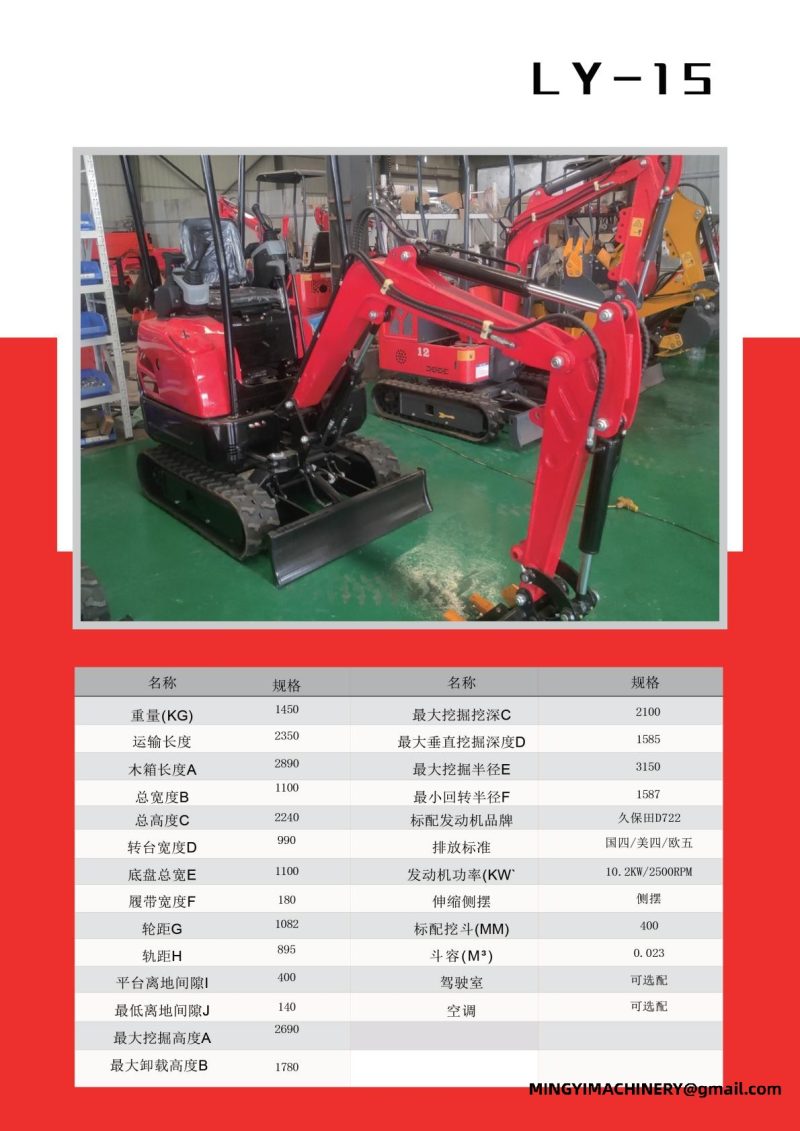
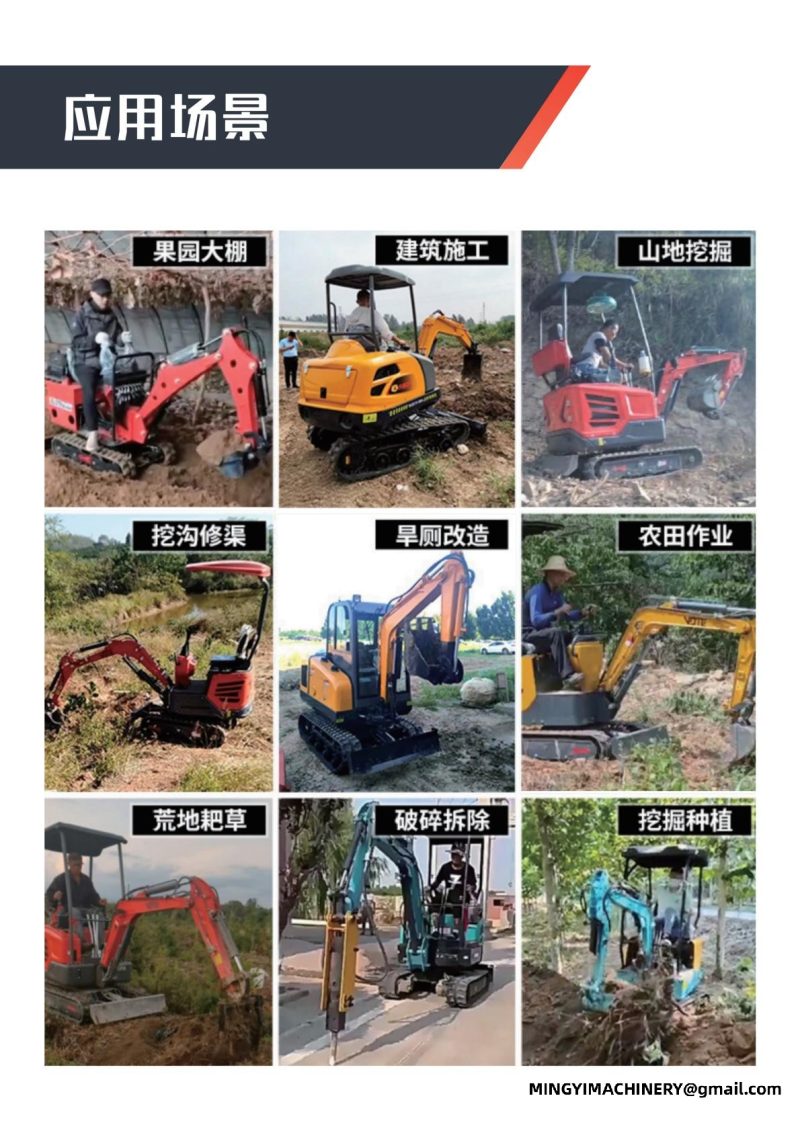
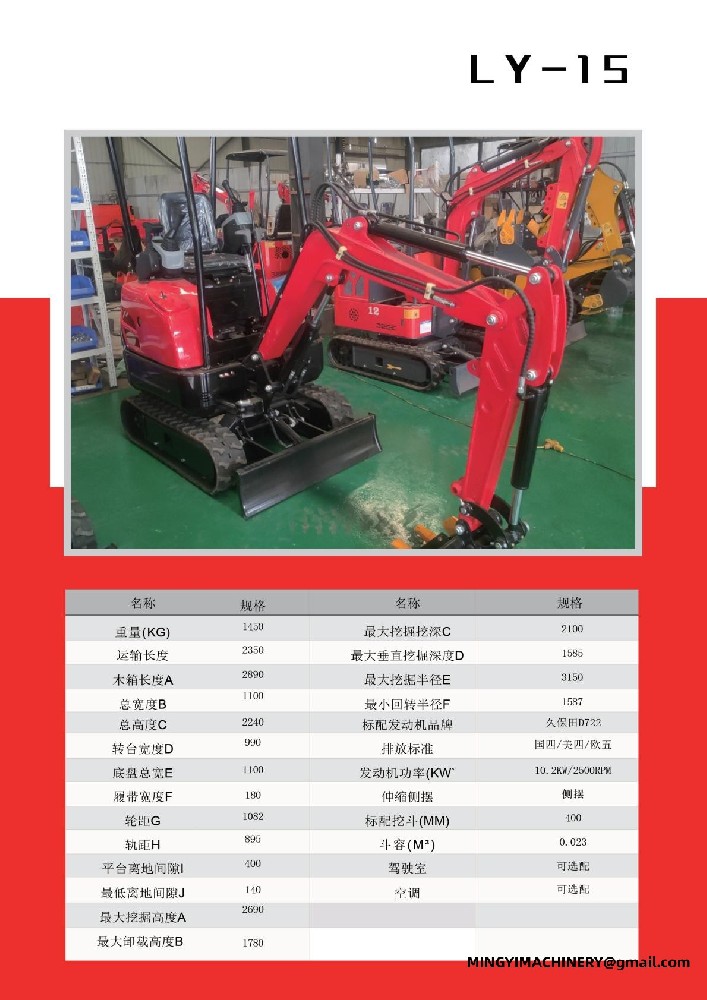
Reference specification — mini excavator range 12W 15W 30-2W 12L Operating weight 1200 kg (2645.55 lb) 1400 kg (3086.47 lb) 2700 kg (5952.48 lb) 1200 kg (2645.55 lb) Transport size (L×W×H) 2200 × 930 × 2250 mm 2200 × 930 × 2250 mm 3000 × 1100 × 2700 mm 2200 × 930 × 2250 mm Max digging depth 1630 mm (64.17 in) 1630 mm (64.17 in) 2200 mm (86.61 in) 1700 mm (66.93 in) Max digging height 2750 mm (108.27 in) 2750 mm (108.27 in) 3000 mm (118.11 in) 2600 mm (102.36 in) Max dumping height 1960 mm (77.17 in) 1960 mm (77.17 in) 2000 mm (78.74 in) 1800 mm (70.87 in) Max digging radius 2900 mm (114.17 in) 2900 mm (114.17 in) 3800 mm (149.61 in) 2900 mm (114.17 in) Max digging distance 2100 mm (82.68 in) 2100 mm (82.68 in) 3050 mm (120.08 in) 2300 mm (90.55 in) Minimum turning radius 1300 mm (51.18 in) 1300 mm (51.18 in) 1750 mm (68.9 in) 1450 mm (57.09 in) Travel speed 3 km/h (1.86 mph) 3 km/h (1.86 mph) 7 km/h (4.35 mph) 3 km/h (1.86 mph) Gradeability 30° 30° 30° 30° Fuel consumption 1-1.3 L/h (0.264—0.343 gal) 1-1.3 L/h (0.264—0.343 gal) 2-3 L/h (0.528—0.793 gal) 1-1.3 L/h (0.264—0.343 gal) Fuel tank capacity 10 L (2.64 gal) 10 L (2.64 gal) 16 L (4.23 gal) 10 L (2.64 gal) Hydraulic oil tank 16 L (4.23 gal) 16 L (4.23 gal) 20 L (5.28 gal) 16 L (4.23 gal) Dozer blade lift height 180 mm (7.09 in) 180 mm (7.09 in) 230 mm (9.06 in) 180 mm (7.09 in) Dozer blade drop depth 210 mm (8.27 in) 210 mm (8.27 in) 280 mm (11.02 in) 210 mm (8.27 in)
Q. Who chooses this class of machine?
A. The undercarriage is the most lengthy part of a compact digger to replace, which makes track choice a buying decision rather than an accessory. Rubber ages from sunlight as much as from work; steel wears from abrasion - the right call depends on what the machine stands on all day. For turf-friendly rubber track applications the practical route is to send the job list to the factory and let the build sheet answer it - which is exactly what this page invites.
Q. Can I change track type after purchase?
A. Yes; conversion is a planned job rather than a swap, and the pages on steel track replacement and rubber-to-steel conversion describe what is involved. Confirm the machine model and the target ground with the factory and the parts arrive as a matched set.
Q. What about colours and branding?
A. OEM colours and decals are part of the build: private-label machines carry the buyer brand on the standard MINGYI platform, and the turf-friendly rubber track order confirms colours, marks and documents before production starts.
Later additions and retrofits on the unit in daily use
Later changes are easier when they were anticipated. Asking for the extra hydraulic circuit or the heavier mounting plate on a machine of this size at build time adds little and leaves the option open.
Handover and getting familiar with the equipment on site
A good handover covers the awkward cases, not just the easy ones. Starting the machine itself on a slope, turning in a confined space and recovering from soft ground are the situations an operator should meet first with someone beside them.
E-mail : sales@mingycn.com
LINE ( ID ): mingyicn
Related pages
variable width mini excavator · multi purpose mini excavator · Wheel Loader for Material Handling: Forks, Grapples and Circuits · Mini Excavators









