Not every job is directly in front of the machine. A deeper trench, a higher bank or a reach beyond the tracks calls for a longer boom and dipper than a standard compact excavator carries.
MINGYI builds compact excavators with extended boom and dipper arrangements, including longer reach versions in the 0.8 to 6 tonnes class. The geometry and the attachment set are agreed at the ordering stage.
Long reach and high lift work
An extended boom and dipper increases the distance the machine can reach, which is useful for deep drainage, wide ditch sections and unloading work at the edge of a site.
Reach has an effort, because the same load feels heavier at a longer radius. Counterweight, track width and the position of the machine all have to be considered together with the boom length.
Extended boom and dipper on deep digs
On deep trenching the extended dipper lets the operator reach the formation level without standing over the excavation, which reduces the risk of the bank collapsing under the tracks.
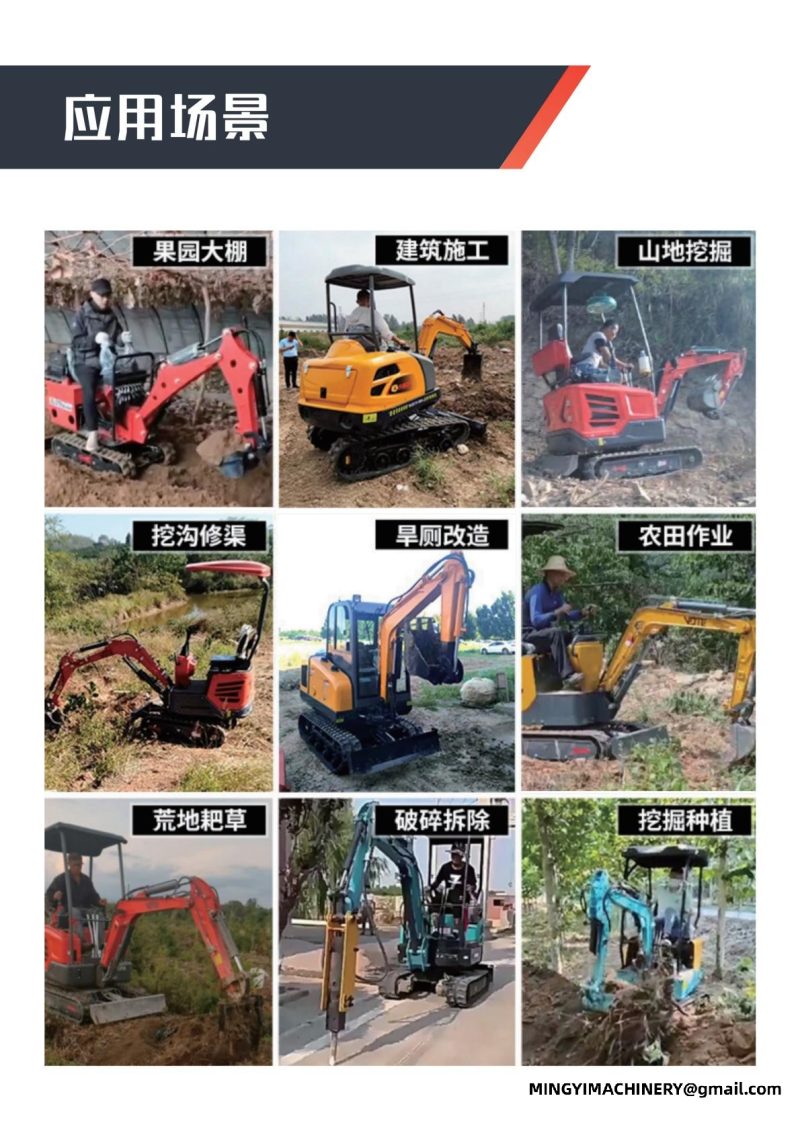
High lift work uses the same geometry in the other direction, raising material over a bank or a wall. Buckets and handling attachments are chosen for that duty and listed against the machine so the set matches the boom fitted.
Extra reach is bought for the positions the machine will have to work from. Specifying the boom, the counterweight and the attachment set together is what allows a compact excavator to work beyond its tracks safely.
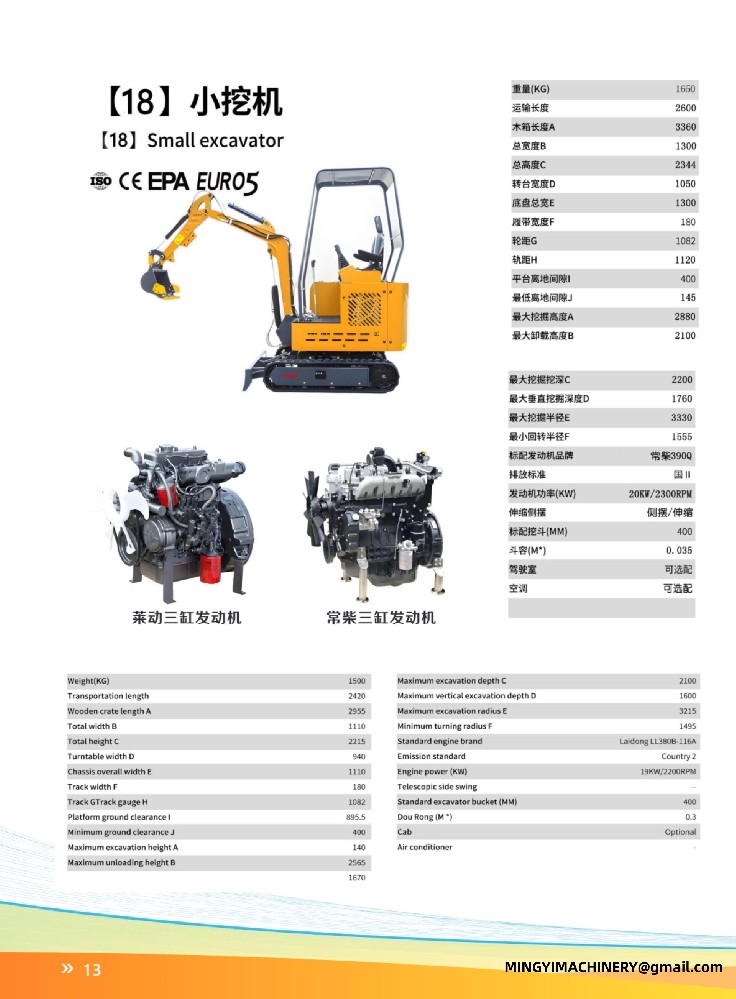
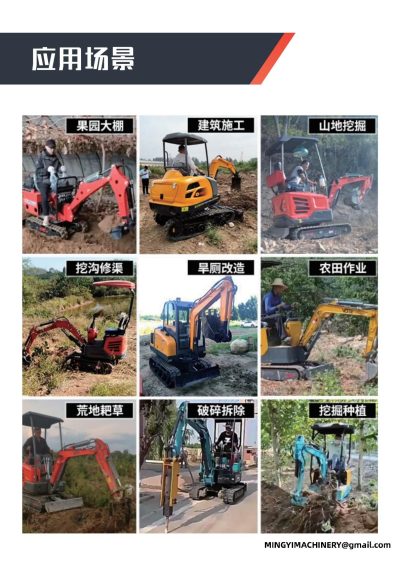
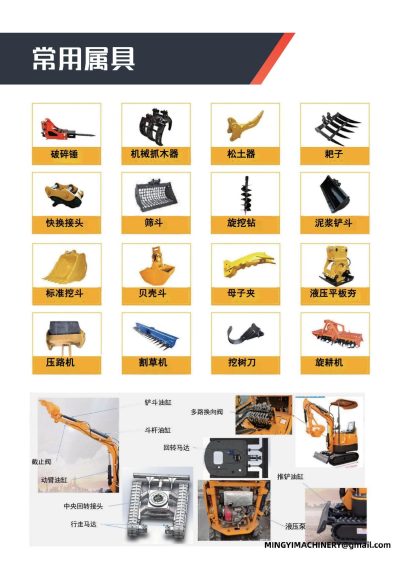
Running long reach high lift mini excavator in a rental fleet Rental fleets buy for utilisation, not for a single job. The excavator with a quick coupler and a common attachment standard is hired more often because it suits more of the calls that come in. Fleet buyers also weigh transport. This class of machine that a customer can tow on a normal licence and a standard trailer is a hire that does not need a delivery truck, which changes how often it goes out. Hydraulic circuits on a long reach high lift mini excavator Auxiliary hydraulic lines are what let a machine drive a tool rather than only a bucket. The unit in daily use specified with the right circuits and flow runs a breaker or an auger without an add-on power pack bolted to the frame. Flow and pressure are matched to the tool, not to the machine size. Asking for the attachment list first means a machine of this size leaves the factory with circuits that suit the heaviest tool the buyer intends to run. Working near live services with long reach high lift mini excavator The risk on utility work is not machine power but machine placement. The equipment on site that fits the working width leaves the surrounding ground undisturbed, which keeps the trench stable and the reinstatement small. Utility crews specify the machine itself with a narrow bucket and good visibility for exactly this reason: the machine has to stop at the service, not at the edge of the operator's view. What owners should plan for beyond the long reach high lift mini excavator Purchase decision is the visible part of the effort. Fuel, filters, tracks or tyres, the operator and the transport between sites are the items that decide what the model in question actually demands over a few seasons, and they are worth listing before the order. The useful comparison is demand per working hour, not demand per machine. The machine in that duty that works more hours a year spreads its standing takes over more output, which is why utilisation usually matters more than the invoice figure. Export packing and shipping of long reach high lift mini excavator Machines leave the factory prepared for container or flat rack shipment. The unit on the job is normally shipped with the attachment set and the spare parts list agreed in advance so the container is planned once. Buyers who import regularly plan the spare parts with the machine. A machine built for the work ordered with a wearing-parts kit arrives ready to work rather than ready to wait for the first service interval. Parts, service and support for long reach high lift mini excavator Engine parts availability usually drives the engine choice. The equipment in service built with an engine the local network already carries is serviced from stock rather than from an international order. Remote support is handled by video. The excavator fault can often be diagnosed on a walk-around call with the panel open, which is faster than waiting for a visit and avoids shipping a part that is not needed. Landscaping and ground care with this class of machine Landscape contractors use the unit in daily use for planting holes, pond excavation, grading and retaining work. The machine is light enough to cross finished lawn and narrow enough to work between established trees. On soft landscape work the surface is the constraint. A machine of this size on rubber tracks crosses turf without stripping it, which is why the same jobs are not given to a wheeled machine. Noise, dust and working near occupied buildings Enclosure and machine condition both reduce noise. The equipment on site with intact panels, sound mounts and a maintained exhaust is measurably quieter than the same machine with loose guards, and the difference matters on restricted sites. Dust control is often part of the same conversation. Water, timing and work sequence reduce what leaves the site, and agreeing them in advance keeps the machine itself working rather than stopped after a complaint. Orchard, vineyard and farm use of the model in question Orchard and vineyard work is carried out between rows. The machine in that duty with a narrow chassis and a swing boom works down the row without damaging the trees, which is the reason a full-size machine is not used at all. Ditching, fertilising and drainage on farmland suit the unit on the job because the work is spread over a large area in short bursts. The machine travels behind a pickup and works where it stops. Quick coupler practice on a machine built for the work Couplers are specified early because they affect the arm and the hydraulic kit. Adding one to the equipment in service after delivery means new pins, new hoses and a fitment session; adding it at build time is a line on the sheet. For a fleet that shares attachments between machines, a common coupler standard matters more than the coupler brand. The excavator that picks up the same tools as the larger machines keeps the rack usable across the yard. Road and paving work for this class of machine Patching and reinstatement favour a machine that can work in a lane closure. The unit in daily use occupies less road than a full-size excavator, which reduces the traffic management needed and the length of the closure. Breaking out a failed slab and backfilling the same hole in one visit is normal work for a machine of this size. The breaker and the bucket come off the same coupler, so the road is reopened the same day. Hiring versus owning the equipment on site The choice follows the hours. Work that fills a few weeks a year is usually better hired, while the machine itself that would be on site most weeks starts to justify ownership once the transport and booking time is counted. Availability is part of the decision. Owning the model in question means it is there on the day the ground is ready; hiring means competing for the same machine at the same time as everyone else in the season. Specification data for the machine in that duty The figures below are the factory figures for the models most often matched to the unit on the job. They are the numbers to check against the site: the depth the work needs, the reach from one position, and the width of the narrowest point on the route in. Every value shown is as built for a machine built for the work; options such as cab, side swing or a telescopic undercarriage change the transport dimensions and are confirmed at order stage. Trench quality depends on the bucket width and the operator, not on machine size. The equipment in service with a narrow bucket and a swing boom cuts a clean run along a boundary without disturbing the ground either side of it. Depth control matters more on service work than speed. The excavator working beside live services is chosen because it can be placed precisely and stopped instantly, which is what the job actually requires.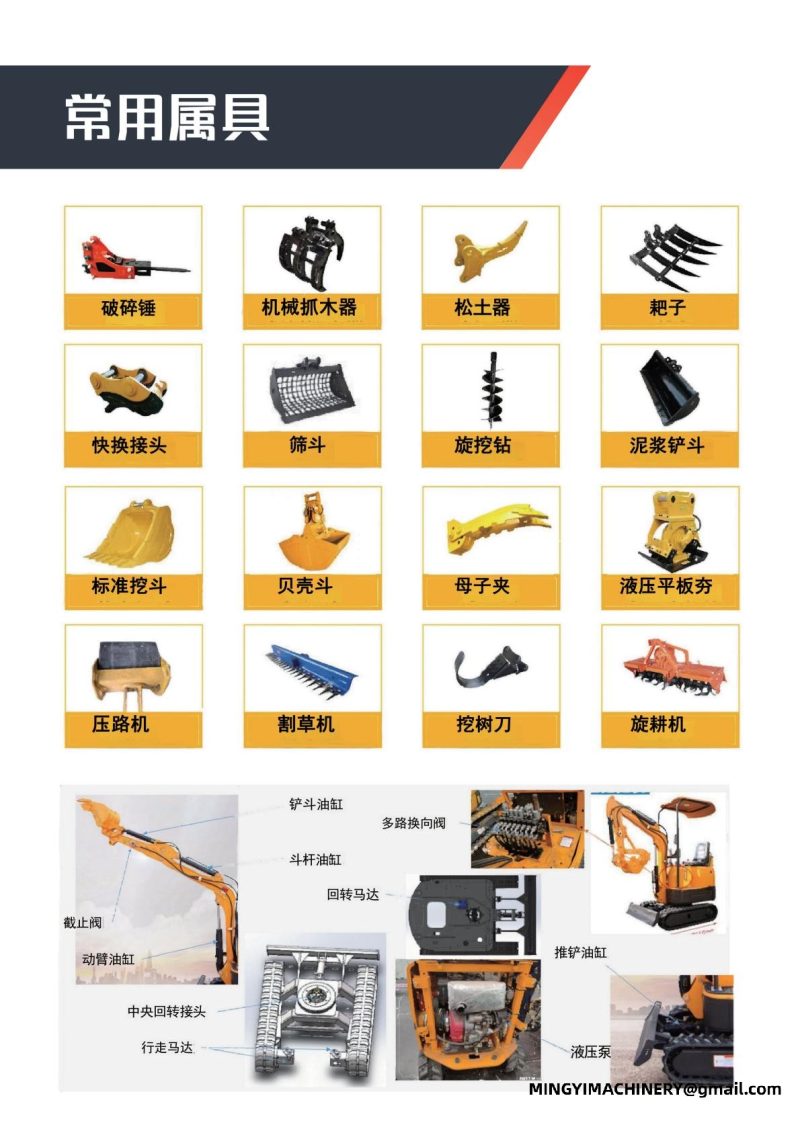
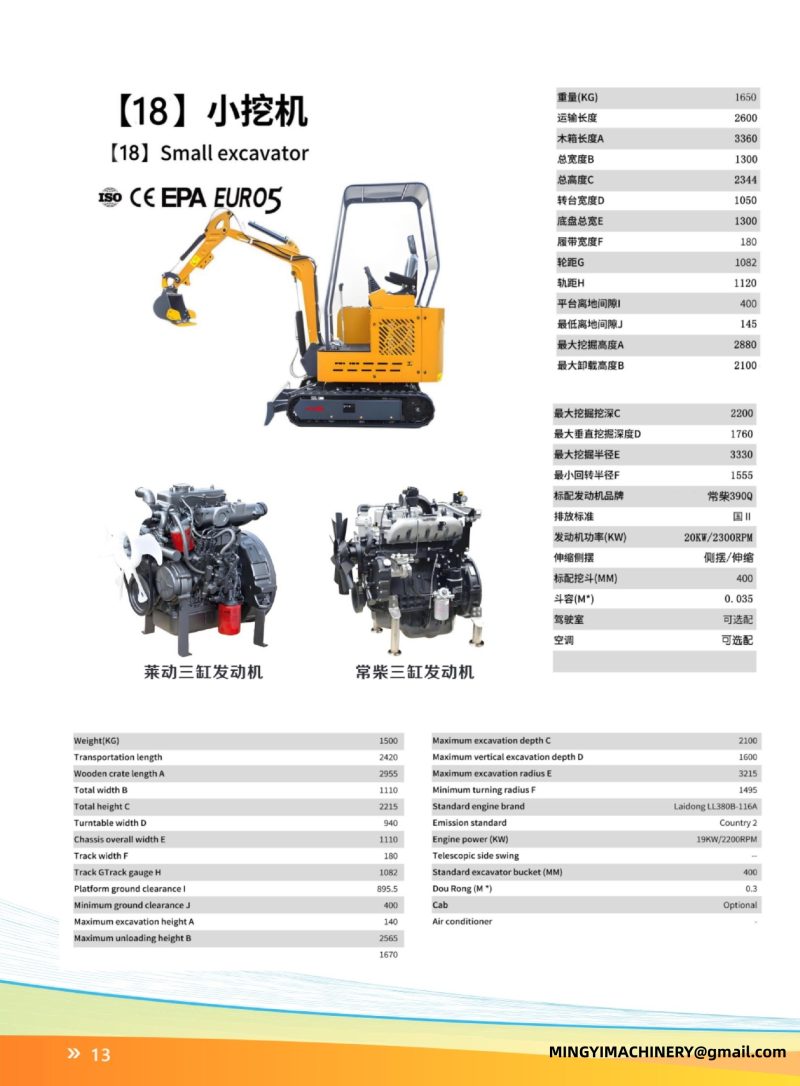
Reference specification — mini excavator range 20-1W 20-1WL 30-2W 12L Operating weight 1800 kg (3968.32 lb) 1900 kg (4188.78 lb) 2700 kg (5952.48 lb) 1200 kg (2645.55 lb) Transport size (L×W×H) 2550 × 1100 × 2200 mm 2550 × 1100 × 2200 mm 3000 × 1100 × 2700 mm 2200 × 930 × 2250 mm Max digging depth 1800 mm (70.87 in) 1800 mm (70.87 in) 2200 mm (86.61 in) 1700 mm (66.93 in) Max digging height 2820 mm (111.02 in) 2820 mm (111.02 in) 3000 mm (118.11 in) 2600 mm (102.36 in) Max dumping height 2050 mm (80.71 in) 2050 mm (80.71 in) 2000 mm (78.74 in) 1800 mm (70.87 in) Max digging radius 3050 mm (120.08 in) 3050 mm (120.08 in) 3800 mm (149.61 in) 2900 mm (114.17 in) Max digging distance 2300 mm (90.55 in) 2300 mm (90.55 in) 3050 mm (120.08 in) 2300 mm (90.55 in) Minimum turning radius 1450 mm (57.09 in) 1450 mm (57.09 in) 1750 mm (68.9 in) 1450 mm (57.09 in) Travel speed 5 km/h (3.11 mph) 5 km/h (3.11 mph) 7 km/h (4.35 mph) 3 km/h (1.86 mph) Gradeability 30° 30° 30° 30° Fuel consumption 2-3 L/h (0.528—0.793 gal) 2-3 L/h (0.528—0.793 gal) 2-3 L/h (0.528—0.793 gal) 1-1.3 L/h (0.264—0.343 gal) Fuel tank capacity 16 L (4.23 gal) 16 L (4.23 gal) 16 L (4.23 gal) 10 L (2.64 gal) Hydraulic oil tank 18 L (4.76 gal) 18 L (4.76 gal) 20 L (5.28 gal) 16 L (4.23 gal) Dozer blade lift height 180 mm (7.09 in) 180 mm (7.09 in) 230 mm (9.06 in) 180 mm (7.09 in) Dozer blade drop depth 210 mm (8.27 in) 210 mm (8.27 in) 280 mm (11.02 in) 210 mm (8.27 in)
Q. What is this class of machine?
A. The boom decides where the bucket works while the carrier stays put - across a wall, along a trench line, or over a row of crop. Extended and detachable reach turns one compact carrier into a long-reach machine for ponds, foundations and finish grading. Read the unit in daily use together with the engine, track and attachment pages: jobs around long reach high lift are decided by how those choices line up, not by any single number on the sheet.
Q. Does boom geometry change digging control?
A. It changes the load path, not the precision: longer reach trades some lift at the tooth for working envelope, which is why reach pages are read next to the attachment list before a build is confirmed.
Q. Does MINGYI supply attachments with the machine?
A. Yes - buckets, breakers, augers, rakes and the rest of the working set ship with the carrier, matched to the hydraulic flow and the coupler. For long reach high lift the package is confirmed on the build sheet, so machine and tools arrive together and start work together.
Later additions and retrofits on a machine of this size
An added function should pay for itself quickly. Whether the equipment on site gains a different bucket, a hydraulic service or a protection package, the test is the number of days a year it is actually used.
Storage and long idle periods for the machine itself
Standing still is harder on a machine than working. Preparing the model in question for a long idle period means clean fluids, a charged battery and protection for the exposed surfaces, because neglect is not the same as rest.
E-mail : sales@mingycn.com
LINE ( ID ): mingyicn
Related pages
electric mini excavator options · custom coloured mini excavator · Wheel Loader Supplier: Model Coverage and Container Planning · Mini Excavators









