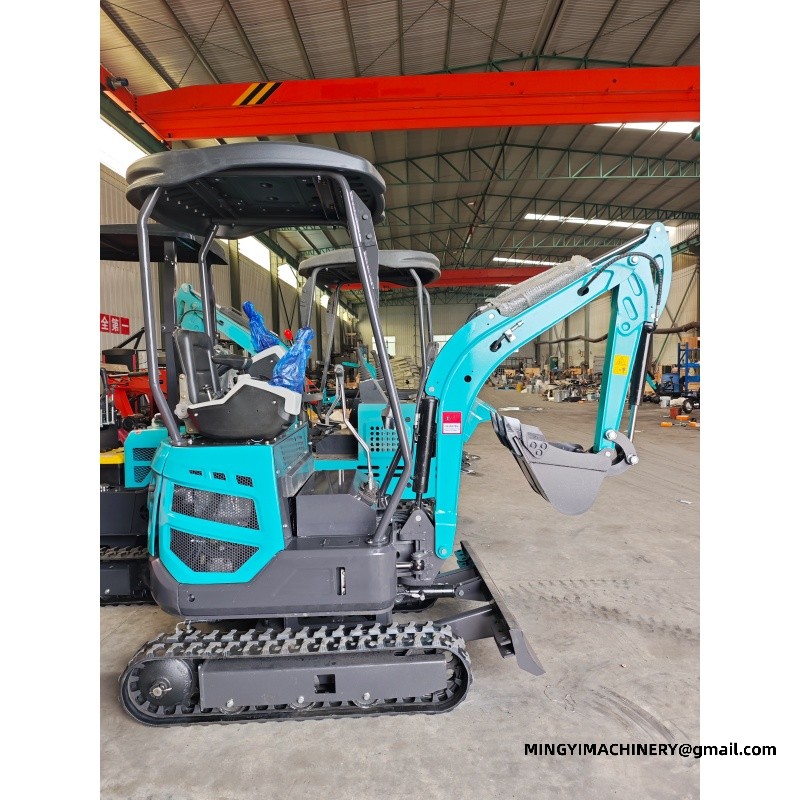
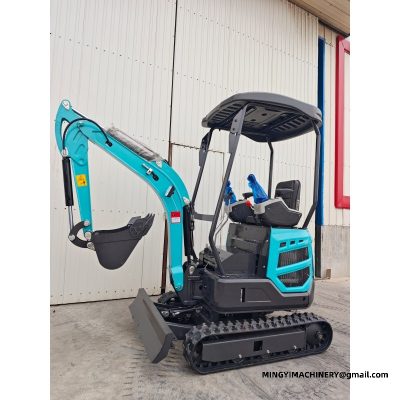
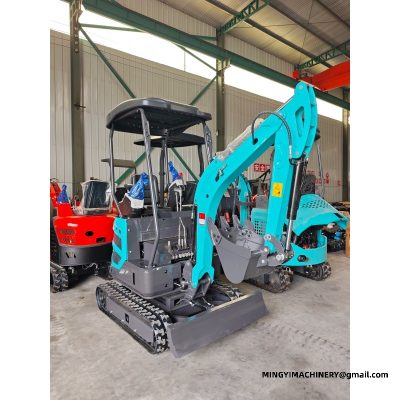
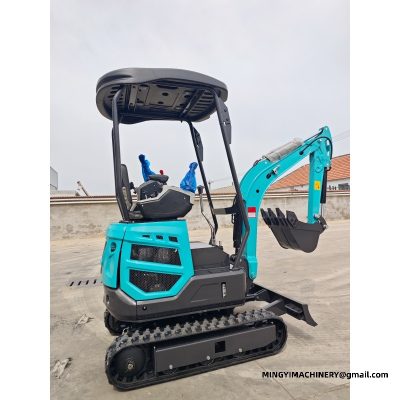
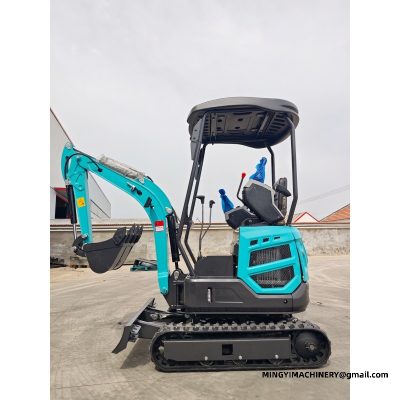
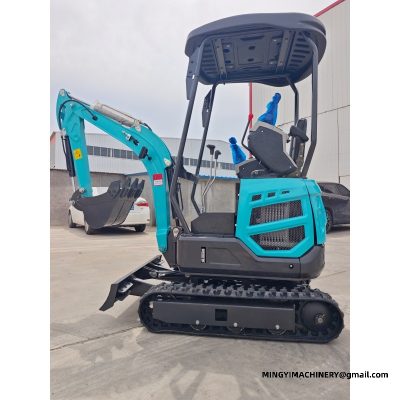
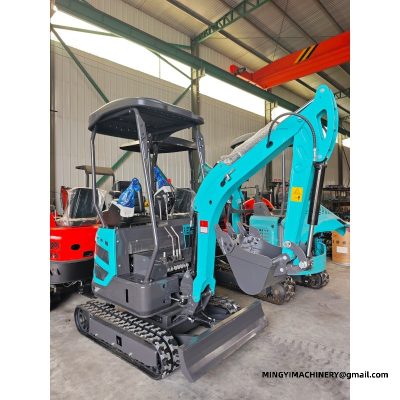
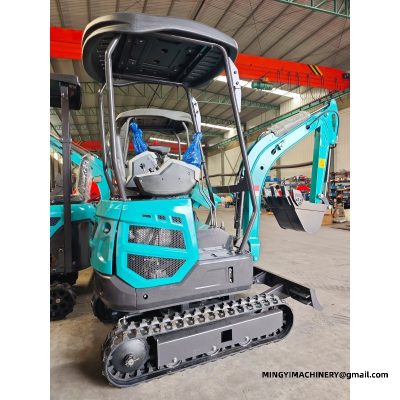
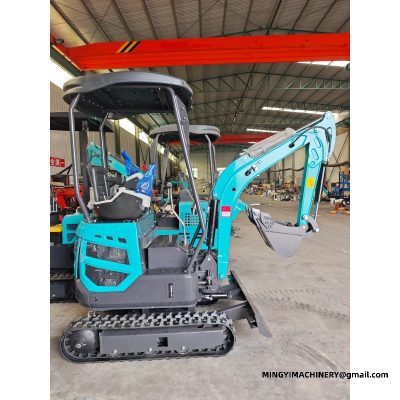
Engineered with a certified heavy lifting eye on the bucket linkage and boom-burst protection valves, ensuring maximum safety when lowering heavy pipes into trenches.
Lifting with an excavator is not the same as digging with it. A lift puts a steady load at a known radius, and the machine has to stay stable while the load is held rather than swept.
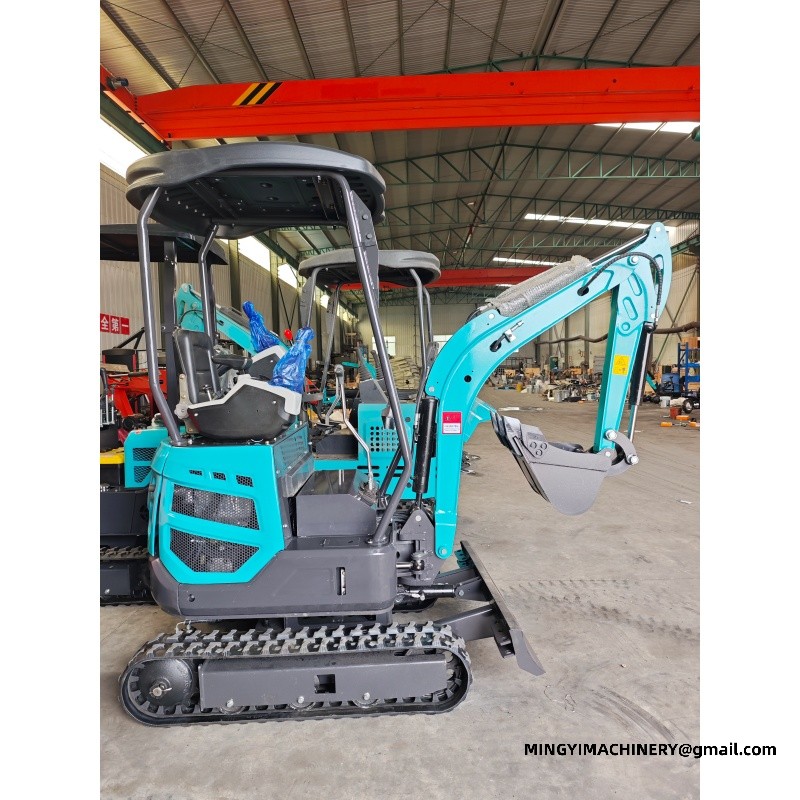
MINGYI builds compact excavators to order for sites where the machine also has to handle material. Track type, counterweight and boom arrangement are chosen to suit the loads and the reach the job requires.
Lifting with a compact excavator
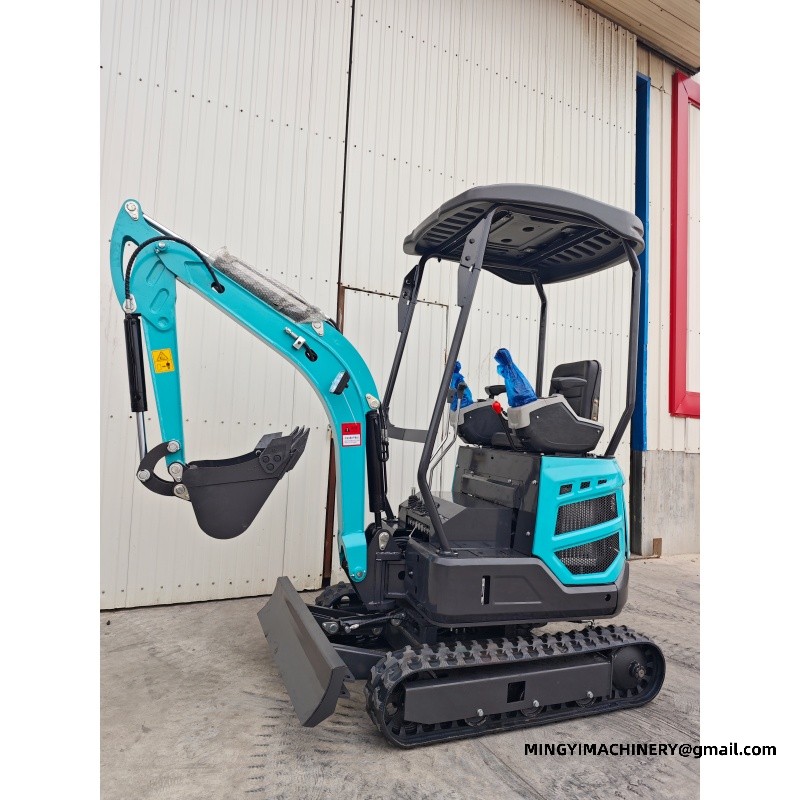
Handling work on a small site often means moving pipes, paving, kerbs or prefabricated parts as well as digging. A machine set up for lifting holds these at a controlled radius rather than scooping them.
Stability is the governing factor. A wider undercarriage, the right counterweight and a track base suited to the ground all increase what can be handled at a given reach.
Rigging and load handling practice
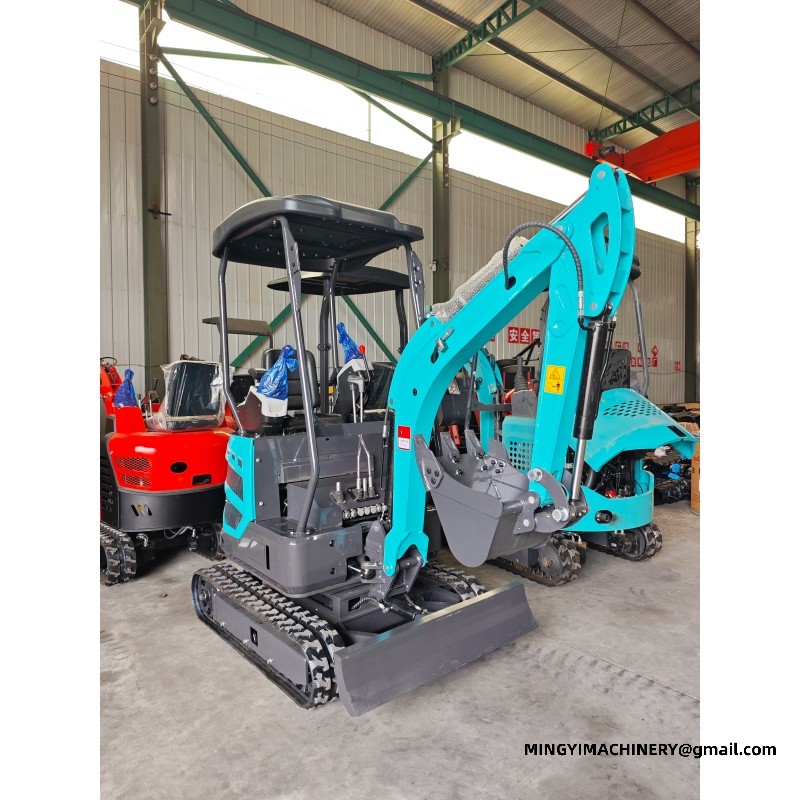
Loads are attached with a lifting eye, a sling or a grab, and the machine is set square to the load before the lift begins. Keeping the load close to the machine reduces the radius and improves stability.
The attachment set follows the materials being handled. A grab, a front fork or a lifting eye all change how the machine is used, and each is listed against the unit so the linkage and capacity match.
For sites that need both digging and lifting, one compact excavator can cover both duties if it is specified for the heavier of the two. Ordering the undercarriage and attachments around that load keeps the machine stable in use.
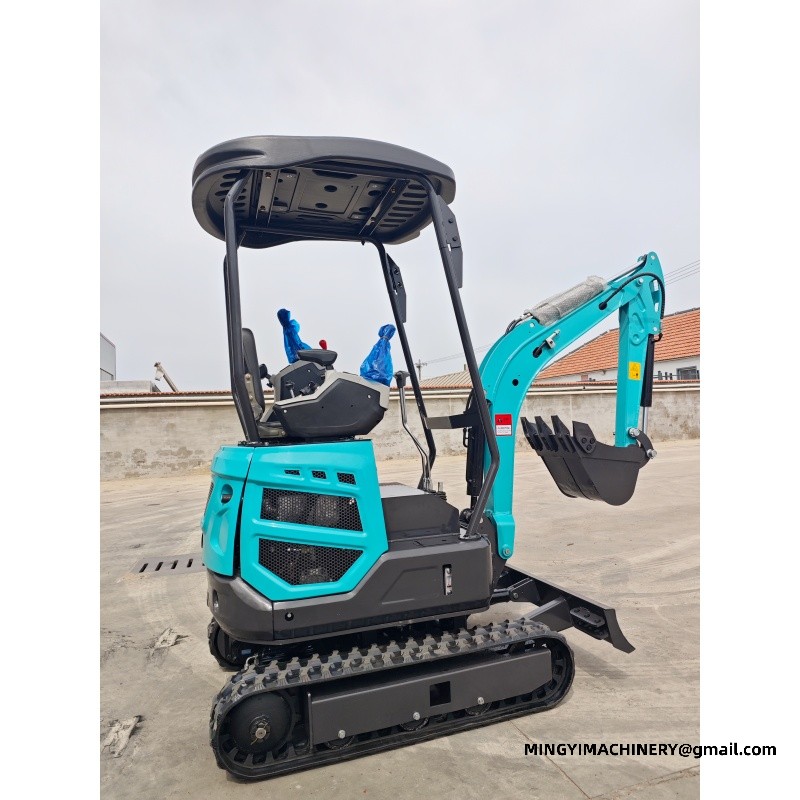
Getting heavy lift compact excavator through a narrow gap The first question on most job lists is whether the machine can reach the work at all. The excavator is chosen against the narrowest point on the route - a garden gate, a doorway, a gap between two walls - because a machine that arrives and then cannot pass loses a day, not an hour. Contractors who buy this class of machine normally have one job in mind that nothing else reaches. The purchase order follows the access measurement, not the other way round, and the build sheet is then settled around it. Quick coupler practice on heavy lift compact excavator A quick coupler is the single option that changes how a machine is used day to day. Fitted to the unit in daily use, it turns an attachment change from a two-person workshop job into a task the operator does alone in minutes. Couplers are specified early because they affect the arm and the hydraulic kit. Adding one to a machine of this size after delivery means new pins, new hoses and a fitment session; adding it at build time is a line on the sheet. Matching heavy lift compact excavator to ground conditions Hard and abrasive ground reverses the specification. On rock, demolition rubble or sharp gravel, steel tracks with rubber blocks on the equipment on site survive conditions that cut a rubber belt quickly. Mixed sites are common and argue for a compromise specification. Most buyers choose rubber for the machine itself and accept the wear, unless the majority of the work is on material that will damage it. Daily checks and maintenance on heavy lift compact excavator Daily maintenance on the model in question is a short list: engine oil level, coolant, track tension, hydraulic oil level and a look at the hoses. Ten minutes at the start of the shift prevents most of the failures that stop a machine. Greasing is the second item. The slew ring, the boom and arm pins and the bucket linkage on the machine in that duty take grease daily in dusty work, and the intervals shorten further when the machine is used in water or mud. Municipal and public works with heavy lift compact excavator Drainage repair, tree planting, footway reconstruction and cemetery work are all within the range of the unit on the job. The jobs are small individually and continuous across the year. Noise and surface protection matter on public work. A machine built for the work on rubber tracks across paving, with a sealed cab for the operator, suits the conditions better than a larger tracked machine. Attachments that turn heavy lift compact excavator into several machines The base machine is a carrier; the tool on the end of the arm decides the task. The equipment in service fitted with a toothed bucket digs, and the same machine with a breaker, an auger or a grab does work that would otherwise need a second unit on site. Attachment lists are best written before delivery. Specifying the excavator with the tools the job list needs avoids the work and delay of adding hydraulics later, and a quick coupler makes the swap a few minutes instead of a workshop job. Export packing and shipping of this class of machine Export documentation, decals and paint are settled before packing. Asking for them with the machine of this size order avoids a second handling session and keeps the machine on the booked vessel. Buyers who import regularly plan the spare parts with the machine. The unit in daily use ordered with a wearing-parts kit arrives ready to work rather than ready to wait for the first service interval. Track choice for the equipment on site Rubber tracks suit paved and landscaped ground because they spread the machine weight and leave the surface intact. Steel tracks with rubber blocks are specified where the ground is rougher or the working day is longer, and the choice can be made per machine rather than accepted as a factory default. Undercarriage selection is a ground question, not a preference question. The machine itself running on finished paving needs rubber; the same machine on demolition rubble or rock wears rubber quickly, so steel with rubber blocks becomes the better answer over a full season. OEM and fleet customisation of the model in question Distributors and rental fleets usually need the machine to look like theirs. Paint, decals, seat colour and attachment branding can be specified on the machine in that duty at build time rather than applied after import. Documentation can be prepared to suit the importer. Manuals, parts books and decal sets for the unit on the job can be supplied with the buyer's own branding where the order size justifies it. Operator technique for a machine built for the work The second habit is tool discipline. Running the equipment in service with the right bucket width for the trench means less spoil, less reinstatement and a cleaner job than a wide bucket and a lot of trimming. Stability is the third. The excavator working across the tracks rather than over the corners keeps the machine steady and the undercarriage loaded evenly, which shows up as track life at the end of the season. Acceptance checks when this class of machine arrives A function check before the machine goes to work is worth the hour. Running through the controls, the travel and the attachment circuit on the unit in daily use confirms it is set up as specified and ready for the site. Documentation should arrive with the machine. Parts list, service schedule and any certificates for a machine of this size are what the workshop needs later, and they are much easier to obtain at delivery than in month six. Specification data for the equipment on site The figures below are the factory figures for the models most often matched to the machine itself. They are the numbers to check against the site: the depth the work needs, the reach from one position, and the width of the narrowest point on the route in. These are the reference figures for the model in question. MINGYI confirms the final build sheet, including engine and attachment choices, against the destination and the job list before production. Power unit selection is settled against the service network the buyer already uses. MINGYI offers Kubota D722, Kubota D902, YANMAR, Changchai, Laidong, Runtong, YARMAX, Youpu 2V80 and Youpu 195, so a fleet running one brand of engine can keep the same filters, the same parts supplier and the same mechanic. Engine choice is also an emissions and documentation question for some markets. Listing the available units with the machine in that duty enquiry lets the factory confirm what can be supplied and documented for the destination country.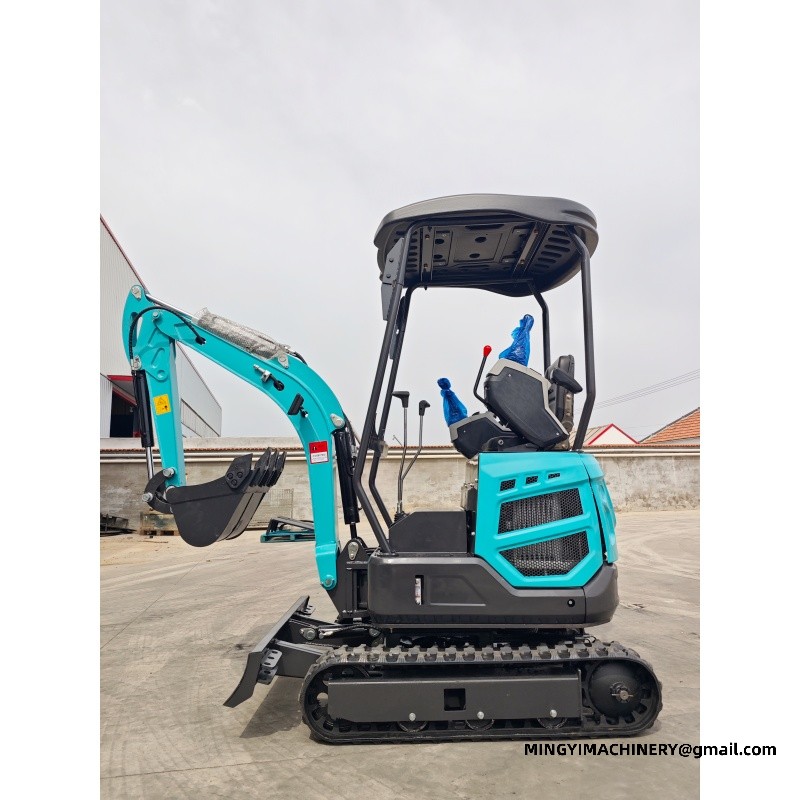
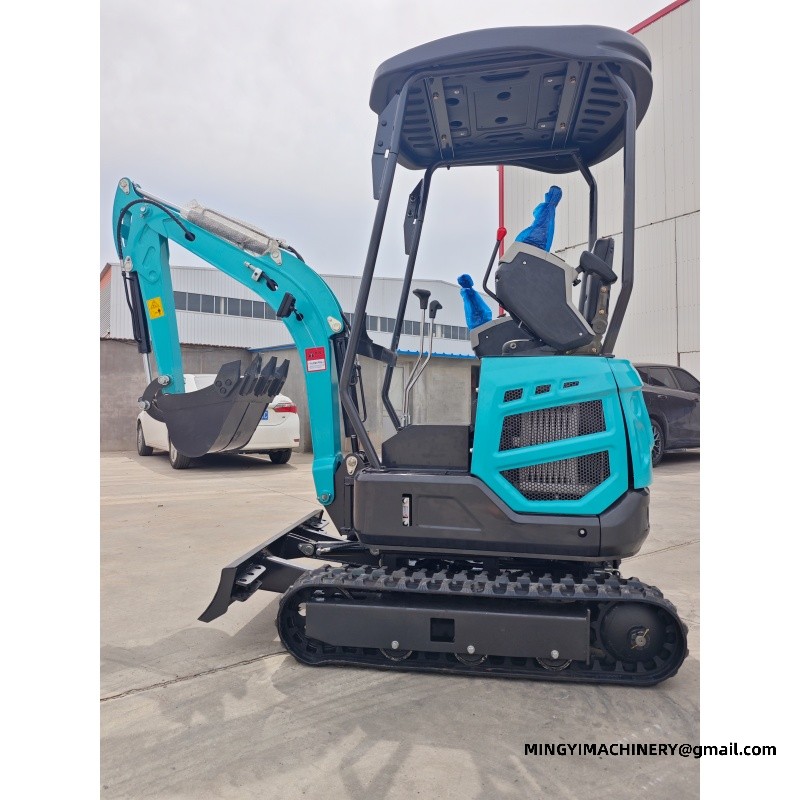
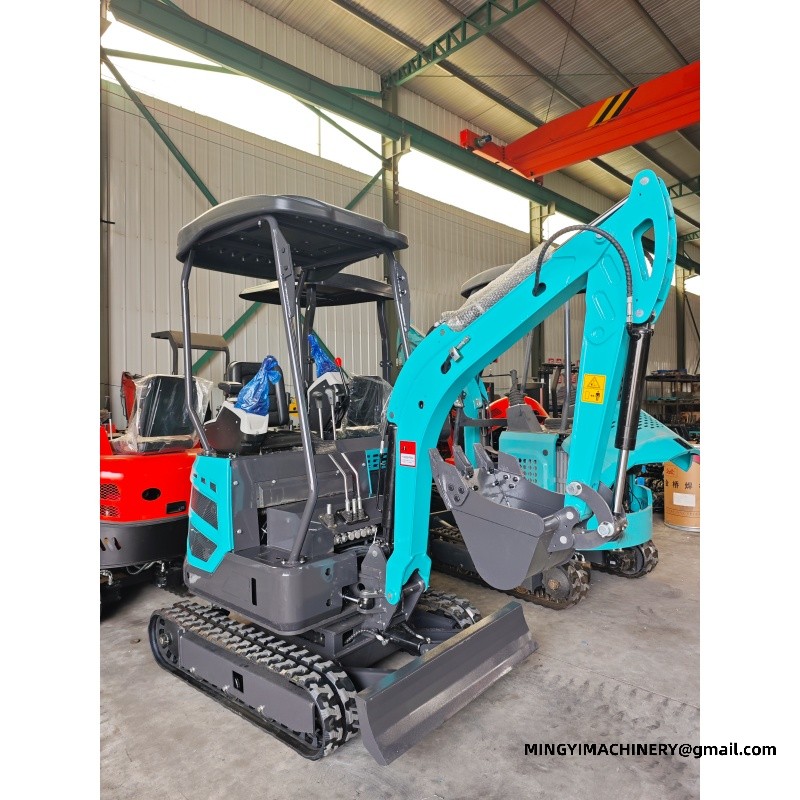
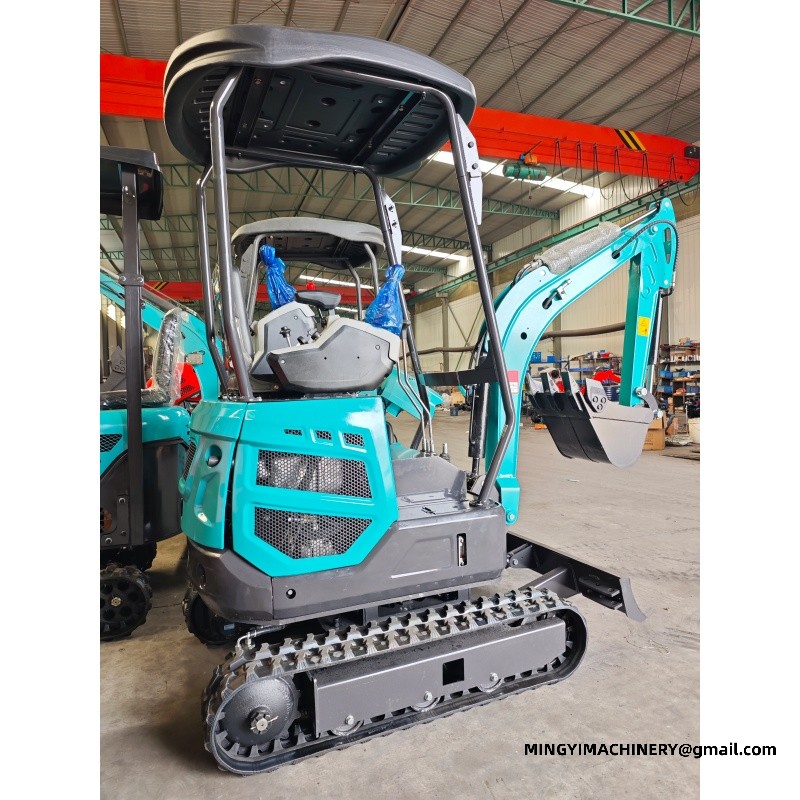
Reference specification — mini excavator range 09W 15W 30-2W 15L Operating weight 1100 kg (2425.08 lb) 1400 kg (3086.47 lb) 2700 kg (5952.48 lb) 1400 kg (3086.47 lb) Transport size (L×W×H) 1800 × 750 × 1970 mm 2200 × 930 × 2250 mm 3000 × 1100 × 2700 mm 2200 × 930 × 2250 mm Max digging depth 1250 mm (49.21 in) 1630 mm (64.17 in) 2200 mm (86.61 in) 1700 mm (66.93 in) Max digging height 2800 mm (110.24 in) 2750 mm (108.27 in) 3000 mm (118.11 in) 2750 mm (108.27 in) Max dumping height 1700 mm (66.93 in) 1960 mm (77.17 in) 2000 mm (78.74 in) 1960 mm (77.17 in) Max digging radius 2570 mm (101.18 in) 2900 mm (114.17 in) 3800 mm (149.61 in) 2900 mm (114.17 in) Max digging distance 1869 mm (73.58 in) 2100 mm (82.68 in) 3050 mm (120.08 in) 2300 mm (90.55 in) Minimum turning radius 1000 mm (39.37 in) 1300 mm (51.18 in) 1750 mm (68.9 in) 1450 mm (57.09 in) Travel speed 3 km/h (1.86 mph) 3 km/h (1.86 mph) 7 km/h (4.35 mph) 3 km/h (1.86 mph) Gradeability 30° 30° 30° 30° Fuel consumption 1-1.3 L/h (0.264—0.343 gal) 1-1.3 L/h (0.264—0.343 gal) 2-3 L/h (0.528—0.793 gal) 1-1.3 L/h (0.264—0.343 gal) Fuel tank capacity 8 L (2.11 gal) 10 L (2.64 gal) 16 L (4.23 gal) 10 L (2.64 gal) Hydraulic oil tank 16 L (4.23 gal) 16 L (4.23 gal) 20 L (5.28 gal) 16 L (4.23 gal) Dozer blade lift height 180 mm (7.09 in) 180 mm (7.09 in) 230 mm (9.06 in) 180 mm (7.09 in) Dozer blade drop depth 210 mm (8.27 in) 210 mm (8.27 in) 280 mm (11.02 in) 210 mm (8.27 in)
Q. Who chooses the unit on the job?
A. The class sets the trade: access on one side, reach and lift on the other, and every compact buyer picks their point on that line. The smallest classes trade reach for access; the largest trade access for output - the build sheet settles the rest. Read a machine built for the work together with the engine, track and attachment pages: jobs around heavy lift are decided by how those choices line up, not by any single number on the sheet.
Q. Is a bigger class always more machine?
A. Only where the site lets it work: a class too big for the access spends the day waiting outside the gate. Match the class to the job list, not to the brochure - the factory confirms the pairing before the build sheet is cut.
Q. What support follows the sale?
A. Spare-part kits, wear items and service documentation ship with the programme, and the parts team works from the serial plate to match components exactly. Warranty and support terms for the heavy lift order are confirmed in writing before the machine leaves.
Moving the equipment in service between sites
A machine that works on one site still has to reach the next. The overall dimensions and the operating weight of the excavator decide what trailer or truck is needed, and that decision belongs before the job is booked.
Documents that travel with this class of machine
A clear parts book saves more time than any other document. When the unit in daily use needs a replacement, the illustration and the part number are what turn a phone call into a shipment instead of a description.
Packing, loading and shipment of a machine of this size
How a machine travels decides how it starts on arrival. Securing the equipment on site against movement, protecting the exposed cylinders and keeping the battery and fluids in the right state for the voyage all belong to the packing list.
E-mail : sales@mingycn.com
LINE ( ID ): mingyicn
Related pages
tree shear mini excavator for forestry · mini excavator with planer attachment · Heavy Duty Wheel Loader: Hinge Plates and Cross-Member Steel · Mini Excavators









