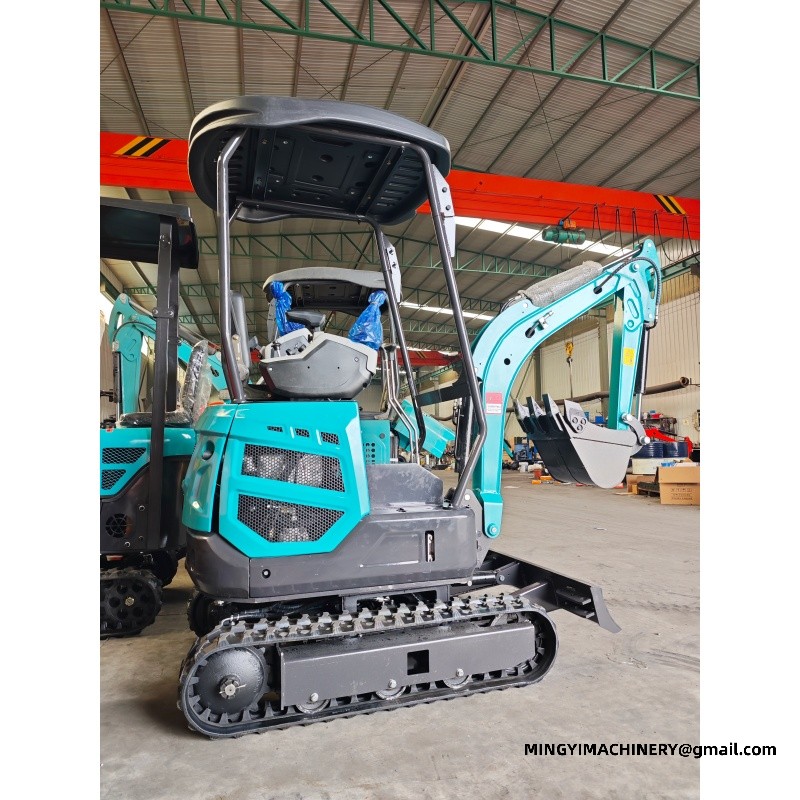
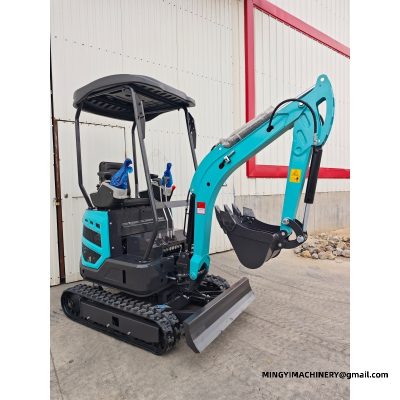
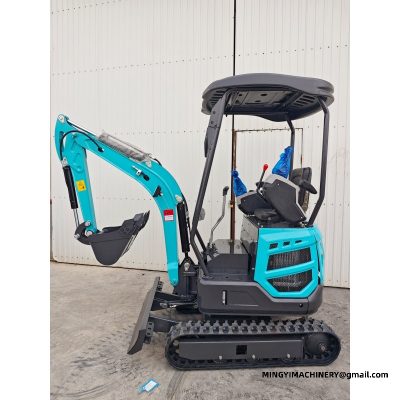
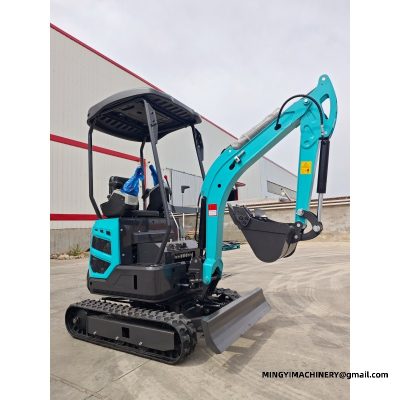
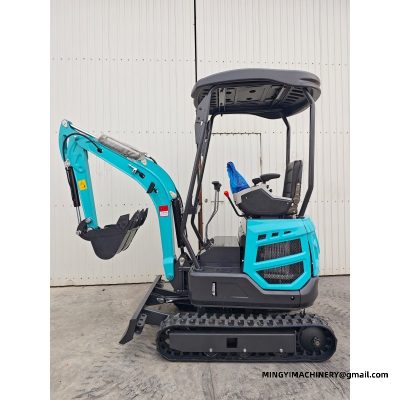
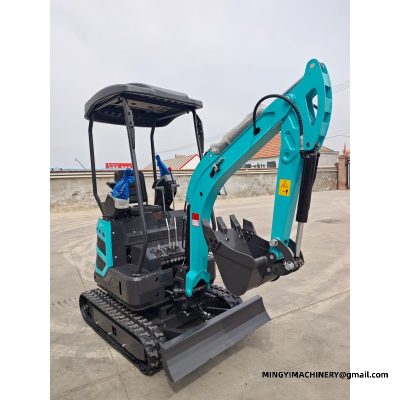
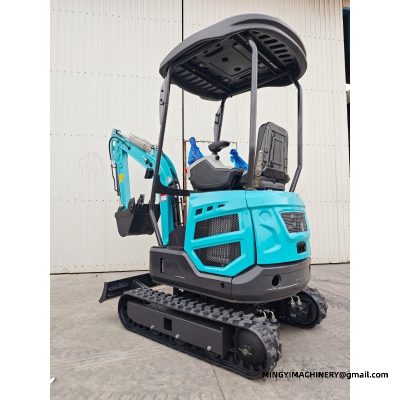
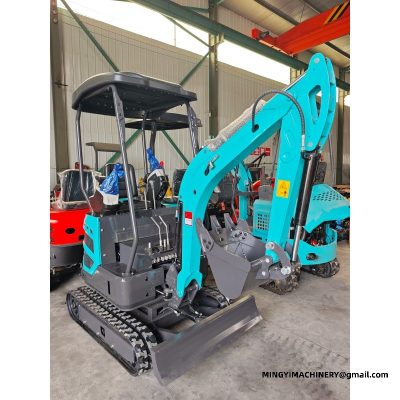
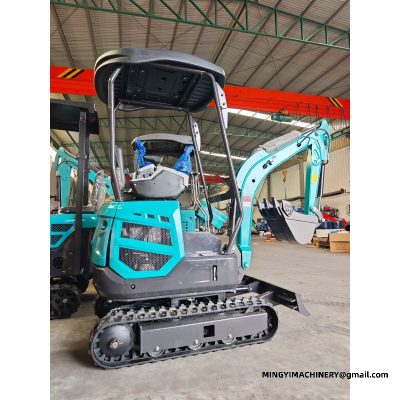
Combines a powerful hydraulic circuit with a heavy-duty tree shear attachment, allowing for swift cutting and clearing of small trees and dense timber.
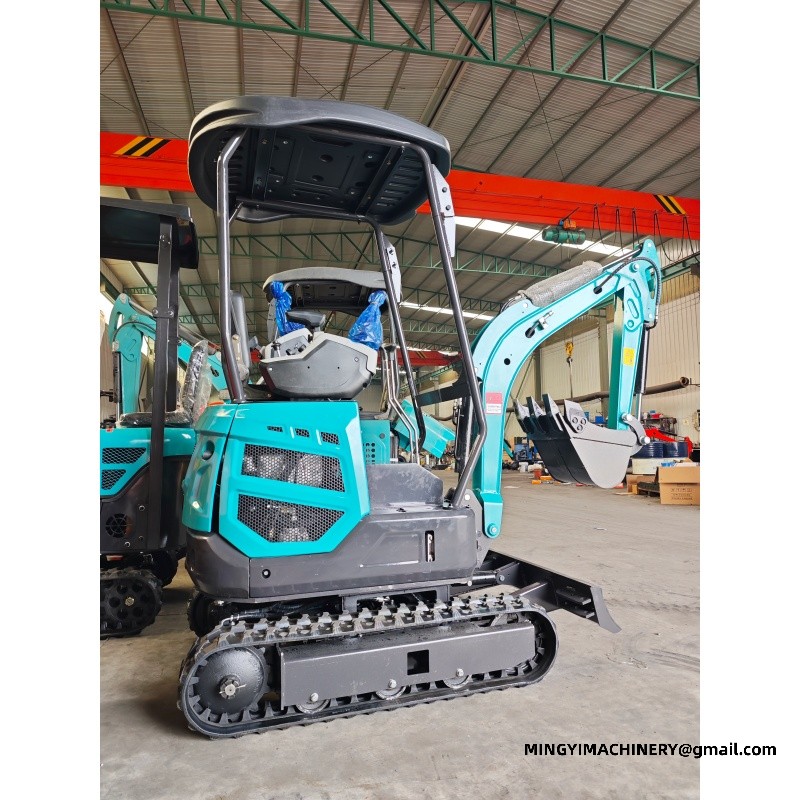
Felling and clearing small timber with a machine instead of a chain saw crew changes the arithmetic of land-clearing work. A MINGYI mini excavator with a tree shear grips, shears and places stems in controlled cycles, the operator working from the cab at boom reach.
The tree shear mounts on the excavator arm and closes across the stem, cutting it clean and holding it for stacking, all driven by the machine's auxiliary hydraulics. For forestry and orchard renewal, the attachment turns the digging carrier into a harvesting unit.
Forestry and clearing work with the shear
The tool suits thinning, clearing windblown stems and cutting access lines through regrowth. Because the shear holds the stem through the cut, the operator places each piece on the stack rather than leaving it where it falls.
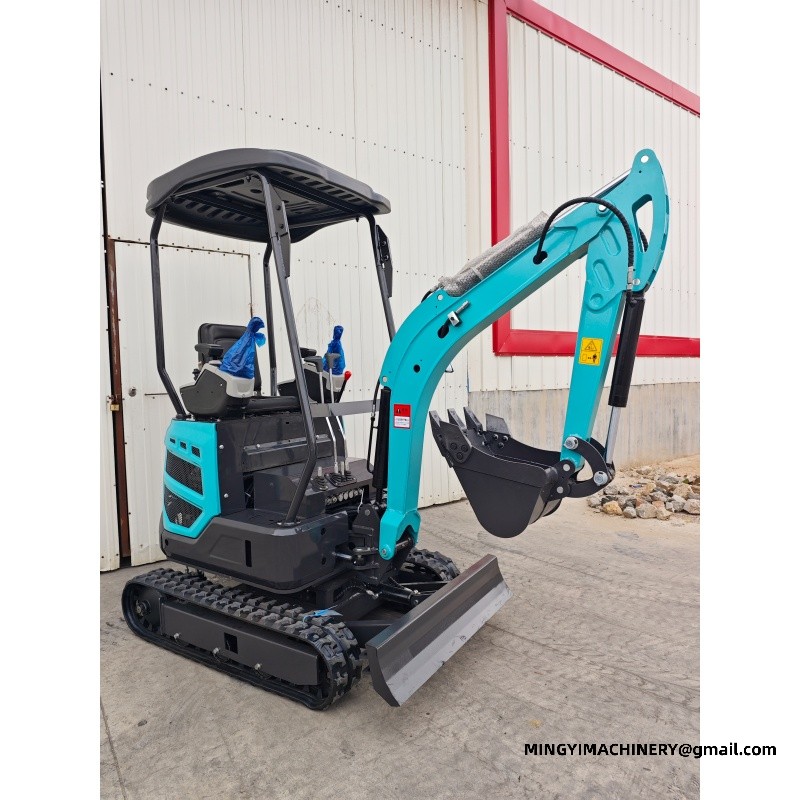
On orchard and plantation renewal, the same machine that digs the drainage and lifts the stumps can shear the standing crop in the changeover, one carrier covering the sequence instead of separate hires.
Ordering a shear-equipped excavator
The hydraulic feed for the shear is specified at the ordering stage together with the machine, since the tool's demands shape the valve group and pipework of the build. Buyers should state the typical stem sizes and duty cycle so the machine class matches the work.
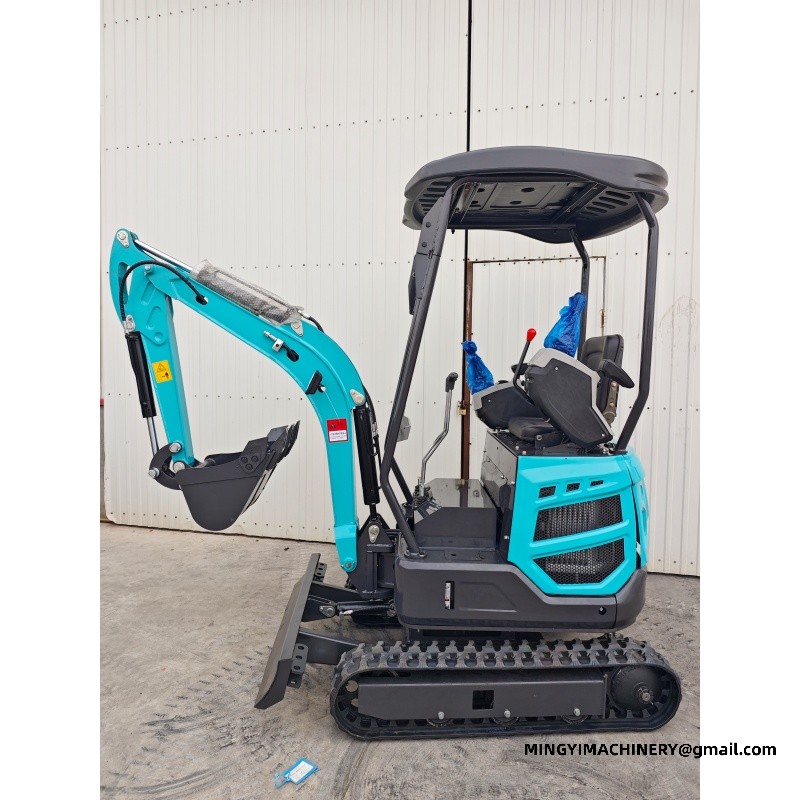
The shear joins the attachment list recorded against the machine's build, and spare parts and service information cover it alongside the carrier. Together with a grab for the stacking work, the excavator arrives as a complete wood-handling unit.
Timber work rewards reach, control and a cab between the operator and the stems. Order the shear with the machine, and clearing becomes a seat-of-the-cab operation.
Running tree shear mini excavator for forestry in a rental fleet Rental fleets buy for utilisation, not for a single job. The excavator with a quick coupler and a common attachment standard is hired more often because it suits more of the calls that come in. The specification that rents best is usually the simplest one to explain at the counter. This class of machine with rubber tracks, a canopy and a coupler covers the majority of weekend and short-term hires. Landscaping and ground care with tree shear mini excavator for forestry Landscape contractors use the unit in daily use for planting holes, pond excavation, grading and retaining work. The machine is light enough to cross finished lawn and narrow enough to work between established trees. Grass cutting heads, rakes and tillers extend a machine of this size into ground care. The same carrier that digs a border in spring can cut and clear the same area later in the season. Working a tree shear mini excavator for forestry through the seasons Weather decides which days are productive. Rain turns some ground unusable and cold changes how the equipment on site starts and warms up, so planning the wet months around maintenance is more useful than planning around output. Seasonal planning smooths the workload. Machines that are busy for a few months and idle for the rest benefit from a service slot in the quiet period, and the machine itself prepared in the off-season starts the busy months reliably. Lifting and material handling with a tree shear mini excavator for forestry Lifting with a machine built to dig needs a plan. The load, the radius and the ground under the machine in that duty all matter, and the safe figure is the one on the chart rather than the one that looks possible. Stability changes with reach. A load the model in question handles close in becomes a different proposition at full extension, so the working radius belongs in the plan before the lift rather than during it. Getting tree shear mini excavator for forestry through a narrow gap Access decides the machine before output does. With the unit on the job the limiting dimension is usually the widest point on the way in, so measuring the gate, the corridor and the turning space first saves a wasted delivery and a second visit. Contractors who buy a machine built for the work normally have one job in mind that nothing else reaches. The purchase order follows the access measurement, not the other way round, and the build sheet is then settled around it. Road and paving work for tree shear mini excavator for forestry Road repair generates short, interrupted jobs - a patch, a drainage connection, a kerb line. The equipment in service is economical here because it travels on a small trailer and starts working minutes after arriving. Patching and reinstatement favour a machine that can work in a lane closure. The excavator occupies less road than a full-size excavator, which reduces the traffic management needed and the length of the closure. Trenching work with this class of machine Service trenches are the most common reason the unit in daily use is hired. Water, sewage, cable and gas runs are narrow, shallow and often close to existing services, which is exactly the work a full-size machine cannot do safely. Depth control matters more on service work than speed. A machine of this size working beside live services is chosen because it can be placed precisely and stopped instantly, which is what the job actually requires. Municipal and public works with the equipment on site Municipal crews work on streets, footpaths and parks where the public is present. The machine itself is specified because it occupies little space, works inside a small exclusion zone and can be moved on a standard trailer. Drainage repair, tree planting, footway reconstruction and cemetery work are all within the range of the model in question. The jobs are small individually and continuous across the year. Daily checks and maintenance on the machine in that duty Daily maintenance on the unit on the job is a short list: engine oil level, coolant, track tension, hydraulic oil level and a look at the hoses. Ten minutes at the start of the shift prevents most of the failures that stop a machine. Track tension is the item most often neglected. A machine built for the work run with slack tracks wears the undercarriage and can throw a track on a turn; run too tight, the same components wear from the other direction. Orchard, vineyard and farm use of the equipment in service Orchard and vineyard work is carried out between rows. The excavator with a narrow chassis and a swing boom works down the row without damaging the trees, which is the reason a full-size machine is not used at all. Farms also use this class of machine for general maintenance - clearing a watercourse, repairing a track, loading a spreader. One carrier with a few attachments covers most of the jobs that would otherwise wait for a contractor. Specification data for the unit in daily use Buyers comparing a machine of this size usually start from four numbers - weight, digging depth, reach and transport width - because those are the ones that decide whether the machine can be delivered and whether it can do the job once it is there. These are the reference figures for the equipment on site. MINGYI confirms the final build sheet, including engine and attachment choices, against the destination and the job list before production. Clearance above matters as much as around. Door heights, pipework and overhead services set the limit for the machine itself indoors, and measuring them first avoids a machine that arrives and cannot be used. Ventilation is the other indoor constraint. Running the model in question inside a closed structure needs air movement, and that is a planning item rather than something to discover after the first hour.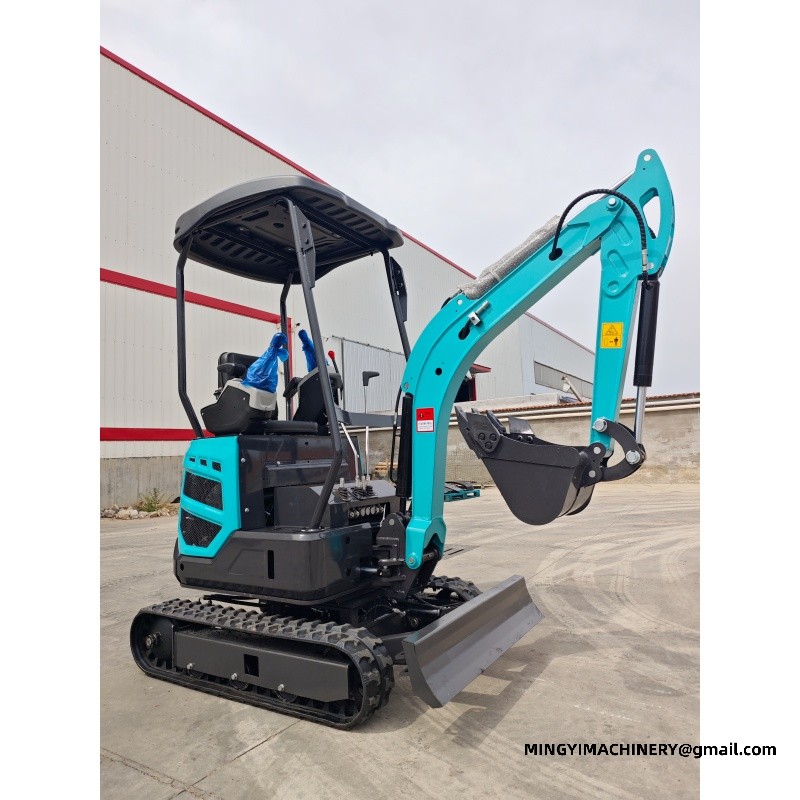
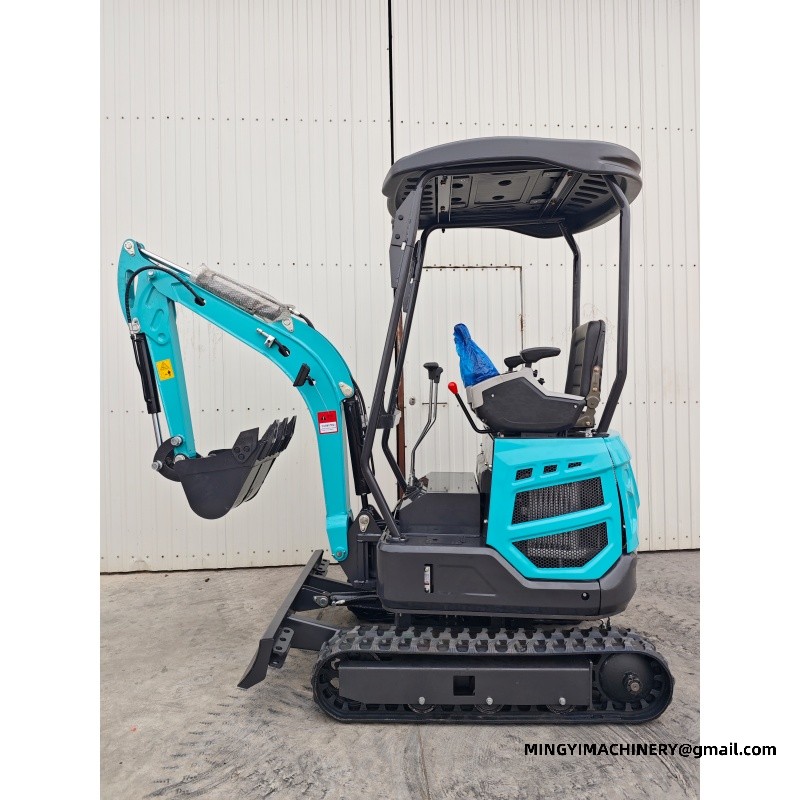
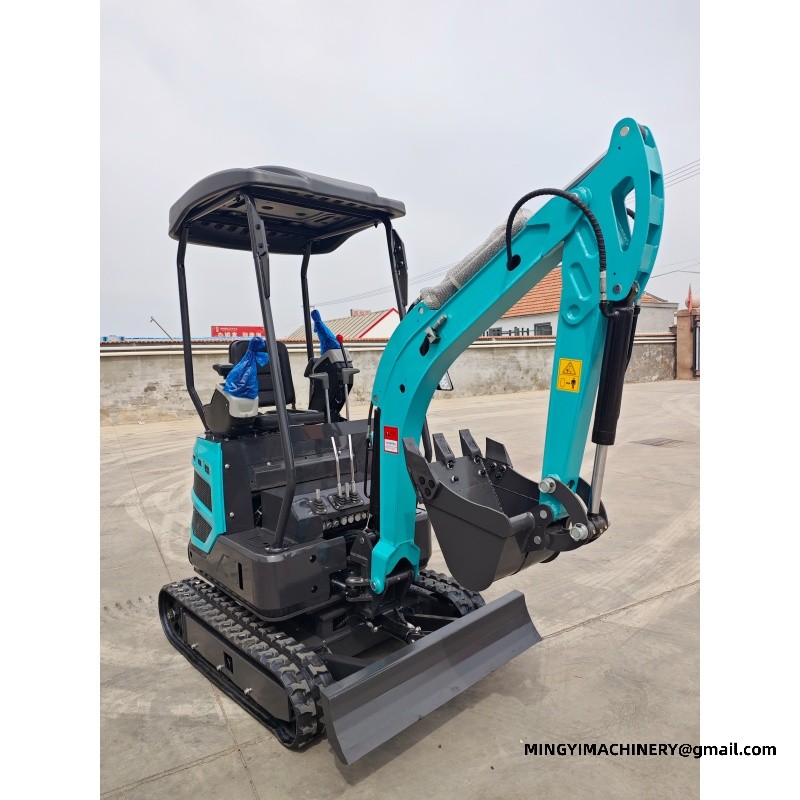
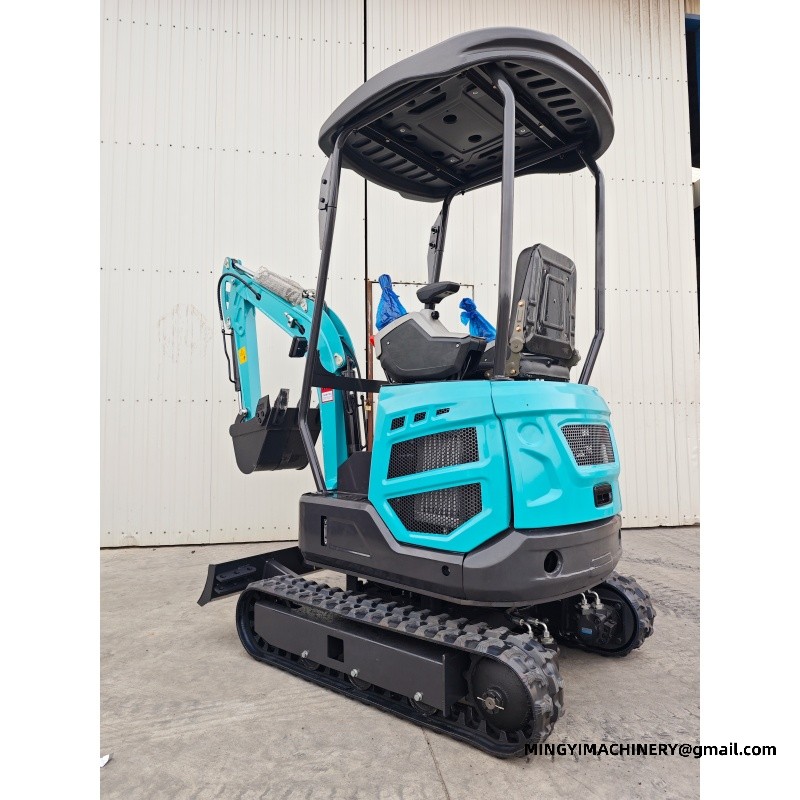
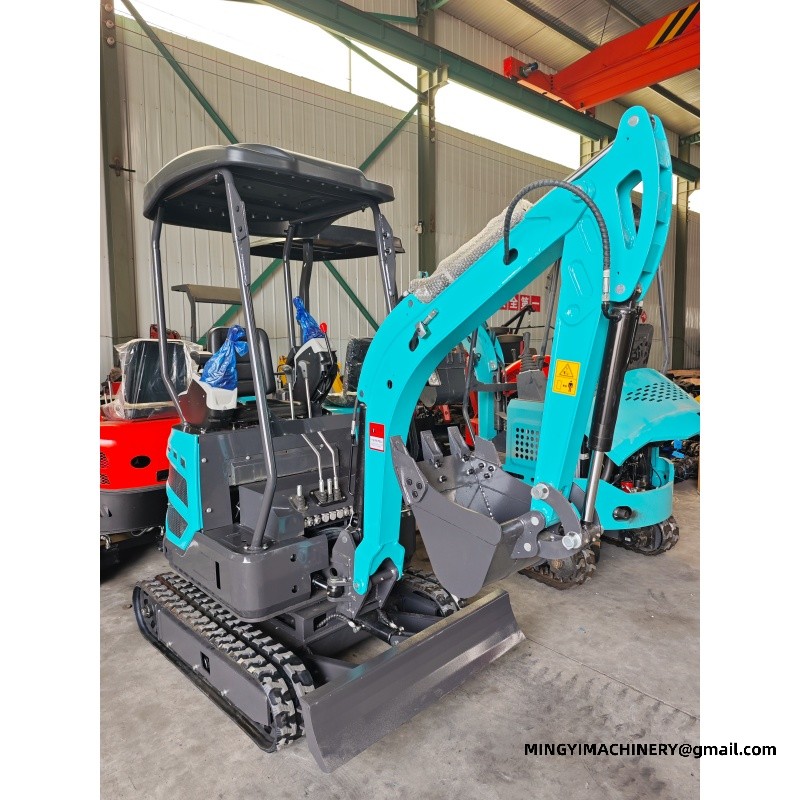
Reference specification — mini excavator range 09W 20-1W 30-2W 09L Operating weight 1100 kg (2425.08 lb) 1800 kg (3968.32 lb) 2700 kg (5952.48 lb) 1100 kg (2425.08 lb) Transport size (L×W×H) 1800 × 750 × 1970 mm 2550 × 1100 × 2200 mm 3000 × 1100 × 2700 mm 2300 × 720 × 1870 mm Max digging depth 1250 mm (49.21 in) 1800 mm (70.87 in) 2200 mm (86.61 in) 1400 mm (55.12 in) Max digging height 2800 mm (110.24 in) 2820 mm (111.02 in) 3000 mm (118.11 in) 2800 mm (110.24 in) Max dumping height 1700 mm (66.93 in) 2050 mm (80.71 in) 2000 mm (78.74 in) 1880 mm (74.02 in) Max digging radius 2570 mm (101.18 in) 3050 mm (120.08 in) 3800 mm (149.61 in) 2490 mm (98.03 in) Max digging distance 1869 mm (73.58 in) 2300 mm (90.55 in) 3050 mm (120.08 in) 2000 mm (78.74 in) Minimum turning radius 1000 mm (39.37 in) 1450 mm (57.09 in) 1750 mm (68.9 in) 1400 mm (55.12 in) Travel speed 3 km/h (1.86 mph) 5 km/h (3.11 mph) 7 km/h (4.35 mph) 3 km/h (1.86 mph) Gradeability 30° 30° 30° 30° Fuel consumption 1-1.3 L/h (0.264—0.343 gal) 2-3 L/h (0.528—0.793 gal) 2-3 L/h (0.528—0.793 gal) 1-1.3 L/h (0.264—0.343 gal) Fuel tank capacity 8 L (2.11 gal) 16 L (4.23 gal) 16 L (4.23 gal) 8 L (2.11 gal) Hydraulic oil tank 16 L (4.23 gal) 18 L (4.76 gal) 20 L (5.28 gal) 16 L (4.23 gal) Dozer blade lift height 180 mm (7.09 in) 180 mm (7.09 in) 230 mm (9.06 in) 180 mm (7.09 in) Dozer blade drop depth 210 mm (8.27 in) 210 mm (8.27 in) 280 mm (11.02 in) 210 mm (8.27 in)
Q. Who chooses the machine in that duty?
A. An attachment widens the range of jobs a single compact excavator can specification and win, which is why the working set matters as much as the base machine. A digger that only digs competes with shovels; a digger with the right working set competes for whole jobs. For forestry applications the practical route is to send the job list to the factory and let the build sheet answer it - which is exactly what this page invites.
Q. How do I know which attachment my machine can run?
A. Compare the carrier hydraulic flow with what the attachment asks for, and the lifting moment with what it weighs at full reach. Lower-flow carriers still run buckets, rakes and mechanical tools; hungry attachments call for the high-flow option, and MINGYI confirms the pairing before the order ships.
Q. Which models does MINGYI build?
A. The 08, 12 and 18 models cover the 0.8 to 6 tonne class with engine, track, cab and attachment options across the range - dealer programmes can mix models in one shipment, and each forestry machine is confirmed on its own build sheet.
Documents that travel with the unit on the job
A clear parts book saves more time than any other document. When a machine built for the work needs a replacement, the illustration and the part number are what turn a phone call into a shipment instead of a description.
Planning the season around the equipment in service
Seasonal work rewards a machine that can change duty. Through the year the excavator may move from one task to another, and the attachment list should be chosen for the whole year rather than for the first job.
Cold weather and winter care for this class of machine
Cold exposes weak batteries, thick oil and water in the fuel. Preparing the unit in daily use for winter means the right grade of oil, a battery in good condition and fuel that will not wax in the tank overnight.
Packing, loading and shipment of a machine of this size
Export packing is part of the machine, not an afterthought. The equipment on site is blocked and braced inside the container so that it arrives in the same condition it left, and the load plan is decided by the dimensions rather than by what fits loosely.
E-mail : sales@mingycn.com
LINE ( ID ): mingyicn
Slope working and stability with tree shear mini excavator for forestry
Turning on a side slope is where most instability starts, so the route and the turning points are chosen before the first load is moved.
Ground that looks firm after a dry week can carry a different load after rain, and that difference is worth a walk-over each morning.
Working up and down the fall line rather than across it keeps the load predictable, and where that is impossible the load is reduced.
Related pages
mini excavator with planer attachment · utility trenching mini excavator · Compact Wheel Loader: Small-Frame Builds for Tight Sites · Mini Excavators









