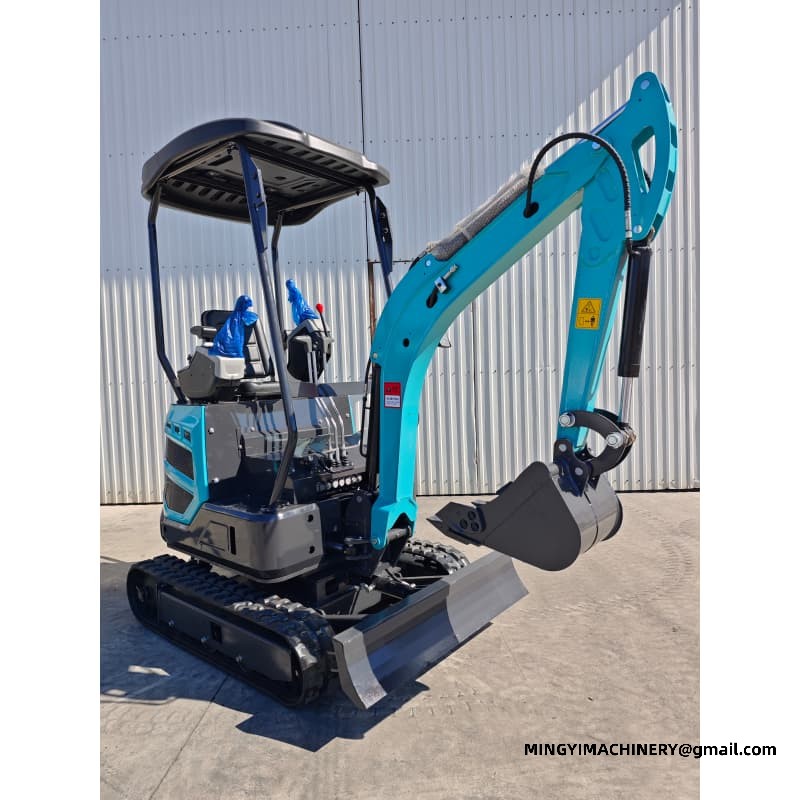
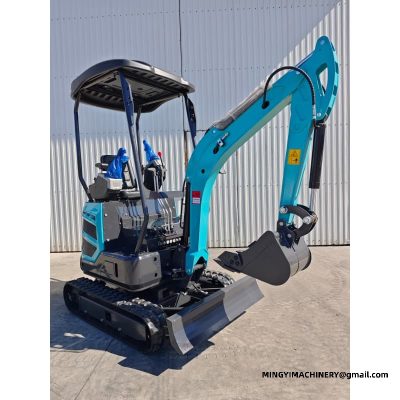
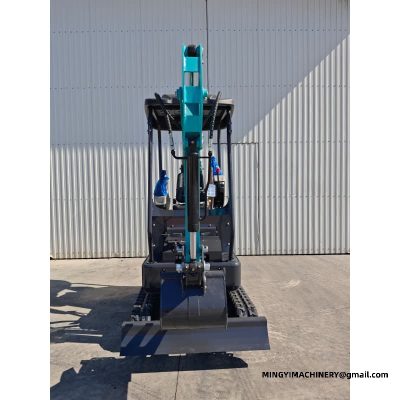
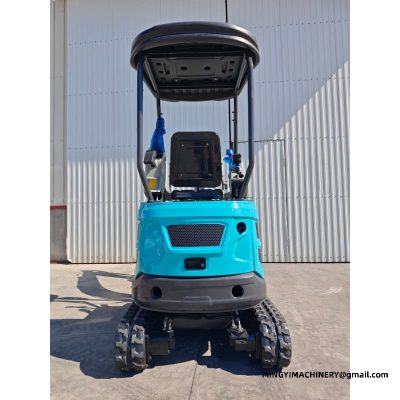
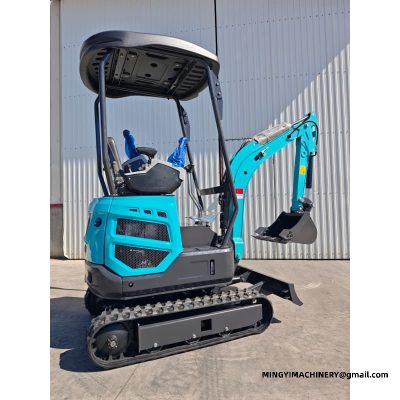
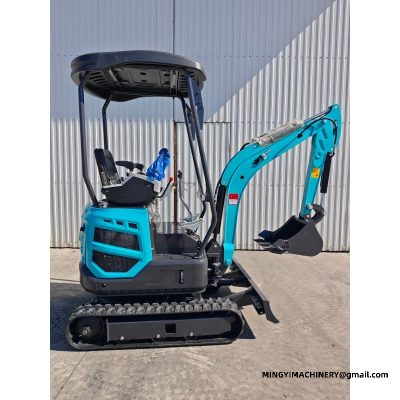
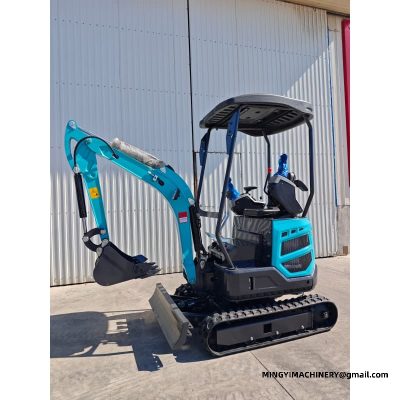
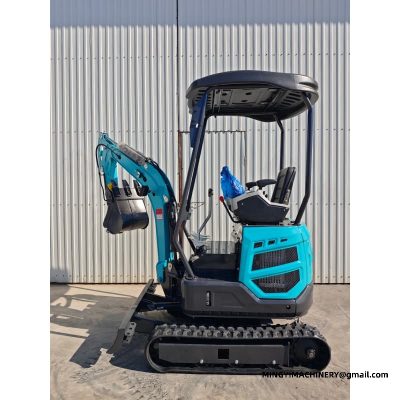
A machine that works every day is judged on the boring things: whether it starts, whether the hydraulics hold their response, and whether the wear parts are easy to source. The MINGYI crawler mini excavator is built as a daily duty unit across the compact classes.
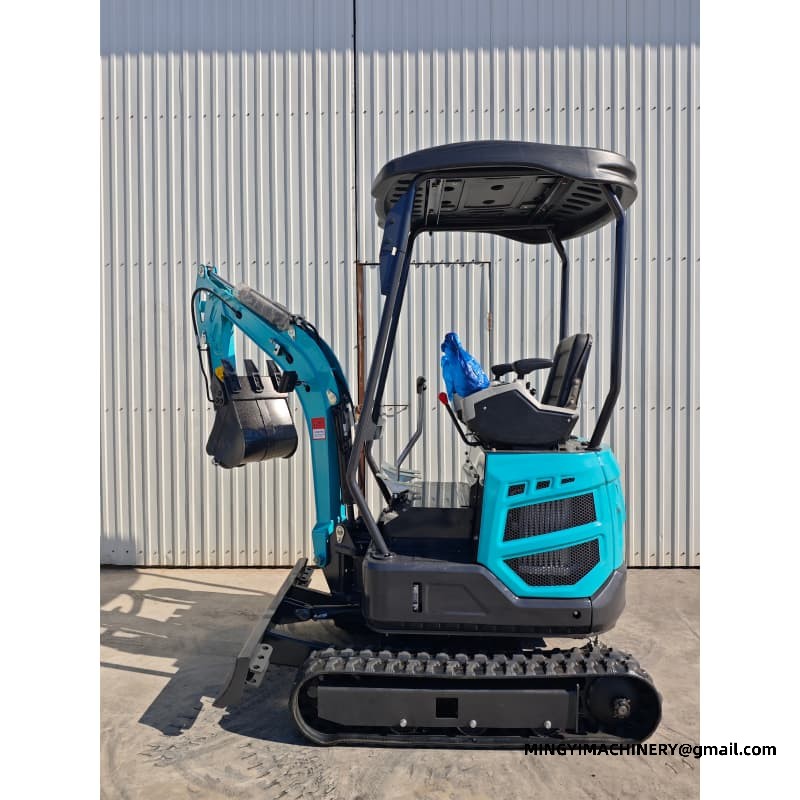
The crawler undercarriage carries the machine across soft and broken ground that a wheeled unit could not work from, with rubber or steel tracks with rubber blocks selected for the surfaces involved. Each build is configured to the buyer's duty at the ordering stage.
Daily operation and routine servicing
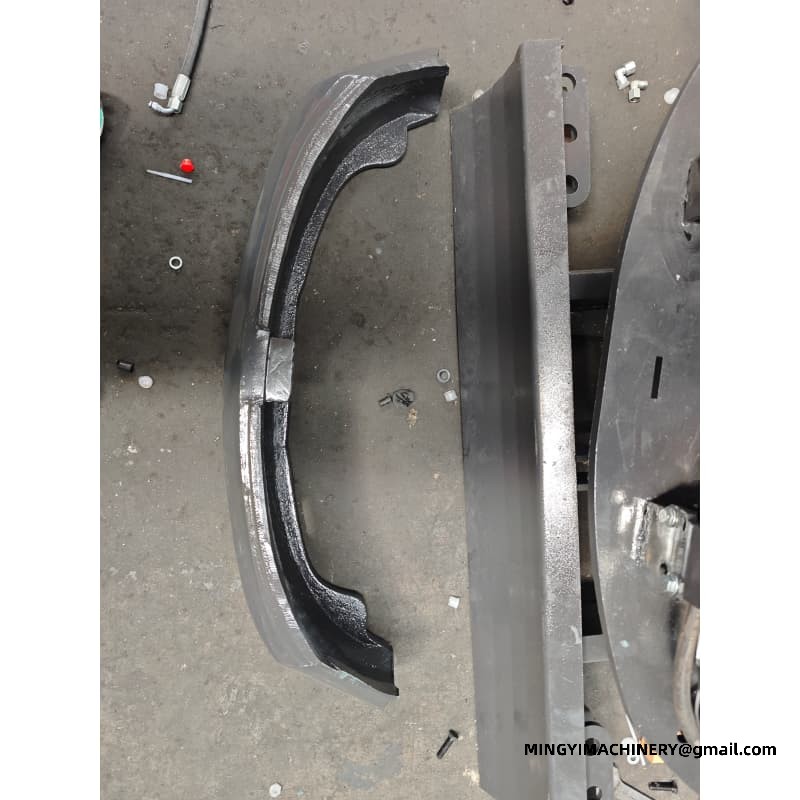
The machines are designed around straightforward daily checks: fluids, filters, track tension and grease points that a site operator can work through before the shift. Service information is supplied with the machine so the routine is documented rather than tribal.
The engine options, including Kubota D722, Kubota D902, YANMAR, Changchai, Laidong, Runtong and YARMAX units, are all supported through the spares that can be ordered with the machine. Buyers pick the brand their local parts channel handles well.
Configuring a daily duty machine
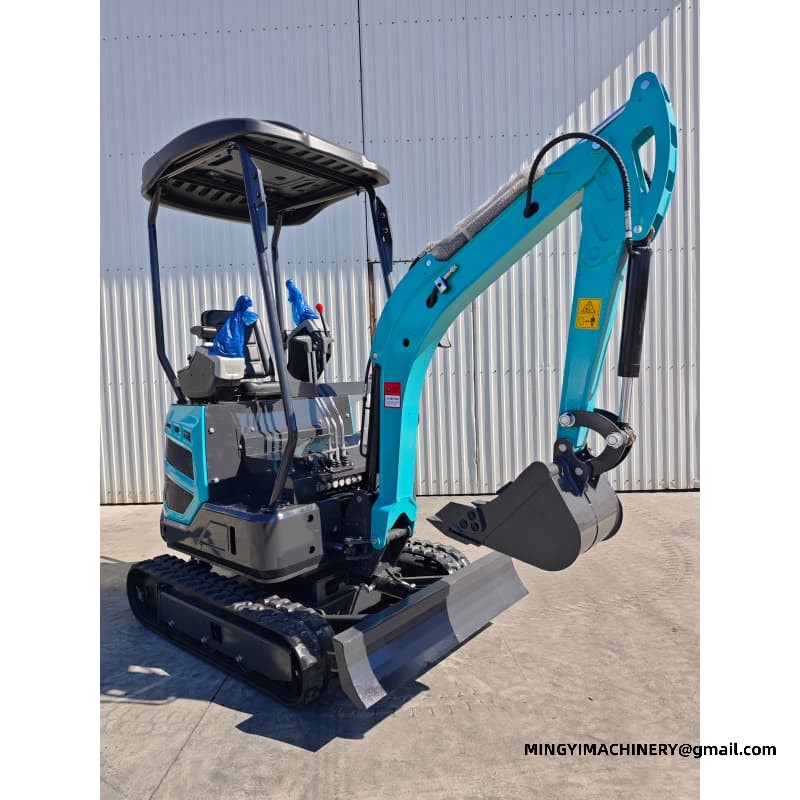
Buyers confirm the class, cab layout and track type at the ordering stage against the ground they work, and the build is recorded against the machine. Landscaping and municipal crews usually choose rubber tracks; harder sites take steel with rubber blocks.
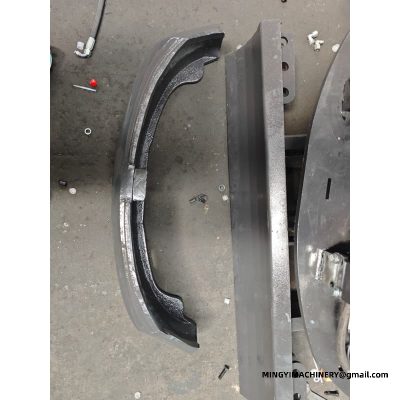
The attachment package, buckets, auger, breaker as needed, is fixed with the same order and coupled through the standard head. Wear parts for the running gear can be ordered as a package.
A daily machine pays its way by being available, and availability comes from simple systems and documented support. MINGYI configures the crawler unit to the buyer's working week and supplies the parts information to keep it running.
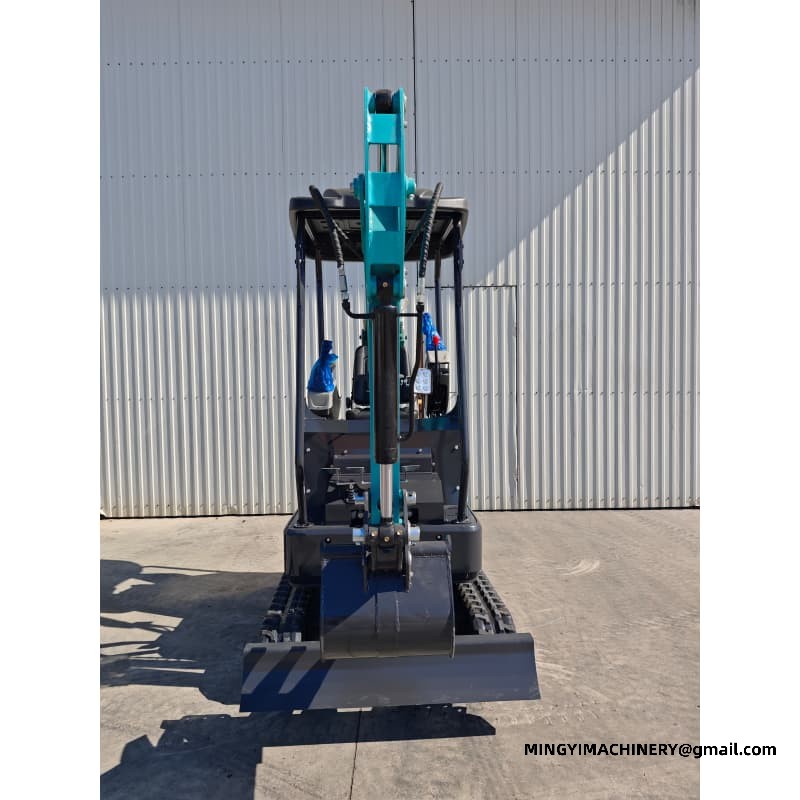
Specifying crawler mini excavator for daily work against a job list The practical way to specify is to write the job list first: the narrowest access, the deepest trench, the heaviest tool and the surfaces the machine must cross. The excavator is then matched to those four numbers. Useful information to send with an enquiry includes working width, required digging depth, ground conditions and the attachment set. Those four items let the factory specify this class of machine that fits rather than a generic build. Hydraulic circuits on a crawler mini excavator for daily work Auxiliary hydraulic lines are what let a machine drive a tool rather than only a bucket. The unit in daily use specified with the right circuits and flow runs a breaker or an auger without an add-on power pack bolted to the frame. Flow and pressure are matched to the tool, not to the machine size. Asking for the attachment list first means a machine of this size leaves the factory with circuits that suit the heaviest tool the buyer intends to run. Road and paving work for crawler mini excavator for daily work Road repair generates short, interrupted jobs - a patch, a drainage connection, a kerb line. The equipment on site is economical here because it travels on a small trailer and starts working minutes after arriving. Breaking out a failed slab and backfilling the same hole in one visit is normal work for the machine itself. The breaker and the bucket come off the same coupler, so the road is reopened the same day. Noise, dust and working near occupied buildings Work near housing or occupied premises brings constraints that open sites do not. Start times, exhaust condition and how often the model in question needs to reverse are the practical limits that neighbours notice. Dust control is often part of the same conversation. Water, timing and work sequence reduce what leaves the site, and agreeing them in advance keeps the machine in that duty working rather than stopped after a complaint. Boom configuration for crawler mini excavator for daily work A swing boom lets the machine dig parallel to its tracks without repositioning, which is what makes trenching beside a wall or a fence practical. On the unit on the job this is often the option that decides whether a job is possible at all. Detachable boom sections are used where transport length matters. A machine built for the work that has to travel on a standard trailer can be built so the arm comes off for the road and goes back on at the site. Daily checks and maintenance on crawler mini excavator for daily work Daily maintenance on the equipment in service is a short list: engine oil level, coolant, track tension, hydraulic oil level and a look at the hoses. Ten minutes at the start of the shift prevents most of the failures that stop a machine. Greasing is the second item. The slew ring, the boom and arm pins and the bucket linkage on the excavator take grease daily in dusty work, and the intervals shorten further when the machine is used in water or mud. Hiring versus owning this class of machine The choice follows the hours. Work that fills a few weeks a year is usually better hired, while the unit in daily use that would be on site most weeks starts to justify ownership once the transport and booking time is counted. Ownership brings obligations that hiring does not. Storage, servicing, insurance and an operator are the items to set against the hire rate before deciding which way a machine of this size should be supplied. Getting the equipment on site through a narrow gap The first question on most job lists is whether the machine can reach the work at all. The machine itself is chosen against the narrowest point on the route - a garden gate, a doorway, a gap between two walls - because a machine that arrives and then cannot pass loses a day, not an hour. Access decides the machine before output does. With the model in question the limiting dimension is usually the widest point on the way in, so measuring the gate, the corridor and the turning space first saves a wasted delivery and a second visit. What owners should plan for beyond the machine in that duty The useful comparison is demand per working hour, not demand per machine. The unit on the job that works more hours a year spreads its standing takes over more output, which is why utilisation usually matters more than the invoice figure. Downtime is the hidden line item. A machine built for the work waiting on a part earns nothing while it stands, so parts availability and service access belong in the plan as much as fuel does. Landscaping and ground care with the equipment in service Grass cutting heads, rakes and tillers extend the excavator into ground care. The same carrier that digs a border in spring can cut and clear the same area later in the season. On soft landscape work the surface is the constraint. This class of machine on rubber tracks crosses turf without stripping it, which is why the same jobs are not given to a wheeled machine. Interior and light demolition with the unit in daily use Breaking out a floor slab, a wall footing or a concrete step is routine work for a machine of this size with a breaker. The machine is small enough to work inside and heavy enough to run the tool at a practical rate. Dust, debris clearance and floor loading all argue for a compact machine indoors. The equipment on site spreads its weight over a wider track footprint than a wheeled machine of similar capacity. Specification data for the machine itself The figures below are the factory figures for the models most often matched to the model in question. They are the numbers to check against the site: the depth the work needs, the reach from one position, and the width of the narrowest point on the route in. Every value shown is as built for the machine in that duty; options such as cab, side swing or a telescopic undercarriage change the transport dimensions and are confirmed at order stage. Digging near water, gas and cable is a precision job. The unit on the job is used here because the operator can work in short controlled cuts and because the machine can be positioned without driving over the run being exposed. Utility crews specify a machine built for the work with a narrow bucket and good visibility for exactly this reason: the machine has to stop at the service, not at the edge of the operator's view.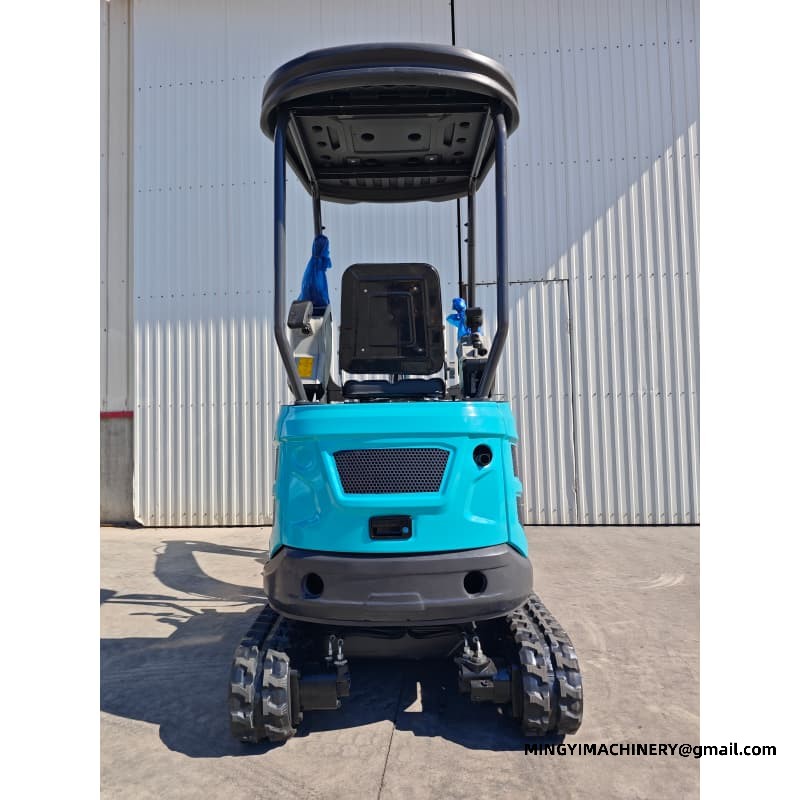
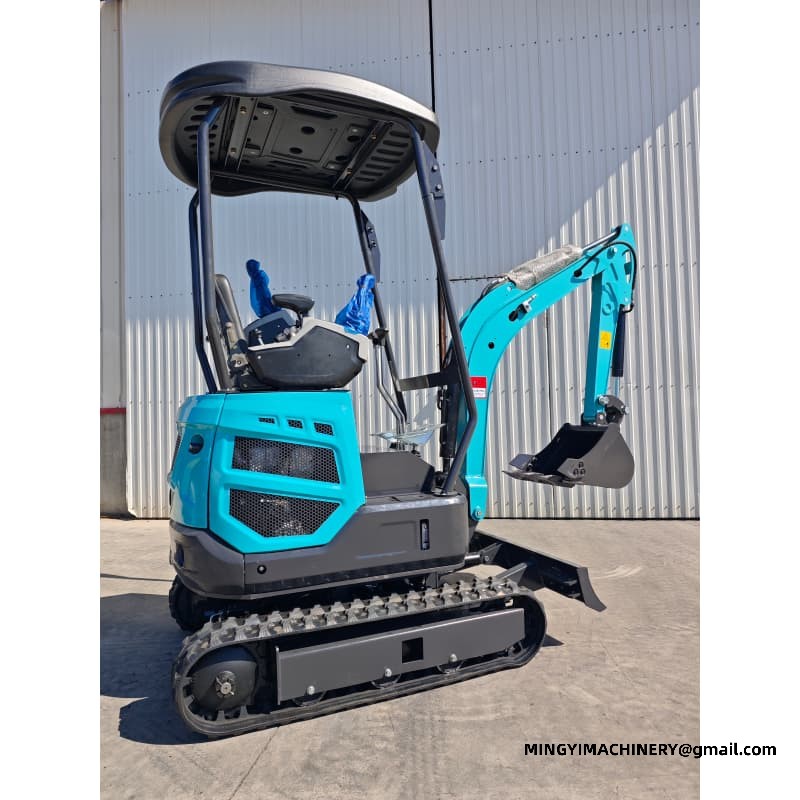
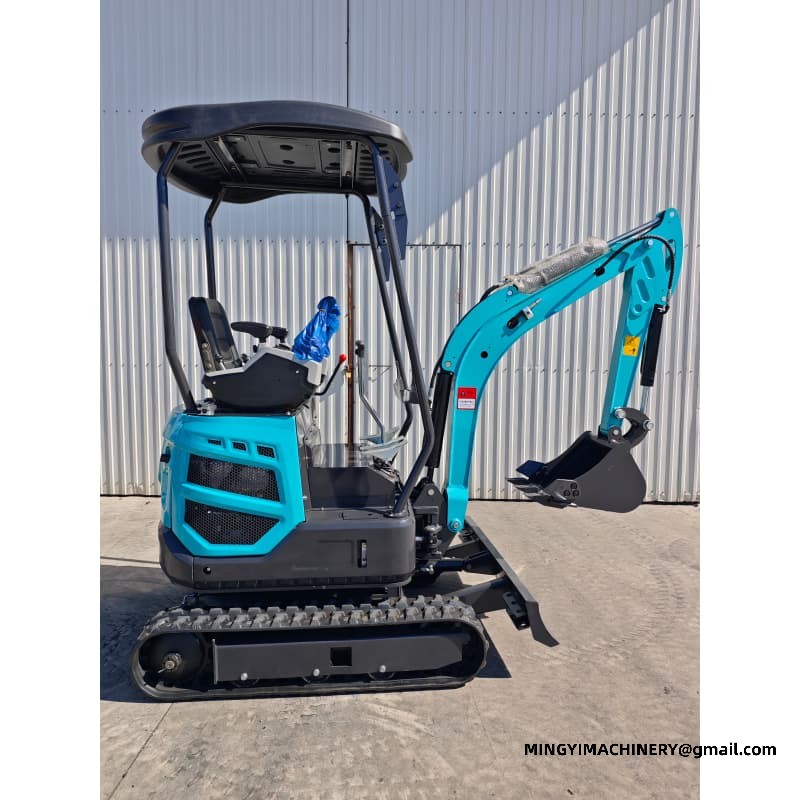
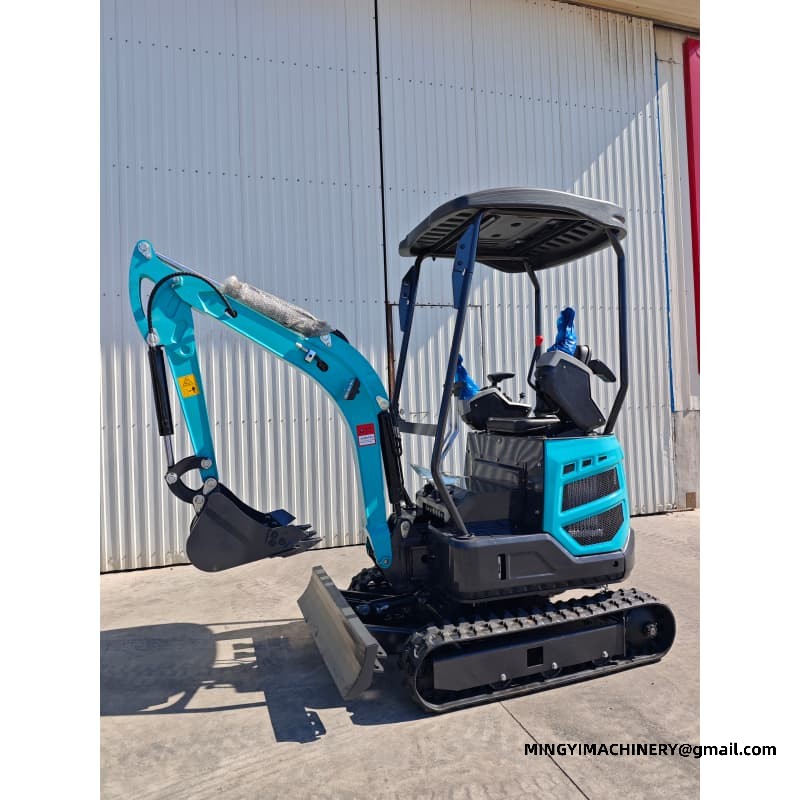
Reference specification — mini excavator range 20-1W 09L 25L 30-2L Operating weight 1800 kg (3968.32 lb) 1100 kg (2425.08 lb) 2200 kg (4850.17 lb) 2400 kg (5291 lb) Transport size (L×W×H) 2550 × 1100 × 2200 mm 2300 × 720 × 1870 mm 3000 × 1300 × 2700 mm 2800 × 1500 × 2500 mm Max digging depth 1800 mm (70.87 in) 1400 mm (55.12 in) 2300 mm (90.55 in) 2200 mm (86.61 in) Max digging height 2820 mm (111.02 in) 2800 mm (110.24 in) 3100 mm (122.05 in) 2900 mm (114.17 in) Max dumping height 2050 mm (80.71 in) 1880 mm (74.02 in) 2050 mm (80.71 in) 2100 mm (82.68 in) Max digging radius 3050 mm (120.08 in) 2490 mm (98.03 in) 3900 mm (153.54 in) 3330 mm (131.1 in) Max digging distance 2300 mm (90.55 in) 2000 mm (78.74 in) 3100 mm (125.05 in) 2700 mm (106.3 in) Minimum turning radius 1450 mm (57.09 in) 1400 mm (55.12 in) 1800 mm (70.87 in) 1555 mm (61.22 in) Travel speed 5 km/h (3.11 mph) 3 km/h (1.86 mph) 7 km/h (4.35 mph) 7 km/h (4.35 mph) Gradeability 30° 30° 30° 30° Fuel consumption 2-3 L/h (0.528—0.793 gal) 1-1.3 L/h (0.264—0.343 gal) 2-3 L/h (0.528—0.793 gal) 2-3 L/h (0.528—0.793 gal) Fuel tank capacity 16 L (4.23 gal) 8 L (2.11 gal) 16 L (4.23 gal) 16 L (4.23 gal) Hydraulic oil tank 18 L (4.76 gal) 16 L (4.23 gal) 18 L (4.76 gal) 18 L (4.76 gal) Dozer blade lift height 180 mm (7.09 in) 180 mm (7.09 in) 230 mm (9.06 in) 230 mm (9.06 in) Dozer blade drop depth 210 mm (8.27 in) 210 mm (8.27 in) 280 mm (11.02 in) 280 mm (11.02 in)
Q. What is the equipment in service?
A. One machine, one trailer, one operator and a full week of varied work is the whole idea behind the compact excavator class. The limit is reach and lift, not willingness: within its envelope the compact machine holds a full-size work rate. MINGYI builds the 08, 12 and 18 models covering the 0.8 to 6 tonne class, and the excavator is where that range meets daily work.
Q. What can I expect from a compact excavator in a normal week?
A. Trenching one day, loading and grading the next, fence posts and drainage through the rest - one machine, one trailer, one operator, and the attachment set specifications the work.
Q. How do I get a specification?
A. Send the model, the destination and the attachment list by email or LINE - the channels listed just below this section. The reply covers the specification, lead time, packing and freight in one document, with the daily work build sheet attached.
Wear items and spares worth holding for this class of machine
A spares list should follow the duty cycle. The unit in daily use working every day in abrasive dust consumes filters and cutting edges far faster than the same machine used once a week, and the shelf should be stocked for the harder case.
Later additions and retrofits on a machine of this size
An added function should pay for itself quickly. Whether the equipment on site gains a different bucket, a hydraulic service or a protection package, the test is the number of days a year it is actually used.
E-mail : sales@mingycn.com
LINE ( ID ): mingyicn
Visibility and blind spots around crawler mini excavator for daily work
Mirrors, cameras and a signal person cover what the seat cannot. Walk the route before the first load and mark the corners where sight is lost.
Reverse alarms and beacons fail quietly, and testing them takes a minute whenever the machine changes site.
Dust, low sun and rain all shorten sight lines, and the sensible response is to slow the cycle rather than to work on memory.
Related pages
lightweight mini digger for backyards · mini excavator for farm land preparation · OEM Wheel Loader Manufacturer: Build Records and Model Mixes · Mini Excavators









