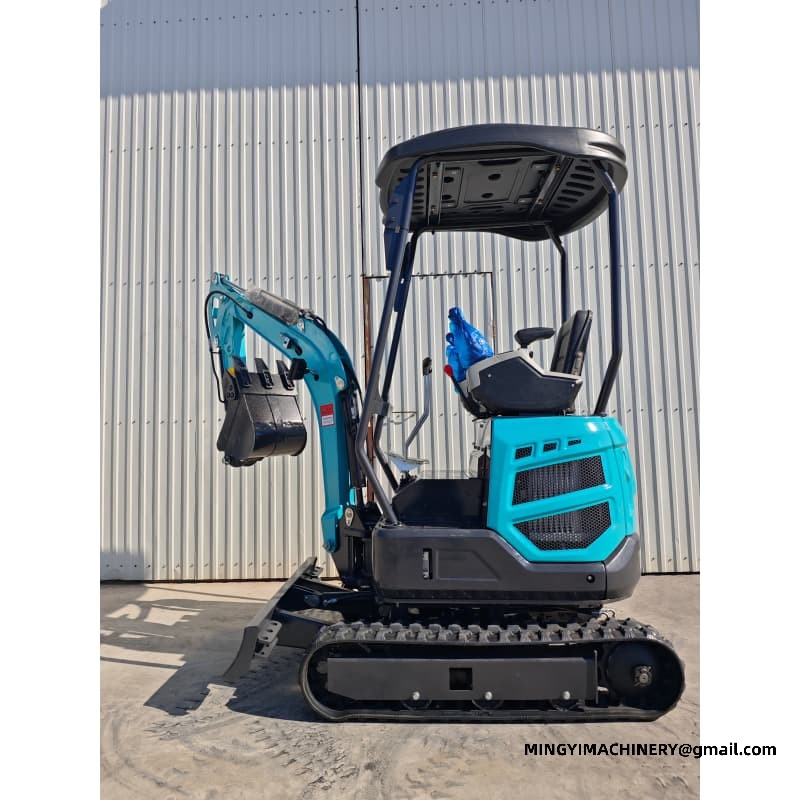
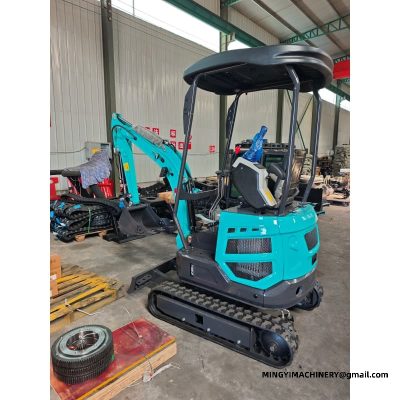
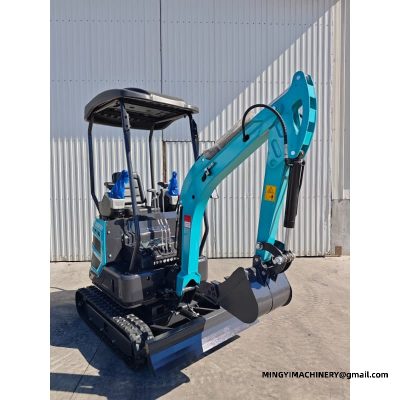
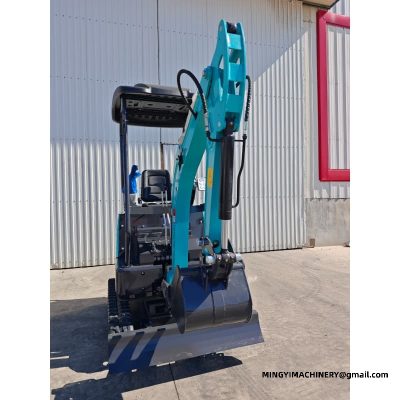
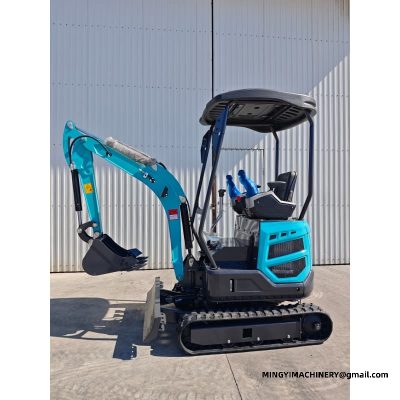
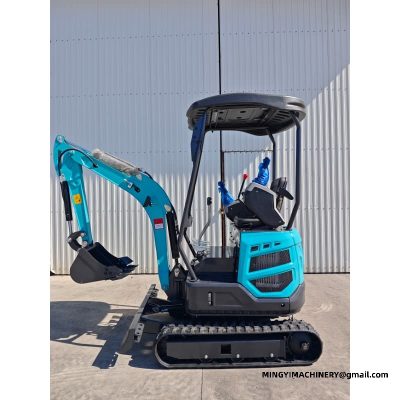
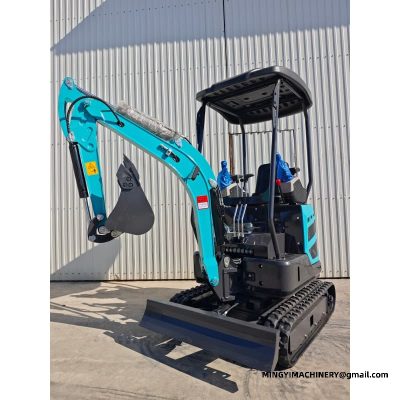
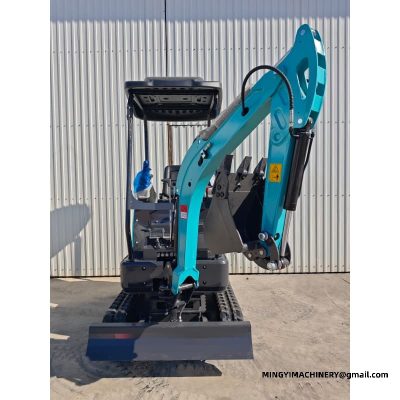
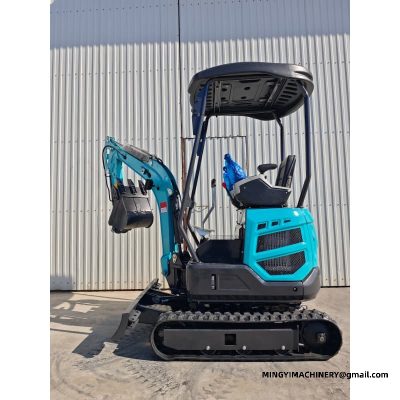
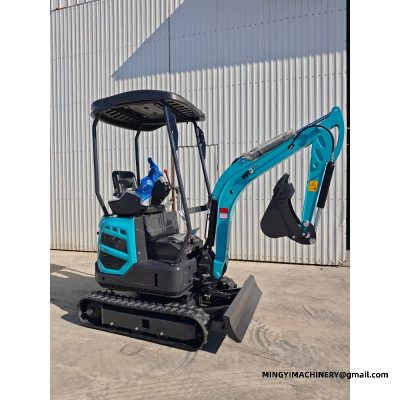
Moving ground is the core job of any excavator, and a compact crawler digger handles it where a larger machine cannot go. Footings, plots and access routes are all shaped by a carrier that can cut, carry and place spoil.
MINGYI builds mini crawler excavators for earthmoving work and supplies them to order. The machine class, the bucket and the tracks are set at ordering to suit the ground and the job it will take on.
Earthmoving with a compact crawler machine
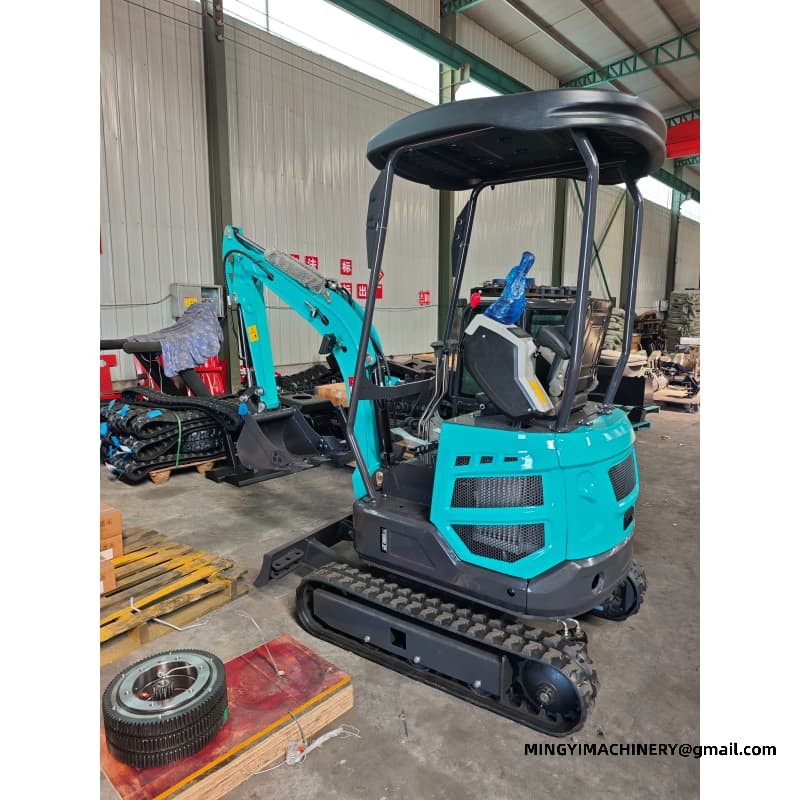
On a small plot the work is a sequence: cut the high ground, carry the spoil and place it where the level needs raising. A compact machine can do all three without a separate dumper if the haul is short.
The bucket chosen for the ground makes the difference, with a toothed edge for firm material and a smooth edge for soft soil. Matching that to the site keeps the cycle times steady.
Setting the machine up for ground work
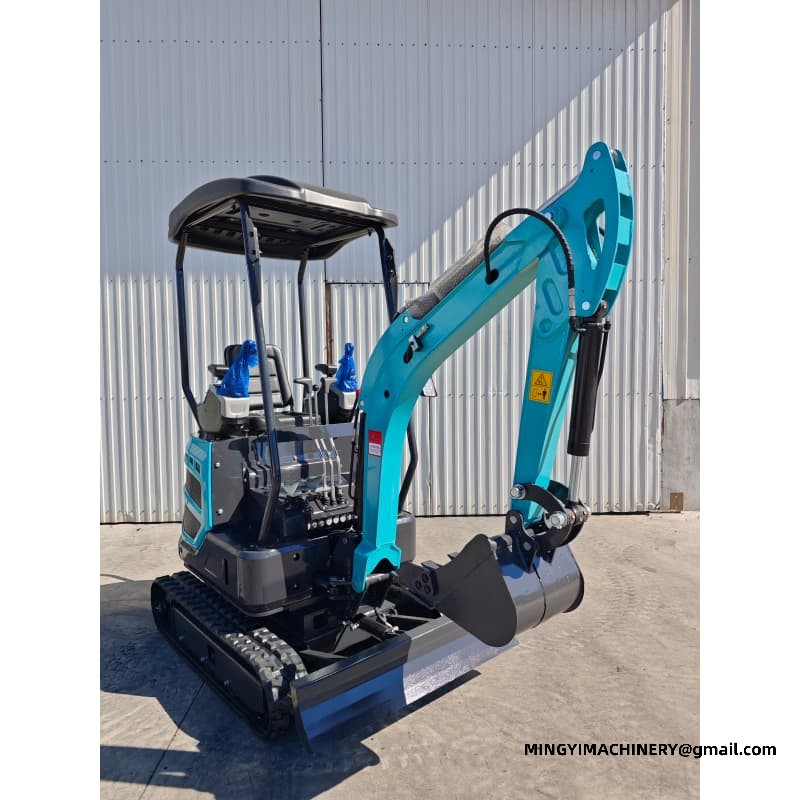
Rubber tracks suit routes that cross paving or grass, while steel tracks with rubber blocks give grip on firmer ground. The choice is noted with the order and follows the surface the machine uses.
A grading bucket levels the finished surface, and a tilting bucket allows the edge to be held flat on uneven ground. Both are matched to the coupler so the operator can change quickly.
Machine class, bucket and track type are the choices an earthmoving order rests on. Settling them during ordering is what gives the carrier the cutting and carrying balance the ground demands.
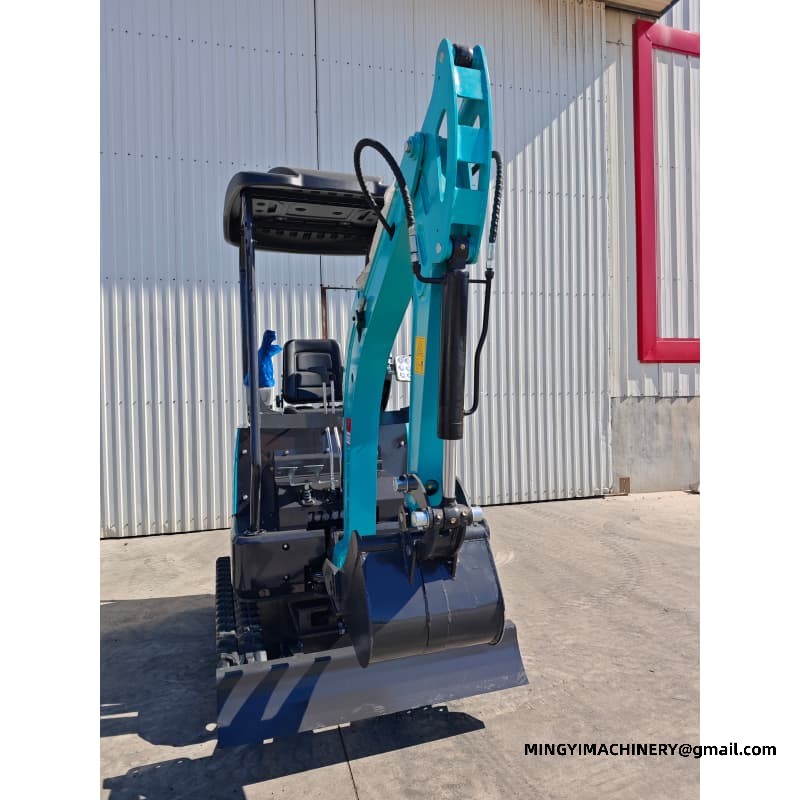
Interior and light demolition with mini crawler digger for earthmoving Interior demolition is an access and a weight question. The excavator that fits through a doorway and works on a suspended floor does jobs that would otherwise be done by hand or by a larger machine that cannot enter. Dust, debris clearance and floor loading all argue for a compact machine indoors. This class of machine spreads its weight over a wider track footprint than a wheeled machine of similar capacity. Boom configuration for mini crawler digger for earthmoving A swing boom lets the machine dig parallel to its tracks without repositioning, which is what makes trenching beside a wall or a fence practical. On the unit in daily use this is often the option that decides whether a job is possible at all. Detachable boom sections are used where transport length matters. A machine of this size that has to travel on a standard trailer can be built so the arm comes off for the road and goes back on at the site. Lifting and material handling with a mini crawler digger for earthmoving Lifting with a machine built to dig needs a plan. The load, the radius and the ground under the machine itself all matter, and the safe figure is the one on the chart rather than the one that looks possible. Ground condition under the machine is part of every lift. Soft or uneven support is the common factor in handling incidents, and checking it takes less time than recovering the equipment on site that has settled. Track choice for mini crawler digger for earthmoving Undercarriage selection is a ground question, not a preference question. The model in question running on finished paving needs rubber; the same machine on demolition rubble or rock wears rubber quickly, so steel with rubber blocks becomes the better answer over a full season. Track type changes what the machine can cross and what it leaves behind. Buyers specify rubber for lawns, driveways and municipal work, and steel with rubber blocks for sites where sharp material would cut a rubber belt in a week. Acceptance checks when a mini crawler digger for earthmoving arrives Delivery day is the best time to find a problem. Checking the specification against the order, the fluid levels, the fasteners and any transport damage while the unit on the job is still on the trailer is faster than claiming later. Documentation should arrive with the machine. Parts list, service schedule and any certificates for the machine in that duty are what the workshop needs later, and they are much easier to obtain at delivery than in month six. Working on slopes and uneven ground with mini crawler digger for earthmoving Slope work is a stability question before it is a traction question. Knowing the gradient a machine built for the work is rated for, and working across rather than straight up where the ground allows, removes most of the risk. Planning the direction of travel helps. Working so that the equipment in service is stable under load and not required to turn on a slope is a decision made before the job starts, not a correction made during it. Matching the excavator to ground conditions Soft ground is a flotation problem, not a power problem. This class of machine on wide rubber tracks crosses lawn, sand and cultivated soil that would stop a narrower machine or a wheeled unit of the same capacity. Mixed sites are common and argue for a compromise specification. Most buyers choose rubber for the unit in daily use and accept the wear, unless the majority of the work is on material that will damage it. Engine options behind a machine of this size Power unit selection is settled against the service network the buyer already uses. MINGYI offers Kubota D722, Kubota D902, YANMAR, Changchai, Laidong, Runtong, YARMAX, Youpu 2V80 and Youpu 195, so a fleet running one brand of engine can keep the same filters, the same parts supplier and the same mechanic. Two buyers can order the same the equipment on site and receive different engines. The decision is rarely about peak power; it is about which parts counter is closest to the site and which engine the local mechanic already knows. Road and paving work for the machine itself Road repair generates short, interrupted jobs - a patch, a drainage connection, a kerb line. The model in question is economical here because it travels on a small trailer and starts working minutes after arriving. Breaking out a failed slab and backfilling the same hole in one visit is normal work for the machine in that duty. The breaker and the bucket come off the same coupler, so the road is reopened the same day. OEM and fleet customisation of the unit on the job Distributors and rental fleets usually need the machine to look like theirs. Paint, decals, seat colour and attachment branding can be specified on a machine built for the work at build time rather than applied after import. Customisation also covers the specification sheet. A fleet buyer may want every equipment in service delivered with the same coupler, the same engine and the same tool kit so training and parts stock stay simple. Trailering and moving the excavator Transport weight and width decide whether a machine needs a specialist haulier. This class of machine sized to travel on a standard plant trailer behind a suitable vehicle moves with the crew rather than on a scheduled low loader. Loading practice matters as much as the numbers. The unit in daily use is driven up ramps under its own power with the boom lowered and the tracks aligned, and secured at the points the manufacturer specifies. Specification data for a machine of this size Where the equipment on site is being specified for a job list, the table below gives the factory figures that matter most: what the machine weighs, how deep and how far it works, and what it measures on a trailer. These are the reference figures for the machine itself. MINGYI confirms the final build sheet, including engine and attachment choices, against the destination and the job list before production. Attachment lists are best written before delivery. Specifying the model in question with the tools the job list needs avoids the work and delay of adding hydraulics later, and a quick coupler makes the swap a few minutes instead of a workshop job. Most of the daily variety on the machine in that duty comes from the attachment rack rather than from the machine itself. Bucket, breaker, auger, ripper, rake and grab cover the large majority of the work a contractor will see.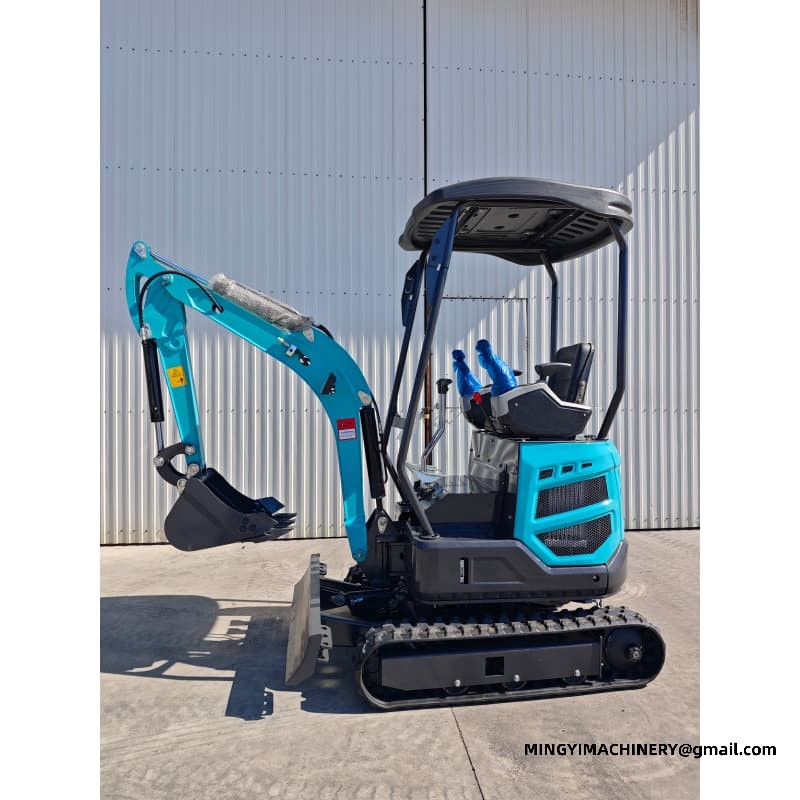
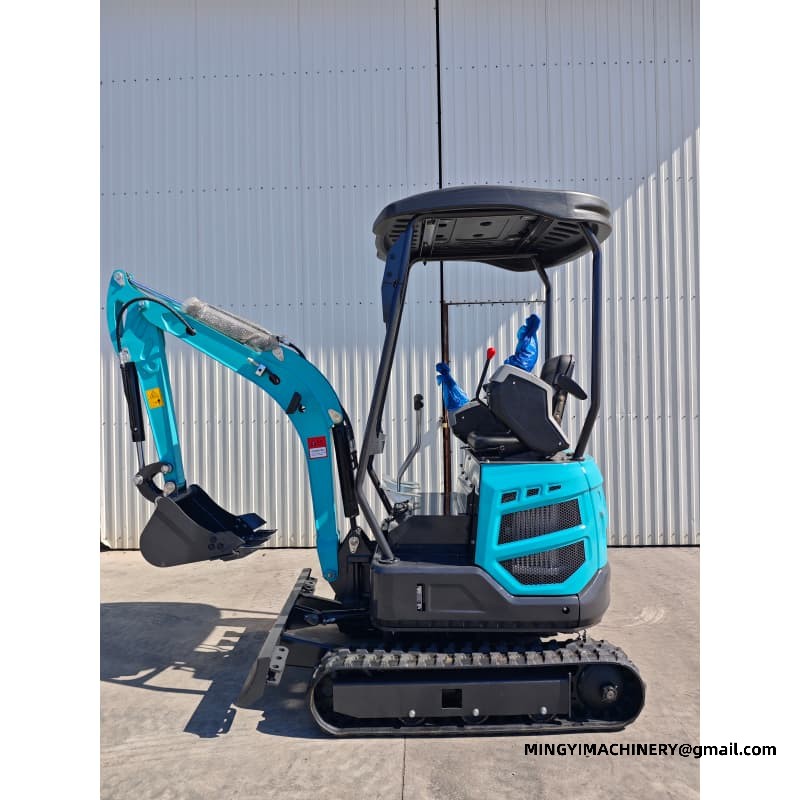
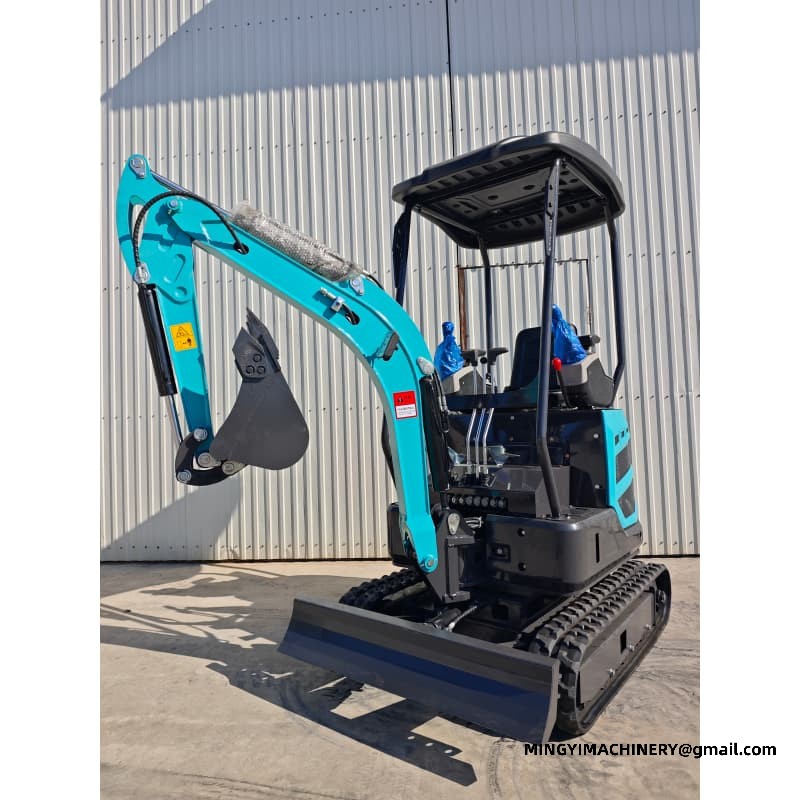
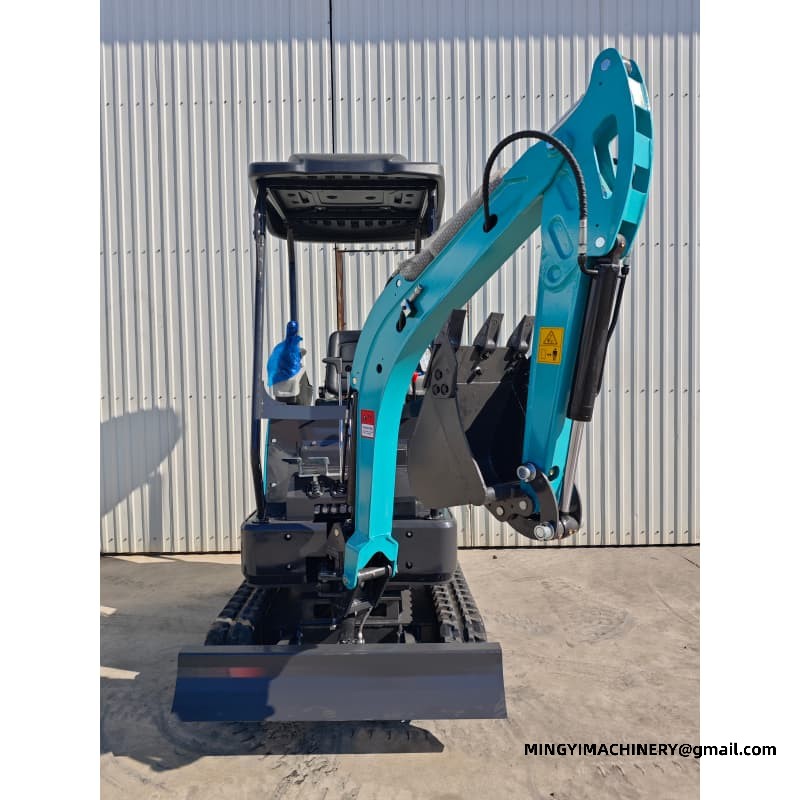
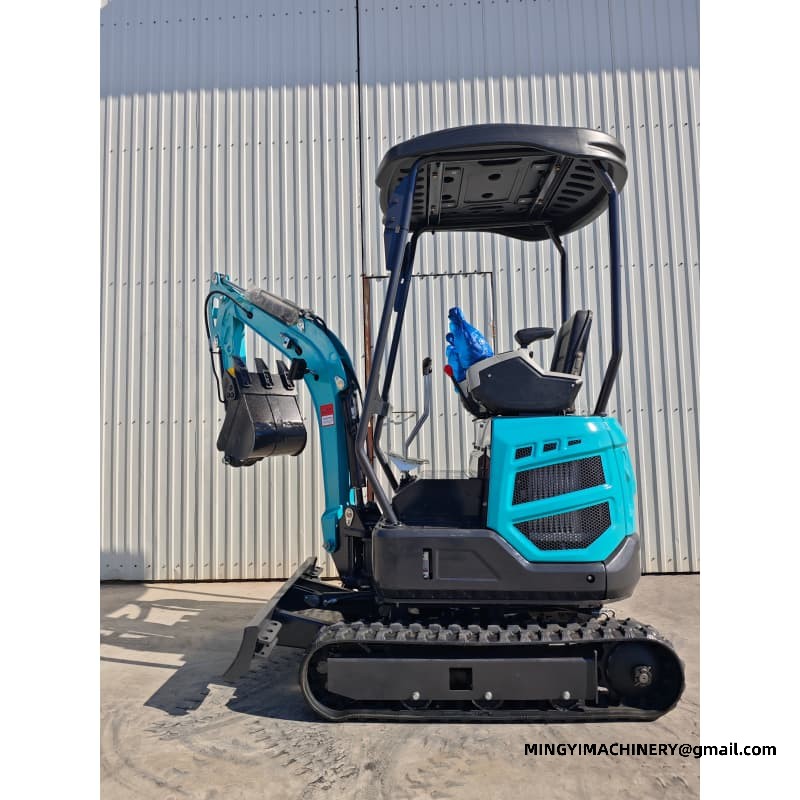
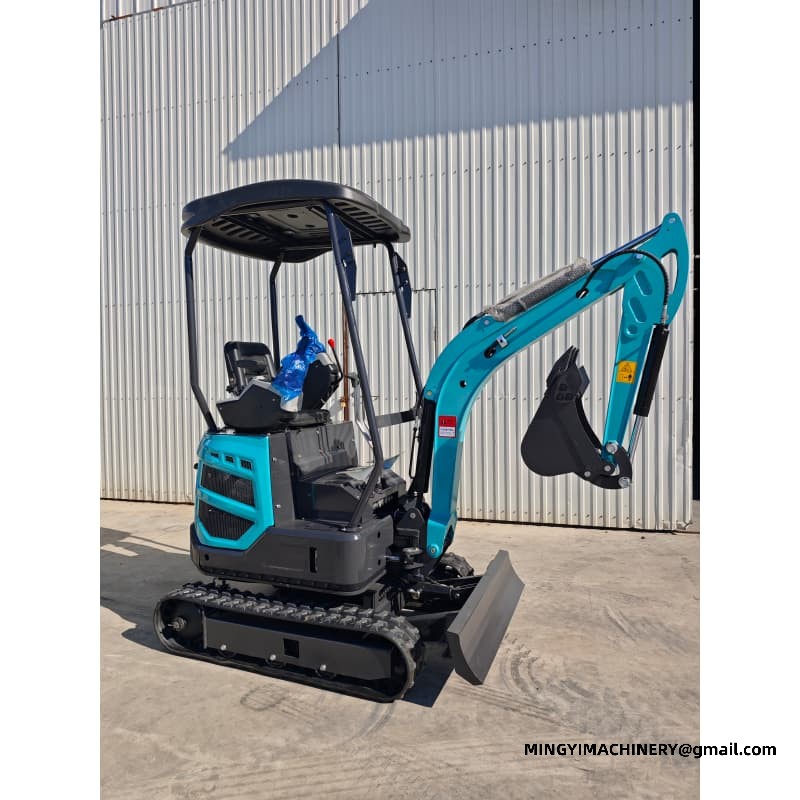
Reference specification — mini excavator range 12W 20-1W 09L 12L Operating weight 1200 kg (2645.55 lb) 1800 kg (3968.32 lb) 1100 kg (2425.08 lb) 1200 kg (2645.55 lb) Transport size (L×W×H) 2200 × 930 × 2250 mm 2550 × 1100 × 2200 mm 2300 × 720 × 1870 mm 2200 × 930 × 2250 mm Max digging depth 1630 mm (64.17 in) 1800 mm (70.87 in) 1400 mm (55.12 in) 1700 mm (66.93 in) Max digging height 2750 mm (108.27 in) 2820 mm (111.02 in) 2800 mm (110.24 in) 2600 mm (102.36 in) Max dumping height 1960 mm (77.17 in) 2050 mm (80.71 in) 1880 mm (74.02 in) 1800 mm (70.87 in) Max digging radius 2900 mm (114.17 in) 3050 mm (120.08 in) 2490 mm (98.03 in) 2900 mm (114.17 in) Max digging distance 2100 mm (82.68 in) 2300 mm (90.55 in) 2000 mm (78.74 in) 2300 mm (90.55 in) Minimum turning radius 1300 mm (51.18 in) 1450 mm (57.09 in) 1400 mm (55.12 in) 1450 mm (57.09 in) Travel speed 3 km/h (1.86 mph) 5 km/h (3.11 mph) 3 km/h (1.86 mph) 3 km/h (1.86 mph) Gradeability 30° 30° 30° 30° Fuel consumption 1-1.3 L/h (0.264—0.343 gal) 2-3 L/h (0.528—0.793 gal) 1-1.3 L/h (0.264—0.343 gal) 1-1.3 L/h (0.264—0.343 gal) Fuel tank capacity 10 L (2.64 gal) 16 L (4.23 gal) 8 L (2.11 gal) 10 L (2.64 gal) Hydraulic oil tank 16 L (4.23 gal) 18 L (4.76 gal) 16 L (4.23 gal) 16 L (4.23 gal) Dozer blade lift height 180 mm (7.09 in) 180 mm (7.09 in) 180 mm (7.09 in) 180 mm (7.09 in) Dozer blade drop depth 210 mm (8.27 in) 210 mm (8.27 in) 210 mm (8.27 in) 210 mm (8.27 in)
Q. What is the unit on the job?
A. Civil small-works crews need one compact machine that digs, lifts and places across a full shift of varied tasks, often next to live traffic. A swing boom reaches the line while the carrier stays off the carriageway. Read a machine built for the work together with the engine, track and attachment pages: jobs around earthmoving are decided by how those choices line up, not by any single number on the sheet.
Q. Can it handle foundations and retaining walls?
A. Footing trenches, drainage behind the wall and placement of blocks are all compact-class work; read the page with the attachment list and the build covers the job end to end.
Q. What support follows the sale?
A. Spare-part kits, wear items and service documentation ship with the programme, and the parts team works from the serial plate to match components exactly. Warranty and support terms for the earthmoving order are confirmed in writing before the machine leaves.
Moving the equipment in service between sites
A machine that works on one site still has to reach the next. The overall dimensions and the operating weight of the excavator decide what trailer or truck is needed, and that decision belongs before the job is booked.
Pre-delivery inspection before this class of machine leaves the shop
A machine should be inspected while it is still on our floor rather than after it lands. For the unit in daily use that means the engine is run to temperature, the hydraulics are cycled through full travel, and every function is checked against the build sheet before the crate is closed.
Packing, loading and shipment of a machine of this size
Container loading is a planning exercise. The overall dimensions and the operating weight of the equipment on site decide whether it ships whole, partly disassembled or with the attachment removed, and that decision is made before the booking.
E-mail : sales@mingycn.com
LINE ( ID ): mingyicn
Visibility and blind spots around mini crawler digger for earthmoving
Mirrors, cameras and a signal person cover what the seat cannot. Walk the route before the first load and mark the corners where sight is lost.
Glass, wipers and mirrors are safety items rather than comfort items, and they belong on the daily walk-around with the lights and the horn.
Related pages
mini excavator for soft landscape work · mini digger for long working shifts · Wheel Loader Log Grapple: Grapple Loads and Hinge Steel · Mini Excavators









