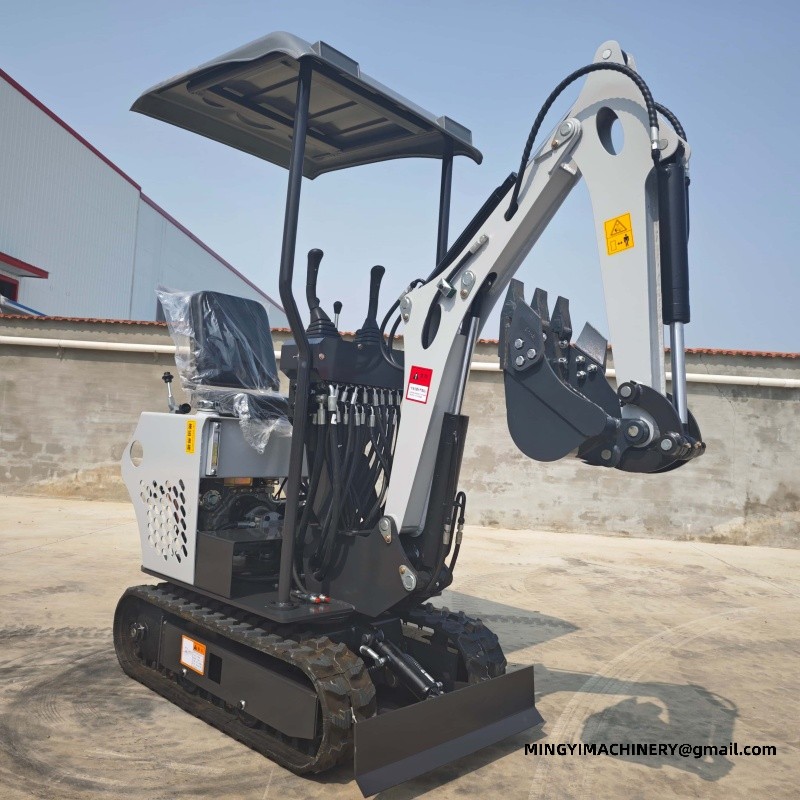
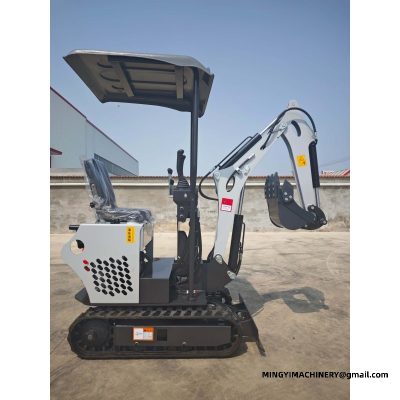
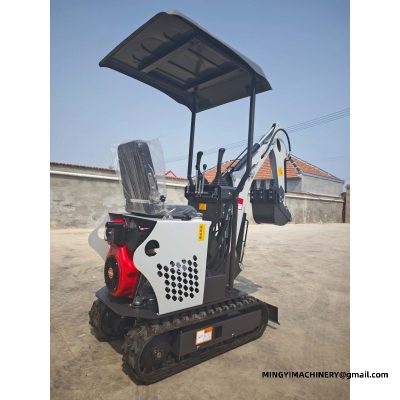
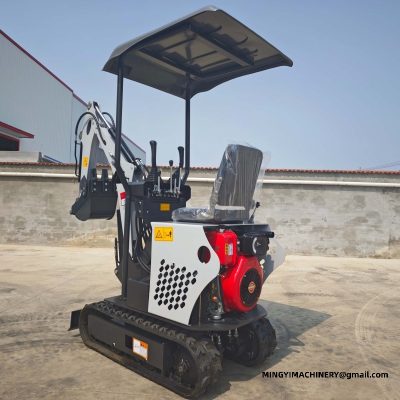
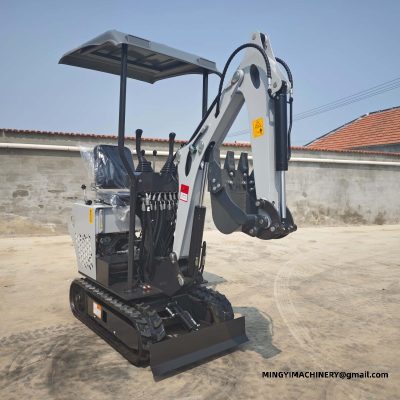
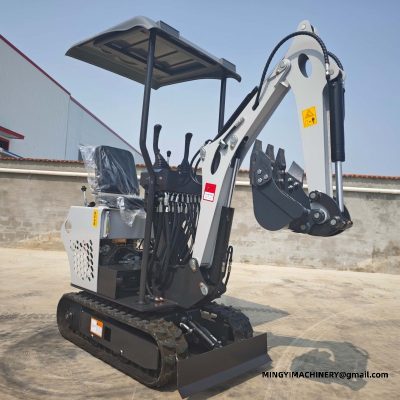
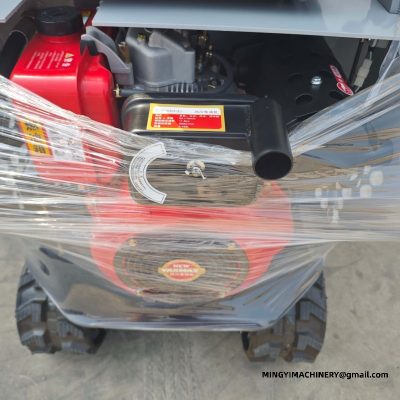
A distributor takes on more than a product when it agrees to sell compact excavators. The machine has to be supported after it leaves the yard, and that support is what keeps a dealer's customers coming back for the next unit.
MINGYI supplies mini crawler excavators to distributors with the aim of making that after-sales work manageable, from the build record through to the spare parts a workshop will need.
What distributor support covers
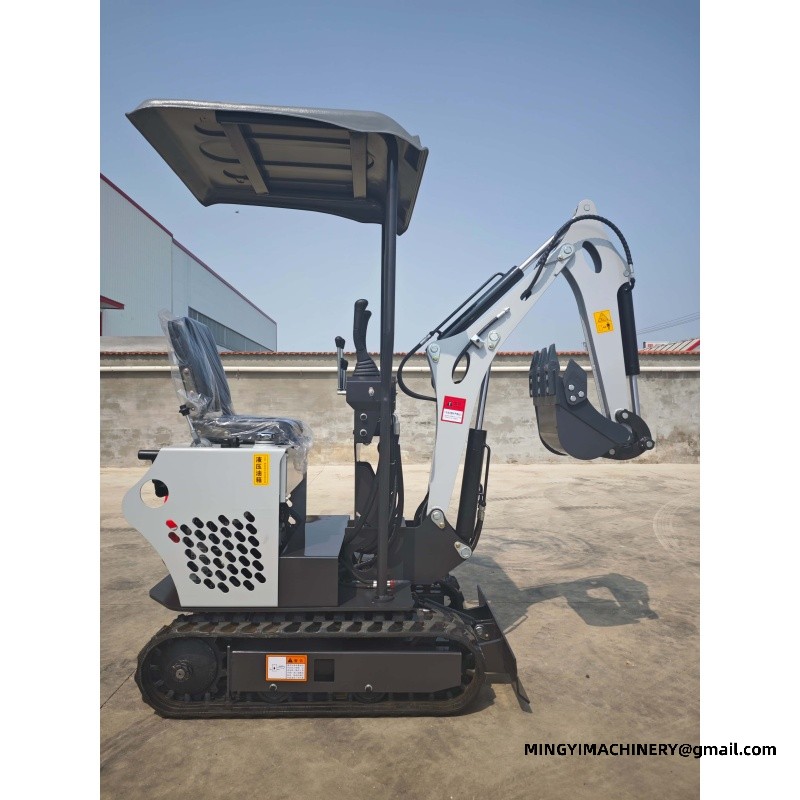
Distributor support starts with documentation. A clear specification sheet and a parts list let a distributor's own workshop understand a machine without contacting the factory for every question, which shortens the time a unit spends off hire.
It continues with a consistent build. When every machine of a given configuration is assembled the same way, a distributor's technician learns the layout once and applies that knowledge across the fleet.
Keeping a distributor fleet running
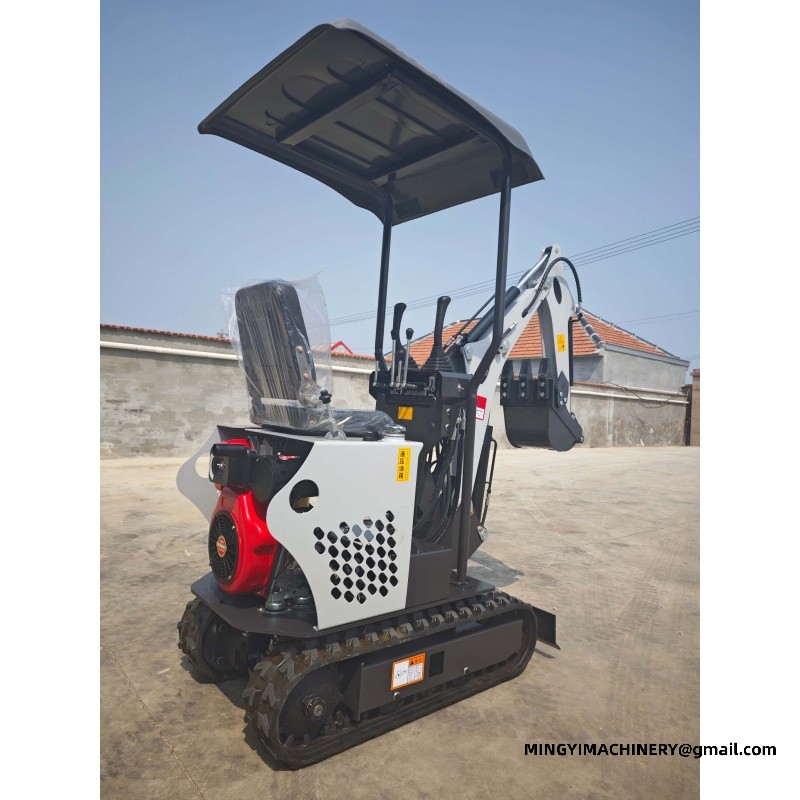
Fleet uptime depends on wear parts being available before they fail. Tracks, bucket teeth, pins and filters are the items a distributor's customers ask for most, and planning for them at the ordering stage keeps a service bay productive.
A distributor also benefits from knowing which attachments were fitted to which unit. When a machine is sold on or moved between owners, the recorded specification makes it clear what will fit without a trial fitting.
Support is not a separate service bolted on after the sale. For a distributor it is the difference between selling a machine once and building a customer who returns for the next one.
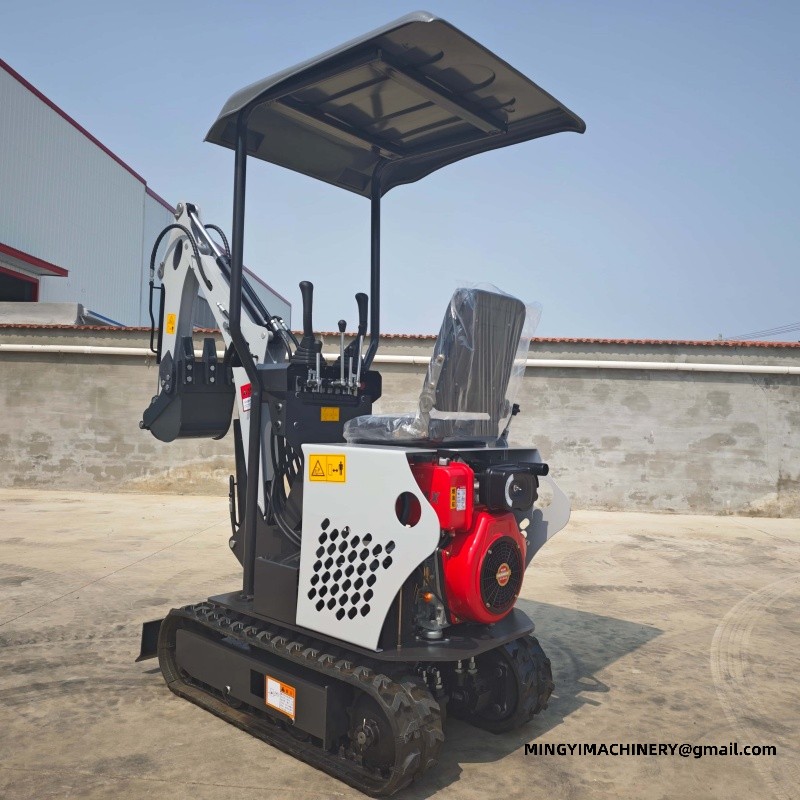
Trenching work with mini excavator distributor support Service trenches are the most common reason the excavator is hired. Water, sewage, cable and gas runs are narrow, shallow and often close to existing services, which is exactly the work a full-size machine cannot do safely. Trench quality depends on the bucket width and the operator, not on machine size. This class of machine with a narrow bucket and a swing boom cuts a clean run along a boundary without disturbing the ground either side of it. Parts, service and support for mini excavator distributor support Support after delivery is a parts question. Wearing items for the unit in daily use - filters, belts, track components, bucket teeth and pins - are the items a buyer should plan to hold before the first service interval. Remote support is handled by video. A machine of this size fault can often be diagnosed on a walk-around call with the panel open, which is faster than waiting for a visit and avoids shipping a part that is not needed. Specifying mini excavator distributor support against a job list The practical way to specify is to write the job list first: the narrowest access, the deepest trench, the heaviest tool and the surfaces the machine must cross. The equipment on site is then matched to those four numbers. Buyers who skip this step either over-buy or under-buy. The machine itself specified only from machine size tends to arrive without the coupler, the circuits or the track type the work actually needs. Daily checks and maintenance on mini excavator distributor support Track tension is the item most often neglected. The model in question run with slack tracks wears the undercarriage and can throw a track on a turn; run too tight, the same components wear from the other direction. Greasing is the second item. The slew ring, the boom and arm pins and the bucket linkage on the machine in that duty take grease daily in dusty work, and the intervals shorten further when the machine is used in water or mud. Lifting and material handling with a mini excavator distributor support Stability changes with reach. A load the unit on the job handles close in becomes a different proposition at full extension, so the working radius belongs in the plan before the lift rather than during it. Ground condition under the machine is part of every lift. Soft or uneven support is the common factor in handling incidents, and checking it takes less time than recovering a machine built for the work that has settled. Getting mini excavator distributor support through a narrow gap The first question on most job lists is whether the machine can reach the work at all. The equipment in service is chosen against the narrowest point on the route - a garden gate, a doorway, a gap between two walls - because a machine that arrives and then cannot pass loses a day, not an hour. Access decides the machine before output does. With the excavator the limiting dimension is usually the widest point on the way in, so measuring the gate, the corridor and the turning space first saves a wasted delivery and a second visit. Acceptance checks when this class of machine arrives Delivery day is the best time to find a problem. Checking the specification against the order, the fluid levels, the fasteners and any transport damage while the machine of this size is still on the trailer is faster than claiming later. Documentation should arrive with the machine. Parts list, service schedule and any certificates for the unit in daily use are what the workshop needs later, and they are much easier to obtain at delivery than in month six. Working on slopes and uneven ground with the equipment on site Slope work is a stability question before it is a traction question. Knowing the gradient the machine itself is rated for, and working across rather than straight up where the ground allows, removes most of the risk. Planning the direction of travel helps. Working so that the model in question is stable under load and not required to turn on a slope is a decision made before the job starts, not a correction made during it. Attachments that turn the machine in that duty into several machines The base machine is a carrier; the tool on the end of the arm decides the task. The unit on the job fitted with a toothed bucket digs, and the same machine with a breaker, an auger or a grab does work that would otherwise need a second unit on site. Most of the daily variety on a machine built for the work comes from the attachment rack rather than from the machine itself. Bucket, breaker, auger, ripper, rake and grab cover the large majority of the work a contractor will see. Landscaping and ground care with the equipment in service Grass cutting heads, rakes and tillers extend the excavator into ground care. The same carrier that digs a border in spring can cut and clear the same area later in the season. On soft landscape work the surface is the constraint. This class of machine on rubber tracks crosses turf without stripping it, which is why the same jobs are not given to a wheeled machine. Interior and light demolition with the unit in daily use Interior demolition is an access and a weight question. A machine of this size that fits through a doorway and works on a suspended floor does jobs that would otherwise be done by hand or by a larger machine that cannot enter. Breaking out a floor slab, a wall footing or a concrete step is routine work for the equipment on site with a breaker. The machine is small enough to work inside and heavy enough to run the tool at a practical rate. Municipal and public works with the machine itself Municipal crews work on streets, footpaths and parks where the public is present. The model in question is specified because it occupies little space, works inside a small exclusion zone and can be moved on a standard trailer. Noise and surface protection matter on public work. The machine in that duty on rubber tracks across paving, with a sealed cab for the operator, suits the conditions better than a larger tracked machine. Specification data for the unit on the job The figures below are the factory figures for the models most often matched to a machine built for the work. They are the numbers to check against the site: the depth the work needs, the reach from one position, and the width of the narrowest point on the route in. These are the reference figures for the equipment in service. MINGYI confirms the final build sheet, including engine and attachment choices, against the destination and the job list before production. Road repair generates short, interrupted jobs - a patch, a drainage connection, a kerb line. The excavator is economical here because it travels on a small trailer and starts working minutes after arriving. Breaking out a failed slab and backfilling the same hole in one visit is normal work for this class of machine. The breaker and the bucket come off the same coupler, so the road is reopened the same day.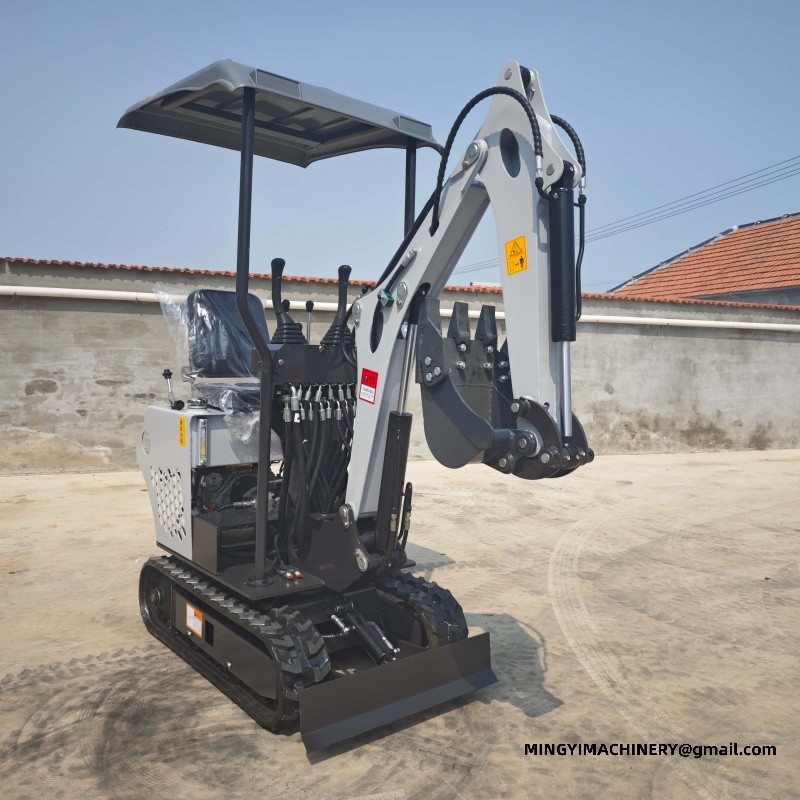
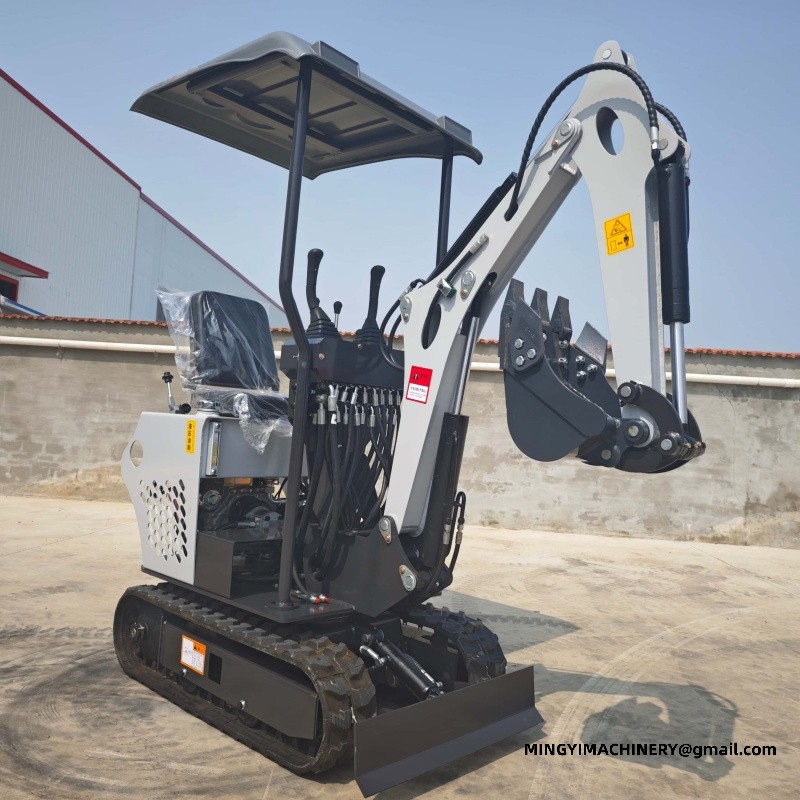
Reference specification — mini excavator range 30-1W 09L 15L 30-2L Operating weight 2900 kg (6393.41 lb) 1100 kg (2425.08 lb) 1400 kg (3086.47 lb) 2400 kg (5291 lb) Transport size (L×W×H) 3000 × 1250 × 2780 mm 2300 × 720 × 1870 mm 2200 × 930 × 2250 mm 2800 × 1500 × 2500 mm Max digging depth 2200 mm (86.61 in) 1400 mm (55.12 in) 1700 mm (66.93 in) 2200 mm (86.61 in) Max digging height 3400 mm (133.86 in) 2800 mm (110.24 in) 2750 mm (108.27 in) 2900 mm (114.17 in) Max dumping height 2400 mm (94.49 in) 1880 mm (74.02 in) 1960 mm (77.17 in) 2100 mm (82.68 in) Max digging radius 4000 mm (157.48 in) 2490 mm (98.03 in) 2900 mm (114.17 in) 3330 mm (131.1 in) Max digging distance 2800 mm (110.24 in) 2000 mm (78.74 in) 2300 mm (90.55 in) 2700 mm (106.3 in) Minimum turning radius 2000 mm (78.74 in) 1400 mm (55.12 in) 1450 mm (57.09 in) 1555 mm (61.22 in) Travel speed 5 km/h (3.11 mph) 3 km/h (1.86 mph) 3 km/h (1.86 mph) 7 km/h (4.35 mph) Gradeability 30° 30° 30° 30° Fuel consumption 2-3 L/h (0.528—0.793 gal) 1-1.3 L/h (0.264—0.343 gal) 1-1.3 L/h (0.264—0.343 gal) 2-3 L/h (0.528—0.793 gal) Fuel tank capacity 16 L (4.23 gal) 8 L (2.11 gal) 10 L (2.64 gal) 16 L (4.23 gal) Hydraulic oil tank 20 L (5.28 gal) 16 L (4.23 gal) 16 L (4.23 gal) 18 L (4.76 gal) Dozer blade lift height 420 mm (16.54 in) 180 mm (7.09 in) 180 mm (7.09 in) 230 mm (9.06 in) Dozer blade drop depth 210 mm (8.27 in) 210 mm (8.27 in) 210 mm (8.27 in) 280 mm (11.02 in)
Q. What does the unit in daily use involve?
A. Export supply is a programme, not a transaction: build specification, packing, documents and parts support have to line up before the machine sails. Mixed-model orders and staged deliveries are routine for dealer and importer programmes, with documents and inspection arranged with the order. MINGYI builds the 08, 12 and 18 models covering the 0.8 to 6 tonne class, and a machine of this size is where that range meets distributor support.
Q. How do I start an order?
A. Send the models, quantities and destination by email or LINE. The factory replies with lead time, packing and freight terms in one specification, and documentation and inspection are arranged at the same time so the shipment and the paperwork travel together.
Q. What support follows the sale?
A. Spare-part kits, wear items and service documentation ship with the programme, and the parts team works from the serial plate to match components exactly. Warranty and support terms for the distributor support order are confirmed in writing before the machine leaves.
Documents that travel with the equipment on site
The machine is only half of what arrives. The parts book, the service schedule and the declarations that come with the machine itself are what let the owner register, insure and maintain it without a second round of emails.
Cold weather and winter care for the model in question
Winter is hard on rubber and on seals as much as on the engine. Parking the machine in that duty under cover, keeping the tracks or tyres off standing water and checking the hoses for cracking are all part of the season.
E-mail : sales@mingycn.com
LINE ( ID ): mingyicn
Related pages
mini excavator private label · mini excavator export supplier · Loader Machine for Construction: Specifying for Site Cycles · Mini Excavators









