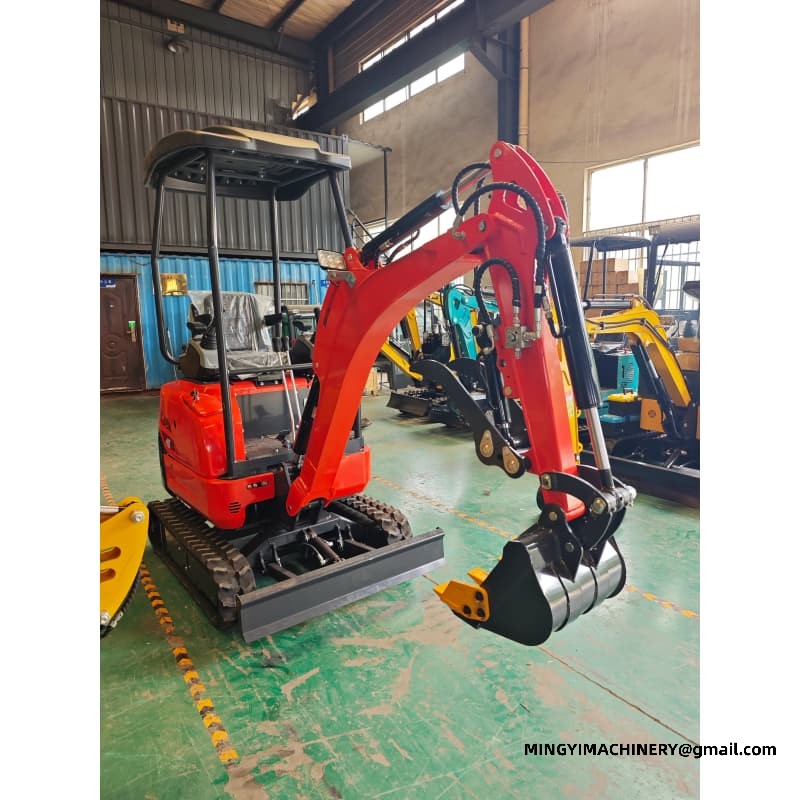
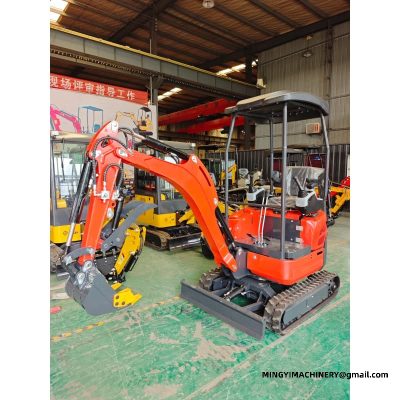
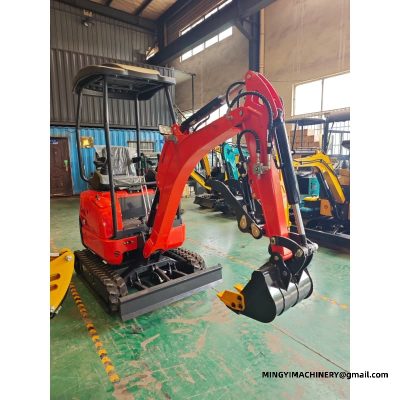
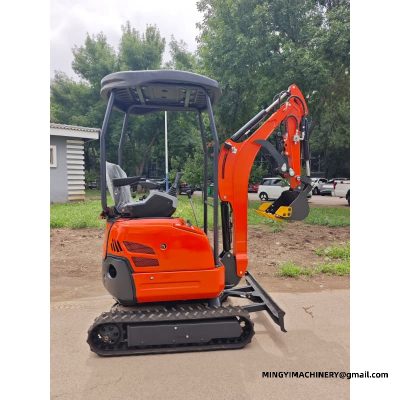
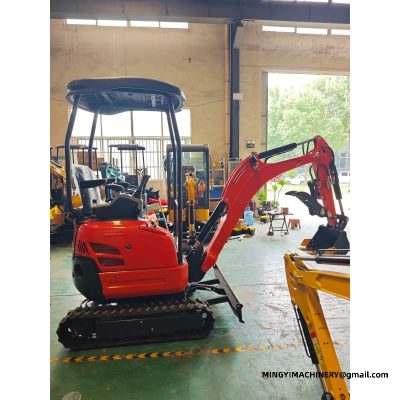
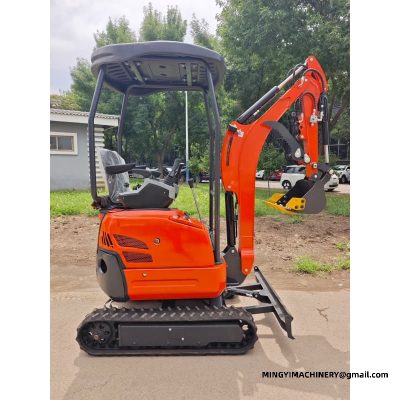
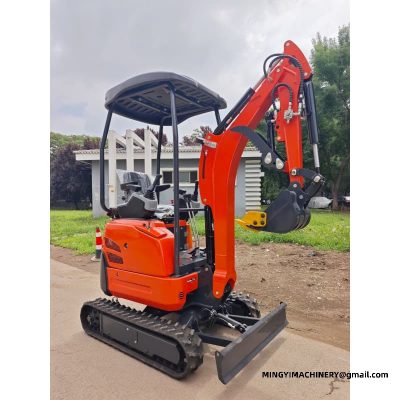
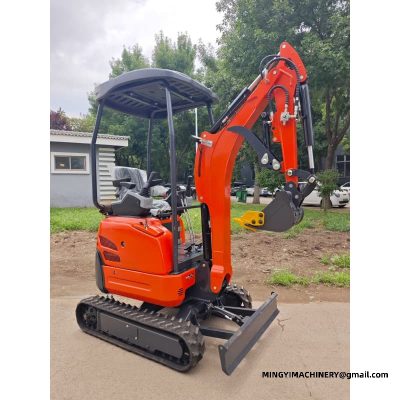
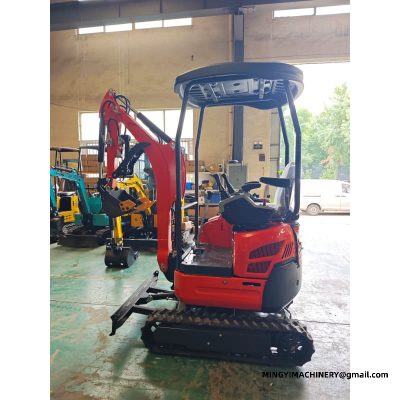
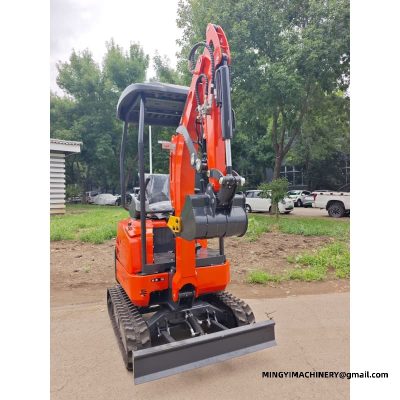
Hydraulic pilot control is what gives a mini excavator its feel. Instead of a direct mechanical linkage, the joysticks send a hydraulic signal to the control valve, which produces a smooth and precise response at the bucket.
MINGYI supplies compact crawler excavators with pilot control for buyers who need fine work from a small machine, with the specification set to the kind of digging the unit will do.
What hydraulic pilot control feels like
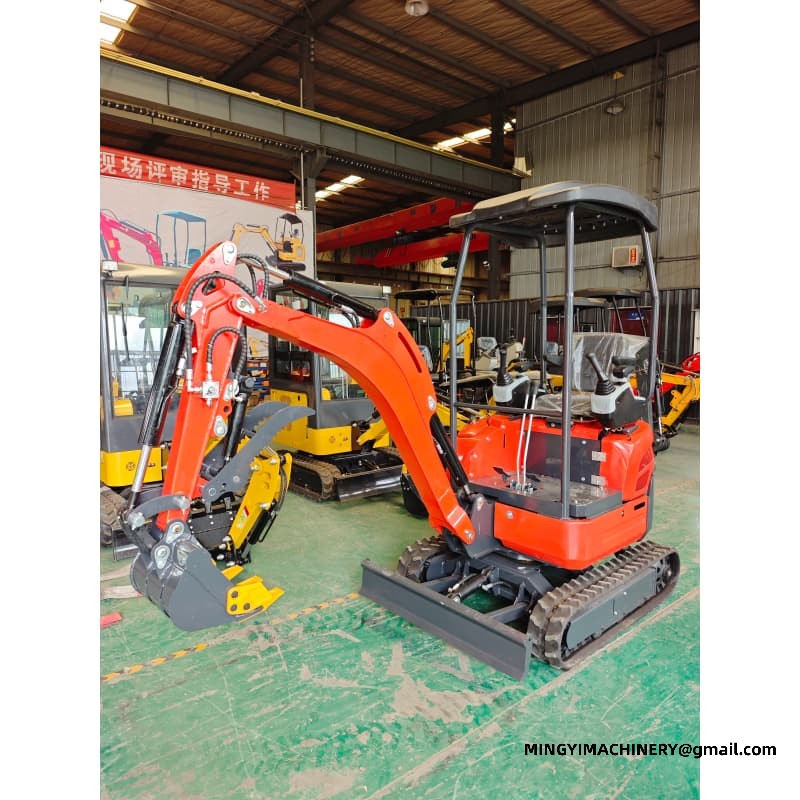
The difference shows in the small movements. With pilot control the operator can make a slow, even stroke instead of an on and off action, which is what makes grading, trimming and careful digging possible with a compact excavator.
The response is also easier on the operator. Light joystick effort over a long shift reduces fatigue, and the smooth action helps an operator keep a steady hand on work that needs accuracy.
Fine control for grading and trenching
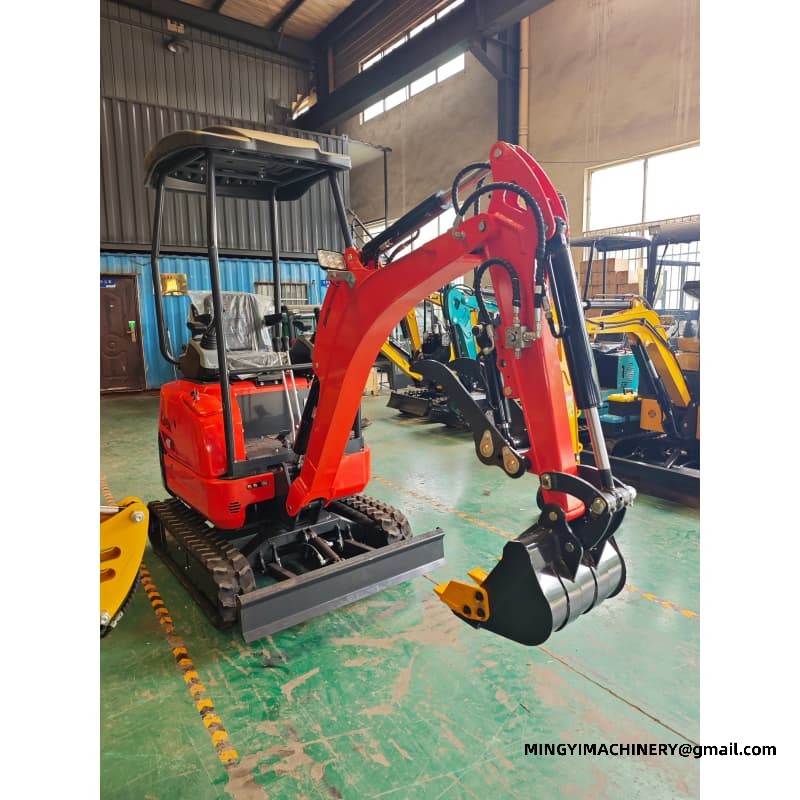
Grading is where pilot control earns its place. Levelling a bed, cutting a slope or trimming a trench floor requires the bucket to move in small increments, and a machine that responds smoothly can hold a line that a coarser control would lose.
Trenching benefits in the same way. Keeping a constant depth over a long run depends on steady movement at the arm, and the finer response lets the operator follow the line without stopping to correct.
Pilot control is a feature that shows in the finish of the work. For a compact excavator doing grading, trenching and careful trimming, the quality of the control is as important as the size of the machine.
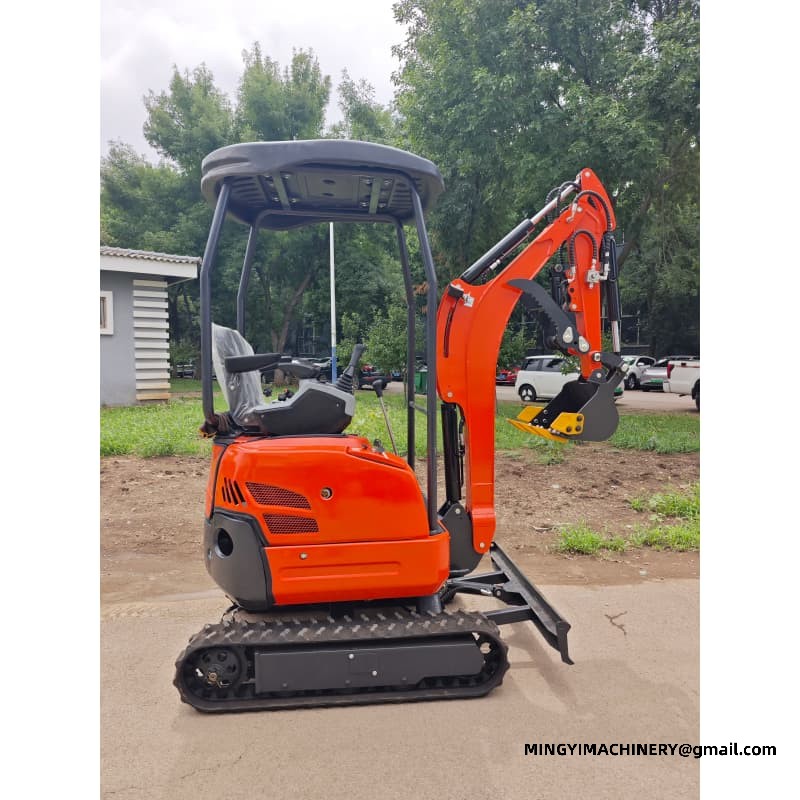
OEM and fleet customisation of hydraulic pilot control mini excavator Distributors and rental fleets usually need the machine to look like theirs. Paint, decals, seat colour and attachment branding can be specified on the excavator at build time rather than applied after import. Documentation can be prepared to suit the importer. Manuals, parts books and decal sets for this class of machine can be supplied with the buyer's own branding where the order size justifies it. Export packing and shipping of hydraulic pilot control mini excavator Export documentation, decals and paint are settled before packing. Asking for them with the machine of this size order avoids a second handling session and keeps the machine on the booked vessel. Buyers who import regularly plan the spare parts with the machine. The unit in daily use ordered with a wearing-parts kit arrives ready to work rather than ready to wait for the first service interval. Matching hydraulic pilot control mini excavator to ground conditions Soft ground is a flotation problem, not a power problem. The equipment on site on wide rubber tracks crosses lawn, sand and cultivated soil that would stop a narrower machine or a wheeled unit of the same capacity. Hard and abrasive ground reverses the specification. On rock, demolition rubble or sharp gravel, steel tracks with rubber blocks on the machine itself survive conditions that cut a rubber belt quickly. Interior and light demolition with hydraulic pilot control mini excavator Breaking out a floor slab, a wall footing or a concrete step is routine work for the model in question with a breaker. The machine is small enough to work inside and heavy enough to run the tool at a practical rate. Dust, debris clearance and floor loading all argue for a compact machine indoors. The machine in that duty spreads its weight over a wider track footprint than a wheeled machine of similar capacity. Attachments that turn hydraulic pilot control mini excavator into several machines Attachment lists are best written before delivery. Specifying the unit on the job with the tools the job list needs avoids the work and delay of adding hydraulics later, and a quick coupler makes the swap a few minutes instead of a workshop job. Most of the daily variety on a machine built for the work comes from the attachment rack rather than from the machine itself. Bucket, breaker, auger, ripper, rake and grab cover the large majority of the work a contractor will see. Boom configuration for hydraulic pilot control mini excavator Extended and offset boom configurations change reach and working range. The equipment in service with a longer arm reaches further but lifts less at full extension, so the specification is set against the deepest and furthest point on the job list. Detachable boom sections are used where transport length matters. The excavator that has to travel on a standard trailer can be built so the arm comes off for the road and goes back on at the site. Lifting and material handling with this class of machine Lifting with a machine built to dig needs a plan. The load, the radius and the ground under the machine of this size all matter, and the safe figure is the one on the chart rather than the one that looks possible. Stability changes with reach. A load the unit in daily use handles close in becomes a different proposition at full extension, so the working radius belongs in the plan before the lift rather than during it. Landscaping and ground care with the equipment on site Landscape contractors use the machine itself for planting holes, pond excavation, grading and retaining work. The machine is light enough to cross finished lawn and narrow enough to work between established trees. Grass cutting heads, rakes and tillers extend the model in question into ground care. The same carrier that digs a border in spring can cut and clear the same area later in the season. Specifying the machine in that duty against a job list The practical way to specify is to write the job list first: the narrowest access, the deepest trench, the heaviest tool and the surfaces the machine must cross. The unit on the job is then matched to those four numbers. Useful information to send with an enquiry includes working width, required digging depth, ground conditions and the attachment set. Those four items let the factory specify a machine built for the work that fits rather than a generic build. Parts, service and support for the equipment in service Engine parts availability usually drives the engine choice. The excavator built with an engine the local network already carries is serviced from stock rather than from an international order. Remote support is handled by video. This class of machine fault can often be diagnosed on a walk-around call with the panel open, which is faster than waiting for a visit and avoids shipping a part that is not needed. Hiring versus owning the unit in daily use The choice follows the hours. Work that fills a few weeks a year is usually better hired, while a machine of this size that would be on site most weeks starts to justify ownership once the transport and booking time is counted. Availability is part of the decision. Owning the equipment on site means it is there on the day the ground is ready; hiring means competing for the same machine at the same time as everyone else in the season. Running the machine itself in a rental fleet Rental fleets buy for utilisation, not for a single job. The model in question with a quick coupler and a common attachment standard is hired more often because it suits more of the calls that come in. The specification that rents best is usually the simplest one to explain at the counter. The machine in that duty with rubber tracks, a canopy and a coupler covers the majority of weekend and short-term hires. Specification data for the unit on the job Buyers comparing a machine built for the work usually start from four numbers - weight, digging depth, reach and transport width - because those are the ones that decide whether the machine can be delivered and whether it can do the job once it is there. Every value shown is as built for the equipment in service; options such as cab, side swing or a telescopic undercarriage change the transport dimensions and are confirmed at order stage. A quick coupler is the single option that changes how a machine is used day to day. Fitted to the excavator, it turns an attachment change from a two-person workshop job into a task the operator does alone in minutes. Couplers are specified early because they affect the arm and the hydraulic kit. Adding one to this class of machine after delivery means new pins, new hoses and a fitment session; adding it at build time is a line on the sheet.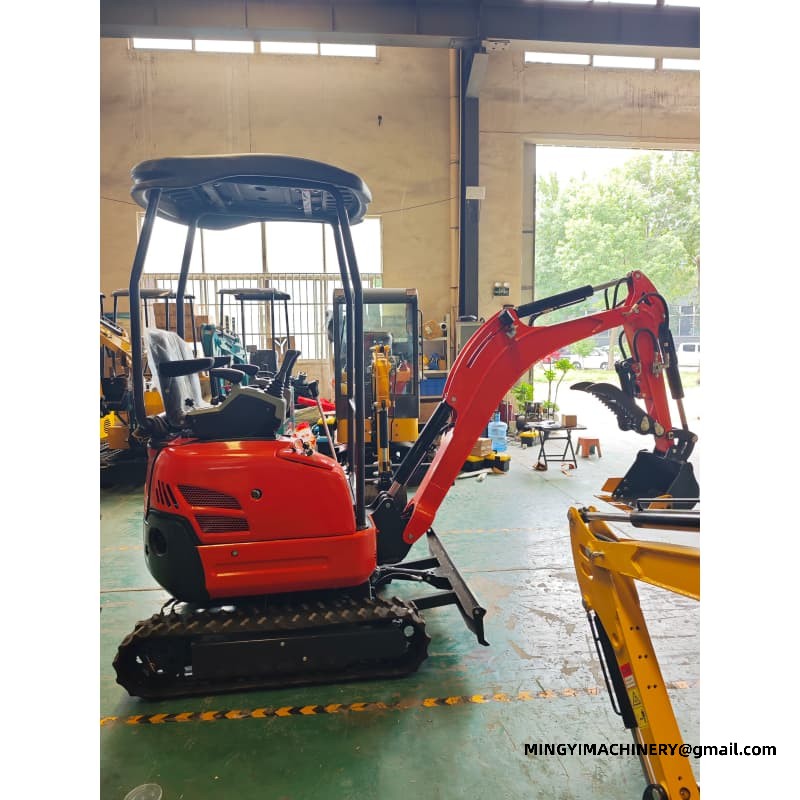
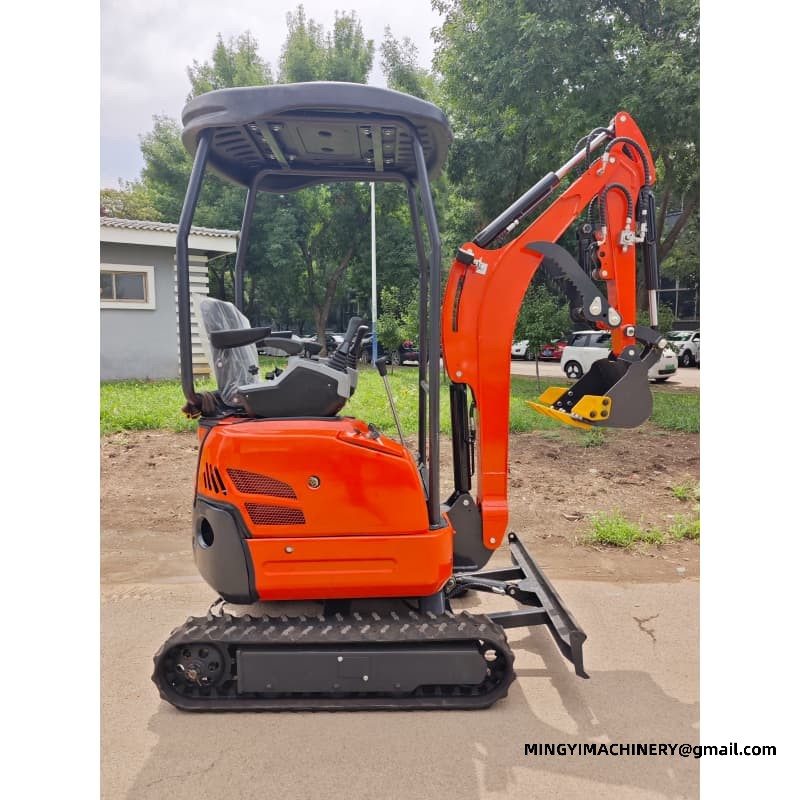
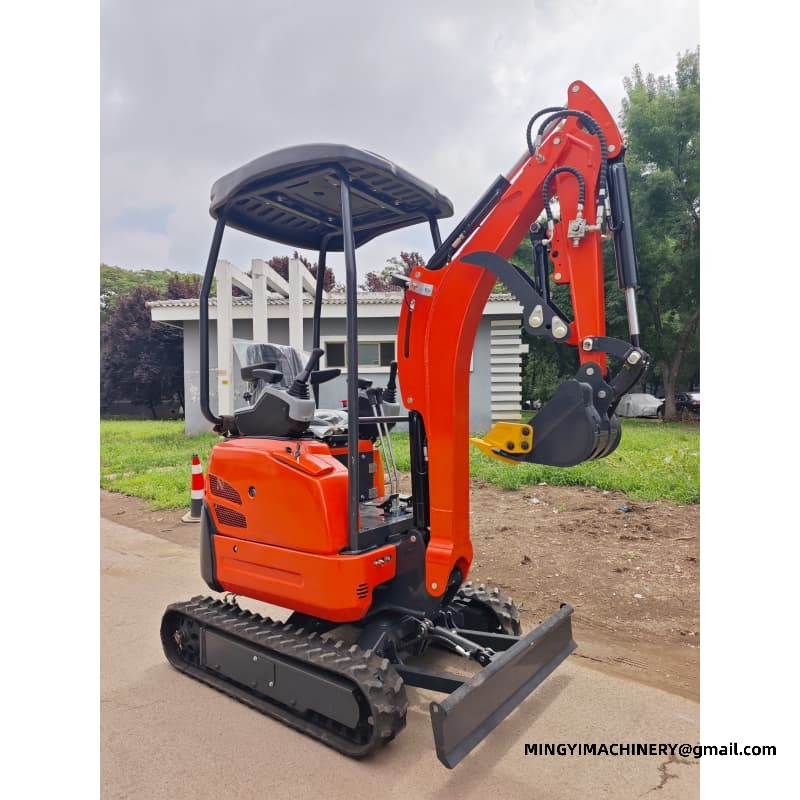
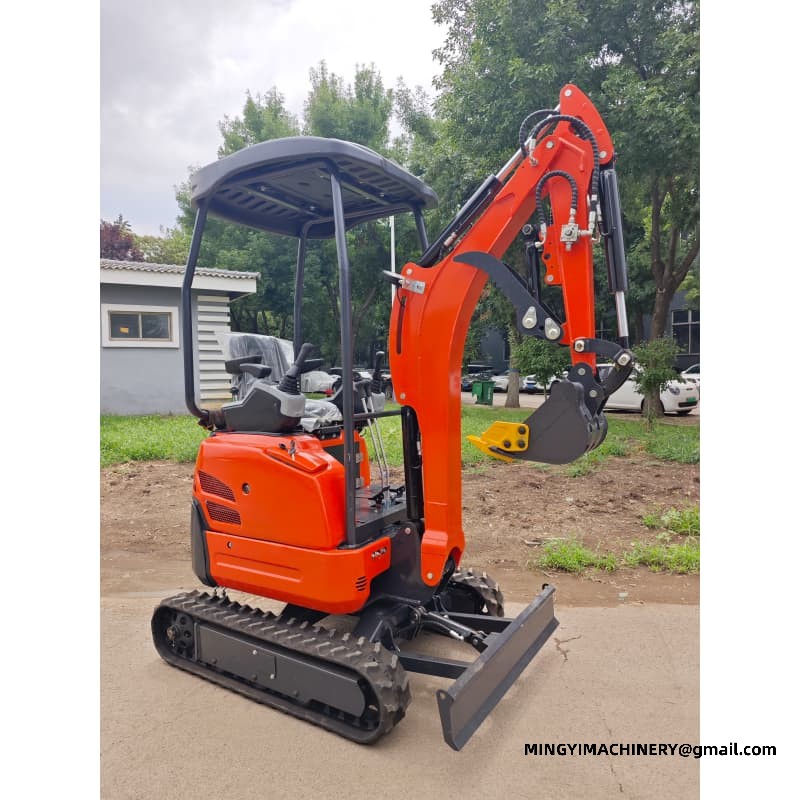
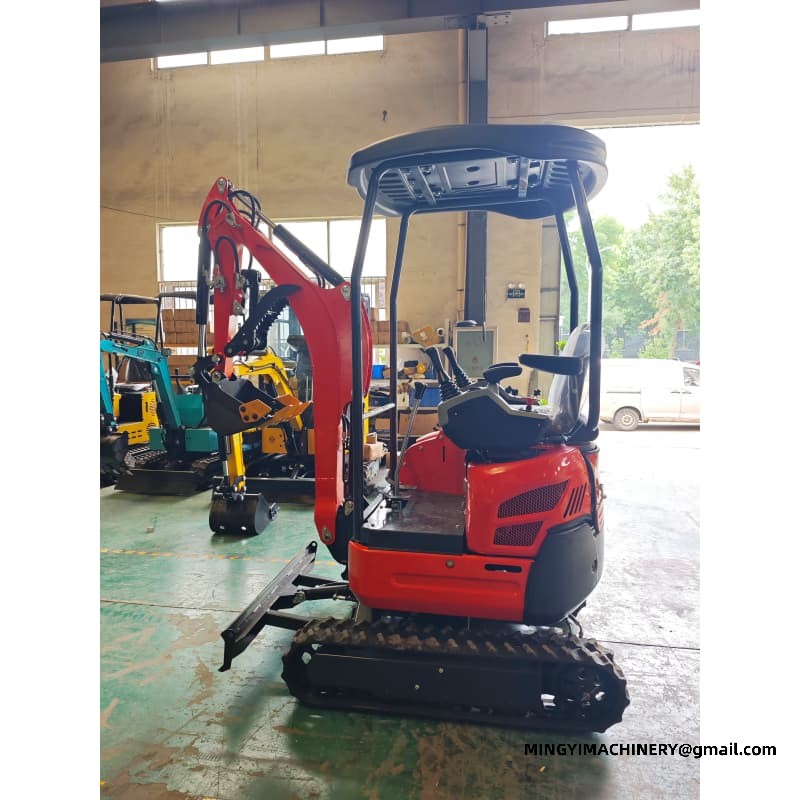
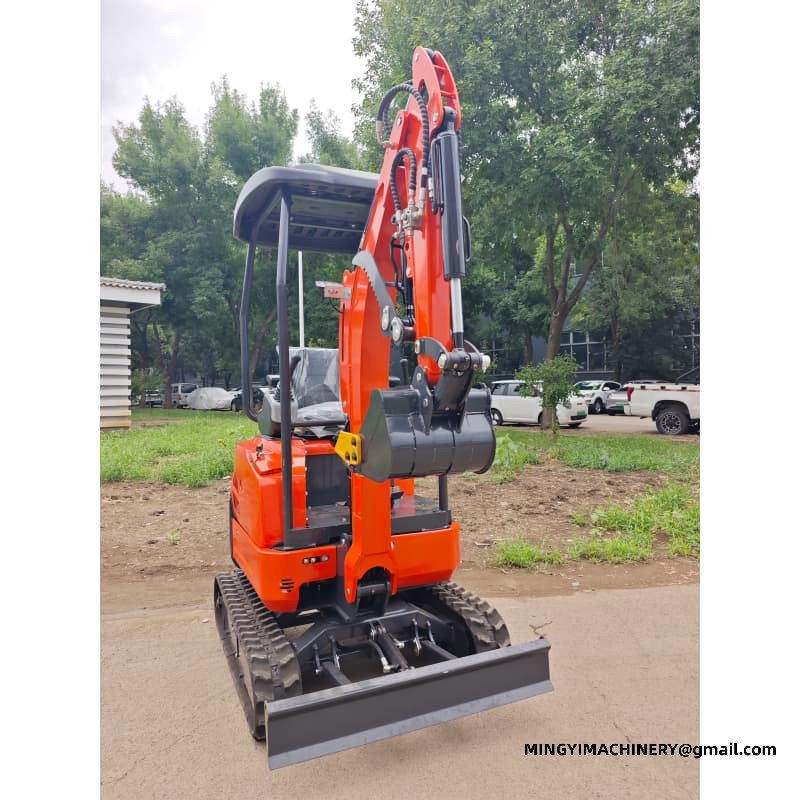
Reference specification — mini excavator range 12W 20-1W 09L 30-2L Operating weight 1200 kg (2645.55 lb) 1800 kg (3968.32 lb) 1100 kg (2425.08 lb) 2400 kg (5291 lb) Transport size (L×W×H) 2200 × 930 × 2250 mm 2550 × 1100 × 2200 mm 2300 × 720 × 1870 mm 2800 × 1500 × 2500 mm Max digging depth 1630 mm (64.17 in) 1800 mm (70.87 in) 1400 mm (55.12 in) 2200 mm (86.61 in) Max digging height 2750 mm (108.27 in) 2820 mm (111.02 in) 2800 mm (110.24 in) 2900 mm (114.17 in) Max dumping height 1960 mm (77.17 in) 2050 mm (80.71 in) 1880 mm (74.02 in) 2100 mm (82.68 in) Max digging radius 2900 mm (114.17 in) 3050 mm (120.08 in) 2490 mm (98.03 in) 3330 mm (131.1 in) Max digging distance 2100 mm (82.68 in) 2300 mm (90.55 in) 2000 mm (78.74 in) 2700 mm (106.3 in) Minimum turning radius 1300 mm (51.18 in) 1450 mm (57.09 in) 1400 mm (55.12 in) 1555 mm (61.22 in) Travel speed 3 km/h (1.86 mph) 5 km/h (3.11 mph) 3 km/h (1.86 mph) 7 km/h (4.35 mph) Gradeability 30° 30° 30° 30° Fuel consumption 1-1.3 L/h (0.264—0.343 gal) 2-3 L/h (0.528—0.793 gal) 1-1.3 L/h (0.264—0.343 gal) 2-3 L/h (0.528—0.793 gal) Fuel tank capacity 10 L (2.64 gal) 16 L (4.23 gal) 8 L (2.11 gal) 16 L (4.23 gal) Hydraulic oil tank 16 L (4.23 gal) 18 L (4.76 gal) 16 L (4.23 gal) 18 L (4.76 gal) Dozer blade lift height 180 mm (7.09 in) 180 mm (7.09 in) 180 mm (7.09 in) 230 mm (9.06 in) Dozer blade drop depth 210 mm (8.27 in) 210 mm (8.27 in) 210 mm (8.27 in) 280 mm (11.02 in)
Q. What is the unit in daily use?
A. Control quality is what separates a compact excavator that fights the operator from one that finishes the day with clean trench walls. High-flow and twin-line circuits exist for attachments that drink more than the standard circuit serves. A machine of this size is one of the pages buyers land on when comparing machines for hydraulic pilot control, and the factory treats it as a specification conversation rather than a catalogue line.
Q. What do pilot controls change in practice?
A. Finesse: the operator meters boom and bucket instead of switching them, which shows in trench walls, grading finish and fatigue at the end of the shift.
Q. Can I see the machine before it ships?
A. Inspection is arranged at the factory, in person or by a scheduled video walk-around - the same session covers paint, decals and attachment fitment for the hydraulic pilot control specification, so the machine inspected is the machine that ships.
Wear items and spares worth holding for the equipment on site
A spares list should follow the duty cycle. The machine itself working every day in abrasive dust consumes filters and cutting edges far faster than the same machine used once a week, and the shelf should be stocked for the harder case.
Planning the season around the model in question
Seasonal work rewards a machine that can change duty. Through the year the machine in that duty may move from one task to another, and the attachment list should be chosen for the whole year rather than for the first job.
E-mail : sales@mingycn.com
LINE ( ID ): mingyicn
Night work and lighting on hydraulic pilot control mini excavator
Night work changes the job more than most specification lines do, because light coverage, glare and shadow decide how much of the site the operator can actually read.
Work lamps should cover the working area and the travel path separately, since a beam set for loading usually leaves the route dark.
Related pages
vineyard soil loosening digger · narrow mini excavator for greenhouses · Compact Wheel Loader: Choosing Between the Two Entry Builds · Mini Excavators









