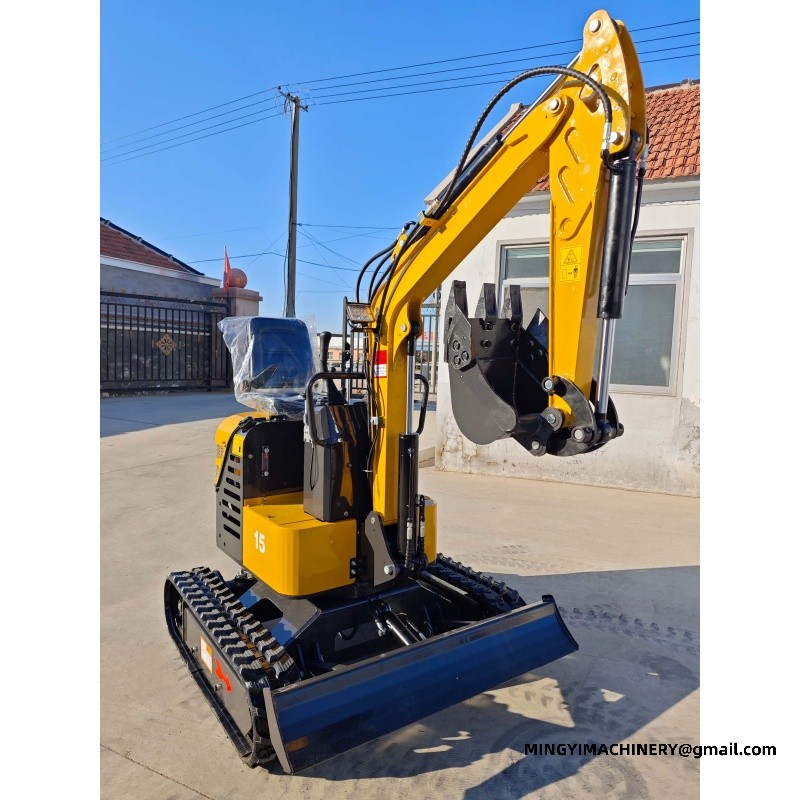
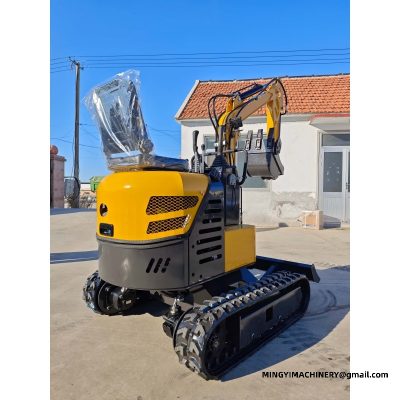
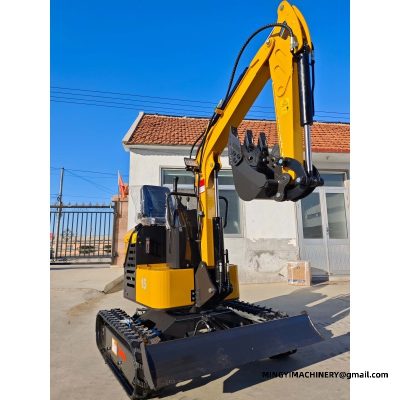
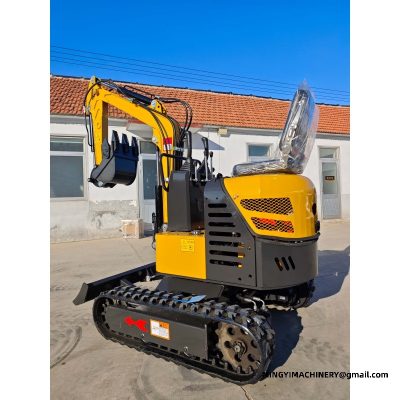
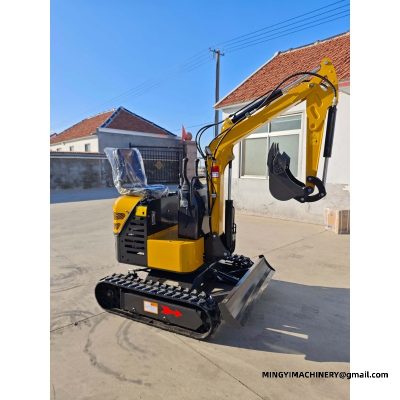
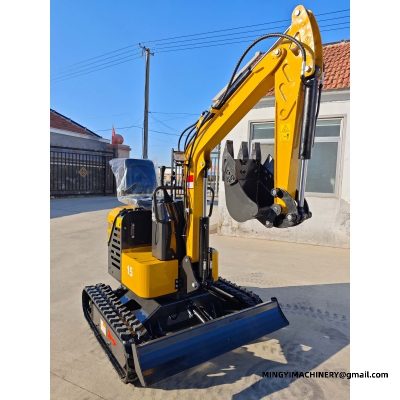
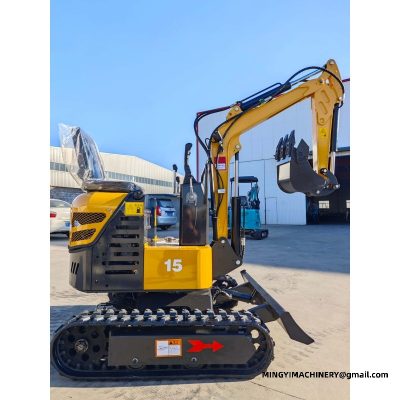
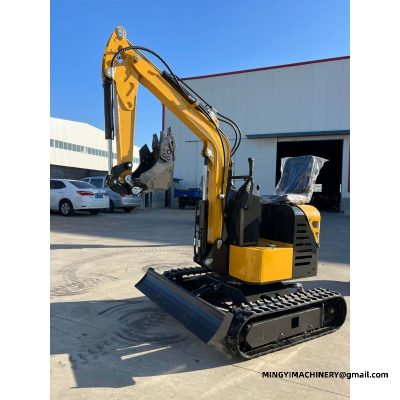
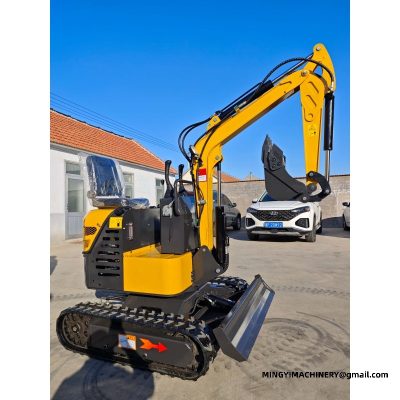
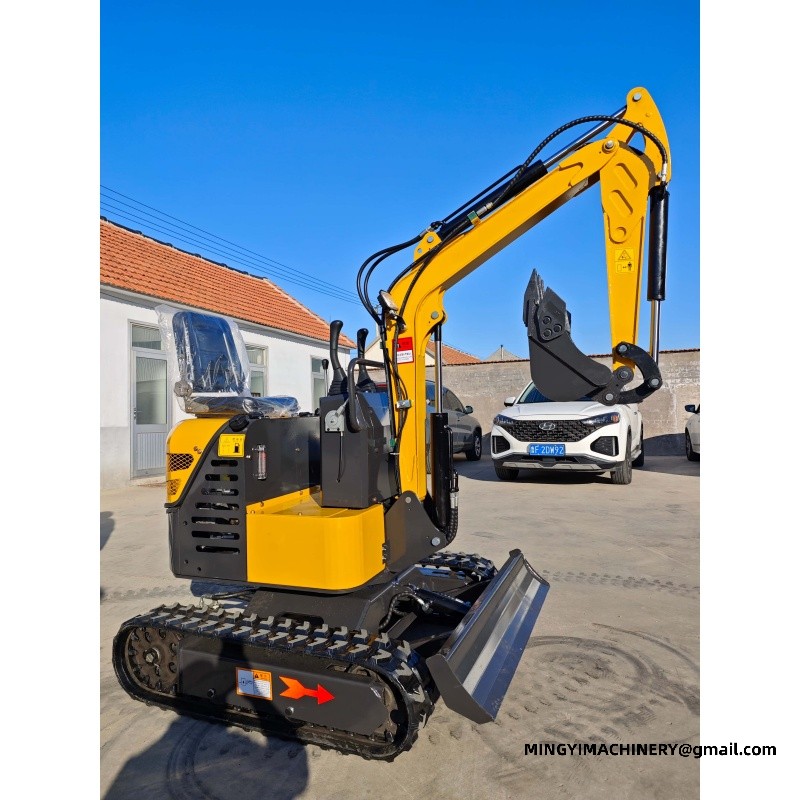
MINGYI manufactures mini excavators on an OEM basis, producing machines to order for brands, importers and dealers who specify their own configuration. Production takes place at our works in China, with each order scheduled against the buyer's requirements.
OEM buyers arrive with different needs: some supply a full specification and need it executed consistently across repeat orders, others work from the standard range and adjust engine options, cab formats and track types to their market.
How OEM excavator production runs
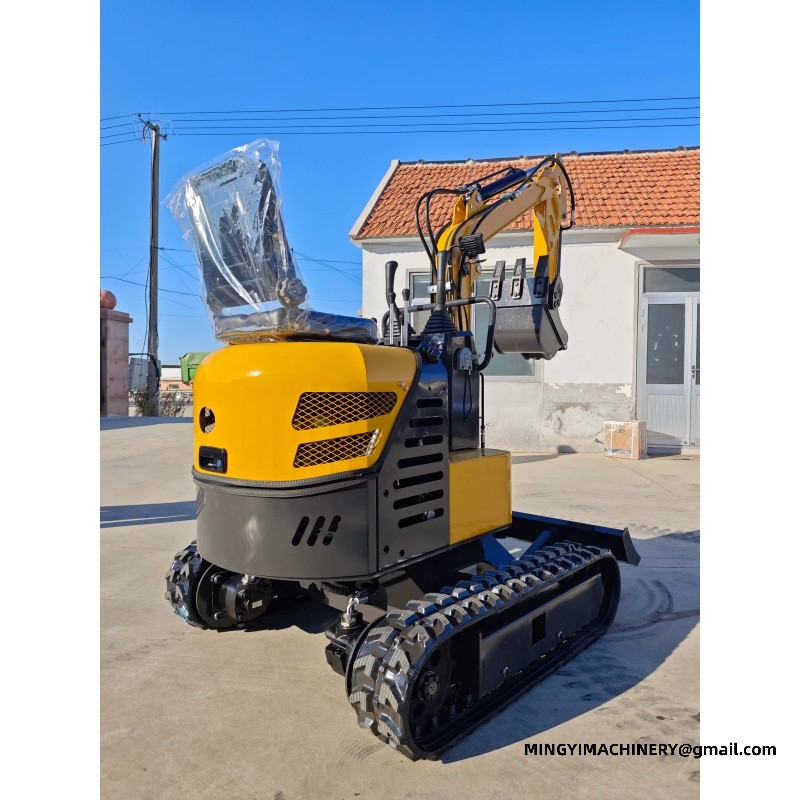
An OEM order starts with the specification: engine option, undercarriage and track type, boom configuration, cab format and the hydraulic arrangement for the attachments the machines must run. The agreed sheet becomes the build record, and every unit is produced and checked against it.
Consistency across repeat orders follows from that record: a second or third order referencing the same specification arrives as the same machine, which matters to brands supporting a single parts list for their market.
What OEM buyers settle before ordering
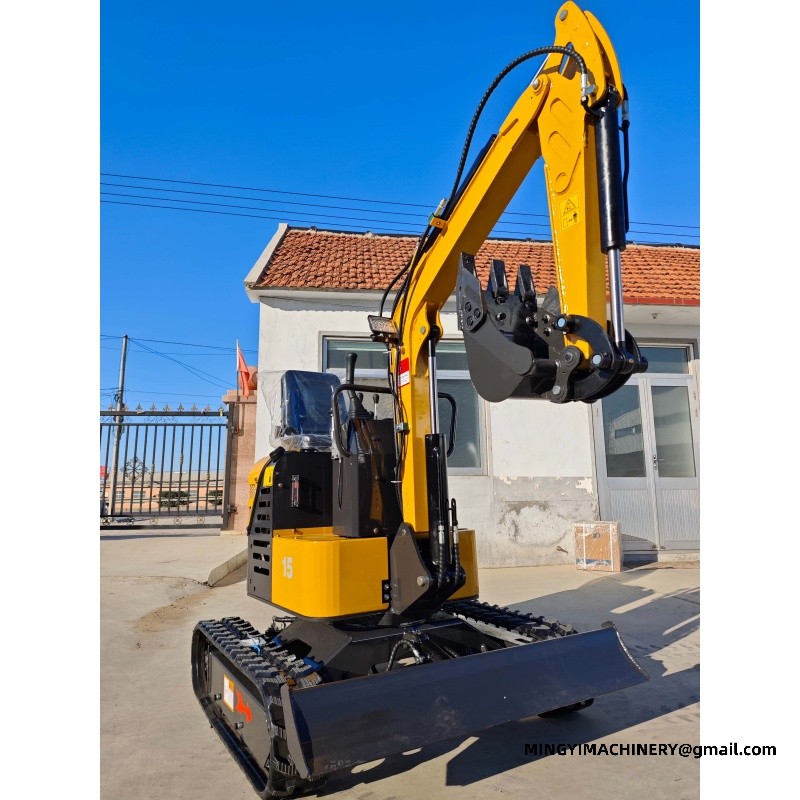
Beyond the machine itself, OEM discussions cover the attachment package, the spare parts and service information supplied with each unit, and the points in the specification the buyer wants fixed versus those left to the works. Paint, decals and naming belong to the buyer's brand.
Buyers should also state their destination market's expectations, since engine and emission configuration is agreed at the ordering stage against where the machines will be registered and worked.
OEM manufacturing succeeds on clear specifications and consistent execution. Bring the specification, and Mingyi Machinery builds to it, order after order.
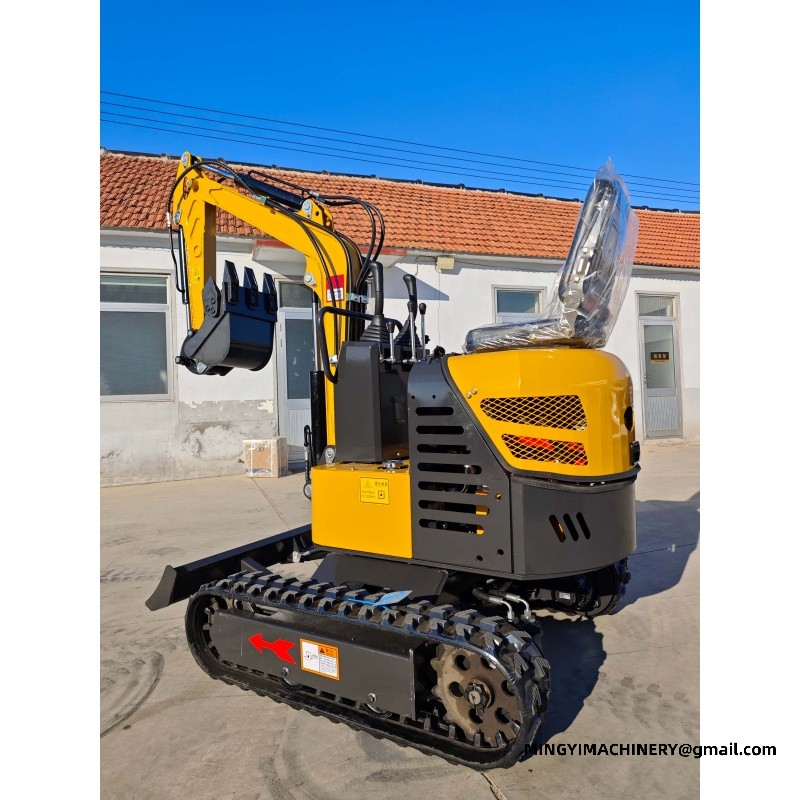
Road and paving work for mini excavator oem manufacturer Road repair generates short, interrupted jobs - a patch, a drainage connection, a kerb line. The excavator is economical here because it travels on a small trailer and starts working minutes after arriving. Patching and reinstatement favour a machine that can work in a lane closure. This class of machine occupies less road than a full-size excavator, which reduces the traffic management needed and the length of the closure. OEM and fleet customisation of mini excavator oem manufacturer Distributors and rental fleets usually need the machine to look like theirs. Paint, decals, seat colour and attachment branding can be specified on the unit in daily use at build time rather than applied after import. Customisation also covers the specification sheet. A fleet buyer may want every machine of this size delivered with the same coupler, the same engine and the same tool kit so training and parts stock stay simple. Track choice for mini excavator oem manufacturer Rubber tracks suit paved and landscaped ground because they spread the machine weight and leave the surface intact. Steel tracks with rubber blocks are specified where the ground is rougher or the working day is longer, and the choice can be made per machine rather than accepted as a factory default. Undercarriage selection is a ground question, not a preference question. The equipment on site running on finished paving needs rubber; the same machine on demolition rubble or rock wears rubber quickly, so steel with rubber blocks becomes the better answer over a full season. Trenching work with mini excavator oem manufacturer Service trenches are the most common reason the machine itself is hired. Water, sewage, cable and gas runs are narrow, shallow and often close to existing services, which is exactly the work a full-size machine cannot do safely. Depth control matters more on service work than speed. The model in question working beside live services is chosen because it can be placed precisely and stopped instantly, which is what the job actually requires. Orchard, vineyard and farm use of mini excavator oem manufacturer Orchard and vineyard work is carried out between rows. The machine in that duty with a narrow chassis and a swing boom works down the row without damaging the trees, which is the reason a full-size machine is not used at all. Farms also use the unit on the job for general maintenance - clearing a watercourse, repairing a track, loading a spreader. One carrier with a few attachments covers most of the jobs that would otherwise wait for a contractor. Export packing and shipping of mini excavator oem manufacturer Export documentation, decals and paint are settled before packing. Asking for them with the equipment in service order avoids a second handling session and keeps the machine on the booked vessel. Buyers who import regularly plan the spare parts with the machine. A machine built for the work ordered with a wearing-parts kit arrives ready to work rather than ready to wait for the first service interval. Hiring versus owning the excavator The choice follows the hours. Work that fills a few weeks a year is usually better hired, while this class of machine that would be on site most weeks starts to justify ownership once the transport and booking time is counted. Ownership brings obligations that hiring does not. Storage, servicing, insurance and an operator are the items to set against the hire rate before deciding which way the unit in daily use should be supplied. Trailering and moving a machine of this size Transport weight and width decide whether a machine needs a specialist haulier. The equipment on site sized to travel on a standard plant trailer behind a suitable vehicle moves with the crew rather than on a scheduled low loader. Detachable components reduce transport length. The machine itself built with a removable arm section or a folding step fits a shorter trailer and may avoid an oversize movement permit. Acceptance checks when the model in question arrives A function check before the machine goes to work is worth the hour. Running through the controls, the travel and the attachment circuit on the machine in that duty confirms it is set up as specified and ready for the site. Documentation should arrive with the machine. Parts list, service schedule and any certificates for the unit on the job are what the workshop needs later, and they are much easier to obtain at delivery than in month six. Interior and light demolition with a machine built for the work Breaking out a floor slab, a wall footing or a concrete step is routine work for the equipment in service with a breaker. The machine is small enough to work inside and heavy enough to run the tool at a practical rate. Dust, debris clearance and floor loading all argue for a compact machine indoors. The excavator spreads its weight over a wider track footprint than a wheeled machine of similar capacity. Operator technique for this class of machine Output on a compact machine comes from placement rather than power. An experienced operator keeps the unit in daily use working inside the swing arc, positions once and digs a full run instead of repositioning for every bucket. Stability is the third. A machine of this size working across the tracks rather than over the corners keeps the machine steady and the undercarriage loaded evenly, which shows up as track life at the end of the season. Boom configuration for the equipment on site A swing boom lets the machine dig parallel to its tracks without repositioning, which is what makes trenching beside a wall or a fence practical. On the machine itself this is often the option that decides whether a job is possible at all. Detachable boom sections are used where transport length matters. The model in question that has to travel on a standard trailer can be built so the arm comes off for the road and goes back on at the site. Specification data for the machine in that duty The figures below are the factory figures for the models most often matched to the unit on the job. They are the numbers to check against the site: the depth the work needs, the reach from one position, and the width of the narrowest point on the route in. Figures are factory figures and are confirmed on the build sheet for a machine built for the work. Where a job sits between two models, the larger machine usually takes less time than the smaller one spends on rework. The practical way to specify is to write the job list first: the narrowest access, the deepest trench, the heaviest tool and the surfaces the machine must cross. The equipment in service is then matched to those four numbers. Useful information to send with an enquiry includes working width, required digging depth, ground conditions and the attachment set. Those four items let the factory specify the excavator that fits rather than a generic build.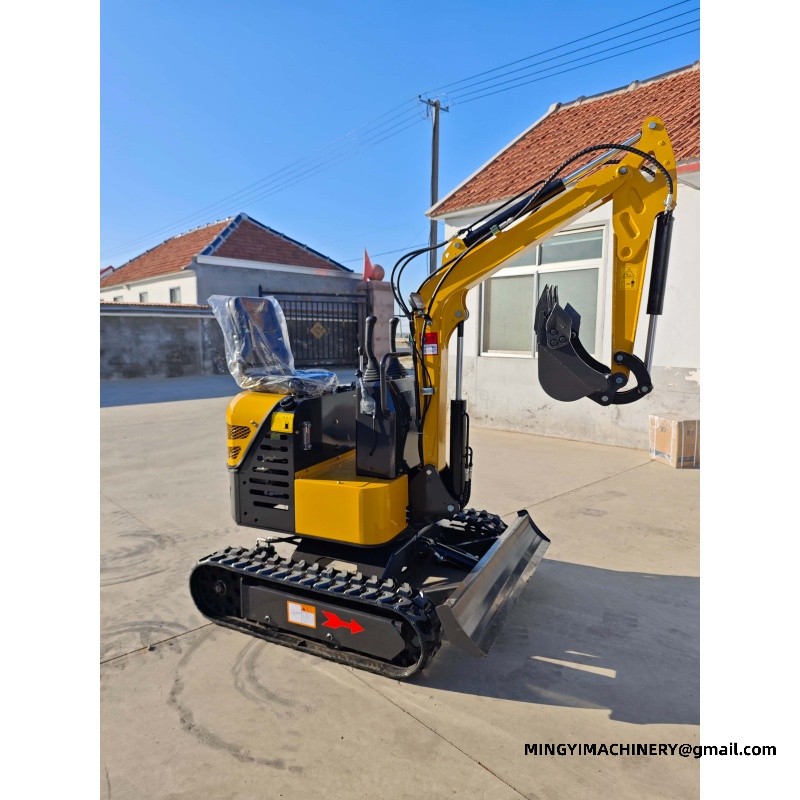
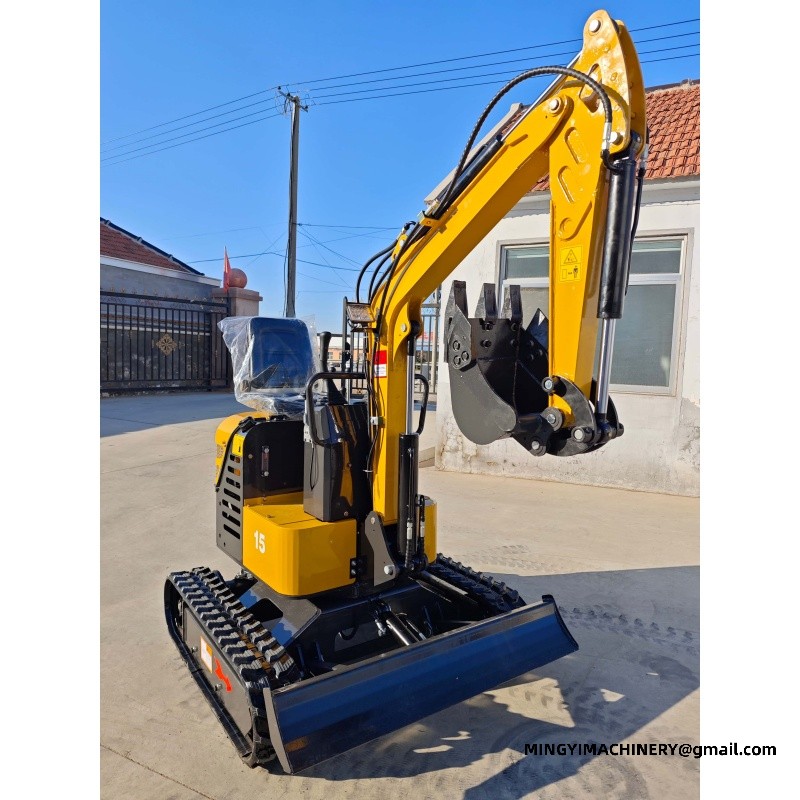
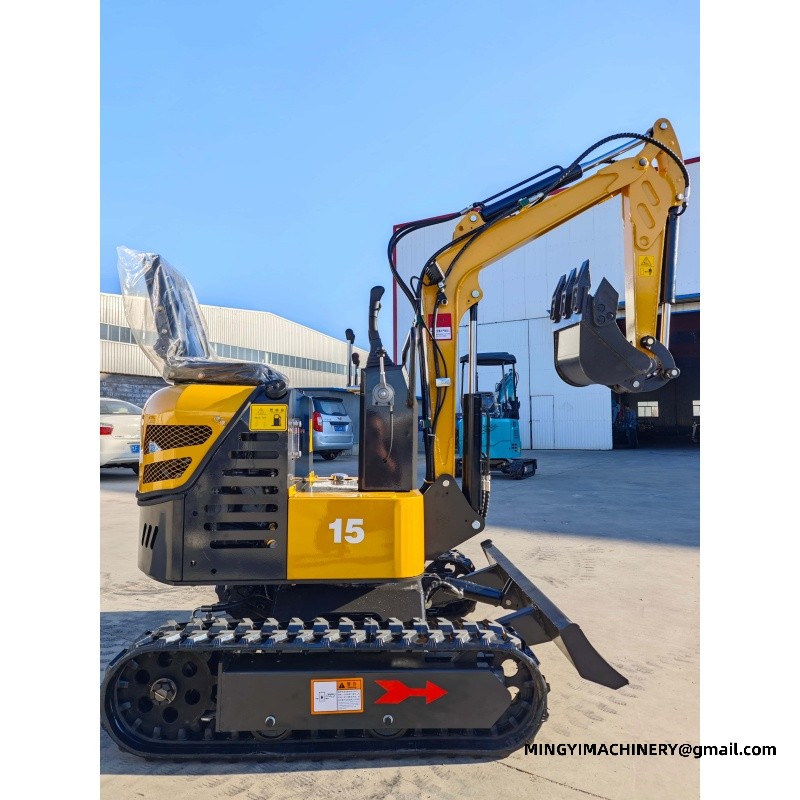
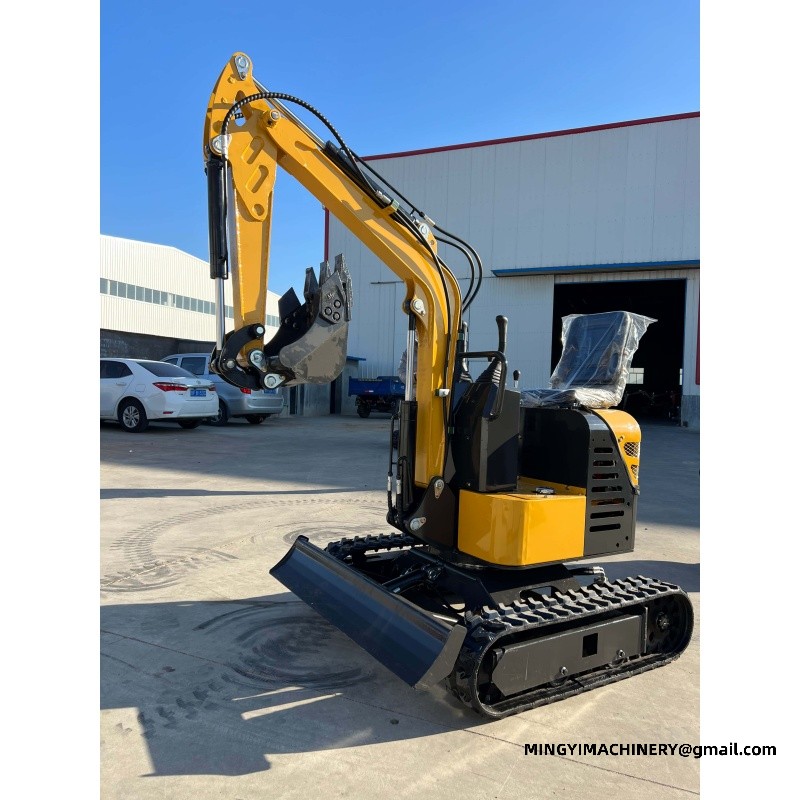
Reference specification — mini excavator range 09W 12W 15W 20-1W Operating weight 1100 kg (2425.08 lb) 1200 kg (2645.55 lb) 1400 kg (3086.47 lb) 1800 kg (3968.32 lb) Transport size (L×W×H) 1800 × 750 × 1970 mm 2200 × 930 × 2250 mm 2200 × 930 × 2250 mm 2550 × 1100 × 2200 mm Max digging depth 1250 mm (49.21 in) 1630 mm (64.17 in) 1630 mm (64.17 in) 1800 mm (70.87 in) Max digging height 2800 mm (110.24 in) 2750 mm (108.27 in) 2750 mm (108.27 in) 2820 mm (111.02 in) Max dumping height 1700 mm (66.93 in) 1960 mm (77.17 in) 1960 mm (77.17 in) 2050 mm (80.71 in) Max digging radius 2570 mm (101.18 in) 2900 mm (114.17 in) 2900 mm (114.17 in) 3050 mm (120.08 in) Max digging distance 1869 mm (73.58 in) 2100 mm (82.68 in) 2100 mm (82.68 in) 2300 mm (90.55 in) Minimum turning radius 1000 mm (39.37 in) 1300 mm (51.18 in) 1300 mm (51.18 in) 1450 mm (57.09 in) Travel speed 3 km/h (1.86 mph) 3 km/h (1.86 mph) 3 km/h (1.86 mph) 5 km/h (3.11 mph) Gradeability 30° 30° 30° 30° Fuel consumption 1-1.3 L/h (0.264—0.343 gal) 1-1.3 L/h (0.264—0.343 gal) 1-1.3 L/h (0.264—0.343 gal) 2-3 L/h (0.528—0.793 gal) Fuel tank capacity 8 L (2.11 gal) 10 L (2.64 gal) 10 L (2.64 gal) 16 L (4.23 gal) Hydraulic oil tank 16 L (4.23 gal) 16 L (4.23 gal) 16 L (4.23 gal) 18 L (4.76 gal) Dozer blade lift height 180 mm (7.09 in) 180 mm (7.09 in) 180 mm (7.09 in) 180 mm (7.09 in) Dozer blade drop depth 210 mm (8.27 in) 210 mm (8.27 in) 210 mm (8.27 in) 210 mm (8.27 in)
Q. Who chooses this class of machine?
A. Buying from the factory shortens the chain between the production line and the working machine, and that is the whole idea of factory-direct supply. Mixed-model orders and staged deliveries are routine for dealer and importer programmes, with documents and inspection arranged with the order. Read the unit in daily use together with the engine, track and attachment pages: jobs around OEM are decided by how those choices line up, not by any single number on the sheet.
Q. How are machines packed and shipped?
A. Complete units travel in containers on timber cradles; CKD packing parts the machine for volume. Documents, marks and routing follow the order, and the destination port decides the packing plan.
Q. How do I get a specification?
A. Send the model, the destination and the attachment list by email or LINE - the channels listed just below this section. The reply covers the specification, lead time, packing and freight in one document, with the OEM build sheet attached.
Later additions and retrofits on a machine of this size
Later changes are easier when they were anticipated. Asking for the extra hydraulic circuit or the heavier mounting plate on the equipment on site at build time adds little and leaves the option open.
Keeping a service record for the machine itself
The record should follow the machine, not the owner. When the model in question changes hands the service history travels with it, and a complete folder is often the difference between a quick sale and a long one.
Reading the early symptoms on the machine in that duty
Machines rarely fail without warning. A change in sound, a slower function or a new leak on the unit on the job is the machine saying something early, and listening then takes a fraction of the time that waiting does.
E-mail : sales@mingycn.com
LINE ( ID ): mingyicn
Related pages
multi-function mini excavator · mini excavator attachment set · OEM Wheel Loader Manufacturer: Build Records and Model Mixes · Mini Excavators









