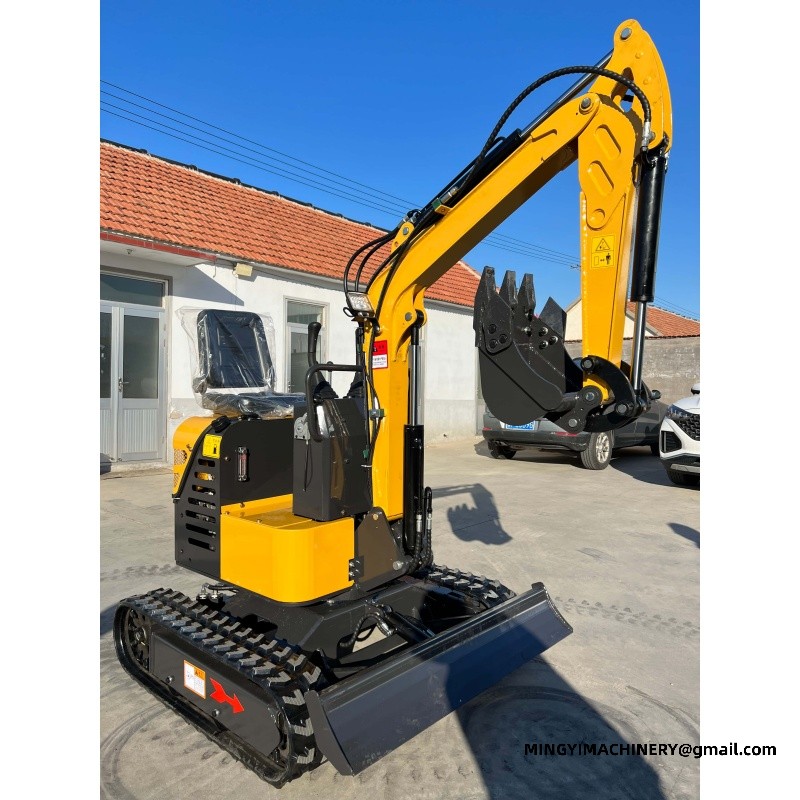
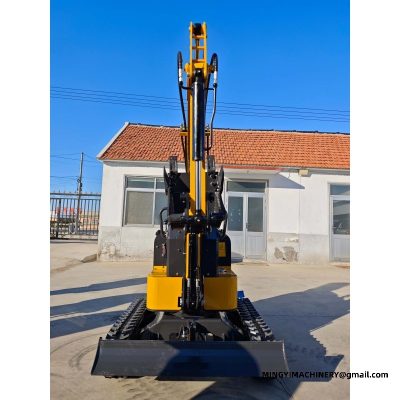
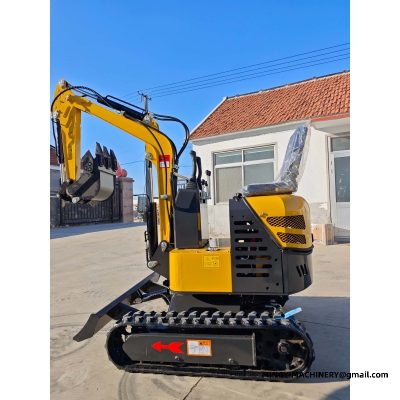
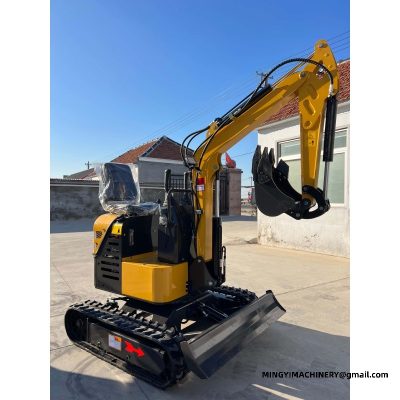
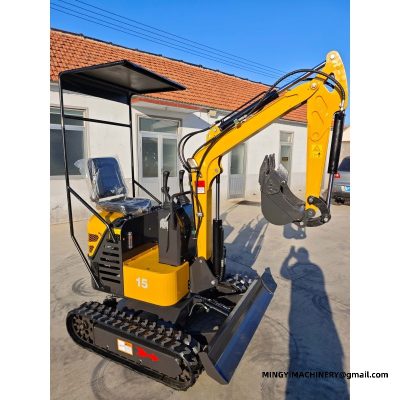
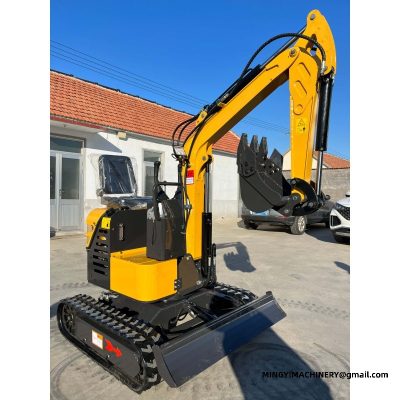
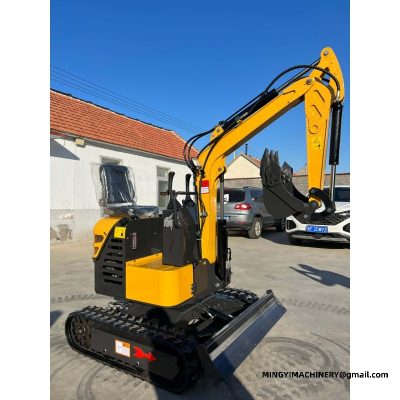
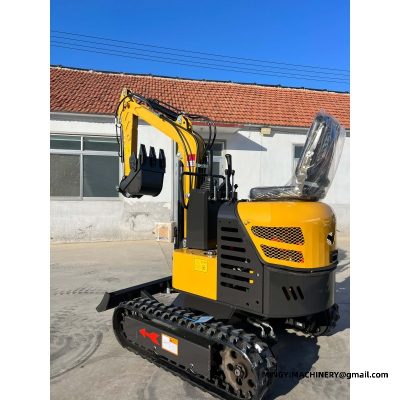
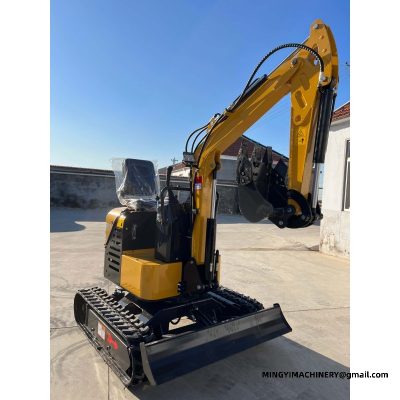
Demolition on small sites is selective work. Structures come down piece by piece, materials get sorted for removal, and the machine has to work close to walls and services that stay standing. A MINGYI mini excavator configured for demolition is built around that sequence rather than around open digging.
The 1 to 3.5 tonnes class is the usual working range for this duty, with the option of steel tracks with rubber blocks where the slab surface is rough. Every machine is built to order, which allows the demolition specific arrangement to be set before assembly starts.
Demolition sequence the machine supports
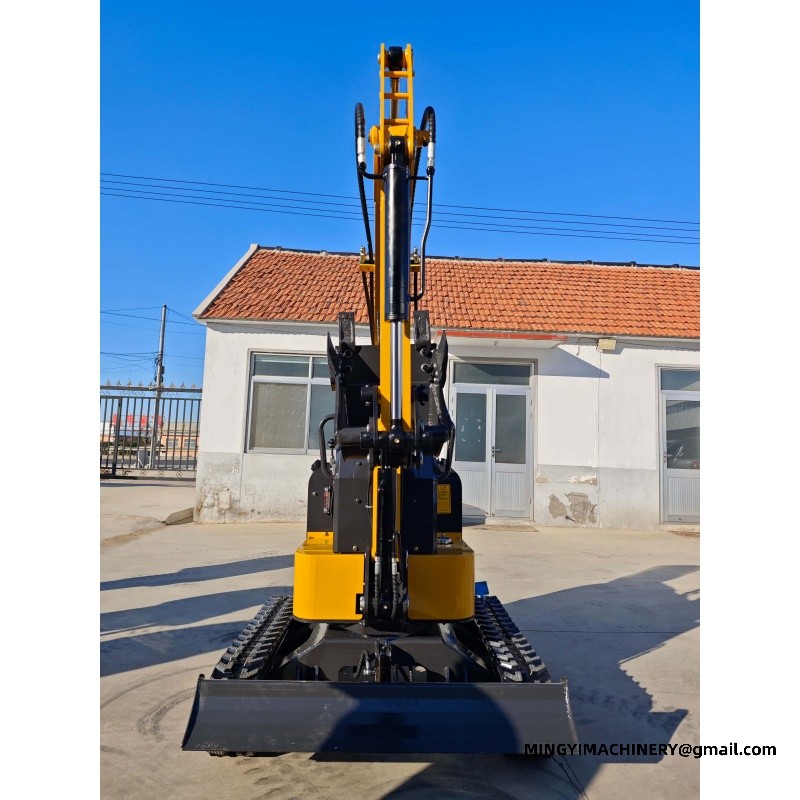
The breaker hammer softens concrete and masonry, the digging bucket peels the sections apart, and a thumb bucket grips broken chunks for sorting into piles. Where steel is present, the same thumb holds beams while they are cut, keeping hands away from the load.
Softer attachments have their place too. A grass rake clears demolition rubble from ground that will be landscaped afterwards, and a soil loosener regrades areas compacted by plant movement during the strip out. The machine finishes what it starts.
Specifying for a demolition environment
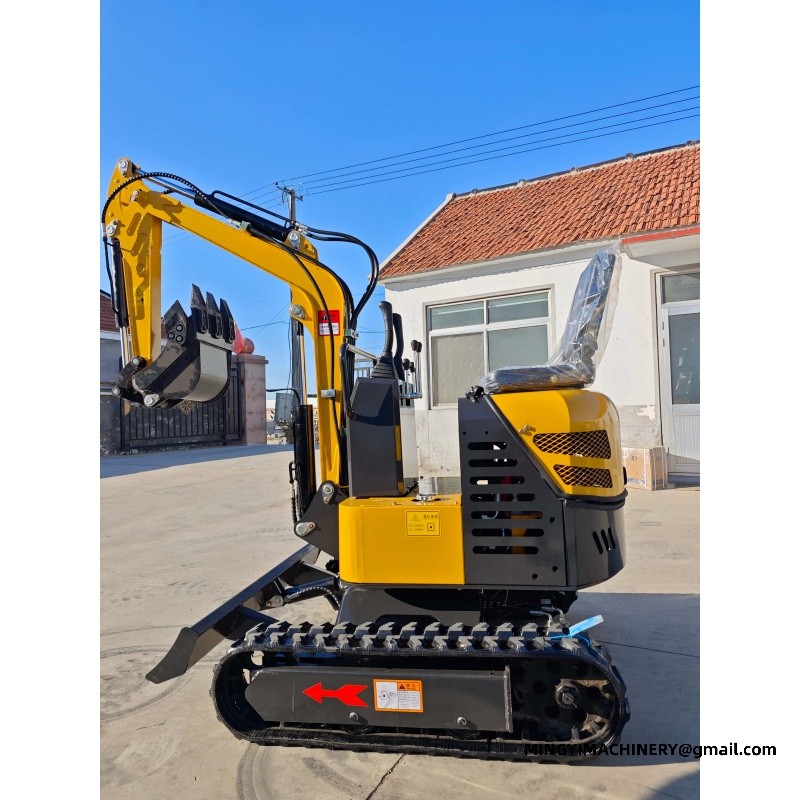
Falling debris and rebar make guard selection important, so an enclosed cab with protective glazing is worth confirming for this line of work rather than an open canopy. Hose routing across the boom should also be reviewed, since abrasion from broken concrete shortens unprotected lines.
Steel tracks with rubber blocks give stability on broken slab and rubble while keeping the machine usable on any paved areas that must survive. Confirm the attachment list at the ordering stage so the coupler, carrier hydraulics and plumbing all arrive matched.
Describe the structures you strip out and the materials you handle most, and the demolition configuration will be drawn up around them. Mingyi Machinery records the agreed specification against the machine, so follow up orders for attachments reference the same build.
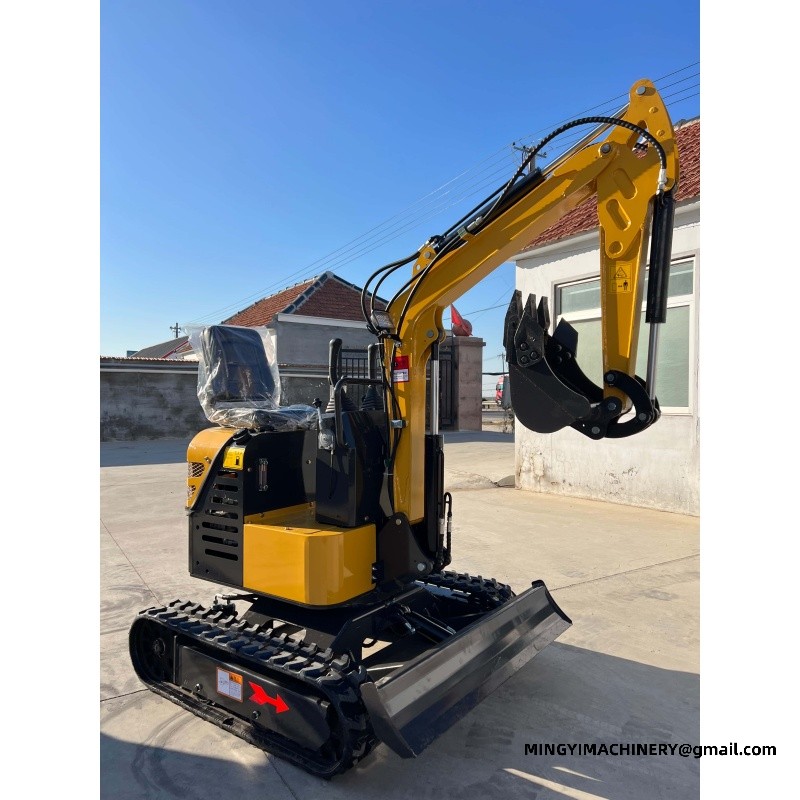
OEM and fleet customisation of mini excavator for demolition Customisation also covers the specification sheet. A fleet buyer may want every this class of machine delivered with the same coupler, the same engine and the same tool kit so training and parts stock stay simple. Documentation can be prepared to suit the importer. Manuals, parts books and decal sets for the excavator can be supplied with the buyer's own branding where the order size justifies it. Working a mini excavator for demolition in confined spaces Clearance above matters as much as around. Door heights, pipework and overhead services set the limit for the unit in daily use indoors, and measuring them first avoids a machine that arrives and cannot be used. Ventilation is the other indoor constraint. Running a machine of this size inside a closed structure needs air movement, and that is a planning item rather than something to discover after the first hour. Specifying mini excavator for demolition against a job list Buyers who skip this step either over-buy or under-buy. The equipment on site specified only from machine size tends to arrive without the coupler, the circuits or the track type the work actually needs. Useful information to send with an enquiry includes working width, required digging depth, ground conditions and the attachment set. Those four items let the factory specify the machine itself that fits rather than a generic build. Hiring versus owning a mini excavator for demolition The choice follows the hours. Work that fills a few weeks a year is usually better hired, while the model in question that would be on site most weeks starts to justify ownership once the transport and booking time is counted. Ownership brings obligations that hiring does not. Storage, servicing, insurance and an operator are the items to set against the hire rate before deciding which way the machine in that duty should be supplied. Parts, service and support for mini excavator for demolition Engine parts availability usually drives the engine choice. The unit on the job built with an engine the local network already carries is serviced from stock rather than from an international order. Remote support is handled by video. A machine built for the work fault can often be diagnosed on a walk-around call with the panel open, which is faster than waiting for a visit and avoids shipping a part that is not needed. Attachments that turn mini excavator for demolition into several machines The base machine is a carrier; the tool on the end of the arm decides the task. The equipment in service fitted with a toothed bucket digs, and the same machine with a breaker, an auger or a grab does work that would otherwise need a second unit on site. Attachment lists are best written before delivery. Specifying the excavator with the tools the job list needs avoids the work and delay of adding hydraulics later, and a quick coupler makes the swap a few minutes instead of a workshop job. Boom configuration for this class of machine Extended and offset boom configurations change reach and working range. The unit in daily use with a longer arm reaches further but lifts less at full extension, so the specification is set against the deepest and furthest point on the job list. Detachable boom sections are used where transport length matters. A machine of this size that has to travel on a standard trailer can be built so the arm comes off for the road and goes back on at the site. Export packing and shipping of the equipment on site Machines leave the factory prepared for container or flat rack shipment. The machine itself is normally shipped with the attachment set and the spare parts list agreed in advance so the container is planned once. Export documentation, decals and paint are settled before packing. Asking for them with the model in question order avoids a second handling session and keeps the machine on the booked vessel. Canopy or enclosed cab on the machine in that duty The cab decision follows the climate and the hours. Operators working a full shift in the unit on the job benefit from a sealed cab with wipers and heating; operators stepping on and off every few minutes usually prefer the canopy for the visibility and the quick exit. Enclosure also changes noise and dust exposure. A sealed cab on a machine built for the work keeps dust out on dry sites and lets the machine work through weather that would otherwise stop a canopy machine for the day. Running the equipment in service in a rental fleet Rental fleets buy for utilisation, not for a single job. The excavator with a quick coupler and a common attachment standard is hired more often because it suits more of the calls that come in. The specification that rents best is usually the simplest one to explain at the counter. This class of machine with rubber tracks, a canopy and a coupler covers the majority of weekend and short-term hires. Municipal and public works with the unit in daily use Drainage repair, tree planting, footway reconstruction and cemetery work are all within the range of a machine of this size. The jobs are small individually and continuous across the year. Noise and surface protection matter on public work. The equipment on site on rubber tracks across paving, with a sealed cab for the operator, suits the conditions better than a larger tracked machine. Hydraulic circuits on the machine itself Flow and pressure are matched to the tool, not to the machine size. Asking for the attachment list first means the model in question leaves the factory with circuits that suit the heaviest tool the buyer intends to run. Hydraulic specification is easier to settle at build time than to correct later. The machine in that duty delivered without auxiliary lines can still dig, but every additional tool becomes a retrofit project. Specification data for the unit on the job Where a machine built for the work is being specified for a job list, the table below gives the factory figures that matter most: what the machine weighs, how deep and how far it works, and what it measures on a trailer. Every value shown is as built for the equipment in service; options such as cab, side swing or a telescopic undercarriage change the transport dimensions and are confirmed at order stage. Hard and abrasive ground reverses the specification. On rock, demolition rubble or sharp gravel, steel tracks with rubber blocks on the excavator survive conditions that cut a rubber belt quickly. Mixed sites are common and argue for a compromise specification. Most buyers choose rubber for this class of machine and accept the wear, unless the majority of the work is on material that will damage it.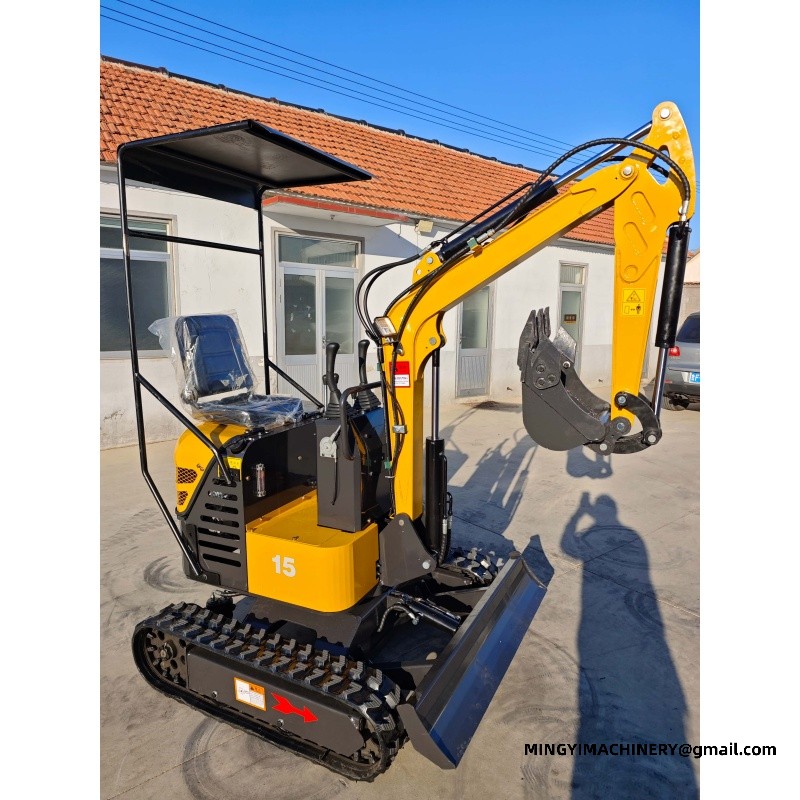
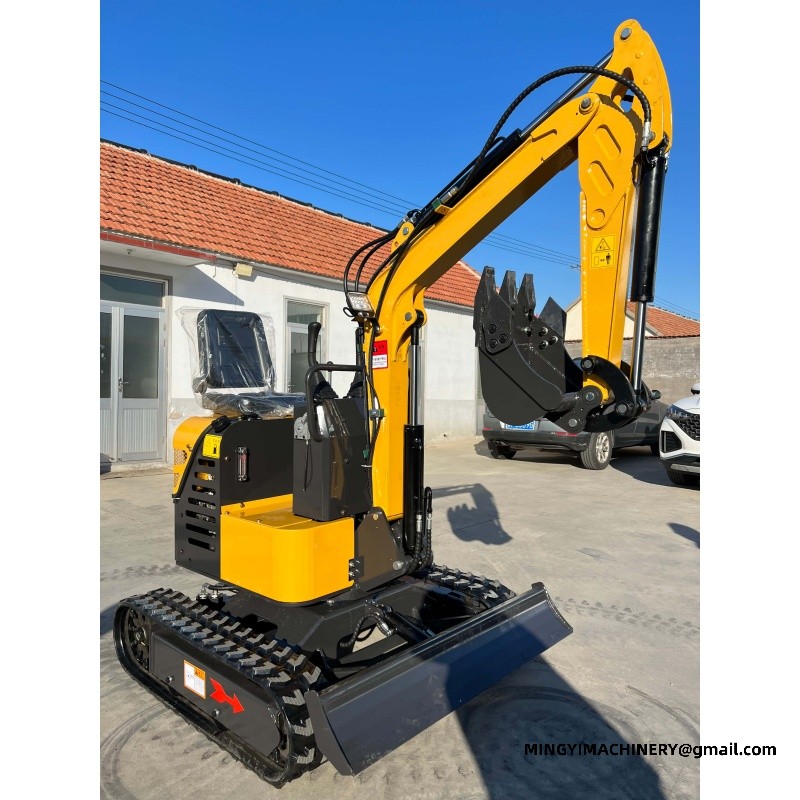
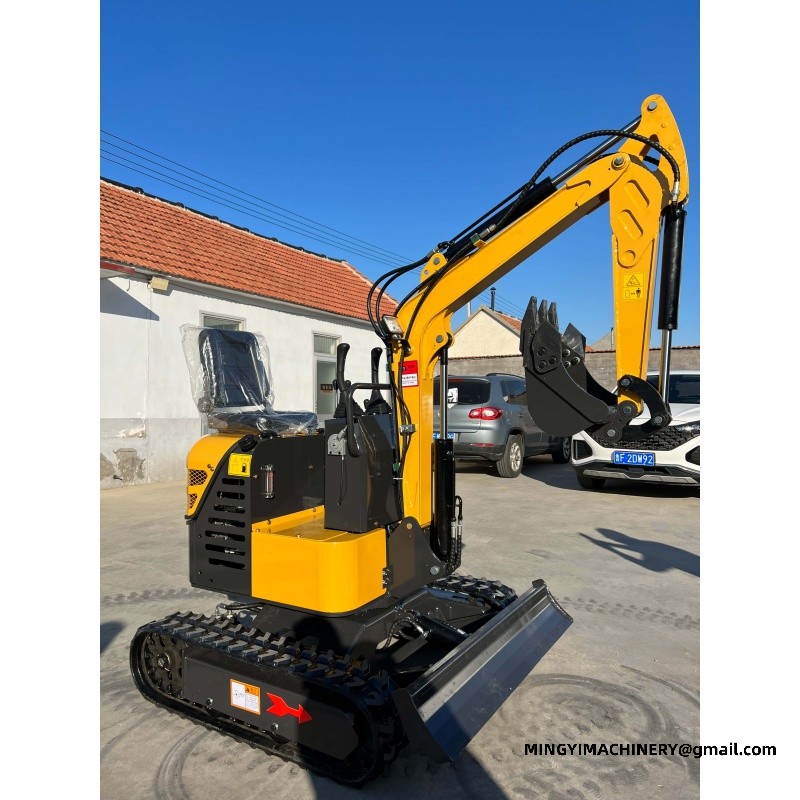
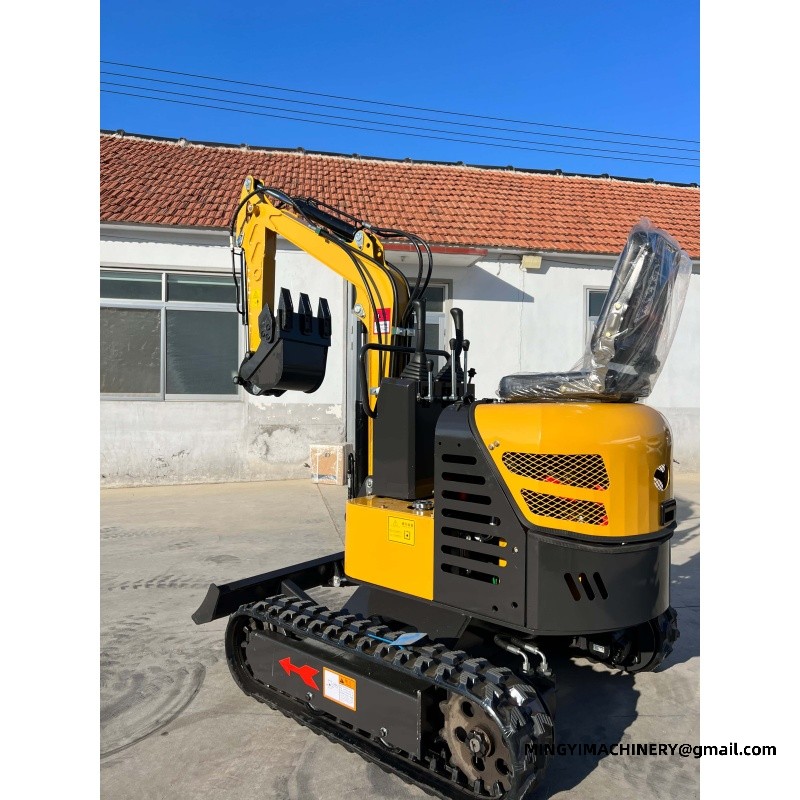
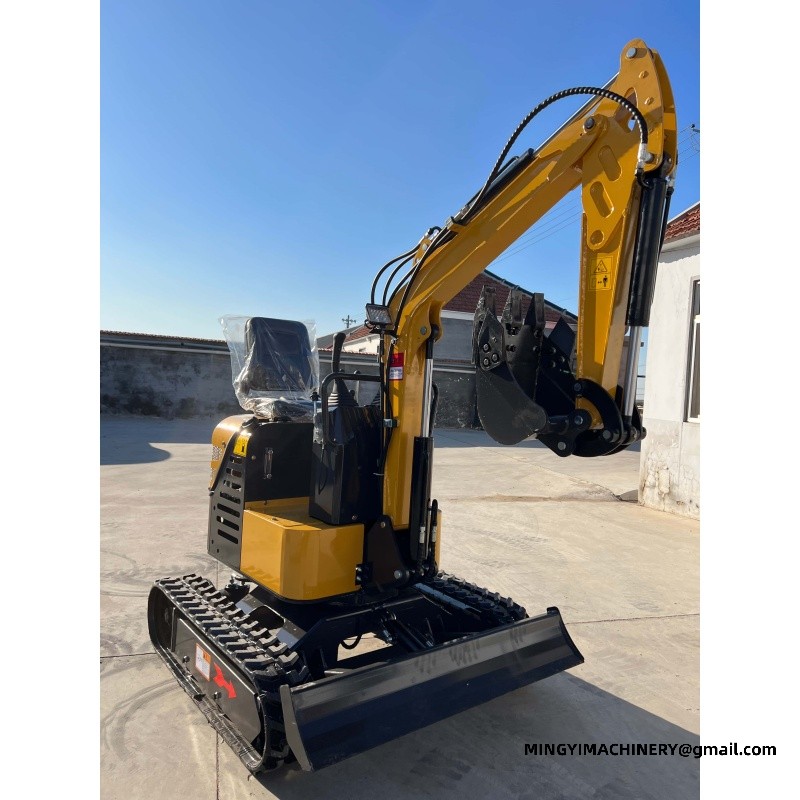
Reference specification — mini excavator range 20-3W 30-1W 30-2W 30-2L Operating weight 1900 kg (4188.78 lb) 2900 kg (6393.41 lb) 2700 kg (5952.48 lb) 2400 kg (5291 lb) Transport size (L×W×H) 2550 × 1100 × 2200 mm 3000 × 1250 × 2780 mm 3000 × 1100 × 2700 mm 2800 × 1500 × 2500 mm Max digging depth 1800 mm (70.87 in) 2200 mm (86.61 in) 2200 mm (86.61 in) 2200 mm (86.61 in) Max digging height 2820 mm (111.02 in) 3400 mm (133.86 in) 3000 mm (118.11 in) 2900 mm (114.17 in) Max dumping height 2050 mm (80.71 in) 2400 mm (94.49 in) 2000 mm (78.74 in) 2100 mm (82.68 in) Max digging radius 3050 mm (120.08 in) 4000 mm (157.48 in) 3800 mm (149.61 in) 3330 mm (131.1 in) Max digging distance 2300 mm (90.55 in) 2800 mm (110.24 in) 3050 mm (120.08 in) 2700 mm (106.3 in) Minimum turning radius 1450 mm (57.09 in) 2000 mm (78.74 in) 1750 mm (68.9 in) 1555 mm (61.22 in) Travel speed 5 km/h (3.11 mph) 5 km/h (3.11 mph) 7 km/h (4.35 mph) 7 km/h (4.35 mph) Gradeability 30° 30° 30° 30° Fuel consumption 2-3 L/h (0.528—0.793 gal) 2-3 L/h (0.528—0.793 gal) 2-3 L/h (0.528—0.793 gal) 2-3 L/h (0.528—0.793 gal) Fuel tank capacity 16 L (4.23 gal) 16 L (4.23 gal) 16 L (4.23 gal) 16 L (4.23 gal) Hydraulic oil tank 18 L (4.76 gal) 20 L (5.28 gal) 20 L (5.28 gal) 18 L (4.76 gal) Dozer blade lift height 180 mm (7.09 in) 420 mm (16.54 in) 230 mm (9.06 in) 230 mm (9.06 in) Dozer blade drop depth 210 mm (8.27 in) 210 mm (8.27 in) 280 mm (11.02 in) 280 mm (11.02 in)
Q. What is the unit in daily use?
A. Demolition work rewards control rather than raw power: break, sort and load without swinging into what has to stay standing. Indoors, zero tail swing keeps the counterweight off the walls and a thumb turns the bucket into a sorting hand. For demolition applications the practical route is to send the job list to the factory and let the build sheet answer it - which is exactly what this page invites.
Q. What attachment set matters for demolition?
A. A breaker for the concrete, a thumb or grapple for sorting, a bucket for clean-up - and steel tracks once the floor is rubble. The coupler turns the machine from breaker carrier to loader between passes.
Q. Does MINGYI supply attachments with the machine?
A. Yes - buckets, breakers, augers, rakes and the rest of the working set ship with the carrier, matched to the hydraulic flow and the coupler. For demolition the package is confirmed on the build sheet, so machine and tools arrive together and start work together.
Later additions and retrofits on a machine of this size
Later changes are easier when they were anticipated. Asking for the extra hydraulic circuit or the heavier mounting plate on the equipment on site at build time adds little and leaves the option open.
Reading the early symptoms on the machine itself
Operators notice things first because they hear the machine every day. Encouraging the person on the model in question to report small changes, and acting on them, is the most effective maintenance programme there is.
E-mail : sales@mingycn.com
LINE ( ID ): mingyicn
Related pages
mini excavator for snow removal · mini excavator for vineyard · Compact Wheel Loader: Choosing Between the Two Entry Builds · Mini Excavators









