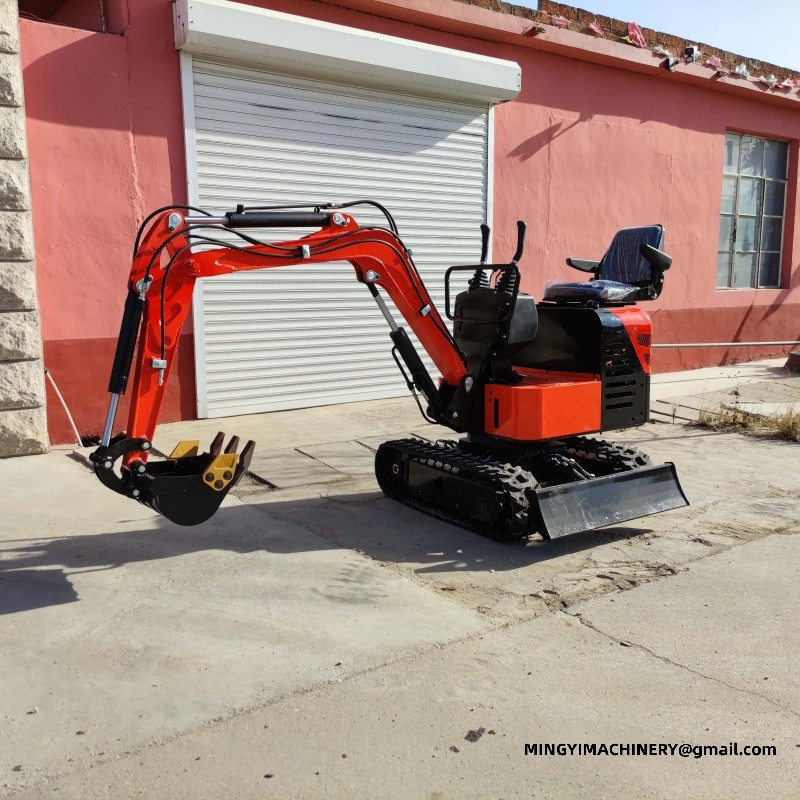
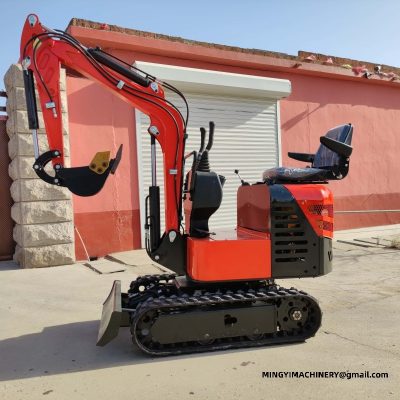
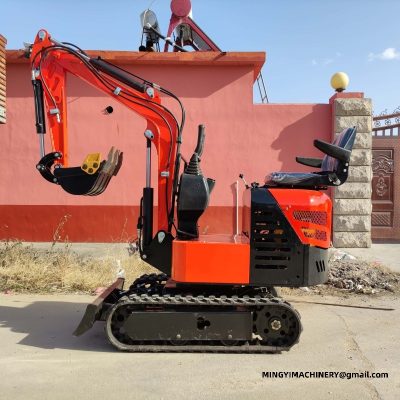
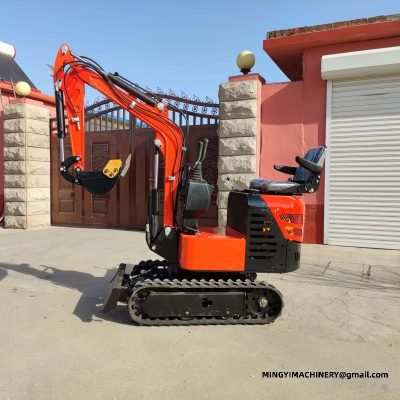
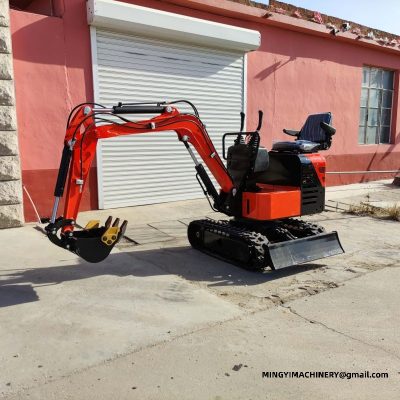
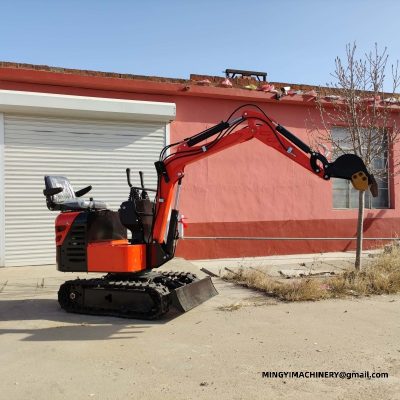
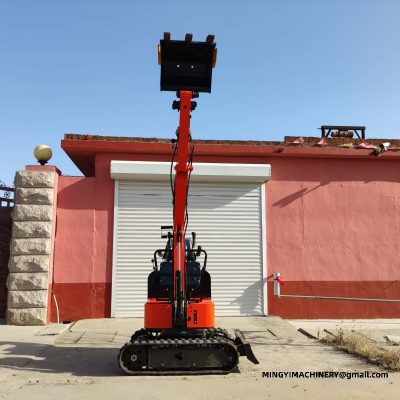
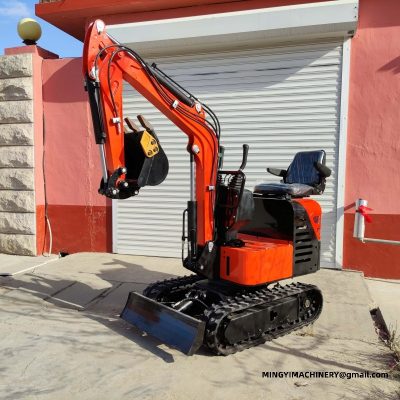
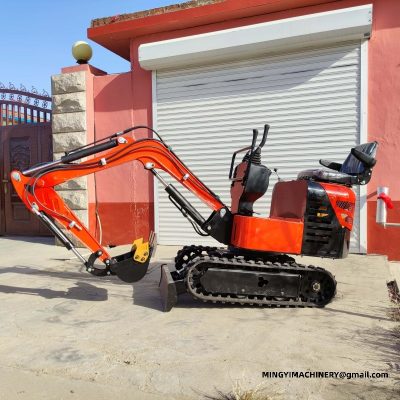
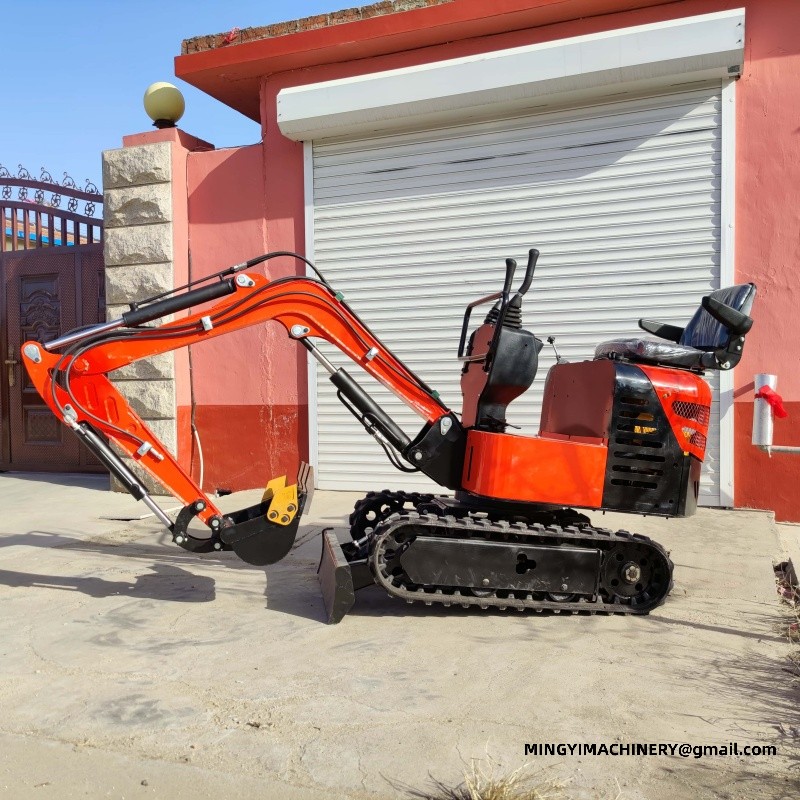
Backyard projects stall on the same obstacle every time: the digging. Patio bases, garden walls, tree planting, small ponds and cable runs all start with moving soil in a space surrounded by fences, lawns and the neighbour's boundary. A mini excavator sized for backyards removes that obstacle in an afternoon.
These are machines light enough to travel on a domestic trailer and narrow enough to pass a side gate, yet still able to dig footings, trench services and load a barrow run. MINGYI builds them to order so the size matches the access.
Backyard projects a small digger speeds up
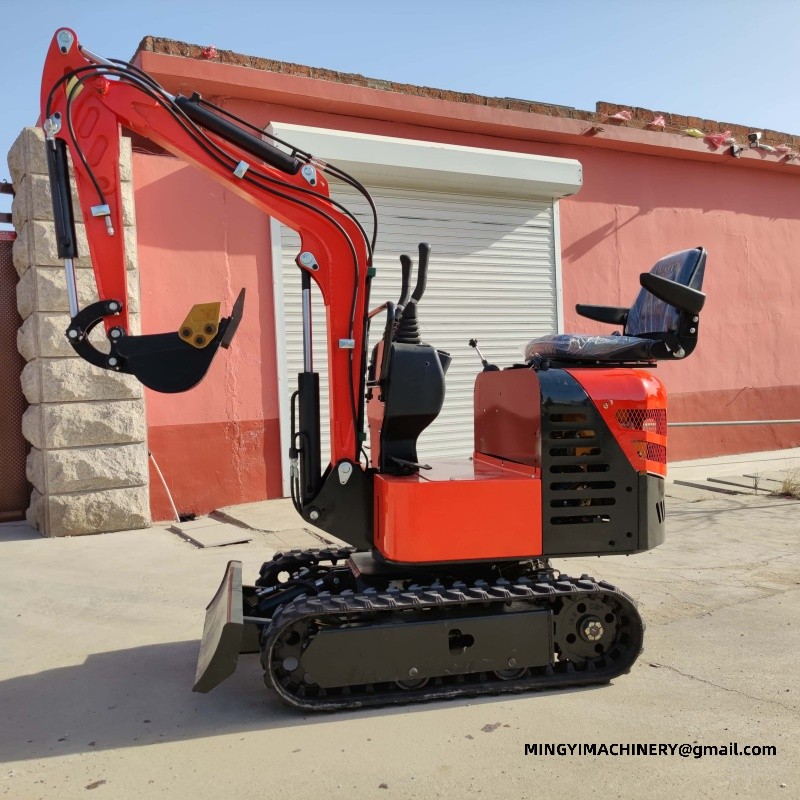
Typical work includes stripping turf for a new patio area, digging footing trenches for walls and pergolas, excavating for small water features and opening shallow runs for lighting and drainage. What would otherwise be weeks of evening shovelling becomes a short machine session.
Established planting usually survives the visit when the plan accounts for it: a swing boom digs along a fence without tracking the bed beside it, and rubber tracks spread the load across the lawn.
Choosing the right backyard machine
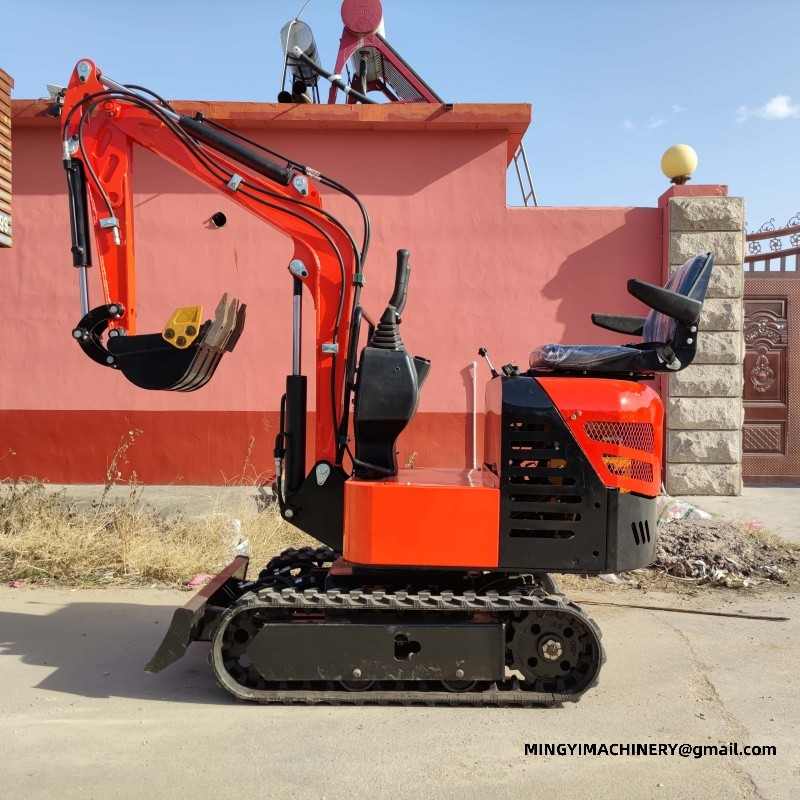
Start from the width of the narrowest gate and the strongest gatepost, then pick the class that clears it with allowance. Small classes within the 1 to 3.5 tonne band cover most domestic projects while remaining easy to tow and store between jobs.
An auger adds planting and post holes, and a quick coupler makes switching between digging and clean-up buckets a short job. Confirming the attachment list at the ordering stage keeps everything matched to one carrier from the start.
Backyards are small, but the digging in them is real digging. Describing your usual projects and the access they offer lets MINGYI fix a specification that does the work without renegotiating with the fence line.
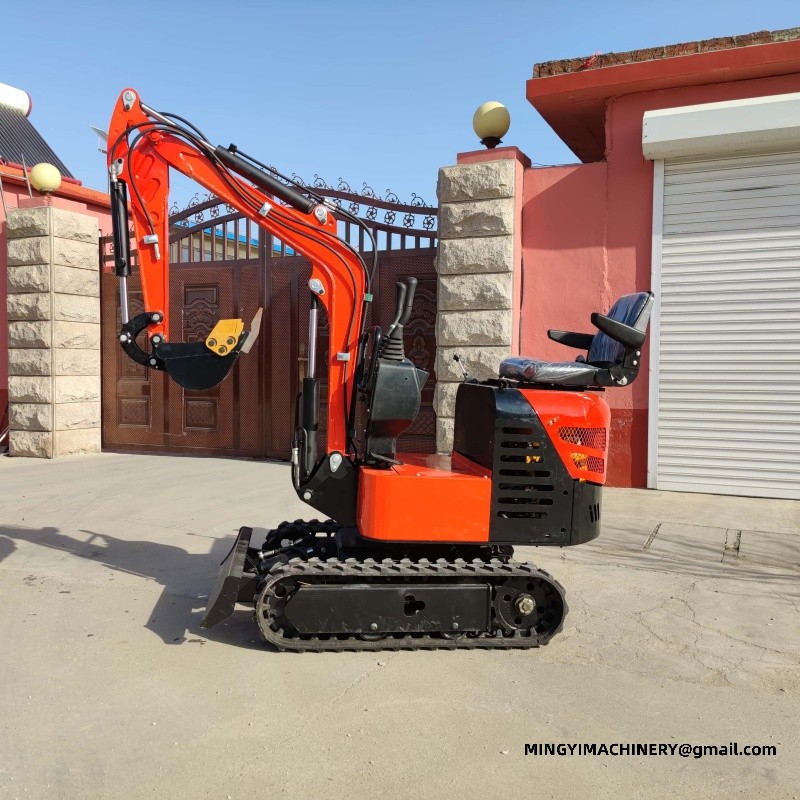
Matching mini excavator for backyard to ground conditions Hard and abrasive ground reverses the specification. On rock, demolition rubble or sharp gravel, steel tracks with rubber blocks on the excavator survive conditions that cut a rubber belt quickly. Mixed sites are common and argue for a compromise specification. Most buyers choose rubber for this class of machine and accept the wear, unless the majority of the work is on material that will damage it. Quick coupler practice on mini excavator for backyard A quick coupler is the single option that changes how a machine is used day to day. Fitted to the unit in daily use, it turns an attachment change from a two-person workshop job into a task the operator does alone in minutes. For a fleet that shares attachments between machines, a common coupler standard matters more than the coupler brand. A machine of this size that picks up the same tools as the larger machines keeps the rack usable across the yard. Trailering and moving mini excavator for backyard Loading practice matters as much as the numbers. The equipment on site is driven up ramps under its own power with the boom lowered and the tracks aligned, and secured at the points the manufacturer specifies. Detachable components reduce transport length. The machine itself built with a removable arm section or a folding step fits a shorter trailer and may avoid an oversize movement permit. Daily checks and maintenance on mini excavator for backyard Daily maintenance on the model in question is a short list: engine oil level, coolant, track tension, hydraulic oil level and a look at the hoses. Ten minutes at the start of the shift prevents most of the failures that stop a machine. Greasing is the second item. The slew ring, the boom and arm pins and the bucket linkage on the machine in that duty take grease daily in dusty work, and the intervals shorten further when the machine is used in water or mud. Parts, service and support for mini excavator for backyard Support after delivery is a parts question. Wearing items for the unit on the job - filters, belts, track components, bucket teeth and pins - are the items a buyer should plan to hold before the first service interval. Remote support is handled by video. A machine built for the work fault can often be diagnosed on a walk-around call with the panel open, which is faster than waiting for a visit and avoids shipping a part that is not needed. Noise, dust and working near occupied buildings Work near housing or occupied premises brings constraints that open sites do not. Start times, exhaust condition and how often the equipment in service needs to reverse are the practical limits that neighbours notice. Dust control is often part of the same conversation. Water, timing and work sequence reduce what leaves the site, and agreeing them in advance keeps the excavator working rather than stopped after a complaint. Hydraulic circuits on this class of machine Auxiliary hydraulic lines are what let a machine drive a tool rather than only a bucket. The unit in daily use specified with the right circuits and flow runs a breaker or an auger without an add-on power pack bolted to the frame. Hydraulic specification is easier to settle at build time than to correct later. A machine of this size delivered without auxiliary lines can still dig, but every additional tool becomes a retrofit project. Road and paving work for the equipment on site Road repair generates short, interrupted jobs - a patch, a drainage connection, a kerb line. The machine itself is economical here because it travels on a small trailer and starts working minutes after arriving. Breaking out a failed slab and backfilling the same hole in one visit is normal work for the model in question. The breaker and the bucket come off the same coupler, so the road is reopened the same day. Operator technique for the machine in that duty The second habit is tool discipline. Running the unit on the job with the right bucket width for the trench means less spoil, less reinstatement and a cleaner job than a wide bucket and a lot of trimming. Stability is the third. A machine built for the work working across the tracks rather than over the corners keeps the machine steady and the undercarriage loaded evenly, which shows up as track life at the end of the season. Canopy or enclosed cab on the equipment in service A canopy keeps the machine light and the operator aware of the surroundings, which suits short jobs in warm weather. A fully enclosed cab is specified where rain, dust or cold are part of the working year, and it can be added to the excavator as a retrofit rather than only at build time. Enclosure also changes noise and dust exposure. A sealed cab on this class of machine keeps dust out on dry sites and lets the machine work through weather that would otherwise stop a canopy machine for the day. Orchard, vineyard and farm use of the unit in daily use Orchard and vineyard work is carried out between rows. A machine of this size with a narrow chassis and a swing boom works down the row without damaging the trees, which is the reason a full-size machine is not used at all. Farms also use the equipment on site for general maintenance - clearing a watercourse, repairing a track, loading a spreader. One carrier with a few attachments covers most of the jobs that would otherwise wait for a contractor. What owners should plan for beyond the machine itself Purchase decision is the visible part of the effort. Fuel, filters, tracks or tyres, the operator and the transport between sites are the items that decide what the model in question actually demands over a few seasons, and they are worth listing before the order. The useful comparison is demand per working hour, not demand per machine. The machine in that duty that works more hours a year spreads its standing takes over more output, which is why utilisation usually matters more than the invoice figure. Specification data for the unit on the job Buyers comparing a machine built for the work usually start from four numbers - weight, digging depth, reach and transport width - because those are the ones that decide whether the machine can be delivered and whether it can do the job once it is there. These are the reference figures for the equipment in service. MINGYI confirms the final build sheet, including engine and attachment choices, against the destination and the job list before production. Machines leave the factory prepared for container or flat rack shipment. The excavator is normally shipped with the attachment set and the spare parts list agreed in advance so the container is planned once. Buyers who import regularly plan the spare parts with the machine. This class of machine ordered with a wearing-parts kit arrives ready to work rather than ready to wait for the first service interval.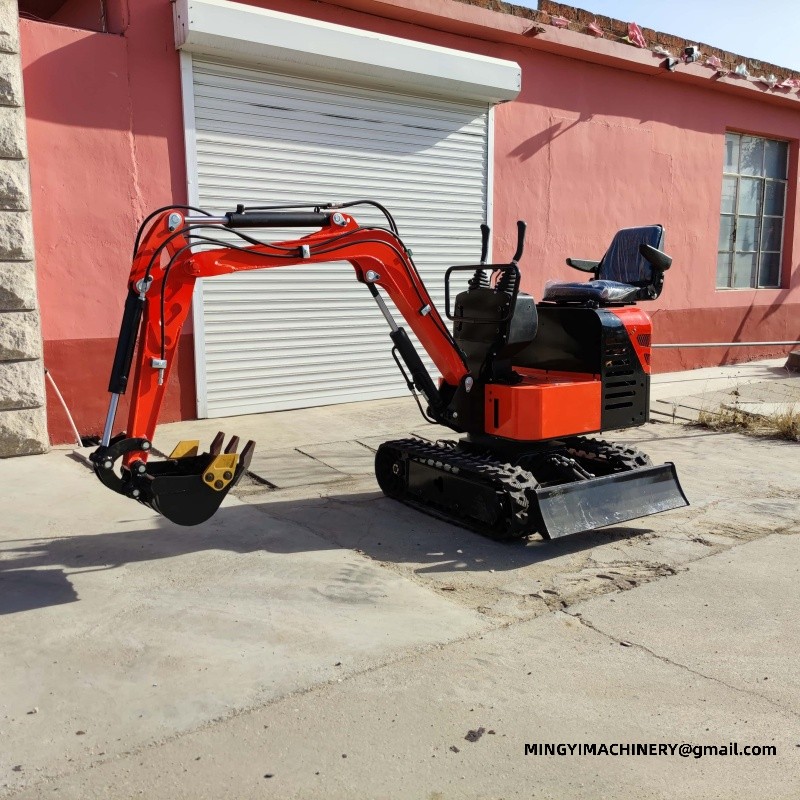
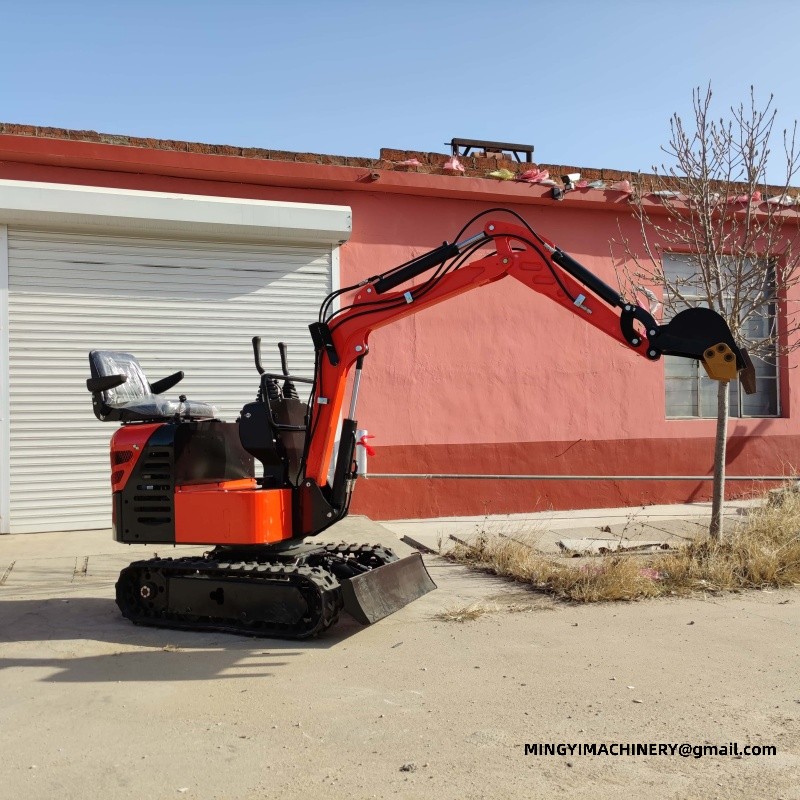
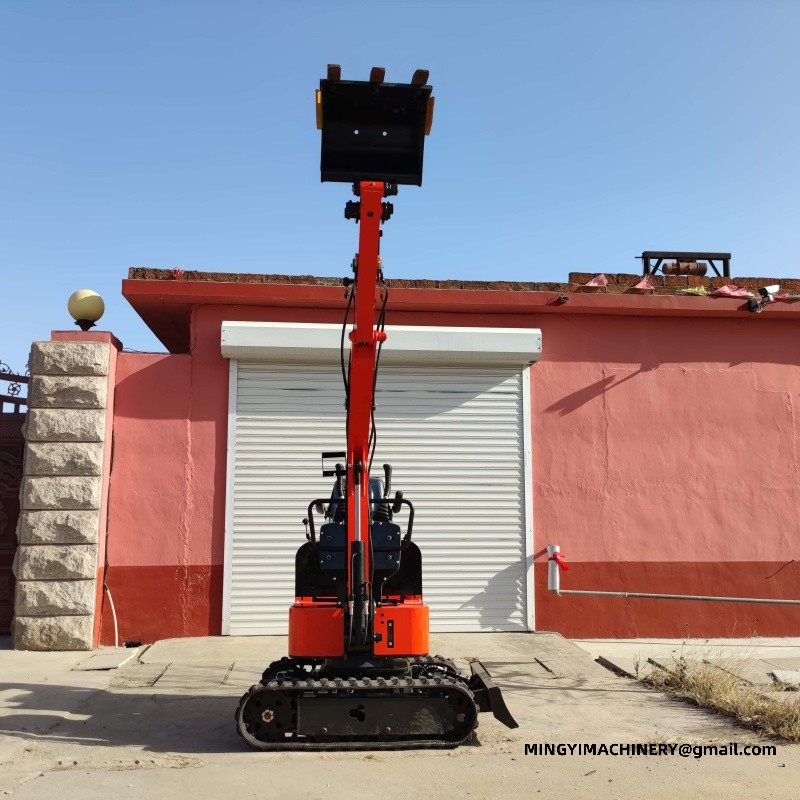
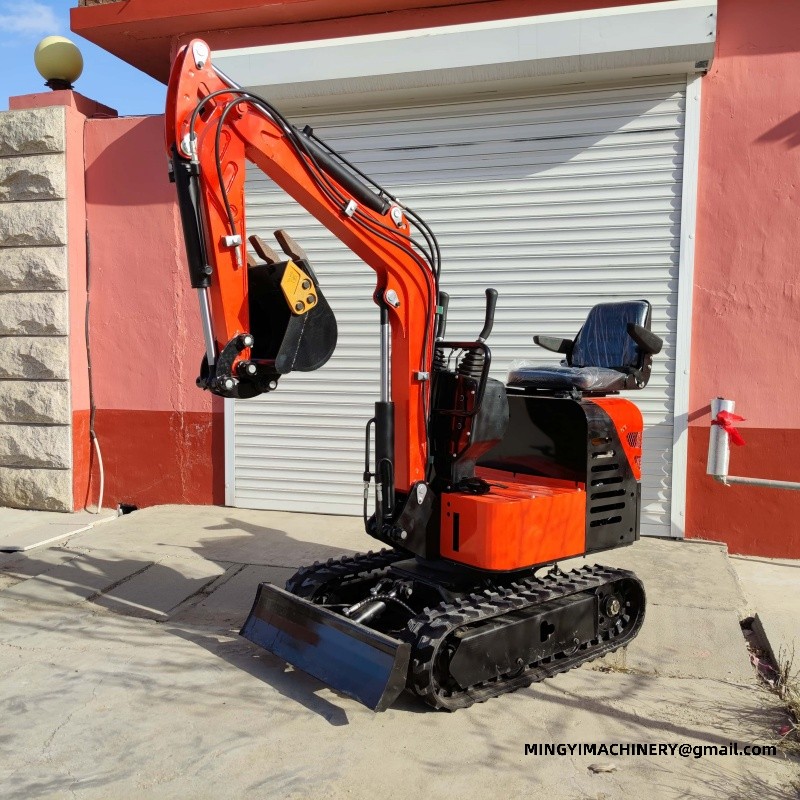
Reference specification — mini excavator range 09W 15W 25L 30-2L Operating weight 1100 kg (2425.08 lb) 1400 kg (3086.47 lb) 2200 kg (4850.17 lb) 2400 kg (5291 lb) Transport size (L×W×H) 1800 × 750 × 1970 mm 2200 × 930 × 2250 mm 3000 × 1300 × 2700 mm 2800 × 1500 × 2500 mm Max digging depth 1250 mm (49.21 in) 1630 mm (64.17 in) 2300 mm (90.55 in) 2200 mm (86.61 in) Max digging height 2800 mm (110.24 in) 2750 mm (108.27 in) 3100 mm (122.05 in) 2900 mm (114.17 in) Max dumping height 1700 mm (66.93 in) 1960 mm (77.17 in) 2050 mm (80.71 in) 2100 mm (82.68 in) Max digging radius 2570 mm (101.18 in) 2900 mm (114.17 in) 3900 mm (153.54 in) 3330 mm (131.1 in) Max digging distance 1869 mm (73.58 in) 2100 mm (82.68 in) 3100 mm (125.05 in) 2700 mm (106.3 in) Minimum turning radius 1000 mm (39.37 in) 1300 mm (51.18 in) 1800 mm (70.87 in) 1555 mm (61.22 in) Travel speed 3 km/h (1.86 mph) 3 km/h (1.86 mph) 7 km/h (4.35 mph) 7 km/h (4.35 mph) Gradeability 30° 30° 30° 30° Fuel consumption 1-1.3 L/h (0.264—0.343 gal) 1-1.3 L/h (0.264—0.343 gal) 2-3 L/h (0.528—0.793 gal) 2-3 L/h (0.528—0.793 gal) Fuel tank capacity 8 L (2.11 gal) 10 L (2.64 gal) 16 L (4.23 gal) 16 L (4.23 gal) Hydraulic oil tank 16 L (4.23 gal) 16 L (4.23 gal) 18 L (4.76 gal) 18 L (4.76 gal) Dozer blade lift height 180 mm (7.09 in) 180 mm (7.09 in) 230 mm (9.06 in) 230 mm (9.06 in) Dozer blade drop depth 210 mm (8.27 in) 210 mm (8.27 in) 280 mm (11.02 in) 280 mm (11.02 in)
Q. What is the unit in daily use?
A. The whole point of the smallest classes is presence - a digging machine that reaches work nothing bigger can enter. Measure the doorway, gate or stairwell first, then match the machine to the gap - the smallest classes pass where a wheelbarrow would struggle. Read a machine of this size together with the engine, track and attachment pages: jobs around backyard are decided by how those choices line up, not by any single number on the sheet.
Q. How does the machine get through a narrow opening?
A. Retractable or variable-width frames narrow for the passage then widen for stability, and zero tail swing keeps the counterweight inside the track line. Measure the gap first, then match the class - the smallest machines pass where a wheelbarrow would struggle.
Q. How do I get a specification?
A. Send the model, the destination and the attachment list by email or LINE - the channels listed just below this section. The reply covers the specification, lead time, packing and freight in one document, with the backyard build sheet attached.
Hot, humid and dusty conditions around the equipment on site
Humidity attacks the parts that are not used. Storage in a damp climate means the machine itself needs the exposed metal protected and the machine run regularly, because standing still does more damage than working.
Moving the model in question between sites
A machine that works on one site still has to reach the next. The overall dimensions and the operating weight of the machine in that duty decide what trailer or truck is needed, and that decision belongs before the job is booked.
E-mail : sales@mingycn.com
LINE ( ID ): mingyicn
Related pages
narrow space mini excavator · low fuel consumption mini excavator · Front End Loader Manufacturer: Boom Geometry and Hinge Steel · Mini Excavators









