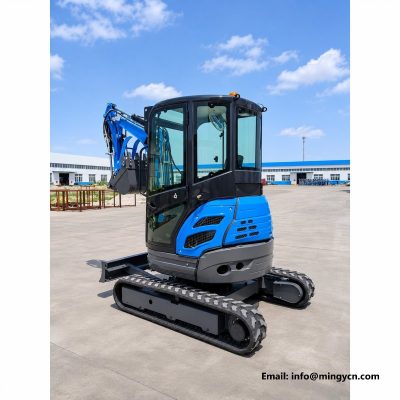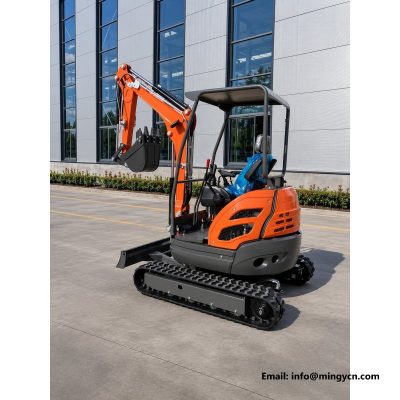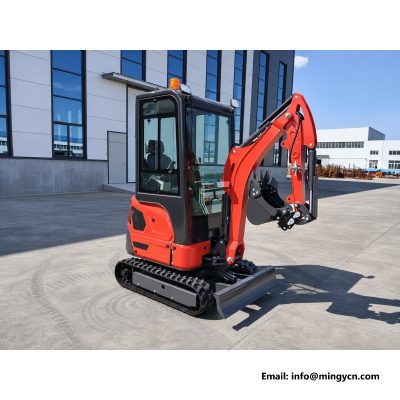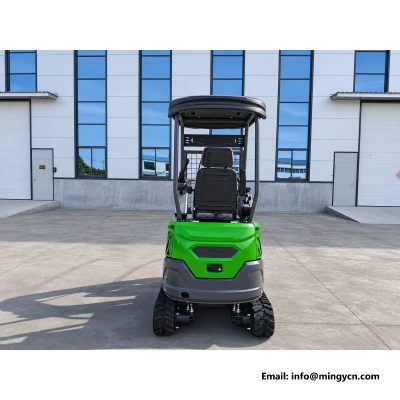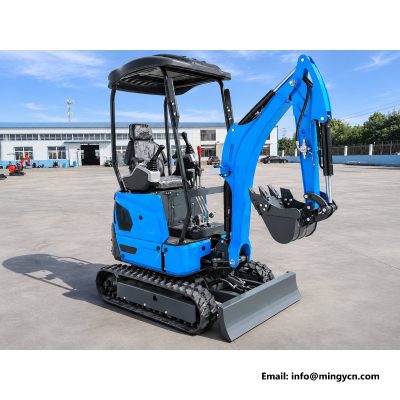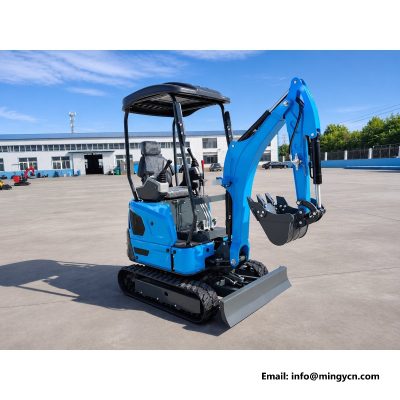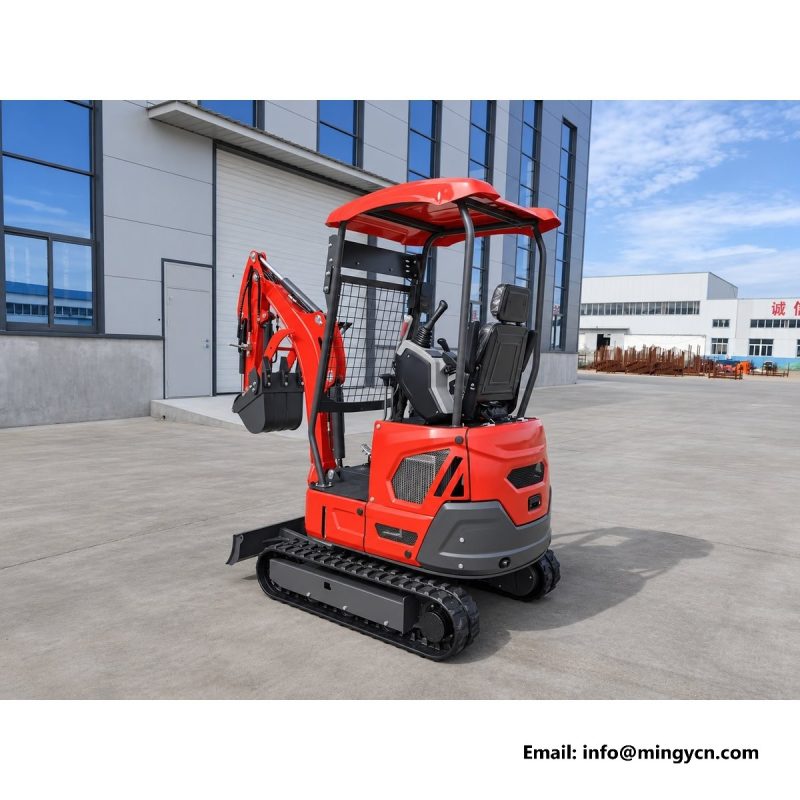
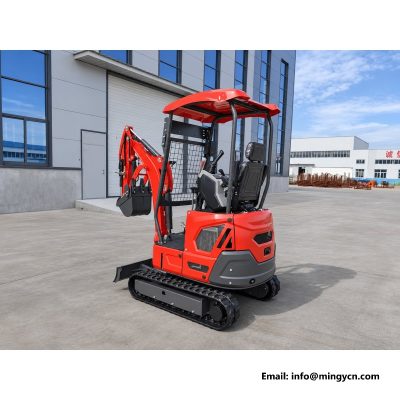
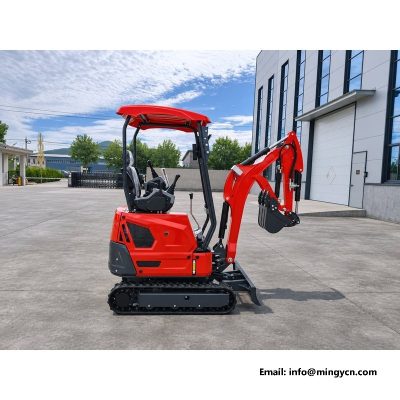
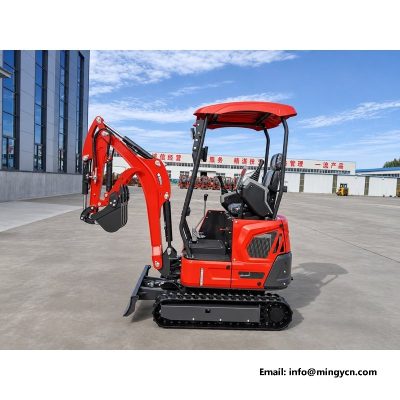
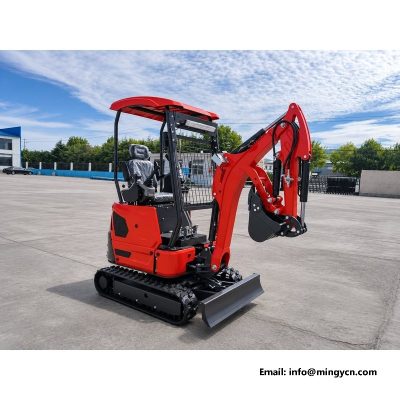
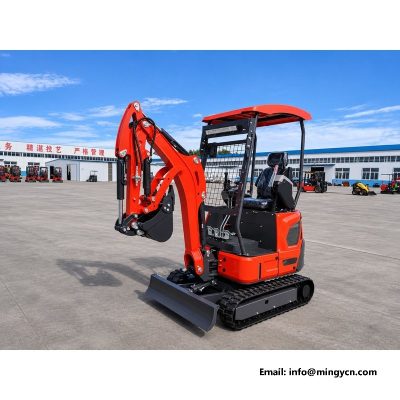
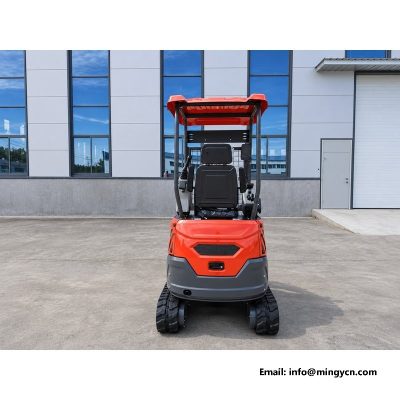
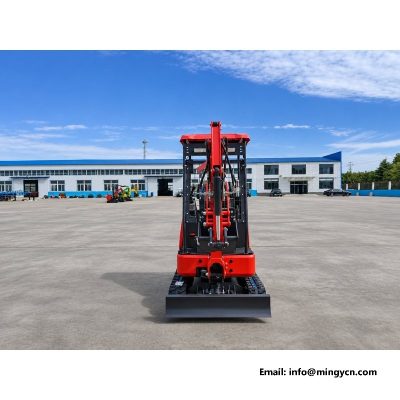
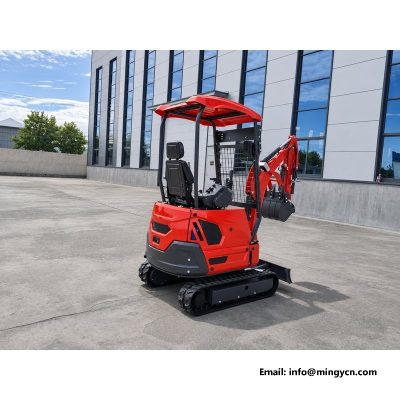
Cycloid travel motor, in-cab display and protective guard on the MY20 mini excavator.
This version of the MY20 carries three items the base canopy machine does not: a cycloid travel motor, an in-cab display and a guard around the glass. It uses the same 1,260 kg carrier and 1,150 mm body width, with pilot joystick control and a 2,100 mm digging depth, but the options change what it can be asked to do and how it should be maintained. The sections below cover the travel drive, the instrument panel and the guards in turn, then look at the rental and demolition cases where the combination makes sense, and finish with the daily checks and the two faults an owner is most likely to meet.
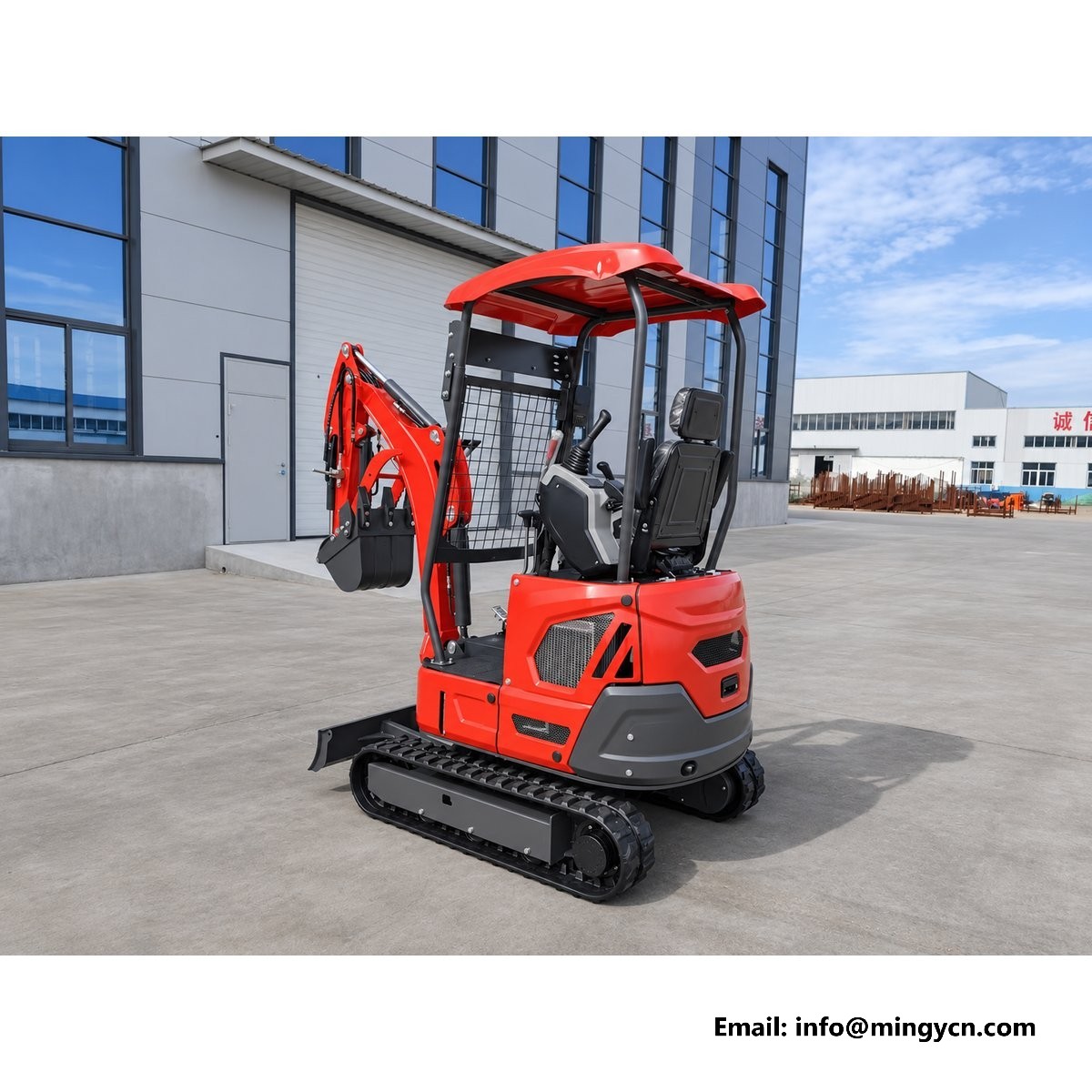
This build of the MY20 adds three items the standard canopy machine does not carry: a cycloid travel motor, an in-cab display and a guard around the glass. Each one answers a different problem. The motor changes how the machine puts power onto the ground at low speed. The display gives the operator information that would otherwise require a walk around the machine. The guard decides how much debris the cab can take before a window becomes a cost. Together they move the machine from a landscaper's tool toward a unit that can survive a rental fleet or a light demolition contract. The sections below take each item in turn, then look at how they interact, what to check daily, and which faults an owner can diagnose without a dealer visit.
A cycloid motor, also called an orbit or gerotor motor, produces rotation from a fixed ring of rollers and a lobed rotor that orbits inside it. Oil entering the motor pushes the rotor around, and the rotor turns the output shaft through a small set of internal splines. The arrangement gives high torque at low speed without a separate gear reduction, in a housing short enough to sit inside the track frame. On a mini excavator that means the final drive is compact, the track can be driven close to the hub, and the machine can creep at a controlled speed while the operator works the boom. Fewer moving parts between motor and sprocket also means fewer places for backlash to develop, which suits machines that live on uneven ground.
| Model | MY20 |
| Operating weight | 1,260 kg |
| Overall dimensions (L x W x H) | 2,550 x 1,150 x 2,200 mm |
| Engine options | Kubota D722 / Laidong 385 / Kubota D902 |
| Rated power | 10.2 kW / 29 kW / 11.8 kW |
| Rated speed | 2,500 / 2,350 / 2,300 rpm |
| Max digging depth | 2,100 mm |
| Max digging height | 2,820 mm |
| Max dump height | 2,050 mm |
| Max digging radius | 3,050 mm |
| Min swing radius | 1,450 mm |
| Max digging distance | 2,300 mm |
| Dozer blade lift / drop | 180 mm / 210 mm |
| Hydraulic tank | 18 L |
| Fuel tank | 16 L |
| Rubber track size | 200 x 41 x 72 mm |
| Gradeability | 30 degrees |
| Travel speed | 2 km/h |
| Control type | Pilot (joystick) hydraulic |
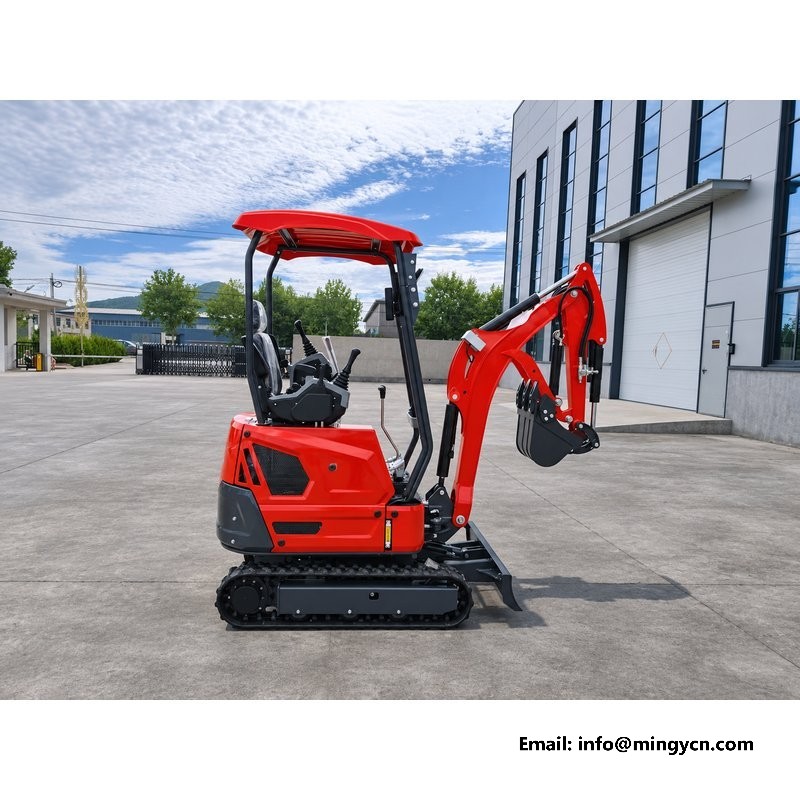
Travel speed on this machine is 2 km/h, and gradeability is 30 degrees, so the travel drive does its hardest work at almost zero speed. That is the condition a cycloid motor handles well: full torque available from the first turn, without the slip and heat a faster motor with a reduction box produces when it is stalled against a ramp. In practice the operator feels it when backing up a trailer ramp, when climbing out of a trench with a full bucket, or when the blade is pushing spoil and the tracks are close to losing grip. The motor keeps turning, the machine keeps moving, and the relief valve is not asked to dump flow for long periods. On wet clay the limit becomes track grip rather than motor torque, which is the correct order of limits.
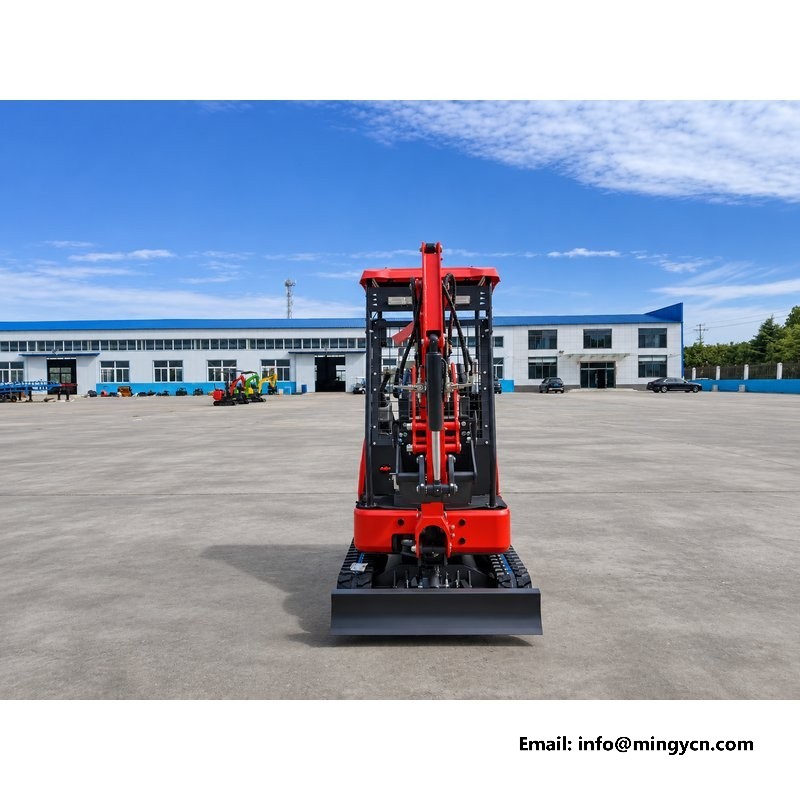
The motor sits at the rear of each track frame, driving the sprocket through a hub, with the hose pair routed along the frame inside a guard. That position keeps the motor out of the mud thrown by the tracks and shortens the run from the control valve. A buyer looking at the machine should follow those two hoses from the valve block to the motor and check that they are clipped, that they clear the frame edge, and that the guard is bolted rather than tacked. The hub area is where leaks appear first, usually as a dark film of oil around the sprocket rather than a drip on the floor. Wiping that area at the end of a shift costs a rag and tells you more than any inspection at service time.
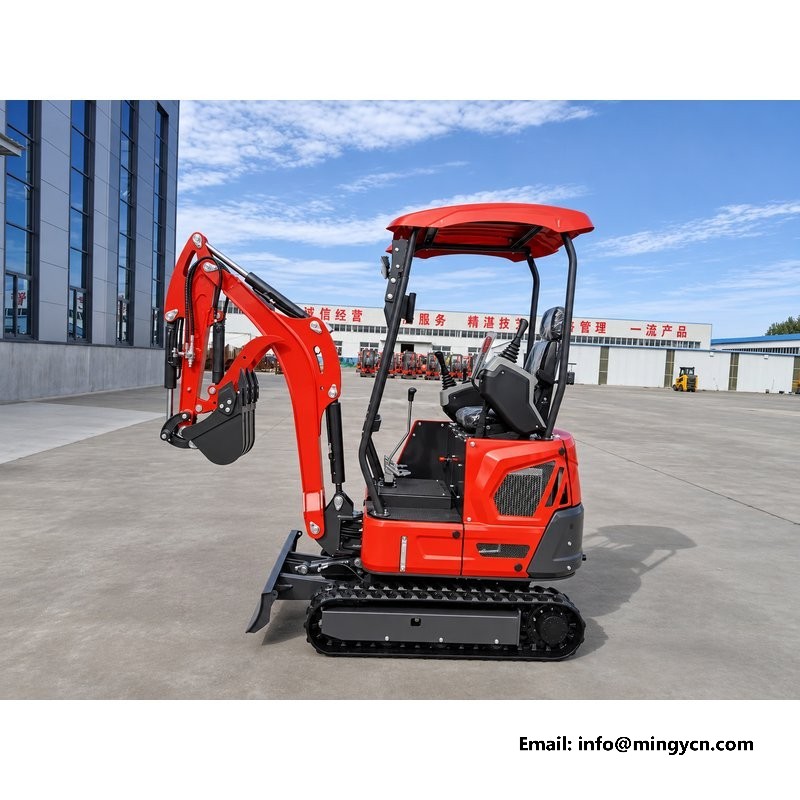
The display in this cab is a working instrument, not a decoration. It gives the operator information that used to require a walk to the engine cover: hour meter, coolant temperature, and warning lamps for oil pressure and charging. On a rental machine the hour meter is the commercial core of the unit, because billing, service intervals and warranty records all hang off it. In daily use the temperature gauge is the one that earns attention, since a blocked radiator or a low coolant level shows there before it becomes a seized engine. The display also gives a fault indication when a sensor or a circuit fails, which shortens diagnosis. Treat a flickering or blank screen as a fault in its own right rather than a cosmetic issue. If the screen has a backlight dimmer, set it for the light on site, not for the showroom.
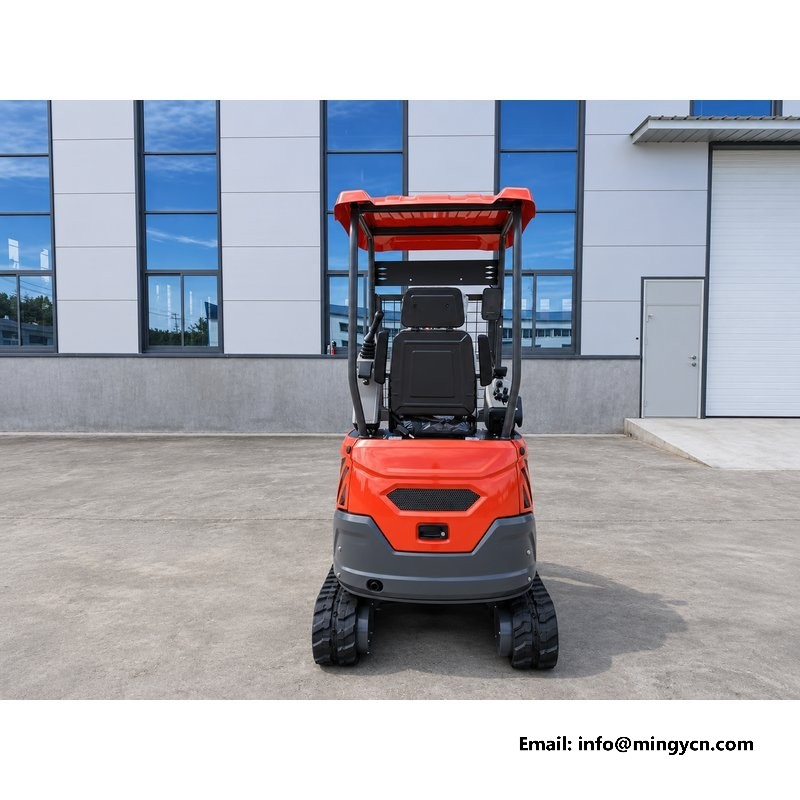
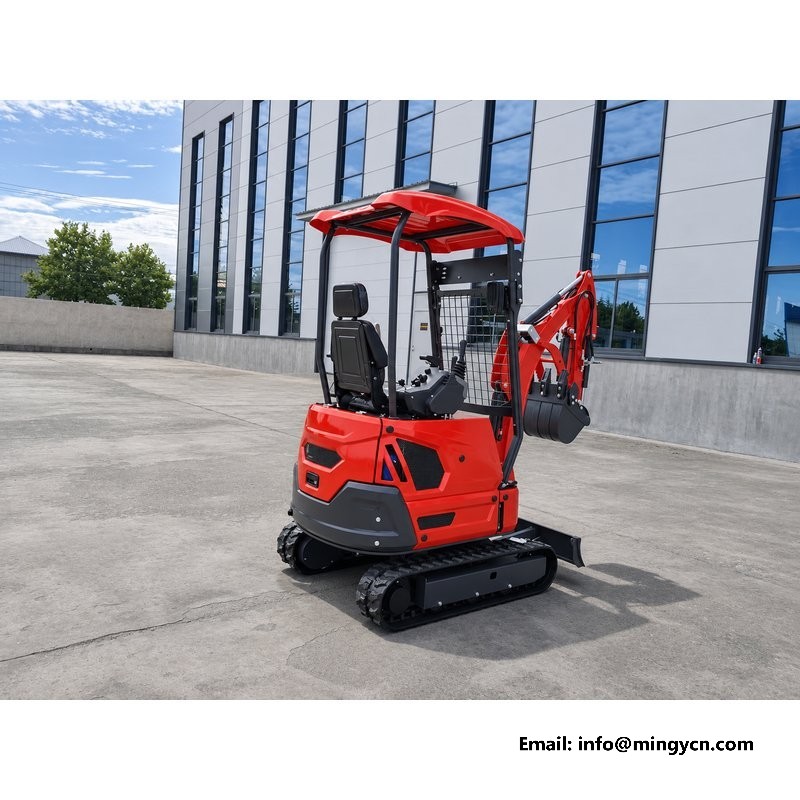
The guards on this machine cover the areas debris reaches first: the front windscreen, the side glass and the lamps on the boom side. In demolition work, concrete fragments and brick ends leave the bucket at speed, and a laminated or toughened window is not designed for that. In forestry and land clearing the same screens stop branches from whipping into the glass when the house swings. The screens also protect the operator from the smaller, constant hazard of dust and grit scoring the glass, which over a season turns a clear window into a haze. A guard is only useful if it is mounted to the structure rather than to the glass frame, so check the mounting points and the mesh before you approve the build. Mesh size is a compromise: fine mesh stops more, coarse mesh lets the operator see.
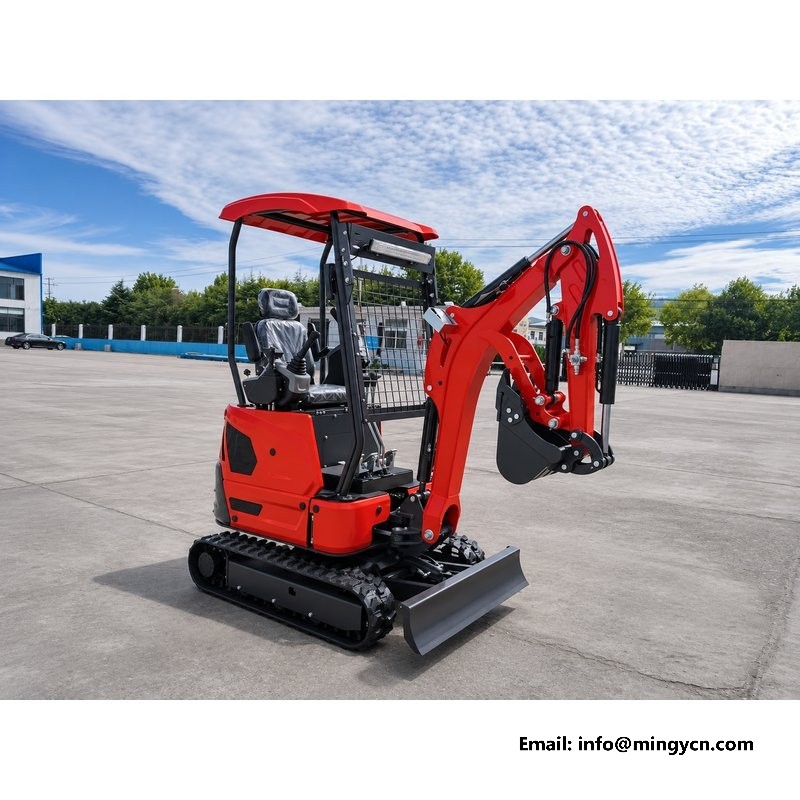
Rental machines are judged by cost per hour, and each of these options attacks a different line in that calculation. The guard reduces glass claims, which are among the most frequent damage items on a small excavator. The display gives the yard an hour reading it can bill against without trusting the customer's estimate. The cycloid travel motor reduces the chance of a travel fault caused by a fast motor working against a reduction gear on a machine that is often overloaded by inexperienced operators. None of the three makes the machine dig better. What they do is keep a unit in service and out of the workshop, which is the figure a fleet manager actually watches at the end of a quarter. A machine that is off hire costs more than any of the three options on this page.
The combination suits three working environments particularly well. In light demolition the guard protects the cab while the machine works inside a building shell where a larger excavator cannot fit. In forestry and orchard clearance the screens stop branches, and the compact body works between trunks without stripping bark from the rows on either side. In scrap yards and recycling sheds the guard keeps flying metal out of the glass while the machine handles material that would destroy a canopy machine's exposed operator. Outside those environments the options are less valuable: a landscaper working clean soil will rarely need the screens, and the extra weight and cost are better spent on a second bucket or a hydraulic thumb. For a yard that handles mixed scrap, the guard is the item that decides whether the machine can be sent out at all.
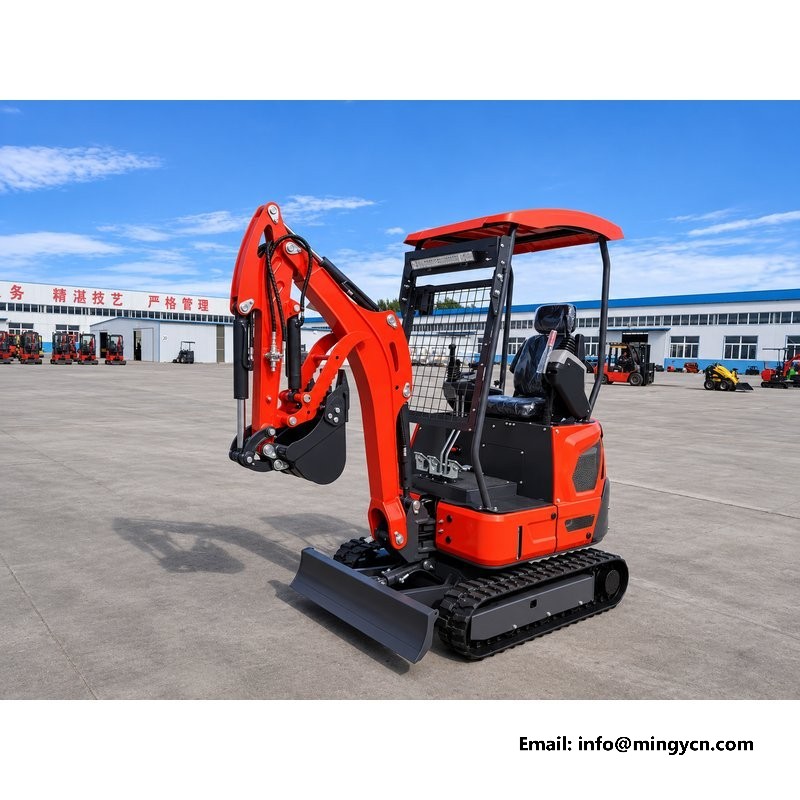
A short walk-round at the start of each shift covers most of what these three options need. At the track frame, wipe the hub and look for oil film, check the hose pair for chafe against the guard, and confirm the sprocket teeth are clean. At the cab, check that the guard mounts are tight and that no mesh strand has broken and is pointing at the glass. Inside, switch on the display and confirm the hour meter advances, the temperature reads cold, and no warning lamp stays lit after the engine starts. Finish with the wiper and the washer, because a dirty screen behind a guard is difficult to clean and easy to ignore until visibility becomes a safety issue. Record the hour reading in the log at the same time, so a missing entry is noticed early.
A machine that travels slowly or pulls to one side is usually suffering from something simple, and the checks should run from the ground up. First confirm the track is not over-tight and that the sprocket is not packed with clay. Then check both hoses at the motor for a soft spot or a crushed section, since a restricted return line will make the drive feel weak long before the motor fails. Compare the two tracks on flat ground: if one side is slow in both directions, the fault is in that motor or its circuit rather than in the pump. Only after those checks should relief pressure be tested, and that test belongs to a technician with the correct gauge. If both tracks are slow, look at the pump and the relief valve before the motors.
Most display faults on a machine of this size are electrical rather than electronic. Start at the fuse box and confirm the circuit has power with the key on. Then check the plug at the back of the display: a connector strained by a harness tie, or corroded by cab condensation, will cause an intermittent screen long before the unit itself fails. Look for a rubbed wire where the harness passes the cab pillar, and check the earth point on the frame. If the screen lights but shows no data, the fault is more likely in the sensor circuit than in the display. Swap the display with a known good unit before ordering a replacement, because the part is expensive and the diagnosis is cheaper. Keep a spare fuse and a spare connector in the tool kit; both fail more often than the screen.
The right way to order this build is to start from the work, not from the option list. If the machine will spend most of its life on clean soil in gardens, a canopy unit with pilot control is enough and the guard is money spent on nothing. If it will go into a rental fleet, the display and the guard pay back within the first season of damage and billing disputes. If it will work demolition or forestry, all three items belong on the order, together with a spare screen and a spare set of guard mounts. Ask the factory to confirm the travel motor type on the order confirmation, and ask for the display manual to be supplied with the machine rather than as a separate item. The order confirmation is the document that decides what arrives.
A cycloid, or orbit, motor produces high torque at low speed inside a short housing, so it can drive the track sprocket without a separate gear reduction. On a 1,260 kg machine limited to 2 km/h, that torque is available from the first turn of the track, which is what the operator needs on a trailer ramp, in mud, or when climbing the 30 degree grade. The layout also reduces the number of parts between the motor and the sprocket.
For an owner-operator working clean sites, the hour meter and warning lamps are a convenience. For a rental fleet they are close to essential, because billing, service intervals and warranty records depend on recorded hours rather than on a customer's estimate. The temperature gauge also gives early warning of a blocked radiator or low coolant, which is cheaper than a seized engine. Order it with the machine so the harness and sensors are factory fitted.
Ordering and technical support
Email: sales@mingycn.com
LINE (ID): mingyicn
Tell us your working width, ground conditions and the attachment you need, and we will confirm the right configuration and shipping details.