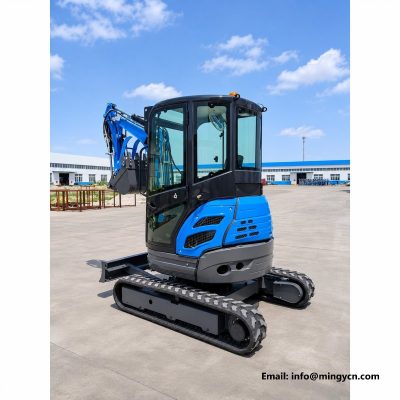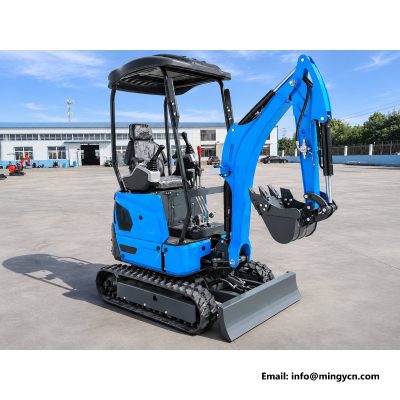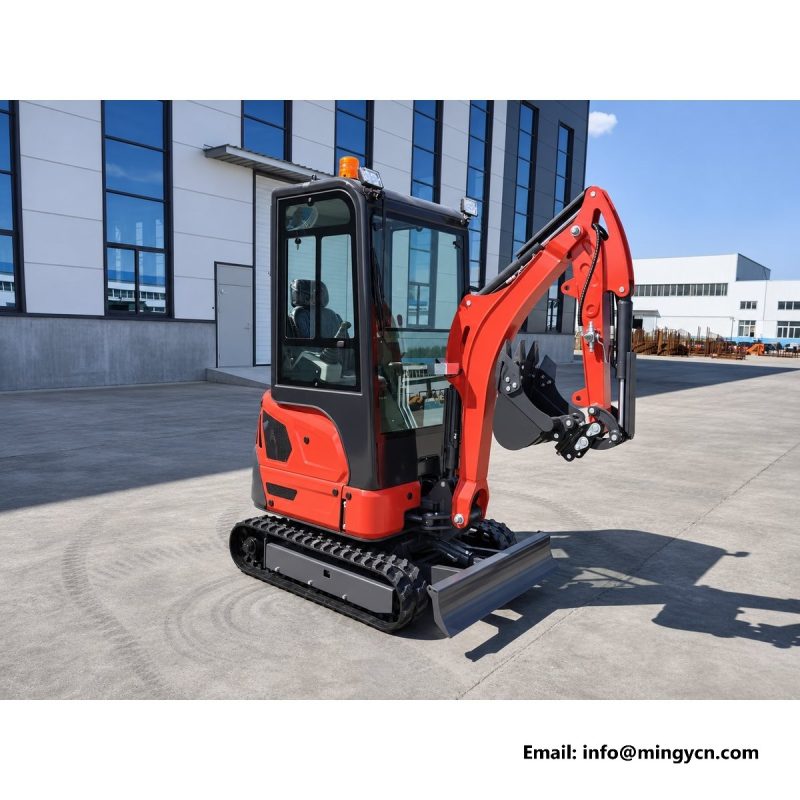
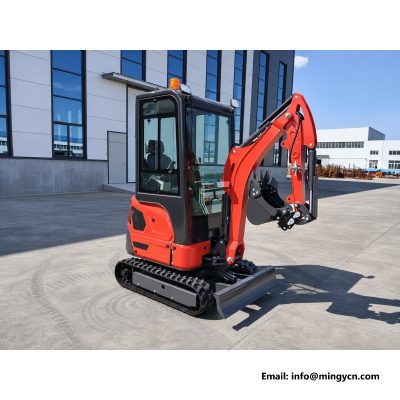
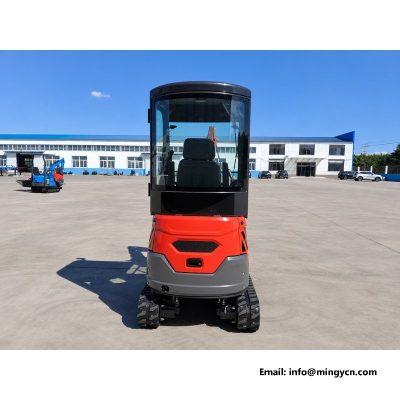
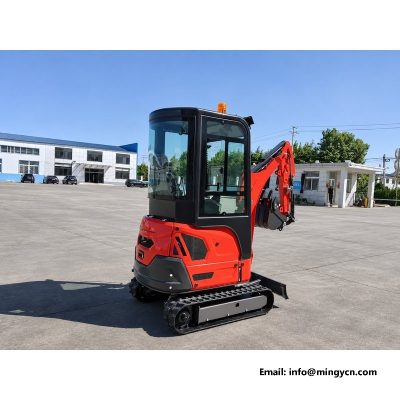
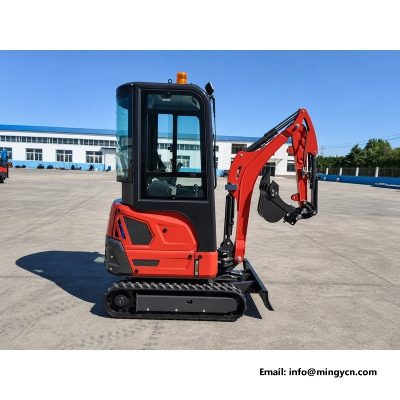
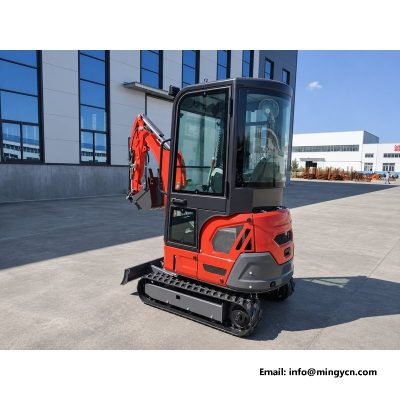
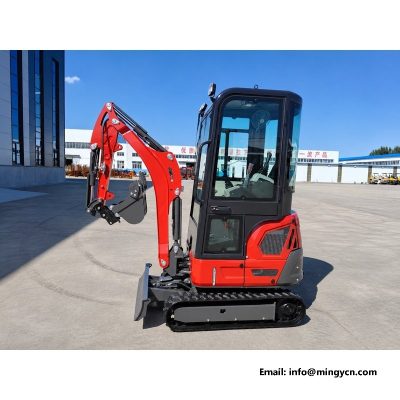
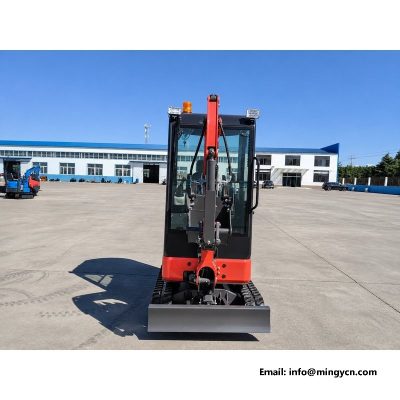
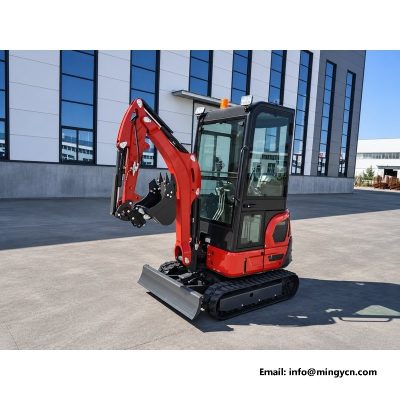
Enclosed cab version of the MY20 mini excavator for long shifts in dust and bad weather.
The cab version of the MY20 keeps the same 1,260 kg undercarriage, the same 1,150 mm body width and the same 2,100 mm digging depth as the canopy machine, and adds an enclosed operator station with glass on all sides. That change looks small in a photograph and matters a great deal across a long shift. This page looks at what the cab does for dust, noise and weather, how the door and the glass should be checked at handover, what the heater and air conditioning options add, and how a dealer or rental yard should decide how many cab units to carry against canopy units.
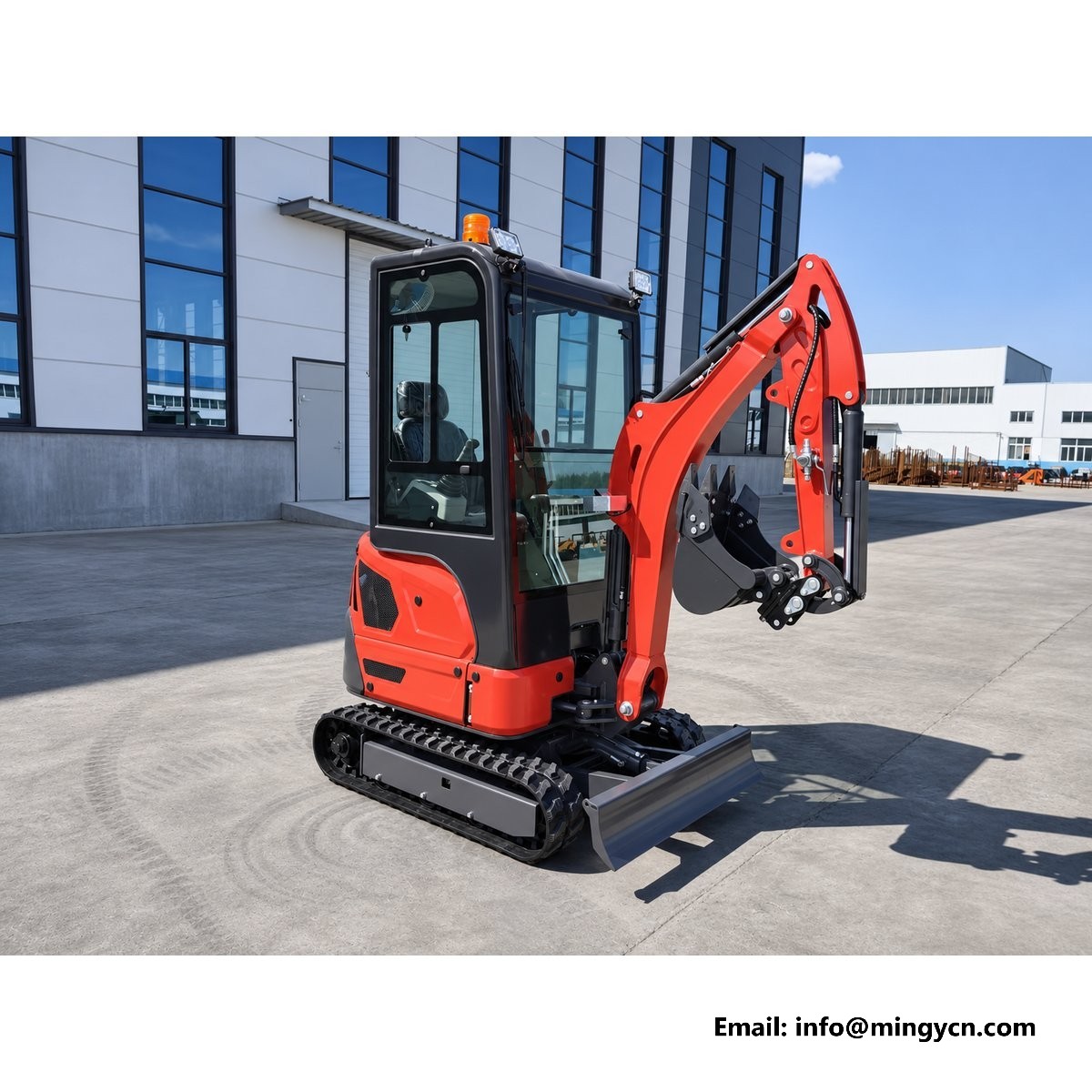
A canopy machine is cheaper, lighter and easier to transport, and for a landscaper working short days in good weather it is the correct choice. A cab becomes worth its cost when the working day is long and the conditions are not. Dust from a demolition site, spray from a wet trench, cold wind in winter and heat in summer all reduce the hours an operator can work effectively, and an enclosed cab with a sealed door and a filtered ventilation path changes that arithmetic. The machine itself does not dig any better. What changes is how many productive hours the same operator can deliver in a shift, and how willing they are to take on a job that would otherwise be quoted with a larger unit. A cab also protects resale value, because the interior is the first thing a used buyer inspects.
On a small excavator the operator sits close to the engine, the hydraulic pump and the bucket, and without a cab all three are part of the working environment. A sealed cab with a door that closes properly and a ventilation intake away from the dust source reduces the amount of material the operator breathes, which matters most on demolition, sweeping and dry earthworks. The same enclosure takes the sharpest edge off engine and pump noise, so the operator is not shouting over the machine at the end of a shift. Neither benefit shows on a specification sheet, and both show in the labour line of a contract. For a fleet running two shifts, the cab often decides whether the second shift is productive. A cab with a recirculation setting keeps the worst of the dust out when the wind is against you.
| Model | MY20 |
| Operating weight | 1,260 kg |
| Overall dimensions (L x W x H) | 2,550 x 1,150 x 2,200 mm |
| Engine options | Kubota D722 / Laidong 385 / Kubota D902 |
| Rated power | 10.2 kW / 29 kW / 11.8 kW |
| Rated speed | 2,500 / 2,350 / 2,300 rpm |
| Max digging depth | 2,100 mm |
| Max digging height | 2,820 mm |
| Max dump height | 2,050 mm |
| Max digging radius | 3,050 mm |
| Min swing radius | 1,450 mm |
| Max digging distance | 2,300 mm |
| Dozer blade lift / drop | 180 mm / 210 mm |
| Hydraulic tank | 18 L |
| Fuel tank | 16 L |
| Rubber track size | 200 x 41 x 72 mm |
| Gradeability | 30 degrees |
| Travel speed | 2 km/h |
| Control type | Pilot (joystick) hydraulic |
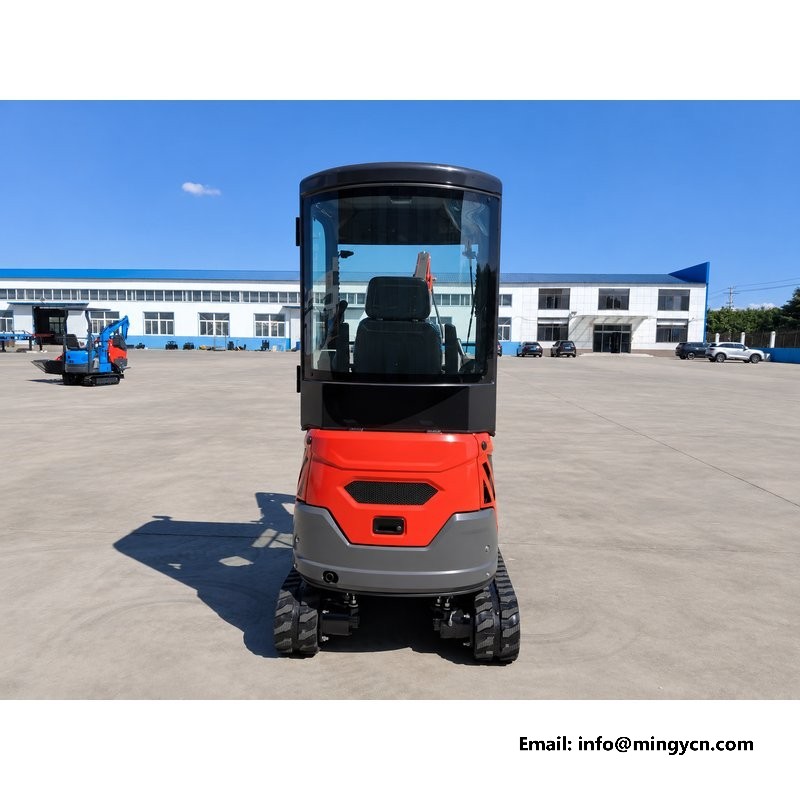
Access is the first thing to test on a cab machine, because it is used many times a day. Open the door fully and check that it holds in the open position rather than swinging back on the operator's leg. Use the step and the handrail as they are meant to be used, with three points of contact, and check that the step surface is not polished smooth. The door sill should be low enough that a boot does not catch, and the opening should clear a person wearing wet weather gear. On a 2,200 mm overall height the roof sits at a comfortable height for an operator of average build, but the entry still needs to be tested with muddy boots rather than in the showroom. Test the door catch with the machine on a slope, where it is most likely to swing.
Visibility from a cab machine is a compromise between glass area and structure, and the buyer should judge it from the seat rather than from the photographs. Sit in the machine with the door closed and look at the bucket at full reach, at the trench edge beside the track, and at the area behind the machine before a swing. The front windscreen should give a clear view of the blade corners, and the side glass should allow a view of the track when the house is turned. A wiper that covers only part of the screen is a real limitation in rain. Mirrors, where fitted, should be adjusted before the machine leaves the yard. Ask for a mirror on each side and a wiper that parks clear of the operator's line of sight, because both are cheap at the factory and awkward later.
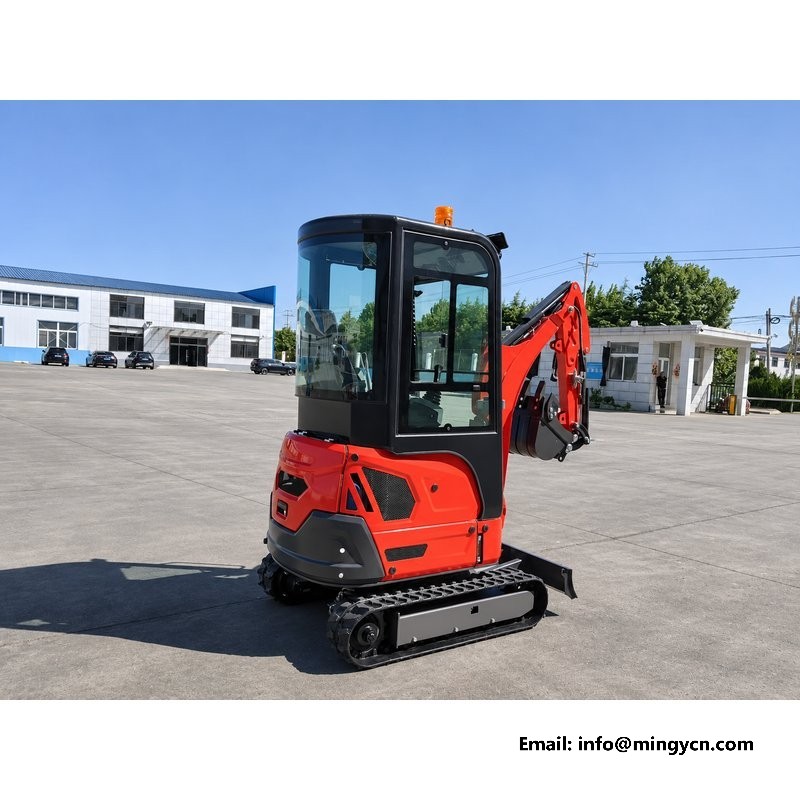
The cab is only as weatherproof as its rubber. Check the door seal along its full length, including the bottom corner where water collects, and look for a flattened or torn section that will let dust in at speed. The glass should be bonded or seated evenly, with no gap at the corners, and the wiper blade should sit flat on the screen with the arm spring still pulling. Replace a hardened wiper blade before the rainy season rather than during it. Keep the drain channels at the bottom of the door clear, because a blocked drain sends water into the cab and rusts the sill from the inside. A five-minute check of these items at handover prevents most cab complaints. Keep a spare blade and a spare arm in the stores, since both are cheap and both fail at the worst time.
Heating and air conditioning are listed as options on this model, either as a heater, a single-cool air conditioning unit, or a combined system. The right choice depends on the climate the machine will work in and on whether it will be used year-round. In a cold climate the heater extends the working season at both ends of the year and keeps the glass clear, which is a safety item as much as a comfort one. In a hot climate the cooling unit is what makes a full shift possible behind a large glass area. Order the option at the factory rather than fitting it later, because the wiring, the compressor mount and the vents are designed into the cab. Ask for the option list in writing with the model code, so the unit cannot be built as a heater-only machine by mistake.
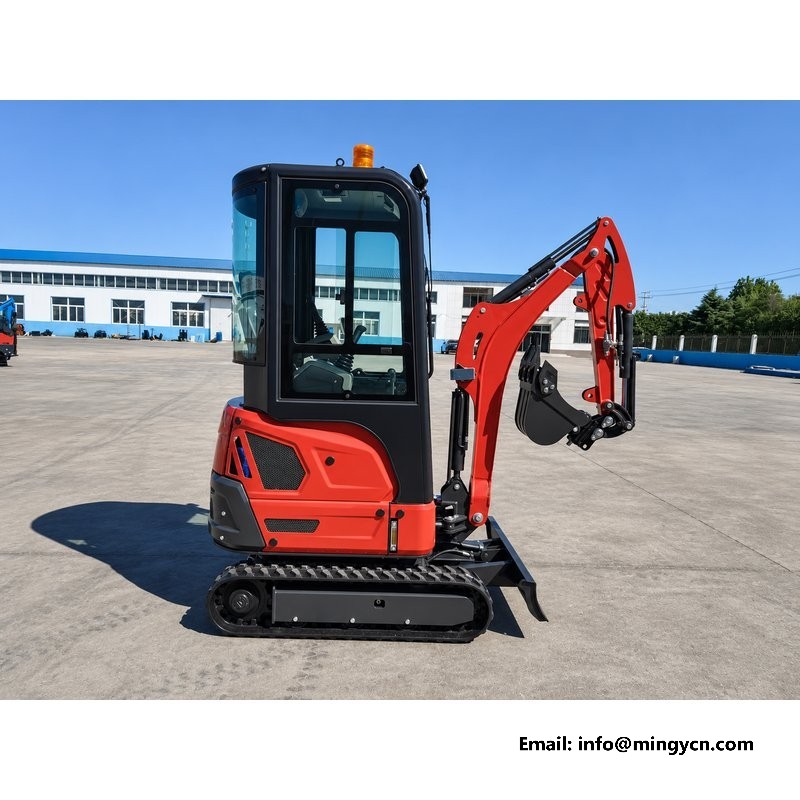
The machine measures 2,200 mm high overall, and a cab machine should be checked against that figure before it is booked onto a trailer or into a container. Measure the actual machine rather than relying on the drawing, because a beacon, an aerial or a roof guard can add height the drawing does not show. Confirm the trailer deck height and the total load height against the route, including bridges and overhead cables. If the machine has to pass under a low structure on site, the same measurement decides whether it fits. A cab that clears a container by a few millimetres will be damaged on the first loading if the ramp angle is wrong. If the machine goes into a container, ask for the height with the beacon removed and the aerial folded, then measure again before loading.
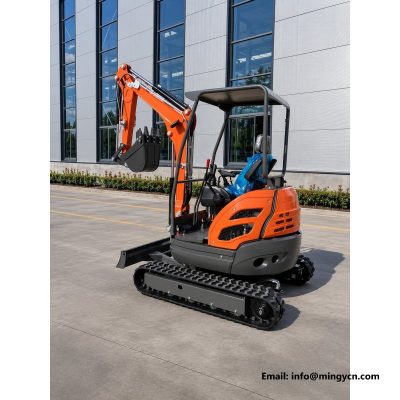
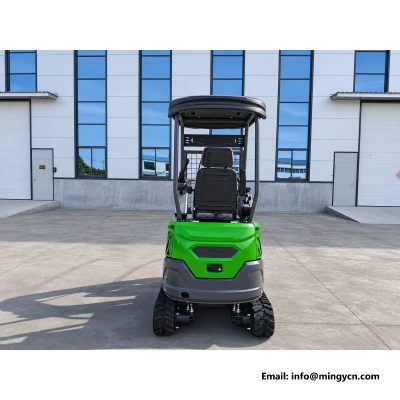
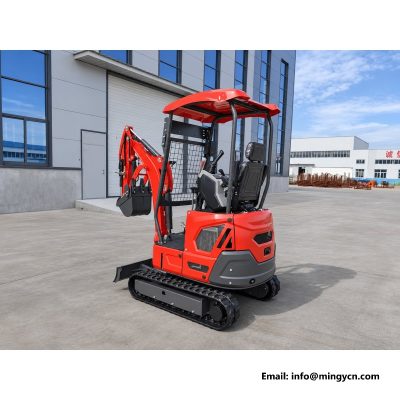
The choice between a cab and a canopy is not a quality question; it is a question about work. A canopy machine is lighter, lower, cheaper and gives the operator an unobstructed view in every direction, which is why landscapers and owner-operators often prefer it. A cab machine is heavier, taller and more expensive, and adds a structure that has to be maintained, but it keeps the operator out of the weather and away from dust and noise. For a rental fleet the cab usually wins on utilisation; for a farm that uses the machine a few days a month the canopy is often the better buy. Decide from the working calendar, not from the photographs. A dealer who sells both versions should keep one of each on the yard, because the customer decides after sitting in them.
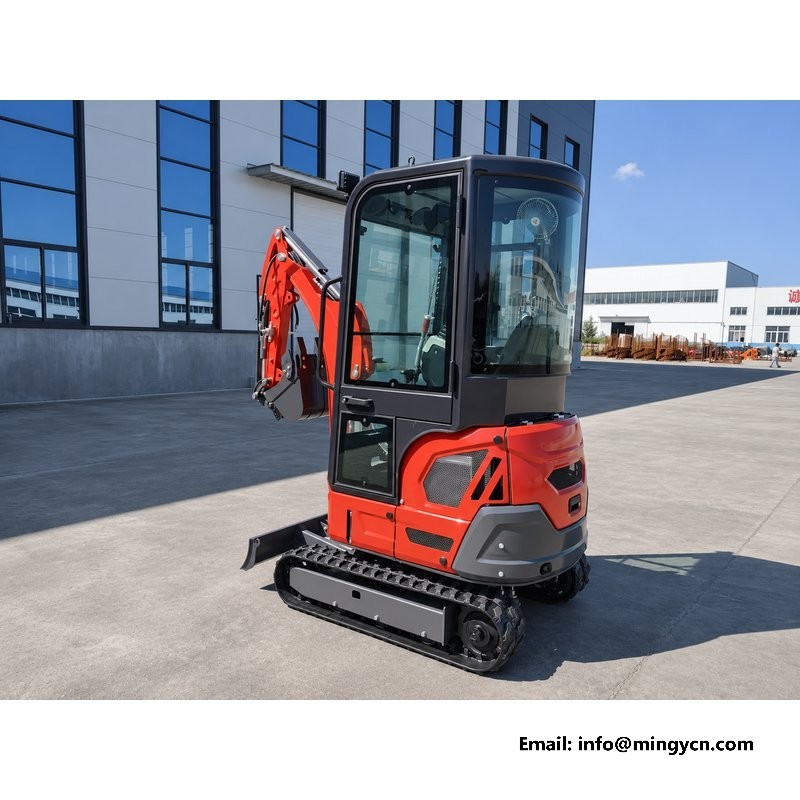
A cab machine needs a handover list of its own. Open and close the door several times and check the latch, the striker and the hinge pins. Push on the glass at each corner to confirm the bond or the rubber is seated. Run water from a hose over the roof and the door for a few minutes and look for a damp patch inside, particularly at the top of the door and around the wiper spindle. Test the wiper, the washer, the heater fan and every switch. Check that the interior light, if fitted, works and that the floor mat is dry. Photograph any fault before the machine is accepted, and record it against the serial number. Do the water test before the machine is washed for delivery, not after, or the evidence is gone.
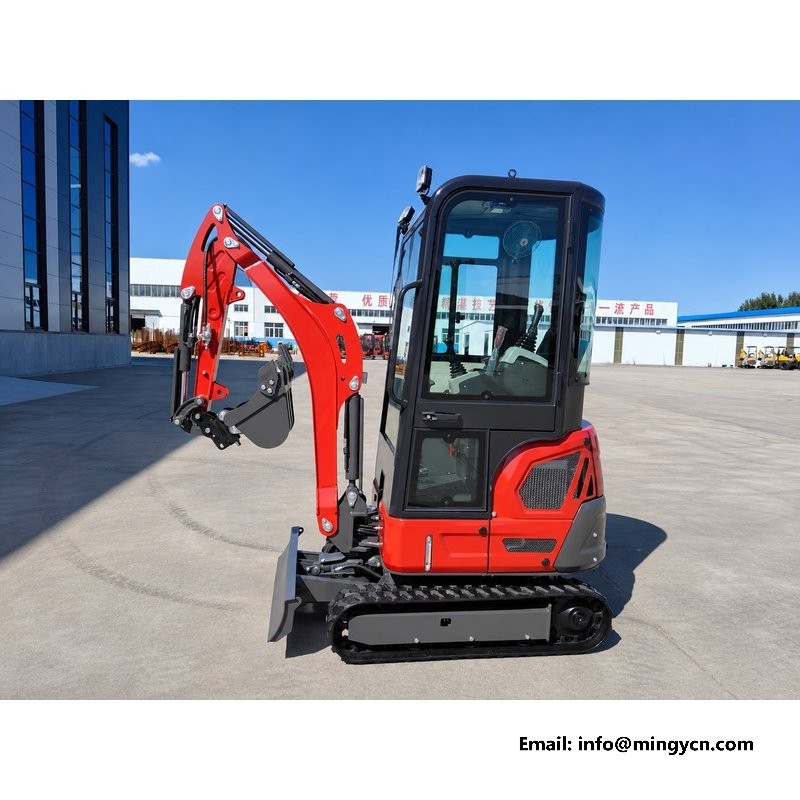
Water finds the weakest seal and stays there. Through a wet season, check the door seals, the windscreen bond and the roof joint after every heavy rain, and dry any damp patch rather than closing the door on it. Leave the door ajar in storage so the cab can ventilate, and keep the drain holes at the bottom of the door and under the floor clear. Condensation on the inside of the glass is normal in a machine that works in the morning and stands in the sun at noon; mould on the seat and the lining is not, and it usually means water is entering somewhere. A cab that smells damp at handover will have a corrosion problem within two seasons. A cover over the machine in storage is worth more than any repair once the water is inside.
A cab takes space that a canopy machine leaves open, so check that the service points are still reachable. The engine cover should open far enough to reach the oil filler, the dipstick and the filters without removing a panel. The battery should be accessible for isolation, and the hydraulic tank and fuel tank fillers, 18 L and 16 L on this model, should be reachable from ground level without climbing on the machine. Look at where the cab wiring runs relative to engine heat and hydraulic hoses. A cab that has to be unbolted to change a filter is a cab that will be neglected, and neglect shows up as a machine that runs hot in its third season. Leave the cab door open during a service so the interior does not bake while the engine runs.
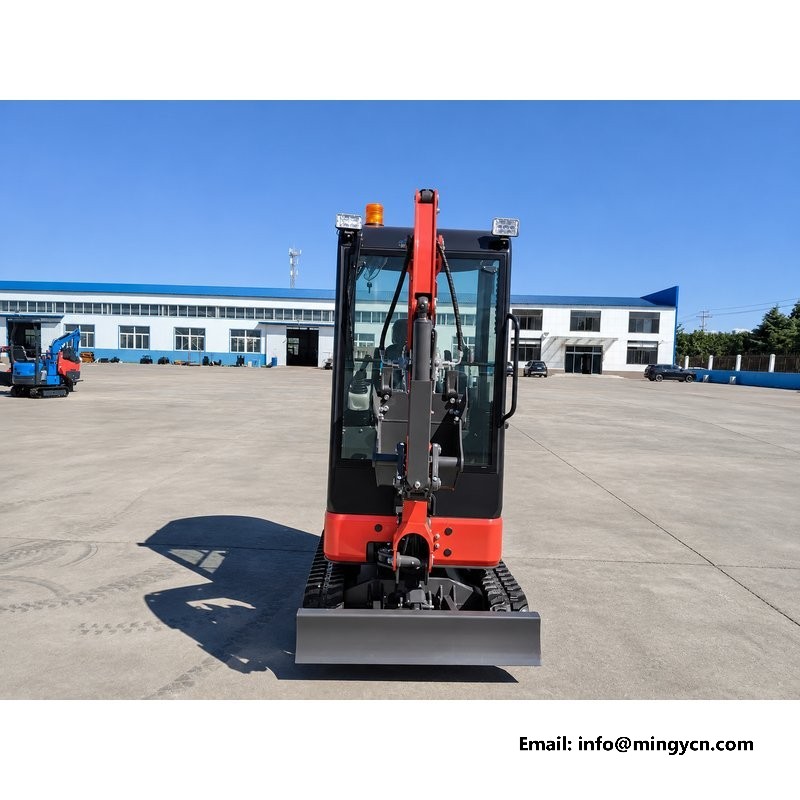
Most dealers and rental yards end up with a mix rather than a single specification. A sensible starting point is to keep canopy units for the clean, short-duration work that owner-operators and landscapers book, and cab units for long shifts, dusty sites and the winter months. The cab machines carry the higher utilisation and the higher damage risk at the same time, which is why the guard option and the display are worth pairing with them. Track the hours on each unit through the display and compare them against the repair record after a season. The mix that produces the lowest cost per hour is the one to repeat in the next order. Write the specification down as a standard build, so the next order repeats the same machine rather than a near copy of it.
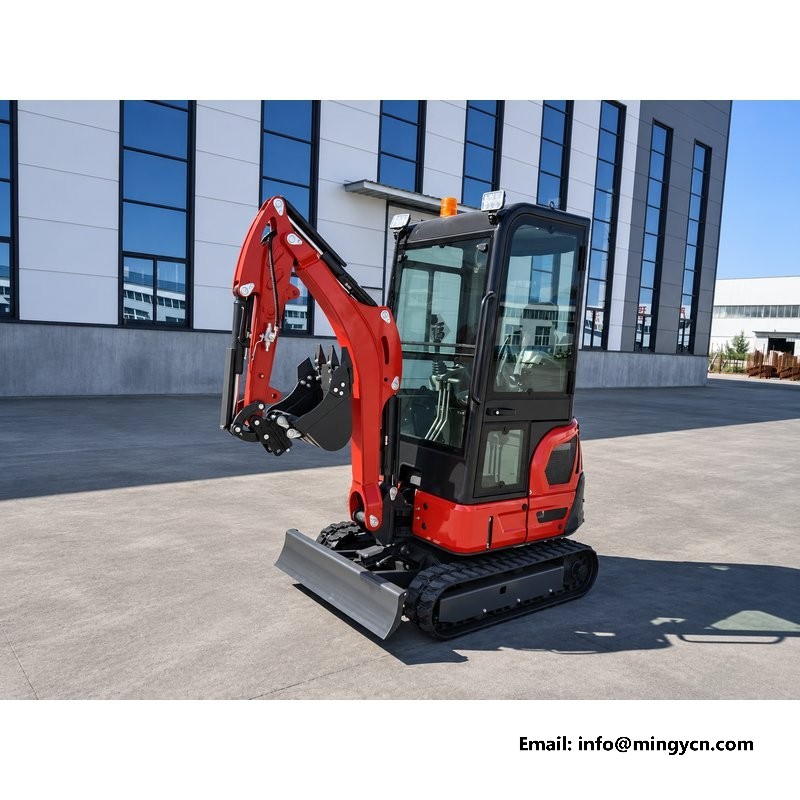
The model is listed at 2,200 mm overall height, and a cab machine should be measured rather than assumed, because a beacon, aerial or roof guard can add height the drawing does not show. Check the figure against the trailer deck and the route before loading, and confirm clearance if the machine has to pass under a structure on site. Loading a tall machine on a steep ramp is where most cab damage happens.
It depends on the climate and the length of the season. Heating and cooling are factory options on this model, offered as a heater, a single-cool unit or a combined system. In a hot climate the cooling unit is what makes a full shift behind large glass realistic; in a cold one the heater keeps the screen clear and extends the season. Order it at build, because the wiring, compressor mount and vents are designed into the cab.
Ordering and technical support
Email: sales@mingycn.com
LINE (ID): mingyicn
Tell us your working width, ground conditions and the attachment you need, and we will confirm the right configuration and shipping details.