The MY30 mini excavator: 2,510 kg operating weight, 0.075 m3 bucket and a 2,660 mm dig depth.
A 2,510 kg excavator with a 0.075 m3 bucket, a 2,660 mm digging depth and a Kubota D1105 engine: those figures describe the MY30, and together they explain most of the work it is bought to do. This page sets out what the machine is, where it fits against one-tonne and three-tonne diggers, how bucket size and digging force were matched, and what the photographs on this page actually show. It is written for buyers who compare machines by looking closely at how they are built, and who want to know what to check before a unit is loaded and shipped.
A 2,510 kg operating weight places this machine in the gap between the small homeowner diggers and the three-tonne units that contractors put on civil works. At that mass the undercarriage stays planted while the arm reaches out with a loaded bucket, yet the machine still passes through a normal site gateway and loads onto a small flatbed trailer without a low-loader. The extra weight over a one-tonne digger is not decoration. It is what lets the bucket bite into compacted clay without the tracks lifting, and what keeps the machine stable when the arm swings out to the side over a spoil heap. Operators who move up from a micro digger feel the difference in the first trench they cut, mostly as a lack of rocking. It is also weight the buyer pays to move on every delivery, so it has to be justified by the work rather than by the brochure.
Most buyers arrive at this class after running something smaller. A one-tonne digger opens a service trench to a house and then runs out of reach and stability. A three-tonne machine does the same job comfortably but asks for a wider trailer, a wider gate and a braver driver on finished lawns. The MY30 measures 3,850 mm long and 2,280 mm wide, which keeps it inside the footprint of a small tipper while leaving the arm enough room to work. That footprint is the practical argument for the class. It is narrow enough to track between a house and a boundary wall, and heavy enough at 2,510 kg to hold its ground when the bucket meets undisturbed subsoil. Buyers rarely regret choosing this size. They regret the one below it.
| Model | MY30 |
| Operating weight | 2,510 kg |
| Overall dimensions (L x W) | 3,850 x 2,280 mm |
| Engine | Kubota D1105, water-cooled in-line 3-cylinder diesel |
| Rated power / speed | 14 kW at 2,200 rpm |
| Bucket capacity | 0.075 m3 |
| Max digging depth | 2,660 mm |
| Bucket digging force | 22.8 kN |
| Swing speed | 9.5 rpm |
| Hydraulic system pressure | 22.5 MPa |
| Ground pressure | 32 kPa |
| Vertical lifting force | 800 kg |
| Horizontal pulling force | 520 kg |
| Rubber track width / length | 250 mm / 1,860 mm |
| Fuel tank | 28 L |
| Travel speed (low / high) | 2.6 / 4.5 km/h |
| Gradeability | 30 degrees |
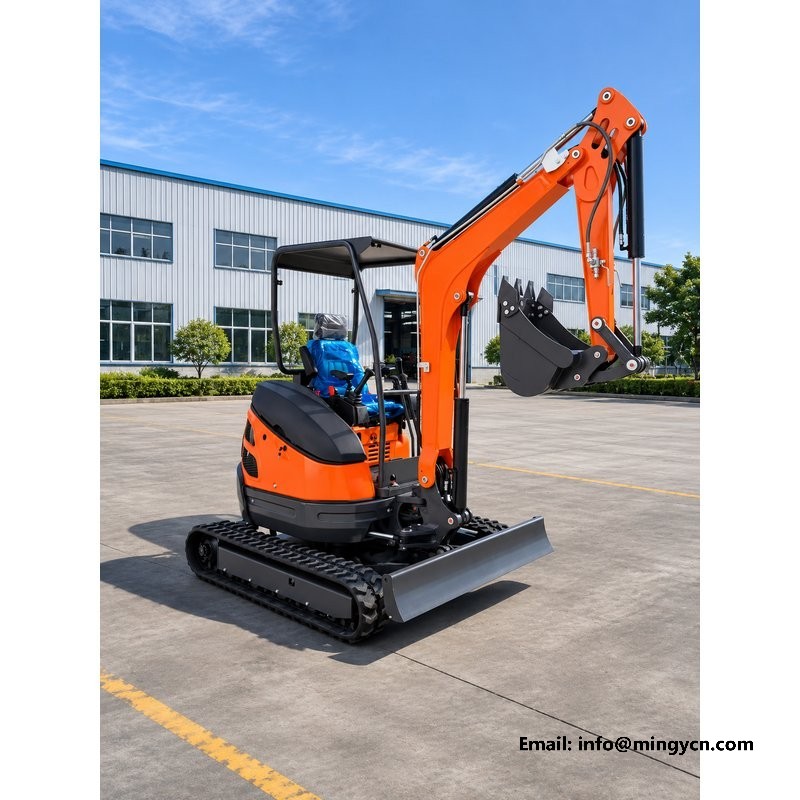
Bucket size and digging force have to be matched, and the pairing on this machine is deliberate. A 0.075 m3 bucket is large enough to move real volume on a footing excavation, yet small enough that the 22.8 kN of bucket digging force still fills it in heavy clay instead of skating across the surface. The hydraulic system runs at 22.5 MPa, which is where that force comes from, and the swing speed of 9.5 rpm keeps the cycle moving when spoil has to be cast to one side. In practice the combination rewards a smooth operator. The bucket curls through the cut and comes out full rather than half empty, and the machine does not have to be held at the top of its pressure range all day to keep up with a gang.
The engine is the Kubota D1105, a water-cooled in-line three-cylinder diesel rated at 14 kW at 2,200 rpm. Three cylinders matter more than the power figure suggests. A single-cylinder engine of similar output shakes the whole machine at idle and needs a heavy counterweight in the frame, while the D1105 runs smoothly enough that the operator can hold a grade without the arm trembling. The coolant jacket also warms evenly, so cold starts are less of a ritual. Kubota's parts network is the other half of the argument. Filters, water pumps and injectors are stocked in most markets, and a dealer who has never seen this excavator has still serviced the engine inside it. For a machine working far from its supplier, that familiarity is worth as much as the rating.
The fuel tank holds 28 litres, and the way that volume is used matters more than the number itself. The D1105 is a small-displacement industrial engine, and at part throttle, which is where most trenching and grading happens, it sips rather than drinks. A tank of this size is intended to cover a working day without the operator breaking off to refuel in the middle of a pour or a delivery, and to leave a margin for the idling that always accumulates on site. Two habits protect that margin. Warm the machine at low idle rather than at full throttle, and refuel at the end of the shift rather than in the morning, so condensation in a part-empty tank has the night to settle instead of being drawn through the filter.
The maximum digging depth is 2,660 mm, and that figure decides which jobs the machine takes and which it hands to a bigger unit. A water service, a gas connection or a cable duct to a dwelling is normally laid well inside that depth, with room left for a gravel bed and a warning tape above the pipe. The same reach covers strip footings for a single-storey extension, soakaway crates and the shallow drainage runs that surround a house. Where the machine earns its keep is in the number of these jobs it can finish in a day without being repositioned constantly. The arm reaches down into the trench instead of the operator dragging the machine backwards, and spoil can be cast clear of the edge so the trench stays open for the next operation.
Orchards and smallholdings ask something different from an excavator: not depth but reach along a row, and the ability to work between trees without damaging them. The 2,660 mm digging depth is more than a planting hole needs, and the same arm geometry that produces it gives the operator room to clean a ditch, lift a stone or reset a fence post from one position. In a mature orchard the machine tracks down the alley between rows, works to one side, and leaves without turning in the soft ground under the trees. Landscape contractors use the same capability for pond edges, terrace steps and stump removal, where the load is intermittent and the machine has to stay steady while the bucket works at an awkward angle. The 30 degree gradeability matters here too, because orchard ground is rarely level for long.
Travel speed is often overlooked until a machine has to cross a site. In low range the MY30 moves at 2.6 km/h, which is the speed for working: tracking along a trench line, positioning over a footing, edging forward as the bucket cuts. High range gives 4.5 km/h, and that is what turns a long crawl across a yard into a short trip. On a site where the excavator serves three or four separate work fronts in a day, the difference is not comfort, it is how much of the day is spent digging rather than travelling. The same holds when the machine has to be loaded or moved between plots on a development. Selection is made from the operator's seat, so nobody has to climb down to change it.
The machine runs on rubber tracks with 250 mm shoes and a track length of 1,860 mm, giving a ground pressure of 32 kPa. Those figures describe a machine that spreads its weight rather than punching it into the ground. On a finished lawn, a paved driveway or a newly graded sub-base, that is the difference between a day's work and a repair bill. Rubber also protects kerbs, thresholds and asphalt edges where a steel-tracked machine would leave marks that have to be made good. Track length is what gives the machine its stability fore and aft when the arm is fully extended, and the 30 degree gradeability means a ramp into a basement excavation or onto a spoil heap is normally within reach without winching. Where the machine has to cross client paving, that pressure figure is worth quoting before work starts.
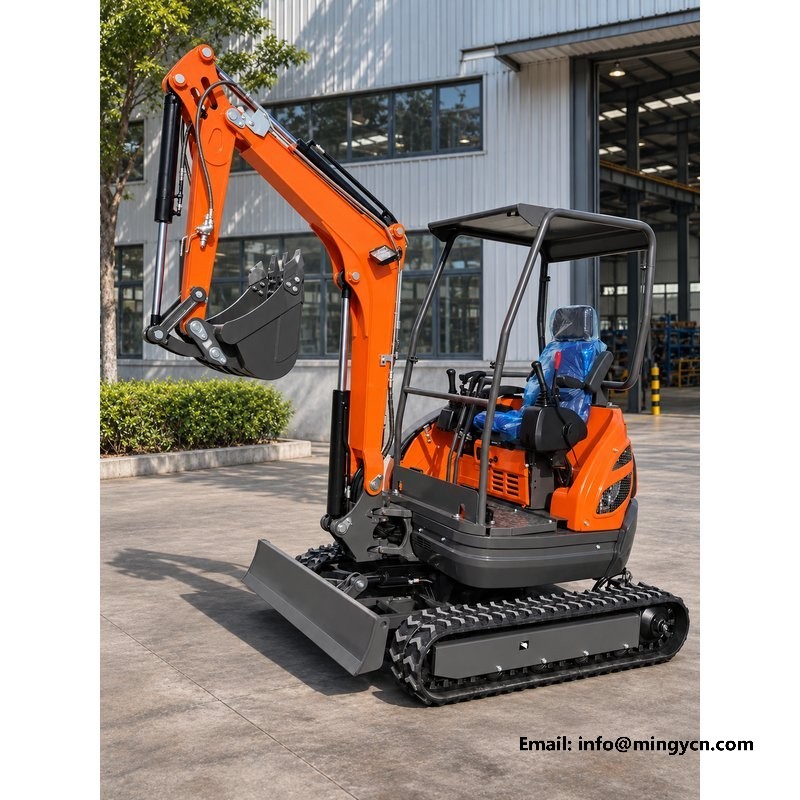
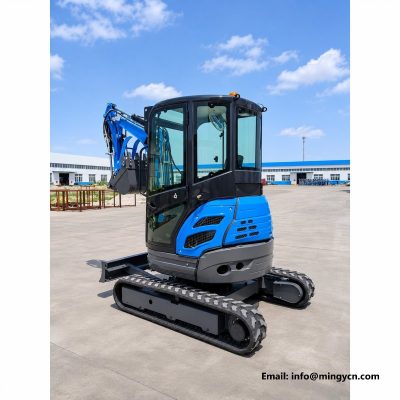
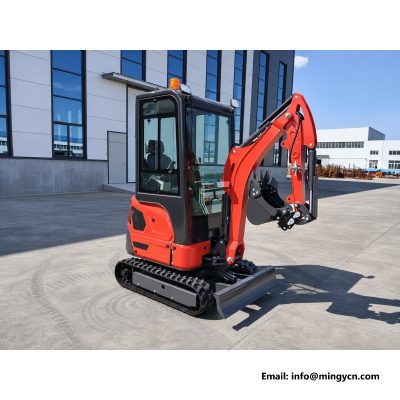
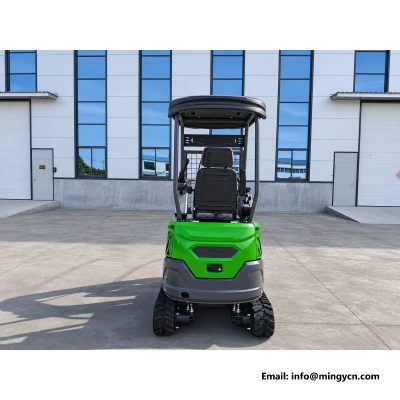
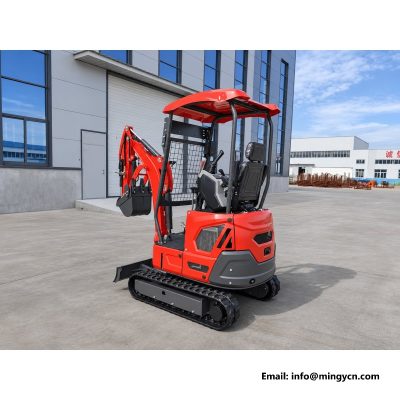
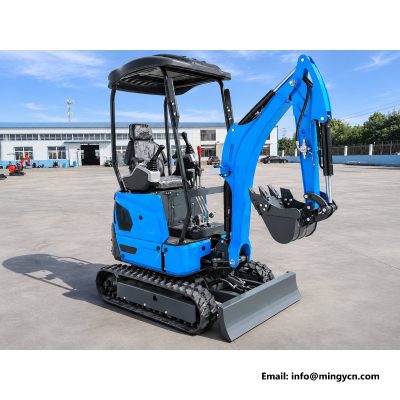
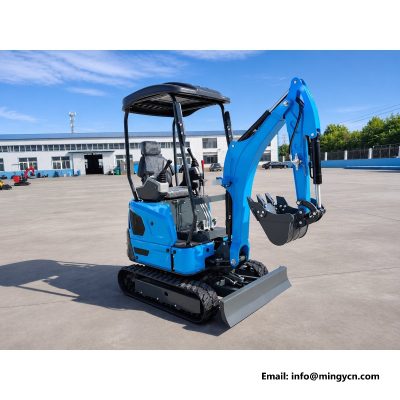
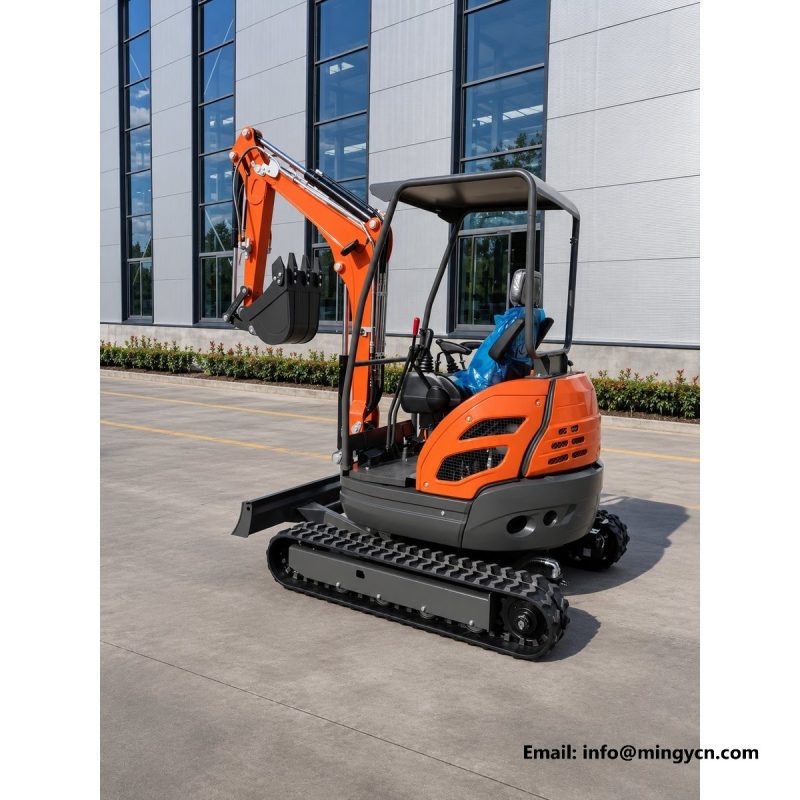
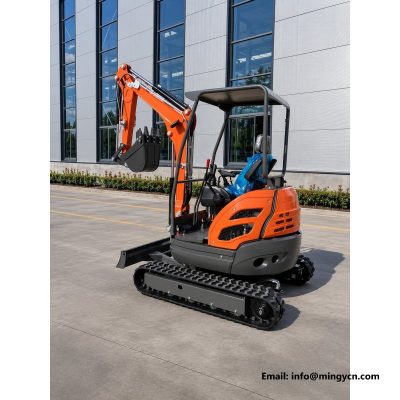
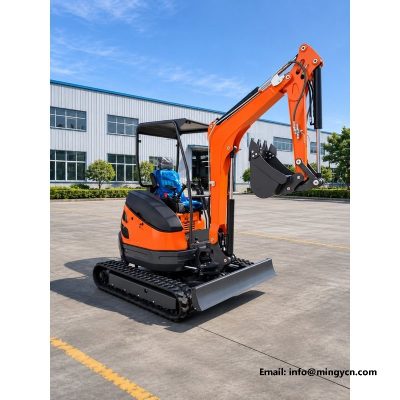
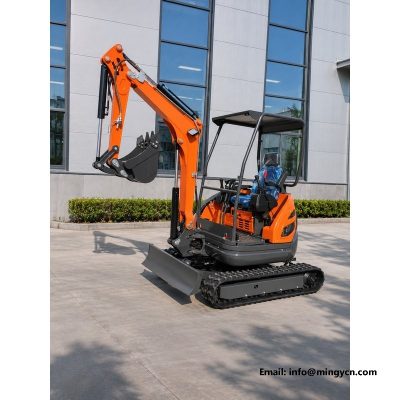
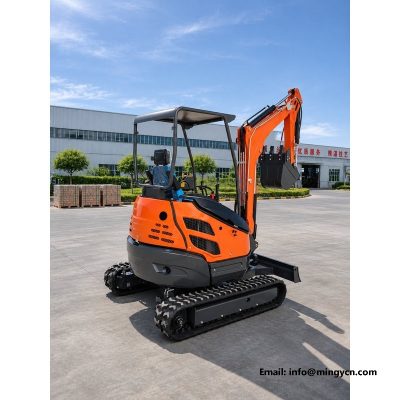
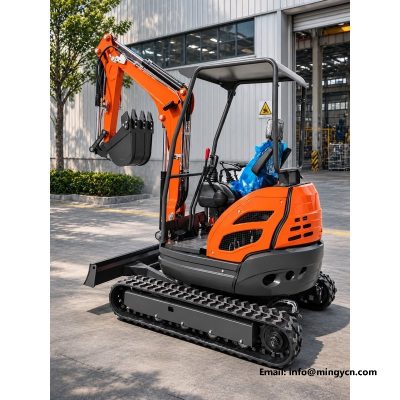
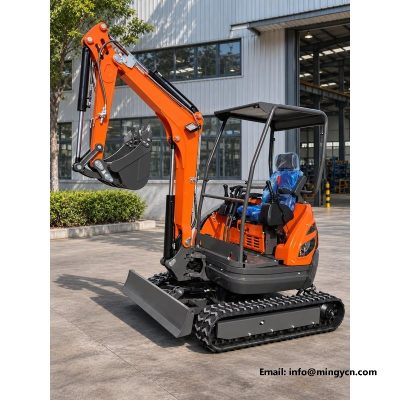
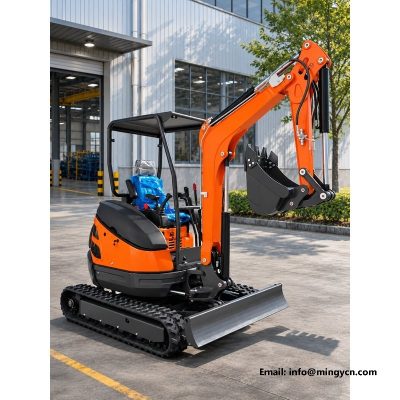
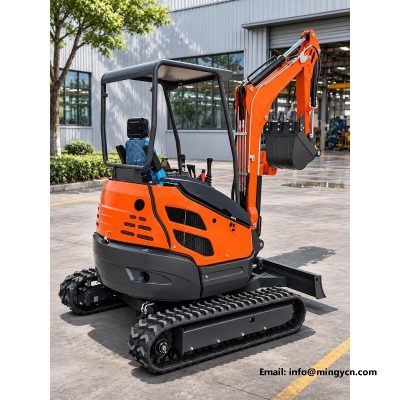
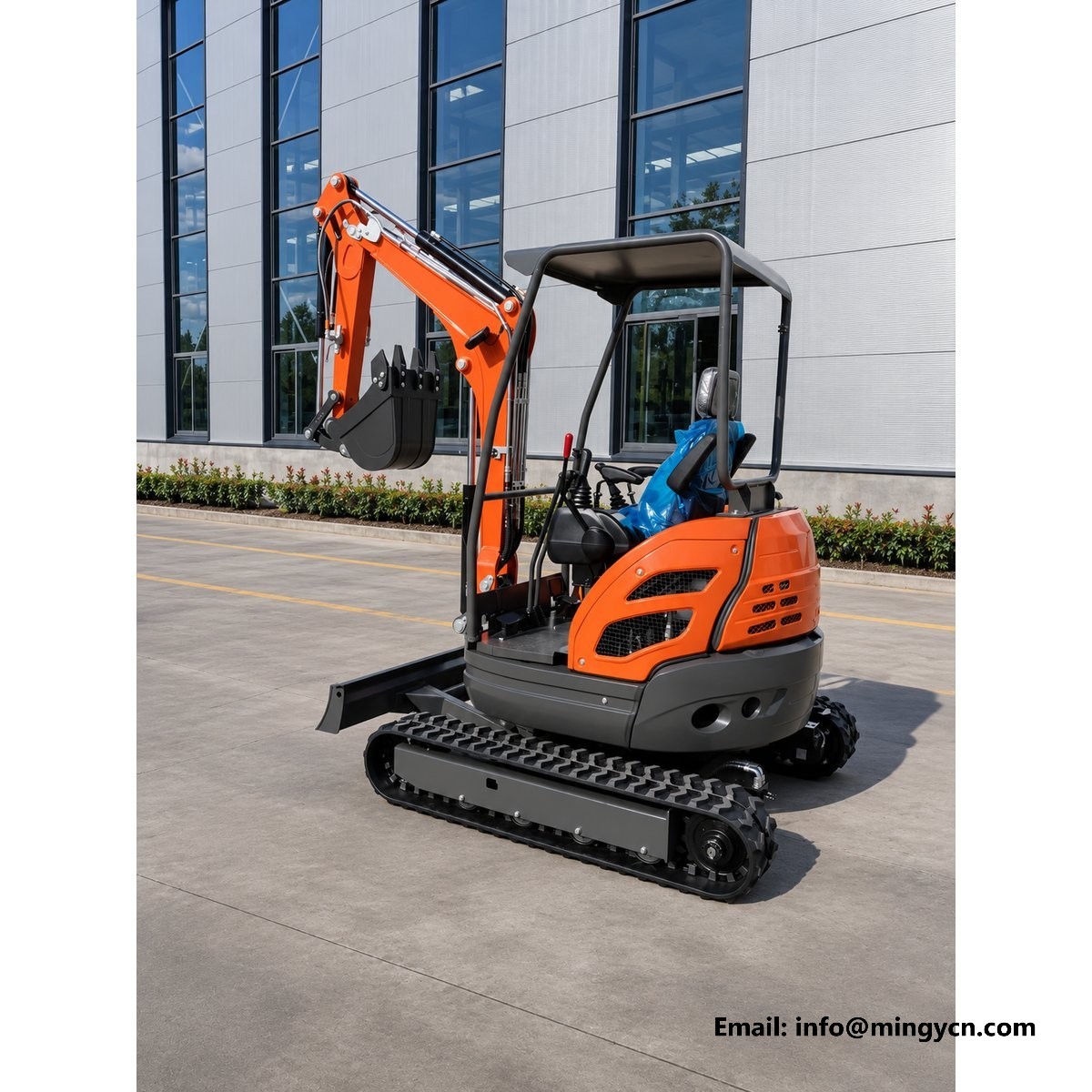
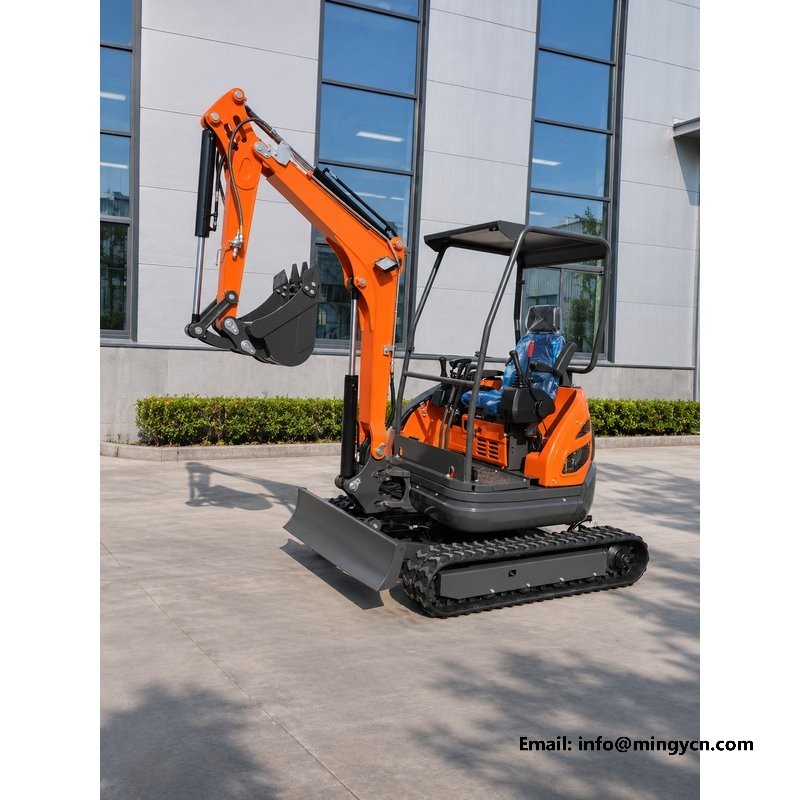
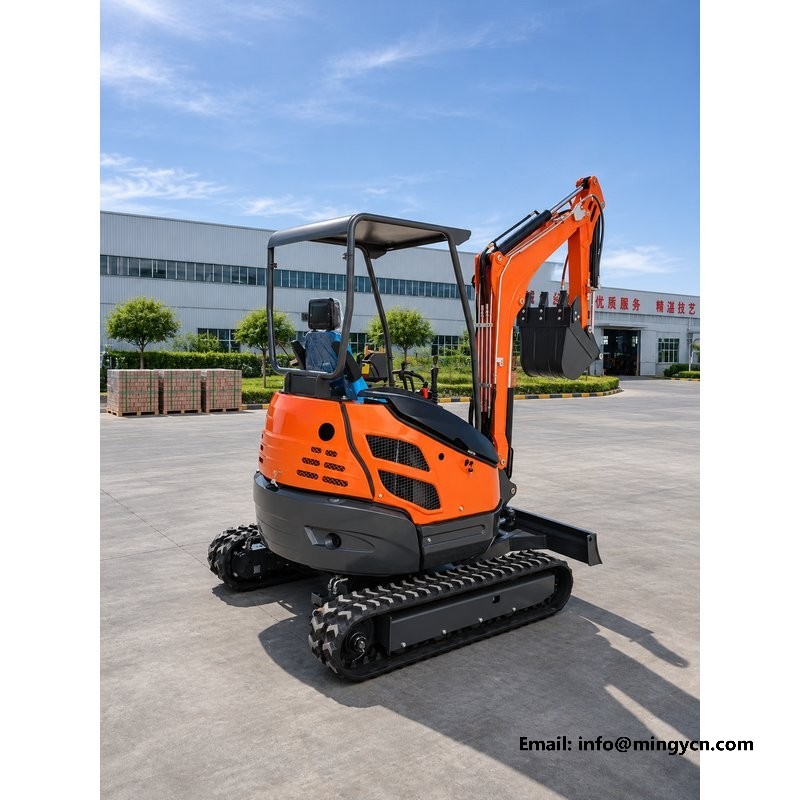
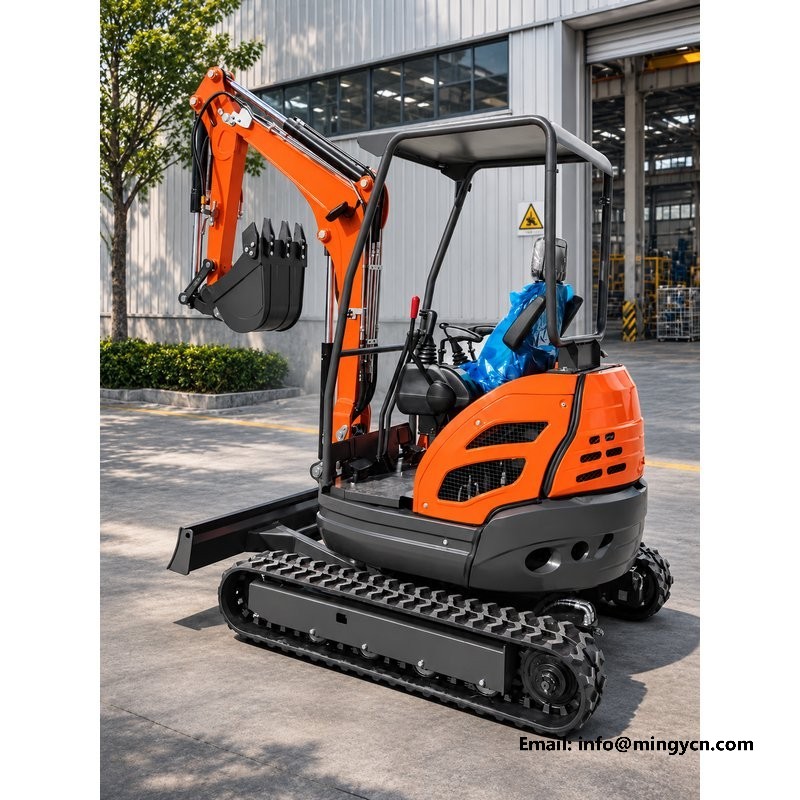
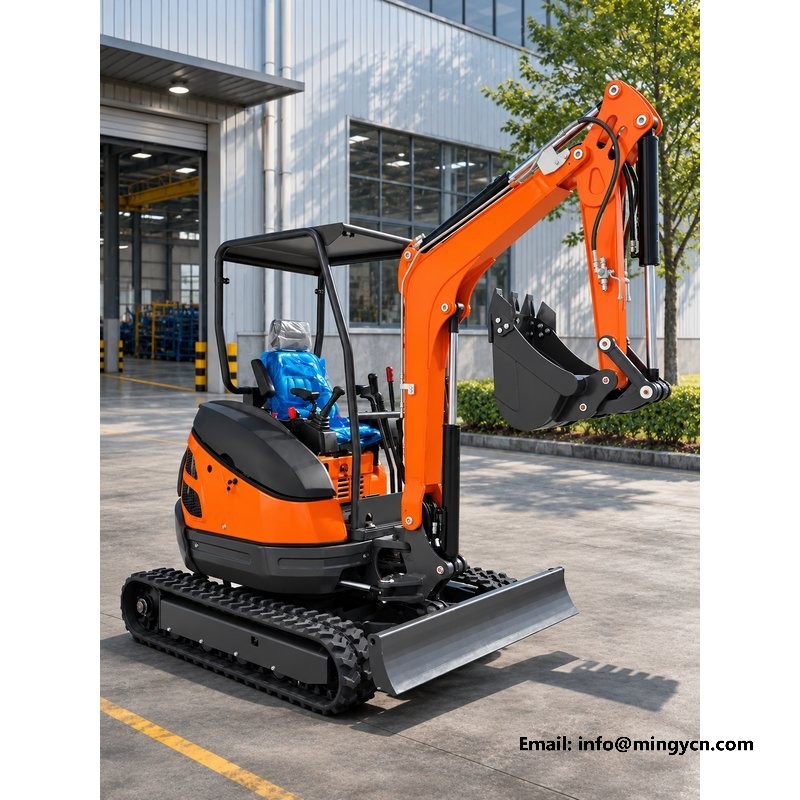
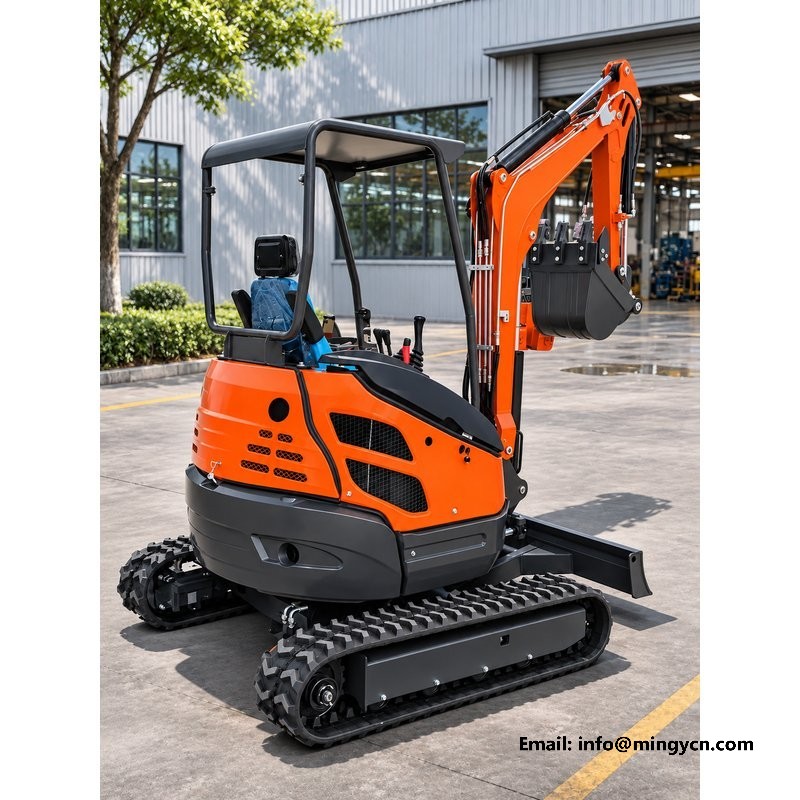
The four yard photographs are the ones to study first, because they show the machine as it will arrive. In the three-quarter front view, look at the dozer blade: how it is mounted, whether the arms are braced, and how much clearance remains under the blade when it is raised. In the side view, follow the hose routing from the valve block to the arm. Hoses clipped at regular intervals and kept clear of sharp edges last longer than hoses left to hang. The rear view shows the counterweight, the engine cover and the access to the air filter. Inside the operator area, the blue seat and the console layout tell you how much room there is and whether the levers fall naturally to hand. None of this replaces a physical inspection, but it narrows the questions worth asking.
Studio photographs strip away the distraction of a yard and let a buyer look at the machine as an object. Against white, panel gaps around the engine cover and side panels become visible, and so does the consistency of the paint on the boom and counterweight. Uneven coverage, thin paint under the arm or primer showing at a folded edge all point to a finishing process that was rushed. The same images show the shape of the canopy and how the roof is supported, which matters when the machine works under trees or inside a shed. They also make one build easier to compare with another, because the lighting and angle are identical. That is the purpose of these four images: not to flatter the machine, but to let detail be judged.
Before a machine is loaded, a buyer or an agent should walk it through a short list. Start cold: check engine oil, coolant and hydraulic level, then start and watch the exhaust for the first minute. Work every function through its full stroke, including the dozer blade, and listen for a change in hydraulic note at the end of travel. Inspect the tracks for cuts and check tension on both sides. Look underneath for fresh oil at the final drives and the swivel joint. Confirm that the hour meter, serial plate and documents agree, and photograph all three. Finally, check that the grease points have been serviced and that the tool kit, manual and spare filter set travel with the machine. A unit that passes this list cold will not need a second technician visit in its first month.
Utility trenches, house footings, drainage runs and orchard work, where the machine needs enough weight to cut undisturbed ground but is still narrow enough to pass between a house and a boundary wall. The 2,660 mm digging depth covers most domestic service connections, and the 0.075 m3 bucket moves spoil at a useful rate without overwhelming the arm. It is also a practical size for landscape contractors working on finished ground, who cannot afford track damage.
Both versions are built on the same chassis and share the Kubota D1105 engine, the 0.075 m3 bucket and the 2,660 mm digging depth. The canopy version keeps the machine low and simple, which suits hire work and sites with height restrictions. The cab version adds weather protection and changes transport height, and is covered on its own page. Buyers should choose by climate and by how long the operator sits in the seat, not by the invoice alone.
Ordering and technical support
Email: sales@mingycn.com
LINE (ID): mingyicn
Tell us your working width, ground conditions and the attachment you need, and we will confirm the right configuration and shipping details.