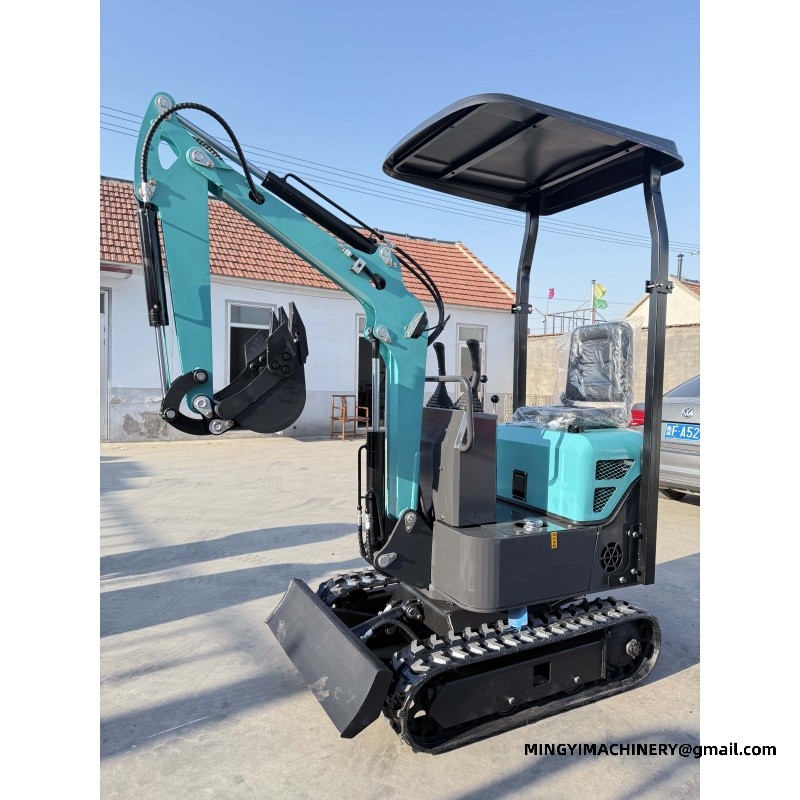
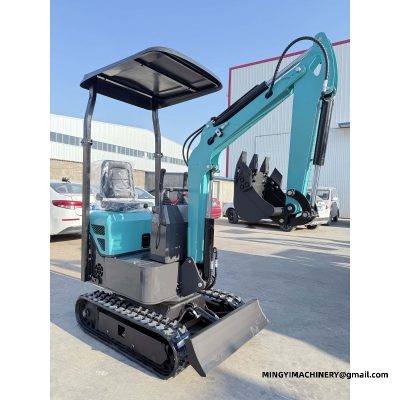
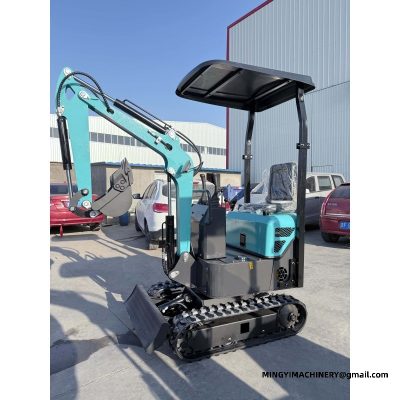
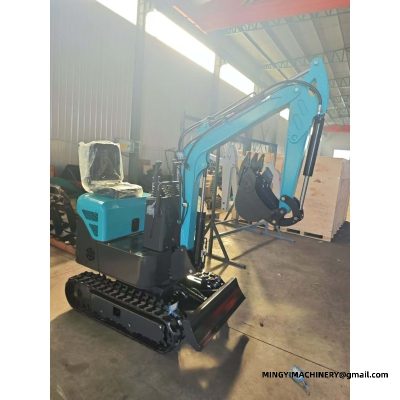
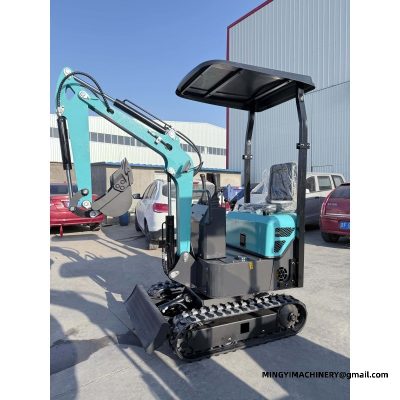
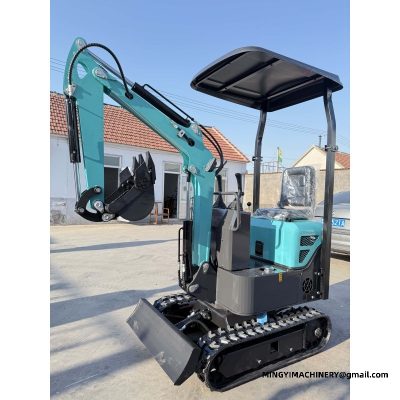
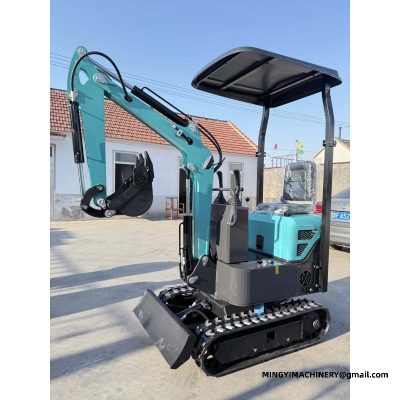
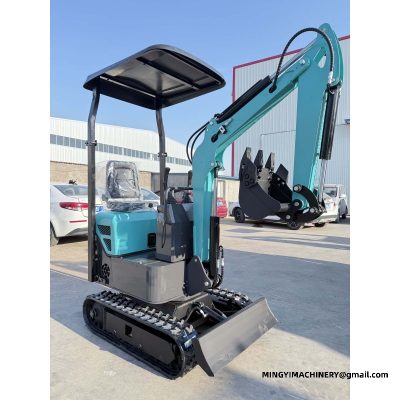
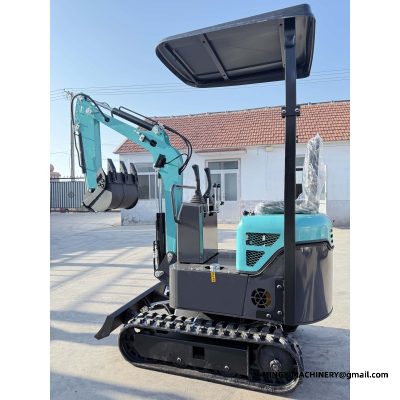
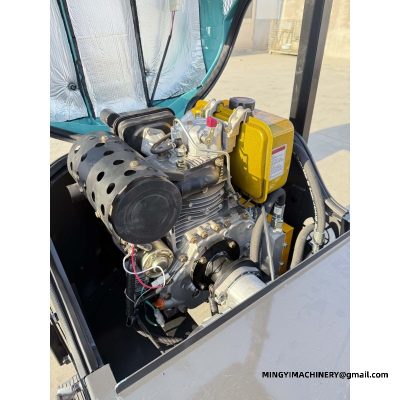
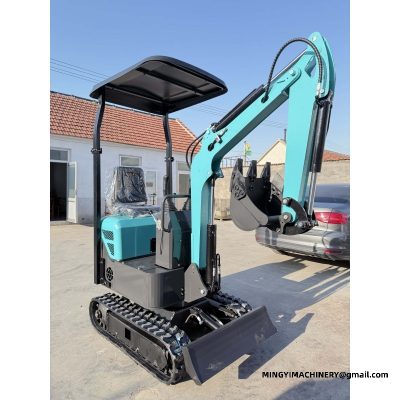
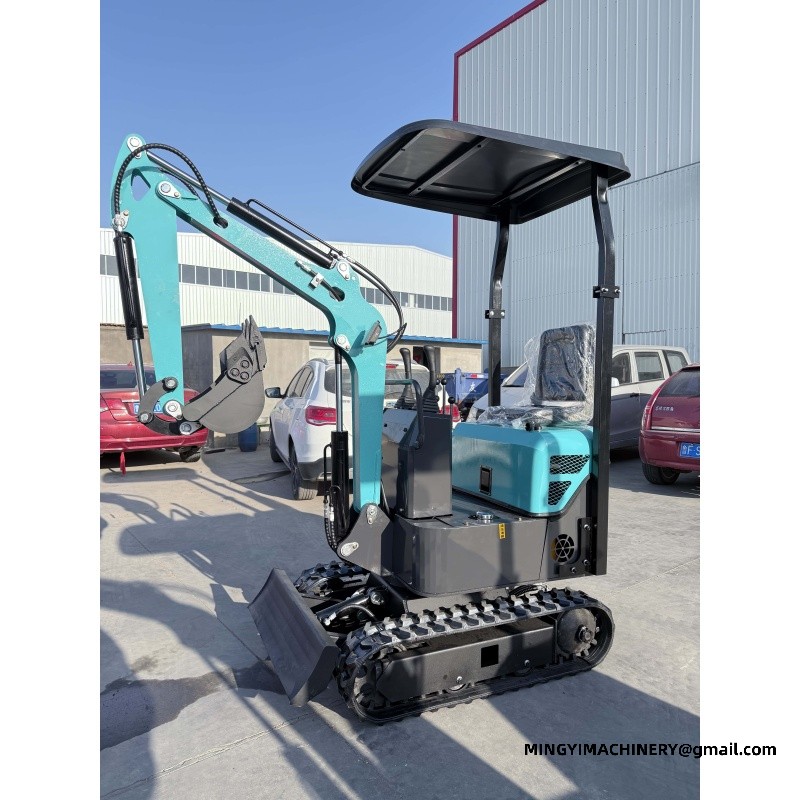
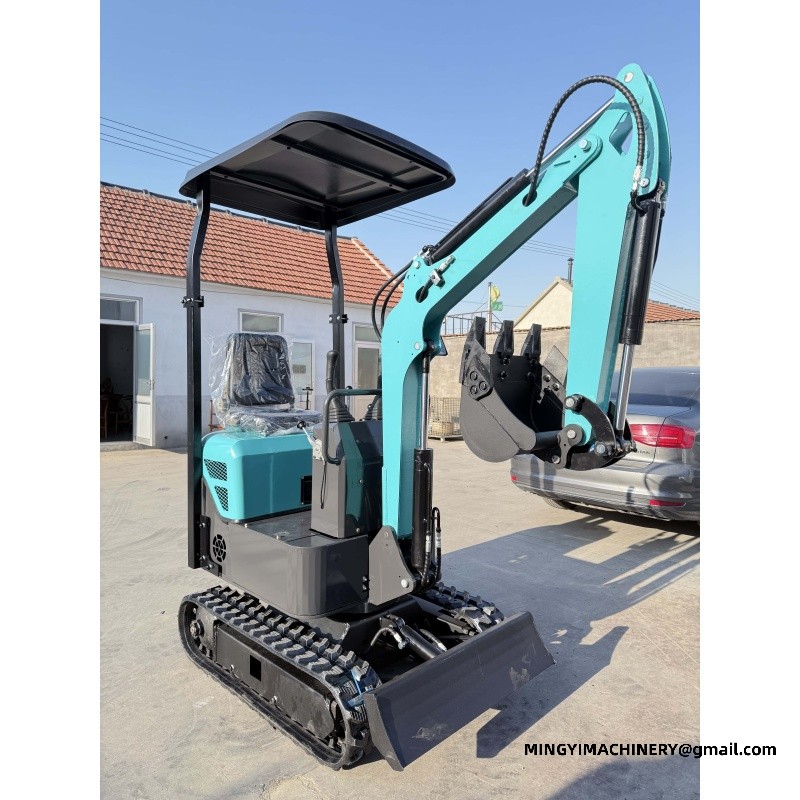
A fixed boom cannot dig a trench beside a wall without the machine body swinging into the obstacle. MINGYI offers its mini excavators with a swing, or offset, boom, where the boom articulates sideways and digs parallel to barriers the chassis cannot pass.
This configuration suits work along building lines, fences, hedges and live traffic lanes. The operator offsets the boom, digs the line, and retracts to travel, all from one machine rather than a special setup.
What swing boom digging solves on site
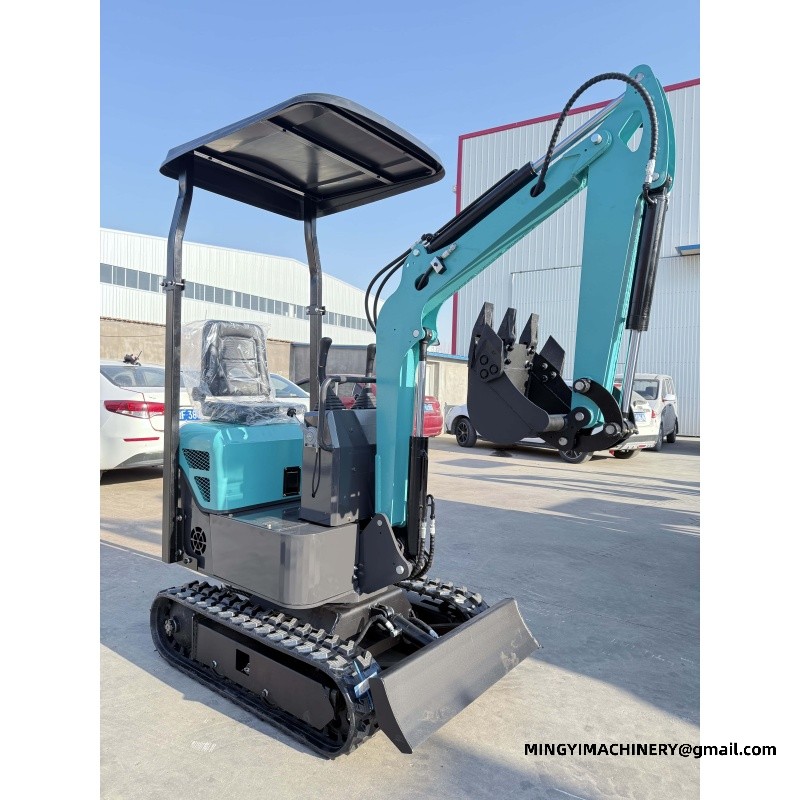
Foundation strips, drainage runs and cable trenches often run tight against structures where the tail of a conventional machine would strike. The offset boom keeps the cut on line while the tracks stay on clear ground, one pass instead of constant repositioning.
On roadside maintenance the swing boom lets the excavator dig the verge and ditch while the carrier remains on the shoulder. The same geometry helps inside yards and along greenhouse walls where every centimetre of clearance counts.
Specifying a swing boom machine from MINGYI
The swing boom option is confirmed at the ordering stage together with the track type and cabin arrangement, since buyers combining offset digging with indoor work often pair it with rubber tracks and a canopy. The configuration is then recorded against the machine.
Augers, narrow buckets and tilting buckets work with the offset geometry for grading along the same obstacle line. Buyers should describe their typical obstruction so the boom and tool package match the actual digging line.
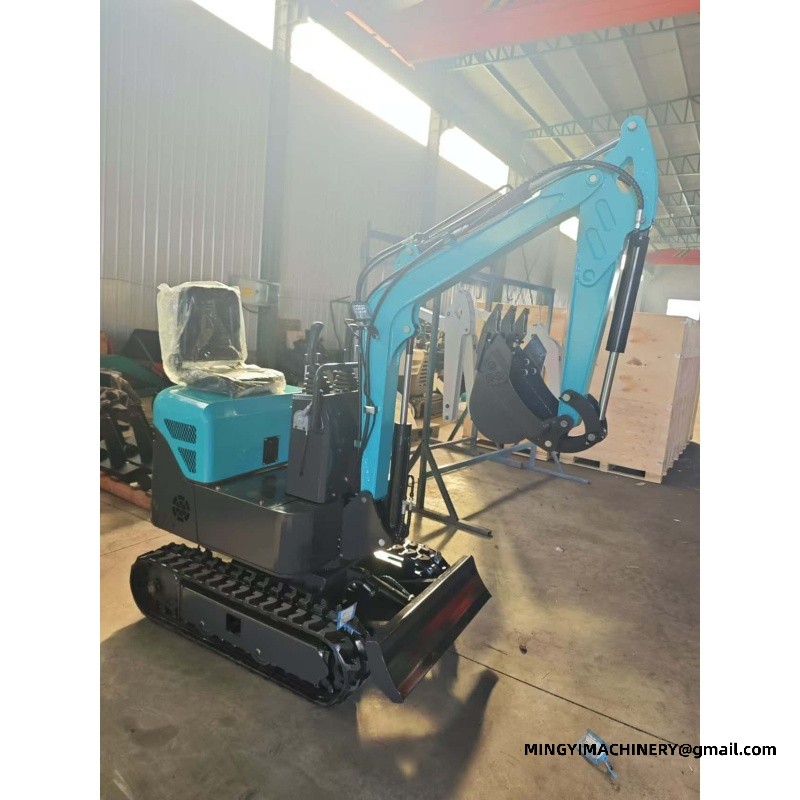
For contractors whose trenches follow walls rather than open ground, the swing boom decides whether the machine fits the job. MINGYI can walk through the site geometry with the buyer and configure the excavator around it.
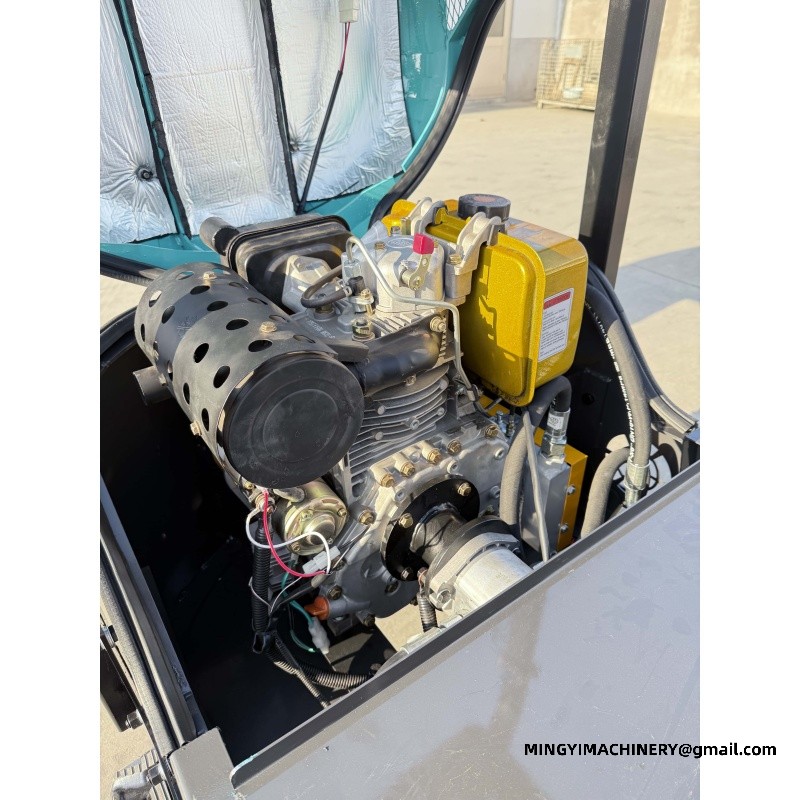
Trailering and moving swing boom trenching mini excavator Transport weight and width decide whether a machine needs a specialist haulier. The excavator sized to travel on a standard plant trailer behind a suitable vehicle moves with the crew rather than on a scheduled low loader. Loading practice matters as much as the numbers. This class of machine is driven up ramps under its own power with the boom lowered and the tracks aligned, and secured at the points the manufacturer specifies. Track choice for swing boom trenching mini excavator Rubber tracks suit paved and landscaped ground because they spread the machine weight and leave the surface intact. Steel tracks with rubber blocks are specified where the ground is rougher or the working day is longer, and the choice can be made per machine rather than accepted as a factory default. Track type changes what the machine can cross and what it leaves behind. Buyers specify rubber for lawns, driveways and municipal work, and steel with rubber blocks for sites where sharp material would cut a rubber belt in a week. Lifting and material handling with a swing boom trenching mini excavator Lifting with a machine built to dig needs a plan. The load, the radius and the ground under the machine of this size all matter, and the safe figure is the one on the chart rather than the one that looks possible. Ground condition under the machine is part of every lift. Soft or uneven support is the common factor in handling incidents, and checking it takes less time than recovering the unit in daily use that has settled. Daily checks and maintenance on swing boom trenching mini excavator Daily maintenance on the equipment on site is a short list: engine oil level, coolant, track tension, hydraulic oil level and a look at the hoses. Ten minutes at the start of the shift prevents most of the failures that stop a machine. Track tension is the item most often neglected. The machine itself run with slack tracks wears the undercarriage and can throw a track on a turn; run too tight, the same components wear from the other direction. What owners should plan for beyond the swing boom trenching mini excavator Purchase decision is the visible part of the effort. Fuel, filters, tracks or tyres, the operator and the transport between sites are the items that decide what the model in question actually demands over a few seasons, and they are worth listing before the order. Downtime is the hidden line item. The machine in that duty waiting on a part earns nothing while it stands, so parts availability and service access belong in the plan as much as fuel does. Trenching work with swing boom trenching mini excavator Trench quality depends on the bucket width and the operator, not on machine size. The unit on the job with a narrow bucket and a swing boom cuts a clean run along a boundary without disturbing the ground either side of it. Depth control matters more on service work than speed. A machine built for the work working beside live services is chosen because it can be placed precisely and stopped instantly, which is what the job actually requires. Municipal and public works with the equipment in service Municipal crews work on streets, footpaths and parks where the public is present. The excavator is specified because it occupies little space, works inside a small exclusion zone and can be moved on a standard trailer. Drainage repair, tree planting, footway reconstruction and cemetery work are all within the range of this class of machine. The jobs are small individually and continuous across the year. Boom configuration for the unit in daily use A swing boom lets the machine dig parallel to its tracks without repositioning, which is what makes trenching beside a wall or a fence practical. On a machine of this size this is often the option that decides whether a job is possible at all. Extended and offset boom configurations change reach and working range. The equipment on site with a longer arm reaches further but lifts less at full extension, so the specification is set against the deepest and furthest point on the job list. Attachments that turn the machine itself into several machines Attachment lists are best written before delivery. Specifying the model in question with the tools the job list needs avoids the work and delay of adding hydraulics later, and a quick coupler makes the swap a few minutes instead of a workshop job. Most of the daily variety on the machine in that duty comes from the attachment rack rather than from the machine itself. Bucket, breaker, auger, ripper, rake and grab cover the large majority of the work a contractor will see. Engine options behind the unit on the job Power unit selection is settled against the service network the buyer already uses. MINGYI offers Kubota D722, Kubota D902, YANMAR, Changchai, Laidong, Runtong, YARMAX, Youpu 2V80 and Youpu 195, so a fleet running one brand of engine can keep the same filters, the same parts supplier and the same mechanic. Two buyers can order the same a machine built for the work and receive different engines. The decision is rarely about peak power; it is about which parts counter is closest to the site and which engine the local mechanic already knows. Operator technique for the equipment in service Output on a compact machine comes from placement rather than power. An experienced operator keeps the excavator working inside the swing arc, positions once and digs a full run instead of repositioning for every bucket. The second habit is tool discipline. Running this class of machine with the right bucket width for the trench means less spoil, less reinstatement and a cleaner job than a wide bucket and a lot of trimming. Specification data for the unit in daily use Buyers comparing a machine of this size usually start from four numbers - weight, digging depth, reach and transport width - because those are the ones that decide whether the machine can be delivered and whether it can do the job once it is there. Every value shown is as built for the equipment on site; options such as cab, side swing or a telescopic undercarriage change the transport dimensions and are confirmed at order stage. The choice follows the hours. Work that fills a few weeks a year is usually better hired, while the machine itself that would be on site most weeks starts to justify ownership once the transport and booking time is counted. Availability is part of the decision. Owning the model in question means it is there on the day the ground is ready; hiring means competing for the same machine at the same time as everyone else in the season.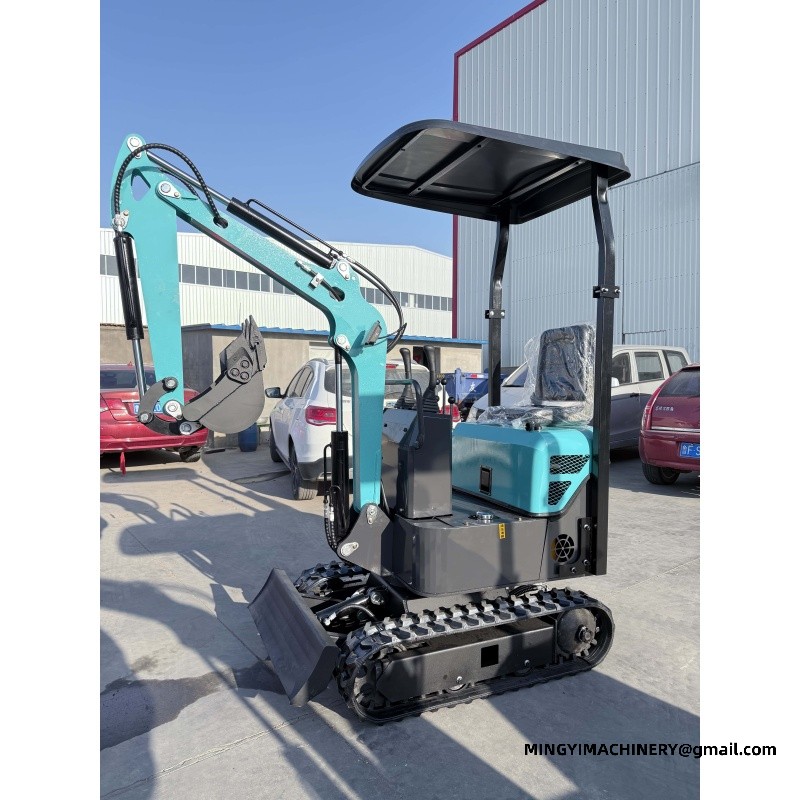
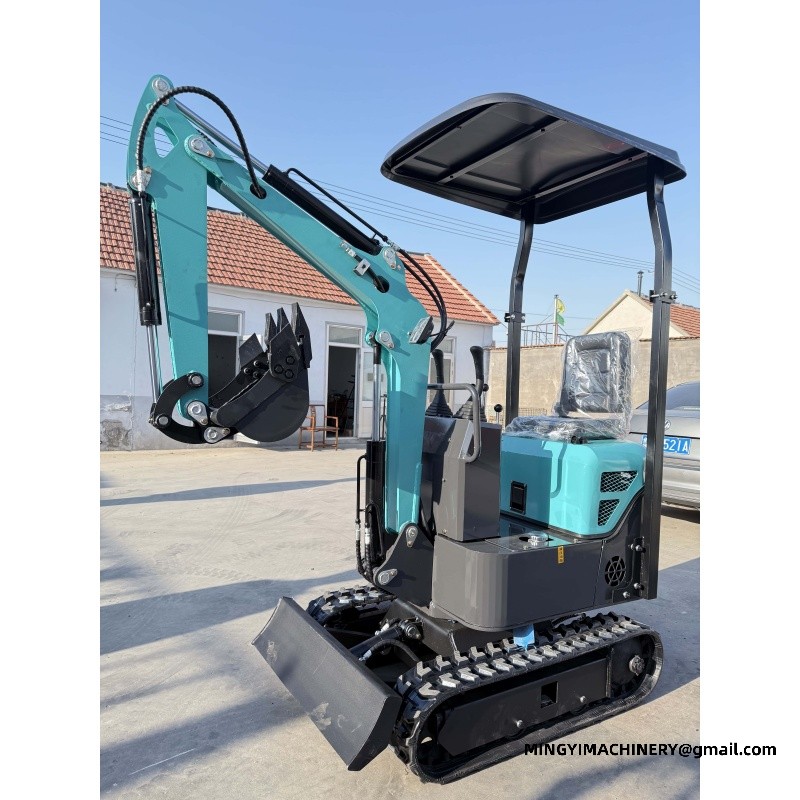
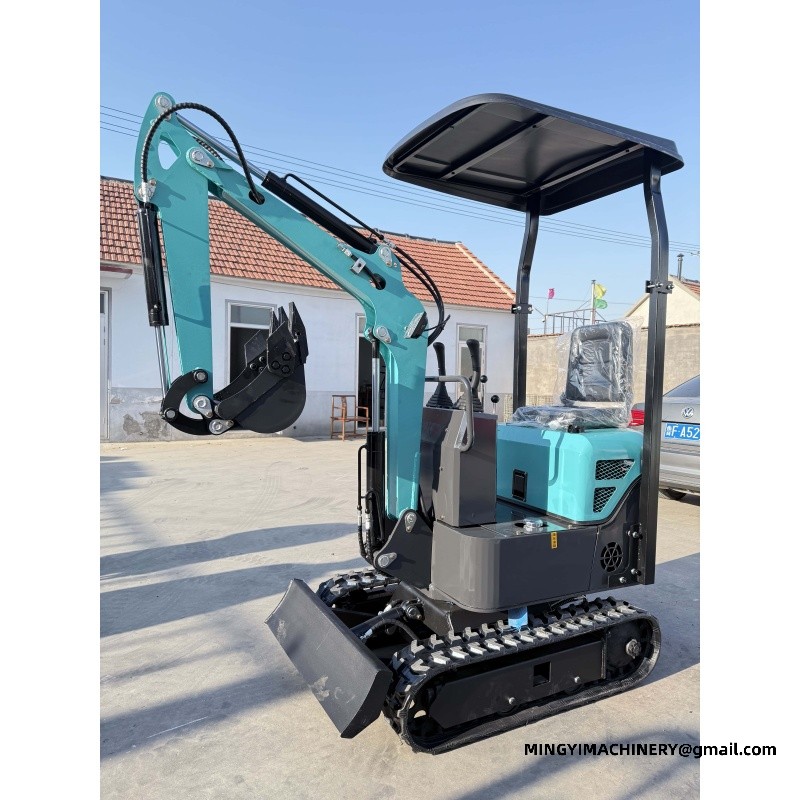
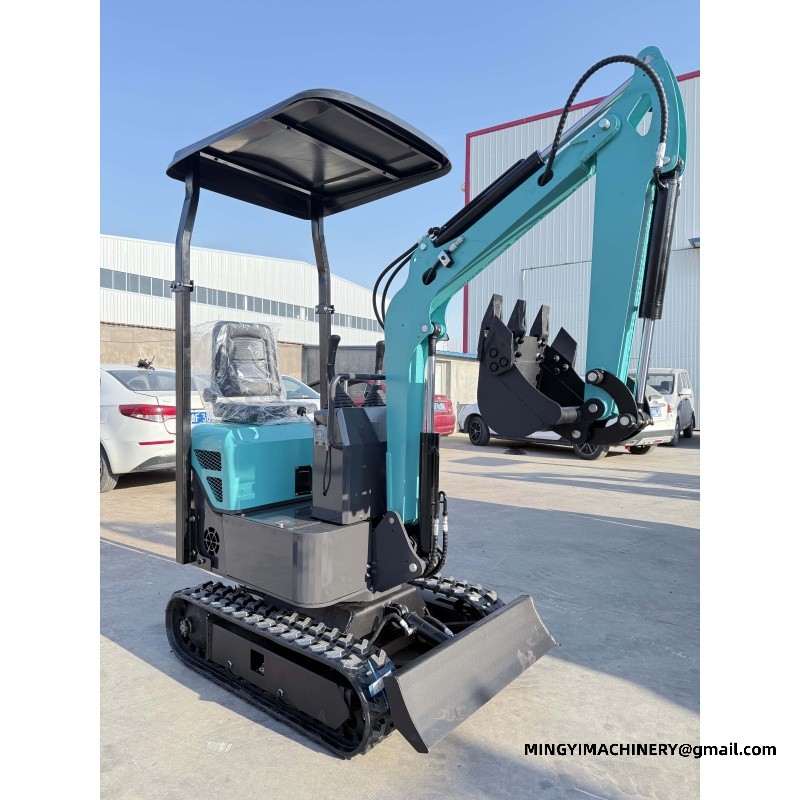
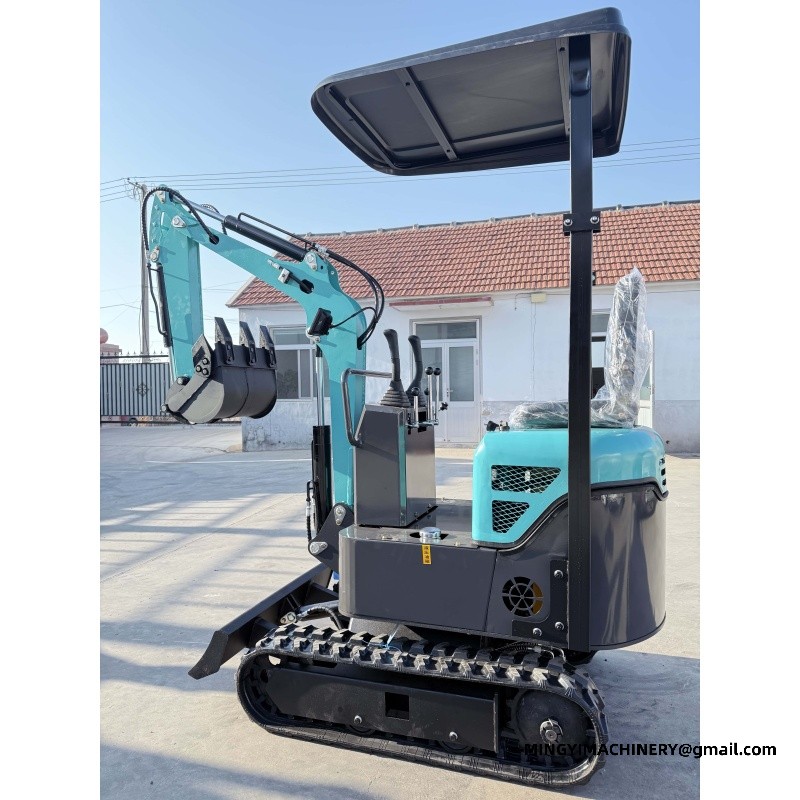
Reference specification — mini excavator range 20-3W 30-1W 30-2W 12L Operating weight 1900 kg (4188.78 lb) 2900 kg (6393.41 lb) 2700 kg (5952.48 lb) 1200 kg (2645.55 lb) Transport size (L×W×H) 2550 × 1100 × 2200 mm 3000 × 1250 × 2780 mm 3000 × 1100 × 2700 mm 2200 × 930 × 2250 mm Max digging depth 1800 mm (70.87 in) 2200 mm (86.61 in) 2200 mm (86.61 in) 1700 mm (66.93 in) Max digging height 2820 mm (111.02 in) 3400 mm (133.86 in) 3000 mm (118.11 in) 2600 mm (102.36 in) Max dumping height 2050 mm (80.71 in) 2400 mm (94.49 in) 2000 mm (78.74 in) 1800 mm (70.87 in) Max digging radius 3050 mm (120.08 in) 4000 mm (157.48 in) 3800 mm (149.61 in) 2900 mm (114.17 in) Max digging distance 2300 mm (90.55 in) 2800 mm (110.24 in) 3050 mm (120.08 in) 2300 mm (90.55 in) Minimum turning radius 1450 mm (57.09 in) 2000 mm (78.74 in) 1750 mm (68.9 in) 1450 mm (57.09 in) Travel speed 5 km/h (3.11 mph) 5 km/h (3.11 mph) 7 km/h (4.35 mph) 3 km/h (1.86 mph) Gradeability 30° 30° 30° 30° Fuel consumption 2-3 L/h (0.528—0.793 gal) 2-3 L/h (0.528—0.793 gal) 2-3 L/h (0.528—0.793 gal) 1-1.3 L/h (0.264—0.343 gal) Fuel tank capacity 16 L (4.23 gal) 16 L (4.23 gal) 16 L (4.23 gal) 10 L (2.64 gal) Hydraulic oil tank 18 L (4.76 gal) 20 L (5.28 gal) 20 L (5.28 gal) 16 L (4.23 gal) Dozer blade lift height 180 mm (7.09 in) 420 mm (16.54 in) 230 mm (9.06 in) 180 mm (7.09 in) Dozer blade drop depth 210 mm (8.27 in) 210 mm (8.27 in) 280 mm (11.02 in) 210 mm (8.27 in)
Q. What is the machine in that duty?
A. Boom geometry is the difference between repositioning the machine ten times an hour and digging through from one stable stance. Reach without width is the compact excavator trick: the boom crosses the obstacle while the tracks stay on firm ground. MINGYI builds the 08, 12 and 18 models covering the 0.8 to 6 tonne class, and the unit on the job is where that range meets swing boom trenching.
Q. When does an extended or detachable boom pay off?
A. Ponds, basement edges, foundation pads and finish grading across obstacles - anywhere the bucket must reach further than the carrier should travel. Detachable designs stow on the trailer, so the machine still passes the narrow gate on the next job.
Q. Does MINGYI supply attachments with the machine?
A. Yes - buckets, breakers, augers, rakes and the rest of the working set ship with the carrier, matched to the hydraulic flow and the coupler. For swing boom trenching the package is confirmed on the build sheet, so machine and tools arrive together and start work together.
Moving a machine built for the work between sites
A machine that works on one site still has to reach the next. The overall dimensions and the operating weight of the equipment in service decide what trailer or truck is needed, and that decision belongs before the job is booked.
Reading the early symptoms on the excavator
Machines rarely fail without warning. A change in sound, a slower function or a new leak on this class of machine is the machine saying something early, and listening then takes a fraction of the time that waiting does.
E-mail : sales@mingycn.com
LINE ( ID ): mingyicn
Night work and lighting on swing boom trenching mini excavator
Night work changes the job more than most specification lines do, because light coverage, glare and shadow decide how much of the site the operator can actually read.
Work lamps should cover the working area and the travel path separately, since a beam set for loading usually leaves the route dark.
Related pages
short tail swing mini excavator · zero tail swing excavator · China Wheel Loader Factory Supplier: Fleet Orders and Spares · Mini Excavators









